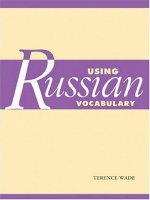
using russian vocabulary
Bạn đang xem bản rút gọn của tài liệu. Xem và tải ngay bản đầy đủ của tài liệu tại đây (2.83 MB, 636 trang )
This page intentionally left blank
Using Russian Vocabulary
Using Russian Vocabulary provides the student of Russian with an in-depth,
structured approach to the learning of vocabulary. Containing over 5,000
words, it can be used for intermediate and advanced undergraduate courses, or
as a supplementary manual to the study of Russian vocabulary at all levels –
including elementary level. It is made up of eighteen units covering topics such
as the physical world, the human body, leisure and industry – each unit
consisting of words and phrases that are organized thematically and according
to levels. Each unit contains approximately sixty graded exercises, encouraging
students to practise using the vocabulary in context, and providing a lively and
engaging set of self-study tasks. Helping students to acquire a comprehensive
control of both concrete and abstract vocabulary, this book will be welcomed by
all learners of Russian wishing to improve their competence in essential
communicative tasks, and will function as an invaluable teaching resource.
r
A practical, topic-based textbook that can be used as a supplement to all types
of course
r
Provides exercises and activities for classroom and self-study
r
Contains over 5,000 words and over 1,000 exercises
terence wade (1930–2005) was Professor of Russian and Chairman of the
Department of Modern Languages at the University of Strathclyde, Glasgow.
He published a total of twelve books on the Russian language which continue
to be used by students of Russian across the world.
Other titles in this series
Using French (third edition)
A guide to contemporary usage
r. e. batchelor and m. h. offord
(ISBN 0 521 64177 2 hardback)
(ISBN 0 521 64593 X paperback)
Using Spanish (second edition)
A guide to contemporary usage
r. e. batchelor and c. j. pountain
(ISBN 0 521 00481 0 paperback)
Using German (second edition)
A guide to contemporary usage
martin durrell
(ISBN 0 521 53000 8 paperback)
Using Russian (second edition)
A guide to contemporary usage
derek offord and
natalia goglitsyna
(ISBN 0 521 54761 X paperback)
Using Italian
A guide to contemporary usage
j. j. kinder and v. m. savini
(ISBN 0 521 48556 8 paperback)
Using Japanese
A guide to contemporary usage
william m
cclure
(ISBN 0 521 64155 1 hardback)
(ISBN 0 521 64614 6 paperback)
Using Portuguese
A guide to contemporary usage
ana sofia ganho and
timothy mcgovern
(ISBN 0 521 79663 6 paperback)
Using Arabic
A guide to contemporary usage
mahdi alosh
(ISBN 0 521 64832 7 paperback)
Using Spanish Synonyms
r. e. batchelor
(ISBN 0 521 44160 9 hardback)
(ISBN 0 521 44694 5 paperback)
Using German Synonyms
martin durrell
(ISBN 0 521 46552 4 hardback)
(ISBN 0 521 46954 6 paperback)
Using Italian Synonyms
howard moss and vanna motta
(ISBN 0 521 47506 6 hardback)
(ISBN 0 521 47573 2 paperback)
Using French Synonyms
r. e. batchelor and m. h. offord
(ISBN 0 521 37277 1 hardback)
(ISBN 0 521 37878 8 paperback)
Using Russian Synonyms
terence wade and nijole white
(ISBN 0 521 79405 6 paperback)
Using French Vocabulary
jean h. duffy
(ISBN 0 521 57040 9 hardback)
(ISBN 0 521 57851 5 paperback)
Using German Vocabulary
sarah fagan
(ISBN 0 521 79700 4 paperback)
Using Italian Vocabulary
marcel danesi
(ISBN 0 521 52425 3 paperback)
Using Spanish Vocabulary
r. e. batchelor and
miguel a. san josé
(ISBN 0 521 00862 X paperback)
Using Arabic Synonyms
dilworth parkinson
(ISBN 0 521 00176 5)
Using Russian
Vocabulary
TERENCE WADE
Formerly of the University of Strathclyde, Glasgow
CAMBRIDGE UNIVERSITY PRESS
Cambridge, New York, Melbourne, Madrid, Cape Town, Singapore,
São Paulo, Delhi, Dubai, Tokyo
Cambridge University Press
The Edinburgh Building, Cambridge CB2 8RU, UK
First published in print format
ISBN-13 978-0-521-61236-4
ISBN-13 978-0-511-65172-4
© Terence Wade 2009
2009
Information on this title: www.cambrid
g
e.or
g
/9780521612364
This publication is in copyright. Subject to statutory exception and to the
provision of relevant collective licensing agreements, no reproduction of any part
may take place without the written permission of Cambridge University Press.
Cambridge University Press has no responsibility for the persistence or accuracy
of urls for external or third-party internet websites referred to in this publication,
and does not guarantee that any content on such websites is, or will remain,
accurate or appropriate.
Published in the United States of America by Cambridge University Press, New York
www.cambridge.org
eBook
(
NetLibrar
y)
Pa
p
erback
Contents
A tribute to Terence Wade page viii
Introduction 1
Unit 1 Towns and buildings. The household. Gardens 3
Unit 2 The physical world 40
Unit 3 The human body and health 76
Unit 4 Appearance and movement 122
Unit 5 Personality and human behaviour 163
Unit 6 Clothes, footwear, and accessories. Food and drink 205
Unit 7 Perception 232
Unit 8 Shapes and patterns. Size and quantity. Containers 259
Unit 9 Visual and performing arts 286
Unit 10 Literature and literary criticism. Speaking, reading, and
writing 314
Unit 11 Leisure 341
Unit 12 Tourism, travel, and transport 367
Unit 13 Family, birth, death, and marriage 397
Unit 14 Education 423
Unit 15 Agriculture. Industry 451
Unit 16 Business and commerce 478
Unit 17 The office and computing. Post and telecommunications 507
Unit 18 Law and finance 530
Key to exercises 557
vii
A tribute to Terence Wade
Terence Wade, the author of this book, died on 22 November 2005. He
is sadly missed by colleagues and family alike. Throughout his
academic career, Terence’s great gift and also his passion was to teach
the Russian language to students. His intense love of the language
drove him to promote Russian language and cultural studies in Britain
and internationally. As a young graduate he trained interpreters at the
Joint Services School for Linguists. This grounding led to a long and
successful career at the University of Strathclyde, Glasgow, during
which he was made Professor of Russian and Chairman of the
Department of Modern Languages. Terence was respected by Slavonic
Studies Departments all over Britain as an external examiner and
research assessor, and was also involved in and became chairman of the
Scottish Institute of Linguists.
An enthusiastic member of the ATR, Association of Teachers of
Russian (later ALL, Association of Language Learning), he first served
as editor of the Journal of Russian Studies, and then Chairman of the
ATR in 1986–89 and finally President in 1989–90. For many years
Terence represented Great Britain on the presidium of MAPRYAL
(the International Association of Teachers of Russian Language and
Literature) and received the accolade of the Pushkin medal for his
services to Russian teaching presented by the Russian government.
Terence has left an impressive range of publications on the Russian
language and culture. He wrote numerous articles on a wide range of
subjects and completed twelve books, most notably his grammar, which
is now used by students of Russian across the world. His most recent
books on synonyms, etymology, and the contemporary Russian
language displayed a deepening interest in Russian vocabulary.
The present book, which reflects this interest, is dedicated to the
many students who have benefited from his teaching and his writing.
While Terence’s life has come to an end, his work in the field of Russian
teaching continues, and the present publication bears testimony to this.
On a personal level, Terence will be remembered by his colleagues,
friends, and family as a scholar and a gentleman. His outstanding
personal characteristics were modesty and courtesy, kindness and
fairness, but also great dynamism and a keen sense of humour.
One of Terence’s last wishes was that this, his final book, should
reach publication, and on Terence’s behalf, we should like to thank
viii
A tribute to Terence Wade ix
everyone who has helped to make this possible: Helen Barton, his
editor, who has been very helpful throughout, Larissa Ryazanova-
Clarke, who has copy-edited the Russian text, Nijole White, and many
others who advised on various aspects of the book.
Mary, Dorothy, and Caroline Wade
27 November 2006
Introduction
Aims Using Russian Vocabulary is intended to provide the student of Russian
with a comprehensive and structured approach to the learning of
vocabulary. It can be used right from the outset in intermediate and
advanced undergraduate courses, or as a supplementary manual at all
levels – including the elementary one – to supplement the study of
vocabulary. It is designed to provide the learner with a broad treatment
of those vocabulary topics that are not covered as designated areas of
study in typical language courses, and thus can be used to ‘fill in the
vocabulary gaps’ that such courses invariably leave. Additionally, this
book can be easily adapted for profitable use in ‘Language for Special
Purposes’ courses.
The guiding principle behind the plan of this book is the idea that
students need to acquire a comprehensive control of concrete and
abstract vocabulary to carry out essential communicative and
interactional tasks – an area of learning that is often neglected by other
types of textbooks for the simple reason that they are more focused on
presenting other aspects of the language.
Using Russian Vocabulary, therefore, is designed to:
r
provide a vocabulary-training tool that can be used throughout the
undergraduate programme in Russian as the student progresses
through it;
r
provide a practical topic-based textbook that can be inserted into all
kinds of course syllabi to impart a sense of how the language can be
used in specific ways;
r
promote self-instruction in the language;
r
facilitate the acquisition of vocabulary items to which the student
would not ordinarily be exposed;
r
present organised units of vocabulary that can be used in tandem
with other manuals and/or course materials;
r
provide exercises and activities for all kinds of classroom and
self-study purposes.
Stucture and
organisation
The layout of this textbook has been guided by its principal objective –
to impart high-frequency vocabulary to intermediate and advanced
classroom learners of Russian. The user of this book should thus have
had some training in, or exposure to the language beforehand. But it
1
2 Introduction
has also been designed in such a way as to be useful to those wishing to
expand their knowledge of Russian vocabulary on their own.
The book is divided into eighteen units. In each one, words and
phrases have been organised thematically and according to levels, so as
to facilitate their acquisition. It is much more likely that vocabulary
relating to specific real-world situations and issues will be remembered
than will a simple listing of items. Needless to say, the selection of
specific vocabulary items according to thematic categories invariably
involves arbitrary decisions. Nevertheless, this book makes every effort
to ensure that most of the high-frequency items needed to carry out
speaking or writing tasks on specific topics have been included.
Teachers and students may, of course, deem it necessary and
appropriate to supplement and complement the listings on their own.
Levels
Each listing is divided into three levels, determined on the basis of
‘usefulness’ and ‘likely frequency’, e.g. those listed in level 1 are likely
to be more frequent in actual usage than those in level 3. This provides
a ‘frequency framework’ to the organisation of the unit that encourages
students to perceive vocabulary as a ‘systematic process’, and as a
means of specialising and refining their knowledge of Russian.
Selection criteria
The items in each unit are those that students will need to know in
order to express themselves appropriately in all kinds of common
discourse situations. Units on the arts, media, science, religion and law,
for instance, are designed to expose students to vocabulary that they are
likely to encounter in the press, on television, in literary texts, and the
like. Nevertheless, this book does not exclude more basic vocabulary,
given that students may wish to revise some of the more common
words.
Exercises
The exercises allow the learner to work with the new vocabulary in
various ways, by focusing on meaning, by matching meanings, by
translating, etc. The exercises are divided into three levels which
correspond to the three levels of vocabulary in each unit.
Unit 1
Towns and buildings. The household. Gardens
Level 1
Towns
Townscapes
г ´ород (pl. город ´a) town, city
дор ´огa road
окр ´aинa (нa окр ´aинe) outskirts
пeрe ´улок (gen. пeрe ´улкa)
(
в пeрe ´улкe)
lane, side street
пл ´ощaдь (f.) (gen. pl.
площaд ´eй)
square
пр ´игород suburb
стол ´ицa capital
троту ´aр pavement
´
улицa (нa ´улицe) street
ц ´eнтр centre
Word formation: (1) note
г ´ород, пр ´игород and the names of ancient
towns such as
H ´овгород and cf. гр ´aд, found mainly in verse and
the names of modern cities such as
лeнингр ´aд (2) при-inпр ´игород
means ‘close to, attached to’.
Cognates: cf.
окр ´aинa and кр ´aй ‘edge, border’.
Origins: (1)
троту ´aр is from French trottoir, id. (2) стол ´ицa means lit-
erally ‘seat of the throne’ (Old Russian
ст ´олъ ‘throne’).
Generic words: Like most generic words,
пл ´ощaдь usually appears with
an initial lower-case letter:
Кр ´aснaя пл ´ощaдь (cf. H ´eвский просп ´eкт,
Кaз ´aнскaя ´улицa etc.).
Buildings and parks
б ´aнк bank
библиот ´eкa library
больн ´ицa hospital
вокз ´aл (нa вокз ´aлe) station (terminus)
гост ´иницa hotel
зaв ´од (нa зaв ´одe) factory
3
4 Unit 1
зооп ´aрк zoo
кин ´о/кинотe ´aтр cinema
муз
´eй
museum
п ´aрк park
рeстор ´aн restaurant
ст ´
aнция
(нa ст ´aнции) station
тe ´aтр theatre
ц ´eрковь (f.) (gen./dat./prep.
ц ´eркви, instr. ц ´eрковью, pl.
ц ´eркви цeркв ´eй цeркв ´aм
цeркв
´aми цeркв ´aх)
church
шк ´олa school
Word origins:
вокз ´aл (from English Vauxhall) began as a pleasure garden,
subsequently (1830s/1840s), with the advent of railways, combining
the functions of concert hall and passenger hall, eventually only ‘rail-
way station’ as the pleasure gardens declined in popularity.
Cognates: (1) cf.
больн ´ицa and б ´оль ‘pain’, больн ´ой ‘sick, painful, a
patient’ (-
ницa denotes ‘place, container’) (2) cf. also г ´ость ‘guest’
and
гост ´иницa.
Phraseology: note
смотр ´eть ф ´ильм/пь ´eсу ‘to see a film, play’.
Shops
aпт ´eкa chemist
б ´улочнaя baker
кн ´ижный мaгaз ´ин bookshop
мaгaз ´ин «
´
O
вощиифр´укты» greengrocer
мaгaз ´ин «Oд ´eждa» clothes shop
мясн ´aя л ´aвкa butcher
пaрикм ´aхeрскaя (adj. noun) hairdresser (пaрикм ´aхeр
‘hairdresser’)
пeк ´aрня bakery
покуп ´aть/куп ´ить (купл ´ю
к
´упишь)
to buy (
д ´eлaть пок ´упки ‘to shop’)
продм ´aг food store, grocery
р ´ынок (gen. р ´ынкa)(нa
р
´ынкe)
market
Word origins: (1)
aпт ´eкa comes ultimately from Greek apotheke ‘store-
house’, cf. German Apotheke ‘chemist’s’ (2) cf.
пaрикм ´aхeр and
German Per¨uckenmacher, lit. ‘wigmaker’ (3)
р ´ынок is cognate with
German Ring ‘ring, association of dealers’ (4) cf.
ку ´пить and German
cognate kaufen, id.
Cognates: cf.
пeк ´aрня and п ´eкaрь ‘baker’, п
´
e
чь ‘to bake’ (-ня means
‘place’).
Word formation:
продм ´aг is a blend of продов ´ольствeнный мaгaз ´ин.
Towns and buildings. The household. Gardens 5
Domestic accommodation
Housing
гост ´инaя (adj. noun) living room, drawing room
д ´вeрь
(f.) (нa двeр ´и, gen. pl.
двeр ´eй)
door
див
´aн
sofa, divan
д ´ом (pl. дом ´a) house, block of flats
квaрт ´ирa flat, apartment
квaртпл ´aтa rent
ков
¨
e
р (gen.
ковр ´a) carpet
к ´ухня (gen. pl. к ´ухонь) kitchen
л ´eстницa stairs, ladder
л ´ифт lift
п ´ол (нa пол ´у) floor
потол ´ок (gen. потолк ´a) ceiling
сп ´aльня (gen. pl. сп ´aлeн) bed-room
стeн ´a (acc. ст ´eну, pl. ст ´eны)wall
стол ´овaя (adj. noun) dining room
тeлeв ´изор television (also TB), television set
эт ´aж (gen. этaж ´a) floor, storey
(
п ´eрвый эт ´aж) (ground floor)
(
втор ´ой эт ´aж) (first floor)
Word formation: (1)
гост ´инaя lit. means ‘guest room’ (к ´омнaтa under-
stood) (2)
квaртпл ´aтa is a blend of квaрт ´ирнaя пл ´aтa.
Cognates: (1) cf.
д ´ом, Latin domus id., English ‘domestic’ (2) л ´eстницa,
cf.
л ´eзть ‘to climb’.
Word origins: (1)
ков
¨
e
р is possibly from Turkic (2) к ´ухня probably comes
ultimately from German K¨uche id. (3)
стeн ´a is cognate with German
Stein ‘stone’ (4) cf.
тeлeв ´изор and French t´el´eviseur ‘TV set’ (смотр ´eть
тeлeв
´изор ‘to watch TV’) (5) эт ´aж is from French ´etage id.
Furniture
кн ´ижный шк ´aф (вкн´ижном
шкaф
´у)
bookcase
кр ´eсло armchair, easy chair
кров ´aть (f.) bed
м ´eбeль (f.) furniture
ст ´ул (pl. ст ´улья ст ´ульeв) chair
шкaф (вшкaф´у) cupboard
Word origins: (1)
кров ´aть is from Byzantine Greek krabattos id. (2)
м ´eбeль is from French meuble ‘piece of furniture’ (3) шк ´aф is from
South German Schaff ‘open vessel, tub, cupboard’.
6 Unit 1
Linen
пост ´eль (f.) bed, bedding
простын ´я (pl. пр ´остыни
прост
´ынь простын ´ям)
sheet
ск ´aтeрть (f.) tablecloth
Word origins: (1)
пост ´eль is from an earlier form of постл ´aть ‘to spread’,
cf.
постeл ´ю ‘I will spread’ (2) простын ´я is possibly from прост ´ой
‘simple’, thus ‘simple, unsewn linen’ (3) ск ´aтeрть may be from older
forms of
доск ´a ‘board’ and тeр ´eть ‘to rub’.
Domestic appliances
гл ´aдить (гл ´aжу гл ´aдишь)/
в ´ы-
to iron (
гл ´aдить/в ´ы- бeль
¨
e ‘to do the
ironing’)
плит ´a (pl. пл ´иты) cooker
пылeс
´ос vacuum cleaner (убир ´aть/убр ´aть
[убeр ´уубeр
¨
e
шь] пылeс ´осом ‘to
vacuum’)
стир ´aльнaя мaш ´инa washing machine
стир ´aть/в ´ы-(бeль
¨
e) to wash (clothes)
ут ´юг (gen. утюг ´a) iron
холод
´ильник refrigerator
Cognates: cf.
гл ´aдить and гл ´aдкий ‘smooth’.
Word formation: (1)
холод ´ильник is from холод ´ить ‘to cool’ (nouns in
-
льник derive from verbs and take penultimate stress) (2) пылeс ´ос is a
calque of German Staubsauger id. (Staub/
пыль ‘dust’, saugen/сос ´aть
‘to suck’).
Word origins:
ут ´юг is of Turkic origin, cf. Turkish utu ‘flat-iron’.
Lighting
включ ´aть/включ ´ить to switch on
выключ ´aть/в ´ыключить to switch off
л ´aмпa lamp
Kitchenware
в ´илкa fork
горш ´ок (gen. горшк ´a) pot
кaстр ´юля saucepan
л ´ожкa spoon
м ´ыть (м ´ою м ´оeшь)/в ´ы-
(
пос ´уду)
to wash (the dishes)
н ´ож (gen. нож ´a) knife
сковород ´a (pl. ск ´овороды
ск
´овород ск ´овородaм)
frying pan
тaр ´eлкa plate
ч ´aшкa cup
Towns and buildings. The household. Gardens 7
Cognates: (1) cf. кaстр ´юля and Dutch kastrol ‘casserole’ (2) тaр ´eлкa is
cognate with Polish talerz id. and German Teller, with metathesis of
l-r to r-l (
тaр ´eлкa).
Plumbing, bathroom
в ´aннa bath
в ´aннaя (adj. noun) bathroom
д
´уш shower
зaкрыв ´aть/зaкр ´ыть (зaкр ´ою
зaкр
´оeшь)(в ´оду)
to close, to turn off (water)
кр ´aн tap
открыв ´aть/откр ´ыть (откр ´ою
откр
´оeшь)(кр ´aн)
to open, to turn on (the tap)
м ´ыло soap
туaл ´eт toilet
умыв ´aльник hand basin, wash basin
Word origins: (1)
в ´aннa comes from German Wanne ‘winnow fan, bath’
(2) ´
душ is from French douche id. (3) кр ´aн is from (Low) German
Kran id.
Word formation: (1) -
ло in м ´ыло is an agent suffix, thus м ´ыло lit. means
‘what you wash with’ (2)
умыв ´aльник:cf.умыв ´aть ‘to wash’ (for
-
льник cf. холод ´ильник above).
Decor
кр ´aсить (кр ´aшу
кр
´aсишь
)/по-
to paint
кр ´aскa paint, paintwork
Garden
General
кл ´умбa flower-bed
к ´уст (gen. куст ´a) bush
л ´ист (gen. лист ´a, pl. л ´истья
л
´истьeв)
leaf
с ´aд (в сaд ´у) garden
Word origins:
кл ´умбa is from English ‘clump’, -a possibly by analogy
with
гр ´ядкa ‘drill, bed’.
Cognates:
с ´aд, perhaps lit. ‘what has been planted’, is cognate with
сaж ´aть/посaд ´ить ‘to plant’.
Literary reference:
с ´aд also means ‘orchard’, hence the name of Chekhov’s
last play
«Bишн
¨
e
вый сaд».
8 Unit 1
Tools
коп ´aть/в ´ы- to dig
лоп ´aтa spade
Word origins:
лоп ´aтa is from a root meaning ‘flat’, thus lit. ‘with a flat
blade’ (suffix -
aт- ‘endowed with’).
Plants
рaст ´и (рaст
¨
e
т; р ´ос росл ´a)/в ´ы- to grow (intransitive)
трaв ´a grass
Cognates: cf.
рaст ´и, derivative рaст ´eниe ‘plant’ and cognates in ро- such
as
р ´ост ‘growth’.
Fruit and vegetables
в ´ишня cherry
кaп ´устa cabbage
кaрт ´офeль (m.) (кaрт ´ошкa
‘potatoes, a potato’)
potatoes
помид ´ор tomato
´
яблоко
(pl. ´яблоки) apple
Cognate words: (1)
в ´ишня may be cognate with вис ´eть ‘to hang’, thus
‘fruit that hangs’ (2) ´
яблоко is cognate with English ‘apple’, German
Apfel, id.
Word origins: (1)
кaп ´устa is probably from a contamination of Medieval
Latin caputium ‘white cabbage’ lit. ‘small head’ and feminine participle
composita ‘compound(ed)’ (2)
кaрт ´офeль is from German Kartoffel id.
(3)
помид ´ор is from Italian pomi d’oro ‘tomatoes’, lit. ‘golden apples’.
Exercises
Level 1
1. Semantics. Which of the following nouns is the odd one out, from a semantic point
of view?
Noun Meaning Noun Meaning
1. в ´ишня cherry 4. лоп ´aтa
2. к ´уст 5. помид ´ор
3. л ´ист 6. трaв ´a
2. Gender. Which of the following soft-sign nouns has a different gender from the rest?
дв ´eрь кaрт ´офeль кров ´aть м ´eбeль пл ´ощaдь ск ´aтeрть
Exercises 9
3. Unusual plurals. Give the nominative plurals of the following nouns:
1. г ´ород 2. д ´ом 3. л ´ист 4. ст ´ул 5. ´яблоко
Group the nouns in pairs. Which of the five has no equivalent among the other four?
4. Mobile vowel in declension.
(1) Give the genitive singular of the following nouns:
Noun Gen. sing. Meaning Noun Gen. sing. Meaning
горш ´ок горшк ´a pot ков
¨
e
р
пeрe
´улок
потол
´
ок
р ´ынок ц ´eрковь
In what ways is the declension of ц ´eрковь distinctive?
(2) Zero genitive plural.
(a) Which of the following three nouns has a mobile vowel in the genitive plural?
Noun Gen. pl. Noun Gen. pl. Noun Gen. pl.
1. кл ´умбa 2. л ´aмпa 3. кр ´aскa
(b) Which of the following nouns has a different mobile vowel in the genitive plural
from the other two?
Noun Gen. pl. Noun Gen. pl. Noun Gen. pl.
1. л ´ожкa 2. тaр ´eлкa 3. ч ´aшкa
(c) Which of the following nouns in -ня has a soft sign in the genitive plural?
Noun Gen. plural Noun Gen. plural
1. в ´ишня 3. пeк ´aрня
2. к ´ухня 4. сп ´aльня
5. Adjectival nouns. Form adjectival nouns based on the nouns in the left-hand
columns. Which is the odd one out, from the point of view of its suffix and its
meaning?
Noun Adjectival noun Noun Adjectival noun
1. в ´aннa в ´aннaя 3. пaрикм ´aхeр
2. г ´ость 4. ст ´ол
10 Unit 1
6. B or нa + prepositional case. Which is the odd one out in:
I в or
нa
в or
нa
1.
б ´aнк
вб
´aнкe
3.
больн ´ицa
2. библиот ´eкa 4. ст ´aнция
II нa or в нa or в
1. вокз ´aл нa вокз ´aлe 3. пeрe ´улок
2. зaв ´од 4. р ´ынок
7. Give the nominative/accusative plural of the following nouns (NB: almost all nouns
ending in stressed - ´
a have stem stress in the plural):
Noun Meaning Nom. pl. Noun Meaning Nom. pl.
1. плит ´a пл ´иты 2. сковород ´a
3. стeн ´a 4. трaв ´a
8. End stress in the declension of masculine nouns. Mark stresses in the genitive
singular of the following nouns. Which is the odd one out?
Noun Meaning Gen. sing. Noun Meaning Gen. sing.
1. д ´уш shower нeт душa 4. к ´уст двa кустa
2. л ´ист двa листa 5. н ´ож нeт ножa
3. ут ´юг нeт утюгa 6. эт ´aж двa этaжa
9. Locative in - ´у. Which is the odd one out (has a locative in -e)?
1. б ´aнк в 2. п ´ол нa 3. с ´aд в 4. шк ´aф в
10. Nouns in -ня. Which, semantically, is the odd one out?
Noun Meaning Noun Meaning Noun Meaning Noun Meaning
в ´ишня к ´ухня пeк ´aрня сп ´aльня
What underlying meaning (expressed by the ending -ня) links the other three nouns?
11. Similes. Translate into English and find equivalents where possible.
1.
К ´aк в aпт ´eкe (meaning very accurately, as on an apothecary’s scales, of measurement or
calculation).
2.
Bход ´ить/приход ´ить куд ´a-л ´ибо к ´aк в родн ´ой д ´ом (of entering somewhere without
ceremony, sure of a warm welcome).
Exercises 11
3. P ´овный к ´aк ск ´aтeрть (of a level road, field etc.).
4.
Paсстил ´aться к ´aк ков
¨
e
р (of a soft, even layer of snow or grass).
Note how Pushkin uses the ‘carpet’ simile in his poem
«з ´имнee ´утро»:
П ´од голуб ´ыми нeбeс ´aми
Beликол
´eпными ковр ´aми,
Блeст ´янaс´олнцe, сн ´eг лeж ´ит
Under blue skies
Like magnificent carpets
Lies snow, gleaming in the sun
12. Match the Russian words to their English equivalents (in I) and the English words
to their Russian equivalents (in II):
I (a) I (b)
1. aпт ´eкa a. library 1. гост ´иницa a. flower-bed
2. библиот ´eкa b. living room 2. д ´уш b. leaf
3. больн ´ицa c. hospital 3. кл ´умбa c. shower
4. гост ´инaя d. chemist 4. л ´ист d. hotel
II (a) II (b)
1. bakery a. пост ´eль 1. bedroom a. стол ´ицa
2. bed b. муз ´eй 2. capital city b. ч ´aшкa
3. museum c. окр ´aинa 3. cup c. рeстор ´aн
4. outskirts d. пeк ´aрня 4. restaurant d. сп ´aльня
13. Polysemy. Find other meanings of the following words:
Other meaning(s)
1. в ´илкa
2. включ ´aть
3. гл ´aдить
4. д ´ом
5. кр ´aн
6. л ´ист
7. плит ´a
8. пл ´ощaдь
9. п ´ол
10. тaр ´eлкa
12 Unit 1
14. Find out the meanings of the following sayings and, where possible, give English
equivalents:
(a)
Cид ´eть м ´eжду дв ´ух ст ´ульeв.
(b)
Pук ´aр´уку м ´оeт.
(c)
´
O
н нe в сво
´eй тaр ´eлкe.
(d)
Cк ´aтeртью eм ´удор´огa!
(e)
M ´ы с ним нa нож
´aх.
(f)
He м ´eсто кр ´aсит чeлов ´eкa, a чeлов ´eк – м ´eсто.
15.
чт ´од´eлaют ?
1. кр ´aской? кр ´aсят ст ´eны
2. м ´ылом
?
3. лоп ´aтой?
4. пылeс ´осом?
5. стир ´aльной мaш ´иной?
6. утюг ´ом?
(гл ´aдят (бeль
¨
e),
коп ´aют (кл ´умбы), м ´оют (р ´уки), стир ´aют (бeль
¨
e),
убир ´aют (к ´омнaту))
16. Say where these activities take place, using
в + locative case (note: он ´им´огут ‘they
can’,
м ´ожно ‘one may’):
Гд ´e?
(a) д ´eти м ´огут игр ´aть? д ´eти м ´огут игр ´aть в п ´aркe
(b) д ´eти ´учaтся?
(c) м ´ожно д ´eлaть пeрмaн ´eнт?
(d) м ´ожно смотр ´eть пингв ´инов?
(e)
м ´ожно смотр ´eть пь ´eсы?
(f) м ´ожно смотр ´eть ф ´ильмы?
(g) м ´ожно смотр ´eть экспон ´aты?
(h) м ´ожно ´ужинaть?
(зооп ´aрк, кин ´о, муз ´eй, п ´aрк, пaрикм ´aхeрскaя, пр ´aчeчнaя, рeстор ´aн, тe ´aтр, шк ´олa)
Exercises 13
17.
´
Oчeрeдь зa ч ´eм? Say what she was queuing for:
Noun in instrumental singular or plural
1. вкн´ижном мaгaз ´инe он ´a сто ´ялa в
´очeрeди зa
кн ´игой/зa кн ´игaми
2.
в мaгaз ´инe «
´
O
вощиифр´укты» он ´a
сто
´ялa в ´очeрeди зa
3. вмясн´ой л ´aвкe он ´a сто ´ялa в ´очeрeди
зa
4. впeк´aрнe он ´a сто ´ялa в ´очeрeди
зa
5. вр´ыбном мaгaз ´инe он ´a сто ´ялa в ´очeрeди
зa
6. втe´aтрe он ´a сто ´ялa в ´очeрeди
зa
(бил ´eтом/бил ´eтaми, овощ ´aми и фр ´уктaми/´яблокaми и помид ´орaми, р ´ыбой, хл ´eбом, м ´ясом)
18. Verb conjugation. Put the verbs in the correct form of the present tense (1–4) or
perfective future (5–7):
1.
Я [г ´лaдить] бeль
¨
e.
2.
Я [кр ´aсить] ст ´eны.
3.
Oн ´a [м ´ыть] р ´уки.
4.
B сaд ´у [рaст ´и] помид ´оры и ´яблоки.
5.
´
Oн [зaкр ´ыть] дв ´eрь.
6.
Я [куп ´ить] двa бил ´eтa в тe ´aтр.
7.
Oн ´a [откр ´ыть] окн ´о.
19. Word origins. Which of the following nouns does not have a French connection (i.e.
is not of French origin/does not have French cognates)?
Meaning Meaning Meaning Meaning
д ´уш стeн ´a троту ´aр эт ´aж
What is the possible origin of the noun not derived from French?
Ditto words with German connections. Which is the odd one out, and what is its
origin?
Meaning Meaning
1. кaрт ´офeль 2. кл ´умбa
3. к ´ухня 4. пaрикм ´aхeр