mt russian vocabulary course
Bạn đang xem bản rút gọn của tài liệu. Xem và tải ngay bản đầy đủ của tài liệu tại đây (446.31 KB, 41 trang )
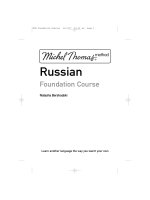
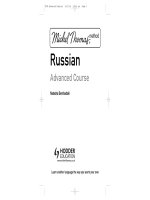
Russian
Vocabulary Course
Natasha Bershadski
www.michelthomas.co.uk
MT RUSSIAN VOCABULARY:RUSSIAN 3/4/09 11:25 Page 1
To find out more, please get in touch with us
For general enquiries and for information about the Michel Thomas Method:
Call: 020 7873 6354 Fax: 020 7873 6325
Email:
To place an order:
Call: 01235 400414 Fax: 01235 400454 Email:
www.michelthomas.co.uk
You can write to us at:
Hodder Education, 338 Euston Road, London NW1 3BH
Visit our forum at:
www.michelthomas.co.uk
Unauthorized copying of this booklet or the accompanying audio material is prohibited,
and may amount to a criminal offence punishable by a fine and/or imprisonment.
First published in UK 2009 by Hodder Education, part of Hachette UK, 338 Euston Road,
London NW1 3BH.
Copyright © 2009. In the methodology, Thomas Keymaster Languages LLC, all rights reserved.
In the content, Natasha Bershadski.
No part of this publication may be reproduced or transmitted in any form or by any means,
electronic or mechanical, including photocopy, recording, or any information storage and retrieval
system, without permission in writing from the publisher or under licence from the Copyright
Licensing Agency Limited. Further details of such licences (for reprographic reproduction) may be
obtained from the Copyright Licensing Agency Limited, Saffron House, 6–10 Kirby Street, London
EC1N 8TS, UK.
Cover image © Photodisc/Stockbyte/Photo library
Typeset by Transet Limited, Coventry, England.
Printed in Great Britain for Hodder Education, an Hachette UK company, 338 Euston Road,
London NW1 3BH.
Impression 10 9 8 7 6 5 4 3 2 1
Year 2012 2011 2010 2009
ISBN 978 0340 98324 9
3
Contents
Introduction 3
User guide 11
Track listing 11
Reference 48
Word families 56
English–Russian glossary 59
The Russian alphabet 72
Introduction
Добро пожаловать!
Welcome! Welcome, to those of you who have
completed the Michel Thomas Method Russian courses by Natasha
Bershadski and to those of you who are about to experience a uniquely exciting
way to learn and improve your Russian!
My name is Rose Lee Hayden, and I had the distinct privilege of working
closely with Michel Thomas for several decades, in particular, teaching what
he referred to as his ‘second phase’ language courses. This ‘second phase’
built upon the structural knowledge of the language that Michel Thomas so
brilliantly provided in his foundation courses. As Michel Thomas himself
often said, ‘I built the house, but it is up to you to decorate it!’
And decorate it we shall in this Michel Thomas Method: Russian
Vocabulary Course that reinforces and expands on what you have already
learned having completed the Michel Thomas Method Russian courses.
And for those of you who have not done these courses, I urge you to do so.
You will be surprised at how painlessly they will teach or reinforce your
Russian and will introduce you to a unique method of language learning.
Succeed with the
and learn another language the way you learnt your own
Developed over 50 years, the amazing teaching method of the world’s
greatest language teacher completely takes the strain out of language
learning. Michel Thomas’ all-audio courses provide an accelerated method
for learning that is truly revolutionary.
MT RUSSIAN VOCABULARY:RUSSIAN 3/4/09 11:25 Page 2
4
At the outset, let me stress what this course does not attempt to do and
how it may differ a little from your previous experiences with the Michel
Thomas Method Russian courses. First, this course does not and cannot
re-teach the original courses, but rather builds directly on them. Therefore,
you may wish to review and keep reviewing your Michel Thomas Method
Russian courses to re-familiarize yourself with structural items and basic
vocabulary previously introduced by Natasha Bershadski.
Second, it is important to state that learning vocabulary is not the same as
learning structure, even though this course teaches vocabulary the Michel
Thomas way. You may find it helpful to review course content more
frequently. But let me reassure you that this more frequent review is no
reflection on your ability, but rather relates to the fact that you have moved
on to another level of instruction with vocabulary acquisition as its basic
goal. Throughout his ‘second phase’ instruction, Michel Thomas frequently
asked his students to review and reinforce the basics before moving on.
Because his methodology is cumulative, you must never rush ahead. Each
building block in some way relates to previous content and uses it in a
carefully constructed way.
Third, those of you who expect drills of each and every word in a category –
family members, days of the week, and so on – don’t! Michel Thomas
actively discouraged memorization, rote learning, writing out lists and any
and all related activities of this type. He knew that we do not learn this way,
and that the stress generated by these means actually impedes learning.
And while we would have liked to have been able to include more words in
a category, space on audio recordings is limited, and we had to make hard
choices with respect to what we could and could not include on the
recording, and so we have included many ‘bonus words’ only in this User
Guide. We did not want to waste valuable learning time at the expense of
introducing more strategic content designed to help you create words,
structures and habits of learning on your own.
I dedicate this course to the memory of Michel Thomas and to all of you
who have chosen to build your Russian vocabulary the Michel Thomas way.
Dr Rose Lee Hayden
Series Editor
5
Who was Michel Thomas?
Michel Thomas was head of the Michel
Thomas Language Centers and taught
languages for over 50 years, primarily in
New York, Beverly Hills and London until
his recent death, aged 90. A graduate of the
Department of Philology at the University of
Bordeaux and student of psychology at the
Sorbonne, his harrowing wartime
experiences escaping Hitler and fighting
with the French Resistance made mastering
languages a matter of survival for Michel
Thomas.
Michel Thomas dedicated his long professional life to probing the learning
process. He focused on the teaching and learning of foreign languages as a
perfect test case for his revolutionary learning system, one that made him
the world’s foremost language teacher to the celebrities, diplomats,
corporate executives as well as others seeking to acquire or enhance their
proficiency in another language.
What is the Michel Thomas Method?
The Michel Thomas Method is unlike anything you have ever experienced,
especially when you compare it with how languages are traditionally taught
in schools or universities. It produces startling results within a remarkably
short period of time, all without the need for books, drills, memorizing, or
homework. Michel Thomas believed that anyone can learn another
language having learned their own, and he developed his unique
methodology that proved this to be true for many thousands of students.
Learning a language the Michel Thomas way builds proficiency, self-
confidence and engages you right from the start. The Michel Thomas
Method breaks a language down to its component parts and presents these
structures in carefully planned sets of exercises that enable you to
reconstruct the language yourself, to form your own sentences that say what
you want, when you want. Almost without you realizing it, you will retain
and apply what you have learned and will be motivated to learn more.
MT RUSSIAN VOCABULARY:RUSSIAN 3/4/09 11:25 Page 4
6
Without the stress of memorization, note taking and homework, you can
relax and let language learning take place as nature intended.
But you have to experience the Michel Thomas Method to believe it. Within
hours you will be creating sophisticated sentences in a wide variety of
situations, as those of you know who have completed the Michel Thomas
language courses. These courses provided you with functional proficiency
in your chosen language and are the foundation upon which this Michel
Thomas Method: Vocabulary Course series builds, phrase by phrase,
the Michel Thomas way.
How did we come to develop this Michel Thomas Method:
Vocabulary Course series?
With nearly 1 million copies of Michel Thomas language courses sold in
the UK alone, and with thousands of enthusiasts who never thought they
could ever learn another language wanting ‘more Michel’, we at Hodder
Education are particularly pleased to offer this new course series that
preserves and extends the language teaching legacy of ‘The Language
Master’, Michel Thomas. Working with us right up to the moment of his
death aged 90, Michel Thomas was in the process of creating a series of
vocabulary courses building on his very successful language courses.
Reflecting his prior input, this series is the product of a new team of authors
and presenters who have either taught for Michel Thomas, or have utilized
his methodology in their own classrooms and professional courses.
With this series we hope to provide what Michel Thomas and his ever-
expanding number of ‘students’ would expect of us, both as educational
publishers and professionals who love languages, teaching them and
learning them. We dedicate this series and others that we will be developing
for schools, businesses and individuals from all walks of life to our much-
esteemed and beloved ‘Language Master’, Michel Thomas.
Who is this Michel Thomas Method: Russian Vocabulary Course for?
People who have already learned Russian with Michel Thomas
This Michel Thomas Method: Russian Vocabulary Course does just
what its name suggests: builds on the content Natasha Bershadski presented
in the Michel Thomas Method Russian Foundation and Advanced
7
Courses. This course covers over 900 words and everyday phrases within
the context of essential building blocks already presented by Natasha
Bershadski. You can both reinforce what you have already learned from
your Michel Thomas Method Russian courses and substantially increase
your Russian vocabulary the Michel Thomas way.
People who have learned Russian using other methods
You may have learned Russian before and want to brush up on it for a
holiday or business trip. Perhaps you are looking for a new approach to
help you with revision or to re-motivate you to dust off your Russian and
improve your proficiency. Either way, the Michel Thomas Method:
Russian Vocabulary Course will introduce you to a unique way of
acquiring language proficiency that will provide dozens of helpful ways to
build on what you already know. You will be able to increase your
vocabulary exponentially, will learn or review over 900 words and everyday
expressions, and will significantly boost your confidence in your ability to
speak, listen to, read and understand Russian.
You may find that it takes a while to get used to the Michel Thomas way of
teaching. It is innovative and quite unlike any other method you will have
come across. But once you have experienced the excitement of painless
learning the Michel Thomas way, you will be hooked!
What does this pack contain?
The pack comprises over five hours of recorded material on CD, plus this
User Guide that contains all the concepts, words and phrases presented in
the course. In these recordings, Natasha Bershadski will introduce concepts
that you will be learning, one by one, and will present helpful hints and
handy tools that you can then use to create your own phrases and increase
your Russian proficiency.
How are the recordings best used?
• Relax! Make yourself comfortable before playing the recordings and try
to let go of the tensions and anxieties traditionally associated with
language learning.
• Do not write or take any notes. Remove notebooks, pens,
dictionaries and anything else associated with traditional, school-based
language learning.
MT RUSSIAN VOCABULARY:RUSSIAN 3/4/09 11:25 Page 6
8
• Do not try to remember. While participating in the recording and
afterwards, it is important that you do not try to memorize specific words
or expressions. It is a basic principle of the Michel Thomas Method that the
responsibility for the student’s learning lies with the teacher. Your learning
is based on understanding, and what you understand you don’t forget.
• Interact fully with the recordings. Use the pause button and
respond out loud (or in a whisper, or in your head if you are in a public
place) before hearing the correct response. This is essential. You do not
learn by repetition but by thinking out the answers to each question; it is
by your own thought process that you truly learn and retain structure
and vocabulary.
• Give yourself time to think. You have all the time you need to think
through your response. Your pause button is the key to your learning! Be
sure to use it. We have inserted standard-length pauses for your
responses so as not to waste valuable recording time with long silences.
• Start at the beginning of the course. Whatever your existing knowledge
of Russian, it is important that you follow the way the Michel Thomas
Method builds up your knowledge of the language. The methodology is
cumulative and recursive so you must not rush ahead before you feel
comfortable that you have mastered a concept, phrase or word. This
vocabulary course also encourages you to take additional time to create
similar examples of your own to reinforce what is being presented.
• Do not get annoyed with yourself if you make a mistake.
Mistakes are part of the learning process; as long as you understand why
you made the mistake and you have the ‘aha’ reaction – ‘Yes, of course,
I understand now’ – you are doing just fine. If you made a mistake and
you do not understand why, you may have been daydreaming for a few
seconds. As noted, the course is structured so that you cannot go on
unless you fully understand everything. So just go back a little and pick
up where you left off.
• Stop the recording whenever it suits you. Breaks in the CD
recordings reflect the numbering and content listings in this User Guide.
This will help you locate items you wish to review and will enable you to
locate where you left off and where you wish to begin once again.
9
What can I expect to achieve?
The Michel Thomas Method Russian courses provided you with a
practical and functional use of the spoken language. Using the Michel
Thomas Method, this Russian Vocabulary Course introduces everyday
conversational language that will improve your communication skills in a
wide variety of situations, empowered by the ability to create your own
sentences and use the language naturally. With this additional practice and
review, plus over 900 words covered and the tools to create hundreds
more, your proficiency in Russian will be reinforced and strengthened as will
your self-confidence and desire to use your newly acquired Russian.
How can I go on to improve further?
Obviously, nothing compares with first-hand contact with native Russian
speakers. And while you may not think that this is possible for you, think
again. There are most likely many Russian speakers, Russian language clubs
and associations in your local area. You need not go to Moscow to find
them. A simple advert in the local newspaper or on a relevant website
offering to exchange English for Russian instruction may locate someone
you will enjoy knowing and practising with – but do think about your own
safety before giving away any personal details. As Michel Thomas noted, we
learn a lot more about our own language when we learn another.
Michel Thomas also recommended a little daily practice – 10–15 minutes –
and knew that this was worth more than several hours of cramming after a
period of time has gone by. We therefore encourage you to start reading,
especially newspaper and magazine interviews that reflect Russian as it is
actually being spoken rather than textbook versions of the language. You can
also keep up and extend your language by reading items in subject areas of
personal interest to you, or you can buy a Russian translation of your
favourite mystery writer. Michel Thomas knew and told you that the more you
read, the more things will fall into place. And as he warned, fight that
temptation to use your dictionary first and think last. You will be glad you did.
One last suggestion here. For really authentic practice, try to listen to
Russian radio and television programmes that you may be able to receive if
you live in a city or have satellite TV options. Relax and listen for gist, not
word by word. You can do it! And little by little you will understand what is
MT RUSSIAN VOCABULARY:RUSSIAN 3/4/09 11:25 Page 8
10
being said. We know that you will find it both rewarding and exciting to
practise your ever-improving Russian!
What do Michel Thomas’ students have to say?
Academy award winning director and actress, Emma Thompson (as
quoted in The Guardian):
‘The excitement of learning something new was overwhelming.
Michel not only taught me Spanish, he opened my eyes to the
possibilities of a completely different kind of learning. Michel takes
the burden off the student and upon himself … Learning Spanish with
Michel was the most extraordinary learning experience of my life –
it was unforgettable.’
Irish dance and music sensation, Michael Flatley (as quoted in The
Linguist):
‘He [Michel Thomas] was a genius … a born teacher and thinker.’
Customer feedback on the Michel Thomas Method
‘I am writing to congratulate you on the highly original and successful
language courses by Michel Thomas; I am currently working on
German and French, while my daughter, at my suggestion, has
bought the Italian course.’
R. Harris
‘I have now finished the eight cassette Italian course and would like to
say how pleased I am with it. I am a scientist, with all my neurons in
the side of my brain that deals with understanding, and next to none
on the side that deals with memory. This has meant my ability to
retain vocabulary and learn a language has been about as bad as it
comes. Against all odds, the Michel Thomas course has left me with a
real sense of achievement, and a tremendous basis for further
progress in learning Italian.’
T. A. Whittingham
‘He doesn’t put words in your mouth, he makes you work out the
words to say yourself.’
Angie Harper
11
User guide
The user guide comprises the following sections:
•Atrack listing in which are printed all the new words and structures as they
are heard for the first time. In addition, ‘extra’ sentences are given: these are
not on the recording, but allow you to practise the new structures and words
in slightly different contexts. These are presented in columns so that you can
work out the Russian for yourself. New words in these extra sentences are
listed in the glossary.
• In the reference section you will find more examples of structures, with
practice sentences.
• The word families section will help you find your way around the Russian
language, allowing you to work out the meanings and forms of new words as
you hear, read and need to say them.
• The glossary lists all the words that appear in the track listing.
• The Russian alphabet, with a pronunciation guide, is given at the end of the
user guide.
* denotes words that are not on the recording. In the track listing, these are
noted only the first time that they appear.
Stress in words of more than one syllable is shown by underlining: in the track
listing, on words that are not on the recording; in the days of the week and
months of the year, numerals and word families sections and in the
glossary, on all words.
Track listing
CD 1 Track 1
Introduction to the course and to the Michel Thomas Method.
Russian and English share a common ancestor: брат = ‘brother’; сестра =
‘sister’; я = ‘I’; ты = ‘you’ (singular, informal); мой = ‘my’ (masc.); два = ‘two’;
три = ‘three’.
один = ‘one’. Some words have come into Russian from German: бутерброд =
‘sandwich’; курорт = ‘resort’; бухгалтер = ‘accountant’, and others from French:
театр = ‘theatre’; этаж = ‘floor, storey’; туалет = ‘toilet’; душ = ‘shower’;
MT RUSSIAN VOCABULARY:RUSSIAN 3/4/09 11:25 Page 10
12
мода = ‘fashion’; мебель = ‘furniture’. The majority of foreign words in Russian
are from English: спорт = ‘sport’; политика = ‘politics’; парламент =
‘parliament’; бизнес = ‘business’; супермаркет = ‘supermarket’; имидж =
‘image’; пиар = ‘PR’; веб-сайт = ‘website’; студент = ‘student’; бизнесмен =
‘businessman’.
Some Russian words have been borrowed by English, too: самовар =
‘samovar’; бабушка = ‘grandmother’; спутник = ‘satellite, travel companion’.
The names Putin and Medvedev are derived from ordinary Russian words: путь
= ‘way’; в путь = ‘let’s go’; медведь = ‘bear’.
дача = ‘dacha, summer house’ comes from дать = ‘to give’; дума = ‘the Duma’
is from думать = ‘to think’.
CD 1 Track 2
Many Russian words are logically built up from a root with added prefixes and / or
suffixes. пере- is a prefix that is often equivalent to the English ‘re-’ in verbs:
передумать = ‘to change one’s mind, rethink’; переделать = ‘to redo, do again’;
передать = ‘to pass, transmit’. The prefix also appears on nouns: передача =
‘programme’. строить = ‘to build, construct’; перестроить = ‘to rebuild,
reconstruct’; стройка = ‘building site’; перестройка = ‘reconstruction, perestroika’.
-ка is a common suffix: тройка = ‘a sleigh pulled by three horses’ comes from
три = ‘three’.
слава = ‘glory’; слово = ‘word’; я узнал(а) новое русское слово = ‘I have
learnt a new Russian word’.
Neuter nouns end in -a in the plural, and the stress often shifts to the ending:
дело = ‘thing’; как дела? = ‘how are things?’; русские слова = ‘Russian words’.
фразы = ‘phrases’; скоро мы будем строить русские слова и фразы = ‘soon
we are going to build Russian words and phrases’.
словарь = ‘dictionary’; календарь = ‘calendar’; у тебя есть словарь? = ‘have
you (informal) got a dictionary?’; где можно купить хороший англо-русский
словарь = ‘where can one buy a good English–Russian dictionary?’
Everybody knows the Russian words Все знают русские слова
‘glasnost’ and ‘perestroika’. «гласность» и «перестройка».
Could you tell me (tell me), please, Скажите, пожалуйста, где вы
where you bought this dictionary? купили этот словарь?
13
CD 1 Track 3
понимать = ‘to understand’; они меня понимают = ‘they understand me’. Drop
the они = ‘they’ if no one in particular is meant: я говорю по-русски, и меня
понимают = ‘I speak Russian and I am understood’. ура! = ‘hooray!’
они зовут = ‘they call’; this verb follows the same pattern as идут = ‘they go’;
меня зовут Наташа = ‘my name is Natasha’ (literally, me (they) call Natasha).
как вас / тебя зовут? = ‘what is your name?’ (formal / informal); его / её зовут
= ‘his / her name is’.
Verbs have two forms – general and concrete; when both forms are written
together, the general form is written first: звать (general) / позвать (concrete) =
‘to call, invite’. The concrete future is formed from the concrete verb: я вас / тебя
позову = ‘I will call you’ (formal / informal). The command form (imperative) is
also often formed from the concrete verb: позовите меня = ‘call (for) me’;
позовите меня, когда вы будете готовы = ‘call for me when you are ready’
(literally, when you will be ready).
I know that they have a son and a Я знаю, что у них есть сын и дочь,
daughter, but I have forgotten what но я забыл(а), как их зовут.
(= how) their names are.
Don’t *forget (your) passport and ticket! Не забу
дь(те) паспорт и билет!
When the documents are (will be) Когда документы будут готовы,
ready you will be called. вас позовут.
Who is this *person, what is his name Кто этот человек, как его зовут и
and what does he want? что он хочет?
CD 1 Track 4
There is a small group of nouns ending in -мя which are neuter: имя = ‘(first)
name’; время = ‘time’; моё имя = ‘my name’.
фамилия = ‘surname’; как ваша фамилия? = ‘what is your surname?’
семья = ‘family’: у них большая семья = ‘they have got a big family’ (literally, by
them (there is) a big family).
Feminine nouns end in -a: мама = ‘mummy, mum’. Some nouns denoting men
also end in -a: папа = ‘daddy, dad’; коллега = ‘colleague’ (male or female);
accompanying words go into the masculine form: мой папа = ‘my dad’; мой
коллега = ‘my colleague’ (male); моя коллега = ‘my colleague’ (female); мой
папа бизнесмен, а моя мама бухгалтер = ‘my dad is a businessman and my
MT RUSSIAN VOCABULARY:RUSSIAN 3/4/09 11:25 Page 12
14
mum is an accountant’. The endings of feminine nouns change in the ‘whom or
what’ situation: я люблю маму и папу = ‘I love mum and dad’.
I know his dad well, his name is Я хорошо знаю его папу, его зовут
Andrei and he is a good accountant. Андрей, и он хороший бухгалтер.
Everybody knows his name and Все знают его имя и фамилию,
surname because he is our потому что он наш коллега.
colleague.
My son and daughter very much Мои сын и дочь очень любят
love (their) grandparents бабушку и де
душку.
(grandmother and *grandfather).
My *parents are still working (still work). Мои родители ещё работают.
CD 1 Track 5
друг = ‘friend’; подруга = ‘female friend’; друзья = ‘friends’.
другой = ‘different, other’; другой путь = ‘a different way’; покажите мне,
пожалуйста, другую книгу = ‘could you please show me another book?’; это
другое дело = ‘that’s another matter, that’s different, that’s better’.
все мои друзья и коллеги будут там = ‘all my friends and colleagues will be
there’.
The plural of вино = ‘wine’ ends in stressed -a: вина = ‘wines’. The plural of
some short masculine nouns ends in stressed -a, too: дома = ‘houses’ (when
the stress is on the first syllable, this means ‘at home’).
The concrete form of строить = ‘to build’ is построить: здесь скоро построят
новые дома = ‘here (they) will soon build new houses, new houses will be built
here soon’.
I have good friends here. They are Здесь у меня (есть) хорошие друзья.
all students. Они все студенты.
A new supermarket is being built here. Здесь строят новый супермаркет.
There is a *saying: “Tell (informal) me Есть погово
рка: «Скажи мне, кто
who is *your (informal) friend, and твой друг, и я скажу тебе, кто ты.»
I will tell you who you (informal) are.”
CD 1 Track 6
A few two-syllable masculine nouns have a plural ending in stressed -a:
паспорта = ‘passports’; номера = ‘numbers, hotel rooms’.
15
город = ‘town’; города = ‘towns’; я хочу увидеть русские города Новгород и
Волгоград = ‘I want to see (concrete form) the Russian towns (of) Novgorod and
Volgograd’.
тоже = ‘too, also, either’; я тоже = ‘me, too’ or ‘I, too’; я тоже так думаю = ‘I
think so too’; я тоже не знаю, куда мы поедем = ‘I don’t know either where we
will go (by vehicle)’.
в means ‘to’ or ‘in’ in Russian, according to different noun endings: мы поедем в
Москву = ‘we will go to Moscow’. This answers the question куда? = ‘where to?’
The ending after в when it means ‘in’ (the ‘location’ situation) is usually -e: в
городе Новгороде = ‘in the town of Novgorod’. This answers the question где? =
‘where’. Since this describes location, it is known as the locative case, or
alternatively the prepositional case, since it only ever follows a preposition.
Feminine nouns change the -a to an -e in the location situation: в Москве =
‘in Moscow’.
In the city there are parks and В городе есть парки и бульва
ры.
*boulevards.
Tomorrow we are going (will go) Завтра мы едем (поедем) в
to Petersburg. Петербург.
In Petersburg we will go to the В Петербурге мы пойдём в
Hermitage. Эрмитаж.
In Moscow the *transport works well. В Москве транспорт работает
хорошо.
Is there furniture in the *room? В комнате есть мебель?
CD 1 Track 7
в = ‘in, to’: я еду в Москву; я буду работать в Москве = ‘I am going to
Moscow; I will be working in Moscow’; в Лондоне = ‘in London’; в Лондон = ‘to
London’.
банк = ‘bank’; банка = ‘jar, tin’; в банке = ‘in a bank’ or ‘in a jar’.
в номере есть душ? = ‘is there a shower in the room?’; в автобусе есть
кондиционер? = ‘is there air conditioning in the bus?’; у них прогресс в работе
= ‘they (have) made progress in work’.
магазин = ‘shop’; что вы купили в магазине? = ‘what did you buy in the
shop?’; мне надо пойти в магазин купить чай и кофе = ‘I need to go to the
shop to buy tea and coffee’.
MT RUSSIAN VOCABULARY:RUSSIAN 3/4/09 11:25 Page 14
16
Please don’t smoke in the room. Не курите, пожалуйста, в комнате.
You can smoke on the *balcony. Вы можете курить на балко
не.
Are there Russian restaurants in В Лондоне есть русские рестораны?
London? – Of course there are. – Конечно, есть.
Time is *money. Время – деньги.
He is a *millionaire; he has a lot of Он миллионер, у него большие
(big) money in the bank. деньги в банке.
Not everything can be bought Не всё можно купить за деньги.
*for money.
CD 1 Track 8
жить = ‘to live’: квартира = ‘flat’; вы живёте в квартире иди в доме? = ‘do
you live in a flat or in a house?’
дача uses на (= literally ‘on’): сейчас они живут на даче = ‘they live at the
dacha now’; в мае они поедут на дачу = ‘in May they will go to the dacha’
(май = ‘May’; в мае = ‘in May’). Other words which take на are: работa =
‘work’; Нева = ‘Neva’ (and other rivers); рынок = ‘market’; завтра мы не идём
на работу = ‘tomorrow we are not going to work’; сейчас все на работе =
‘everybody is at work now’; Петербург – город на Неве = ‘Petersburg is a city
on the Neva’; на рынке можно купить все продукты = ‘one can buy all the
food in the market’ (the ‘o’ of рынок is dropped) (продукты = ‘food(stuffs),
products’).
Who are these *people and what are Кто эти лю
ди и что они здесь
they doing here? – They live here. делают? – Они здесь живут.
Chekhov lived in Yalta Yalta is a Чехов жил в Ялте. Ялта – (это)
*resort town. курортный город.
Now I have a big family and we live Сейчас у меня большая семья, и мы
in a house and not in a flat. живём в доме, а не в квартире.
The city (of) Volgograd is on the Volga. Город Волгоград – на Волге.
They *buy (general verb) all the Они покупают все продукты
food in the market. на рынке.
CD 1 Track 9
кухня = ‘kitchen, cuisine’: на кухне = ‘in the kitchen’ (literally, on the kitchen);
русская национальная кухня = ‘Russian national cuisine’.
улица = ‘street’; на улице = ‘in the street, outside’; в Москве нельзя пить пиво
на улице = ‘in Moscow you’re not allowed to drink beer in the street’.
17
о = ‘about’ takes the location situation endings: о доме = ‘about the house, about
home’; сейчас oн живёт далеко, но он всё время думает о домеиосемье=
‘he now lives far away but he thinks about (his) home and family all the time’.
чтo = ‘what’; o чём? = ‘about what?’; в чём? = ‘in what?’; в чём проблема? =
‘what’s the problem’ (literally, in what is the problem); в чём дело? = ‘what’s the
matter?’
дом = ‘house, home’: дома = ‘at home’; домой = ‘to home (direction)’; в доме =
‘in the house’.
на автобусе = ‘by bus, on the bus’; машина = ‘car’; на машине = ‘by car’;
поезд = ‘train’; на поезде = ‘by train’.
When you want to say ‘come’ or ‘go’ when talking about public transport, you
use the ‘walking’ verb: идёт поезд = ‘the train is coming / going’.
At home we think about work and at Дома мы думаем о работе, а на
work we think about home. работе мы думаем о доме.
Russians like to drink tea in the kitchen. Русские любят пить чай на кухне.
I am not in a rush. Let us go not by Я не спешу. Давайте поедем не на
tube, but by bus. метро, а на автобусе.
Could you please tell me, is this Скажите, пожалуйста, этот автобус
bus going into town? идёт в город?
All people want to live in *peace. Все люди хотят жить в ми
ре.
All people in the *world want to live well. Все люди в мире хотят хорошо жить.
There was an interesting *discussion В газете была интересная дискуссия
about the *crisis in the economy. о кризисе в экономике.
CD 1 Track 10
The suffix -ка turns masculine nouns denoting people into feminine ones:
студент = ‘(male) student’; студентка = ‘(female) student’; спортсмен =
‘sportsman’; спортсменка = ‘sportswoman’. маршрут = ‘route’; маршрутка =
‘minibus’ (short for маршрутное такси = (literally) ‘routed taxi’. поездка = ‘trip’;
завтра у нас будет поездка в Новгород на автобусе = ‘tomorrow we will have
a trip to Novgorod’. футболка = ‘t-shirt’; девушка = ‘girl’. Use this word when
addressing female shop assistants, waitresses etc: девушка, пожалуйста,
покажите мнe эту футболку = ‘Miss, could you show me this t-shirt, please?’
Feminine nouns ending in -ия have the ending -ии in the location situation:
Россия = ‘Russia’; в России = ‘in Russia’; в Британии = ‘in Britain’; в Германии
= ‘in Germany’.
MT RUSSIAN VOCABULARY:RUSSIAN 3/4/09 11:25 Page 16
18
конституция = ‘constitution’; компания = ‘company’; презентация =
‘presentation’; oни работают в компании «Газпром» = ‘they work in the
company “Gazprom”’; вы тоже были на презентации? = ‘were you at the
presentation, too?’
The same -ии ending (location situation) is used after o = ‘about’ for feminine
nouns ending in -ия: я сейчас читаю книгу о России = ‘I am now reading a
book about Russia’.
Where is this minibus going? Куда идёт эта маршрутка?
In Russia (they like) *both the theatre В России любят и театр, и кино.
and the cinema.
I (have) read an interesting book Я читал(а) интересную книгу о
about the revolution in Russia. революции в России.
On the photo are my family and На фотографии – моя семья и мои
my friends at the dacha. друзья на даче.
My name is …, I am an American Меня зовут …, я американский
businessman; here is my бизнесмен, вот моя визи
тка.
*business card.
Excuse me, have you got a Извините, у вас есть программка?
*theatre programme?
CD 1 Track 11
Nouns ending in a soft sign can be either masculine or feminine (most are
feminine). Masculine nouns ending in a soft sign include словарь = ‘dictionary’
and кремль = ‘Kremlin’. In the location situation their ending changes from soft
sign to -e: в словаре = ‘in the dictionary’; в кремле = ‘in the Kremlin’. Feminine
soft-sign-ending nouns in the location situation change the soft sign to -и:
площадь = ‘square’, Сибирь = ‘Siberia’: на площади = ‘in / on the square’; в
Сибири = ‘in Siberia’; мы хотим узнать всё о Сибири = ‘we would like to find
out everything about Siberia’.
путь = ‘way’ in the location situation ends in -и: в пути = ‘on the way’; поезд
ещё в пути = ‘the train is still on its way’; время в пути = ‘travelling time’.
When saying to where you are going, feminine nouns ending in -ия change to
-ию: в Россию = ‘to Russia’. But feminine nouns ending in a soft sign do not
change at all in the ‘to where’ situation: я хочу поехать в Сибирь = ‘I want to go
to Siberia’.
19
The *Russian president works in Российский президент работает
the Kremlin. в Кремле.
I don’t like to speak about politics, Я не люблю говорить о политике,
let’s talk (*have a talk) about sport. давайте поговори
м о спорте.
They don’t recommend me to go Мне не рекомендуют ехать
to Siberia in *December. в Сибирь в декабре.
CD 1 Track 12
ждать = ‘to wait’ (general form): я буду вас ждать = ‘I will wait for you’; я жду =
‘I wait, am waiting’. The concrete form of this verb is подождать: подождите
меня, пожалуйста = ‘wait for me, please’ (imperative).
пока = ‘while’; пока вы ждёте, вы можете выпить кофе = ‘while you’re
waiting, you can have coffee’. пока also means ‘bye!’
увидимся завтра = ‘see you tomorrow’ (literally, we will see each other)
(reflexive verb).
I don’t like waiting: time is money. Я не люблю ждать: время – деньги.
Wait for me in the *corridor. Подождите меня в коридо
ре.
While we wait we can have a chat Пока мы ждём, мы можем
about the trip. поговорить о поездке.
Bye! I think we’ll soon see each other. Пока! Я думаю, (что) мы скоро
увидимся.
CD 1 Track 13
уже = ‘already’; вы уже готовы? так быстро? = ‘are you already ready? so
quickly?’; я вас жду уже час = ‘I’ve been waiting for you for an hour’ (literally,
already an hour).
давно = ‘for a long time’; уже давно = ‘for a long time now’ (literally, already for
a long time); я уже давно живу в Москве = ‘I have already been living (I
already live) in Moscow for a long time’. давно also means ‘a long time ago’; это
было давно, и я уже забыл(a) = ‘that was a long time ago, and I’ve already
forgotten’; недавно = ‘not long ago, recently’.
старый = ‘old’; новый = ‘new’; я люблю эту старую традицию = ‘I love this old
tradition’. модный = ‘fashionable’; старомодный = ‘old-fashioned’; стиль (masc)
= style; старомодный стиль = ‘old-fashioned style’.
MT RUSSIAN VOCABULARY:RUSSIAN 3/4/09 11:25 Page 18
20
I like the flat, but the furniture is Мне нравится квартира, но мебель
old-fashioned (there). We (will) need старомодная (но там старомодная
to buy new furniture. мебель). Нам надо (будет) купить
новую мебель.
We have been waiting for you for Мы вас уже давно ждём.
a long time now.
It was a long time ago, at that time Это было давно, тогда
я ещё не
(*then) I did not speak Russian yet. говорил(а) по-русски.
I don’t understand what the problem Я не понимаю, в чём проблема.
is. While you were waiting you could Пока вы ждали, вы могли (бы)
have had a chat about the project. поговорить о проекте.
My parents are already old, they Мои родители уже старые, они
haven’t been working for a long давно не работают.
time now.
It is a *young city and young people Это молодой город там живут
live there. молодые люди.
Why is this young man smoking? Почему этот молодой человек
Smoking is not allowed here. курит? Здесь нельзя курить.
Young man, don’t smoke, please! Молодой человек, не курите,
пожалуйста!
CD 2 Track 1
Russian words have an ending to convey the sense of the English ‘of something
or somebody’, called the genitive case. For masculine and neuter nouns, add -а
(or occasionally -я): центр города = ‘city centre’ (literally, centre of the city);
номер телефона = ‘telephone number’; кто автор проекта? = ‘who is the
author of the project?’; карта города = ‘city map’; я люблю музыку
Шостаковича = ‘I love Shostakovich’s music’; багаж = ‘luggage’; регистрация
багажа = ‘luggage check-in’. Note that the stress is on the final -a in багажа =
‘of the luggage’.
In Russian, an -a at the end of a noun might mean it is a feminine noun in the
ordinary or dictionary form (nominative case), e.g. проблема = ‘problem’, or that
it is the ‘of what’ situation (genitive case) for a masculine or neuter noun:
проблема терроризма = ‘the problem of terrorism’ (the dictionary form of
‘terrorism’ is терроризм).
We need to buy a map of the city. Нам надо купить карту города.
Do you like music by Bach Вы любите музыку Баха?
(music of Bach)?
21
I have been to (= was in) Chekhov’s Я был(а) в доме Чехова в Ялте и
House in Yalta and saw his room. видел его комнату.
You cannot (= it is not permitted) В центре города нельзя паркова
ть
to *park the car in the centre of машину.
the city.
One can buy tickets in the airport Билеты можно купить в кассе
*ticket office. аэропорта.
CD 2 Track 2
площадь Ленина = ‘Lenin Square’; улица Чехова = ‘Chekhov Street’; на улице
Чехова = ‘in Chekhov Street’.
The opposite of есть = ‘there is, there are’ is нет = ‘there is not, there aren’t
(any)’, which is followed by the ‘of’ ending (genitive): в номере нет туалета и
душа = ‘there is no toilet and shower in the room’ (literally, there is no of toilet
and of shower). телевизор = television; бензин = ‘petrol’; есть машина – нет
бензина = ‘there is a car – there is no petrol’.
у меня нет компьютера = ‘I haven’t got a computer’. директора сейчас нет, но
он скоро будет = ‘the director is not in now, but he will soon arrive’ (literally, he
soon will be).
вход = ‘entry’; нет входа = ‘no entry’; выход = ‘exit’; нет выхода = ‘no exit’. The
у as in у меня (= ‘I have’) also means ‘by’ and is followed by the ‘of’ ending
(genitive); у входа = ‘by the entrance’; у выхода = ‘by the exit’; я буду вас
ждать у входа в метро = ‘I’ll be waiting for you by the entrance to the metro’.
у президента = ‘the president has’; у президента (есть) дача в Сочи = ‘the
president has a dacha in Sochi’; дача президента = ‘the president’s dacha’.
Could you please tell me where Скажите (мне), пожалуйста, где
Yeltsin street is? улица Ельцина.
If you had a map of *Yekaterinburg, Если бы у вас была карта
I would show / have shown you Екатеринбу
рга, я бы вам показал(а)
this street. эту улицу.
Why isn’t there a television in the Почему в номере нет телевизора?
hotel room?
I cannot work from home (= at home) Я не могу работать дома, потому что
because I have no computer. у меня нет компьютера.
I waited for you at the entrance to the Я ждал вас у входа в метро, а вы
metro and you were at the exit. были у выхода.
MT RUSSIAN VOCABULARY:RUSSIAN 3/4/09 11:25 Page 20
22
If it were not for the snow, we could Если бы не снег, мы могли бы
have parked the car by the entrance. запарковать машину у входа.
There is no air conditioning in the В машине нет кондиционера, но есть
car, but there is a *CD player. CD-пле
ер.
There is no balcony, but there is a В доме нет балкона, но есть гараж.
*garage in the house.
We have been working *together for Мы давно работаем вместе и хорошо
a long time and we understand понимаем друг друга.
*each other well.
CD 2 Track 3
The feminine endings -a or -я become -ы or -и in the ‘of’ situation: мандарины
Марины = ‘Marina’s mandarins’; у Марины – мандарины = ‘Marina has
mandarins’; мэр Москвы = ‘the mayor of Moscow’; директор фирмы = ‘the
director of the firm’ (фирма = ‘firm’).
у нас есть вода = ‘we have water’; у нас нет воды = ‘we have no water’; у
него нет семьи = ‘he doesn’t have a family’; у Тома нет дома; у Иры нет
квартиры = ‘Tom has no house; Ira has no flat’; у нас ещё нет информации =
‘we don’t have the information yet, we still don’t have the information’.
революция = ‘revolution’; площадь Революции = ‘Revolution Square’;
экскурсия = ‘excursion’; завтра не будет экскурсии, потому что нет
автобуса = ‘tomorrow there will be no excursion, because there is no bus’.
президент России сейчас в Америке = ‘the president of Russia is now in
America’; американский президент сейчас в России = ‘the American
president is now in Russia’: the ‘in a place’ ending (locative) and the ‘of’ ending
(genitive) are the same for feminine nouns ending in -ия.
They have an old dacha: there is У них старая дача, там нет ни газа,
*neither gas nor shower there. ни душа.
I cannot go there: it is far away, Я не могу поехать туда: это далеко,
and I don’t have a car. а у меня нет машины.
The ‘Revolution Square’ metro station Метро «Площадь революции» в
is in the centre of Moscow. центре Москвы.
I don’t have a map of Moscow. У меня нет карты Москвы.
We have neither a map of Moscow nor У нас нет ни карты Москвы, ни
the metro plan (= plan of the metro). плана метро.
The firm has a good *reputation. У фирмы хорошая репута
ция.
23
There is an opera and ballet theatre В городе есть театр оперы и балета.
(= theatre of opera and ballet) in
the city.
CD 2 Track 4
The ‘in a place’ (locative) and ‘of’ (genitive) endings are also the same for
feminine soft-sign-ending nouns: города Сибири = ‘the cities of Siberia’; в
квартире нельзя жить, потому что там нет мебели = ‘it’s impossible to live in
the flat because there is no furniture there’.
из = ‘from, out of’ is followed by the ‘of’ situation (genitive): из Петербурга =
‘from Petersburg’; реклама из газеты ‘advert from a newspaper’ (реклама =
‘advert’); привет из России = ‘greetings from Russia’.
We have students from Britain У нас (есть) студенты из Британии
and America. и Америки.
We will go from Moscow to Petersburg Мы поедем из Москвы в Петербург
by train. на поезде.
Where shall we go *after (followed Куда мы пойдём / поедем по
сле
by ‘of’ situation) breakfast? завтрака?
CD 2 Track 5
гостиница = ‘hotel’; в гостинице есть бар, но нет ресторана = ‘there is a bar,
but no restaurant, in the hotel’; мы пойдем / поедем на экскурсию в Кремль
из гостиницы = ‘we will go (on foot / by transport) on an excursion to the
Kremlin from the hotel’ (на = ‘on, to’ is used with activities, such as excursions).
гость = ‘guest, visitor’; в гости = ‘to see / visit friends’ (literally, to / into guests);
завтра мы идём в гости = ‘tomorrow we are going to visit friends’.
дети = ‘children’; школа = school; дети уже большие, oни скоро пойдут в
школу = ‘the children are already big, they will soon go to school’; все дети
любят зоопарк, но не все любят школу = ‘all children like the zoo, but not all
like school’ (зоопарк = ‘zoo’).
We now have visitors from New York. У нас сейчас гости из Нью-Йорка.
The hotel is not *far from the city centre Гостиница недалеко
от центра города
and the airport. и аэропорта.
I have parked the car not far from Я запарковал(а) машину недалеко
the hotel. от гостиницы.
MT RUSSIAN VOCABULARY:RUSSIAN 3/4/09 11:25 Page 22
24
In *September all children go to school. В сентябре все дети идут в школу.
After school the children will go home. После школы дети пойдут домой.
After the opera everybody will go to После оперы все пойдут в ресторан.
the restaurant.
CD 2 Track 6
To express ‘together with something or somebody’ (instrumental case) in the
plural, the endings are -ами/-ями: с друзьями = ‘with friends’; с коллегами =
‘with colleagues’: у нас проблемы с компьютерами = ‘we have problems with
the computers’; контакт = ‘contact’; в контакте = ‘in contact’; конфеты =
‘sweets, chocolates’; мы будем пить чай с конфетами = ‘we will be drinking
tea with chocolates’. дома мы говорим по-русски с детьми = ‘at home we
speak Russian to (literally, with) the children’.
потом = ‘later, then’. The ending for ‘together with’ in the masculine and neuter
singular, the ending is -ом: коньяк с шоколадом = ‘cognac with chocolate’
(шоколад = ‘chocolate’); молоко = ‘milk’; сахар = ‘sugar’; кофе с бутербродом
= ‘coffee with a sandwich’; мёд = ‘honey’; мы хотим чай с мёдом = ‘we would
like tea with honey’; с другом = ‘with a friend’. встреча = ‘meeting,
appointment’; адвокат = ‘lawyer’; завтра у меня встреча с адвокатом =
‘tomorrow I have an appointment with the lawyer’. энтузиазм = ‘enthusiasm’: oн
работает с энтузиазмом = ‘he works with enthusiasm’.
молодец! = ‘well done!’
интерес = interest; я с интересом узнал(а) = ‘it was interesting to find out’
(literally, I with interest learnt).
Tomorrow the president has a *press Завтра у президента пресс-
conference and a meeting with конфере
нция и встреча с
journalists. журналистами.
Are you still in contact with friends Вы ещё в контакте с друзьями и
and colleagues from London? коллегами из Лондона?
I am glad that the young people are Я рад(а), что молодые люди
working with interest and enthusiasm. работают с интересом и энтузиазмом.
The director is busy now; he has Директор сейчас занят, у него
a meeting with the manager. встреча с менеджером.
I need to talk (have a chat / word) Мне надо поговорить с коллегами.
with colleagues.
He is still living with his parents. Он ещё живёт с родителями.
25
I am an *optimist and think that soon Я оптимист и думаю, что скоро все
all people will live in peace *with люди будут жить в мире друг
each other. с дру
гом.
CD 2 Track 7
The preposition без = ‘without’ is also followed by the ‘of’ endings (genitive):
вход без багажа = ‘entry without luggage’; без меня = ‘without me’; нельзя
жить без воды = ‘it’s impossible to live without water’; без оппозиции нет
демократии = ‘without opposition there is no democracy’ (оппозиция =
‘opposition’; демократия = ‘democracy’); без работы = ‘without work’.
без can also be used as a prefix before adjectives: безработный =
‘unemployed, an unemployed person’; безработные = ‘(the) unemployed’
(plural); бездомный = ‘homeless, a homeless person’; безвыходный =
‘hopeless’ (literally, without exit); безвыходная ситуация = ‘hopeless situation’.
It’s not allowed (not possible) to Нельзя входи
ть / войти в поезд
*enter the train without a ticket. без билета.
He has long been out of (= without) Он уже давно без работы, но
work; but the situation is not hopeless. ситуация не безвыходная.
One can find out all about the work Можно узнать всё о работе
of Parliament from the newspaper. парламента из газеты.
Both in London and in Moscow there И в Лондоне, и в Mоскве есть
are unemployed and homeless (people). безработные и бездомные.
CD 2 Track 8
с чем? = ‘with what?’; c чем вы будете (пить) чай, с молоком или с
лимоном? = ‘what will you have tea with, with milk or lemon?’ (лимон =
‘lemon’); с кем? = ‘with whom?’; c кем вы были в ресторане? = ‘who were you
in the restaurant with?’; со мной = ‘with me’ (the extra ‘o’ is to make it easier to
pronounce); с тобой = ‘with you’.
The ‘together with’ (instrumental) ending for feminine nouns ending in -a is -ой: с
подругой = ‘with a (female) friend’; с сестрой = ‘with (my) sister’; мы с сестрой
= ‘my sister and I’ (literally, we with sister).
с братом = ‘with (my) brother’; с ним = ‘with him’. с ними = ‘with them’; с ней =
‘with her’; мы с ними (с ним / с ней) друзья = ‘we are friends with them (with
him / with her)’.
MT RUSSIAN VOCABULARY:RUSSIAN 3/4/09 11:25 Page 24
26
The ‘together with’ (instrumental) form of soft-sign-ending feminine nouns is -ью:
с мебелью = ‘with furniture’; из России с любовью = ‘from Russia with love’
(любовь = ‘love’).
The children live with the grandparents Дети живут с бабушкой и дедушкой
at the dacha and not with (their) на даче, а не с родителями в городе.
parents in the city.
One cannot buy love for money. Нельзя купить любовь за деньги.
I like the music from the film Я люблю музыку (мне нравится
‘From Russia with Love’. It is very музыка) из фильма «Из России с
*beautiful. любовью». Она очень краси
вая.
My friend and I are going to see Мы с другом идём в гости, (Ты)
friends (to guests). Will you come пойдёшь с нами?
with us?
CD 2 Track 9
хлеб = ‘bread’; мясо = ‘meat’; рис = ‘rice’; салат = ‘salad’; c чем вы будете
мясо, с рисом или салатом? = ‘what will you have meat with, rice or salad?’; c
мясом = ‘with meat’. рыба = ‘fish’; курица = ‘chicken’; пицца = ‘pizza’;
бутерброд с рыбой = ‘fish sandwich’ (literally, sandwich with fish); винегрет =
‘beetroot salad’.
диета = ‘diet’; на диете = ‘on a diet’; торт = ‘cake’; я на диете, я не буду есть
торт = ‘I am on a diet, I won’t eat the cake’.
The verb есть = ‘to eat’ is irregular: я не ем мясо, но я люблю рыбу = ‘I don’t
eat meat, but I like fish’. Коммунисты говорили: «Кто не работает, тот не ест»
= ‘Communists used to say “who doesn’t work, doesn’t eat”‘ (literally, that one
doesn’t eat); русские едят суп с хлебом, но в Англии обычно едят суп без
хлеба = ‘Russians eat soup with bread, but in England they usually eat soup
without bread’ (Англия = ‘England’).
What would you like (your) sandwich С чем вы хотите (ты хочешь)
with, with *sausage (salami) or *cheese? бутерброд, с колбасо
й или (с) сыром?
I don’t eat cheese: I am allergic (by me Я не ем сыр: у меня аллергия на
allergy) to cheese. I want a sandwich сыр. Я хочу бутерброд с икрой.
with *caviar.
I have changed my mind: I will Я передумал(а): я буду мясо не с
have meat not with rice, but with рисом, а с макаронами.
*pasta.
27
What do you usually eat for breakfast? Что вы обычно едите на завтрак?
When I am in a rush I don’t eat anything.Когда я спешу, я ничего не ем.
My friend doesn’t eat meat – Мой друг / моя подруга не ест мясо,
he / she is a *vegetarian. он вегетариа
нец / она вегетарианка.
CD 2 Track 10
много = ‘a lot, much’; много хлеба = ‘a lot of bread’; много воды = ‘a lot of
water’; много багажа = ‘a lot of luggage’; немного = ‘not much, a little’; я
немного устал(а) = ‘I am a little tired’.
обед = ‘dinner, lunch’; на обед = ‘for dinner’. завтрак = ‘breakfast’; завтракать
/ позавтракать = ‘to have breakfast’; обедать / пообедать = ‘to have lunch’; я
обычно обедаю с коллегами на работе = ‘I usually have lunch with colleagues
at work’.
пить = ‘to drink’: я не пью водку = ‘I don’t drink vodka’; сок = ‘juice’;
минеральная вода = ‘mineral water’.
тост = ‘toast’; за вас! = ‘to you!’; за вашу семью! = ‘to your family!’; за
встречу! = ‘to our meeting!’; встречу is also the future verb, meaning ‘I will
meet’; я вас встречу на вокзале = ‘I will meet you at the station’.
Let us have a drink to (our) meeting! Давайте выпьем за встречу!
To y o u ( formal), to your family and За вас, за вашу семью и за нашу
to our meeting in Moscow! встречу в Москве!
I can’t go home, I still have a Я не могу идти домой, у меня ещё
lot of work. много работы.
We still have a lot *of time. У нас ещё (есть) много вре
мени.
So much work, so *little time. Так много работы, так мало времени!
In the *rush hour there are a lot В час пик в транспорте много людей.
*of people in the transport.
After lunch children sleep. После обеда дети спят.
He has a lot *of money in the bank. У него много денег в банке.
I am tired and want to *sleep. Я устал(а) и хочу спать.
CD 2 Track 11
вкусный = ‘tasty’; русский хлеб очень вкусный = ‘Russian bread is delicious’;
спасибо, очень вкусно = ‘thank you, it’s delicious’; вкус = ‘taste’; у неё
хороший вкус = ‘she has good taste’; безвкусный = ‘tasteless’ (literally,
without tasty).
MT RUSSIAN VOCABULARY:RUSSIAN 3/4/09 11:25 Page 26
28
кусок = ‘piece’; кусок пиццы = ‘piece of pizza’; кусок торта = ‘piece of cake’.
закуска = ‘starter’; на закуску = ‘as a starter’.
сам = ‘self, oneself’; он сам = ‘he himself’; она сама = ‘she herself’; они сами =
‘they themselves’; я сделаю всё сам(а) = ‘I will do everything myself’; спасибо,
я сам(а) = ‘thank you, I will do it myself’. самовар = ‘samovar’ (literally, self-
boiler); самогон = ‘home-made vodka’; самолёт = ‘plane’; когда ваш самолёт?
= ‘when is your flight?’ (literally, plane); самодельный = ‘self-made, home-made’.
I am *learning (studying) Russian Я сам(а) изуча
ю русский.
myself.
We will meet you ourselves. Мы сами вас встретим.
I like cooking (= to cook). When we Я люблю готовить. Когда у нас гости,
have visitors I myself buy everything я сам(а) всё покупаю и готовлю
and prepare a tasty dinner. вкусный обед.
*School breakfasts are not very tasty. Школьные завтраки не очень
вкусные.
Give me, please, a big piece of pizza: Дайте мне, пожалуйста, большой
I am very *hungry. кусок пиццы: я очень голодный
(голодная) / хочу есть.
My son eats a lot of meat, Мой сын ест много мяса, он всё
he is hungry all the time. время голодный.
I cannot sleep on the plane. Я не могу спать в самолёте.
CD 2 Track 12
The ending of the number один = ‘one’ changes according to the following noun:
один журнал = ‘one journal’; одна книга = ‘one book’; одна минута = ‘one
minute’; одно слово = ‘one word’. одно другое = ‘one thing another thing’;
ещё один = ‘one more, another one (literally, yet one)’; eщё один кусок,
пожалуйста = ‘one more piece, please’. Use this if you want more of the same,
but if you want something different, say дайте другой кусок пожалуйста = ‘give
me a different piece, please’. ещё одно = ‘one more thing’. один also means
‘alone, on one’s own’; я один (одна) = ‘I am alone’; вы живёте один (одна)? =
‘do you live alone?’
Can I have another piece of cake? Можно ещё один кусок торта?
It is delicious. Он очень вкусный.
I don’t like this T-shirt very much. Could Мне не очень нравится эта
you show me a different one, please. футболка. Покажите мне,
пожалуйста, другую.
29
*Many Russian business people Многие русские бизнесмены хотят
want to live in London. жить в Лондоне.
They say he has bought another Говорят, он купил ещё один
football club. футбольный клуб.
CD 3 Track 1
пока мы здесь одни, скажите мне пожалуйста = ‘while we are alone here,
tell me please ’ один also has a ‘who or what form’ (accusative) in the
feminine: дайте мне эту книгу = ‘give me this book’; oдну минуту! / oдну
минутку! = ‘one moment, just a minute’. Here, the ‘who or what form’ is used
because there is a verb implied (e.g. ‘wait a moment’, or ‘give me a moment’).
одни can also mean ‘some people’: одни другие = ‘some people others
’; одни любят готовить, другие любят есть = ‘some people like to cook,
others like to eat’.
что ещё? = ‘what else?’; кто ещё? = ‘who else?’; куда ещё? = ‘where else?’
(direction, i.e. ‘to where else?’); где ещё? = ‘where else?’ (location, literally, in
where else).
четыре = ‘four’. The numbers 2, 3 and 4 are followed by a noun in the ‘of’
situation (genitive case): я уже жду четыре часа = ‘I have already been waiting
for four hours’; «Три сестры» Чехова = ‘The Three Sisters by Chekhov’ (literally,
of Chekhov).
The feminine form of the number 2 is две; feminine nouns following it also take
the ‘of’ ending (genitive): две сестры = ‘two sisters’; две минуты = ‘two minutes’.
I have two brothers and one sister. У меня два брата и одна сестра.
And he / she has two sisters and А у него / неё две сестры и
one brother. один брат.
There are two rooms and a big В квартире две комнаты и большая
kitchen in the flat. кухня.
What else would you like to know Что ещё вы хотите узнать?
(find out)?
CD 3 Track 2
правда = ‘truth’; said with a rising intonation правда?, it means ‘really?’;
неправда = ‘lie, untruth’; может быть, они говорят правду = ‘maybe they are
telling the truth’; не может быть! = ‘I don’t believe this, that’s not possible’
(literally, not maybe).
MT RUSSIAN VOCABULARY:RUSSIAN 3/4/09 11:25 Page 28
30
прав = ‘right’: он прав = ‘he is right’; она права = ‘she is right’; вы правы, мы
можем сделать это сами = ‘you are right, we can do it ourselves’. в принципе
вы правы = ‘in principle you are right’ (принцип = ‘principle’). время покажет,
кто был прав = ‘time will tell (show) who was right’.
право = ‘the right, law’; права (plural) = ‘rights’, ‘driving licence’: у нас есть
права = ‘we have rights’; у вас есть права? = ‘have you got a driving licence?’;
вот мои права = ‘here is my driving licence’.
направо = ‘on / to the right’; налево = ‘on / to the left’; правый = ‘right, right-
wing’; левый = ‘left, left-wing’; правая партия = ‘right-wing party’; левая газета
= ‘left-wing newspaper’.
In principle there is everything. В принципе всё есть. Где этот
Where is this ‘principle’? (a *joke) принцип? (шу
тка)
In Russia there are both left-wing В России есть и левые, и правые
and right-wing parties. партии.
Of course I have a driving licence, Конечно, у меня есть права, но я
but I forgot it (them) at home. забыл(а) их дома.
Is it true that the children have built Это правда, что дети сами
this car themselves? построили эту машину?
I don’t believe this! Не может быть!
If you go to the right you will see a Если вы пойдёте направо, вы
big square, if you go to the left you увидите большую площадь, если вы
will see a *church and *straight пойдёте налево, вы увидите
ahead is the *central railway station. церковь, а прямо – центральный
вокзал.
CD 3 Track 3
говорят = ‘they say’ (i.e. people in general); говорят что завтра будет снег =
‘they say there will be snow tomorrow’; как говорят, что будет, то будет = ‘as
they say, what will be, will be’ (literally, what will be, that will be). говорится = ‘it
is said’; this reflexive form of the verb is a synonym of говорят = ‘they say’.
час = ‘hour’; часто = often’: часто говорят, что бизнес – это риск = ‘they often
say that business is a risk’. часы (plural) = ‘watch, clock’: мои / ваши часы
спешат = ‘my / your watch is fast’ (literally, are in a rush).
рано = ‘early’; ещё рано, почему вы так спешите? = ‘it’s still early, why are
you in such a rush?’ поздно = ‘late’; рано или поздно = ‘sooner or later’
31
(literally, early or late); рано или поздно мы всё узнаем = ‘sooner or later we
will find out everything’.
ужин = ‘supper, evening meal’; ужинать = ‘to have supper’; обычно мы
завтракаем дома, обедаем на работе, а ужинаем в ресторане = ‘usually we
have breakfast at home, dinner at work and supper in the restaurant’.
As Russians often say, what’s past is Как часто говорят русские, что
past. (what was, that was). было, то было.
They had a lot of beer and they У них было много пива и они много
drank a lot. пили.
Sooner or later there will be Рано или поздно в России тоже
democracy in Russia as well, будет демократия и не будет
and there will be no corruption. коррупции.
Sooner or later there will be no Рано или поздно в мире не будет
terrorism or extremism in the world. терроризма и экстремизма.
Businessmen like to take risks (= to *risk). Бизнесмены любят рискова
ть.
CD 3 Track 4
трудный = ‘difficult’: трудный проект = ‘difficult project’; трудная работа =
‘difficult work / job’; трудное слово = ‘difficult word’; трудные слова = ‘difficult
words’; трудно идти = ‘difficult to walk’; трудно сказать = ‘difficult to say’; мне
трудно быстро идти, потому что я устал(а) = ‘it is difficult for me (literally, to
me difficult) to walk quickly because I am tired’; если вам не трудно = ‘if you
don’t mind, if it’s not too much trouble’ (literally, if to you not difficult). труд =
‘labour’; министр труда = ‘labour minister’ (literally, the minister of labour). с
трудом = ‘with difficulty / effort, hardly’; я с трудом его понимаю = ‘I hardly
understand him’. без труда = ‘without difficulty, effortlessly’; трудоголик =
‘workaholic’; продуктивный = ‘productive’; эффективный = ‘effective’.
трудоголики очень много работают, но часто они работают непродуктивно
и неэффективно = ‘workaholics work very much, but often they work
unproductively and ineffectively’.
Most adjectives that have been borrowed from English have the ending -ный:
национальный = ‘national’; активный = ‘active’; пассивный = ‘passive’;
спортивный = ‘sporty’; популярный = ‘popular’; интенсивный = ‘intensive’;
национальный герой = ‘national hero’.
Some words borrowed from English acquire a different meaning in Russian:
актуальный = ‘pressing, urgent’: сейчас экстремизм и национализм – очень
MT RUSSIAN VOCABULARY:RUSSIAN 3/4/09 11:25 Page 30
32
актуальные проблемы = ‘extremism and nationalism are very pressing
problems now’. нормально = ‘normally’; сейчас телефон работает нормально
= ‘now the telephone is working normally’. But when the English ‘normally’
means ‘usually’, use обычно = ‘usually, habitually’ in Russian: обычно мы
обедаем дома = ‘normally, we have dinner at home’.
сегодня = ‘today’; сегодня мы никуда не идём, потому что дети устали =
‘today we are not going anywhere because the children are tired’ (literally, we are
to nowhere not going).
интенсивная программа = ‘intensive programme’; музей = ‘museum’.
Working (= to work) with children is Работать с детьми интересно,
interesting but difficult. но трудно.
In the newspaper there is a lot of В газете много информации о рынке
information about the labour market труда.
(= market of labour).
If you don’t mind, (could you) book Если вам не трудно, закажите мне
me a taxi, please. такси, пожалуйста.
It’s a shame that I am working late Жаль, что я работаю поздно
today and cannot go to the theatre сегодня и не могу пойти с вами
with you. в театр.
CD 3 Track 5
никто ничего не знает = ‘nobody knows anything’. когда = ‘when’; никогда =
‘never’; я никогда не был(а) в Кремле = ‘I have never been to the Kremlin’
(literally, in the Kremlin).
я мог(ла) бы это сделать = ‘I could have done this, I could do this’.
хотеть = ‘to want’; я хотела бы поехать в Америку = I would like to go to
America’. The use of the particle бы, which has no meaning of its own, makes
the sentence hypothetical (subjunctive).
плохой = ‘bad’; плохо = ‘badly’; кондиционер в машине плохо работает = ‘the
air conditioning in the car is not working well’ (literally, working badly). мне плохо
= ‘I feel bad / ill / poorly’ (literally, to me badly / poorly); вам плохо? = ‘are you ill
/ poorly?’
день (masc.) = ‘day’: сегодня хороший день = ‘today is a nice day’; весь день
= ‘all day’; я былa в офисе весь день и я очень устал(a) = ‘I was in the office
all day and am very tired’. добрый = ‘kind’, ‘good’: добрый день! = ‘good day!’
33
утро = ‘morning’; доброе утро! = ‘good morning!’; вечер = ‘evening’; добрый
вечер! = ‘good evening!’; всё утро и весь вечер = ‘all morning and all evening’.
выходной (день) = ‘day off’; сегодня мы не работаем – у нас выходной
(день) = ‘today we are not working – we have a day off’.
I will never forget this interesting trip Я никогда не забуду эту интересную
to Siberia by train. поездку в Сибирь на поезде.
I have never been to Siberia and Я никогда не был в Сибири и тоже
would also very much like to go there. очень хотел(а) бы поехать туда.
They say it’s very beautiful and Говорят, там очень красиво и
interesting there. интересно.
I don’t understand anything in politics. Я ничего не понимаю в политике.
Let’s talk about music and literature. Давайте поговорим о музыке и
литературе.
When I have a day off I sleep Когда у меня выходной день, я всё
all morning. утро сплю.
*All the information and all the Вся информация и все документы
documents are already in the office. уже в офисе.
How can one book an *entry ticket Как можно заказать входно
й билет
to the club? в клуб?
CD 3 Track 6
добро пожаловать! = ‘welcome!’; жаль (or жалко ) = ‘a pity’; очень жаль
(жалко)! = ‘it’s a great pity’ (literally, very pity); как жаль (жалко)! = ‘what a
shame’ (literally, how pity); мне очень жаль, но = ‘I am very sorry, but …’
(literally, to me is pity).
утром = ‘in the morning’; вечером = ‘in the evening. днём = ‘in the afternoon, in
the daytime’ (from день = ‘day’); сегодня утром = ‘this morning’ (literally, today
in the morning); что вы делаете сегодня вечером? = ‘what are you doing
tonight?’
идти = ‘to go’ is used to mean ‘to be going now’, or ‘to be on one’s way’: мы
идём = ‘we are going, we are on our way’. When we mean ‘go habitually or
regularly’ we use the verb ходить = ‘to go’. Compare куда вы обычно ходите
вечером? = ‘where do you usually go in the evening?’ with куда вы идёте? =
‘where are you going (now)?’, which refers to a single journey.
There is a consonant change in the я = ‘I’ form; the д of ходить = ‘to go’
changes to ж, just like in видеть = ‘to see’, я вижу = ‘I see’: я хожу = ‘I go,
MT RUSSIAN VOCABULARY:RUSSIAN 3/4/09 11:25 Page 32
34
walk’; я часто хожу в театр, но я никогда не хожу в кино = ‘I often go to the
theatre but never go to the cinema’; дети уже большие, они ходят в школу =
‘the children are already big, they go to school’; мы любим ходить в гости =
‘we love to go to visit people’ (literally, go to guests). In all of these examples, we
are talking about habitual or frequent actions.
After work we often go to this popular После работы мы часто ходим в
*vegetarian restaurant. It is not этот популярный вегетариа
нский
*expensive and very good. ресторан. Он не дорогой и
очень хороший.
Tonight I am visiting friends and Сегодня вечером я иду в гости,
tomorrow morning I am going to work. а завтра утром – на работу.
We don’t often go (= not often go) Мы не часто ходим в кино, потому
to the cinema, because we have что у нас (есть) телевизор и
a television and a DVD-player at home. DVD-плеер дома.
It’s a shame that I am working Жаль, что я работаю поздно сегодня
late today and cannot go to the и не могу пойти с вами в театр.
theatre with you.
Normally I read in the evening but Обычно я вечером читаю, но сегодня
today I will go to bed (= go to sleep) я пойду спать после ужина.
after supper.
*How much is the entry ticket? Сколько стоит входной билет?
This is *worth buying (= to buy). Это стоит купить.
CD 3 Track 7
Most Russian verbs have one form in the present tense that translates the
English ‘I do’ and ‘I am doing’: я делаю = ‘I do, am doing’, я работаю = ‘I work,
am working’.
Going verbs in Russian have an extra ‘habitual’ general verb: я иду = ‘I am
going’, я часто хожу = ‘I often go’.
ходить = ‘to go (habitually)’ is used in the past to describe how you used to go,
or went regularly or often: когда мы жили на даче, мы часто ходили в лес =
‘when we lived at the dacha we often went (used to go) to the forest’ (лес =
‘forest, wood’). It is also used to describe a return trip: я ходил(a) в магазин =
‘I went to the shop, I’ve been to the shop’.
35
вчера = ‘yesterday’; вчера вечером мы ходили в ресторан = ‘yesterday
evening we went to the restaurant’.
Where did you go yesterday evening? Куда вы ходили (ты ходил) вчера
= Where were you yesterday evening? вечером? = Где вы были вчера
вечером?
We didn’t go anywhere because Мы никуда не ходили, потому что у
we had visitors. нас были гости.
While everybody was sleeping mum Пока все спали, мама ходила в
went to the shop to buy bread and milk. магазин и купила хлеб и молоко.
There was a lot of snow *in the forest В лесу
было много снега и было
and it was very beautiful. очень красиво.
We usually *go (= travel) to the Мы обычно ездим на дачу на
dacha by train. поезде.
I usually I go (drive) to work by Я обычно езжу на работу на машине,
car but yesterday I went (travelled) но вчера я ездил(а) на метро,
by tube because there was a потому что было много снега.
lot of snow.
CD 3 Track 8
самый = ‘the most’: самый большой = ‘the biggest’ (literally, the most big);
самый плохой = ‘the worst’; Новосибирск – самый большой город в Сибири
= ‘Novosibirsk is the biggest city in Siberia’.
больше = ‘more, any more’; спасибо, я больше не хочу = ‘thank you, I don’t
want any more’; я больше не могу = ‘I can’t any more’; больше ничего =
‘nothing else, nothing more’; раньше = ‘earlier, previously, before, in the past’
(from ранo = ‘early’); никто больше не ходит в кино = ‘nobody goes to the
cinema any more’; дальше = ‘further away, further’ (from далеко = ‘far away’);
нам надо знать, что делать дальше = ‘we need to know what to do next’
(literally, do further).
лучше = ‘better’; эта гостиница больше и лучше = ‘this hotel is bigger and
better’; чем = ‘than’; чем … тем = ‘the more the more ’; чем раньше, тем
лучше = ‘the earlier, the better’; намного = ‘much’(in comparisons); намного
больше = ‘much more, far more’; намного лучше = ‘much better’; лучший =
‘best’ (or самый лучший): мой лучший друг = ‘my best (male) friend’.
This is the biggest but worst hotel Это самая большая, но самая плохая
in town. Why did you book it? – гостиница в городе. Почему вы её
MT RUSSIAN VOCABULARY:RUSSIAN 3/4/09 11:25 Page 34
36
Because it is inexpensive. заказали? – Потому что она
недорогая.
We wanted to book a hotel in the Мы хотели заказать гостиницу в
centre of the city, but all the best центре города, но там все лучшие
rooms (were) already booked there. номера уже заняты.
They say that Russian bread is the Говорят, что русский хлеб – самый
tastiest in the world. вкусный в мире.
In the past there was even (= yet) Раньше было ещё больше
more *bureaucracy and *less бюрокра
тии и меньше демократии,
democracy than now. чем сейчас.
What next? (=What further?) Что дальше?
Better to do less, but better. Лучше сделать меньше, но лучше.
CD 3 Track 9
он рекомендует = ‘he recommends’; это меня интересует = ‘this interests me,
I am interested in this’; идея = ‘idea’; идеи = ‘ideas’; рекомендация =
‘recommendation’; комментарий = ‘comment’; меня не интересуют эти
проблемы = ‘I am not interested in these problems’; меня тоже = ‘me neither’
(literally, me too).
меня интересует can also mean ‘I would like to know, I would like to find out’;
меня интересует где … = ‘I would like to know where…’; его / её / их / тебя
интересует = ‘he / she is / they / you (informal) are interested’.
I am more interested in books about Меня больше интересуют книги о
theatre than cinema. And you? театре, чем о кино. А вас?
We are not interested in politics Нас больше не интересует политика.
any more. – Neither are we. We are – Нас тоже. Мы уста
ли от политики.
*tired of (= from) politics.
I have no more money in the bank У меня больше нет денег в банке и я
and I cannot *pay for the flat. не могу платить (заплатить)
за квартиру.
If you have no money now you can Если у вас сейчас нет денег, вы
pay later when you have money. можете заплатить потом, когда у
вас будут деньги.
There are *fee-paying schools in В России тоже есть платные школы.
Russia too.
Entry tickets are *free. Входные билеты бесплатные.
37
CD 3 Track 10
мне надо = ‘I need, I have to’ (literally, to me needed); нам / вам / тебе надо =
‘we / you (formal / informal) need’.
The informal ‘you’ endings follow the pattern of ‘I’: у меня = ‘I have’; у тебя =
‘you have’; со мной = ‘with me’; с тобой = ‘with you’; мне ‘to me’; тебе = ‘to
you’.
ему = ‘to him’; ей = ‘to her’; ему / ей надо = ‘he /she needs, has to’; им надо =
‘they need, they have to’.
нужно ‘needed’ means the same as надо: им нужно / надо спешить = ‘they
need to hurry’. However, надо = ‘needed’ is only used with verbs, whereas
нужно can also be used with nouns, in which case it has to agree with, or take
the ending of, the noun: ему нужна машина с кондиционером = ‘he needs a
car with air conditioning’ (feminine ending to agree with ‘car’). The masculine
form is нужен = ‘needed’: мне нужен ваш совет = ‘I need your advice’ (совет
= ‘council, advice’; Британский Совет = ‘British Council’; Советский Союз =
‘Soviet Union’); нам нужны хорошие специалисты = ‘we need good
specialists’.
We know you are a good specialist Мы знаем, что вы хороший
and we very much need your advice. специалист и нам очень нужен ваш
совет.
Where do you / will you *advise Где вы сове
туете / посоветуете мне
me to buy a new television? купить новый телевизор?
The British Council works in both Британский Совет работает и в
Moscow and Petersburg. Москве, и в Петербурге.
Is it true that Moscow is the most Это правда, что Москва самый
expensive city in *Europe? дорогой город в Европе?
I advise you (informal) to go to bed Я советую тебе рано пойти спать:
early: tomorrow you have an завтра у тебя интервью и
interview and a presentation. презентация.
Is Russia a member of (= enters) Россия входит в Европейский Союз?
the European Union?
This is an unusual situation – I need Это необычная ситуация – мне
to *consult a colleague. нужно посоветоваться с коллегой.
MT RUSSIAN VOCABULARY:RUSSIAN 3/4/09 11:25 Page 36
38
CD 4 Track 1
я даю = ‘I give’; я даю вам слово, что я скоро сделаю всё = ‘I give you (my)
word that I will soon do everything’. он даёт = ‘he gives’: он всегда даёт нам
хорошие советы = ‘he always gives us good advice’ (literally, advices);
передать = ‘to pass’; что ему передать? = ‘what do I tell him?’ (literally, what to
him to pass); передайте им привет = ‘pass on to them (my) regards’; он тоже
передаёт вам привет = ‘he also sends (literally, passes) his regards’.
дать = ‘to give’ is a concrete verb, so it forms the concrete future tense: я дам =
‘I will give’; он даст = ‘he will give’; ты дашь = ‘you will give’ (informal); мы
дадим = ‘we will give’; вы дадите = ‘you will give’ (formal, plural); они дадут =
‘they will give’; я вам дам один совет = ‘I’ll give you some advice’ (literally, one
advice). Notice that this verb has almost the same endings as есть = ‘to eat’.
он передаст = ‘he will pass’; секретарь передаст ему все документы = ‘the
secretary will pass him all the documents’ (секретарь (masc.) = ‘secretary’).
дать знать = ‘to let know’ (literally, to give to know); когда у меня будет
информация о поездке, я дам вам знать = ‘when I have the information
(literally, will have) about the trip, I will let you know’ (literally, give you to know).
он дал = ‘he gave’; она дала = ‘she gave’; они дали = ‘they gave’. дайте мне =
‘give me’; давайте пойдём = ‘let’s go’ (on foot); давайте поeдeм = ‘let’s go’
(by vehicle).
The minister of culture has given Министр культуры дал(а) интервью
an interview to the ‘The Times’ газете «Таймс». После интервью
newspaper. After the interview there была пресс-конференция.
was a press-conference.
When will you let us know? Когда вы дадите нам знать?
The secretary will give you free Секретарь даст вам бесплатные
entry tickets. входные билеты.
How much do we have to tip Сколько нужно дать на чай?
(*give for tea)?
The secretary will have all the Вся информация будет у секретаря
.
information. (= all the information
will be by the secretary)
*It’s very expensive here. Let’s go to Здесь очень дорого. Давайте пойдём
another restaurant. в другой ресторан.
It is expensive to park the car in В центре Москвы дорого парковать
the centre of Moscow, it is better машину, лучше поехать на метро или
to go by tube or by bus. на автобусе.
39
CD 4 Track 2
ему = ‘to him’; кому? = ‘to whom?’; кому нужны билеты на концерт? = ‘who
needs tickets for the concert?’ The ending for masculine nouns in the ‘giving’
situation (dative case) is -y or -ю: другу = ‘to a friend’; сказать другу = ‘to tell a
friend’ (literally, to a friend); это нужно передать директору = ‘this should be
passed to the director’ (literally, this it is necessary to pass); слава богу! ‘thank
God!’ (literally, glory to God) (бог = ‘God’). друг другу = ‘to each other’ (literally,
friend to friend): мы всё говорим друг другу = ‘we tell each other everything’
(literally, we everything speak to each other).
писать / написать = ‘to write’: мне надо (нужно) написать e-mail другу = ‘I
need to write an e-mail to a friend’; я пишу = ‘I write, I am writing’; я напишу = ‘I
will write’; я ему напишу, когда у меня будет время = ‘I will write to him when I
have time’ (literally, when I will have time); напишите, пожалуйста, это слово =
‘could you write (literally, write, please) this word?’
писатель = ‘writer’; писатели = ‘writers’; the suffix -тель often denotes
professions: строитель = ‘builder’; читатель = ‘reader’. роман = ‘novel’;
Толстой – мой любимый писатель. Я читал(а) все его романы = ‘Tolstoy is
my favourite writer. I have read all his novels.’
звонить / позвонить = ‘to phone, give a call’; я скоро вам позвоню или
напишу и-мейл = ‘I will soon call you (literally, to you) or write an e-mail’; cлава
богу, что он позвонил! = ‘thank God that he phoned!’ перезвонить = ‘to call
back, to phone again’ (literally, to re-phone); когда вы можете перезвонить? =
‘when can you call back?’
The president’s *press secretary Пресс-секрета
рь президента даст
will give an interview to a journalist интервью журналисту радио
of ‘Radio Russia’. «Россия».
They love each other and they often Они любят друг друга и часто пишут
call and write to each other. и звонят друг другу.
This will be our (with you) secret, Это будет наш с тобой (с вами)
I won’t tell anyone (*to no one). секрет, я никому не скажу.
I wonder what the British *press Интересно, что пишет британская
writes about the situation in Russia. пресса о ситуации в России.
And my favourite Russian writer А мой любимый русский писатель –
is Chekhov. I have read all his Чехов. Я читал все его рассказы.
*stories.
I didn’t *understand what you said. Я не по
нял(а), что вы сказали.
MT RUSSIAN VOCABULARY:RUSSIAN 3/4/09 11:25 Page 38
40
Could you write (it) here, Напишите здесь, если вам не трудно.
if you don’t mind.
In the past they used to write Раньше писа
ли письма, а сейчас
*letters and now they write e-mails. пишут и-мейлы.
CD 4 Track 3
The ending for feminine nouns in the ‘giving’ situation (dative case) is -e:
коллега = ‘colleague’; коллеге = ‘to a colleague’; подруга = ‘female friend,
girlfriend’; подруге = ‘to a girlfriend’; мне надо позвонить подруге = ‘I need to
phone a (girl)friend’. передай(те) привет маме и папе = ‘say hallo to (your)
mum and dad’ (literally, pass regards to).
The verb ‘to like’ needs the ‘giving’ situation (dative) as what you are actually
saying is ‘something appeals to somebody’: Вашингтону не нравится
политика Москвы, а Москве не нравится политика Вашингтона =
‘Washington doesn’t like Moscow’s policy and Moscow doesn’t like Washington’s
policy’.
The endings for all plural nouns in the ‘giving’ situation (dative) are -ам or -ям:
друзьям = ‘to friends’; коллегам = ‘to colleagues’; детям = ‘to children’: детям
нужна добрая няня = ‘the children need a kind nanny’ (няня = ‘nanny, child
minder’); туристам показали центр города = ‘the tourists were shown the town
centre’ (literally, to the tourists (they) showed).
мне передали = ‘I was told, they told me’ (literally, to me (they) passed);
менеджеру фирмы передали, что все документы готовы = ‘the manager of
the firm was told (passed) that all the documents were ready’ (literally, are ready).
ключ = ‘key’; вам передали ключи? = ‘did they pass (give) you the keys?’
холодно = ‘it’s cold’; мне холодно = ‘I am cold, I feel cold’ (literally, to me it is
cold); ему / ей / им холодно = ‘he / she is / they are cold’; холодный = ‘cold’
(adjective): я не могу есть этот суп, он холодный = ‘I can’t eat this soup, it (he)
is cold’.
тепло = ‘(it is) warm’; вчера было очень холодно, а сегодня тепло =
‘yesterday it was very cold and today it’s warm’; тёплый = ‘warm’ (adjective);
сегодня тёплый день, и вода в море очень тёплая = ‘it’s a warm day today
and the water in the sea is very warm’ (море = ‘sea’).
мороз = frost; сегодня мороз = ‘today is frosty’ (literally, today frost).
мороженое = ‘ice cream’; десерт = ‘dessert’; на десерт мы будем кофе, а
41
дети будут мороженое = ‘for the dessert we will have coffee and the kids will
have ice cream’.
Pass (my) regards to (your) parents Передай(те) привет родителям
and children. и детям.
For the dessert, for me *lemon cake На десерт мне лимо
нный торт, а
and for the children *chocolate детям шоколадное мороженое,
ice cream, please. пожалуйста.
They often say in Russia: ‘the best В России часто говорят: «Всё
of everything (= everything the best) лучшее – детям!»
is for children!’
I was told to wait in the corridor Мне сказали подождать в коридоре,
while they prepared (= prepare) the пока готовят документ.
document.
They have announced (= passed / Передали, что утром будет мороз.
transmitted) that there will be frost
in the morning.
They say he is a millionaire and he Говорят, что он миллионер и у него
has a *yacht and a dacha by яхта и дача на море, но у него нет
(= on) the sea, but he hasn’t got самолёта.
a plane.
There used to be (= earlier there was) Раньше в море было намного больше
many (= much) more fish in the sea. рыбы.
It is *hot today. It’s a pity there is Сегодня жарко. Жаль, что в комнате /
no air conditioning in the room / номере нет кондиционера.
hotel room.
The *weather in Petersburg is bad Сейчас погода в Петербурге плохая:
now: it’s cold and *it is raining холодно и идёт дождь.
(= rain is going).
CD 4 Track 4
Many English adjectives ending in ‘-cal’ or ‘-ic’ end in -ческий in Russian:
политический = ‘political’; исторический = ‘historical, historic’; экономический
= economic; классический = ‘classical’; критический = ‘critical’. политический
лидер = ‘political leader’; политическая партия = ‘political party’. экономист =
‘economist’; кризис = ‘crisis’; экономисты говорят, что скоро может быть
экономический кризис = ‘economists say that soon there may be an economic
crisis’. серьёзный = ‘serious’; серьёзная ситуация = ‘serious situation’; регион
MT RUSSIAN VOCABULARY:RUSSIAN 3/4/09 11:25 Page 40
42
= ‘region’; политическая и экономическая ситуация в регионе серьёзная, но
не критическая = ‘the political and economic situation in the region is serious
but not critical’. меня интересует русская классическая музыка = ‘I am
interested in Russian classical music’; я люблю русскую классическую
музыку = ‘I like / love Russian classical music’. исторический музей = ‘history
museum’ (literally, historical); спортивный комплекс = ‘sports complex’.
чтобы = ‘in order to’; чтобы делать / сделать = ‘in order to do’; чтобы знать =
‘in order to know’; чтобы понимать = ‘in order to understand’.
Nouns ending in ‘-ty’ in English (and those with a similar-sounding ending) often
end in -тет in Russian: университет = ‘university’; комитет = ‘committee’;
приоритет = ‘priority’; иммунитет = ‘immunity’; менталитет = ‘mentality’;
чтобы понимать русский юмор, надо знать русский менталитет = ‘in order
to understand Russian humour one needs to know the Russian mentality’ (юмор
= ‘humour’).
This *secret information was passed Эту секре
тную информацию
to the diplomat. передали дипломату.
The economic situation in the region Экономическая ситуация в регионе
is critical and many people are критическая, и многие люди без
without work. работы.
He is interested in classic sports Его интересуют классические
cars (= *automobiles). спортивные автомобили (машины).
Is there a *democratic party in Russia? В России есть демократическая
партия?
Many students don’t know what they Многие студенты не знают, что они
are going to do after the university. будут делать после университета.
In order to understand the Russian Чтобы понимать русский менталитет,
mentality one needs to know Russian нужно (надо) знать русскую
*history and read Russian literature историю и читать русскую
and newspapers. литературу и газеты.
I like (the fact) that this journalist Мне нравится, что этот журналист
writes about politics with humour. пишет о политике с юмором.
CD 4 Track 5
в наше время = ‘nowadays, these days’ (literally, in our time); вoвремя = ‘in
time’; моя сестра никогда ничего не делает вовремя, она всё время
говорит: я сделаю это потом, или завтра = ‘my sister never does anything in
43
time; she all the time says, I will do it later, or tomorrow’. пунктуальный =
‘punctual’; oна не очень пунктуальная = ‘she is not very punctual’.
всегда = ‘always’; клиент всегда прав = ‘the client is always right’. как всегда =
‘as always’.
временно = ‘temporarily’; лифт временно не работает = ‘the lift is temporarily
out of order’ (literally, not working); извините, телефон временно занят = ‘we
are sorry, the number is temporarily busy’ (recorded announcement).
временный = ‘temporary’; технический = ‘technical’; извините, у нас
временные технические проблемы = ‘we are sorry, we have temporary
technical problems’.
современный = ‘contemporary, modern’; современный балет = ‘modern
ballet’; современная литература = ‘modern literature’; вас интересует
современный или классический балет? = ‘are you interested in contemporary
or classical ballet?’
-ник suffix: пикник = ‘picnic’; современник = ‘a contemporary’; работник =
‘worker, employee’; советник = ‘adviser’; дачник = ‘summer resident’ (literally,
dacha resident); одноклассники = ‘classmates’; сотрудник = ‘co-worker,
member of staff’. работникам фирмы дали выходной (день) = ‘the employees
of the firm were given a day off’. президенту нужны хорошие советники = ‘the
president needs good advisers’. все наши сотрудники сейчас заняты = ‘all our
staff are busy now’.
I don’t like the saying ‘the client is Мне не нравится поговорка «Клиент
always right’; customers (= *buyers) всегда прав»; покупа
тели не всегда
are not always right. правы.
Not all Shostakovich’s contemporaries Не все современники Шостаковича
liked his music. Many *criticised it. понимали его музыку.
Многие её критиковали.
I can work on the computer and Я могу работать на компьютере и
have breakfast *at the same time. одновременно завтракать. – А я не
– And I can’t do two things at a time. могу делать два дела одновременно.
He himself does nothing, only criticises Он сам ничего не делает, только всё
everything. Nobody likes his style. критикует. Никому не нравится
его стиль.
The firm need serious, punctual staff. Фирме нужны серьёзные,
пунктуальные сотрудники.
MT RUSSIAN VOCABULARY:RUSSIAN 3/4/09 11:25 Page 42
44
He is no longer (=already not) young Он уже не молодой, но ещё
but (is) still a popular and progressive популярный и прогрессивный
*politician. I think he needs a new поли
тик. Я думаю, ему нужен новый
modern image. современный имидж.
CD 4 Track 6
Russian ‘going’ verbs: идти (general) / пойти (concrete) = ‘to go on foot, walk’;
ехать / поехать ‘to go by transport, travel’. я пойду = ‘I will go’ (on foot); я поеду
= ‘I will go’ (by transport). пойти на компромисс = ‘to compromise’
(компромисс = ‘compromise’); мы знаем вашу позицию и понимаем, что вы
не можете пойти на компромисс = ‘we know your position and understand that
you cannot compromise’.
Other prefixes change the meaning or the ‘direction’ of the verb; при- is the
arriving prefix: прийти = ‘to arrive’ (on foot); приехать = ‘to arrive’ (by transport).
я приду = ‘I will arrive’ (on foot); я приеду = ‘I will arrive’ (by transport); когда я
приду домой, я вам позвоню = ‘when I arrive home (on foot), I will call you’.
мы скоро поедем на вокзал = ‘we will soon go to the station’; мы скоро
приедем (на вокзал); = ‘we will soon arrive (at the station)’; когда вы
приехали в Москву? = ‘when did you arrive in Moscow?’
при- can be added to other verbs: нести = ‘to carry’; принести (concrete form)
= ‘to bring’; что вам принести? = ‘what shall I bring you?’ (literally, what to you
to bring); я принесу багаж сам(а) = ‘I will bring the luggage myself’. The request
form (imperative) ends with -ите: принесите документы и одну фотографию
= ‘bring the documents and one photograph’.
Why didn’t you tell us that you were Почему вы нам не сказали, что вы
not coming (would not come)? не придёте? Если бы мы знали, что
If we had known that you were вы не придёте, мы бы вас не ждали.
not coming, we wouldn’t have waited
for you.
He said that he would soon arrive, Он сказал, что он скоро придёт, но
but we have been waiting for him мы его уже давно ждём.
for a long time.
When we arrived in Russia we already Когда мы приехали в Россию, мы уже
spoke and understood Russian well. хорошо говорили и понимали
по-русски.
45
If you had phoned when you arrived Если бы вы позвонили, когда вы
I would have met you. приехали, я бы вас встретил(а).
After the revolution many people После революции многие (люди)
*left (= went away from) Russia for уе
хали из России в Европу или
(= to) Europe or Asia. His Америку. Его бабушка и дедушка
grandparents went to England. поехали в Англию.
The soup is delicious but there Суп очень вкусный, но не солёный.
isn’t enough salt (= isn’t *salty). Принесите, пожалуйста, соль.
Could you bring the salt, please.
CD 4 Track 7
The пере- prefix often has the sense of transition: перейти = ‘to cross, move’
(on foot); перейти улицу = ‘to cross the street’; когда вы перейдёте улицу, вы
увидите метро = ‘when you cross the street you will see the metro’ (literally, will
cross). перейти на ‘ты’ = ‘to switch to familiar terms’; давайте перейдём на
‘ты’ = ‘let’s switch to ‘ты’ / familiar terms’. рано или поздно все перейдут на
новые современные технологии = ‘sooner or later everybody will switch to new
modern technologies’ (технология = ‘technology’). переехать = ‘to move’ (by
transport), to move house; oни давно переехали в другой город = ‘they long
ago moved to another city’. переписать = ‘to rewrite’; пересказать = ‘to retell’;
перечитать = ‘to re-read, read once again’; перенести = ‘to move (something),
to reschedule’; перенести встречу = ‘to move, reschedule the meeting’.
Sometimes the meaning of a verb changes completely when a prefix is added:
найти = ‘to find’ (literally, walk on something); трудно найти работу в Москве?
= ‘is it difficult to find a job in Moscow?’; вы найдёте = ‘you will find’; здесь вы
найдёте всё, что вам нужно = ‘here you will find everything (that) you need’.
We have known each other for a Мы уже давно знаем друг друга,
long time now, let’s switch to ‘ты’! давайте (перейдём) на ты!
I am very tired after the conference Я очень устал(а) после конференции
and would like to move our meeting и хотел(а) бы перенести нашу
to tomorrow, if possible. встречу на завтра, если можно.
You need to change (= cross) to Вам надо перейти на другую
another platform. платформу.
We would like to move to a house Мы бы хотели переехать в дом с
*with a sea view. ви
дом на море.
Could you please bring the luggage Принесите, пожалуйста, багаж в
into the room. номер.
MT RUSSIAN VOCABULARY:RUSSIAN 3/4/09 11:25 Page 44
46
Here you will find a lot of information Здесь вы найдёте много
about the labour market информации о рынке труда.
(market of labour).
A good specialist all the time studies Хороший специалист всё время
new modern technologies. изучает новые современные
технологии.
All *schoolchildren study the history Все шко
льники изучают историю
of Russia. России.
Many specialists cannot find work Многие специалисты сейчас не
now. могут найти работу.
CD 4 Track 8
читать / прочитать = ‘to read’: я давно хотел(а) прочитать эту книгу = ‘I have
long wanted to read this book’. The concrete verb is used here as it means ‘read
through once’ or ‘read to the end’. вы читали эту книгу? = ‘have you read the
book?’ The general verb is used here as you are interested in the fact of reading,
not whether the book was finished.
дать = ‘to give’; продать = ‘to sell’: я продаю = ‘I sell, am selling’; они продают
= ‘they sell, are selling’; вы продаёте = ‘you sell, you are selling’.
туристический = ‘tourist’; туристический агент = ‘tourist agent’;
туристическая фирма = ‘tourist firm’. тур = ‘tour’; Азия = ‘Asia’; эта
туристическая фирма продаёт интересные туры в Азию = ‘this tourist firm
sells interesting tours to Asia’.
только = only, just; есть только один билет = ‘there is only one ticket’; eго
интересует только поп-музыка = ‘he is interested only in pop-music’.
I am more interested in tours to Asia Меня больше интересуют туры в
than to Europe. I have long wanted Азию, чем в Европу. Я давно
to go to Asia, but I didn’t have хотел(а) поехать в Азию, но у меня
the money. не было денег.
I cannot eat much in the morning. Я не могу много есть утром.
I only eat *porridge, an *omelette Я только ем ка
шу, омлет и два
and two sandwiches with sausage. бутерброда с колбасой.
Have you read the novel *War and Вы читали роман «Война и мир»?
Peace ? I have *just read it (= him). Я только что его прочитал(а).
I haven’t read the novel but I have Я не читал роман, но я смотре
л(а)
seen (*watched) the film. I (had) фильм. Я давно хотел(а) его
47
long wanted to see (= watch посмотреть.
(concrete verb) it (= him)).
I don’t like excursions with a guide; Я не люблю экскурсии с гидом;
I like to walk on my own and see я люблю ходить один и сам всё
(= *look at) everything myself. смотре
ть.
After the war the situation was very После войны ситуация была очень
difficult and many people left the region. трудная и многие уехали из региона.
I am not hungry, I’ve just eaten. Я не голодный/-ная, я только
что ел(а) / поел(а).
I am very sorry, but the house has Мне очень жаль, но дом только что
just been sold (they have just sold). продали.
In the market they sold me a bad На рынке мне продали плохую
copy of the film. If I had known it was a копию фильма. Если бы я знала(а),
*pirated copy I wouldn’t have bought it. что это пиратская копия, я бы её
не купил(а).
*We’ll see who is right! Посмотрим, кто прав!
CD 4 Track 9
раз = ‘a time’, as in ‘one time, two times’ etc; один раз = ‘once, one time’; ещё
(один) раз = ‘one more time’; раз, два, три = ‘one, two, three’; в другой раз =
‘another time’ (literally, on a different time); мы сделаем это в другой раз = ‘we
will do it another time’; много раз = ‘many times’; я его видел(а) только один
раз = ‘I saw him only once’. (один) раз в день = ‘once a day’ (literally, once in a
day); я ем мясо (один) раз в день = ‘I eat meat once a day’. неделя – ‘week’;
раз в неделю = ‘once a week’ (literally, once into a week).
два раза = ‘two times, twice’; три раза = ‘three times’; четыре раза = ‘four
times’;
oна ходит на работу только два или три раза в неделю = ‘she goes to work
only two or three times a week’.
понедельник = ‘Monday’; в понедельник = ‘on Monday’; в понедельник у
меня презентация = ‘on Monday I have a presentation’. суббота = ‘Saturday’; в
субботу = ‘on Saturday’; в субботу я не работаю, я могу пойти на экскурсию
= ‘I don’t work on Saturday, I can go on an excursion’. увидимся в субботу =
‘see you on Saturday’ (literally, we will see each other on Saturday).
MT RUSSIAN VOCABULARY:RUSSIAN 3/4/09 11:25 Page 46
48
We watch television only once a week, Мы смотрим телевизор только
on Saturday. I like going to the (один) раз в неделю, в субботу. Я
cinema more than watching TV. больше люблю ходить в кино и в
театр, чем смотреть телевизор.
I don’t look up all the words in the Я не смотрю все новые слова в
dictionary, only interesting or словаре, только интересные или
difficult (ones). трудные.
I go to the fitness club two or three Я хожу в фитнес-клуб два или три
times a week. раза в неделю.
I have been to the surgery only once Я был(а) в поликлинике только один
and will not go there again (any more). раз и больше туда не пойду. Сейчас
There is flu (around) now and there грипп, и там было много людей.
were many people.
When we see each other on Когда мы увидимся в понедельник,
Monday we can have a chat мы можем поговорить о поездке.
about the trip.
I have just arrived and am very tired. Я только что пришёл (пришла) и
Let’s talk another time. очень устал(а). Давайте поговорим
в другой раз.
I know this region of Russia well. Я хорошо знаю этот регион России.
I have been here many times. Я здесь был(а) много раз. Сейчас
Now the situation there is much better ситуация там намного лучше, чем
than before. Soon I will go there again раньше. Скоро я поеду туда ещё раз.
(once more).
Reference
‘Coming and going’ verbs
I am going (on foot = walking) я иду
he is going он идёт
he was going он шёл
she was going она шла
we / they were going мы / они шли
he arrived (on foot) он пришёл
she arrived она пришла
we / they arrived мы / они пришли
49
he found он нашёл
she found она нашла
we / they found мы / они нашли
Yesterday we went to the theatre. Вчера мы ходили в театр. Когда мы
When we arrived at (in) the theatre пришли в театр, мы не нашли
we couldn’t (didn’t) find the программку.
(theatre) programme.
he left он ушёл
she left она ушла
we / they left мы / они ушли
We couldn’t (didn’t) find his house, Мы не нашли его дом, и ушли.
and left.
to go / walk (habitually) ходить
he goes / walks он ходит
he finds он находит
they walk они ходят
it is situated он / она находится
they are situated они находятся
Do you know where the Central Вы не знаете, где находится
Bank of Russia is situated? Центральный Банк России?
Russia is situated both in Europe Россия находится и в Европе,
and in Asia. и в Азии.
to come up / approach подходить / подойти
The train is approaching. Поезд подходит.
The train has arrived (approached). Поезд подошёл.
to go through проходить / пройти
Please, go through. (Come on in!) Проходите, пожалуйста!
to drop in заходить / зайти
Drop in and see us! Заходите в гости!
Figurative use of ‘coming and going’ verbs
Time goes by. Время идёт.
Time passes. Время проходит.
All is going well. Всё идёт хорошо.
It is raining / snowing. It rains / snows. Идёт дождь / снег.
MT RUSSIAN VOCABULARY:RUSSIAN 3/4/09 11:25 Page 48