TAI LIEU LUYEN THI TRUNG HOC PHO THONG QUOC GIA TIENG ANH TAP 1 2016
Bạn đang xem bản rút gọn của tài liệu. Xem và tải ngay bản đầy đủ của tài liệu tại đây (8.64 MB, 119 trang )
(JC� HT\-\, ..;, \{\ CKGJ
(1c.,1 Q\\\:l\ -=? Gt\ (_ 1AQ)
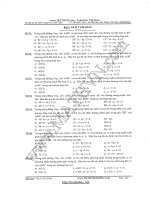
27. Prices ___ considerably since this time last year.
C. raised
A. have raised B. rose
@ have risen
from 49% in 1980 to nearly
28. ThE number of working women in China
65% today.
@ has increased
A. has been increasing
C is increasing
D. have increased
two miles and a half, and now she feels exhausted.
JI}. She
B. was running @ has run
A.--;:�ns @�- has been running
}t). Sor 1cthing tells me that you __ to a single word I ___ in the past ten minutes.
{J. haven't been listening - have said
� haven't listened- had said
C. hadn't listened- said
D. didn't listen- was saying
31. I low many of those chocolates ___ today?
A. did you eat
B. do you eat
�
C. had you eaten
� have you eaten
l1. This is the latest news from Timbuktu. Two-thirds of the city _______ in a fire.
B. were destroyed
� has been destroyed
was destroyed
D. have been destroyed
33. Ou:· industrial output ___ from $2 million in 2011 to $4 million this year.
B. rose
l.. rises
C. was rising @. has risen
34. The replacement of shops such as the groceries' and chemist's by cafes
. . __ . _______ the housewives with insufficient facilities for shopping .
.t .• leave
B. have left
has left
D. to have left
35. 1 Ic ______ off alone a month ago, and ____ of since.
B. setted- hasn't heard
(!;') set- hasn't been heard
D. setted- hadn't been heard
C. set- hasn't heard
36. \Q'] looked tired. ___ hard all day?
I _) Have you been working
B. Did you work
C. Do you work
D. Are you working
37. Thi msands of antibiotics __, but only about thirty are in common use today .
.A. have
D. have been developing
(!). have been developed·
38. No :1e of the students
to class yet.
A. are coming B. hadn't come C. haven't come@. have come
39. We ______ for three hours and are very tired.
/,,.. are walking
:�.:.. have been walking
D. had been walking
C. were walking
B,
©
1
9