Software Fault Tolerance Techniques and Implementation phần 3 ppt
Bạn đang xem bản rút gọn của tài liệu. Xem và tải ngay bản đầy đủ của tài liệu tại đây (920.86 KB, 35 trang )
[34] Duncan, R. V., and L. L. Pullum, Executable Object-Oriented Cyberspace Models for
System Design and Risk Assessment, Quality Research Associates, Technical Report,
Sept. 1999.
[35] Williams, J. F., L. J. Yount, and J. B. Flannigan, Advanced Autopilot Flight Director
System Computer Architecture for Boeing 737-300 Aircraft, AIAA/IEEE 5th Digital
Avionics Systems Conference, Seattle, WA, Nov. 1983.
[36] Hills, A. D., and N. A. Mirza, "Fault Tolerant Avionics, AIAA/IEEE 8th Digital
Avionics Systems Conference, San Jose, CA, Oct. 1988, pp. 407414.
[37] Traverse, P., AIRBUS and ATR System Architecture and Specification, in U. Voges
(ed.), Software Diversity in Computerized Control Systems, New York: Springer, 1988,
pp. 95104.
[38] Walter, C. J., MAFT: An Architecture for Reliable Fly-by-Wire Flight Control, 8th
Digital Avionics Systems Conference, San Jose, CA, Oct. 1988, pp. 415421.
[39] Avizienis, A., The Methodology of N-Version Programming, in M. R. Lyu (ed.),
Software Fault Tolerance, New York: John Wiley and Sons, 1995, pp. 2346.
[40] Lovric, T., Systematic and Design DiversitySoftware Techniques for Hardware
Fault Detection, Proc. 1st Euro. Dependable Computing Conf. EDCC-1, 1994,
pp. 309326.
[41] Burke, M. M., and D. N. Wall, The FRIL Model Approach for Software Diversity
Assessment, in M. Kersken and F. Saglietti (eds.), Software Fault Tolerance: Achieve-
ment and Assessment Strategies, New York: Springer-Verlag, 1992, pp. 147175.
[42] Wall, D. N., Software DiversityIts Role and Measurement, Phase 2, REQUEST
Report R2.3.6, 1989.
[43] Ammann, P. E., and J. C. Knight, Data Diversity: An Approach to Software Fault
Tolerance, Proceedings of FTCS-17, Pittsburgh, PA, 1987, pp. 122126.
[44] Ammann, P. E., Data Diversity: An Approach to Software Fault Tolerance, Ph.D.
dissertation, University of Virginia, 1988.
[45] Ammann, P. E., and J. C. Knight, Data Diversity: An Approach to Software Fault
Tolerance, IEEE Transactions on Computers, Vol. 37, 1988, pp. 418425.
[46] Gray, J., Why Do Computers Stop and What Can Be Done About It? Tandem,
Technical Report 85.7, June 1985.
[47] Martin, D. J., Dissimilar Software in High Integrity Applications in Flight Control,
Software for Avionics, AGARD Conference Proceedings, 1982, pp. 36-136-13.
[48] Morris, M. A., An Approach to the Design of Fault Tolerant Software, M. Sc. the-
sis, Cranfield Institute of Technology, 1981.
[49] Ammann, P. E., D. L. Lukes, and J. C. Knight, Applying Data Diversity to Differen-
tial Equation Solvers, in Software Fault Tolerance Using Data Diversity, Univ. of
Virginia, Tech. Report No. UVA/528344/CS92/101, for NASA LaRC, July 1991.
56 Software Fault Tolerance Techniques and Implementation
TEAMFLY
Team-Fly
®
[50] Ammann, P. E., and J. C. Knight, Data Re-expression Techniques for Fault Tolerant Sys-
tems, Tech. Report, Report No. TR90-32, CS Dept., Univ. of Virginia, Nov. 1990.
[51] Cristian, F., Exception Handling, in T. Anderson (ed.), Resilient Computing Systems,
Vol. 2, New York: John Wiley and Sons, 1989.
[52] Ammann, P. E., Data Redundancy for the Detection and Tolerance of Software
Faults, Proceedings: Interface 90, East Lansing, MI, May 1990.
[53] Siewiorek, D. P., and D. Johnson, A Design Methodology, in D. P. Siewiorek and
R. S. Swarz (eds.), Reliable Computer SystemsDesign and Evaluation, Bedford, MA:
Digital Press, 1992, pp. 739767.
[54] Xu, J., and B. Randell, Object-Oriented Construction of Fault-Tolerant Software, Uni-
versity of Newcastle upon Tyne, Technical Report Series, No. 444, July 1993.
[55] Randell, B., and J. Xu, The Evolution of the Recovery Block Concept, in M. R. Lyu
(ed.), Software Fault Tolerance, New York: John Wiley and Sons, 1995, pp. 121.
[56] Daniels, F., K. Kim, and M. Vouk. The Reliable Hybrid PatternA Generalized
Software Fault Tolerant Design Pattern, Proceedings: PloP 1997 Conference, 1997.
[57] Pullum, L. L., and R. V. Duncan, Jr., Fault-Tolerant Object-Oriented Code Generator:
Phase I Final Report, Quality Research Associates, Tech. Rep., NASA Contract, 1999.
[58] Anderson, T., and P. A. Lee, Fault Tolerance: Principles and Practice, Upper Saddle
River, NJ: Prentice-Hall, 1981.
[59] Randell, B., Fault Tolerance and System Structuring, Proceedings 4th Jerusalem Con-
ference on Information Technology, Jerusalem, 1984, pp. 182191.
[60] Lee, P. A., and T. Anderson, Fault Tolerance: Principles and Practice, New York:
Springer-Verlag, 2nd ed., 1990.
[61] Duncan, R. V., Jr., and L. L. Pullum, Object-Oriented Executives and Components
for Fault Tolerance, IEEE Aerospace Conference, Big Sky, MT, 2001.
[62] Grnarov, A., J. Arlat, and A. Avizienis, On the Performance of Software Fault-
Tolerance Strategies, Proceedings of FTCS-10, Kyoto, Japan, 1980, pp. 251256.
[63] Sullivan, G., and G. Masson, Using Certification Trails to Achieve Software Fault
Tolerance, Proceedings of FTCS-20, Newcastle, 1990, pp. 423431.
[64] Bondavalli, A., F. DiGiandomenico, and J. Xu, A Cost-Effective and Flexible Scheme for
Software Fault Tolerance, Univ. of Newcastle upon Tyne, Tech. Rep. No. 372, 1992.
[65] Xu, J., A. Bondavalli, and F. DiGiandomenico, Software Fault Tolerance: Dynamic
Combination of Dependability and Efficiency, Univ. of Newcastle upon Tyne, Tech.
Rep. No. 442, 1993.
Structuring Redundancy for Software Fault Tolerance #%
3
Design Methods, Programming
Techniques, and Issues
Developing dependable, critical applications is not an easy task. The trend
toward increasing complexity and size, distribution on heterogeneous plat-
forms, diverse accidental and malicious origins of system failures, the conse-
quences of failures, and the severity of those consequences combine to thwart
the best human efforts at developing these applications. In this chapter, we
will examine some of the problems and issues that most, if not all, software
fault tolerance techniques face. (Issues related to specific techniques are dis-
cussed in Chapters 4 through 6 along with the associated technique.) After
examining some of the problems and issues, we describe programming
or implementation methods used by several techniques: assertions, check-
pointing, and atomic actions. To assist in the design and development
of critical, fault-tolerant software systems, we then provide design hints and
tips, and describe a development model for dependable systems and a design
paradigm specific to N-version programming (NVP).
3.1 Problems and Issues
The advantages of software fault tolerance are not without their attendant
disadvantages, issues, and costs. In this section, we examine these issues
and potential problems: similar errors, the consistent comparison problem
(CCP), the domino effect, and overhead. These are the issues common to
#'
many types of software fault tolerance techniques. Issues that are specific to
individual techniques are discussed in Chapters 4 through 6, along with the
associated technique. Knowing the existence of these problems and under-
standing the problems may help the developer avoid their effects or at least
understand the limitations of the techniques so that knowledgeable choices
can be made.
3.1.1 Similar Errors and a Lack of Diversity
As stated in the introductory chapter, the type of software fault tolerance
examined in this book is application fault tolerance. The faults to be tolerated
arise from software design and implementation errors. These cannot be
detected by simple replication of the software because such faults will be the
same in all replicated copieshence the need for diversity. (We discussed the
need for and experiments on diversity in Chapter 2.) Diversity allows us to
be able to detect faults using multiple versions of software and an adjudicator
(see Chapter 7). In this section, we examine the faults arising from a lack of
adequate diversity in the variants used in design diverse software fault toler-
ance techniques and the problems resulting from a lack of diversity.
One of the fundamental premises of the NVP software fault tolerance
technique (described in Section 4.2) and other design diverse techniques,
especially forward recovery ones, is that the lack of independence of pro-
gramming efforts will assure that residual software design faults will lead to
an erroneous decision by causing similar errors to occur at the same [decision
point] [1] in two or more versions. Another major observation is that
[NVPs] success as a method for run-time tolerance of software faults
depends on whether the residual software faults in each version are distin-
guishable [2, 3]. The reason errors need to be distinguishable is because of
the adjudicatorforward recovery design diverse techniques typically use
some type of voter to decide upon or adjudicate the correct result from the
results obtained from the variants. (Adjudicators are discussed in Chapter 7.)
The use of floating-point arithmetic (FPA) in general computing pro-
duces a result that is accurate only within a certain range. The use of design
diversity can also produce individual variant results that differ within a cer-
tain range, especially if FPA is used. A tolerance is a variance allowed by a
decision algorithm. Two or more results that are approximately equal within
a specified tolerance are called similar results. Whether the results are correct
or incorrect, a decision algorithm that allows that tolerance will view the
similar results as correct. Two or more similar results that are erroneous are
referred to as similar errors [1, 4], also called identical and wrong answers
60 Software Fault Tolerance Techniques and Implementation
(IAW). If the variants (functionally equivalent components) fail on the same
input case, then a coincident failure [5] is said to have occurred. If the actual,
measured probability of coincident variant failures is significantly different
from what would be expected by chance occurrence of these failures (assum-
ing failure independence), then the observed coincident failures are correlated
or dependent [69].
When two or more correct answers exist for the same problem, for the
same input, then we have multiple correct results (MCR) [10, 11]. An exam-
ple of MCR is finding the roots of an nth order equation, which has n dif-
ferent correct answers. The current algorithms for finding these roots often
converge to different roots, and even the same algorithm may find different
roots if the search is started from different points. Figure 3.1 presents a tax-
onomy of variant results, the type of error they may indicate, the type of
Design Methods, Programming Techniques, and Issues 61
Variant results
Outside tolerance
Within tolerance
Dissimilar results
Correct
Incorrect
Multiple correct
results
Multiple incorrect
results
Probable decision
mechanism failure
[Undetected success]
Independent failure
[Detected failure]
Similar results
Correct Incorrect
Correct results
[Success]
Similar errors
Same
input
case
Coincident failure
Occurs
more
frequently
than by
chance
Correlated or
dependent failures
[Undetectable failures]
Figu re 3.1 A taxonomy of variant results.
failure the error may invoke, and the resulting success or failure detected.
The arrows show the errors causing the failures to which they point.
Figure 3.2 illustrates some of these errors and why they pose problems
for fault-tolerant software. In this example, the same input, ), is provided to
each variant. Variants 1 and 2 produce results, H
1
and H
2
, respectively, that are
within a predefined tolerance of each other. Suppose a majority voter-type
decision mechanism (DM) is being used. Then, the result returned by the
decision mechanism, H ∗, is equal to H
1
or H
2
(or some combination of H
1
and
H
2
such as an average, depending on the specific decision algorithm). If H
1
and H
2
are correct, then the system continues this pass without failure. How-
ever, if H
1
and H
2
are erroneous, then we have similar errors (or IAW answers)
and an incorrect result will be returned as the valid result of the fault-
tolerant subsystem. Since variants 1 and 2 received the same input, ), we also
have a coincident failure (assuming a failure in our example results from the
inability to produce a correct result). With the information given in this
example, we cannot determine if correlated or dependent failures have
occurred. This example has illustrated the havoc that similar errors can play
with multiversion software fault tolerance techniques.
3.1.2 Consistent Comparison Problem
Another fundamental problem is the CCP, which limits the generality of the
voting approach for error detection. The CCP [12, 13] occurs as a result of
62 Software Fault Tolerance Techniques and Implementation
Variant 1
Variant 2
Variant 3
) ) )
H
3
H
2
H
1
Tolerance
H ∗
H H H∗ =
1 2
or
Figu re 3.2 Example of similar results.
finite-precision arithmetic and different paths taken by the variants based
on specification-required computations. Informally stated, the difficulty
is that if N versions operate independently, then whenever the specification
requires that they perform a comparison, it is not possible to guarantee that
the versions arrive at the same decision, i.e., make comparisons that are con-
sistent [14]. These isolated comparisons can lead to output values that are
completely different rather than values that differ by a small tolerance. This is
illustrated in Figure 3.3. The following example is from [12].
Suppose the application is a system in which the specification requires
that the actions of the system depend upon quantities, x, that are measured
by sensors. The values used within a variant may be the result of extensive
computation on the sensor measurements. Suppose such an application is
Design Methods, Programming Techniques, and Issues 63
Variant 1 Variant 2 Variant 3
True
True
False
True
False
N
Finite-precision
arithmetic (FPA)
function, )
Finite-precision
arithmetic (FPA)
function, )
Finite-precision
arithmetic (FPA)
function, )
) N( ) ) N( ) ) N( )
N N
FPA function, * FPA function, *
* ) N( ( )) * ) N( ( ))
+ ) N( ( )), * ) N( ( ( ))) - * ) N( ( ( )))
FPA function, ,
FPA function, +
FPA function, -
> ?+
1
> ?+
2
> ?+
2
> ?+
2
> ?+
1
> ?+
1
≠ ≠
Figu re 3.3 Consistent comparison problem yields variant resul t disagree ment.
implemented using a three-variant software system and that at some point
within the computation, an intermediate quantity, A(x), has to be compared
with an application-specific constant C
1
to determine the required process-
ing. Because of finite-precision arithmetic, the three variants will likely have
slightly different values for the computed intermediate result. If these inter-
mediate result values are very close to C
1
, then it is possible that their rela-
tionships to C
1
are different. Suppose that two of the values are less than C
1
and the third is greater than C
1
. If the variants base their execution flow on
the relationships between the intermediate values and C
1
, then two will fol-
low one path and the third a different path. These differences in execution
paths may cause the third variant to send the decision algorithm a final result
that differs substantially from the other two, B(A(x)) and C (A(x)).
It may be argued that the difference is irrelevant because at least two
variants will agree, and, since the intermediate results were very close to C
1
,
either of the two possible results would be satisfactory for the application. If
only a single comparison is involved, this is correct. However, suppose that a
comparison with another intermediate value is required by the application.
Let the constant involved in this decision be C
2
. Only two of the variants will
arrive at the comparison with C
2
(since they took the same path after com-
parison with C
1
). Suppose that the intermediate values computed by these
two variants base their control flow on this comparison with C
2
, then again
their behavior will differ. The effect of the two comparisons, one with each
constant, is that all variants might take different paths and obtain three
completely different final results, for example, D(B(A(x))), E(B(A(x))), and
C (A(x)). All of the results are likely to be acceptable to the application, but
it might not be possible for the decision algorithm to select a single correct
output. The order of the comparisons is irrelevant, in fact, since different
orders of operation are likely if the variants were developed independently.
The problem is also not limited to comparison with constants because if
two floating-point numbers are compared, it is the same as comparing their
differences with zero.
The problem does not lie in the application itself, but in the specifica-
tion. Specifications do not (and probably cannot) describe required results
down to the bit level for every computation and every input to every com-
putation. This level of detail is necessary, however, if the specification is
to describe a function in which one, and only one, output is valid for every
input [15]. It has been shown that, without communication between the
variants, there is no solution to the CCP [12].
Since the CCP does not result from software faults, an n-version system
built from fault-free variants may have a nonzero probability of being unable
64 Software Fault Tolerance Techniques and Implementation
to reach a consensus. Hence, if not avoided, the CCP may cause failures to
occur that would not have occurred in non-fault-tolerant systems. The CCP
has been observed in several NVP experiments. There is no way of estimat-
ing the probability of such failures in general, but the failure probability will
depend heavily on the application and its implementation [14]. Although
this failure probability may be small, such causes of failure need to be taken
into account in estimating the reliability of NVP, especially for critical
applications.
Brilliant, Knight, and Leveson [12] provide the following formal defi-
nition of CCP:
Suppose that each of N programs has computed a value. Assuming that
the computed values differ by less than A (A > 0) and that the programs
do not communicate, the programs must obtain the same order rela-
tionship when comparing their computed value with any given
constant.
Approximate comparison and rounding are not solutions to this prob-
lem. Approximate comparison regards two numbers as equal if they differ by
less than a tolerance @ [16]. It is not a solution because the problem arises
again with C + @ (where C is a constant against which values are compared).
Impractical avoidance techniques include random selection of a result, exact
arithmetic, and the use of cross-check points (to force agreement among
variants on their floating-point values before any comparisons are made that
involve the values).
When two variants compare their computed values with a constant, the
two computed values must be identical in order for the variants to obtain
the same order relationship. To solve the CCP, an algorithm is needed that
can be applied independently by each correct variant to transform its com-
puted value to the same representation as all other correct variants [12]. No
matter how close the values are to each other, their relationships to the con-
stant may still be different. The algorithm must operate with a single value
and no communication between variants to exchange values can occur since
these are values produced by intermediate computation and are not final out-
puts. As shown by the following theorem, there is no such algorithm, and
hence, no solution to the CCP [12].
Other than the trivial mapping to a predefined constant, no algorithm
exists which, when applied to each of two n-bit integers that differ
by less than 2k, will map them to the same m-bit representation
(m + k ≤ n).
Design Methods, Programming Techniques, and Issues $#
In the investigation of practical avoidance techniques for the CCP, the major
characteristic that needs to be considered is whether or not the application
has state information that is maintained from frame to frame, that is,
whether or not the application maintains its history [12]. Systems and associ-
ated CCP avoidance techniques can be characterized as shown in Figure 3.4.
Each of these types of systems and the avoidance technique proposed by Bril-
liant, Knight, and Leveson [12] are discussed in the following paragraphs.
The immediate effect of inconsistent comparison on a system is that a con-
sensus might not be reached. The extent of the resulting damage varies with
the application and has a substantial impact on the effectiveness of measures
designed to handle the damage [12]. The avoidance approach requires that
enhancements be made to the implementation of an NVP system.
3.1.2.1 Systems with No History
Some simple control systems have no history and thus compute their outputs
for a given frame using only constants and the inputs for that frame. If no
consensus is reached in one frame and if the inputs are changing, then it is
extremely unlikely that the lack of consensus will last for more than a short
time. After a brief interval, the inputs should leave the region of difficulty.
Doing so, subsequent comparisons will be consistent among the variants.
Hence, the effects of the CCP in systems with no history are transient.
An avoidance approach, using confidence signals, for the CCP in sys-
tems with no history is described in [12]. Each variant determines, for itself,
whether the values used in comparisons were close enough to warrant
66 Software Fault Tolerance Techniques and Implementation
System
History
No history
CCP → Transient effects
Avoidance Confidence
signals
→
Convergent states
CCP → Temporary
discrepancy
Avoidance Confidence
signals
→
Nonconvergent states
CCP → May never
reach consensus
Avoidance Revert to
backup or
fail-safe
system
→
Figu re 3.4 Consistent comparison pro blem avoidance techniques depend on system his-
tory main tenan ce.
TEAMFLY
Team-Fly
®
suspicion of inconsistency. If a possibly inconsistent solution is detected by
the variant, it signals the voter of the event. The voter is unable to tell the dif-
ference between the occurrence of an inconsistent comparison and a failed
variant, so it ignores the flagged variants results. The voter can then vote
using the results from the variants that indicated confidence in their results.
Hence, the fault tolerance may be reduced or even eliminated in this situa-
tion. System recovery under these circumstances is application dependent,
but it may be possible to treat the situation as a single-cycle failure [12]. This
approach requires fairly extensive modifications to the system structure. For
example, each variant result would have to be supplemented by a confidence
signal, and the voter would have to be modified to incorporate these signals
into its decision-making logic.
3.1.2.2 Systems with Convergent States
The situation is much more complex for systems with history, that is, those
that maintain internal state information over time. In these systems, the fail-
ure to reach a consensus may coincide with differences in the internal state
information among the variants [12]. The duration of these internal state
differences varies among applications.
In some applications, the state information is revised with the passage
of time and, once the inputs have changed so that comparisons are again con-
sistent, the variants may revise their states to also be consistent. In these sys-
tems with convergent states, the entire system is once again consistent and
operation can safely proceed. An example [12] of this type of application is
an avionics system in which the flight mode is maintained as internal state
information. If the flight mode is determined by height above ground, then
if a measurement is taken that is close to the value at which the mode is
changed, different variants might reach different conclusions about which
mode to enter. If the variants continue to monitor the height sensor, any
inconsistency that occurs should be rapidly corrected.
Inconsistent comparisons may cause a temporary discrepancy among
variant states in systems with convergent states. A confidence signal approach
may also be used with these systems [12]. Each variant must maintain confi-
dence information as part of its state. If a part of the systems state infor-
mation is based on a comparison that may be inconsistent, then the variant
must indicate a No confidence signal to the voter for its results. The no
confidence state for this variant remains until the system state is reevaluated.
The time required to reevaluate the state is application dependent. During
the reevaluation period the system is not fault tolerant. In addition, the time
to reevaluate the state may be unacceptably long.
Design Methods, Programming Techniques, and Issues 67
3.1.2.3 Systems with Nonconvergent States
Other applications (i.e., systems with nonconvergent states) determine and
then never reevaluate some state information. An example [12] of this type
system is sensor processing in which one variant may determine that a sensor
has failed and subsequently ignore it. Other variants may not make the
same decision at the same point in time, and, depending on subsequent sen-
sor behavior, may never conclude that the sensor has failed. Hence, although
the inputs change, the variants may continue to arrive at different correct
outputs long after comparisons become consistent because the sets of state
information maintained by the individual variants are different.
Once the variants in a system with nonconvergent states acquire differ-
ent states, the inconsistency may persist indefinitely. Though no variant has
failed, the variants may continue to produce different outputs. In the worst
case, the NVP system may never again reach a consensus on a vote. There is
no simple avoidance technique that can be used for systems with nonconver-
gent states. The only practical approach in systems of this type seems to be to
revert to a backup or a fail-safe system [12].
3.1.3 Domino Effect
While the CCP of the previous section can generally affect design diverse
forward recovery software fault tolerance techniques, the domino effect dis-
cussed here can generally affect backward recovery techniques. The domino
effect [17] refers to the successive rolling back of communicating processes
when a failure is detected in any one of the processes.
To implement software fault tolerance in concurrent systems (of multi-
ple cooperating processes that communicate with each other via messages),
one cannot simply apply some fault tolerance technique in each separate
process. If this is done, then each process will have its own error detection
mechanism and would establish its own recovery point(s). When one process
detects an error and attempts recovery to its recovery point or checkpoint,
this can result in an inconsistent global system state unless the other rele-
vant processes are also rolled back. When rolling back the faulty process to its
recovery point, the messages issued by that process may also be faulty, so they
must be recalled [17, 18]. This recall will force the other processes to roll
back to their recovery points that precede receipt of the recalled messages.
This recovery and recall continues until the system reaches a stable state,
which may be the initial state. This continual rollback and recall is the dom-
ino effect, resulting when recovery and communication operations are not
68 Software Fault Tolerance Techniques and Implementation
coordinated. This causes the loss of the entire computation that was per-
formed prior to the detection of the initial error.
An example will help illustrate the domino effect (see Figure 3.5).
(Similar examples are provided in [1821] and others. The example provided
here is derived from [22].) In the figure below, the communicating processes
are labeled P1 and P2. At time T1, P1 detects an error and must roll back to
recovery point R6. Because of the communications, C5, between P1 and P2,
process P2 has to roll back to its recovery point R5. Because of this rollback,
the effect of C4 has to be removed, so P1 has to roll back to R4. Because of
C3, P2 has to roll back to R3. Because of C2, P1 has to roll back to R1 and
because of C1, P2 has to roll back to R2. Now both processes have rolled
back to their initial state at T0 and lost the computations performed between
T0 and T1.
The avoidance of the uncontrolled rolling back evidenced by the
domino effect is achieved if system consistent states, which serve as recovery
points, can be established. A consistent state of a system conforms to the
systems correctly reachable states and the events history as reflected in
the system behavior (its interface) [23]. A consistent state allows the system
to achieve an error-free state that leads to no contradictions and conflicts
within the system and its interfaces. All communications between processes
and their order of occurrence are taken into account. To support consistency,
some restrictions on the communication system must be enforced [23]:
Design Methods, Programming Techniques, and Issues 69
P1
P2
C1
C1
R1
R2
T0
R3
C2
C2
C3
C3
C4
C4
C5
C5
R5
R7
R4
R6
Error
Time
T1
Interprocess communication
Recovery point
C
R
Key:
Figu re 3.5 The domino effect. (Source: [22], © 1991, IEEE. Reprinted with perm issio n.)
•
Communication delay is negligible and can be considered zero.
•
Communication maintains a partial order of data transfer. All mes-
sages sent between a particular pair of processes are received at the
destination in the order they were sent.
Consistent states can be determined statically or dynamically. The
static approach is a language-based approach in which the consistent state is
determined at compile time. At compile time a recovery line is set compris-
ing a set of recovery points, one for each process, to which the processes will
roll back. The conversation scheme [17, 24] is a well-known static approach
and the oldest approach for overcoming the domino effect. In the conversa-
tion scheme, processes that are members of a conversation may communi-
cate with each other, but not with processes outside the conversation. The
processes must establish a recovery point when they enter a conversation,
and all processes must leave the conversation together. This technique is dis-
cussed more in Chapter 4.
The dynamic approach uses stored information about communication
and recovery points to set up a recovery li ne only after an error occ urs.
The programmer-transparent coordination scheme [18, 25, 26] is a dynamic
approach that overcomes the domino effect by relying on an intelligent
underlying machine. Detailed implementations of models and recovery
protocols based on state descriptions can be found in the literature, such
as in [27].
3.1.4 Overhead
The benefits of software fault tolerance do not come without a price. In
this section, we examine the overhead incurred in the use of software fault
tolerance in terms of space (memory), time, and cost. Given this information
(and information specific to individual techniques presented in Chapter 4),
one can make a more informed decision on the use of software fault
tolerance.
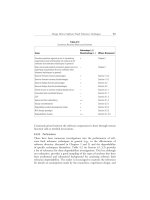
Table 3.1 [28] provides a summary of the overhead involved in soft-
ware fault tolerance for tolerating one fault. Overhead is described in terms
of both structural overhead and operational time overhead. The table does
not include overhead that is common to all approaches (including that over-
head that should be present in non-fault-tolerant software) such as checking
input variables to ensure their values are within a valid range or checking
for results that are obviously grossly wrong. For example, the recovery block
70 Software Fault Tolerance Techniques and Implementation
Design Methods, Programming Techniques, and Issues 71
Table 3.1
Software Fault Tolerance Overhead for Tolerating One Fault (From: [28], © 1995 John Wiley & Sons, Ltd. Reproduced wi th permission .)
Method Name
Structural Overhead Operational Time Overhead
Diversified
Software Layer
Mechanisms
(Layers Supporting
the Diversified
Software Layer)
Systematic
On Error
Occurrence
Decider Variants Execution
RcB One variant and one AT Recovery cache Acceptance test execution Accesses to recovery
cache
One variant and AT
execution
NSCP Error detection by ATs On e variant and two ATs Result switching Input data consistency
and variants e xecution
synchronization
Possible result switching
Error detection by
comparison
Three variants Comparators and result
switching
Comparison exec ution
NVP Two variants Voters Vote execution Usually neglectable
(RcB) technique includes structural overhead for one variant, an acceptance
test (AT), and its recovery cache and operational time overhead for executing
the AT, accessing the recovery cache, and when an error is detected, execut-
ing an additional variant and the AT on the second variants results. We hold
further discussion of the details of this table for the technique discussions of
Chapters 4 through 6. It is provided here to briefly illustrate some of the
non-cost-related overhead.
As discussed in Chapter 2, all the software fault tolerance techniques
require diversity in some form and this diversity in turn requires additional
space or time, or both. Xu, Bondavalli, and Di Giandomenico [29] provide
an illustration (see Figure 3.6) that summarizes the space and time overheads
of software fault tolerance techniques. Space is defined here as the amount of
hardware, such as the number of processors, needed to support parallel exe-
cution of multiple variants. Time is defined for the figure as the physical time
required to execute the variants sequentially. For example, the NVP technique
requires additional space for its n variants, so it is to the upper (right) side of
the space continuum on the figure. It is also on the lower (top) side of the time
continuum because all the variants are executed in parallel. (Xu, Bondavalli,
and Di Giandomenico [29] developed a technique, self-configuring optimal
programming (SCOP), presented in Chapter 6, that attempts to optimize
72 Software Fault Tolerance Techniques and Implementation
0
Space
Time (sequential execution)
e.g., Sequential NVP
Recovery
blocks
Conditionally
sequential
execution
(Parallel execution)
e.g., NVP
t n/( 1)-VP
NSCP
−
Possible region of
dynamic space-time
trade-offs
Software variant
2
0
v
i
v
1
v
2
v
2
v
3
v
n
v
n
Figu re 3.6 Space and time redu ndanc y i n s oftwa re fault tolerance. (Source: [29],
© 1995, Spring er-Ve rlag, Figu re 1, p . 158.)
these overheads.) For use here, the figure provides a basis for understanding
the space and time requirements of, and possible trade-offs between, the soft-
ware fault tolerance techniques being considered for use.
Software fault tolerance also introduces additional overhead in terms of
costs. The cost-effectiveness of software has been the subject of debate for
many years. The question usually posed is this: Is it better to devote the extra
effort to develop the additional variants for diverse software or to devote that
effort to the verification and validation (V&V) of one really good piece of
software? (Halton [30] provides an interesting discussion of this question,
favoring diversity.) Below we provide brief descriptions of experimental
results on the cost of diversity, then continue with more specific cost
information.
The following summaries provide brief overviews of experimental
results on the costs of diversity. Note that, in general, the results indicate that
the cost of threefold diversity (e.g., NVP with n = 3) is not three times that of
a single development (it is less) and the cost of twofold diversity is less than
twice that of a single development. In addition, not all parts of the softwares
functionality are critical; that is, only a small part of the software may need to
be made fault tolerant. Software fault tolerance may also be less expensive
than alternative means of assurance. When examining the cost of software
fault tolerance, it is useful to keep the focus on the cost implications on the
overall project.
•
Several experiments, for example [3133], have shown that the
development and maintenance costs for three-variant diversity can
be twice that of a single development and less than double for two-
variant diversity.
•
The Ericsson company [32] found that, for their railway interlock-
ing system, the costs of developing two functionally equivalent soft-
ware variants is not double the cost of a single variant because: (a)
not all parts of the system are critical, hence only the critical parts
may require fault tolerance; (b) while the cost of program specifica-
tion (design), coding, and testing is doubled, the cost of requirement
specification, system specification, test specification, and system test
execution is not doubled. In the Ericsson system [32], the majority
of the system is concerned with complex computations to make
train control decisions. The control commands are submitted to the
interlocking software and only the interlocking software is diversely
implemented.
Design Methods, Programming Techniques, and Issues %!
•
Panzl [34] found that two-variant development with back-to-
back (comparison) testing increases the initial development cost by
77% (not a factor of 2), but reduced the number of residual errors
from 69 to 2.
•
Laprie, et al. [35] analyzed the cost of several software fault tolerance
techniques and found that in a multiple variant software develop-
ment project typical component cost is about 75% to 80% of
single-variant costs.
•
An experiment at the University of Newcastle upon Tyne estimated
the RcB techniques overhead for two variants to be 60% [36] (i.e.,
0.8 times the cost of a non-fault-tolerant variant, a cost increase fac-
tor of 1.6).
•
Another experiment estimated the cost of NVP for n = 3 variants
at 2.26 times the cost of a one-variant program [37] (and a cost
increase factor of 1.5 for n = 2). Hence, the cost of a variant in NVP
was evaluated as 0.75 times the cost of a non-fault-tolerant variant.
• There are a number of models of the cost of fault-tolerant software
[35, 3843]. We will examine one of these in detail later in this
section.
• Some industries, such as aircraft and nuclear power, are subject
to official regulation. The costs of demonstrating safety in these
industries can far outweigh the development costs. For example,
over 500 person-years of effort in safety assessment [44, 45] (not
including lost income associated with licensing delays) have been
used in the Sizewell B nuclear power station computer-based protec-
tion system. In some cases, diversity (not necessarily software diver-
sity) has been used to make a more convincing safety case.
•
Acceptable alternatives to software fault tolerance may also increase
the systems cost. For example, formal methods can be used to prove
that a program meets its specification (see Section 1.3.1.3). How-
ever, there are high costs associated with these alternatives and there
remains the risk of faults within the process and results of these
approaches.
Kanoun [46] provides the results of examining working hours recorded
during the development of a real-life software system (composed of two self-
checking diverse variants). Kanoun evaluated the cost overhead induced
by the development of the second variant with respect to the cost of the
74 Software Fault Tolerance Techniques and Implementation
principal variant, which was considered as a reference. The results indicate
this overhead varies from 15% to 134% according to the development phase
(134% for coding and unit tests together; about 100% for integration tests,
general tests, maintenance, and analysis; about 60% for specification analy-
sis, design, and documentation; and 25% for functional specifications). The
average was around 64% for all phases excluding the effort spent for require-
ment specifications and system tests. The average is between 42% and 71% if
the requirement specification phase only is excluded (assuming the system
test overhead is 0% and 100%, respectively). Kanouns results confirm those
published in previous work (see above). The results are especially valuable
since they were observed for a real system in an industrial environment (ver-
sus an experimental environment).
We will examine one of the cost models mentioned above in more
detail. Laprie, et al. [35] examined the costs of several software fault tolerance
techniques and provided a model for determining the cost of fault-tolerant
software with respect to the cost of non-fault-tolerant software. Laprie starts
with a cost distribution across life cycle phases for classical, non-fault-
tolerant software (see Table 3.2, with these entries based on [47]). Since
fault-tolerant software is used mainly with critical applications and the cost
distribution is based on no specific class of software, [35] provides some mul-
tiplicative factors that depend on the particular lifecycle activity (from [48]).
To determine the cost of fault-tolerant software, factors are used to
account for the overheads associated with the decision points and the DMs,
and to account for the cost reduction in V&V caused by commonalities
among variants. The commonalities include actual V&V activities (e.g.,
back-to-back testing) and V&V tools (e.g., test harnesses). Given the current
state of the art, the values of these factors cannot be accurately estimated, but
[35] provides reasonable ranges of values for the factors. The factors and their
ranges from [35] are provided below.
•
r is the multiplier associated with the decision points, with
1 < r < 1.2.
•
s is the multiplier associated with the decider, with 1 < s < 1.1 for
NVP (Section 4.2) and N self-checking programming (NSCP)
(Section 4.4) when error detection is performed through compari-
son, and 1 < s < 1.3 for RcB (Section 4.1) and NSCP when error
detection is performed through AT (Section 7.2). This difference
reflects the differences in the deciders, that is, the fact that the
Design Methods, Programming Techniques, and Issues %#
deciders are specific when they decide by AT and generic when they
decide by comparison or vote.
•
u is the proportion of testing performed once for all variants (such as
provision for test environments and harnesses), with 0.2 < u < 0.5.
•
v is the proportion of testing, performed for each variant, that takes
advantage of the existence of several variants (such as back-to-back
testing), with 0.3 < v < 0.6.
•
w is the cost-reduction factor for testing performed in common for
several variants, with 0.2 < w < 0.8.
The following expression gives the cost of fault-tolerant software (C
FT
)
with respect to the cost of non-fault-tolerant software (C
NFT
):
( )
[ ]
( )
( )
C C rs Nr s
r us u N vw
FT NFT
Spe Des
/ = + + + − +
+ + − + −
H H H H
Req Imp
1
1 1
( )
[ ]{ }
v
V V
H
&
where N is the number of variants, and H
Req
, H
Spe
, H
Des
, H
Imp
, and H
V&V
are the
cost distribution percentages for requirements, specification, design, imple-
mentation, and V&V, respectively.
Table 3.3 gives the ranges for the ratio C
FT
/C
NFT
as well as the average
values and the average values per variant. Examining this tables results
provides quantitative evidence for the qualitative statement that N-variant
software is less costly than N times a non-fault-tolerant software. The experi-
mental cost results noted earlier in this section fall within the ranges noted in
Table 3.3.
3.2 Programming Techniques
In this section, we describe several programming or implementation tech-
niques used by several software fault tolerance techniques. The programming
techniques covered are assertions, checkpointing, and atomic actions. Asser-
tions can be used by any software fault tolerance technique, and by non-
fault-tolerant software. Checkpointing is typically used by techniques that
employ backward recovery. Atomic actions can also be used in non-fault-
tolerant software, but are presented here primarily in the context of software
fault tolerance in concurrent systems.
76 Software Fault Tolerance Techniques and Implementation
TEAMFLY
Team-Fly
®
Design Methods, Programming Techniques, and Issues 77
Table 3.2
Software Cost Elements for Non-Fault-Tolerant Software
(From: [35], © 199 0, IEEE. Reprinted with permission .)
Activity
Life-Cycle Cost
Breakdown
[47]
Multipliers
for Critical
Applications [48]
Cost Distribution
Development Development
and
Maintenance
Development
Requirements 3% 1.3 8% 6%
Specification 3% 1.3 8% 7%
Design 5% 1.3 13% 14%
Implementation 7% 1.3 19% 19%
V&V 15% 1.8 52% 54%
Maintenance* 67%
*Of this, 20% is for corrective maintenance, 25% is for ad aptive maintenance, and 55% is for perfective
maintenance [47 ].
Table 3.3
Cost of Fault-Tolerant Softwar e Versus Non-Fault-Tolerant Software
(From: [35], © 199 0, IEEE. Reprinted with permission .)
Faults
Tolerated
Fault Tolerance
Method N
(C
F T
/C
N FT
)
Minimum
(C
F T
/C
N FT
)
Maximum
(C
F T
/C
N FT
)
Average
(C
F T
/NC
N FT
)
Average
1 RcB 2 1.33 2.17 1.75 0.88
1 NSCP
AT
Comparison
2
4
1.33
2.24
2.17
3.77
1.75
3.01
0.88
0.75
1 NVP 3 1.78 2.71 2.25 0.75
2 RcB 3 1.78 2.96 2.37 0.79
2 NSCP
AT
Comparison
3
6
1.78
3.71
2.96
5.54
2.37
4.63
0.79
0.77
2 NVP 4 2.24 3.77 3.01 0.75
3.2.1 Assertions
Assertions are a fairly common means of program validation and error detec-
tion. As early as 1975, Randell [17] presented executable assertions as central
to the design of fault-tolerant programs. An executable assertion is a state-
ment that checks whether a certain condition holds among various program
variables, and, if that condition does not hold, takes some action. In essence,
they check the current program state to determine if it is corrupt by test-
ing for out-of-range variable values, the relationships between variables and
inputs, and known corrupted states. These assertion conditions are derived
from the specification, and the assertion can be made arbitrarily stringent
in its checking. Assertions may be set up to only produce a warning upon
detection of a corrupt state or they may take or initiate corrective action. For
example, upon the detection of a corrupt state, the assertion may halt pro-
gram execution or attempt to recover from the corrupt state. What the asser-
tion does upon firing (detecting a corrupt state) is application-dependent.
Assertions can be used as part of a reasonableness-checking AT such as a
range bounds AT (see Section 7.2.3).
Traditional assertions produce warnings when the condition being
checked is not met. They do not typically attempt recovery. Recovery asser-
tions, on the other hand, are forward recovery mechanisms that attempt to
replace the current corrupt state with a correct state. As with checkpointing
(discussed in the next subsection), the entire state can be replaced or only
specific variables, depending on the system constraints and overhead (e.g.,
time and memory) involved in the saving and restoration of the variables or
states values. Assertions can also be used to reset variables periodically (i.e.,
without necessarily testing for a corrupt state) in, for example, safety-critical
real-time systems to limit the propagation of corrupt data values [49].
Some programming languages provide special constructs for executable
assertions. However, executable assertions are essentially Boolean functions
that evaluate to TRUE when the condition holds, and FALSE otherwise.
Using a generic pseudocode language, we can present the simplest form of an
executable assertion as
if not assertion then action
where assertion is a Boolean expression and action is a method or
procedure.
The most general form of an assertion must refer to the current state
and to a previous state. Primary choices for the previous state are:
78 Software Fault Tolerance Techniques and Implementation
•
The initial state, s
0
;
•
An intermediate state between s
0
and the current state that was
reached along the path the program execution has taken.
Mili [50] provides three reasons for which an intermediate state should be
chosen over the initial state in an executable assertion:
1. Modularity: We can think of the assertion a as checking a local pro-
gram segment b by referring to the state of the program before exe-
cution of b and after execution of b. The program segment b and its
assertion-checking facilities then form a modular unit that is con-
text independentit does not depend on where it is in the pro-
gram [50].
2. Time parsimony: Block b can be arbitrarily short, and the function it
computes arbitrarily simple. Hence the assertion that checks it can
be arbitrarily easy to compute and arbitrarily time efficient. By con-
trast, referring to s
0
means that, at milestone m, we check expected
past functional properties of program P at m, whose complexity we
do not choose [50].
3. Space parsimony: Block b can be arbitrarily short, and the variables
it affects arbitrarily few. Hence the memory space required to save
the variables modified by block b is arbitrarily small. By contrast,
referring to s
0
means that sufficient memory space must be set
aside to save all of s
0
, whose size we do not choose [50].
The initial state or intermediate state, the block b to be checked, and the
statement that saves all or part of the previous state comprise an elementary
asserted block (EAB). The general form of an EAB is [50]:
$
s
=s;
b; // modifies s, but not
$
s
if not a(
$
s
,s)then action;
In the above EAB, the assignment statement
$
s s=
means saving state s in
$
s
.
The expression a(
$
s
, s) is the assertion. As stated earlier, we may only want to
save some variables, such as those that are going to be modified by b and/or
those that are involved in the expression of assertion a.
Lets look at an example. Suppose s ∈5 is an integer. Also, suppose that
program block b determines the square of s, that is, b = (s = s ∗ s). The
Design Methods, Programming Techniques, and Issues %'
following three simple assertions [50] illustrate different assertions we can
use with the defined program block, >.
$
s
=
s;
b;
if not (s =
$
s
2
) then action;
$
s
=s;
b;
if not (
$
s
> 1 ⇒ s >
$
s
) then action;
$
s
=s;
b;
if not (s > 0) then action;
In typical practice, > would be an intricate block of code that is difficult to
analyze and =(
$
I
, I) would be a simple assertion [50].
When an error is detected in the current state, action should be taken
to notify the designer (so that corrective actionfault removalcan be
taken) and a procedure is invoked to perform damage assessment and take
appropriate recovery action.
An assertion, I?, can be used to detect strict correctness (or freedom
from errors) in the program. The following pseudocode sample (after [50])
illustrates the pattern for such an assertion.
perform_error_management
{
if not sc(
$
s
=s)then {
// erroneous state
produce_warning(UI_or_errorfile, detected_error);
// UI - User Interface
perform_damage_assessment_and_recovery; }
}
3.2.2 Checkpointing
Checkpointing is used in (typically backward) error recovery, which we recall
restores a previously saved state of the system when a failure is detected. Recov-
ery points, points in time during the process execution at which the system
state is saved, are established. The recovery point is discarded when the process
result is accepted, and it is restored when a failure is detected. Checkpoints are
one of several mechanisms used to establish these recovery points. Other
mechanisms include the audit trail [51] and the recovery cache [52, 53]:
80 Software Fault Tolerance Techniques and Implementation