Modern food microbiology 7th ed phần 126
Bạn đang xem bản rút gọn của tài liệu. Xem và tải ngay bản đầy đủ của tài liệu tại đây (180.51 KB, 5 trang )
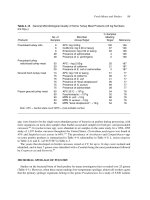
Figure 26–3 Reported isolates of Shigella by species and year, United States, 1975–2000. Centers for Disease Control and
Prevention (2002).
632
Modern Food Microbiology
Figure 26–4 Reported cases of shigellosis per 1,000,000 population by year, United States, 1970–2000. Date from PHLIS, Centers for
Disease Control and Prevention (2002).
Foodborne Gastroenteritis Caused by Salmonella and Shigella
633
634
Modern Food Microbiology
Foodborne Cases
For the period 1973–1987, foodborne shigellosis accounted for 12% of reported food poisoning
cases in the United States for which an etiological agent could be found, placing it third behind staphylococcal food poisoning (14%) and salmonellosis (45%).4 Poor personal hygiene is a common factor
in foodborne shigellosis, with shellfish, fruits and vegetables, chicken, and salads being prominent
among vehicle foods. The prominence of these foods is due to the fecal–oral route of transmission. The
shigellae are not as persistent in the environment as are salmonellae and escherichiae. The recorded
species isolations of Shigella in the United States for the years 1975–2000 are noted in Figure 26–3.
It should be noted that the isolations noted were from many sources including foods. S. sonnei is
clearly the most frequent isolate followed by S. flexneri. The recorded shigellosis cases (per 100,000
population) in the United States for the years 1970–2000 can be seen from Figure 26–4, and they
include foodborne as well as non-foodborne cases.
In 2000, an outbreak of shigellosis in three western states of the United States was caused by S.
sonnei; the vehicle food was a 5-layer party dip, and there were 30 victims.12 The dip layers consisted of
bean/salsa/guacamole/nacho cheese/sour cream. An outbreak caused by S. sonnei occurred in Spain
in 1995–1996 and it was traced to fresh pasteurized milk cheese;there were >200 victims, and an
infected food handler appeared to be the source of the pathogen to susceptible individuals.
Virulence Properties
The virulence mechanisms of the shigellae are much more complex than previously thought, and
they are discussed in Chapter 22 along with salmonellae and some E. coli strains.
REFERENCES
1. Adinarayanan, N., V.D. Foltz, and F. McKinley. 1965. Incidence of Salmonellae in prepared and packaged foods. J. Infect.
Dis. 115:19–26.
2. Audisio, M.C., G. Oliver, and M.C. Apella. 2000. Protective effect of Enterococcus faecium J96, a potential probiotic
strain, on chicks infected with Salmonella Pullorum. J. Food Protect. 63:1333–1337.
3. Barnhart, H.M., D.W. Dreesen, R. Bastien, and O.C. Pancorbo. 1991. Prevalence of Salmonella Enteritidis and other
serovars in ovaries of layer hens at time of slaughter. J. Food Protect. 54:488–491.
4. Bean, N.H., and P.M. Griffin. 1990. Foodborne disease outbreaks in the United States, 1973–1987: Pathogens, vehicles,
and trends. J. Food Protect. 53:804–817.
5. Beloian, A., and G.C. Schlosser. 1963. Adequacy of cooking procedures for the destruction of salmonellae. Am. J. Public
Health 53:782–791.
6. Bradshaw, J.G., D.B. Shah, E. Forney, and J.M. Madden. 1990. Growth of Salmonella Enteritidis in yolk of shell eggs from
normal and seropositive hens. J. Food Protect. 53:1033–1036.
7. Brooks, J. 1962. Alpha amylase in whole eggs and its sensitivity to pasteurization temperatures. J. Hyg. 60:145–151.
8. Bryan, F.L. 1977. Diseases transmitted by foods contaminated by wastewater. J. Food Protect. 40:45–56.
9. Centers for Disease Control and Prevention. 2003. Multistate outbreak of Salmonella serotype Typhimurium infections
associated with drinking unpasteurized milk—Illinois, Indiana, Ohio, and Tennessee, 2002–2003. Morb. Mort. Wkly. Rep.
52:613–615.
10. Centers for Disease Control and Prevention. 2002. Multistate outbreaks of Salmonella serotype Poona infections associated
with eating cantaloupe from Mexico—United States and Canada, 2000–2002. Morb. Mort. Wkly. Rep. 51:1044–1047.
11. Centers for Disease Control and Prevention. 2000a. Outbreak of Salmonella serotype Enteritidis infection associated with
eating raw or undercooked shell eggs—United States, 1996–1998. Morb. Mort. Wkly. Rep. 49:73–79.
Foodborne Gastroenteritis Caused by Salmonella and Shigella
635
12. Centers for Disease Control and Prevention. 2000b. Outbreak of Shigella sonnei infections associated with eating a nationally
distributed dip—California, Oregon, and Washington, January 2000. Morb. Mort. Wkly. Rep. 49:60–61.
13. Centers for Disease Control and Prevention. 1999. Outbreak of Salmonella serotype Muenchen infections associated with
unpasteurized orange juice—United States and Canada, June 1999. Morb. Mort. Wkly. Rep. 48:582–585.
14. Centers for Disease Control. 1985. Shigellosis—United States, 1984. Morb. Mort. Wkly. Rep. 34:600.
15. Chung, K.C., and J.M. Goepfert. 1970. Growth of Salmonella at low pH. J. Food Sci. 35:326–328.
16. Chung, Y.H., S.Y. Kim, and Y.H. Chang. 2003. Prevalence and actibiotic susceptibility of Salmonella isolated from foods
in Korea for 1993 to 2001. J. Food Protect. 66:1154–1157.
17. Crockett, C.S., C.N. Hass, A. Fazil. 1996. Prevalence of shigellosis in the U.S.: Consistency with dose-response information.
Int. J. Food Microbiol. 30:87–99.
18. D’Aoust, J.Y., and H. Pivnick. 1976. Small infectious doses of Salmonella. Lancet 1:866.
19. Dargatz, D.A., P.J. Fedorka-Cray, S.R. Ladely, and K.E. Ferris. 2000. Survey of Salmonella serotypes shed in feces of beef
cows and their antimicrobial susceptibility patterns. J. Food Protect. 63:1648–1653.
20. Fedorka-Cray, P.J., D.A. Dargatz, L.A. Thomas, and J.T. Gray. 1998. Survey of Salmonella serotypes in feedlot cattle. J.
Food Protect. 61:525–530.
21. Goepfert, J.M., and R.A. Biggie. 1968. Heat resistance of Salmonella Typhimurium and Salmonella Senftenberg 775W in
milk chocolate. Appl. Microbiol. 16:1939–1940.
22. Graber, G. 1991. Control of Salmonella in animal feeds. Division of Animal Feeds, Center for Veterinary Medicine, Food
and Drug Administration. Report to the National Advisory Commission on Microbiological Criteria for Foods.
23. Hennessy, T.W., C.W. Hedberg, L. Slutsker. 1996. A national outbreak of Salmonella Enteritidis infections from ice cream.
N. Engl. J. Med. 334:1281–1286.
24. Hinton, M., E.J. Threlfall, and B. Rowe. 1990. The invasive potential of Salmonella Enteritidis phage types for young
chickens. Lett. Appl. Microbiol. 10:237–239.
25. Hobbs, B.C. 1961. Public health significance of Salmonella carriers in livestock and birds. J. Appl. Bacteriol. 24:340–352.
26. Horwitz, M.A., R.A. Pollard, M.H. Merson, and S.M. Martin. 1977. A large outbreak of foodborne salmonellosis on the
Navajo Indian Reservation, epidemiology and secondary transmission. Am. J. Public Health 67:1071–1076.
27. Impey, C.S., and G.C. Mead. 1989. Fate of salmonellas in the alimentary tract of chicks pre-treated with a mature caecal
microflora to increase colonization resistance. J. Appl. Bacteriol. 66:469–475.
28. Jones, F.T., R.C. Axtell, D.V. Rives, S.E. Schneideler, F.R. Tarver, Jr., R.L. Walker, and M.J. Wineland. 1991. A survey of
Salmonella contamination in modern broiler production. J. Food Protect. 54:502–507.
29. Juven, B.J., N.A. Cox, J.S. Bailey, J.E. Thomson, O.W. Charles, and J.V. Shutze. 1984. Survival of Salmonella in dry food
and feed. J. Food Protect. 47:445–448.
30. Kampelmacher, E.H. 1963. The role of salmonellae in foodborne diseases. In Microbiological Quality of Foods, ed. L.W.
Slanetz et al., 84–101. New York: Academic Press.
31. Keller, L.H., C.E. Benson, K. Krotec, and R.J. Eckroade. 1995. Salmonella Enteritidis colonization of the reproductive
tract and forming and freshly laid eggs of chickens. Infect. Immun. 63:2443–2449.
32. Lee, W.-C., M.-J. Lee, J.-S. Kim, and S.-Y. Park. 2001. Foodborne illness outbreaks in Korea and Japan studied restrospectively. J. Food Protect. 64:899–902.
33. Le Minor, L., and M.Y. Popoff. 1987. Designation of Salmonella enterica sp. nov., nom. rev., as the type and only species
of the genus Salmonella. Int. J. System. Bacteriol. 37:465–468.
34. Lerche, M. 1961. Zur Lebenfahigkeit von Salmonella bakterien in Mayonnaise und Fleischsalat. Wein. Tierarztl. Mschr.
6:348–361.
35. Ley, F.J., B.M. Freeman, and B.C. Hobbs. 1963. The use of gamma radiation for the elimination of salmonellae from
various foods. J. Hyg. 61:515–529.
36. Lillard, H.S. 1986. Role of fimbriae and flagella in the attachment of Salmonella Typhimurium to poultry skin. J. Food Sci.
51:54–56, 65.
37. Martin, W.J., and W.H. Ewing. 1969. Prevalence of serotypes of Salmonella. Appl. Microbiol. 17:111–117.
38. Matches, J.R., and J. Liston. 1968. Low temperature growth of Salmonella. J. Food Sci. 33:641–645.
39. Mead, G.C., and P.A. Barrow. 1990. Salmonella control in poultry by “competitive exclusion” or immunization. Lett. Appl.
Microbiol. 10:221–227.
636
Modern Food Microbiology
40. Milone, N.A., and J.A. Watson. 1970. Thermal inactivation of Salmonella Senftenberg 775W in poultry meat. Health Lab.
Sci. 7:199–225.
41. Ng, D.L.K., B.B. Koh, L. Tay, and M. Yeo. 1999. The presence of Salmonella in local food and beverage items in Singapore.
Dairy Food Environ. Sanit. 19:848–852.
42. Ng, H., H.G. Bayne, and J.A. Garibaldi. 1969. Heat resistance of Salmonella: The uniqueness of Salmonella Senftenberg
775W. Appl. Microbiol. 17:78–82.
43. Page, G.V., and M. Solberg. 1980. Nitrogen assimilation by Salmonella Typhimurium in a chemically defined minimal
medium containing nitrate, nitrite, or ammonia. J. Food Sci. 45:75–76, 83.
44. Perales, I., and A. Audicana. 1988. Salmonella Enteritidis and eggs. Lancet 2:1133.
45. Proctor, M.E., M. Hamacher, M.L. Tortorello, J.R. Archer, and J.P. Davis. 2001. Multistate outbreak of Salmonella serovar
Muenchen infections associated with alfalfa sprouts grown from seeds pretreated with calcium hypochlorite. J. Clin.
Microbiol. 39:3461–3465.
46. Reeves, M.W., G.M. Evins, A.A. Heiba, B.D. Plikaytis, and J.J. Farmer. 1989. Clonal nature of Salmonella Typhi and
its genetic relatedness to other salmonellae as shown by multilocus enzyme electrophoresis, and proposal of Salmonella
bongori comb. nov. J. Clin. Microbiol. 27:311–320.
47. Rogers, R.E., and M.F. Gunderson. 1958. Roasting of frozen stuffed turkeys. I. Survival of Salmonella Pullorum in
inoculated stuffing. Food Res. 23:87–95.
48. Ryan, C.A., M.K. Nickels, N.T. Hargrett-Bean, M.E. Potter, T. Endo, L. Mayer, C.W. Langkop, C. Gibson, R.C. McDonald,
R.T. Kenney, N.D. Puhr, P.J. McDonnell, R.J. Martin, M.L. Cohen, and P.A. Blake. 1987. Massive outbreak of antimicrobialresistant salmonellosis traced to pasteurized milk. JAMA 258:3269–3274.
49. Shirota, K., H. Katoh, T. Murase, T. Ito, and K. Otsuki. 2001. Monitoring of layer feed and eggs for Salmonella in eastern
Japan between 1993 and 1998. J. Food Protect. 64:734–737.
50. Shrimpton, D.H., J.B. Monsey, B.C. Hobbs, and M.E. Smith. 1962. A laboratory determination of the destruction of alpha
amylase and salmonellae in whole egg by heat pasteurization. J. Hyg. 60:153–162.
51. Stavric, S., and J.-Y. D’Aoust. 1993. Undefined and defined bacterial preparations for the competitive exclusion of
Salmonella in poultry—A review. J. Food Protect. 56:173–180.
52. Stavric, S., T.M. Gleeson, B. Blanchfield, and H. Pivnick. 1987. Role of adhering microflora in competitive exclusion of
Salmonella from young chicks. J. Food Protect. 50:928–932.
53. Stock, K., and A. Stolle. 2001. Incidence of Salmonella in minced meat produced in a European Union-approved cutting
plant. J. Food Protect. 64:1435–1438
54. Thomason, B.M., W.B. Cherry, and D.J. Dodd. 1977. Salmonellae in health foods. Appl. Environ. Microbiol. 34:602–603.
55. Tkalcic, S., T. Zhao, B.G. Harmon, M.P. Doyle, C.A. Brown, and P. Zhao. 2003. Fecal shedding of enterohemorrhagic
Escherichia coli in weaned calves following treatment with probiotic Escherichia coli. J. Food Protect. 66:1184–1189.
56. Troller, J.A. 1976. Salmonella and Shigella. In Food Microbiology: Public Health and Spoilage Aspects, ed. M.P. deFigueiredo and D.F. Splittstoesser, 129–155. Westport, CT: AVI.
57. Van der Wielen, P.W.J.J., L.J.A. Lipman, F. van Knapen, and S. Biesterveld. 2002. Competitive exclusion of Salmonella
enterica serovar Enteritidis by Lactobacillus crispatus and Clostridium lactatifermentans in a sequencing fed-batch culture.
Appl. Environ. Microbiol. 68:555–559.
58. Zaika, L.L., A.H. Kim, and L. Ford. 1991. Effect of sodium nitrite on growth of Shigella flexneri. J. Food Protect. 54:424–
428.
59. Zaika, L.L., L.S. Engel, A.H. Kim, and S.A. Palumbo. 1989. Effect of sodium chloride, pH and temperature on growth of
Shigella flexneri. J. Food Protect. 52:356–359.