Managerial accounting, 5th by jiambalvo test bank ch11
Bạn đang xem bản rút gọn của tài liệu. Xem và tải ngay bản đầy đủ của tài liệu tại đây (267.13 KB, 50 trang )
CHAPTER 11
Standard Costs and Variance Analysis
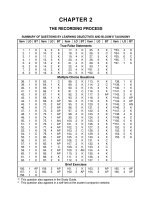
Summary of Questions by Objectives and Bloom’s Taxonomy
Item SO
BT Item SO
BT
True-False Statements
1.
1
K
8.
1
K
2.
1
K
9.
2
K
3.
1
K
10. 1,6
K
4.
1
K
11.
2
K
5.
1
K
12.
2
K
6.
1
K
13.
3
K
7.
1
K
14.
3
K
Multiple Choice Questions
32.
1
K
58.
2
K
33.
1
K
59.
2
K
34.
1
K
60.
2
C
35.
1
K
61.
2
AP
36.
1
K
62.
2
AP
37.
1
C
63. 2,3,4 AP
38.
1
K
64.
3
AP
39.
1
K
65.
3
AP
40.
1
K
66.
3
AP
41.
1
K
67.
3
AP
42.
1
K
68.
3
AP
43.
1
K
69. 2,3,4 C
44.
1
K
70.
2
C
45.
1
C
71.
3
C
46.
1
C
72.
3
AP
47.
2
K
73.
3
AP
48.
2
C
74.
3
AP
49.
6
K
75.
3
AP
50.
2
AP
76.
3
AP
51.
2
AP
77.
4
K
52.
2
AP
78.
4
C
53.
2
AP
79.
4
K
54.
2
AP
80.
4
K
55.
2
AP
81. 4,5
C
56.
2
AP
82. 4,5
K
57. 1,6
K
83. 4,5
K
Matching
161. 1,3,4 K
Exercises
162. 2-4 AP 166.
2
AP
163.
2
AP 167. 2,3
AP
164.
3
AP 168. 2,3,4 AP
165.
2
AP 169. 2,3
AP
Item
SO
BT
3
3
4
4
4
4
4
K
C
K
C
C
C
C
22.
23.
24.
25.
26.
27.
*28.
6
6
7
5,7
6
6
A1
K
K
K
C
K
C
K
*29.
*30.
*31.
A1
A1
A1
K
K
K
84.
85.
86.
87.
88.
89.
90.
91.
92.
93.
94.
95.
96.
97.
98.
99.
100.
101.
*102.
*103.
*104.
*105.
*106.
*107.
*108.
*109.
4
4
4
4
4
2-4
4
4
4
4
4
4
4
4
6
5
7
7
A1
A1
A1
A1
A1
A1
A1
A1
K
AP
AP
C
K
AP
AP
AP
AP
AP
AP
AP
AP
C
C
K
C
C
K
K
K
K
C
K
K
C
*110.
*111.
112.
113.
114.
115.
116.
117.
118.
119.
120.
121.
122.
123.
124.
125.
126.
127.
128.
129.
130.
131.
132.
133.
134.
135.
A1
A1
2
2
2
2
2
2
3
3
3
3
3
3
2
2
3
3
1-4
2
2
3
3
4
4
4
K
K
AP
AP
AP
AP
AP
AP
AP
AP
AP
AP
AP
AP
AP
AP
AP
AP
AP
AP
AP
AP
AP
AP
AP
AP
136.
137.
138.
139.
140.
141.
142.
143.
144.
145.
146.
147.
148.
149.
150.
151.
152.
153.
154.
155.
156.
157.
158.
159.
*160.
4,5
4
2
2
3
3
4
4
4,5
5
4
4
4,5
4
5
4,5
2-4
4
4
4
3
3
2
2
A1
AP
AP
AP
AP
AP
AP
AP
AP
AP
AP
AP
AP
AP
AP
AP
AP
AP
AP
AP
AP
AP
AP
AP
AP
AP
170.
171.
172.
173.
4
5
3
2
AP
AP
AP
AP
174.
175.
176.
177.
3
3
4
4
AN
AP
AP
AP
15.
16.
17.
18.
19.
20.
21.
Item
SO
BT
Item
SO
BT
11-2
Test Bank to accompany Jiambalvo Managerial Accounting, 5th Edition
Challenge Exercises
178.
6
EV 180.
*179 A1
AP 181.
.
Short-Answer
Essays
184.
1
K
186.
185.
1
K
187.
2
3
AN
AN
182.
183.
2-6
4,5
EV
AP
2
4,5
AN
C
188.
189.
6
7
C
C
190.
*191.
7
A1
C
C
Chapter 11 Standard Costs and Variance Analysis
11-3
TRUE-FALSE
1.
In a standard costing system, manufactured goods are recorded at the variable cost that should
have been incurred to produce the items.
2.
Differences between standard and budgeted costs are referred to as standard cost variances.
3.
The use of standard costs is limited to manufacturing companies.
4.
Budgeted costs are the same as standard costs.
5.
Ideal standards are developed under the assumption that no obstacles to the production process
will be encountered.
6.
For planning purposes, ideal standards are more useful than attainable standards.
7.
A variance analysis generally involves decomposing the difference between standard and actual
costs into three components—direct materials, direct labor, and manufacturing overhead.
8.
Ideal standards are synonymous with favorable variances, while attainable standards are
synonymous with unfavorable variances.
9.
A material price variance measures whether more or less material was used in producing
inventory.
10.
Unfavorable variances are red flags that a manager has performed poorly.
11.
The material quantity variance compares the actual quantity of material purchased with the
quantity of material used.
12.
The material price variance is equal to the standard price per unit of material times the actual
quantity of material used.
13.
The labor rate variance is also known as the labor efficiency variance.
14.
The labor rate variance measures whether the rate paid to employees is more or less than the
company’s standard rate.
15.
The labor rate variance is equal to the difference between the actual number of labor hours
worked and the standard labor hours allowed, times the standard labor wage rate.
16.
A favorable labor efficiency variance indicates that employees worked more quickly than
expected.
17.
The total variance for manufacturing overhead is the difference between the flexible budget for
overhead and actual overhead costs.
18.
An unfavorable controllable overhead variance indicates that more cost was incurred on overhead
costs than allowed in the flexible budget.
19.
A favorable overhead volume variance is a signal that the actual quantity produced was greater
than the quantity anticipated.
11-4
Test Bank to accompany Jiambalvo Managerial Accounting, 5th Edition
20.
An unfavorable overhead volume variance always indicates that overhead is overapplied during
the period.
21.
The controllable variable overhead variance is inappropriately named, because managers are not
expected to be able to control it.
22.
If a management by exception approach is used to investigate variances, only variances that cause
costs to be more than expected are investigated.
23.
Variances that are large in absolute dollar value or as a percent of budgeted amounts are generally
considered exceptional in a management by exception approach.
24.
In some instances, process improvement can lead to unfavorable variances.
25.
If actual demand is greater than anticipated, an overall favorable variance will exist for each of
the three production costs.
26.
The materials storeroom clerk is responsible for material price variances.
27.
A purchasing manager might be tempted to buy inferior materials because it will create favorable
material quantity variance.
*28.
In a standard costing system, the cost transferred out of Work in Process inventory is equal to the
standard cost per items produced time the number of completed units.
*29.
A standard costing system simplifies accounting by carrying inventory at standard cost.
*30.
All insignificant variances are closed to Cost of Goods Sold.
*31.
A favorable material quantity variance is recorded with a credit to the Material Quantity Variance
account.
Material from the appendix to the chapter is marked with an asterisk (*).
Answers
1
2
3
4
5
6
7
F
F
F
F
T
F
T
8
9
10
11
12
13
14
F
F
F
F
F
F
T
15
16
17
18
19
20
21
F
T
F
T
T
F
F
22
23
24
25
26
27
28
F
T
T
F
F
F
T
29 T
30 T
31 T
Chapter 11 Standard Costs and Variance Analysis
MULTIPLE CHOICE
32.
Which of the following statements is true of standard cost?
A.
It is equal to the actual cost of one unit of product.
B.
It is the amount management thinks that one unit of product should cost.
C.
It allows companies to generate more favorable than unfavorable variances.
D.
It is often calculated after production for the period is complete.
33.
What are standard cost variances?
A.
Differences between standard and actual costs
B.
Amounts that exceed budgeted amounts
C.
Useful industry-developed amounts that can be used by companies to evaluate their
performance
D.
Differences between budgeted and standard amounts
34.
The difference between standard and actual costs is
A.
considered to be an ideal standard.
B.
a variance by exception.
C.
the budgeted cost of one item of product.
D.
a standard cost variance.
35.
What is the cost that management believes should be incurred to produce a product under
anticipated conditions called?
A.
Budgeted cost
B.
Ideal cost
C.
Actual cost
D.
Standard cost
36.
In what industries are standard costs used?
A.
Manufacturing companies only
B.
Service companies only
C.
Both manufacturing and service companies
D.
None of these answer options are correct.
37.
For which one of the following will standard costs be most useful?
A.
A soft drink bottling company
B.
A caterer
C.
A cabinet manufacturer
D.
An event planner
38.
What is a standard cost?
A.
The difference between an attainable standard and an ideal standard
B.
The budgeted cost of the total number of budgeted units
C.
The budgeted cost of a single unit
D.
None of these answer choices are correct.
39.
Which one of the following is true concerning standard and budgeted costs?
A.
Standard cost times the expected production level equals the budgeted cost.
B.
Standard cost times the predetermined overhead rate equals the budgeted cost.
C.
Total budgeted cost divided by actual units equals the standard cost.
D.
None of these answer choices are correct.
11-5
11-6
Test Bank to accompany Jiambalvo Managerial Accounting, 5th Edition
40.
The difference between standard costs and budgeted costs is that standard cost
A.
refers to a single unit while budgeted costs refer to the cost, at standard, for the total
number of budgeted units.
B.
is calculated under ideal conditions, while budgeted costs are calculated for attainable
conditions.
C.
is calculated for raw material while budgeted costs are calculated for direct labor.
D.
is part of the management accounting system, while budgets are part of the financial
accounting system.
41.
For which one of the following are standard production costs not developed?
A.
Direct materials
B.
Commission per unit
C.
Manufacturing overhead
D.
Fixed costs
42.
Which one of the following is often used to determine a standard price for materials?
A.
Time-and-motion studies
B.
A union labor contract
C.
Price lists provided by suppliers
D.
Materials requisition forms
43.
Which of the following is a method of determining the standard quantity of direct labor?
A.
An analysis of past data regarding overhead required for various levels of production
B.
Labor contract negotiated with the union employees
C.
Time-and-motion studies conducted by industrial engineers
D.
Suppliers’ estimates of labor quantities to be used
44.
A company developed a standard cost for overhead. Which of the following involves standard
development procedures that are similar to developing overhead standard costs?
A.
Standard costs for materials
B.
Total number of units to be produced
C.
Predetermined overhead rates
D.
Budgeted direct labor costs
45.
Management of Wilson, Inc. developed standards under the assumption that a variety of factors
may lead to less than perfect performance. Which type of standard was developed?
A.
Ideal standards
B.
Actual standards
C.
Attainable standards
D.
Questionable standards
46.
Which of the following is a reason that most managers support the use of attainable standards
rather than ideal standards?
A.
Attainable standards allow for an occasional equipment failure.
B.
Attainable standards recognize that suppliers must provide raw materials with no defects.
C.
Attainable standards are required in order to have zero variances.
D.
Attainable standards motivate employees to achieve perfection.
Chapter 11 Standard Costs and Variance Analysis
11-7
47.
Which of the following may cause an unfavorable material variance?
I. More material was used than planned.
II. A company paid a higher price for materials than expected.
III. More materials were used than purchased.
A.
I and II
B.
II and III
C.
I and III
D.
I, II, and III
48.
What are the two most likely reasons an unfavorable total materials variance may exist?
A.
Inflation caused an increase in the cost to acquire materials of the same quality, and due
to this inflation, the company purchased fewer materials than used.
B.
The company used less material than it purchased, and the amount paid for the material
was more than the standard price.
C.
The price paid was more than the standard price, and the quantity budgeted was less than
quantity used.
D.
The price paid was more than the standard price, and the quantity used was less than the
quantity budgeted
49.
Lander Foods applied management by exception. Which of the following would have occurred?
A.
The company’s managers prepared a flexible budget.
B.
Management created a poorly conceived budget.
C.
Management forecasted its sales for the budget period.
D.
Management investigated all significant variances.
50.
Scotto Designs has the following standards for the production of scarves:
Direct materials
Direct labor
Standard Quantity
1.2 yards per scarf
0.15 hours per scarf
Standard Price
$4.70 per yard
$11.00 per hour
The company used 985 yards of material in order to make 800 scarves in April. The company
purchased 1,100 yards at $4.60 per yard. How much is the direct materials quantity variance?
A.
$110 favorable
B.
$118 unfavorable
C.
$8 unfavorable
D.
$705 unfavorable
51.
Scotto Designs has the following standards to make one scarf:
Direct materials
Direct labor
Standard Quantity
1.2 yards per scarf
0.15 hours per scarf
Standard Price
$4.70 per yard
$11.00 per hour
The company used 985 yards of material in order to make 800 scarves in April. The company
purchased 1,100 yards at $4.60 per yard. How much is the direct materials price variance?
A.
$110 favorable
B.
$118 unfavorable
C.
$8 unfavorable
D.
$98.50 favorable
11-8
Test Bank to accompany Jiambalvo Managerial Accounting, 5th Edition
52.
An automobile parts company has a standard material price of $2 per pound. In October the
company produced 4,500 units using 6,000 pounds of material. The company experienced a
favorable materials quantity variance of $1,200. How much is the standard quantity of materials
per unit?
A.
1.20 pounds
B.
1 pound
C.
2.4 pounds
D.
1.47 pounds
53.
A manufacturing company has a standard quantity of direct materials of 7 pounds per unit at a
standard price of $2.20 per pound. In April the actual material price was $2.40 per pound and the
company produced 5,500 units. If the company experienced a favorable material quantity
variance of $6,600 during the month, how much was the actual quantity of material used?
A.
35,500 pounds
B.
32,542 pounds
C.
38,500 pounds
D.
41,500 pounds
54.
Blue Box Beach Chairs has the following standards to make beach chairs:
Direct materials
Direct labor
Standard Quantity
2.2 pounds of polywood per chair
0.65 hours per chair
Standard Price
$3.50 per pound
$13.00 per hour
The static budget was based on the production of 6,200 beach chairs. The company used 13,000
pounds of polywood in order to make 6,000 chairs in April. The company purchased 7,000
pounds of polywood at a total cost of $24,150. How much is the direct materials quantity
variance?
A.
$700 favorable
B.
$2,240 favorable
C.
$350 favorable
D.
$1,050 favorable
55.
Blue Box Beach Chairs has the following standards to make beach chairs:
Direct materials
Direct labor
Standard Quantity
2.2 pounds of polywood per chair
0.65 hours per chair
Standard Price
$3.50 per pound
$13.00 per hour
The static budget was based on the production of 6,200 beach chairs. The company used 13,000
pounds of polywood in order to make 6,000 chairs in April. The company purchased 7,000
pounds of polywood at a total cost of $24,150. How much is the direct materials price variance?
A.
$700 favorable
B.
$2,240 favorable
C.
$350 favorable
D.
$1,050 favorable
Chapter 11 Standard Costs and Variance Analysis
11-9
56.
Last month, Investly Widgets purchased 16,400 pounds of material and used 16,600 pounds in the
production of 4,200 widgets. The actual cost per pound of the material was $7.80 and the standard
price was $7.75 per pound. The company budgeted 4,500 widgets for production. How much is
the material quantity variance?
A.
$820 unfavorable
B.
$730 favorable
C.
$1,550 favorable
D.
More information is needed to determine the answer.
57.
Which variances are most important to investigate?
A.
Variable costs variances, because they are controllable
B.
Those that are material in amount
C.
Those that are immaterial in amount
D.
Those that are unfavorable
58.
Which one of the following determines the material price variance?
A.
The difference between actual price per unit and standard price per unit times the quantity
of material purchased from suppliers
B.
The difference between actual price per unit and standard price per unit times standard
quantity of material used for the achieved level of production
C.
The difference between actual quantity of material purchased and the actual quantity of
material used times the standard price of material per unit
D.
The difference between actual quantity of material purchased and the actual quantity of
material used times the actual price of material per unit purchased
59.
What will result if the actual price per unit of material is greater than the standard price?
A.
A favorable material price variance
B.
An unfavorable material quantity variance
C.
An unfavorable material price variance
D.
A favorable material quantity variance
60.
If the material quantity variance is favorable, the
A.
material price variance will be unfavorable.
B.
material price variance must also be favorable.
C.
quantity purchased is less than the quantity used.
D.
actual quantity used is less than the standard quantity allowed.
61.
Electric Zero produces relay units for generators. Each relay has a standard material cost of $67.
Standards call for two relays per generator. In July, the company purchased 120 relays for $7,560.
The company used 104 relays in the production of 50 generators, with 4 relays damaged in the
installation process. The standard quantity of labor is 20 hours per generator, with a standard
wage rate of $23. The company incurred 1,020 labor hours at a cost of $22,950. How much is the
material price variance?
A.
$480 favorable
B.
$268 unfavorable
C.
$1,340 unfavorable
D.
$592 unfavorable
11-10
Test Bank to accompany Jiambalvo Managerial Accounting, 5th Edition
62.
Electric Zero produces relay units for generators. Each relay has a standard material cost of $67.
Standards call for two relays per generator. In July, the company purchased 120 relays for $7,560.
The company used 104 relays in the production of 50 generators, with 4 relays damaged in the
installation process. The standard quantity of labor is 20 hours per generator, with a standard
wage rate of $23. The company incurred 1,020 labor hours at a cost of $22,950. How much is the
material quantity variance?
A.
$480 favorable
B.
$268 unfavorable
C.
$1,340 unfavorable
D.
$592 unfavorable
63.
Siggy Inc. budgeted 12,000 and produced 11,000 tape dispensers during June. Resin used to make
the dispensers is purchased by the pound. Manufacturing overhead is applied based on units
produced. Manufacturing standards and actual costs follow:
Standards
Materials
2 pounds @ $5.00 a pound
Labor
0.25 hours @ $15.00 per hour
Variable overhead
$39,000
Fixed overhead
$1.50 per dispenser
How much is the standard cost of a tape dispenser?
A.
$18.50
B.
$13.75
C.
$24.75
D.
$18.80
Actual
20,900 pounds @ $4.90 per pound
2,700 hours @ $15.30 per hour
$36,500
$17,250
64.
Master Auto Parts has a standard labor rate of $10.50 per hour. In September, the company
produced 10,000 gears using 24,000 labor hours. The company experienced a favorable labor rate
variance of $18,000 during September. How much is Master Auto Parts’ actual labor rate per
hour?
A.
$9.75
B.
$11.25
C.
$13.50
D.
$7.50
65.
Blue Box Beach Chairs has the following standards to make beach chairs:
Direct materials
Direct labor
Standard Quantity
2.2 pounds of polywood per chair
0.65 hours per chair
Standard Price
$3.50 per pound
$13.00 per hour
The static budget was based on the production of 6,200 beach chairs. The company used 13,000
pounds of polywood in order to make 6,000 chairs in April. The company purchased 7,000
pounds of polywood at a total cost of $24,150. It also used 3,840 labor hours at a cost of $12.70
per hour. How much is the direct labor efficiency variance?
A.
$1,932 unfavorable
B.
$1,152 favorable
C.
$780 favorable
D.
$2,470 favorable
Chapter 11 Standard Costs and Variance Analysis
66.
11-11
Blue Box Beach Chairs has the following standards to make beach chairs:
Direct materials
Direct labor
Standard Quantity
2.2 pounds of polywood per chair
0.65 hours per chair
Standard Price
$3.50 per pound
$13.00 per hour
The static budget was based on the production of 6,200 beach chairs. The company used 13,000
pounds of polywood in order to make 6,000 chairs in April. The company purchased 7,000
pounds of polywood at a total cost of $24,150. It also used 3,840 labor hours at a cost of $12.70
per hour. How much is the direct labor rate variance?
A.
$1,932 unfavorable
B.
$1,152 favorable
C.
$780 favorable
D.
$2,470 favorable
67.
Standard Faucets uses standard costing and recorded the following data for the month of August:
Standard direct labor rate
Standard hours allowed for actual production
Actual direct labor rate
Labor efficiency variance
$10.00 per hour
20,000 hours
$10.50 per hour
$5,000 favorable
How much is the labor rate variance for August?
A.
$9,750 unfavorable
B.
$14,750 unfavorable
C.
$4,750 unfavorable
D.
$0
68.
Paradise Energy Company produces a product with a direct labor standard of 4.5 hours per unit at
a rate of $13.50 per hour. During July 2,200 units were produced using 9,825 labor hours at an
actual cost of $135,094. How much is the total direct labor variance for July?
A.
$2,456 unfavorable
B.
$1,013 favorable
C.
$1,444 unfavorable
D.
$3,469 favorable
69.
Which of the following would cause a variance to be unfavorable?
A.
The actual price is less than the standard price.
B.
The standard hours allowed are less than the actual hours worked.
C.
The overhead costs incurred are less than the flexible budget amount.
D.
All of these answer choices are correct.
70.
Why is the point of purchase the best time to compute material price variances?
A.
This is when the company is able to determine the total cost of production.
B.
This is when the cost of material will be known.
C.
This is when the company knows the amount of materials used in production.
D.
This is the only point when the company is able to determine a standard material price.
71.
Which one of the following is a possible cause of an unfavorable labor rate variance?
A.
The company used attainable standards rather than ideal standards.
B.
The company hired new, inexperienced employees.
C.
The company produced fewer units than had been planned.
D.
The company used more experienced workers than planned.
11-12
Test Bank to accompany Jiambalvo Managerial Accounting, 5th Edition
72.
Paradise Energy Company produces a product with a direct labor standard of 4.5 hours per unit at
a rate of $13.50 per hour. During July 2,200 units were produced using 9,825 labor hours at an
actual cost of $135,094. How much is the direct labor efficiency variance for July?
A.
$2,456 unfavorable
B.
$1,013 favorable
C.
$1,444 favorable
D.
$3,469 unfavorable
73.
Electric Zero produces relay units for generators. Each relay has a standard cost of $67. Standards
call for two relays per generator. In July, the company purchased 120 relays for $7,560. The
company used 104 relays in the production of 50 generators, with four relays damaged in the
installation process. The standard quantity of labor is 20 hours per generator, with a standard
wage rate of $23. In July, the company incurred 1,020 labor hours at a cost of $22,950. How
much is the labor rate variance?
A.
$460 unfavorable
B.
$50 favorable
C.
$510 favorable
D.
$460 favorable
74.
Electric Zero produces relay units for generators. Each relay has a standard cost of $67. Standards
call for two relays per generator. In July, the company purchased 120 relays for $7,560. The
company used 104 relays in the production of 50 generators, with four relays damaged in the
installation process. The standard quantity of labor is 20 hours per generator, with a standard
wage rate of $23. In July, the company incurred 1,020 labor hours at a cost of $22,950. How
much is the labor efficiency variance?
A.
$460 unfavorable
B.
$50 favorable
C.
$510 favorable
D.
$460 favorable
75.
Steep, Inc. budgeted 6,000 cup holders for March. Each holder is sold for $12. Actual production
for March was 6,300 cup holders. Standards and actual costs follow for March:
Standards
Materials
1.1 pounds @ $2.40 a pound
Labor
Variable overhead
Fixed overhead
0.10 hours @ $14.00 per hour
$16,800
$9,600
How much is the labor rate variance?
A.
$140 favorable
B.
$186 unfavorable
C.
$46 unfavorable
D.
$280 favorable
Actual
6,400 pounds purchased for $15,040;
6,450 pounds used
620 hours @ $14.30 per hour
$18,400
$10,300
Chapter 11 Standard Costs and Variance Analysis
76.
11-13
Steep, Inc. budgeted 6,000 cup holders for March. Each holder is sold for $12. Actual production
for March was 6,300 cup holders. Standards and actual costs follow for March:
Standards
Materials
1.1 pounds @ $2.40 a pound
Labor
Variable overhead
Fixed overhead
0.10 hours @ $14.00 per hour
$16,800
$9,600
Actual
6,400 pounds purchased for $15,040;
6,450 pounds used
620 hours @ $14.30 per hour
$18,400
$10,300
How much is the labor efficiency variance?
A.
$140 favorable
B.
$186 unfavorable
C.
$46 unfavorable
D.
$280 favorable
77.
Which of the following will determine the total variance for manufacturing overhead?
A.
The difference between the overhead applied to inventory at standard and the actual
overhead costs
B.
The difference between fixed overhead and variable overhead
C.
The difference between the efficiency variance and the rate variance
D.
The difference between the controllable overhead variance and the overhead volume
variance
78.
If the controllable overhead variance is favorable, the overhead volume variance
A.
will be favorable.
B.
may be favorable or unfavorable.
C.
will not be significant and may be omitted from the analysis.
D.
will be zero.
79.
What is the difference between the actual amount of overhead and the amount of overhead that
would be included in a flexible budget called?
A.
Total overhead variance
B.
Actual overhead variance
C.
Controllable overhead variance
D.
Overhead volume variance
80.
What will result if the actual overhead costs incurred are greater than the amount in the flexible
budget?
A.
The controllable overhead variance will be unfavorable.
B.
The overhead volume variance will be favorable.
C.
The overhead volume variance will be unfavorable.
D.
The controllable overhead variance will be favorable.
81.
For which of the following reasons does the volume variance arise?
A.
Overhead costs incurred were greater or less than the amount budgeted.
B.
The company operated at more or less units of production activity than expected during
the period.
C.
Actual activity equaled the volume used to establish the overhead cost per unit.
D.
The company purchased more or less materials for production than the amount used.
11-14
Test Bank to accompany Jiambalvo Managerial Accounting, 5th Edition
82.
What does an unfavorable overhead volume variance indicate?
A.
The quantity of production was less than what was anticipated.
B.
The company spent more costs on overhead than expected.
C.
Production took longer than expected.
D.
The company produced more units than it budgeted.
83.
In which of the following situations will the overhead volume variance be favorable?
A.
When more units are produced than were originally planned
B.
When actual overhead costs are less than the flexible budget
C.
When the predetermined overhead rate was set too low
D.
When there are units remaining in ending inventory
84.
Which of the following values is used in the calculations for both the controllable overhead
variance and the overhead volume variance?
A.
Overhead applied to production using the predetermined overhead rate
B.
Flexible budget level of overhead for the actual level of production
C.
Actual overhead incurred
D.
None of these answer choices are used in both calculations.
85.
Steep, Inc. budgeted 6,000 cup holders for March. Each holder is sold for $12. Actual production
for March was 6,300 cup holders. Manufacturing overhead is applied based on units produced.
Standards and actual costs follow for March:
Standards
Materials
1.1 pounds @ $2.40 a pound
Labor
Variable overhead
Fixed overhead
0.10 hours @ $14.00 per hour
$16,800
$9,600
Actual
6,400 pounds purchased for $15,040;
6,450 pounds used
620 hours @ $14.30 per hour
$18,400
$10,300
How much is the overhead controllable variance?
A.
$1,460 unfavorable
B.
$480 favorable
C.
$2,300 unfavorable
D.
$980 favorable
86.
Steep, Inc. budgeted 6,000 cup holders for March. Each holder is sold for $12. Manufacturing
overhead is applied based on units produced. Actual production for March was 6,300 cup holders.
Standards and actual costs follow for March:
Standards
87.
Materials
1.1 pounds @ $2.40 a pound
Labor
Variable overhead
Fixed overhead
0.10 hours @ $14.00 per hour
$16,800
$9,600
Actual
6,400 pounds purchased for $15,040;
6,450 pounds used
620 hours @ $14.30 per hour
$18,400
$10,300
How much is the overhead volume variance?
A.
$1,460 unfavorable
B.
$480 favorable
C.
$2,300 unfavorable
D.
$980 favorable
For what reason(s) might the overhead volume variance occur?
Chapter 11 Standard Costs and Variance Analysis
I.
II.
III.
A.
B.
C.
D.
11-15
Overhead cost control is poor.
The actual activity level was less than estimated.
The expected production level was greater than budgeted.
I and II
II and III
I and III
I, II, and III
88.
Into what components is the manufacturing overhead variance decomposed when it is analyzed?
A.
Overhead volume variance and controllable overhead variance
B.
Overhead rate variance and overhead efficiency variance
C.
Fixed overhead variance and variable overhead variance
D.
Controllable overhead variance and uncontrollable overhead variance
89.
Cuevas Company produces magic swords. It uses units as the cost driver for overhead. The
following information was provided concerning its standard cost system for 2014:
Standard/Budgeted Data
Material
½ lb. @ $15.00 per lb.
Labor
1.2 hrs. @ $12 per hr.
Fixed overhead
$62,000
Variable overhead $11 per unit
Production
2,000 units
Produced
Materials purchased
Materials used
Labor worked
Overhead
Actual Data
2,100 units
1,050 lbs. for $14,700
1,080 lbs.
2,500 hrs. costing $29,375
$82,000
How much is the standard cost per unit?
A. $21.90
B. $63.90
C. $69.00
D. $62.42
90.
Rodchester Company uses standard costing. Overhead is applied at $12 per unit produced. Data
for the month of March follows:
Actual overhead costs
Actual units produced
Flexible budget overhead for units produced
How much is the overhead volume variance?
A.
$16,000 favorable
B.
$17,200 favorable
C.
$1,200 unfavorable
D.
$14,800 unfavorable
$194,000
17,400
$210,000
11-16
Test Bank to accompany Jiambalvo Managerial Accounting, 5th Edition
91.
RTC Supply Co. produces cleaning equipment for professional cleaners. At the start of the year,
RTC estimated variable overhead costs to be $13 per unit and total fixed overhead costs at
$300,000 based on a volume of 60,000 units. The detail for the overhead estimates follows:
Variable Overhead
Indirect materials
Utilities
Maintenance
Total variable overhead
Fixed Overhead
Supervisor salaries
Depreciation
Other fixed overhead
Total fixed overhead
Total overhead costs
Budget @ 60,000 units
$ 480,000
120,000
180,000
780,000
125,000
150,000
25,000
300,000
$1,080,000
Actual Costs
$ 469,500
93,000
224,000
786,500
127,000
145,000
26,000
298,000
$1,084,500
Actual production for the year totaled 62,000 units. How much is the variable overhead flexible
budget variance?
A.
$4,500 unfavorable
B.
$10,000 favorable
C.
$21,500 favorable
D.
$19,500 favorable
92.
At the start of 2014, Capital Cemetery determined its standard labor cost to be 2.5 hours for each
cemetery plot prepared at $14.00 per hour. The budget for variable overhead was $8 per plot and
budgeted fixed overhead was $15,000 for the year. Overhead is applied based on the number of
plots prepared. The company expects to prepare 5,000 plots during 2014. During 2014, the actual
cost of labor was $14.30 per hour. Capital prepared 4,900 cemetery plots requiring 11,700 direct
labor hours. Actual overhead for the year was $52,100. How much is the controllable overhead
variance?
A.
$1,800 favorable
B.
$300 unfavorable
C.
$2,100 favorable
D.
$800 favorable
93.
At the start of 2014, Capital Cemetery determined its standard labor cost to be 2.5 hours for each
cemetery plot prepared at $14.00 per hour. The budget for variable overhead was $8 per plot and
budgeted fixed overhead was $15,000 for the year. Overhead is applied based on the number of
plots prepared. The company expects to prepare 5,000 plots during 2014. During 2014, the actual
cost of labor was $14.30 per hour. Capital prepared 4,900 cemetery plots requiring 11,700 direct
labor hours. Actual overhead for the year was $52,100. How much is the overhead volume
variance?
A.
$1,800 favorable
B.
$300 unfavorable
C.
$2,100 favorable
D.
$800 favorable
Chapter 11 Standard Costs and Variance Analysis
94.
11-17
Hanson produces pressure washers. The detail for the overhead estimates follows:
Variable Overhead
Indirect materials
Utilities
Maintenance
Total variable overhead
Fixed Overhead
Supervisor salaries
Depreciation
Other fixed overhead
Total fixed overhead
Total overhead costs
Budget @ 50,000 units
$ 480,000
120,000
180,000
780,000
125,000
150,000
25,000
300,000
$1,080,000
Actual Costs
$ 469,500
93,000
224,000
786,500
127,000
145,000
26,000
298,000
$1,084,500
Actual production for the year totaled 62,000 units. How much is the overhead volume variance?
A.
$72,000 favorable
B.
$77,580 favorable
C.
$63,940 favorable
D.
$74,000 favorable
95.
Sigorny Company uses standard costing and applies overhead on the basis of units produced. The
company provided the following for July:
Predetermined overhead rate per unit produced
Budgeted fixed overhead
Variable overhead budgeted per unit
Actual units produced
$6.20
$12,600
$2.00
3,100
If the controllable overhead variance was $920 favorable in July, how much were total actual
overhead costs?
A.
$17,880
B.
$18,800
C.
$19,220
D.
$19,720
96.
Sigorny Company uses standard costing and applies overhead on the basis of units produced. The
company provided the following for July:
Predetermined overhead rate per unit produced
Budgeted fixed overhead
Variable overhead budgeted per unit
Actual units produced
$6.20
$12,600
$2.00
3,100
How much is the budgeted variable overhead in July?
A.
$18,600
B.
$6,200
C.
$19,220
D.
$6,000
97.
What does the overhead controllable variance indicate?
A.
The company produced more or less than the quantity planned.
B.
Material quantity standards were more or less than the actual quantity used.
C.
Material price standards were more or less than the actual price.
D.
Actual overhead cost was more or less than the amount indicated in the flexible budget.
11-18
Test Bank to accompany Jiambalvo Managerial Accounting, 5th Edition
98.
Which of the following is not a criterion that a company might use to determine whether or not a
variance is exceptional?
A.
The variance is based on a significant percentage of the standard cost.
B.
The variance is unfavorable.
C.
The variance is for a large dollar amount.
D.
The variance is for a significant percentage of the flexible budget amount.
99.
Which of the following variances is most likely the responsibility of the purchasing manager?
A.
Material quantity variance
B.
Labor efficiency variance
C.
Material price variance
D.
Overhead volume variance
100.
Under what condition(s) might a favorable variance be considered unfavorable?
I. When a manager overproduces to fully utilize labor in a non-bottleneck
department
II. When a manager buys a better quality materials at a cheaper price
A.
I only
B.
II only
C.
Both I and II
D.
Neither I nor II
101.
How might an emphasis on variances as performance measures lead to overproduction?
A.
Managers may produce more units than a bottleneck can handle.
B.
Managers may fully utilize the existing labor force.
C.
Managers may produce fewer units than needed.
D.
Managers may buy more raw materials than needed for production.
*102.
Which statement is true concerning a standard costing system?
A.
Unfavorable variances are recorded; favorable variances are not recorded in the
accounting records.
B.
Only unfavorable variances that are large enough to be investigated under the company’s
management by exception policy are recorded in the accounting records.
C.
The costs added to the inventory accounts are recorded at standard costs rather than
actual costs.
D.
No Work in Process Inventory account is used.
*103.
Which statement is true concerning unfavorable variances in a standard costing system?
A.
They are recorded only if they are significant.
B.
They are offset by favorable variances for the same amounts.
C.
They are recorded in the cost of goods sold account when incurred.
D.
They are recorded with debits.
*104.
Which statement is true concerning an insignificant material quantity variance in a standard
costing system?
A.
It is recorded in the accounting records as a credit when the material is ordered.
B.
It is closed to the manufacturing overhead account at the end of the period.
C.
It is recorded at the actual cost of materials used times the standard quantity of materials
allowed.
D.
It is closed to the cost of goods sold account at yearend.
Chapter 11 Standard Costs and Variance Analysis
11-19
*105.
Ace Manufacturing uses a standard costing system. What amount is debited to the Work in
Process Inventory when labor is incurred in production?
A.
Actual labor hours used times the standard rate per hour
B.
Actual labor hours used times the actual rate per hour
C.
Standard labor hours used times the actual rate per hour
D.
Standard labor hours used times the standard rate per hour
*106.
Which statement is true concerning the variance accounts in a standard costing system?
A.
They cause the general ledger to be out of balance.
B.
They appear on the balance sheet as adjustments to Work in Process Inventory.
C.
They are temporary accounts and are closed before financial statements are prepared.
D.
They have debit balances prior to closing.
*107.
Which statement is true concerning insignificant favorable variance accounts in a standard
costing system?
A.
They have a debit balance.
B.
They reduce a company’s total expenses.
C.
They are closed to Work in Process.
D.
They are recorded with a credit to the related inventory accounts.
*108.
Which of the following variances is not recorded with a journal entry that involves a debit to
Work in Process in a standard costing system?
A.
Material price variance
B.
Material quantity variance
C.
Labor rate variance
D.
Labor efficiency variance
*109.
When is a labor rate variance recorded in a standard costing system?
A.
At the time the labor costs are incurred
B.
At the time employees given rate increases
C.
After units of product are completed
D.
As part of the closing process
*110.
Wilson Manufacturing uses a standard costing system. When Wilson sells its inventory units, by
how much is the Finished Goods Inventory account reduced?
A.
The actual cost of the units sold plus the total of the unfavorable variances
B.
The standard cost of the units sold
C.
The actual direct materials, direct labor, and standard manufacturing overhead
D.
The actual cost of the units sold
*111.
As a practical matter, to which account are variance accounts with insignificant balances usually
closed?
A.
Manufacturing Overhead
B.
Work in Process Inventory
C.
Finished Goods Inventory
D.
Cost of Goods Sold
11-20
Test Bank to accompany Jiambalvo Managerial Accounting, 5th Edition
112.
Ultimate Production manufactures radon detectors. The standards for materials for each detector
is 2 pounds of acrylic at a standard cost of $4.30 per pound. During May, the company purchased
890 pounds and used 830 pounds of acrylic and made 410 radon detectors. The company paid
$4.45 per pound for the acrylic. There were 400 detectors budgeted for May. How much is the
material price variance?
A.
$134 unfavorable
B.
$43 unfavorable
C.
$177 unfavorable
D.
$263 unfavorable
113.
Ultimate Production manufactures radon detectors. The standards for materials for each detector
is 2 pounds of acrylic at a standard cost of $4.30 per pound. During May, the company purchased
890 pounds and used 830 pounds of acrylic and made 410 radon detectors. The company paid
$4.45 per pound for the acrylic. There were 400 detectors budgeted for May. How much is the
material quantity variance?
A.
$134 unfavorable
B.
$43 unfavorable
C.
$177 unfavorable
D.
$263 unfavorable
114.
Straton Company produces one product, the H2001. Each unit of H2001 requires 6.5 pounds of
raw material with a standard cost of $12.00 per pound. During July, Straton purchased 3,500
pounds of this raw material at a price of $12.25 per pound and used 3,280 pounds to produce 500
units of the H2001. How much is the material price variance?
A.
$3,000 unfavorable
B.
$360 unfavorable
C.
$875 unfavorable
D.
$820 unfavorable
115.
Thomas Company produces one product, the E4501. The standards for E4501 include the use of
25 yards of raw material at a standard price of $4.42 per yard. During a recent month, the
company used 65,000 yards of raw material to produce 2,580 units of E4501. Thomas purchased
this material at a cost of $4.37 per yard. How much is the material quantity variance?
A.
$2,185 unfavorable
B.
$2,185 favorable
C.
$2,210 unfavorable
D.
$3,225 favorable
116.
Glue For All has developed the following material standard to produce one container of Glue-It:
96 ounces of Chemical A at $0.15 per ounce. Glue For All planned to produce 2,000 containers of
Glue-It during July. The company purchased 1,500 gallons (192,000 ounces) of Chemical A at a
cost of $0.14 per ounce in July. The company used 1,480 gallons of materials to produce 1,950
containers of Glue-It. How much is the material quantity variance?
A.
$1,920 favorable
B.
$1,894 favorable
C.
$336 unfavorable
D.
$1,584 unfavorable
Chapter 11 Standard Costs and Variance Analysis
11-21
117.
Glue For All has developed the following material standard to produce one container of Glue-It:
96 ounces of Chemical A at $0.15 per ounce. Glue For All planned to produce 2,000 containers of
Glue-It during July. The company purchased 1,500 gallons (192,000 ounces) of Chemical A at a
cost of $0.14 per ounce in July. The company used 1,480 gallons to produce 1,950 containers of
Glue-It. How much is the material price variance?
A.
$1,920 favorable
B.
$1,894 favorable
C.
$336 unfavorable
D.
$1,584 unfavorable
118.
Mohammed Company employs a standard cost system. Mohammed has established the following
standards for one unit of product:
Direct materials
Direct labor
Standard Quantity
12.0 pounds
2.6 hours
Standard Price
$ 7.00/pound
$22.00/hour
Standard Cost
$ 84.00
57.20
During June, Mohammed planned to produce 24,000 units of product. It purchased 330,000
pounds of direct material at a total cost of $2,343,000. The total factory wages for June were
$1,440,000. Mohammed manufactured 25,000 units of product during June using 302,000 pounds
of direct material and 64,000 direct labor hours. How much is the labor rate variance?
A.
$32,000 unfavorable
B.
$22,000 favorable
C.
$10,000 favorable
D.
$35,200 unfavorable
119.
Mohammed Company employs a standard cost system. Mohammed has established the following
standards for one unit of product:
Direct materials
Direct labor
Standard Quantity
12.0 pounds
2.6 hours
Standard Price
$ 7.00/pound
$22.00/hour
Standard Cost
$ 84.00
57.20
During June, Mohammed planned to produce 24,000 units of product. It purchased 330,000
pounds of direct material at a total cost of $2,343,000. The total factory wages for June were
$1,440,000. Mohammed manufactured 25,000 units of product during June using 302,000 pounds
of direct material and 64,000 direct labor hours. How much is the labor efficiency variance?
A.
$32,000 unfavorable
B.
$22,000 favorable
C.
$10,000 favorable
D.
$35,200 unfavorable
120.
Radical Company produces versascopes. It has a standard wage rate of $9.50 per hour. It has
determined that the standard time to assemble one versascope is 2.75 hours. During August, the
company’s employees assembled 600 versascopes, and they were paid $15,974 for 1,630 hours of
work. What is Radical’s labor efficiency variance?
A.
$489 favorable
B.
$299 favorable
C.
$271 favorable
D.
$190 favorable
11-22
Test Bank to accompany Jiambalvo Managerial Accounting, 5th Edition
121.
Standard Tires’ labor standard for the production of one bicycle tire is 4.5 hours at $8.50 per hour.
During October, the company’s employees produced 140,000 tires, using 610,000 hours at a total
cost of $5,328,400. How much is Standard Tire’s labor efficiency variance?
A.
$143,400 unfavorable
B.
$26,600 favorable
C.
$170,000 favorable
D.
$313,400 favorable
122.
Barnes Company produces men’s ties. The following budgeted amounts were provided by
management for the current year:
Category
Direct materials
Direct labor
Standard Inputs
1.1 yards per tie
0.32 hours per tie
Standard Cost
$4.00 per yard
$9.00 per hour
Barnes produced and sold 4,000 ties during 2014. Actual performance for the year is:
Direct Materials
Yards used in production
Yards purchased
Actual cost per yard
Direct Labor
4,100Labor hours incurred
3,900Actual cost per hour
$3.75
1,240
$9.25
How much is the labor rate variance?
A.
$310 unfavorable
B.
$360 favorable
C.
$50 favorable
D.
$1,000 unfavorable
123.
Barnes Company produces men’s ties. The following budgeted amounts were provided by
management for the current year:
Category
Direct materials
Direct labor
Standard Inputs
1.1 yards per tie
0.32 hours per tie
Standard Cost
$4.00 per yard
$9.00 per hour
Barnes produced and sold 4,000 ties during 2014. Actual performance for the year is:
Direct Materials
Yards used in production
Yards purchased
Actual cost per yard
Direct Labor
4,100Labor hours incurred
3,900Actual cost per hour
$3.75
How much is the labor efficiency variance?
A.
$310 unfavorable
B.
$360 favorable
C.
$50 favorable
D.
$1,000 unfavorable
1,240
$9.25
Chapter 11 Standard Costs and Variance Analysis
124.
11-23
Capital Leather Company produces leather footballs. The standard cost for each football is:
Direct material
Direct labor
2 feet of leather at $4.00 per foot
1.5 hours at $12.00 per hour
During February, 1,200 footballs were produced and 2,600 feet of leather were purchased at $4.25
per foot. Production usage was 2,300 feet. Direct labor cost incurred was $20,930 for 1,820
hours. How much is the direct material price variance?
A.
$650 favorable
B.
$650 unfavorable
C.
$575 favorable
D.
$575 unfavorable
125.
Capital Leather Company produces leather footballs. The standard cost for each football is:
Direct material
Direct labor
2 feet of leather at $4.00 per foot
1.5 hours at $12.00 per hour
During February, 1,200 footballs were produced and 2,600 feet of leather were purchased at $4.25
per foot. Production usage was 2,300 feet. Direct labor cost incurred was $20,930 for 1,820
hours. How much is the direct material quantity variance?
A.
$100 unfavorable
B.
$400 favorable
C.
$800 favorable
D.
$800 unfavorable
126.
Capital Leather Company produces leather footballs. The standard cost for each football is:
Direct material
Direct labor
2 feet of leather at $4.00 per foot
1.5 hours at $12.00 per hour
During February, 1,200 footballs were produced and 2,600 feet of leather were purchased at $4.25
per foot. Production usage was 2,300 feet. Direct labor cost incurred was $20,930 for 1,820
hours. How much is the direct labor rate variance?
A.
$900 favorable
B.
$900 unfavorable
C.
$910 favorable
D.
$910 unfavorable
127.
Capital Leather Company produces leather footballs. The standard cost for each football is:
Direct material
Direct labor
2 feet of leather at $4.00 per foot
1.5 hours at $12.00 per hour
During February, 1,200 footballs were produced and 2,600 feet of leather were purchased at $4.25
per foot. Production usage was 2,300 feet. Direct labor cost incurred was $20,930 for 1,820
hours. How much is the direct labor efficiency variance?
A.
$20 unfavorable
B.
$240 unfavorable
C.
$360 unfavorable
D.
$360 favorable
11-24
Test Bank to accompany Jiambalvo Managerial Accounting, 5th Edition
128.
Standard Gears produces lawn mower gears. It uses units as the cost driver for overhead. The
following information was provided concerning its standard cost system:
Actual Data
Produced
Budgeted and Standard Data
12,400 units
4,650 lbs. for a total cost of
$32,550
Budgeted units
Materials used
4,700 lbs.
Budgeted labor
Labor worked
7,460 hrs. costing $79,822
Materials purchased
Fixed: $84,800
Variable $36,100
Actual overhead
Budgeted materials
12,500 units
0.40 lb. @ $7.10 per lb.
36 minutes @ $11.00 per hour
Budgeted variable
overhead
$35,625
Budgeted fixed overhead
$85,500
How much is the standard cost of each lawn mower gear?
A.
$25.59
B.
$19.13
C.
$9.44
D.
$19.28
129.
Standard Gears produces lawn mower gears. It uses units as the cost driver for overhead. The
following information was provided concerning its standard cost system:
Actual Data
Produced
Budgeted and Standard Data
12,400 units
4,650 lbs. for a total cost of
$32,550
Budgeted units
Materials used
4,700 lbs.
Budgeted labor
Labor worked
7,460 hrs. costing $79,822
Materials purchased
Actual overhead
Fixed: $84,800
Variable $36,100
How much is the direct material price variance?
A.
$465 favorable
B.
$1,846 favorable
C.
$470 favorable
D.
$2,201 favorable
Budgeted materials
12,500 units
0.40 lb. @ $7.10 per lb.
36 minutes @ $11.00 per hour
Budgeted variable
overhead
$35,625
Budgeted fixed overhead
$85,500
Chapter 11 Standard Costs and Variance Analysis
130.
11-25
Standard Gears produces lawn mower gears. It uses units as the cost driver for overhead. The
following information was provided concerning its standard cost system:
Actual Data
Budgeted and Standard Data
Produced
12,400 units
Materials purchased 4,650 lbs.; total cost $32,550
Budgeted units
Budgeted materials
Materials used
4,700 lbs.
Budgeted labor
Labor worked
7,460 hrs. costing $79,822
Fixed: $84,800
Variable $36,100
Actual overhead
12,500 units
0.40 lb. @ $7.10 per lb.
36 minutes @ $11.00/hour
Budgeted variable overhead
$35,625
Budgeted fixed overhead
$85,500
What is the direct material quantity variance?
A.
$465 favorable
B.
$1,846 favorable
C.
$470 favorable
D.
$2,201 favorable
131.
Billy Bob Subs has the following standard cost to produce a king size party sub sandwich.
Direct materials = 4 pounds @ $3.00 per pound = $12.00 per sub
Direct labor = 1/2 hour @ $8.00 per hour = $4.00 per sub
During December, the company produced 1,000 party subs, bought 4,300 pounds and used 4,100
pounds of meat at $3.20 per pound, and used 490 hours of labor at a total cost of $4,018. How
much is the direct labor rate variance?
A.
$98 unfavorable
B.
$18 unfavorable
C.
$80 favorable
D.
$178 unfavorable
132.
Billy Bob Subs has the following standard cost to produce a king size party sub sandwich.
Direct materials = 4 pounds @ $3.00 per pound = $12.00 per sub
Direct labor = 1/2 hour @ $8.00 per hour = $4.00 per sub
During December, the company produced 1,000 party subs, bought 4,300 pounds and used 4,100
pounds of meat at $3.20 per pound, and used 490 hours of labor at a total cost of $4,018. How
much is the direct labor efficiency variance?
A.
$80 favorable
B.
$18 unfavorable
C.
$98 unfavorable
D.
$178 unfavorable
133.
When Walston Corporation prepared its budget for 2014, it estimated fixed overhead of $540,000
($45,000 per month) and variable overhead at $3.00 per unit produced. The company planned to
produce 48,000 units during the year at a rate of 4,000 units each month. During April, the
company produced 3,800 units and total overhead costs were $59,000. How much is the amount
of overhead in the flexible budget for April’s level of production?
A.
$57,000
B.
$45,000
C.
$46,000
D.
$56,400