Managerial accounting, 5th by jiambalvo test bank ch07
Bạn đang xem bản rút gọn của tài liệu. Xem và tải ngay bản đầy đủ của tài liệu tại đây (238.49 KB, 47 trang )
CHAPTER 7
The Use of Cost Information in Management Decision-Making
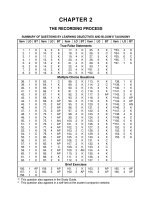
Summary of Questions by Objectives and Bloom’s Taxonomy
Item
SO
BT
Item
True-False Statements
1.
1
K
7.
2.
1
K
8.
3.
1
K
9.
4.
1
K
10.
5.
1
K
11.
6.
1
K
12.
Multiple Choice Questions
28.
1
K
49.
29. 1,2
K
50.
30. 1,2
K
51.
31. 1,2
C
52.
32. 1,2
K
53.
33.
1
C
54.
34.
2
K
55.
35. 1,2
K
56.
36. 1,2
C
57.
37. 1,2
K
58.
38. 1,2
K
59.
39.
1
K
60.
40.
1
K
61.
41.
1
K
62.
42.
1
K
63.
43.
1
AP
64.
44.
2
C
65.
45. 1,2
K
66.
46.
1
AP
67.
47.
1
AP
68.
48.
1
AP
69.
Matching
131. 1,2,3 K
Exercises
132. 1,2
K
136.
133.
1
AP 137.
134. 1,2
AP 138.
135.
1
AP 139.
5.
Challenge
Exercises
150. 1,2,4 AP 151.
Short-Answer Essays
154.
1
K
156.
155.
1,2
K
157.
SO
BT
Item
SO
BT
Ite
m
SO
BT
1
2
1
1
1
1,2
K
K
K
K
K
C
13.
14.
15.
16.
17.
18.
1
1,2
1,2
1,2
3
3
K
K
K
K
K
K
19.
20.
21.
22.
23.
*24.
3
3
4
4
4
A1
K
K
K
K
K
C
1
1
1
1
1
1
1
1
1
1
1
1
1
1,3
1
1,3
1,3
1
1
1
3
AP
AP
AP
AP
AP
AP
AP
AP
AP
AP
AP
AP
AP
AP
AP
AP
AP
AP
AP
AP
K
70.
71.
72.
73.
74.
75.
76.
77.
78.
79.
80.
81.
82.
83.
84.
85.
86.
87.
88.
*89.
*90.
3
3
3
3
3
3
3
3
3
3
3
3
4
4
1,2
1,2
1,2
1,2
1,2
A1
A1
K
C
K
C
K
C
C
K
C
K
AP
AP
K
K
K
AP
AP
AP
AP
K
K
*91.
*92.
93.
94.
95.
96.
97.
98.
99.
100.
101.
102.
103.
104.
105.
106.
107.
108.
109.
110.
111.
A1
A1
1,3
1,3
1,3
1
1
1
1
1
1
1
1
1
1
1
1
1
1
1
3
K
K
C
AP
C
AP
AP
AP
AP
AP
AP
AP
AP
AP
AP
AP
AN
AP
AP
AP
AP
1
1
1
1,2
AP
AP
AP
AP
140.
141.
142.
143.
1,2
1,2
1,2
3
C
AP
AP
AP
144.
145.
146.
147.
3
3
3
4
AP
AP
AP
AP
1,2
AP
152.
1,2
AP
153.
1,2
AP
1
1
C
C
158.
159.
3
4
K
K
160.
161.
A1
A1
K
C
Item
SO
BT
*25.
*26.
*27.
A1
A1
A1
K
K
K
112.
113.
114.
115.
116.
117.
118.
119.
120.
121.
122.
123.
124.
125.
126.
*127.
*128.
*129.
*130.
3
3
3
3
3
3
3
3
3
3
3
3
3
3
3
A1
A1
A1
A1
AP
AP
AP
AP
AP
AN
AP
AP
AP
AP
AP
AP
AP
AP
AP
AP
AP
AN
AP
148.
149.
A1
A1
AP
AP
NN
7-2
Test Bank to accompany Jiambalvo Managerial Accounting, 5th Edition
TRUE-FALSE
1.
Incremental profit is the additional revenue received as a result of selecting one decision
alternative over another.
2.
Sunk costs are incremental costs because they increase or decrease with the choice of one
alternative over another.
3.
Differential costs are relevant in decision-making.
4.
In deciding whether to sell or process further, the costs that have been incurred to process the
product to the split-off point are incremental costs.
5.
In a make-or-buy decision, direct materials and direct labor are usually incremental costs.
6.
In a make-or-buy decision, the original purchase price of equipment that is currently used in the
manufacturing process is usually a relevant cost because the equipment can be sold for its salvage
value.
7.
Avoidable fixed costs are incremental in a make-or-buy decision.
8.
Avoidable costs are always relevant.
9.
Decision alternatives that provide the largest incremental profit are always the best option.
10.
The proper way to analyze the decision to drop a product line is to compare sunk costs to
incremental costs.
11.
Common costs are not directly traceable to an individual product line.
12.
If a company decides to eliminate a product, fixed costs allocated to that product line will be
avoided.
13.
When deciding whether to eliminate a segment, the segment should be dropped if its contribution
margin less the avoidable fixed costs is positive.
14.
Opportunity costs represent the benefits foregone by selecting one alternative over another.
15.
Avoidable costs are always incremental to business decisions.
16.
Fixed costs are always sunk costs.
17.
Two or more products which result from common inputs are called cut-off products.
18.
The best way to allocate the cost of common inputs to joint products is based on the physical
quantities of the outputs.
19.
Allocating joint costs to products based on physical quantities will make all of the products have
the same gross margin ratio if they are sold at the split-off point.
7-3
Chapter 7 The Use of Cost Information in Management Decision Making
20.
The stage of production at which individual products are identifiable is referred to as the spin-off
point.
21.
One advantage of using an outside supplier is the possibility that the outside supplier is
particularly efficient at manufacturing the needed part or component.
22.
The qualitative aspects of a decision must receive the same careful attention as the quantitative
aspects.
23.
A primary disadvantage of using an outside supplier is that the supplier may not be able to deliver
the needed parts or components on a timely basis.
*24.
When applying the theory of constraints, management attempts to improve throughput in factory
bottlenecks.
*25.
A manufacturing company will have a binding constraint unless the capacity in all its departments
exceeds the demand of its products.
*26.
According to the theory of constraints, everything else should be subordinate to the binding
constraint.
*27.
Throughput is the amount of inventory produced in a period.
Material from the appendix to the chapter is marked with an asterisk (*).
Answers
1
2
3
4
5
F
F
T
F
T
6
7
8
9
10
F
T
T
F
F
11
12
13
14
15
T
F
F
T
T
16
17
18
19
20
F
F
F
F
F
21
22
23
*24
*25
T
T
T
T
T
*26 T
*27 T
7-4
Test Bank to accompany Jiambalvo Managerial Accounting, 5th Edition
MULTIPLE CHOICE
28.
Which of the following is quite often not incremental?
A.
Direct labor
B.
Direct material
C.
Variable manufacturing overhead
D.
Fixed manufacturing overhead
29.
Which of the following is never considered in incremental analysis?
A.
Incremental revenue
B.
Sunk costs
C.
Incremental profit
D.
Differential costs
30.
Which of the following is a cost that does not differ between decisions?
A.
Controllable costs
B.
Opportunity costs
C.
Unavoidable costs
D.
Incremental costs
31.
Which one of the following is the preferred alternative when deciding between two alternatives?
A.
No opportunity or sunk costs exist.
B.
Revenues are greater than under the other alternatives.
C.
Expenses are less than under the other alternatives.
D.
Incremental profit is greater than under the other alternatives.
32.
Which of the following is a cost that was incurred in the past that will never be incremental?
A.
Sunk costs
B.
Opportunity costs
C.
Avoidable costs
D.
Relevant costs
33.
A company is trying to decide whether to sell partially completed goods in their current state or
incur additional costs to finish the goods and sell them as complete units. Which of the following
is not relevant to the decision?
A.
The selling price of the completed units
B.
The costs incurred to process the units to this point
C.
The selling price of the partially completed units
D.
The costs that will be incurred to finish the units
34.
A company is trying to decide whether to keep or drop the organic foods department in its grocery
store. If organic foods are dropped, the manager will be laid off. What is the manager's salary in
relation to the decision to keep or drop the department?
A.
An opportunity cost and therefore relevant
B.
Avoidable and therefore incremental
C.
Sunk and therefore not relevant
D.
The same for all alternatives and therefore not relevant
7-5
Chapter 7 The Use of Cost Information in Management Decision Making
35.
Which of the following is most likely relevant in a make-or-buy decision?
A.
Unavoidable costs
B.
Sunk costs
C.
Incremental revenues
D.
Opportunity costs
36.
Wilson is currently producing a component for one of its products. Wilson has received an offer
to buy the component from an outside supplier. A machine is currently being rented to
manufacture the component. If the company buys the component, the rental will be cancelled.
What is the rent on the machine, in relation to the decision to make or buy the component?
A.
Sunk and therefore not relevant
B.
Avoidable and therefore not relevant
C.
Avoidable and therefore relevant
D.
Unavoidable and therefore relevant
37.
Costs that will be eliminated if a particular course of action is undertaken are called
A.
sunk costs.
B.
opportunity costs.
C.
accounting costs.
D.
avoidable costs.
38.
The value of benefits foregone by selecting one decision alternative over another is a(n)
A.
unavoidable cost.
B.
incremental benefit.
C.
differential revenue.
D.
opportunity cost.
39.
A product line should be dropped when
A.
it has a positive contribution margin.
B.
it has unavoidable fixed costs.
C.
there will be a positive change in income if the product line is dropped.
D.
All of these answer choices are correct.
40.
Which of the following statements is(are) true concerning common costs?
I.
They are costs that are directly traceable to an individual product line.
II.
They are normally avoidable.
A.
I only
B.
II only
C.
Both I and II
D.
Neither I nor II
41.
Which of the following is a direct cost of a specific department in a retail store?
A.
Supplies used in cleaning the store
B.
Rent of the store
C.
Utilities used by the store, such as electricity
D.
Cost of the department manager’s salary
7-6
Test Bank to accompany Jiambalvo Managerial Accounting, 5th Edition
42.
When a department or product line is dropped, the common fixed costs that had been allocated to
that department
A.
are eliminated.
B.
become variable costs.
C.
are allocated to the remaining departments or product lines.
D.
become sunk costs.
43.
Harrison Enterprises currently produces 8,000 units of part B13. Current unit costs for part B13
are as follows:
Direct materials
Direct labor
Factory rent
Administrative costs
General factory overhead (allocated)
Total
$12
9
7
10
7
$45
If Harrison decides to buy part B13, 50% of the administrative costs would be avoided. All of the
company’s items, including part B13, are manufactured in the same rented production facility.
The company has an offer from a wholesaler that wishes to sell the part to Harrison for $31 per
unit. What will occur if the company accepts the offer?
A.
The cost for this part will increase by $5 per unit.
B.
The cost for this part will be the same.
C.
The cost for this part will decrease by $14 per unit.
D.
The cost for this part will decrease by $10 per unit.
44.
You have tickets to go to Jamaica over spring break. Just this week your best friend informs you
that he (she) is getting married over spring break. Your friend would like you to stay back in the
city and be the wedding attendant. The tickets to Jamaica are nonrefundable.
Which of the following is a sunk cost relating to your decision of attending the wedding or going
on the trip to Jamaica?
A.
The cost of the airline tickets to Jamaica
B.
The cost of wedding gift
C.
The cost of the clothing you will have to buy/rent to be in the wedding
D.
The cost of the rent on your apartment for the month
45.
Which of the following statements regarding opportunity costs is true?
A.
Opportunity costs are recorded as an expense since they are a cost of accepting another
option.
B.
Opportunity costs are always incremental.
C.
Opportunity costs are unavoidable.
D.
The same decision will be reached whether or not opportunity costs are considered in an
incremental analysis.
7-7
46.
Chapter 7 The Use of Cost Information in Management Decision Making
Samson Designers produces a lady’s handbag that normally sells for $120. The company
produces 800 units annually but has the capacity to produce 1,100 units. An order from a
customer has been received for 200 handbags at $85 each that would not disrupt current
operations. Current costs for the handbag are as follows:
Direct materials
Direct labor
Variable overhead
Fixed overhead
Total
$23.00
45.00
7.00
12.00
$87.00
In addition, the customer would like to add a monogram to each bag which would require an
additional $4 per bag in additional labor costs. Samson would also have to purchase a piece of
equipment to create the monogram which would cost $800. This equipment would not have any
other uses. Which statement is true with regard to this situation?
A.
Incremental revenues will exceed incremental costs by $400.
B.
Incremental revenues will exceed incremental costs by $1,200.
C.
Incremental costs will exceed incremental revenues by $1,200.
D.
Incremental costs will exceed incremental revenues by $2,000.
47.
Speedo produces signature goggles which it sells for $35. The company produces 15,000 pairs of
these goggles annually but has the capacity to produce 20,000. An order for manufacturing and
selling 1,000 pairs at $25 has been received from the U.S. Olympic swim team that would not
disrupt current operations. Current costs for the signature goggles are as follows:
Direct materials
Direct labor
Variable overhead
Fixed overhead
Total
$ 6.00
10.00
3.00
8.00
$27.00
In addition, the Olympic coach would like to add the U.S. Olympic logo to each pair which would
require an additional $2 per pair of goggles in additional labor costs. The company would also
have to rent a logo stamper to stamp the logo which would cost $600. Which statement is true
with regard to this order?
A.
Incremental profit will be $4,000.
B.
Incremental costs will be $27,000.
C.
Incremental costs will be $21,600.
D.
Incremental costs will exceed incremental revenues by $4,600.
48.
Denray Deli has two locations, downtown and in the town mall. During March, the company
reported total net income of $144,000 with sales of $1,200,000. The contribution margin in the
downtown store was 30%. The contribution margin in the town mall store is $80,000. Total fixed
costs are allocated as $110,000 in the downtown store and $90,000 in the town mall location.
How much are sales at the downtown location?
A.
$880,000
B.
$1,146,667
C.
$254,000
D.
None of these answer choices are correct.
7-8
Test Bank to accompany Jiambalvo Managerial Accounting, 5th Edition
49.
Mel’s Diner owns a single restaurant, which has a cantina primarily used to seat patrons while
they wait on their tables. The company is considering eliminating the cantina. Segmented
contribution income statements are as follows and fixed costs applicable to both segments are
allocated on the basis of square footage.
Sales
Variable costs
Direct fixed costs
Allocated fixed costs
Net income
Restaurant
$800,000
475,000
50,000
212,500
$ 62,500
Cantina
$200,000
160,000
15,000
37,500
($ 12,500)
Total
$1,000,000
635,000
65,000
250,000
$ 50,000
What effect will occur if Mel’s Diner eliminates the cantina if there is no effect on restaurant
sales?
A.
Net income will increase by $12,500.
B.
Net income will decrease to $37,500.
C.
Net income will decline by $25,000.
D.
Net income will be $62,500.
50.
The Book Rack has two locations, downtown and on campus. During March, the company
reported net income of $164,000 and sales of $1.2 million. The contribution margin in the
downtown store was $320,000 (32% of sales). The contribution margin in the campus store is
$110,000. Direct fixed costs are $90,000 in the downtown store and $93,000 in the campus
location. How much are total variable costs?
A.
$953,000
B.
$770,000
C.
$680,000
D.
$430,000
51.
Abacus has 800 obsolete calculators that are carried in inventory at a cost of $1,920. If these
calculators are upgraded at a cost of $3,100, they could be sold for $4,500. Alternatively, the
calculators could be sold “as is” for $1,600. What is the net advantage or disadvantage of
reworking the calculators?
A.
$1,400 advantage
B.
$2,900 advantage
C.
$5,440 disadvantage
D.
$200 disadvantage
52.
Swell Computers has 12 obsolete computers that are carried in its inventory at a cost of $13,200.
If these computers are upgraded at a cost of $7,500, they could be sold for $15,300. Alternatively,
the computers could be sold “as is” for $9,000. What is the net advantage or disadvantage of
upgrading the computers?
A.
$6,300 advantage
B.
$1,200 disadvantage
C.
$5,400 disadvantage
D.
$3,000 advantage
7-9
53.
Chapter 7 The Use of Cost Information in Management Decision Making
The following are production and cost data for two products, buckets and pails, produced in
batches of 600 each.
Contribution margin per batch
Machine set-ups needed per batch
Buckets
$360
14
Pails
$250
9
The company can only perform 9,450 set-ups each period, yet there is unlimited demand for each
product. What is the maximum contribution margin for the year?
A.
$366,000
B.
$243,000
C.
$1,050
D.
$262,500
54.
The following are production and cost data for two products, A and B, produced in batches of 100
units.
Contribution margin per batch
Machine set-ups needed per batch
Product A
$450
25
Product B
$340
20
The company can only perform 12,000 set-ups each period yet there is unlimited demand for each
product. What is the incremental profit from producing Product A instead of Product B for the
year?
A.
$216,000
B.
$204,000
C.
$12,000
D.
$54,000
55.
Marshal Costumes owns two stores and management is considering eliminating the Mandarin
store due to declining sales. Common fixed costs are allocated on the basis of sales. Contribution
income statements are as follows:
Arlington
Mandarin
Total
Sales
$300,000
$200,000
$500,000
Variable costs
160,000
130,000
290,000
Direct fixed costs
40,000
20,000
60,000
Allocated fixed costs
80,000
65,000
145,000
Net Income
$ 20,000
$ (15,000)
$ 5,000
Marshal’s management feels that if they eliminate the Mandarin store, that sales in the Arlington
store will increase by 10%. If the Mandarin store is closed, what is the incremental effect on
profit for Marshal Costumes?
A.
Increase by $17,000
B.
Decrease by $36,000
C.
Increase by $22,000
D.
Decrease by $20,000
7-10
Test Bank to accompany Jiambalvo Managerial Accounting, 5th Edition
56.
Publix has 2,700 pounds of bananas with a total cost of $864. Because the bananas have become
too ripe, Publix is contemplating whether it should use the bananas to bake banana bread or sell
the bananas ‘as is’ to the homeless center for $1,485. In addition to the cost of the bananas, it
would cost $2,565 to convert the bananas into bread, which could then be sold for a total of
$4,480. However, a special oven to bake the bread will have to be rented for an additional $300.
What is the incremental effect on income if Publix converts the bananas to banana bread?
A.
Increase of $130
B.
Increase of $430
C.
Decrease of $734
D.
Increase of $1,615
57.
Fanatic Footwear has two store locations, midtown and at the beach. During October, the
company reported net income of $80,000 on sales of $450,000. Sales in the midtown store were
$170,000 and variable costs in the beach store were 40% of sales. The contribution margin in the
midtown store was $85,000. If total direct fixed costs are $40,000, how much are total fixed costs
for Fanatic Footwear?
A.
$93,000
B.
$150,000
C.
$370,000
D.
None of these answer choices are correct.
58.
Watson Wheels currently makes 6,000 wheels annually that are used in other products it
manufactures. Current unit costs for the wheels are as follows:
Direct materials
Direct labor
Variable manufacturing overhead
Fixed manufacturing overhead
Total
$22.00
16.00
12.00
15.00
$65.00
The company has an offer from a manufacturer to produce the wheels for $60 per wheel. If the
company decides to buy the wheels, the empty warehouse space could be rented for $22,000
annually. In addition, half of the fixed manufacturing overhead costs would be avoided if the
company decides to buy the wheels. If the company decides to accept the offer, what is the
incremental effect on the company’s net income?
A.
A savings of $7,000
B.
A savings of $37,000
C.
A decrease in net income of $15,000
D.
An increase in net income of $52,000
59.
Trebecker Construction plans to discontinue its roofing segment which last year generated a
contribution margin of $65,000 and incurred $70,000 in fixed costs. If the segment is
discontinued, half of the fixed costs will be avoided. What effect is expected to occur to the
company’s overall profit?
A.
A decrease of $5,000
B.
A decrease of $30,000
C.
A decrease of $5,000
D.
An increase of $30,000
7-11
Chapter 7 The Use of Cost Information in Management Decision Making
60.
Tannimen Square has 800 obsolete calculators in its inventory which have a cost of $16 each. If
the calculators are reworked they could be sold for $23 each. If sold ‘as-is’, the revenue would be
only $12 each. If Tannimen decides to rework the calculators, how much should the company be
willing to invest to ensure that no additional loss occurs on the sale of the calculators?
A.
$5,600
B.
$8,800
C.
$0
D.
$3,200
61.
Blue Chip Company sells gears for $9 per unit. The unit cost of each gear follows:
Direct materials
Direct labor
Manufacturing overhead
Total
$1.50
2.20
2.10
$5.80
An order to purchase 4,000 gears was recently received from a new customer. There is enough
capacity to fill the order and filling this order would not disrupt current operations. Blue Chip
Company would incur an additional $1.80 per gear for shipping costs. Half of the manufacturing
overhead costs are fixed and would be incurred no matter how many units are produced. In
negotiating a price, how much is the minimum acceptable selling price?
A.
$7.60
B.
$5.80
C.
$4.75
D.
$6.55
62.
Conviser Tools manufactures a number of products from the same raw material. Joint processing
costs total $10,000. Product A could be sold at the cut-off point for $18,000 or it can be further
processed at a cost of $9,000 and then sold for $35,000. Conviser should:
A.
Further process product A because its incremental revenues will exceed incremental costs
by $8,000.
B.
Further process product A because its incremental revenues will exceed incremental costs
by $26,000.
C.
Sell as-is because the incremental loss is $2,000 if processed further.
D.
Further process product A because its incremental revenues will exceed incremental costs
by $16,000.
63.
Barnett Brass sells economy door knobs for $15 each. Unit product costs are as follows:
Direct materials
Direct labor
Manufacturing overhead
Total
$3
2
4
$9
An order to purchase 4,000 units was recently received from a new customer. There is enough
capacity to fill the order and filling this order would not disrupt current operations. Barnett Brass
would incur an additional $1.50 per unit for shipping costs. Thirty percent of the manufacturing
overhead costs are fixed and would be incurred no matter how many units are produced. In
negotiating a price, how much is the minimum acceptable selling price?
A.
$10.50
B.
$7.80
C.
$9.30
D.
$7.70
7-12
Test Bank to accompany Jiambalvo Managerial Accounting, 5th Edition
64.
Meehan Gifts manufactures a number of products from the same raw material. Joint processing
costs total $4,000. Product Z could be sold at the cut-off point for $6,000 or it can be further
processed at a cost of $9,000 and then sold for $14,000. Meehan Company should
A.
sell product Z at the split-off point because its incremental costs will exceed incremental
revenues by $5,000 than if processed further.
B.
further process product Z because its incremental revenues will exceed incremental costs
by $1,000 with this option.
C.
sell product Z at the split-off point because its incremental costs will exceed incremental
revenues by $1,000 than if processed further.
D.
sell product Z at the split-off point because its incremental costs will exceed incremental
revenues by $5,000 than if processed further.
65.
B&B Flooring produced 8,000 yards of its economy-grade carpet. In the coloring process, there
was a pigment defect and the resulting color faded. The carpet normally sells for $18 per yard,
with $6 of variable cost per yard and $3 of fixed cost per yard assigned to the carpet. The
company realizes that it cannot sell the faded carpet for $18 per yard through its normal channels,
unless the coloring process is repeated. The incremental cost of the coloring process is $4 per
yard. Ace Apartments is willing to buy the carpet in its current faded condition for $13 per yard.
Should B&B repeat the coloring process or sell the carpet to Ace Apartments?
A.
Repeat coloring for $8,000 benefit
B.
Sell ‘as is’ to Ace for $32,000 benefit
C.
Repeat coloring for $56,000 benefit
D.
Sell ‘as is’ to Ace for $56,000 benefit
66.
Foot Print has three product lines in its retail stores: shoes, boots, and sandals. The allocated fixed
costs are based on units sold and are unavoidable. Results of June follow:
Units sold
Revenue
Variable costs
Direct fixed costs
Allocated fixed costs
Net income (loss)
Socks
800
$24,800
13,600
5,000
8,000
$(1,800)
Boots
1,200
$30,400
13,200
7,000
9,000
$ 1,200
Sandals
2,400
$36,600
16,800
6,500
8,000
$ 5,300
Total
4,400
$91,800
43,600
18,500
25,000
$ 4,700
Demand of individual products is not affected by changes in other product lines. How much is
the incremental effect on income of dropping socks?
A.
Decrease of $11,200
B.
Decrease of $6,200
C.
Increase of $1,800
D.
Decrease of $1,500
7-13
67.
Chapter 7 The Use of Cost Information in Management Decision Making
Deep South Dairy gathered the following data about the two products that it produces:
Product
Milk
Yogurt
Current Sales
Value
$8,000
12,000
Estimated Added
Processing Costs
$2,000
7,000
Sales Value if
Processed Further
$11,000
18,000
Which of the products should be processed further?
A.
Milk, because profits increase by $1,000, whereas Yogurt results in decrease of profit
B.
Yogurt, because profits increase by $1,000, which exceeds the profits increased by Milk
C.
Both products, because revenue will increase by $9,000 for Milk, and by $6,000 for
Yogurt
D.
Both products, because profits for Milk will be $1,000, and profit for Yogurt will be
$1,000
68.
Way Living sells unfinished oak shelves for $35 each. Budgeted sales for the year are expected to
be 4,000 shelves. Each shelf requires 4 linear feet of wood to produce. The cost of wood is $4.80
per linear foot. Direct labor is $6.00 per shelf. Variable overhead and fixed overhead costs per
unfinished shelf are $1.00 and $0.50 respectively. Way Living is considering whether it should
stain the shelves so it can sell them for $48.00 each. It estimates it will sell 60% of the budgeted
shelves ‘stained’ with the others unfinished. The direct costs of staining each shelf are $9.00.
How much is the incremental effect on profit if the company stains the shelves?
A.
$16,000
B.
$67,200
C.
$52,000
D.
None of these answer choices are correct.
69.
Two or more products that result from common inputs are called
A.
split products.
B.
joint products.
C.
split-off products.
D.
common products.
70.
Joint costs
A.
are the cost of the common inputs for joint products.
B.
are the costs incurred after the split-off point for joint products.
C.
are expensed because they have no future benefit for a company.
D.
only exist when there are no opportunity costs involved in the decision.
71.
Which of the following is a common input resulting in joint products?
A.
Logwood that is made into shelves of different lengths
B.
Uncooked pasta, which is made into cooked meals at a restaurant
C.
Flour that is made into bread, cookies, and other baked goods
D.
A hog that is made into ham, bacon, and other meat products
72.
What is the stage of production at which the individual joint products are identified?
A.
Split-off point
B.
Joint processing point
C.
Joint identification point
D.
Relative sales point
7-14
Test Bank to accompany Jiambalvo Managerial Accounting, 5th Edition
73.
Which of the following is not a joint product?
A.
Milk converted into cream and butter
B.
Logs converted into paper and cardboard
C.
Crude oil converted into gasoline and jet fuel
D.
4’ x 8’ plywood converted into chairs and tables
74.
At the split-off point,
A.
the production process stops and profitable products can be sold.
B.
inventory becomes obsolete.
C.
the company recognizes profit by selling the product.
D.
the cost incurred can be separated into individual joint products.
75.
The allocation of joint costs to joint products influences
A.
the dollar amount of profit of each joint product.
B.
the overall profitability of the company.
C.
the decision to sell or process further the joint products.
D.
the timing of when the split-off point will occur.
76.
Production of all the joint products should cease if
A.
any of the individual joint products sells for less than its allocated cost.
B.
the total joint cost is less than the total revenue generated when all of the joint products
are sold.
C.
any of the joint products have a negative gross margin after the joint costs have been
allocated.
D.
total revenue from the sale of all the joint products is less than the joint cost.
77.
Which method of allocating joint costs is based on the proportional sales values at the split-off
point?
A.
Proportional method
B.
Physical quantities method
C.
Relative sales value method
D.
Joint allocation method
78.
Which statement is true of the relative sales value method if all joints products are sold at the
split-off point?
I. The products will have the same gross margin ratio.
II. The products will have the same gross margin per unit.
A.
Both I and II
B.
Neither I nor II
C.
Only I
D.
Only II
79.
When making a decision to sell a joint product at the split-off point or process it further, which of
the following is not relevant?
A.
The amount of joint costs assigned
B.
The sales value at the split-off point
C.
The cost of further processing
D.
The sales value after further processing
7-15
80.
Chapter 7 The Use of Cost Information in Management Decision Making
LanaTech produces three products, X, Y, and Z, from recycled paper. Budgeted data for next
month follows:
Units produced
Sales value at split-off per unit
Additional processing costs per unit
Joint production costs per unit
Sales value if processed further per unit
X
800
$6
$1
$2
$9
Y
2,400
$15
$4
$6
$20
Z
1,600
$12
$5
$4
$16
The joint cost of the recycled paper is $110,000. Which of the products should be produced
beyond the split-off point?
X
Y
Z
A.
No
Yes
Yes
B.
Yes
Yes
No
C.
No
No
No
D.
No
Yes
No
81.
Ralston Tile produces three types of ceramic tiles, models 33, 41, and 56 from clay, which is
mined in the Arizona desert. Budgeted data for next month follows:
Units produced
Sales value at split-off per unit
Additional processing costs per unit
Joint production costs per unit
Sales value if processed further per unit
33
3,000
$15
$4
$2
$20
41
4,500
$18
$6
$5
$23
56
6,000
$24
$7
$5
$32
The joint cost of mining the clay is $80,000. Which of the products should be produced beyond
the split-off point?
33
41
56
A.
Yes
Yes
Yes
B.
Yes
Yes
No
C.
No
Yes
Yes
D.
Yes
No
Yes
82.
One advantage of using an outside supplier is that
A.
the adverse effect of a downturn in the business will be less severe.
B.
it will enhance the manager’s control over the production process.
C.
the component produced will always be of a better quality.
D.
it will boost employee morale.
83.
Which of the following is a disadvantage of using an outside supplier?
A.
Employees may have to be laid off if production is outsourced.
B.
The supplier assumes the risk of obsolete inventory.
C.
The supplier may provide a cost savings due to increased efficiencies.
D.
The supplier may have better quality control.
7-16
Test Bank to accompany Jiambalvo Managerial Accounting, 5th Edition
84.
Which of the following costs are always incremental and relevant in decision analysis?
A.
Opportunity costs and sunk costs
B.
Sunk costs and avoidable costs
C.
Unavoidable costs and opportunity costs
D.
Relevant costs and opportunity costs
85.
State University is considering hiring an outside company for its grounds maintenance. In this
regard, State University has received a bid from Mackin Services. Mackin states that its bid of
$410,000 will cover all services and planting materials required to “keep State University’s
grounds in a condition comparable to prior years.” State University’s cost for grounds
maintenance in the preceding year was $412,000 as follows:
Salary of three full-time gardeners
Plant materials
Fertilizer
Fuel
Depreciation of other equipment
Depreciation of tractor and mowers
Total
$295,000
80,000
9,000
8,000
5,000
15,000
$412,000
If State University hires Mackin, it will be able to sell its other equipment for $30,000, and the
three gardeners will be laid off. What is the first year financial impact of hiring the outside
company for its grounds maintenance?
A.
$13,000 additional cost
B.
$2,000 savings
C.
$17,000 savings
D.
$30,000 savings
86.
State University is considering hiring an outside company for its grounds maintenance. In this
regard, State University has received a bid from Mackin Services. Mackin states that its bid of
$410,000 will cover all services and planting materials required to “keep State University’s
grounds in a condition comparable to prior years.” State University’s cost for grounds
maintenance in the preceding year was $412,000 as follows:
Salary of three full-time gardeners
Plant materials
Fertilizer
Fuel
Depreciation of other equipment
Depreciation of tractor and mowers
Total
$295,000
80,000
9,000
8,000
5,000
15,000
$412,000
If State University hires Mackin, it will be able to sell its other equipment for $30,000, and the
three gardeners will be laid off. What will savings be in the second year?
A.
$13,000 additional costs
B.
$2,000 savings
C.
$7,000 savings
D.
$30,000 savings
7-17
87.
Chapter 7 The Use of Cost Information in Management Decision Making
Sanders Toys is beginning to manufacture Bungey Wagons. The product will be sold to toy store
chains for $12 each. Management allocates $120,000 of fixed manufacturing overhead costs to
Bungey Wagons. The manufacturing cost for each wagon at the expected production of 10,000
wagons is as follows:
Direct material
Direct labor
Overhead ($1.20 fixed and $2.00 variable)
Total
$ 13.00
4.00
3.20
$20.20
The company has contacted a number of suppliers to determine whether it is better to buy or
manufacture the wheels. The lowest quote for a set of 4 wheels needed for each wagon is $3.15. It
is estimated that purchasing the wheels from a supplier will save 10 percent of direct materials,
20 percent of direct labor, and 15 percent of variable overhead. Sanders Toys’ manufacturing
space is highly constrained. By purchasing the wheels, the company will not have to lease
additional manufacturing space that currently cost $8,000 per year. What is the incremental cost
or benefit of buying the wheels as opposed to making them?
A.
$500 net benefit
B.
$7,500 net cost
C.
$14,500 net cost
D.
None of these answer choices are correct.
88.
Hanson Sports has three product lines: footballs, basketballs, and bats. Common costs are
allocated based on relative sales. A product line income statement for the year ended December
31, 2014 follows:
Football
s Basketballs
Bats
Total
Sales
$600,000
$800,000
$400,000 $1,800,000
Cost of goods sold
260,000
400,000
230,000
890,000
Gross margin
340,000
400,000
170,000
910,000
Less other variable costs
85,000
120,000
80,000
285,000
Contribution margin
255,000
280,000
90,000
625,000
Less direct salaries
50,000
60,000
45,000
155,000
Less common fixed costs
85,000
100,000
55,000
240,000
Net income
$120,000
$120,000
($10,000) $ 230,000
Since the profit for bats is relatively low, the company is considering dropping this product line.
What is the incremental effect of dropping bats?
A.
$185,000
B.
($45,000)
C.
$240,000
D.
$280,000
*89.
The theory of constraints seeks to
A.
improve throughput in all departments.
B.
improve throughput in the department with the binding constraint.
C.
create more constraints.
D.
sell at the split-off point.
7-18
Test Bank to accompany Jiambalvo Managerial Accounting, 5th Edition
*90.
As it pertains to the theory of constraints, inspections should be conducted
A.
after the process with the binding constraint.
B.
during the process with the binding constraint.
C.
before the work is transferred to a constrained department.
D.
without regard to the binding constraint.
*91.
In theory of constraints, what does “break the binding constraint” mean?
A.
Improve the process that was the binding constraint.
B.
Improve all processes simultaneously.
C.
Make sure that the items made in the constrained process yield the highest contribution
margin.
D.
Make across-the-board cuts to all processes that are binding.
*92.
When operating in a constrained environment, which products should be produced?
A.
Those with the highest contribution margin per unit
B.
Those with the highest contribution margin per unit of the constrained process
C.
Those with the highest selling price
D.
Those with the lowest allocated joint cost
93.
Zanatech’s market for its remote control has changed significantly, and Zanatech has had to drop
the selling price per unit from $45 to $38. There are some units in the work in process inventory
that have costs of $30 per unit associated with them. Zanatech can sell these units in their current
state for $22 each. It will cost Zanatech $11 per unit to rework these units so that they can be sold
for $38 each. Which of the following is not a relevant value in this problem?
A.
$22
B.
$30
C.
$38
D.
$8
94.
Zanatech’s market for its remote control has changed significantly, and Zanatech has had to drop
the selling price per unit from $45 to $38. There are some units in the work in process inventory
that have costs of $30 per unit associated with them. Zanatech can sell these units in their current
state for $22 each. It will cost Zanatech $11 per unit to rework these units so that they can be sold
for $38 each. How much is the financial impact if the units are processed furthur?
A.
$5 per unit profit
B.
$16 per unit profit
C.
$3 per unit loss
D.
$12 per unit loss
95.
Zanatech’s market for its remote control has changed significantly, and Zanatech has had to drop
the selling price per unit from $45 to $38. There are some units in the work in process inventory
that have costs of $30 per unit associated with them. Zanatech can sell these units in their current
state for $22 each. It will cost Zanatech $11 per unit to rework these units so that they can be sold
for $38 each. Which of the following is the amount of sunk costs in this problem?
A.
$30 per unit
B.
$11 per unit
C.
$38 per unit
D.
$15 per unit
7-19
Chapter 7 The Use of Cost Information in Management Decision Making
96.
Zanatech’s market for its remote control has changed significantly, and Zanatech has had to drop
the selling price per unit from $45 to $38. There are some units in the work in process inventory
that have costs of $30 per unit associated with them. Zanatech can sell these units in their current
state for $22 each. It will cost Zanatech $11 per unit to rework these units so that they can be sold
for $38 each. A new employee looks at the analysis and exclaims, “We’ll lose money with either
of these alternatives! Let’s just throw these units in the trash!” What effect will this option have
on net income?
A.
Profit will decrease by $45 per unit for each unit discarded.
B.
Profit will decrease by $30 per unit for each unit discarded.
C.
Profit will increase by $11 per unit since the completion costs will not have to be
incurred.
D.
Profit will decrease by $5 per unit for each unit discarded.
97.
Reason Food Store has 4,000 pounds of raw pork approaching its expiration date. Each pound has
a cost of $4.50. The pork could be sold ‘as is’ for $3.00 per pound to the dog food processing
plant, or roasted and sold in the deli. The cost of roasting the pork will be $2.80 per pound and
each pound could be sold for $6.50. What should be done with the pork and why?
A.
The pork should be thrown away since there will be a loss with each of the other
alternatives.
B.
The pork should be processed further since the sales price increases by $3.50 per pound
and the cost only increases by $2.80 per pound.
C.
The pork should be sold ‘as is’ since there is no reason to put more cost into a product
that is already selling below its $4.50 cost.
D.
It does not matter which option is undertaken since all alternatives result in a loss.
98.
Winton Corporation currently makes rolls for deli sandwiches it produces. It uses 30,000 rolls
annually in the production of deli sandwiches. The costs to make the rolls are given below:
Materials
Labor
Variable overhead
Fixed overhead
$0.24 per roll
$0.40 per roll
$0.16 per roll
$0.20 per roll
A potential supplier has offered to sell Winton the rolls for $0.90 each. If the rolls are purchased,
30% of the fixed overhead could be avoided. If Winton accepts the offer, what will the effect on
profit be?
A.
$1,200 decline in profit
B.
$1,200 increase in profit
C.
$3,000 decline in profit
D.
$3,000 increase in profit
7-20
Test Bank to accompany Jiambalvo Managerial Accounting, 5th Edition
99.
Tool Time manufactures carpenter-grade screwdrivers. The company is trying to decide whether
to continue to make the case in which the screwdrivers are sold, or to outsource the case to
another company. The direct material and direct labor cost to produce the cases total $2.00 per
case. The overhead cost is $1.00 per case which consists of $0.40 in variable overhead that would
be eliminated if the cases are bought from the outside supplier. The $0.60 of fixed overhead is
based on expected production of 200,000 cases per year and consists of the salary of the case
production manager of $40,000 per year, along with the remainder consisting of rent, insurance,
and depreciation on equipment that will have no resale value. The manager will be laid off if the
cases were bought externally. The outside supplier has offered to supply the cases for $2.80 each.
How much will Tool Time save or lose if the cases are bought externally?
A.
Save $0.40 per case
B.
Lose $0.10 per case
C.
Lose $0.80 per case
D.
Save $0.10 per case
100.
Diamond Brands manufactures rice, wheat, and oat cereals. Sanders Company has approached
Diamond Brands with a proposal to sell the company the rice cereals at a price of $22,000 for
20,000 pounds. The following costs are associated with production of 20,000 pounds of rice
cereal:
Direct material
Direct labor
Manufacturing overhead
Total
$13,000
5,000
7,000
$25,000
The manufacturing overhead consists of $2,000 of variable costs with the balance being allocated
to fixed costs. What is the amount of avoidable costs if Diamond Brands buys rather than makes
the rice cereal?
A.
$25,000
B.
$22,000
C.
$23,000
D.
$20,000
101.
Diamond Brands manufactures rice, wheat, and oat cereals. Sanders Company has approached
Diamond Brands with a proposal to sell the company the rice cereals at a price of $22,000 for
20,000 pounds. The following costs are associated with production of 20,000 pounds of rice
cereal:
Direct material
Direct labor
Manufacturing overhead
Total
$13,000
5,000
7,000
$25,000
The manufacturing overhead consists of $2,000 of variable costs with the balance being allocated
to fixed costs, which are 30% unavoidable. What is the incremental cost per pound that Diamond
will (incur) or save if it buys the rice cereal from Sanders?
A.
$1.175 savings
B.
$0.10 cost
C.
$0.075 savings
D.
$23.50 cost
7-21
102.
Chapter 7 The Use of Cost Information in Management Decision Making
Diamond Brands manufactures rice, wheat, and oat cereals. Sanders Company has approached
Diamond Brands with a proposal to sell the company the rice cereals at a price of $22,000 for
20,000 pounds. The following costs are associated with production of 20,000 pounds of rice
cereal:
Direct material
Direct labor
Manufacturing overhead
Total
$13,000
5,000
7,000
$25,000
The manufacturing overhead consists of $2,000 of variable costs with the balance being allocated
fixed costs. Should Diamond Brands make or buy the rice cereal?
A.
Buy them to save $4,000.
B.
Continue to make them because the incremental cost of buying is $2,000.
C.
Buy them to save $2,000.
D.
Continue to make them because the incremental cost of buying is $22,000.
103.
Macho Sports Company sells soccer and baseball merchandise. The company is trying to decide
whether or not to continue the baseball merchandise given the decline in the demand and current
loss of this product line. The following information is available for the segments:
Sales
Variable costs
Contribution margin
Direct fixed costs
Allocated common fixed costs
Net income
Baseball
$120,000
72,000
48,000
32,000
20,000
($ 4,000)
Soccer
$420,000
220,000
200,000
70,000
70,000
$ 60,000
If the baseball segment is dropped, soccer sales will be unaffected. What will be the effect on
overall profits if the baseball segment is eliminated?
A.
Overall profits will increase $4,000.
B.
Overall profits will decrease by $48,000.
C.
Overall profits will decrease by $16,000.
D.
Overall profits will decrease by $120,000.
7-22
Test Bank to accompany Jiambalvo Managerial Accounting, 5th Edition
104.
Macho Sports Company sells soccer and baseball merchandise. The company is trying to decide
whether or not to continue the baseball merchandise given the decline in the demand and current
loss of this product line. The following information is available for the segments:
Sales
Variable costs
Contribution margin
Direct fixed costs
Allocated common fixed costs
Net income
Baseball
$120,000
72,000
48,000
32,000
20,000
($ 4,000)
Soccer
$420,000
220,000
200,000
70,000
70,000
$ 60,000
The company will allocate more space to the soccer product line if the baseball line is dropped.
This will allow soccer sales to increase by 25%. What is the incremental effect of the decision to
drop the baseball line?
A.
Net income will increase by $2,000.
B.
Net income will increase by $30,000.
C.
Net income will increase by $34,000.
D.
Net income will increase by $54,000.
105.
Wedding Supply is trying to decide whether or not to continue distributing reception supplies.
The following information is available for Wedding Supply’s business segments.
Sales
Variable costs
Contribution margin
Direct fixed costs
Allocated common fixed costs
Net income
Reception Supplies
$160,000
84,000
76,000
50,000
30,000
($ 4,000)
Bridal Dresses Floral Decorations
$110,000
$210,000
50,000
120,000
60,000
90,000
20,000
25,000
25,000
30,000
$ 15,000
$ 35,000
If reception supplies are dropped, what change will occur to profit?
A.
Decrease by $26,000
B.
Decrease by $76,000
C.
Increase by $4,000
D.
None of these answer choices are correct.
7-23
106.
Chapter 7 The Use of Cost Information in Management Decision Making
Wedding Supply is trying to decide whether or not to continue distributing reception supplies.
The following information is available for Wedding Supply’s business segments.
Reception Supplies Bridal Dresses Floral Decorations
Sales
$160,000
$110,000
$210,000
Variable costs
84,000
50,000
120,000
Contribution margin
76,000
60,000
90,000
Direct fixed costs
50,000
20,000
25,000
Allocated common fixed costs
30,000
25,000
30,000
Net Income
($ 4,000)
$ 15,000
$ 35,000
If reception supplies are dropped, floral decorations sales are expected to increase by 20%. What
impact will the increase in floral decorations have on overall profitability?
A.
Income will increase by $7,000.
B.
Income will increase by $16,000.
C.
Income will decrease by $18,000.
D.
Income will decrease by $8,000.
107.
Diva Footwear is contemplating if it should continue producing platform shoes. The following
information is available for the company’s segments
Sales
Variable costs
Contribution margin
Direct fixed costs
Allocated fixed costs
Net income
Platform Shoes
$120,000
64,000
56,000
45,000
20,000
($ 9,000)
Athletic Shoes
$420,000
220,000
200,000
70,000
70,000
$ 60,000
Boots
$360,000
140,000
220,000
90,000
60,000
$ 70,000
Based on the information provided, which of the following is most likely to be the basis of
allocating the fixed costs to the segments?
A.
Sales
B.
Direct fixed costs
C.
Net income
D.
Variable costs
108.
Diva Footwear is contemplating if it should continue producing platform shoes. The following
information is available for the company’s segments.
Sales
Variable costs
Contribution margin
Direct fixed costs
Allocated fixed costs
Net income
Platform Shoes
$120,000
64,000
56,000
45,000
20,000
($ 9,000)
Athletic Shoes
$420,000
220,000
200,000
70,000
70,000
$ 60,000
Boots
$360,000
140,000
220,000
90,000
60,000
$ 70,000
If platform shoes are dropped, what effect will occur to Diva Footwear’s net income?
A.
Increase by $9,000
B.
Decrease by $56,000
C.
Decrease by $11,000
D.
Increase by $56,000
7-24
Test Bank to accompany Jiambalvo Managerial Accounting, 5th Edition
109.
Diva Footwear is contemplating if it should continue producing platform shoes. The following
information is available for the company’s segments.
Sales
Variable costs
Contribution margin
Direct fixed costs
Allocated fixed costs
Net income
Platform Shoes
$120,000
64,000
56,000
45,000
20,000
($ 9,000)
Athletic Shoes
$420,000
220,000
200,000
70,000
70,000
$ 60,000
Boots
$360,000
140,000
220,000
90,000
60,000
$ 70,000
If platform shoes are dropped, sales of athletic shoes are expected to drop by 10%. What impact
will occur to Diva Footwear’s net income?
A.
Income will decrease by $11,000.
B.
Income will decrease by $31,000.
C.
Income will decrease by $53,000.
D.
Income will increase by $9,000.
110.
The following information is available for Diva Footwear’s segments:
Sales
Variable costs
Contribution margin
Direct fixed costs
Allocated fixed costs
Net income
Platform Shoes
$120,000
64,000
56,000
45,000
20,000
($ 9,000)
Athletic Shoes
$420,000
220,000
200,000
70,000
70,000
$ 60,000
Boots
$360,000
140,000
220,000
90,000
60,000
$ 70,000
Diva Footwear normally sells boots for $90 per pair. An exporter has approached Diva about
buying 1,000 pairs of boots for a one-time export deal for $81 per pair. Diva can avoid $3.00 per
pair of the normal variable cost on this sale, but Diva must pay a fixed cost of $4,000 to have the
boots shipped. Diva has the capacity to produce this order, and no regular sales will be affected.
What affect will occur on Diva’s profits if the order is accepted?
A.
Profits will increase by $42,000.
B.
Profits will increase by $49,000.
C.
Profits will increase by $45,000.
D.
More information is needed to answer.
111.
Hurley Processors processes clay into two joint products—molding foam and craft blocks. When
processed, each pound of clay yields 20 units of foam and 80 units of blocks. Foam sells for $2
per unit and blocks sells for $1.50 per unit. The total cost to process a 100-pound batch of clay is
$35. If the physical quantities method is used to allocate the joint costs, how much will be
allocated to each batch of modeling foam?
A.
$7.00
B.
$8.75
C.
$28.00
D.
$40.00
7-25
Chapter 7 The Use of Cost Information in Management Decision Making
112.
Hurley Processors processes clay into two joint products, molding foam and craft blocks. When
processed, each pound of clay yields 20 units of foam and 80 units of blocks. Foam sells for $2
per unit and blocks sells for $1.50 per unit. The total cost to process a 100-pound batch of clay is
$35. If the physical quantities method is used to allocate the joint costs, how much will be
allocated to each batch of craft blocks?
A.
$1.20
B.
$28.00
C.
$8.75
D.
$120.00
113.
Hurley Processors processes clay into two joint products, molding foam and craft blocks. When
processed, each pound of clay yields 20 units of foam and 80 units of blocks. Foam sells for $2
per unit and blocks sells for $1.50 per unit. The total cost to process a 100-pound batch of clay is
$35. If the relative sales value method is used to allocate the joint costs, what is the total amount
that will be allocated to each batch?
A.
$55
B.
$35
C.
$160
D.
None of these answer choices are correct.
114.
Hurley Processors processes clay into two joint products, molding foam and craft blocks. When
processed, each pound of clay yields 20 units of foam and 80 units of blocks. Foam sells for $2
per unit and blocks sells for $1.50 per unit. The total cost to process a 100-pound batch of clay is
$35. If the relative sales value method is used to allocate the joint costs, how much will be
allocated to each batch of modeling foam?
A.
$7.00
B.
$8.75
C.
$28.00
D.
$15.00
115.
Hurley Processors processes clay into two joint products, molding foam and craft blocks. When
processed, each pound of clay yields 20 units of foam and 80 units of blocks. Foam sells for $2
per unit and blocks sells for $1.50 per unit. The total cost to process a 100-pound batch of clay is
$35. If the relative sales value method is used to allocate the joint costs, how much will be
allocated to craft blocks?
A.
$8.75
B.
$26.25
C.
$28.00
D.
$15.00