Volume 5 biomass and biofuel production 5 08 – ethics of biofuel production
Bạn đang xem bản rút gọn của tài liệu. Xem và tải ngay bản đầy đủ của tài liệu tại đây (474.67 KB, 10 trang )
5.08
Ethics of Biofuel Production
I Waller, FiveBarGate Consultants Ltd, Cleveland, UK
© 2012 Elsevier Ltd.
5.08.1
5.08.2
5.08.3
5.08.4
5.08.5
5.08.6
5.08.7
5.08.8
5.08.9
5.08.10
5.08.11
5.08.12
5.08.13
5.08.14
References
Introduction
A Model for Sustainability Management Systems
RTFO
RED
ISCC
RSB
RSPO
RTRS
CEN Standard on Biomass for Transport Biofuels
ISO Standard on Biomass for Energy
Various Standards in the Retail Sector
International Labor Laws
Indirect Land Use Change
Conclusions
99
99
103
103
104
104
104
105
105
105
106
106
107
107
107
5.08.1 Introduction
The issue of ethical aspects of biofuels production requires consideration of multiple and varied factors. These include the impact of
a biofuels production pathway on the stakeholders affected by the supply chain and the environment within which the supply chain
operates.
The scope of influence of any biofuels supply chain has effectively been drawn wider and wider as debate on the extent of actual
and potential impacts develops. For example, impact assessment is considered at local level, around a biofuels production pathway
in terms of emissions to water sources or use of energy to dry crops or producing a fuel. Discussion has however also considered
global impacts as the consideration of land use change practices turns from direct impacts of clearing land to grow a crop to the
potential indirect effects of using crops from one unit of land for biofuels and therefore having to clear further forest land in order to
produce sufficient crop for other uses.
These factors are generally considered within a framework of sustainability management and reporting. Sustainability is itself
widely defined. However, at a very high and conceptually simple level with regard to biofuels, it can be considered as delivering fuels
today in a way that does not undermine our planet’s future.
The breadth of this definition requires further development in order to make it useful and provide rigorous and appropriate
measures that can help resolve the potential direct and indirect impacts of biofuels production. Working toward more useful
definitions of sustainability has been the subject of intense activity in the biofuels sector over recent years.
A framework for evidence of sustainability management systems may be drawn from a number of regulations and standards in
existence or in development. Many of these are European regulations or standards. It is generally recognized that European policy
and markets are well ahead of other regional policy and industrial practice with regard to sustainability assurance. This stems from
concerns raised through the late twentieth century relating to the application of genetically modified (GM) technology within
human food supply chains.
This chapter begins by proposing a model for sustainability management systems in general. It then goes on to examine eight
specific sustainability standards that have been used in various ways in the biofuels sector, drawing out similarities and differences
in emphasis. The chapter concludes by looking at a number of voluntary standards used in the retail sector, some relevant aspects of
international labor laws, and the impact of indirect land use change (iLUC) on biofuels sustainability.
5.08.2 A Model for Sustainability Management Systems
In general, sustainability management systems are defined at a national or regional policy or regulatory level in order that societal
concerns are managed consistently. This approach has developed following growing understanding of society’s impact on the
environment and a desire to reduce the impact of road transport on global warming. Occasionally, these management systems
are more international in nature, developed from multistakeholder or environmental groups. However, all these systems have
become more involved and detailed in nature as the requirements to provide assurances regarding the potential direct and indirect
impacts have surfaced.
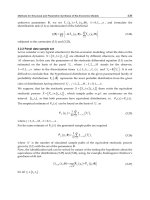
A generic model of a sustainability management system is illustrated in Figure 1, with the first step being to establish standards.
Comprehensive Renewable Energy, Volume 5
doi:10.1016/B978-0-08-087872-0.00509-6
99
100
Issues, Constraints & Limitations
Establish
standards
Review targets
and standards
Set targets
Verify
performance
Monitor
performance
Figure 1 A generic model for a sustainability management system.
This approach has been taken in a number of regions, starting with the United Kingdom in developing the Renewable Transport
Fuel Obligation (RTFO). Figure 2 provides some more detail on the RTFO as developed with the Low Carbon Vehicle Partnership.
The RTFO approach to sustainability management developed from the original European Biofuels Directive, which was later
superseded by the Renewable Energy Directive (RED). The RED sets a reporting standard, defining biofuel properties according to
sustainability criteria and then requiring European Community Member States to gradually introduce more and more biofuels
meeting this standard into the transport fuel pool.
This type of approach to sustainability management has developed a range of standards. The standards are generally constructed
from a top-down approach to concepts, married with a bottom-up approach which considers how to find evidence that helps make
the concepts measurable. Figure 3 illustrates this generic model for construction of standards.
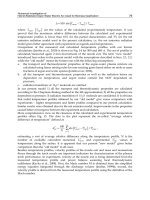
This generic model allows high-level principles to be developed into detailed indicators of performance through criteria
developed for each principle. The kinds of principles generally considered are broadly shown in Figure 4.
Looking across a range of sustainability standards that have been developed or adapted for biofuels, a pattern begins to emerge
as illustrated in Figure 5.
Will specify reporting
criteria but minimum
performance standards
Renewable transport
fuels obligation
Social/
Environmental
Reporting requirement
Incentive
scheme?
GHG saving
Biofuels Sustainability Standard
Social
standard
Environmental
standard
Acceptable performance
Crop–specific schedules
Gold standard performance
Step–specific schedules
Figure 2 Renewable Transport Fuel Obligation (RTFO) sustainability management approach.
Carbon intensity
calculator
Will specify
criteria and performance
standards
Ethics of Biofuel Production
101
Principles
Criteria
Indicators
Figure 3 Generic model for construction of standards.
Principles
Criteria
Ecology
Biodiversity
Labor rights, e.g., child
Land use and rights
Soil, air, water emissions
Waste management
Legal structures
GHG emissions
Fair price
Indicators
Figure 4 Typical principles included within sustainability standards.
Principles
7–12
Criteria
Typically up to 5 per principle
Indicators
Typically up to 5 per criterion
Figure 5 Typical structure observed across a range of sustainability standards.
This kind of structure enables verification, as the indicators are items that a suitably qualified and experienced auditor can seek
objective evidence for (see Figure 6).
The requirement for third-party verification raises a number of questions and challenges for supply chains. Generally, this
verification is required at the point that a biofuel is placed into the market. However, in order to demonstrate compliance with the
standard, the party placing the fuel into the market must have knowledge of the land use history relating to the soil in which the
biomass from which the fuel was derived was grown. Third-party verification must be able to demonstrate product provenance all
the way back to the soil.
This gives rise to the concept of a chain of custody, which passes ownership of different products or commodities along a supply
chain, from soil to fuel (see Figure 7).
Issues, Constraints & Limitations
Increasing ability to find data points for
verification
102
Principles
Criteria
Indicators
Figure 6 Approach to verification in an auditing context.
Chain of custody GHG reporting
Data flow
Supply chain
assurance
Seed
Seed
Seed
Fuel
Stock
blending and
control
systems
Product flows
Figure 7 ‘Chain of custody’ greenhouse gas reporting.
This chain of custody must enable a third party to assess information transmitted along the chain of custody and information
retained within the chain of custody in order to demonstrate that claims made relating to the finished fuel can be justified with
objective evidence.
These chains of custody may be very long. For example, a land owner A may grow a crop and harvest it. They may then sell their
crop to a trader B, who in turn aggregates this crop with other similar crops and sells the total to another trader C, who further
aggregates crops and then sells to a further trader D before the crop arrives with a biofuels producer E, who is buying crops from
multiple aggregated sources. The biofuel producer may sell their product to a trading partner F, who subsequently sells the biofuels
to a further trader G, who blends the biofuels with other biofuels and sells a blend onto a further trader H. This trader then finally
sells to a party I, who mixes the biofuels with fossil fuel and sells this blended fuel to a party J, who uses it as transport fuel. Generally
it is the final party, J, who has to demonstrate compliance with a standard. Party J in this example is 10 steps away from the soil
where the crop was grown but needs to have objective evidence of the sustainability characteristics of the land in which the crop was
grown on in order for the biofuels to have sound provenance and qualify as sustainable biofuels. Such a supply chain would not be
uncommon, given the global trade in agricultural commodities and fuels.
The following sections review a range of relevant standards, examining the linkages between principles, criteria, and
indicators.
Ethics of Biofuel Production
103
5.08.3 RTFO
RTFO is the policy that has set the precedent within bioenergy sectors for carbon and sustainability (C&S) reporting of bio-based
energy vectors [1]. This policy was developed during the early years of the twenty-first century in response to the European biofuels
policy and came into force in April 2009. In addition to implementing the EU biofuels policy, the RTFO sets a framework for
reporting the provenance of the biofuels placed on the market and sets targets for both the level of sustainability achieved and the
transparency of the information made available.
The RTFO approach to C&S reporting was developed by adopting a multistakeholder approach to setting a benchmarking
standard against which all biofuels can be measured. The standard developed included a greenhouse gas (GHG) assessment
methodology as well as environmental and social criteria indicators. The GHG methodology is not considered here as it is addressed
elsewhere in this volume. The environmental and social criteria and indicators were set into a framework that was developed by
drawing consistent themes from multiple existing similar standards. This approach created a ‘standard of standards’, or
meta-standard, against which all standards can be benchmarked. The RTFO meta-standard has retained its industry leading profile
as it has been revised in order to enable comparison with a broader set of standards.
The meta-standard considers seven broad principles as listed in Table 1.
Up to the time the RTFO was introduced, energy markets enabled the use of biomass in energy applications, such as power and
transport, but did not require the power or transport sectors to be accountable for the broader environmental impact of the supply
chains they engage with. This arguably led to some potential unintended consequences associated with the opportunity for
suppliers of biomass-based feedstocks to indirectly create consequential environmental harm.
The example often quoted is the use of palm-based products in energy, where the rate of expansion of palm forests may have
caused adverse destruction of long-established forests which have retained high carbon stocks and supported highly biodiverse
ecosystems. Whether this is the case is unclear, as protagonists argue that the palm sector is growing rapidly due to continuing
demand for palm oil for food and oleochemical applications. However, what is clear is the wide-ranging press opposition to the
RTFO biofuels promotion policy that was instigated by single interest groups working in partnership to influence decision makers.
5.08.4 RED
The RED has developed a wide response to the concerns raised in response to the development of the RTFO C&S reporting
framework [2]. This is particularly evident in the definition of a liquid biofuel. A series of requirements relating to the use of biofuels
is defined within Articles 17 and 18 of the Directive.
Article 17 provides sustainability characteristics of a biofuel as properties of the fuel itself.
• The fuel properties shall
– exclude wastes and residues derived from everything except agriculture, aquaculture, fisheries, and forestry
– have a minimum GHG saving of at least 35%, rising to 50% and then 60%
– not come from land of high biodiversity, including
• primary forest
• designated areas for
– nature protection
– species protection
• highly biodiverse grassland
• where the land use is classified from January 2008
– not come from land of high carbon stock, including
• wetland
• continuous forest
• woodland of more than 1 ha in size with average tree height greater than 5 m
Table 1
The seven broad principles in the RTFO meta-standard
Biomass production will not destroy or damage large above- or belowground carbon stocks
Biomass production will not lead to the destruction of or damage to high-biodiversity areas
Biomass production does not lead to soil degradation
Biomass production does not lead to the contamination or depletion of water sources
Biomass production does not lead to air pollution
Biomass production does not adversely affect workers’ rights and working relationships
Biomass production does not adversely affect existing land rights and community relations
RTFO, Renewable Transport Fuel Obligation.
104
Issues, Constraints & Limitations
• where the land use is classified from January 2008
• peatland as defined in January 2008
– Where derived from within the European Community the fuel must be demonstrably grown according to EU common agricultural
policy environmental protection standards and the fuel must be shown to deliver at least a default GHG emission reduction when
assessed at a regional level. The region is defined according to a European Union National Unit of Territory level 2.
Article 18 then requires all these properties to be assured by third-party verification. Parties providing third-party assurance must be
able to demonstrate independence from the supply chain and demonstrate suitable organizational and individual qualifications
and experience.
The RED allows any party to develop a scheme of sustainability assurance that may seek approval by the European Commission.
Such a voluntary scheme, once approved, must be accepted by all parties within the European Union. There are no approved
schemes at the time of writing.
5.08.5 ISCC
The International Sustainability & Carbon Certification (ISCC) System has developed in response to the RED [3]. It is intended to
deliver all the requirements of the RED, including verification, by providing assurance at each stage of the supply chain. ISCC has
applied for recognition as a voluntary scheme.
In order to demonstrate ISCC compliance, a member company must pay fees to ISCC and undergo an audit of the management
systems they have in place, to demonstrate that they meet the requirements of ISCC. Audits are provided by audit companies
recognized by ISCC. The requirements of the management systems are set out in detailed documents, covering requirements for data
capture and data flow.
5.08.6 RSB
Roundtable on Sustainable Biofuels (RSB) was established with broad stakeholder involvement including environmental activists
[4]. The RSB standard offers a set of principles and a verification structure. The standard offers 12 principles as listed in Table 2.
5.08.7 RSPO
The Roundtable on Sustainable Palm Oil (RSPO) is a voluntary standard established by parties trading palm oil [5]. RSPO originally
had seven principles, which have developed to the eight principles defined in Table 3.
Governance of the RSPO is via membership and active contribution to standard setting. Membership includes environmental
activists, who tend to have shown deep concern for biodiversity as well as human rights.
Table 2
The 12 principles in the RSB standard
Legality
Planning, monitoring, and continuous
improvement
GHG emissions
Human and labor rights
Rural and social development
Local food security
Conservation
Soil
Water
Air
Use of technology, inputs, and
management of waste
Land rights
Biofuels operations shall follow all applicable laws and regulations
Sustainable biofuel operations shall be planned, implemented, and continuously improved through open,
transparent, and consultative impact assessment and management process and an economic viability
analysis
Biofuels shall contribute to climate change mitigation by significantly reducing life-cycle GHG emissions as
compared to fossil fuels
Biofuel operations shall not violate human rights or labor rights, and shall promote decent work and the
well-being of others
In regions of poverty, biofuels operations shall contribute to the social and economic development of local,
rural, and indigenous people and communities
Biofuel operation shall ensure the human right to adequate food and improve food security in insecure
regions
Biofuel operations shall avoid negative impacts on biodiversity, ecosystems, and conservation principles
Biofuel operations shall implement practices that seek to reverse soil degradation and/or maintain soil health
Biofuel operations shall maintain or enhance the quality and quantity of surface water and groundwater
resources and respect prior or customary water rights
Air pollution from biofuels operations shall be minimized along the supply chain
The use of technologies in biofuels operations shall seek to maximize production efficiency and social and
environmental performance and minimize the risk of damage to the environment and people
Biofuel operations shall respect land rights and land use rights
GHG, greenhouse gas; RSB, Roundtable on Sustainable Biofuels.
Ethics of Biofuel Production
Table 3
105
The eight principles in the RSPO standard
No.
Principle
1.
2.
3.
4.
5.
6.
7.
8.
Commitment to transparency
Compliance with applicable laws and regulations
Commitment to long-term economic and financial viability
Use of appropriate best practice by growers and millers
Environmental responsibility and conservation of natural resources and biodiversity
Responsible consideration of employees and individuals and communities affected by growers and mills
Responsible development of new plantings
Commitment to continuous improvement in key areas of activity
RSPO, Roundtable on Sustainable Palm Oil.
5.08.8 RTRS
The Round Table on Responsible Soy (RTRS) covers five broad principles as listed in Table 4 [6].
The RTRS structure is therefore similar to other standards, offering parties the opportunity to be assured against RTRS and
subsequently to offer RTRS-assured product to market. The standard has been established over many years of stakeholder
engagement including environmental activists.
5.08.9 CEN Standard on Biomass for Transport Biofuels
The EN standard-setting body began work on developing a supply chain assurance standard for all biomass-based energy vectors in
parallel with development of the RED [7]. However, as the CEN process is a multistakeholder, multination process that seeks
consensus between industry bodies, the committee structure was unable to develop appropriate standards in a time frame that met
with the requirements of the RED. Therefore, the CEN process has now reduced the scope of its efforts to consider bioliquids only, in
order to feed into the RED requirements where further clarification is required by industry and Member States in order to deliver the
RED.
The CEN process initially developed a workgroup approach with the following broad working areas: nomenclature; GHG
accounting methodology; environmental impacts; social impacts; chain of custody assurance; indirect effects. Work continues in the
areas of environmental impacts and chain of custody assurance.
Table 5 lists some of the factors included in the CEN process.
5.08.10 ISO Standard on Biomass for Energy
During 2009, the broader international community recognized the importance of developing broad-based carbon and sustainability assurance standards [8]. This has developed into an agreement to produce an international standard on these issues via ISO
(International Organization for Standardization). The high-level work for this global standard-setting process has not fully
Table 4
RTRS principles
Responsible community relations
Legal compliance and good business practice
Good agricultural practice
Responsible labor conditions
Environmental responsibility
RTRS, Round Table on Responsible Soy.
Table 5
Some factors considered in the CEN process
Does the biomass come from a region that has defined protection, including grassland, peatland, or other registered nature protection/conservation area
since January 2008?
Does the biomass come from a region that has terrestrial or aquatic biodiversity value?
Does the biomass come from a region that has a management plan in place to manage the impact on the environment? This includes impacts on soil,
water, and air and considers nutrient management and agricultural practice
106
Issues, Constraints & Limitations
commenced at the time of writing. However, it is likely to build on the early work of the CEN looking at biomass for energy in the
broadest sense and potentially may build on the CEN workgroup structure.
The timescale for an ISO PC248 process is likely to conclude in a standard being accepted in the time frame from 2015 to 2020,
which is within the time frame of the RED.
5.08.11 Various Standards in the Retail Sector
There are a number of voluntary standards in the retail sector. These include the Rainforest Alliance standard [9], Traidcraft [10],
Fairtrade [11], Linking Environment and Farming (LEAF) [12], Little Red Tractor mark [13], and the Forestry Stewardship Council
(FSC) mark [14]. These standards generally allow a retail product to carry an approved mark or label, once the supply chain has been
reviewed for conformity assessment with the managing agent’s standard requirements. Since they are already in use for other
products, they provide a quick route to product assurance for biofuels and their feedstocks.
Some of these standards cover environmental sustainability, while others cover social aspects of sustainability. The FSC mark for
forestry products defines broad principles of compliance with environmental and social factors (see Table 6). These again fit very
well with the RTFO meta-standard.
The LEAF mark is another well-developed, structured, and detailed standard, this time associated with agricultural production.
The LEAF mark covers the principles listed in Table 7. Again, there is a strong fit with the RTFO meta-standard.
Some of these standards focus more on human capital, such as land and labor rights and workforce needs. Specific social supply
chain requirements found here tend to align with those of the RTFO and the RED, with the social requirements offering standards
guidance in relation to the principles of paying a fair price to cover costs of production, paying a premium that allows investment in
future production, and entering long-term contracts to provide stability.
5.08.12 International Labor Laws
The International Labour Organization defines a series of standards aimed at improving the rights, livelihoods, security, and
opportunities of people, families, and communities around the world. Since 1919, the International Labour Organization has
maintained and developed a system of international labor standards aimed at promoting opportunities for women and men to
obtain decent and productive work, in conditions of freedom, equity, security, and dignity. In today’s globalized economy,
international labor standards is an essential component in the international framework for ensuring that the growth of the global
economy provides benefits to all. The list of standards developed is detailed and complex (see Table 8).
These standards offer a much more detailed structure than the RTFO.
Table 6
FSC compliance principles (environmental and social)
Compliance with laws and FSC principles
Tenure and use rights and responsibilities
Indigenous peoples’ rights
Community relations and worker’s rights
Benefits from the forest
Environmental impact
Management plan
Monitoring and assessment
Maintenance of high conservation value forests
Plantations
FCS, Forestry Stewardship Council.
Table 7
LEAF principles
Organization and planning – integrated farm management
Soil management and crop nutrition
Crop protection
Pollution control and waste management
Energy and water efficiency
Wildlife and landscape
Animal husbandry and the environment
LEAF, Linking Environment and Farming.
Ethics of Biofuel Production
107
Table 8
Standards developed by the International Labour
Organization
Freedom of association, collective bargaining, and industrial relations
Forced labor
Elimination of child labor and protection of children and young persons
Equality of opportunity and treatment
Tripartite consultation
Labor administration and inspection
Employment policy and promotion
Vocational guidance and training
Employment security
Wages
Working time
Occupational safety and health
Social security
Maternity protection
Social policy
Migrant workers
Seafarers
Fishermen
Dockworkers
Indigenous and tribal peoples
Specific categories of workers
Final articles conventions
5.08.13 Indirect Land Use Change
The final aspects to consider with regard to biofuels supply chains are captured within the thinking relating to iLUC. Providing useful
methods for objectively assessing indirect effects and their impact has proven to be very difficult. Recent work has developed from
economic analysis published by Searchinger et al. [15]. Searchinger et al. postulated that biofuels use drives land use change by creating
additional demand. There has been a flurry of academic, political, and press activity following this work. The Gallagher [16] review aimed
to build on Searchinger et al.’s work by calling for scientific and technical submissions to consider indirect effects. This led to a great deal of
work within the European Community [17]. Further work has been developed by the Low Carbon Vehicle Partnership [18] also.
In general, there is consensus that there may be indirect effects of creating additional demand for products of agricultural
production, including the potential for this demand to lead to land use change. However, the supply chain mechanisms and
influence through which this additional demand may create this land use change are varied and complex. Some aspects of biofuels
use may have created additional demand for land use. Some aspects of biofuels use may reduce demand for land use. The complex
nature of the supply chains therefore makes agreement and resolution of the underlying science base complicated.
What is generally agreed is that land use demand is created by a broad set of factors, including biofuels, but more widely
associated with other demands, such as food and materials. It is also generally agreed that if all land-based sectors were to assess the
direct impacts of their operations on the environment, in a similar way to the many and varied biofuels sustainability standards,
then indirect effects might well be eliminated. To put it another way, every indirect impact is a direct impact from another
land-based sector.
5.08.14 Conclusions
The factors impacting upon biofuels sustainability are many and diverse. There is broad agreement on the high-level principles that
should apply to sustainable biofuels production, with signs of increasing convergence. Because of the range of possible feedstocks
and the length and complexity of supply chains, several different standards have been developed. They draw to varying extents on
existing, tried-and-tested assurance mechanisms. The ultimate requirement is for verifiable, auditable data that assure regulators that
fuels sold comply with evolving sustainable production principles. A generic model linking those high-level principles to measur
able, auditable data has been proposed here and exemplified with reference to existing approaches and some topical developments.
References
[1] />[2] Directive 2009/28/EC of the European parliament and of the council of 23 April 2009 on the promotion of the use of energy from renewable sources and amending and
subsequently repealing Directives 2001/77/EC and 2003/30/EC.
108
[3]
[4]
[5]
[6]
[7]
[8]
[9]
[10]
[11]
[12]
[13]
[14]
[15]
Issues, Constraints & Limitations
/> /> /> /> /> /> /> /> /> /> /> />Searchinger T, Heimlich R, Houghton RA, et al. (2008) Use of U.S. croplands for biofuels increases greenhouse gases through emissions from land-use change. Science
319(5867): 1238–1240, DOI: 10.1126/science.1151861.
[16] />[17] />[18] FWG-p-11-02.