Neurochemical Mechanisms in Disease P73 pot
Bạn đang xem bản rút gọn của tài liệu. Xem và tải ngay bản đầy đủ của tài liệu tại đây (255.55 KB, 10 trang )
Genetics of AD and PD 705
mouse models with missense mutations of the endogenous murine PSEN1 and high
Aβ42 levels perform poorly on the object recognition test (Huang et al., 2003; Janus
et al., 2000). Double PSEN1/APP transgenics have been developed and suggest that
PSEN1, APP, and mutations within these genes, play a role in the production of Aβ
(Holcomb et al., 1998; Mineur et al., 2005).
Genetic Variation
To date, there have been 123 PSEN1 mutations reported (Fig. 3). A com-
prehensive list of PSEN1 mutations is available through the NCBI database
( The majority of these mutations are
missense mutations. These missense mutations cause amino acid substitutions
throughout the PSEN1 protein and appear to result in a relative increase in the
ratio of the Aβ42 to Aβ40 peptides via either increased Aβ42 or decreased Aβ40
generation, or a combination of both (Scheuner et al., 1996). For example, individ-
uals that carry the PSEN1 L166P mutation can have an age-at-onset in adolescence,
Fig. 3 AD3: PSEN1 structure and mutations. Thus far, at least 123 mutations in the PSEN1 gene
have been described, of which a few are shown. For a more complete list of PSEN1 mutations, see
TM, transmembrane domains. Scale is approximate
706 L.M. Bekris et al.
and in vitro studies indicate that this mutation induces exceptionally high levels of
Aβ42 production as well as impairs notch intracellular domain production and notch
signaling (Moehlmann et al., 2002).
AD4: Presenilin 2
Inheritance and Clinical Features
A candidate gene for the chromosome 1 AD4 locus was identified in 1995 in a Volga
German AD kindred with a high homology to the AD3 locus (PSEN1) and was
later named presenilin 2 (PSEN2) (Levy-Lahad et al., 1995; Rogaev et al., 1995;
Sherrington et al., 1996). In contrast to mutations in the PSEN1 gene, missense
mutations in the PSEN2 gene are a rare cause of EOFAD, at least in Caucasian pop-
ulations. The age of onset in PSEN2-affected families appears to be older (45–88
years) than that observed in PSEN1-affected families (25–65 years). Age of onset
is highly variable among PSEN2-affected family members within the same family,
whereas for PSEN1-affected families, the age of onset is generally quite similar
among affected family members and is even similar among members of differ-
ent families with the same mutation (Campion et al., 1999; Rogaev et al., 1995;
Sherrington et al., 1996, 1995). Missense mutations in the PSEN2 gene may be of
lower penetrance than PSEN1 mutations and thus be subject to the modifying action
of other genes or environmental influences (Sherrington et al., 1996; Tandon and
Fraser, 2002).
Gene Location and Structure
The PSEN2 gene is located on chromosome 1 (1q42.13) and was identified by
sequence homology and cloned (Levy-Lahad et al., 1995; Rogaev et al., 1995).
PSEN2 has 12 exons and is organized into 10 translated exons that encode a 448
amino acid peptide. The PSEN2 protein is predicted to consist of 9 transmembrane
domains and a large loop structure between the sixth and seventh domains (Fig. 4).
PSEN2 also displays tissue-specific alternative splicing (ADCG, 1995; Anwar et al.,
1996; Hutton et al., 1996; Levy-Lahad et al., 1995; Prihar et al., 1996; Rogaev et al.,
1995).
Gene Function and Expression
Like PSEN1, PSEN2 has been described as a component of the atypical aspartyl
protease called γ-secretase that is responsible for the cleavage of Aβ (De Strooper
et al., 1998; Wolfe et al., 1999b). PSEN2-associated mutations have been reported
to increase the ratio of Aβ42 to Aβ40 (Aβ42/Aβ40) in mice and humans (Citron
et al., 1997; Scheuner et al., 1996), indicating that presenilins might modify the
way in which γ-secretase cuts APP. APP processing at the gamma-secretase site
has been reported to be affected in variable ways by the presenilin mutations. For
example, PSEN1-L166P mutations cause a reduction i n Aβ production whereas the
PSEN1-G384A mutant significantly increases Aβ42. In contrast, PSEN2 appears to
be a less efficient producer of Aβ than PSEN1 (Bentahir et al., 2006). The functions
and biological importance of presenilin splice variants are poorly understood. But
Genetics of AD and PD 707
Fig. 4 AD4: PSEN2 structure and mutations. Thus far, at least 16 mutations in the PSEN2 gene
have been described, of which a few are shown. For a more complete list of PSEN2 mutations, see
The V393M novel mutation was most recently found
in one case (Lindquist et al., 2008). TM, transmembrane domains. Scale is approximate
it appears that differential expression of presenilin isoforms may lead to differential
regulation of the proteolytic processing of the APP protein. For example, aberrant
PSEN2 transcripts lacking exon 5 increase the rate of production of Aβ peptide (Sato
et al., 2001), whereas naturally occurring isoforms without exons 3 and 4 and/or
without exon 8 do not affect production of Aβ (ADCG, 1995; Grunberg et al., 1998).
PSEN2 is expressed in a variety of tissues, including the brain where it is expressed
primarily in neurons (Kovacs et al., 1996).
Genetic Variation
Mutations in PSEN2 are a much rarer cause of FAD than are PSEN1 mutations,
having been described in only six families, including the Volga German kindred
where a founder effect has been demonstrated (Cruts and Van Broeckhoven, 1998;
Levy-Lahad et al., 1995; Rogaev et al., 1995; Sherrington et al., 1996). To date,
as many as 16 PSEN2 mutations have been identified. One of the first mutations
to be identified was a point mutation resulting in the substitution of an isoleucine
for an asparagine at residues 141 (N141l) located within the second transmembrane
domain (Levy-Lahad et al., 1995). Most recently, a V393M mutation located within
the seventh transmembrane domain has been described (Lindquist et al., 2008)
(Fig. 4). A comprehensive list of PSEN2 mutations is available through the NCBI
database ( />708 L.M. Bekris et al.
1.2.3 Genes Associated with Risk in Sporadic Alzheimer’s Disease
AD2: APOE
Inheritance and Clinical Features
The APOE gene has been associated with both familial late-onset and sporadic late-
onset AD in numerous studies of multiple ethnic groups. There are three major
protein isoforms of human apoE (apoE2, apoE3, and apoE4), which are the prod-
ucts of three alleles (2, 3, and 4). The frequency of the APOE 4 allele varies
between ethnic groups, but the APOE 4– carriers are the most frequent in controls
across all ethnic groups and APOE 4+ carriers are the most frequent in AD patients
(Brousseau et al., 1994; Chauhan, 2003; Farrer et al., 1997, 1995; Hendrie et al.,
1995; Liddell et al., 1994; Lucotte et al., 1994; Mayeux et al., 1993; Poirier et al.,
1993; Roses et al., 1995; Schellenberg, 1995; Selkoe, 2001;Tsaietal.,1994).
The APOE 4 genotype is associated with higher risk of AD (Corder et al., 1993),
with earlier age of onset of both AD (Tang et al., 1996) and Down syndrome (where
there is an additional copy of chromosome 21 carrying the APP gene) (Schupf
and Sergievsky, 2002), and also with a worse outcome after head trauma (Nicoll
et al., 1995) and stroke, both in humans (Liu et al., 2002b) and in transgenic mice
expressing human apoE4 (Horsburgh et al., 2000).
Gene Location and Structure
The APOE gene is located on chromosome 19q13.2 and consists of 4 exons that
encode a 299 amino acid protein. The APOE gene is in a cluster with other
apolipoprotein genes: APOC1, APOC2, and APOC4.TheAPOE 4 loci are located
within exon 4 of the gene. The three APOE 4 alleles (2, 3, and
4) defined by
two single nucleotide polymorphisms, rs429358 and rs7412, encode three protein
isoforms (E2, E3, and E4). The most frequent isoform is apoE3, which contains
cysteine and arginine at amino acid positions 112 and 158. Both positions contain
cysteine residues in apoE2 and arginine residues in apoE4 (Fig. 5). This substitu-
tion affects the three-dimensional structure and the lipid-binding properties between
isoforms. In apoE4, the amino acid substitution results in a changed structure with
the formation of a salt-bridge between an arginine in position 61 and a glutamic
acid in 255 that causes this isoform to bind preferentially to VLDL whereas apoE3
and apoE2 bind preferentially to high-density lipoproteins (HDLs) (Mahley et al.,
2006).
Gene Function and Expression
The mechanisms that govern apoE toxicity in the brain are not fully understood.
Some proposed mechanisms include isoform specific toxicity, apoE E4–mediated
amyloid aggregation, and apoE E4–mediated tau hyperphosphorylation (Huang,
2006).
It is known that apoE plays an important role in the distribution and metabolism
of cholesterol and triglycerides within many organs and cell types in the human body
(Mahley et al., 2006). The apoE polymorphism is unique to humans and has been
Genetics of AD and PD 709
Fig. 5 AD2: APOE structure and single nucleotide polymorphisms (SNPs). The general protein
structure of apoE is shown (panel a). The two SNPs and corresponding protein locations are shown
(rs429358 and rs7412; C112R and R158C). The APOE 2, 3, 4 haplotype is shown in panel b.
Receptor binding domain; R. Scale is approximate
proposed to have evolved as a result of adaptive changes to diet (Finch and Stanford,
2004; Mahley and Rall, 1999). Individuals carrying APOE 4 have higher total and
LDL cholesterol (Sing and Davignon, 1985). Neurons, in vitro, have a cholesterol
uptake that is lower when the lipid is bound to apoE4 compared to apoE2 and apoE3
(Rapp et al., 2006), and apoE4 appears to be less efficient than the other isoforms
in promoting cholesterol efflux from both neurons and astrocytes (Michikawa et al.,
2000).
Chylomicron remnants and very low density lipoprotein (VLDL) remnants are
rapidly removed from the circulation by receptor-mediated endocytosis. ApoE, the
major apolipoprotein of the chylomicron in the brain, binds to a specific receptor
and is essential for the normal catabolism of triglyceride-rich lipoprotein con-
stituents. Defects in apolipoprotein E result in familial dysbetalipoproteinemia, or
type III hyperlipoproteinemia (HLP III), in which increased plasma cholesterol and
triglycerides are the consequence of impaired clearance of chylomicron and VLDL
remnants (Mahley et al., 1999). In the brain, lipidated apoE binds aggregated Aβ in
a isoform-specific manner, apoE4 being much more effective than the other forms,
710 L.M. Bekris et al.
and has been proposed to enhance deposition of the Aβ peptide (Stratman et al.,
2005).
Brain cells from APOE knock-out mice (APOE−/−) are more sensitive to exci-
totoxic and age-related synaptic loss (Buttini et al., 1999), whereas Aβ-induced
synaptosomal dysfunction is also enhanced compared to control animals (Keller
et al., 2000). When human apoE isoforms are expressed i n APOE−/− mice, the
expression of apoE3, but not apoE4, is protective against age-related neurodegen-
eration (Buttini et al., 1999) and Aβ toxicity (Keller et al., 2000). In addition,
astrocytes, from APOE−/− mice that express human apoE3, release more choles-
terol than those expressing apoE4, suggesting that apoE isoforms may modulate t he
amount of lipid available for neurons. Other studies report apoE-specific effects on
Aβ removal from the extracellular space whereby the apoE3 isoform has a higher
Aβ binding capacity than ApoE4 when associated with lipids (Canevari and Clark,
2007; LaDu et al., 1995).
In humans the greatest expression of apoE is found in the liver, followed by the
brain. Animal and in vitro models show that in the brain, astrocytes and microglia
are the main producers of secreted apoE (Pitas et al., 1987; Uchihara et al., 1995)
whereas neurons appear to produce apoE under stress conditions (Aoki et al., 2003;
Xu et al., 1999). In a rodent model, moderate injury induces enhancement of apoE
levels in clusters of CA1 and CA3 pyramidal neurons (Boschert et al., 1999); in
another model, apoE levels increase in response to peripheral nerve injury (Ignatius
et al., 1986) whereas apoE secretion in human primary astrocytes can be reduced by
a combination cytokines (Baskin et al., 1997).
In addition, individuals carrying apoE4 have higher amyloid and tangle pathol-
ogy (Nagy et al., 1995), and they have an increase in mitochondrial damage (Gibson
et al., 2000) compared to those carrying other forms.
Genetic Variation
The gene dose of APOE 4 is a major risk factor for the disease, with many stud-
ies reporting an association between gene dose, age-at-onset (Blacker et al., 1997),
and cognitive decline (Martins et al., 2005). After age 65, the risk among family
members increases depending on the number of 4 alleles present in the affected
individual. Risks to family members with the APOE 2/2 and 2/3 genotypes are
nearly identical at all ages to risks for family members with the APOE 3/3 genotype.
Among family members with
APOE 3/3, the lifetime risk for AD by age 90 can be
as much as three times greater than the expected proportion of APOE 4 carriers,
suggesting that factors other than APOE contribute to AD risk. In addition, a 44%
risk of AD by age 93 among family members of APOE 4/4 carriers indicates that as
many as 50% of people having at least one e4 allele do not develop AD. There also
appears to be a gender modification effect because the risk to male family members
with APOE 3/4 is similar to that for the APOE 3/3 group but significantly less than
the risk for the APOE 4/4 carriers; whereas among female family members the risk
for the APOE 3/4 carriers is nearly twice that for the APOE 3/3 carriers (Brousseau
et al., 1994; Farrer et al., 1997, 1995; Hendrie et al., 1995; Liddell et al., 1994;
Lucotte et al., 1994; Mayeux et al., 1993; Poirier et al., 1993;Tsaietal.,1994).
Genetics of AD and PD 711
1.3 Summary
AD is characterized by an irreversible progressive loss of memory and cognitive
skills that can occur in rare familial cases as early as the third decade. Currently there
is no cure for AD, and treatments only slow AD progression slightly in some patients
(Raina et al., 2008; Raschetti et al., 2007). The early-onset familial forms of AD
have an autosomal dominant inheritance linked to three genes: APP, PSEN1, and
PSEN2. The most common sporadic form of AD occurs after the age of 60 and has
thus far been consistently, across numerous studies, associated with only one gene,
the APOE gene. The mechanistic contribution of these genes in AD pathogenesis
has been studied extensively but the specific biology involved in the progression of
AD remains unclear, suggesting that AD is a genetic and environmentally complex
disease.
2 Parkinson’s Disease
2.1 Introduction
2.1.1 Prevalence and Incidence
Parkinson’s disease (PD) (OMIM #168600) is the second most common neu-
rodegenerative disorder. The incidence is similar worldwide, with the prevalence
increasing in proportion to regional increases in population longevity with more
than 1% affected over the age of 65 years and more than 4% of the popula-
tion affected by the age of 85 years (de Rijk et al., 2000). Idiopathic PD is
the most frequent form of Parkinsonism and accounts for over 75% of all PD
cases, and it usually refers to a s yndrome characterized by late-onset, largely non-
genetic movement disorder (Gibb and Lees, 1988). Rare forms of PD in which
genetic factors dominate, represent 5–10% of all PD patients (Belin and Westerlund,
2008).
2.1.2 Clinical Symptoms
Clinical manifestations that can be detected by neurological examinations include
tremor, rigidity, bradykinesia, and postural instability. Disruption of motor abilities
is associated with striatal dopamine levels thought to arise from selective and pro-
gressive loss of dopaminergic cells within the substantia nigra pars compacta and
the locus ceruleus of the midbrain (Tan and Skipper, 2007). Secondary symptoms
may involve cognitive dysfunction and subtle language problems. Symptoms can
be both chronic and progressive. Levodopa remains the most effective treatment of
PD symptoms but its use is complicated by the emergence of motor fluctuations and
dyskinesias. Dopamine agonists, catechol-O-methyltransferase inhibitors, and other
anti-Parkinsonian drugs may diminish or prevent these complications and possibly
exert disease-modifying effects (Jankovic, 2006).
712 L.M. Bekris et al.
2.1.3 Clinical Diagnosis
Diagnostic clinical criteria of PD include four cardinal symptoms: bradykinesia,
rest tremor, rigidity, and postural instability. An additional criterion includes a
therapeutic response of tremor to levodopa (Galpern and Singhal, 2006). In addi-
tion, other common motor signs and symptoms include loss of automatic motor
movements such as loss of arm swing, loss of blinking, and difficulty in perform-
ing simultaneous motor acts. Many nonmotor symptoms can also be present in
PD, such as cognitive impairment, hallucination, delusion, behavioral abnormali-
ties, clinical depression, disturbances of sleep and wakefulness, loss of smell, pain,
and autonomic dysfunctions such as constipation, hypotension, urinary frequency,
impotence, and sweating (Mizuno et al., 2008).
2.1.4 Neuropathological Diagnosis
The diagnosis of idiopathic PD may also involve confirmation upon autopsy where
neuropatholgical assessment of the amount of neuronal loss and Lewy-related
pathology (Lewy bodies and Lewy neurites), in the brainstem and elsewhere in the
brain, is performed. Eosinophilic neuronal cytoplasmic inclusions known as Lewy
bodies (LBs) are found in PD postmortem brain (Gibb and Lees, 1988). The disease
is also characterized by dopamine neuron degeneration and depigmentation of the
substantia nigra accompanied by neuronal loss in other brainstem regions including
the ventral tegmental area and locus ceruleus (Belin and Westerlund, 2008; Love,
2005).
The principal component of LBs is α-synuclein, and LBs are best visualized
immunohistochemically, using an antibody to α-synuclein (Love, 2005). The func-
tion of α-synuclein is unknown. I t is primarily found in neural tissue in presynaptic
terminals. It can also be found in glial cells. It is predominantly expressed in the neo-
cortex, hippocampus, substantia nigra, thalamus, and cerebellum (George, 2002).
LBs are typically found in the substantia nigra and locus ceruleus, where there
is substantial neuronal loss and gliosis. LBs may also be found in the dorsal motor
nucleus of the vagus where LBs are usually roughly spherical, with an eosinophilic
core surrounded by a paler ‘‘halo.’’ Within the cerebrum, LBs are usually present
in the amygdaloid nuclei, parahippocampal and cingulate gyri, and insula, but
they may also be found in other parts of the neocortex. The cholinergic nucleus
basalis of Meynert may also be affected. Cortical LBs appear as regions of homoge-
neous eosinophilic staining of neuronal cytoplasm and eccentric displacement of the
nucleus (Love, 2005). Lewy neurites are nerve cell processes that contain aggregates
of α-synuclein and are most numerous in the CA2/3 region of the hippocampus and
in the substantia nigra (Love, 2005).
2.2 Genetics of Parkinson’s Disease
2.2.1 Introduction
Historically, PD was considered to be largely sporadic in nature without genetic
origin. However, in the past decade, genetic studies of PD families from different
Genetics of AD and PD 713
geographical regions worldwide have strengthened the hypothesis that PD has a
substantial genetic component. One of the first autosomal dominant inherited forms
of PD was identified in an Italian family, and it is named PARK1 ( Polymeropoulos
et al., 1996). Since then, 13 loci, PARK1–13, have been linked to rare forms of
PD: autosomal dominant and autosomal recessive PD (Belin and Westerlund, 2008;
Farrer, 2006). Of these 13 loci, eight genes have been described as causing PD:
four autosomal dominant (SNCA, LRRK2, UCHL1, and HTRA2) and four autosomal
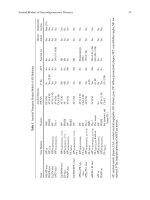
recessive (PRKN, DJ1, PINK1, and ATP13A2; Table 1). Mutations in the SNCA,
LRRK2, PRKN, and PINK1 genes are the most well-chararacterized as causing PD
whereas mutations in the other genes listed do not have as much supporting evidence
as causes of PD. Recently, a clinical association has been reported between PD and
type-1 Gaucher’s disease, which is caused by a glucocerebrosidase deficiency owing
to mutations in the glucocerebrosidase gene (GBA), and several studies have found
an association between GBA mutations and PD (Aharon-Peretz et al., 2004;Bras
et al., 2007; Clark et al., 2005, 2007; De Marco et al., 2008; Eblan et al., 2006;
Gan-Or et al., 2008; Lwin et al., 2004; Sato et al., 2005; Spitz et al., 2008;Tan
et al., 2007;Toftetal.,2006; Wu et al., 2007; Ziegler et al., 2007). The GBA gene
has not yet been named as a PD gene but is described briefly here. Some PD genes
where mutations have been linked to familial forms of PD are also candidate genes
for sporadic forms of PD, as those genes (SNCA and LRRK2) may also carry other
mutations that merely increase risk (Table 1).
2.2.2 Genes Associated with Autosomal Dominant Parkinson’s Disease
PARK1 and PARK4: SNCA
Inheritance and Clinical Features
PARK1- and PARK4-linked PD are both of autosomal dominant inheritance, but
PARK1 is caused by missense mutations in the α-synuclein gene (SNCA) and
PARK4, by multiplications of SNCA. Affected family members are mostly of
juvenile-onset with atypical clinical features including myoclonus and hypoven-
tilation, with rapid progression of symptoms. Three missense mutations, A53T
(Polymeropoulos et al., 1996), A30P (Kruger et al., 1998), and E46K (Zarranz
et al., 2004); duplications (Chartier-Harlin et al., 2004
; Fuchs et al., 2007;
Ibanez et al., 2004; Nishioka et al., 2006); and triplications (Farrer et al., 2004;
Singleton et al., 2003)ofSNCA are known (Fig. 6). The A53T substitution was
Fig. 6 PARK1 and PARK4: SNCA structure and mutations. The general protein structure of α-
synuclein is shown (Bisaglia et al., 2008). Scale is approximate
714 L.M. Bekris et al.
the first mutation identified in a large family with autosomal dominant disease
(Polymeropoulos et al., 1996). Later, A30P and E46K substitutions were identi-
fied in a German and a Spanish family, respectively, with clinical features described
as dementia with LB (Kruger et al., 1998; Zarranz et al., 2004). PARK1 missense
mutations and PARK4 multiplications are both extremely rare causes of familial
Parkinsonism (Chartier-Harlin et al., 2004; Farrer et al., 2004; Fuchs et al., 2007;
Ibanez et al., 2004; Nishioka et al., 2006; Singleton et al., 2003).
Gene Location and Structure
SNCA is located on chromosome 4q22.1, has six exons, and encodes a 140 amino
acid protein. The N-terminus consists of an amphipathic α-helical domain that asso-
ciates with membrane microdomains, known as lipid rafts (Fortin et al., 2004).
The central region contains a fibrillization region, and the C-terminus contains an
aggregation inhibition region (Fig. 6) (Bisaglia et al., 2008).
Gene Function and Expression
SNCA is expressed throughout the mammalian brain and is enriched in presynaptic
nerve terminals (George, 2002). The protein can adopt partially folded structures
but in its native form is unfolded and can assume both monomeric and oligomeric
alpha helix and beta-sheet conformations, as well as morphologically diverse aggre-
gates, ranging from those that are amorphous to amyloid-like fibrils (Uversky,
2003). These fibrillar moieties are a component of LBs in both familial and idio-
pathic PD (Spillantini et al., 1997), but it is unclear whether the fibrils themselves,
or the oligomeric fibrilization intermediates (protofibrils), are toxic to the cell.
Interestingly, SNCA genomic multiplications in familial PD are associated with an
increase in protein expression (Farrer et al., 2004) and brain samples of triplication
mutant carriers show protofibril formation is enhanced with an increase in SNCA
expression (Miller et al., 2004). In vitro, A30P, A53T, and E46K mutant proteins
show an increased propensity for self-aggregation and oligomerization into protofib-
rils, compared with wild-type protein (Conway et al., 1998; Pandey et al., 2006)
that may be related to the membrane permeabilization activity of these protofib-
rils, which form pore-like and tubular structures (Lashuel et al., 2002). It appears
that only A53T and E46K promote formation of the fibrils (Conway et al., 2000;
Greenbaum et al., 2005) whereas A30P has been reported to disrupt the interaction
between α-synuclein and the lipid raft and to possibly redistribute the protein away
from the synapse (Fortin et al., 2004).
A mouse spontaneous deletion strain is viable, fertile, and phenotypically nor-
mal (Specht and Schoepfer, 2001) whereas overexpression of wild-type SNCA in a
mouse model has many features of PD, such as loss of dopaminergic terminals in
the striatum, mislocalization and accumulation of insoluble α-synuclein, and motor
abnormalities (Rockenstein et al., 2002; Fleming et al., 2004; Masliah et al., 2000
).
Both A30P and A53T mutant mouse models display neuronal cell loss and motor
changes (Melrose et al., 2006).