Gale Encyclopedia Of American Law 3Rd Edition Volume 1 P54 pps
Bạn đang xem bản rút gọn của tài liệu. Xem và tải ngay bản đầy đủ của tài liệu tại đây (475.92 KB, 10 trang )
It may cover a different range of legal topics
than does the Multistate Bar Examination,
although some topics are duplicated by the
two tests.
In addition, as of 2007 all states except
Maryland, Washington, and Wisconsin require
a passing score on the Multistate
PROFESSIONAL
RESPONSIBILITY
Examination (MPRE), a standard-
ized multiple-choice test of legal and profes-
sional ethics. Bar applicants normally take this
two-hour test several weeks before or after
they take the bar examination. The Multistate
Professional Responsibility Examination tests
the applicants’ knowledge of the Amer ican
Bar Association’s Model Rules of Professional
Conduct. Topics include attorney-client confi-
dentiality, conflicts of interest, and attorney
advertising.
In 2008 a total of 34 jurisdictions incorpo-
rated the Multistate Performance Test (MPT) as
part of their bar examinations. This test was
designed to assess an examinee’s ability to
complete fundamental legal tasks that most
beginning lawyers face in real life practice.
The MPT assesses an examinee’s ability to
sort factual materials, separating relevant from
irrelevant facts; analyze statutory, case, and
administrative materials to extract the relevant
principles of law; apply the relevant law to the
presented facts in a manner that would resolve a
client’s legal problem; address all ethical con-
cerns; and communicate the legal issue and
solution effectively in writing. The MPT is a
timed examination, and each jurisdiction deter-
mines the relative weight to give this part of the
examination along with the other scores.
Finally, several states include a Multistate
Essay Examination (MEE) as part of their
overall bar examinations. The MEE consists of
30-minute essay questions on a more expansive
array of legal topics than the standard six topics
covered in the 200-question multistate exami-
nation. These additional areas of law include
business associations, evidence,
FAMILY LAW,
federal
CIVIL PROCEDURE, trusts and estates, and
the
UNIFORM COMMERCIAL CODE (UCC). Fewer
than 20 states were testing the MEE in 2007.
A steady rise in the number of persons
taking bar examinations keeps competition
tight. According to the National Conference of
Bar Examiners, 80,3 19 applicants took a bar
examination in 2008; 70,172 of them were first-
time takers. Overall, 71 percent, or 56,915
examinees, passed. However, among first-time
takers from American Bar Association (ABA)-
approved law schools, 85 percent passed,
whereas repeat-takers had only a 43 percent
pass rate. The examination can be taken more
than once. In rare cases , an attorney who has
been disbarred or suspended can take a speci al
bar examination for reinstatement. In 2008,
only 20 disbarred or suspended attorneys across
the United States took a reinstatement exam
(seven, or 35 percent, passed).
In a few states, an attorney may be licensed
to pract ice law without taking the state’s bar
examination. Wisconsin permits graduates of
accredited Wisconsin law schools to become
licensed attorneys without taking any bar
examination. Other states offer reciprocity, by
accepting Multistate Bar Examination scores
attained in other jurisdictions or by waiving the
bar examination requirement for experienced
attorneys licensed in other jurisdictions.
Jurisdictions also differ in their approach to
legal education requirements. Most states re-
quire bar applicants to graduate from law
schools accredited by the American Bar Associ-
ation (ABA). Some states, such as California
and Georgia, will admit bar candidates who
received law degrees from unaccredited law
schools under certain circumstances. California,
Maine, New York, Vermont, Virginia, Washing-
ton, and Wyoming do not require law degrees at
all, but alternatively require several years of legal
study—also known as reading law — with a
licensed attorney. According to the NCBE, in
2008, 56,357 persons were admitted to bars by
examination; 7,888 by court motion, and 468 by
diploma privilege. Whatever the legal education
requirements, all members of the bar must pass
the bar examination.
FURTHER READINGS
American Bar Association/Bureau of National Affairs. 1995.
ABA/BNA Lawyers’ Manual on Professional Conduct.
Bosse, Diane F., and Lawrence M. Grosberg. 2003. “The Bar
Exam: Should the Test Continue in Its Current Form or
Are Alternatives Needed?” New York Law Journal
Magazine 2 (April): 12.
Curcio, Andrea A. 2002. “A Better Bar: Why and How the
Existing Bar Exam Should Change.” Nebraska Law
Review 81 (winter): 363–423.
Curriden, Mark. 1995. “Lawyers Who Skip Law School.”
American Bar Association Journal 81 (February).
Darrow-Kleinhaus, Suzanne. 2009. The Bar Exam in a
Nutshell. 2d ed. St. Paul, Minn.: West Group.
Garth, Bryant G. 1983. “Rethinking the Legal Profession’s
Approach to Collective Self-Improvement: Competence
GALE ENCYCLOPEDIA OF AMERICAN LAW, 3RD E DITION
518 BAR EXAMINATION
and the Consumer Perspective.” Wisconsin Law Review
1983.
Getz, Malcolm, John Siegfried, and Terry Calvani. 1981.
“Competition at the Bar: The Correlation between the
Bar Examination Pass Rate and the Profitability of
Practice.” Virginia Law Review 67.
National Conference of Bar Examiners, 2009. “2008
Statistics.” The Bar Examiner, May. Text available
online at />downloads/Bar_Admissions/2008_Stats.pdf; website home
page: (accessed
August 5, 2009).
Pobjecky, Thomas A. “The Florida Board of Bar Examiners:
The Constitutional Safeguard between Attorney Aspir-
ants and the Public.” Nova Law Review 18.
Rogers, W. Sherman. 1989. “Title VII Preemption of State
Bar Examinations: Applicability of Title VII to State
Occupational Licensing Tests.” Howard Law Journal 32.
“Society of American Law Teachers Statement on the Bar
Exam, July 2002.” 2002. Journal of Legal Education 52
(September): 446–52.
v
BARBOUR, PHILIP PENDLETON
Philip Pendleton Barbour, an ASSOCIATE JUSTICE
of the U.S. Supreme Court, was a strong
advocate of states’ rights and the
STRICT
CONSTRUCTION
of the Constitution.
The son of a wealthy planter from one of
Virginia’s oldest families, Barbour was born
May 25, 1783, in Orange County, Virginia. He
was educated locally and excelled in languages
and classical literature. At seventeen, he became
an apprentice to an Orange County lawyer.
After less than a year clerk ing and studying law,
Barbour left Virginia for Kentucky, where he
practiced law for a short time. In 1801 he
returned to Virginia to attend the College of
William and Mary, in Williamsburg, where he
briefly studied law. A year later he established a
law practice in Orange County, and quickly
gained a reputation for his outstanding oratori-
cal abilities in the courtroom. In 1804 he
married Frances Johnson, the daughter of a
local planter, with whom he had seven children.
Barbour’s family was both socially promi-
nent and politically active. His father, Thomas
Barbour, was a member of the Virginia House
of Burgesses for many years, and his older
brother became a Virginia governor, U.S. sena-
tor, and secretary of war under President
JOHN
QUINCY ADAMS
, whose administration Barbour
would eventually oppose. Encouraged by his
father’s and brother’s successes, in 1812 Bar-
bour ran for and won a seat in the Virginia
House of Delegates. Two years later he won a
seat in the U.S. Congress and aligned himself
with a group of older Republicans who favored
strict construction of the Constitu tion and a
limited federal government. Barbour served as
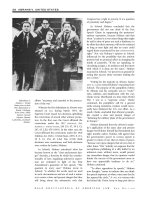
Philip Barbour.
GETTY IMAGES
Philip Pendleton Barbour 1783–1841
◆◆◆◆◆
◆
❖❖
1775–83
American Revolution
1783 Born,
Orange County,
Va.
1789 U.S.
Constitution ratified
1800 Began
apprenticeship
with Orange
Co. lawyer
1812 Elected to
Virginia House of
Representatives
1827–30 Served in U.S. House of
Representatives a second time
1836 Appointed
associate justice
of the U.S.
Supreme Court
1830 Appointed federal judge
for eastern Virginia
1841 Died,
Richmond, Va.
1821–23 Served as speaker of the House
1825 Appointed state judge
in General Court for the
Eastern District of Virginia
1814–24 Served
in U.S. House of
Representatives
▼▼
▼▼
1775
1850
1825
1800
GALE ENCYCLOPEDIA OF AMERICAN LAW, 3RD E DITION
BARBOUR, PHILIP PENDLETON 519
Speaker of the House from 1821 until 1823,
when he was defeated by HENRY CLAY . In 1824
Barbour chose not to run for reelection to
Congress, and returned to Virginia to resume
his law practice.
During his career as a practicing
ATTORNEY,
Barbour was involved in a number of important
cases. He argued the state’s position before the
U.S. Supreme Court in Cohen v. Virginia, 19
U.S. 264, 6 Wheat. 264, 5 L. Ed. 257 (1821), a
landmark suit that helped to clarify the role of
the federal courts in reviewing state court
decisions. In Cohen the Court held that the
federal judiciary could review cases arising in
the state courts that involved constitutional
issues. Though Barbour lost the case, his
vigorous represent ation helped to further estab-
lish his reputation as a strong defender of the
states against what he often saw as the growing
encroachment of the federal government.
In 1825, after consid ering and then declin-
ing an offer from
THOMAS JEFFERSON to join the
law faculty at the University of Virginia, Bar-
bour was appointed to the General Court for
the Eastern District of Virginia, a state trial
court, where he served for almost two years. In
1827, at the urging of his constituents, Barbour
ran unopposed for Congress, though he lost
the Speaker’s race to fellow Virginian Andrew
Stevenson. During his second stint in Congress,
Barbour was a vocal opponent of President
Adams, even though Barbour’s brother James
Barbour was a member of the Adams cabinet.
Barbour objected to the administration’s spend-
ing policies and to the imposition of a
TARIFF in
1828. He also continued his relentless advocacy
of states’ rights and the narrow construction of
the Constitution, introducing an unsuccessful
bill in 1829 requiring that five of the seven
justices on the U.S. Supreme Court concur in
any decision involving a constitutional question.
In the late 1820s Barbour became a strong
supporter of
ANDREW JACKSON, who defeated the
incumbent Adams in 1828. Barbour was
considered for a position in the Jackson cabinet
but was not appointed. In 1829 Barbour was
chosen president of the Virginia Constitutional
Convention, replacing the ailing
JAMES MONROE.
During the sometimes tumultuous convention,
Barbour argued for
APPORTIONMENT of represen-
tation based on both white population and
property ownership, and argued that the latter
should be a qualification for the right to
vote. Barbour also sided with the conservative
slaveholders in the eastern part of the state
against citizens in the western part of the state
who, opposed to
SLAVERY, eventually formed a
separate state, West Virginia.
Barbour’s unwavering support of Jackson
and his policies earned him an appointment as a
federal judge for eastern Virginia in 1830. In
1832 he was briefly a candidate for
VICE PRESIDENT
against MARTIN VAN BUREN, even though Van
Buren was Jackson’s choice in his reelection bid.
Barbour soon withdrew his candidacy to preserve
party unity, and threw his support to Van Buren.
As early as 1831 Barbour was rumored to be
next in line for a seat on the U.S. Supreme
Court as soon as Jackson, now in his second
term, had an opportunity to make an appoint-
ment. Nationalists, who disagreed with Bar-
bour’s states’ rights and strict constructionist
views, opposed Barbour as a possible candidate
for the Court. In 1836 Barbour was nominated
to succeed retiring justice Gabriel Duval, at the
same time that
ROGER B. TANEY was nominated as
chief justice and confirmed to succeed
JOHN
MARSHALL
, also retiring. As expected, Barbour’s
nomination drew criticism, but he was never-
theless confirmed by a vote of 30–11.
Barbour wrote only a dozen opinions for the
Court. His most important majority opini on
was in City of New York v. Miln, 36 U.S. 102, 11
Pet. 102, 9 L. Ed. 648 (1837). At issu e in Miln
was a New York state law requiring captains of
vessels arriving at ports to provide harbor
authorities with the names, ages, birthplaces,
and occupations of arriving passengers. The
Court considered whether the law was an un-
constitutional invasion of the exclusive federal
right to regulate interstate and international
trade. The Court ruled that the law was a
legitimate exercise of the state’s “police power”
to protect the health and welfare of its citizens.
The decision provided the perfect opportunity
for Barbour to expound upon his states’ rights
views. He wrote that the state not only had the
right to impose such laws but also the “solemn
duty to advance the safety, happiness and
prosperity of its people, and to provide for the
GENERAL WELFARE, by any and every act of
legislation, which it may deem to be conducive
to these ends.” The decision marked a signifi-
cant departure from the philosophy of the
previous Court, headed by Marshall, which had
emphasized the importance of federal authority
in matters that even indirectly involved inter-
state and international commerce. Though
WHAT IS SETTLED BY
THE
CONSTITUTION
CANNOT BE ALTERED
BY LAW
.
—PHILIP BARBOUR
GALE ENCYCLOPEDIA OF AMERICAN LAW, 3RD E DITION
520 BARBOUR, PHILIP PENDLETON
influential, Miln was criticized and limited by
subsequent decisions of the Court.
In February 1841, at age 58, Barbour died
suddenly of a heart attack. He thus served only
five years on the Court, completing one of the
shortest terms in its history.
FURTHER READINGS
Congressional Quarterly. 2004. Guide to the U.S. Supreme
Court. 4th ed. Washington, D.C.:Congressional Quarterly.
Elliott, Stephen P., ed. 1986. A Reference Guide to the United
States Supreme Court. New York: Facts on File.
Federal Judicial Center. Available online at .
gov (accessed August 28, 2009).
BARGAIN
A reciprocal understanding, contract, or agree-
ment of any sort usually pertaining to the loan,
sale, or exchange of property between two parties,
one of whom wants to dispose of an item that the
other wants to obtain. To work out the terms of an
agreement; to negotiate in good faith for the
purpose of entering into an agreement.
A union engages in
COLLECTIVE BARGAINING on
proposed contract terms.
BARGAINING AGENT
A union that possesses the sole authority to act on
behalf of all the employees of a particular type in a
company.
A b argaining a gent is certified by the
NATIONAL
LABOR RELATIONS BOARD
(NLRB) as the exclusive
representative of a certain type of employee. The
International Garment Workers Union, for ex-
ample, might act as the bargaining agent for all
seamstresses employed at a particular dress factory.
CROSS REFERENCES
Labor Law; Labor Union.
v
BARLOW, FRANCIS CHANNING
Francis Channing Barlow achieved prominence
as a lawyer and a soldier. Barlow was born October
19, 1834, in Brooklyn, New York. He graduated
from Harvard in 1855, and was admitted to the
New York bar in 1858. From 1859 to 1861, and
also in 1866, Barlow practiced law.
At the onset of the Civil War in 1861,
Barlow joined the Union Army and fought at
various battles, including Fair Oaks, Antietam,
Chancellorsville, and Spottsylvania. He was
wounded at Gettysburg in 1863 but returned
to service, and by the end of the war he had
earned the rank of major general.
After the Civil War Barlow became
SECRETARY
OF STATE
of New York, serving from 1865 to 1867,
and 1869 to 1870. In 1869, he was U.S. marshal
for the southern district of New York. He per-
formed the duties of New York attorney general
from 1871 to 1873, and was instrumental in the
early proceedings concerning the prosecution of
the Tweed Ring, a group of corrupt New York
politicians.
Barlow returned to his law practice in 1874.
In 1876 he participated in the investigation of
the controversial Hayes-Tilden presidential
election results. He died January 11, 1896, in
New York City.
CROSS REFERENCE
Tammany Hall.
v
BARR, WILLIAM PELHAM
William Pelham Barr served as attorney general
of the United States from 1991 to 1993 under
President
GEORGE H.W. BUSH.
The son of Donald Barr and Mary Ahern
Barr,
WILLIAM BARR was born May 23, 1950, in
Francis Channing Barlow 1834–1896
◆◆◆
❖
❖
1834 Born,
Brooklyn, N.Y.
1861–65 U.S.
Civil War
1871 Began “Tweed Ring” prosecution;
helped found American Bar Association
1861–65 Fought in Union Army;
attained rank of major general
1855 Graduated from
Harvard University
1871–73 Served as attorney
general of New York State
1876 Participated in
Hayes-Tilden presidential
election investigation
1896 Died, New
York City
◆
1858 Admitted to New York bar
▼▼
▼▼
1825
1900
1875
1850
GALE ENCYCLOPEDIA OF AMERICAN LAW, 3RD E DITION
BARR, WILLIAM PELHAM 521
New York City, and was schooled there. He
completed an undergraduate degree at New
York’s Columbia University in 1971 and began
a two-year master’s program in Chinese studies.
Armed with his graduate degree, he moved to
Washington, D.C., in 1973 and went to work as
a staff officer with the
CENTRAL INTELLIGENCE
AGENCY
(CIA). He was accompanied by his wife,
Christine Moynihan, to whom he was married
on June 23, 1973.
While working at the CIA, Barr enrolled in
the night program at George Washington
University Law School. He earned his law
degree in 1977, graduating second in his class.
After law school, he clerked for one year with
the presiding judge of the District of Columbia
Circuit Court. He was admitted to the Virginia
bar in 1977 and to the District of Columbia bar
in 1978. Also in 1978, Barr accepted an associate
position at the Washington, D.C., law firm of
Shaw, Pittman, Potts, and Trowbridge. There he
concentrated on civil
LITIGATION and federal
administrative practice.
In 1982 Barr was named to President
Ronald Reagan’s Domestic Policy Council.
During his two years of service, he became well
known and respected by the administration and
leaders in the
REPUBLICAN PARTY. Barr returned
to Shaw, Pittman in 1984, to resume his legal
career. He was made a partner of the firm
in 1985.
After several years in private practice, Barr
reentered public service in 1989, when he was
named assistant attorney general by the George
H. W. Bush administration. He took over the
Justice Departm ent’s Office of Legal Counsel,
where his role was to advise the White House
and the attorney general and other administra-
tion officials. Historically, the Office of Legal
Counsel has been called upon to reassure
presidents that their intended actions are within
the law.
As assistant attorney general Barr auth ored
two controversial advisory opinions that
allowed President Bush to expand his war on
drugs and to apprehend Panamanian drug lord
Manuel Noriega. One opinion (13 U.S. Op. Off.
Legal Counsel 387) held that U.S. military forces
could be assigned to law enforcement opera-
tions abroad, and the other (13 U.S. Op. Off.
Legal Counsel 195) that the president had
authority to order the
FEDERAL BUREAU OF
INVESTIGATION
(FBI) to arrest fugitives overseas
without consent of the local government.
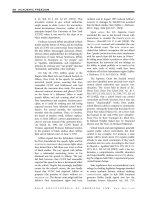
William Pelham
Barr.
AP IMAGES
William Pelham Barr 1950–
▼▼
▼▼
1950
2000
1975
◆
◆
◆
◆
◆
◆◆
❖
1950 Born,
New York City
1971 Earned undergraduate
degree at Columbia University
1950–53
Korean War
1961–73
Vietnam War
◆
1973 Graduated with M.A. in Chinese
from Columbia; joined CIA
1977 Earned J.D.
from George
Washington
University
1982–84 Served
as counsel for
President
Reagan’s
Domestic Policy
Council
1989
Appointed
assistant
attorney
general by
President
George H.
W. Bush
◆
2001 Advised George
W. Bush administration
on terrorism-related
legal issues; advocated
secret military tribunals
for Al Qaeda POWs
2001 September 11
terrorist attacks
2009 Joined Kirkland &
Ellis LLP as Of Counsel
1993 Returned to
private practice
1991 Nominated and
confirmed as U.S.
attorney general
◆
1990 Became deputy
attorney general
GALE ENCYCLOPEDIA OF AMERICAN LAW, 3RD E DITION
522 BARR, WILLIAM PELHAM
Barr was named deputy attorney general in
1990. He became acting attorney general in June
1991 when
RICHARD THORNBURGH resigned to
enter the race for a U.S. Senate seat in
Pennsylvania. Barr was nominated and con-
firmed as attorney general in the fall of 1991,
becoming, at age forty-one, the youngest person
to hold that post since Ramsey Clark, who was
appointed in 1967.
After years of unpleasant and adversarial
relationships with Attorneys General
EDWIN
MEESE III
and Thornburgh, Congress welcomed
Barr’s appointment. Members of Congress
praised his candor and cooperation, and they
supported his decision to launch internal
investigations into the Justice Department’s
handling of the Bank of Credi t and Commerce
International (BCCI) scandal and the Inslaw
computer scandal. BCCI was shut down by
bank regulators in 1991 for massive
FRAUD,
THEFT, MONEY LAUNDERING, and the financing of
arms deals and terrorist activities. Depositors
lost billions when the bank’s assets were seized.
Inslaw, Inc., accused the
JUSTICE DEPARTMENT of
conspiring to steal its proprietary software after
the company’s government contract had been
revoked.
The
AMERICAN BAR ASSOCIATION was encour-
aged by Barr’s willingness to reconsider a
Thornburgh decision that prevented local bar
associations from interviewing judicial nomi-
nees, and an editorial in the November 25,
1991, issue of National Law Journal praised the
department planned by the new attorney
general as less poli tical, more open, and more
“inclined toward integrity” than the depart-
ments run by his immediate predecessors in the
RONALD REAGAN and George H. W. Bush admin-
istrations.
However, Barr’s honeymoon with the Dem-
ocratic Congress and the nation’s legal press did
not last. Barr was soon criticized for his inability
to obtain CIA cooperation in the BCCI and
Banca Nationale del Lavoro (BNL) investiga-
tions and for delays in closing down the BCCI.
A CIA investigation revealed that an Atlanta,
Georgia, branch of the BNL had provided
fraudulent loans to Iraq—loans that helped
Saddam Hussein to build his military strength.
Barr’s internal investigation of the theft of an
Inslaw-developed computer program by gov-
ernment officials was tagged a whitewash. He
angered Japanese officials when he announced a
change in antitrust policy that allowed the
Justice Department to bring cases against
Japanese cartels that restricted U.S. exports.
Moreover, Barr fought popular opinion and
strong evidence of improprieties by the Justice
Department w hen he continued to support the
deportation of John Demjanjuk—wrongly ac-
cused of being the infamous Nazi death camp
guard who was called Ivan the Terrible.
Finally, Barr took the unprecedented step of
denying a congressional request for an indepen-
dent investigation into the events known as
Iraqgate. Barr said he and the Justice Depart-
ment would conduct their own investigation to
determine whether anyone in the Bush admin-
istration had commi tted a crime by giving aid to
Saddam Hussein prior to the Iraqi invasion of
Kuwait and the resulting Persian Gulf War.
Ongoing questions about the administra-
tion’s knowledge of, and involvement in,
Iraqgate contributed to Bush’s defeat in the
presidential election of 1992 and ended Barr’s
tenure as the nation’s attorney general.
In spite of his bright beginning, Barr was
unable to depart significantly from the agendas
and operational styles of his predecessors and
the presidents they served. According to the
December 7, 1992 issue of National Law
Journal, “Under Presidents Reagan and Bush
and their Attorneys General Ed Meese, Dick
Thornburgh and
WILLIAM P. BARR, the nation
witnessed the politicization of the
JUSTICE
DEPARTMENT
beyond anything that has gone
before”.
In 1993 Barr returned to Shaw, Pittman and
resumed the
PRACTICE OF LAW. At the time, he
was a member of the American Bar Association,
the Virginia State Bar Association, and the
District of Columbia Bar Association.
Barr later joined Verizon Communicatio ns,
a provider of phone services, as head of its legal
department. Under his leadership, the depart-
ment developed a high percentage of minority
and women attorneys and employees. The legal
department of New York-based Verizon Com-
munications was named the 2002 Northeast
Region Employer of Choice by the Minority
Corporate Counsel Association (MCCA).
In 2001, as the competition between local
phone companies and other digital subscriber
line (DSL) provider s grew, B arr i nst ituted a law -
suit against D SL provider Covad C ommunications.
I DON’T CARE HOW
MUCH POLITICAL
PRESSURE IS
BROUGHT TO BEAR
[OR THAT] THE
OP-EDS [AND]
JOURNALISTS ARE
SAYING
IT’S NOT
FAST ENOUGH FOR
THEM
.THE
STANDARD WILL STAY
WHERE IT IS
.
—WILLIAM BARR
GALE ENCYCLOPEDIA OF AMERICAN LAW, 3RD E DITION
BARR, WILLIAM PELHAM 523
The suit, which claimed that Covad employees
had m ade f alse reports that Verizon had obs-
tructed Covad’s installation services, was dis-
missed by a federal d istrict court judge in
November 2002.
While working for Verizon, Barr lectured to
groups such as the Federalist Society and offered
advice to the administration of
GEORGE W. BUSH
concerning legal measures against TERRORISM.
Barr retired from Verizon Communications
in late 2008, after serving as executive
VICE
PRESIDENT
. While at Verizon, he led the legal, regu-
latory, and government affairs group. In early
2009 he joined Kirkland & Ellis LLP in an Of
Counsel capacity, in its Washington, D.C., office.
FURTHER READINGS
Baker, Nancy V. 1992. Conflicting Loyalties: Law and Politics
in the Attorney General’s Office, 1789-1990. Lawrence:
Univ. Press of Kansas.
Department of Justice. 1991. 200th Anniversary of the Office
of the Attorney General, 1789-1989. Washington, D.C.:
Department of Justice, Office of Attorney General and
Justice Management Division.
Fletcher, Martin. 2001. “Terror Leaders Could Die By Firing
Squad.” London Times. (November 16).
“Legal Job No. 1.” 1992. National Law Journal 15
(December 7).
BARRATRY
In criminal law, the frequent incitement of
lawsuits and quarrels that is a punishable offense.
Barratry is most commonly applied to an
ATTORNEY who attempts to bring about a lawsuit
that will be profitable to her or him. Barratry is
an offense both at
COMMON LAW and under some
state statutes. The broader common-law crime
has been limited by certain statutes. An attorney
who is overly officious in instigating or en-
couraging prosecution of groundless
LITIGATION
might be guilty of common barratry under
a particular statute. The requirement for the
crime of barratry is that repeated or persistent
acts of litigation are performed by the accused.
Barratry is generally a
MISDEMEANOR punishable
by fine or imprisonment. In the case of an
attorney, disbarment is the usu al punishment.
Because few cases have been prosecuted, barra-
try is considered by the legal community at large
to be an archaic crime. This is particularly true
today due to a highly litigious atmosphere.
In maritime law, barratry is the commission
of an act by the master or mariners of a vessel
for an unlawful or fraudulent purpose that is
contrary to the duty owed to the owners, by
which act the owners
SUSTAIN injury.
Aformofbarratryismisconductofthe
master of a ship in taking commodities on board
that subject the ship to
SEIZURE for SMUGGLING.Itis
essential in barratry that a criminal act or intent
exist on the part of the master or mariners which
inures to their own benefit and causes injury to
the owners of the ship.
BARRISTER
In English law, an attorney who has an exclusive
right of argument in all the superior courts.
A barrister is a counselor who is learned in
law and who has been admitted to plead at the
bar. A barrister drafts the pleadings in all cases,
with the exception of the simplest ones.
Distinguished from an
ATTORNEY, which is an
English lawyer who conducts matters out of
court, a barrister engages in the actual argument
of cases or the conduct of the trial.
BARRON V. BALTIMORE
In Barron v. City of Baltimore, 32 U.S. (7 Pet.)
243, 8 L.Ed. 672 (U.S. 1833), the U.S. Supreme
Court ruled that the
FIFTH AMENDMENT to the U.S.
Constitution bound only the federal government
and was thus inapplicable to actions taken by
state and local governments. In 1868 the states
ratified the
FOURTEENTH AMENDMENT in part to
nullify the Supreme Court’s holding in Barron v.
Baltimore. However, it was not until the twentieth
century when the Supreme Court made most of
the federal
BILL OF RIGHTS applicable to the states.
The case arose when John Barron, owner of
the largest and most profitable wharf in the
eastern section of Baltimore, Maryland, sued the
city for losses his wharf had allegedly suffered as
a result of silting. When Barron had originally
purchased the wharf, the wharf enjoyed the
deepest waters in the area. However, in 1815
Baltimore had undertaken a major plan to reno-
vate and modernize the city by building em-
bankments, grading roads, and paving streets.
To facilitate this plan, the city began diverting
water streams from a range of hills around the
city into the wharf. In the seven years leading up
to Barron’s lawsuit, Baltimore experienced a
number of violent rainstorms, causing the
streams to fill with sand, mud, and earth from
the newly graded roads and abutting emban k-
ments. The silt eventually poured into Barron’s
GALE ENCYCLOPEDIA OF AMERICAN LAW, 3RD E DITION
524 BARRATRY
wharf, making the water so shallow that it was
no longer accessible by larger ships. By 1822, the
year Barron filed suit, the harbor had lost
almost its entire value as a commercial wharf.
At trial in the Baltimore County Court-
house, Barron claimed that the city appropriat-
ed his private property for a public use without
providing him
JUST COMPENSATION, as he said was
required by the Takings Clause of Fifth
Amendment to the U.S. Constitution. The trial
court agreed and awarded Barron $4,500 in
damages. The city appealed, and a Maryland
appellate court reversed. Barron then petitioned
the U.S. Supreme Court by
WRIT of error and
review was granted. Chief Justice
JOHN MARSHALL
delivered the Court’s unanimous opinion.
The sole issue before the Court was whether
the Fifth Amendment to the federal Constitution
applied to actions taken by state and local
governmental entities. The federal Constitution
“was ordained and established by the people of
the United States for themselves, for their own
government, and not for the government of the
individual states,” Marshall wrote. When the
Founding Fathers made an exception to this rule
in particular provisions of the U.S. Constitution,
Marshall said, they made clear that those
provisions were in fact applicable to the states.
For example, Marshall observed that section 10 of
Article I provides that “No State shall pass
any Bill of Attainder.” Yet none of the first Ten
Amendments to the U.S. Constitution makes any
similar reference to
STATE ACTION, Marshall
reasoned, evincing the Founding Fathers clear
intent to make the Bill of Rights applicable only
against the federal government.
“Each state established a constitution for
itself, and in that constitution, provided such
limitations and restrictions on the powers
of its particular government, as its judgment
dictated,” the chief justice continued. If Barron’s
property interests were harmed by the city, then
he was required to rely on state or local law to
vindicate his rights. Neither the Fifth Amend-
ment nor any other provision in the Bill of
Rights was applicable to his lawsuit, Marshall
concluded, and U.S. Supreme Court lacked
jurisdiction to take any further action. Accord-
ingly, Marshall dismissed the suit.
Barron v. Baltimore signaled a retreat from
Marshall’s earlier opinions that had expanded
the scope and application of the federal Cons-
titution, a change that reflected the growing
states’ rights movement over the issue of
SLAVERY. Although Barron v. Baltimore was re-
affirmed 12 years later in Permoli v. New
Orleans, 44 U.S. (3 How.) 589, 11 L.Ed. 739
(1845), the Union’s victory in the Civil War
marked the beginning of the end for Barron as a
valid and binding
PRECEDENT.
In 1868 the states ratified the Fourteenth
Amendment, which provides that no state shall
“deprive any person of
DUE PROCESS OF LAW
[or]
EQUAL PROTECTION of the laws.” During the
Congressional debates, JOHN BINGHAM,aRepubli-
can representative from Ohio and the primary
architect of the Fourteenth Amendment, argued
that enacting the Fourteenth Amendment was
necessary to nullify the Supreme Court’sholding
in Barron v. Baltimore.
Despite Bingham’s stated intentions, the Bill
of Rights was not made applicable to the states
through the doctrine of selective incorporation
until the twentieth century. Under this doctrine,
the Supreme Court has ruled that every protec-
tion contained in the Bill of Rights—except for
the right to bear arms, the right to an indictment
by a
GRAND JURY, the right to trial by jury in civil
cases, and the right against quartering soldiers—
must be protected by state governments under
the Equal Protection and Due Process Clauses of
the Fourteenth Amendment.
The Supreme Court has explained that each
of the incorporated rights is “deeply rooted in
the nation’s history,” and is “fundamental” to the
concept of “ordered liberty” embodied in the
Due Process Clause. Palko v. Connecticut, 302
U.S. 319, 58 S. Ct. 149, 82 L.Ed. 288 (1937). Any
state that denies one of these rights to its residents
violates its duty to provide “equal protection of
the laws” guaranteed to the residents of every
state. States may provide their residents with
more constitutional protection than is afforded
by the U.S. Bill of Rights, but the Fourteenth
Amendment prohibits any state from providing
its residents with less protection.
FURTHER READINGS
Amar, Akhil Reed. 1992. “The Bill of Rights and the
Fourteenth Amendment.” Yale Law Journal 101.
Jenkins, Ray. 1987. “Amendable Constitution Allows for
Corrections of Framer’s Errors.” Los Angeles Daily
Journal (June 4).
Papenfuse, Edward C. 2006. Outline, Notes and Documents
Concerning Barron v. Baltimore, 32 U.S. 243. Available
online at />html; website home page: (accessed
August 28, 2009).
GALE ENCYCLOPEDIA OF AMERICAN LAW, 3RD E DITION
BARRON V. BALTIMORE 525
BARTER
The exchange of goods or services without the use
of money as currency.
Barter is a contract wherein parties trade
goods or commodities for other goods, as op-
posed to sale or exchange of goods for money.
Barter is not applicable to contracts involving
land, but solely to contracts relating to goods
and services. For example, when a tenant
exchanges the performance of various mainte-
nance tasks around a house for free room and
board, a barter has taken place.
BASE FEE
An interest in real property that has the potential
to last forever, provided a specific contingency does
not occur.
For example, a grantee might be given an
estate in blackacre, “provided the land is not
used for illegal purposes.”
This type of fee is also known as a con-
ditional, determinable, or qualified fee.
BASE LINE
Survey line used in the government survey to
establish township lines. Horizontal elevation line
used as a centerline in a highway surv ey.
BASEBALL
Although certain laws have protected citizens
for decades from various forms of monopolistic
practices, the legal dec isions surrounding
“America’s favorite pastime” have allowed it to
be exempt from most forms of government
intervention. Through the years, Major League
Baseball (MLB) has escaped measures that
would have ended its exc lusive control over
contracts and copyrights and its all-around
monopoly on professional U.S. baseball. Mean-
while, as contracts and team expenditures have
run well into the millions of dollars, many
have come to see baseball as less of a sport and
more of a business—and a business that should
be regulated. Americans still revere baseball, but
fans, players, and owners al l hope that govern-
ment decisions will save the game from labor
strikes and a host of other ills. The federal
government, however, has done little other than
let baseball remain a special, nationally pro-
tected institution.
The growth of professional baseball—and
some of its headaches—followed a natural
economic progression. Much about the sport’s
origin is shrouded in myth, but the sport is
thought to have begun sometime in the
nineteenth century. The first organized contest
probably took place on June 19, 1846, between
two amateur teams: the New York Nine and the
Knickerbockers. In 1869 the Cincinnati Red
Stockings, a professional team, paved the way
for other franchises to develop. In 1871 the
National Association of Professional Base Ball
Players was born. The National League of
Professional Base Ball Clubs was formed in
1876, and baseball has been both a game and
profitable enterprise ever since.
From baseball’s early days, the courts have
failed to see the game as posing a threat to
business laws. The Sherman Antitrust Act of
1890 (15 U.S .C.A. § 1 et seq.)—a statute
prohibiting monopolies—forbids undue
RE-
STRAINT OF TRADE
on commerce between states.
In 1920, an appeals court ruled that baseball is
unobjectionable in part because it operates on
an interstate level (Nation al League of Profes-
sional Baseball Clubs v. Federal Baseball Club of
Baltimore, 50 App. D.C. 165, 269 F. 681). It
stated, in general reference to other forms of
trade and commerce, that “the Sherman Anti-
trust Act does not apply, unless the effect of
the act complained of on interstate commerce is
direct, not merely indirect or incidental.”
Baseball, the court found, did not pose a threat
to the economy of the world of sports.
The National Lea gue case stemmed from
allegations made by the Federal League’s
Baltimore Terrapins. In the early 1900s the
struggling Federal League sought to be a venture
of the major leagues and competed with other
major league franchises. But the National and
American Leagues bought out many of the
Federal teams, sometimes player by player.
The Terrapins, one of the last surviving teams
in the Federal League, sued the National League.
Representatives of the Terrapins argued that
MLB owners had treated the Terrapins with
scorn, offering the team only $50,000 in
settlement for damages incurred by the buyouts.
In court, the Terrapins argued that MLB had
violated antitrust laws and had participated in
monopolizing ventures.
The case made it all the way to the U.S.
Supreme Court (National League, 259 U.S. 200,
GALE ENCYCLOPEDIA OF AMERICAN LAW, 3RD E DITION
526 BARTER
42 S. Ct. 465, 66 L. Ed. 898 [1922]). In 1922, in
an opinion written by Justice Oliver Wendell
Holmes Jr., the Supreme Court declared
baseball to be, first and foremost, a sport and
not a business. In Holmes’s words, baseball
activities were “purely state affairs.” The deci-
sion gave baseball the unique status of being the
only official professional sports organization to
be exempt from antimonopoly laws. In effect,
the decision protected baseball as a national
treasure.
The National League decision was reaf-
firmed in 1953 with Toolson v. New York
Yankees (346 U.S. 356, 74 S. Ct. 78, 98 L. Ed.
64). In a brief statement, the Court ruled against
the
PLAINTIFF, minor league player George
Toolson. Toolson’s arguments were based on
the complaint that baseball was a monopoly
that offered him unfair contract deals. The
Court said Congress alone had been given
the right to exercise powers that could break
up the structure of baseball’s professional
organization.
The controversial issue in Toolson was
baseball’s reserve clause, the earliest symbol of
the sport’s under lying business nature. The
reserve clause stated that once a player had
accepted a contract to play for a certain team,
the player was bound to serve that team for one
year and must enter into a new contract with
the same team “for the succeeding season at a
salary to be determined by the parties to such
contract.” It was agreed that if a player violated
the reserve clause, he would be guilty of
“contract jumping” and would be ineligible to
serve in any club of the leagues until formally
reinstated.
The reserve clause guaranteed players little
more than an in come. Players attacked it. I n
the 197 0s, Curtis C. Flood, center fielder for
the St. Louis Cardinals, brought charges
against Bowie K. Kuhn, acting c ommissioner
of baseball. The issue was a player’s
FREE
AGENCY
, which Flood had requested and Kuhn
had denied. Free agency is the option to
negotiate a contract with any team, basically
a release from the reserve clause. Taking his
case to the Supreme Court, Flood argued that
the reserve clause unfairly prevented him from
striking deals with other teams that would pay
him more for his services. The Supreme Court
decided on June 19, 1972, that it did not have
the authority to act (Flood v. Kuhn, 407 U .S.
258, 92 S. Ct. 2099, 32 L. Ed. 2d 728). Only
baseball’s acting commissioner could designate
free agency.
Player discontent, as a reaction to the
decision, set the stage for more free agency
bids, and
ARBITRATION between players and
owners began in 1973. In January 1976, Andy
Messersmith succeeded in obtaining free agen-
cy, which ushered in a new era of high stakes:
Players could now dictate certain terms of
employment, and the era of multimillion-dollar
contracts began.
Money was also at issue in a case related to
another aspect of the game. After more than a
century of professional play, in 1986 televised
broadcasts of baseball and the copyright laws
surrounding them came into question. Players
felt that the terms of their employment did not
include their performances for television audi-
ences. They insisted that the telecasts and the
profits being derived from them were being
made without their consent. In Baltimore
Orioles v. Major League Baseball Players Associa-
tion, 805 F.2d 663 (7th Cir. 1986), major league
clubs sought a judgment that upheld their
exclusive right to broadcast games. The major
league players argued that their performances
were not copyrightable works because they
lacked sufficient artistic merit. Refusing to cut
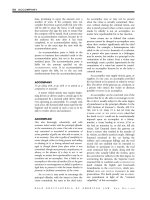
With a payroll of
approximately
$11,000, the 1869
Cincinnati Red
Stockings were the
first professional
baseball team.
LIBRARY OF CONGRESS
GALE ENCYCLOPEDIA OF AMERICAN LAW, 3
RD E DITION
BASEBALL 527