Lecture Notes in Computer Science- P54 doc
Bạn đang xem bản rút gọn của tài liệu. Xem và tải ngay bản đầy đủ của tài liệu tại đây (651.65 KB, 5 trang )
254 M. Spaniol et al.
for Documentation and Conservation cooperates with international organizations as
well as national institutions in the domain of cultural heritage preservation. In this
context, capacity-building activities in heritage management for Afghan experts and
conservation work on some of the most important monuments in the country such as
the UNESCO World Heritage Site Bamiyan are key projects. Activities take place in
tight cooperation with national institutions and local experts such as the Society of the
Preservation of Afghanistan Cultural Heritage (SPACH)
3
, the Departments of Ar-
chaeology and Historical Monument Preservation of the Afghan Ministry of Informa-
tion and Culture, the National Research Institute of Cultural Properties Tokyo and
with the participation of a new generation of scholars and students from the Kabul
University. The creation of a UNESCO Cultural Master Plan for the World Heritage
site of Bamiyan
4
is one of the most important outcomes of the project. However, it
remains a difficult and complex task to recruit and coordinate a sufficient number of
local and foreign experts to accomplish such an ambitious project. This is a typical
example that acts as case study in this work:
“We are trying to specify the exact position of a large piece of debris in one of
the giant Buddha caves in Bamiyan. This is a necessary preprocessing step for a
potential later relocation of fragments and reconstruction of the giant Buddha
itself. As a capacity building measure, experts instruct local heritage officials
employed for the project to take photos of a stone fragment with a GPS-enabled
camera [6]. But quality of the resulting data tends to be rather poor as the local
employees have problems at using the equipment in the pre-defined sequence or
they simply forget to reset the GPS bearing settings after a photo has been taken
because the overall purpose of this activity is not fully understood for a variety
of reasons.”
While educational infrastructures have to be rebuilt across the country, the brain drain
of a whole generation also has to be stopped or even inverted. In our vocational train-
ing scenario we use educational games to teach adult employees the nature of a
conservation project, the nature of data gathering procedures, and the correct use of
the equipment. Since the creation of educational games from scratch is expensive and
requires highly specialized technical and pedagogical skills, we use a semi-automatic
approach in creating educational games from multimedia narratives. Starting point are
non-linear stories created in our MPEG-7 [8] based multimedia integrated story-
telling environment called MIST [22], which taps the multimedia repository of an
online community with the intention of gathering the widespread information about
the Afghan cultural heritage [14].
In this paper, Section 2 highlights the interrelation between (non-)linear story-
telling and educational gaming in technology-enhanced learning (TEL) for vocational
training [7]. Then we present the related work with an emphasis on multimedia capa-
bleness, interoperability and community support in Section 3. In Section 4, we intro-
duce our methodology of creating educational games from expert knowledge captured
in non-linear multimedia stories. Section 5 explains how our approach connects
3
o/ (last access: 28/05/08)
4
(last access: 28/05/08)
From Story-Telling to Educational Gaming: The Bamiyan Valley Case 255
non-linear story-telling and educational gaming in the case of Bamiyan Valley. Fi-
nally, conclusions and future work are presented in Section 6.
2 TEL for Vocational Training: Story-Telling and Educational
Gaming Revisited
When making TEL productive for vocational training, a usual question arises: What
are the main differences between guiding children in their learning processes and
guiding adults? Knowles developed a theory called andragogy (mentioned by Barbara
Kieslinger in her blog
5
) that specified fundamental aspects to be covered in adult
learning [12, 13]. He figured out that adults – unlike children – are self-directed and
expect to take responsibility for decisions. Moreover, adults prefer the instructor to
behave as a facilitator instead of a lecturer. As a result, he postulated four principles
to be incorporated in the process of adult learning [12, 13]:
1) Motivation: Adults need to know why they need to learn something
2) Experience: Adults need to learn experientially
3) Orientation: Adults approach learning as problem-solving
4) Readiness: Adults learn best when the topic is of immediate value
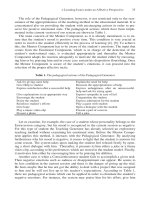
Table 1. Andragogical similarities between story-telling and educational gaming
Andragogy Story-Telling Educational Gaming
Motivation Reliving real life tasks Preparation for real life tasks
Experience
Non-linear exploration of
story paths
Non-linear navigation through a
virtual world
Orientation Complex story graph Interleaved sub-problems
Readiness
Problem solving by other
members’ experiences
Understanding of real life
problems by reproduction
Table 1 depicts the andragogical similarities between story-telling and educational
gaming. From the respective facets contained in story-telling as well as in educational
gaming, it can be seen that both approaches emulate real life processes either within
complex story graphs or as interleaved sub-problems. This is consistent with the main
conclusion that can be drawn from the previous four assumptions for TEL in voca-
tional training: TEL in vocational training requires learning to focus more on the
process and less on the contents.
However, educational games require highly specialized technical and pedagogical
skills to cover adequately complex learning topics. This difficulty can lead to a trivi-
alization of the final games produced, which in turn can lead to a de-motivation prob-
lem. Indeed, as pointed out by Hamalainen [7], while the integration of learning and
5
(last access:
28/05/08)
256 M. Spaniol et al.
gaming provides great opportunities, it also addresses severe motivational challenges
(particularly in vocational training). As pointed out by Weinberger [25], an important
source of de-motivation is the creation of excessively obvious tasks by designers
during scripting.
In turn, non-linear digital stories are an ideal starting point for the creation of edu-
cational games, since each story addresses a known problem, so that the story recipi-
ent may gain benefit from other users’ experiences. The results are real-life stories
that set up the basis for non-trivialized educational videogames. In order to connect
both aspects, we take a closer look at related work in the next section and will point
out what (if possible at all) is needed to connect these approaches.
3 Related Work
There are very different approaches to group-based story-telling and educational gam-
ing. In this overview, we focus on initiatives to foster knowledge sharing in communi-
ties of practice. We will also point out whether and to what extent these approaches
cover both aspects in andragogical motivation: Reliving real life tasks from stories
and preparation issues in educational gaming.
3.1 Related Work on Story-Telling
An application of group story-telling in knowledge management is TellStory [20]. It is
a collaborative, web-based application that allows a group of users to jointly create a
text-based story. A decisive deficit of TellStory is that it is text-based only and does
not support the usage of multimedia.
StoryMapper is an approach to group-based story creation [1]. The collaboration
process is guided by user roles (i.e. teller, organizer, associator/indexer and listener).
For visual representation StoryMapper supports the use of conceptual maps and arbi-
trary media can be attached to the conceptual map nodes. Thus, StoryMapper is capa-
ble of modeling expert experiences within stories.
An approach towards group story-telling for team awareness and entertainment is
PhotoStory [24]. Group members may create stories jointly, which consist of pictures
and their subtitles. The system is based on BSCW [11] and supports community col-
laboration and knowledge exchange according to the BSCW methodology. However,
its current implementation only supports photos.
An approach to retrospective story-telling with digital photos is iTell [15]. In this
aspect, iTell is in line with the intention of story-telling to support learning by sharing
expertise within communities. iTell supports a 4-ary creation process (brainstorming,
organization, writing and media association) including photos as well as voice re-
cordings to be associated with linear text-based stories.
Collaborative audio-based storytelling is an approach focused on audio and its
text-based metadata [10]. The system is also suitable for modeling non-linear media
dependencies. However, collaborative audio-based storytelling does not support any
other media and application of the stories for educational gaming is not considered.
An interactive environment for emergent story-telling is StoryWriter [23]. The idea
is to create text-based and illustrated stories. The authors of stories are guided by rules
From Story-Telling to Educational Gaming: The Bamiyan Valley Case 257
that e.g. manage the interaction between characters. But StoryWriter is neither web-
based nor collaborative.
In addition, there are several story-telling platforms especially for cultural heritage
management such as the CIPHER project [5] and the Instory project [3]. Both of them
focus on helping tourists explore cultural heritage sites using linear multimedia.
3.2 Related Work on Educational Games
Regarding the development of educational games, the field is very broad, as there are
many different approaches to game development. These can range from writing them
from scratch (using general-purpose languages such as C++) to GUI-based authoring
tools than don’t require any programming knowledge. Given the nature of this appli-
cation, we will focus the discussion on such authoring tools.
Many game-authoring tools are actually non-educational commercial products tar-
geted to amateur game developers willing to develop their own games without pro-
gramming knowledge. This is the case of tools such as The FPS Creator and The 3D
Game Maker, both developed by The Game Creators
6
. On the other hand, Mission
Maker (distributed by Immersive Education
7
) was developed with educational pur-
poses, but it is still a commercial product.
The Game Maker [19], on the other hand, is an academic project consisting on a
GUI-based authoring environment that also supports a scripting language to extend
the functionality of the tool. It has been used in several academic research projects
related to educational gaming [2]. However, it was not specifically designed for the
kind of game design that we are pursuing.
In this sense, the Alice
8
project, developed by Carnegie Mellon University, was
originally designed to be a first contact with Object Oriented Programming, but its
spin-off project, Storytelling Alice would fit the game design we are seeking. Unfor-
tunately, its focus on being a tool to learn computer programming suggests that it may
not be ideal for the integration with our previously existing tools.
3.3 Conclusion
In the previous overview we have introduced several approaches towards story-telling
and educational gaming. As we have pointed out, current approaches are not suitable
for combining community support with a comprehensive methodological support to
connect the reliving real life tasks from stories and the preparation issues in educa-
tional gaming. Thus, next section introduces our approach to connect the structural
properties of the story-telling with a specific gaming engine.
4 Creating Educational Games from Non-linear Digital Stories
As mentioned in the previous chapter there is no approach that exploits the expertise
of non-linear digital stories for a latter usage in educational gaming. In order to tap
6
(last access: 28/05/08)
7
(last access: 28/05/08)
8
(last access: 28/05/08)
258 M. Spaniol et al.
the vast repository of community-generated knowledge for vocational training con-
tained in non-linear digital stories, we propose an efficient way of creating and con-
verting these stories into educational games. This is the rationale behind the connec-
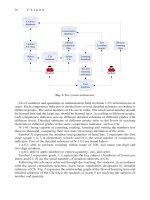
tion of the structural approach of the story-telling environment MIST (developed at
RWTH Aachen University, Germany) with the <e-Adventure> educational game
platform (developed at Complutense University of Madrid, Spain) via an XML-based
interchange format.
Fig. 1. Interconnecting story-telling and educational gaming for vocational training
4.1 Using MIST to Compose Non-linear Digital Stories
The first pillar of this approach is the story-telling environment MIST [22]. In
order to help experts and instructors in creating useful stories (from a structural
point of view), the MOD paradigm is applied (cf. [21] for details). The basis are
multimedia contents that might either be re-used from our geographic informa-
tion system ACIS or newly added at time of creation. Thus, the story designer
might take benefit of the vast pool of already existing data in the community
repository.
The MIST editor allows a temporal composition of multimedia contents. The story
author can now create paths covering different aspects along the contents. Thus, the
problems addressed depend on the path selected and lead consequently to different
results in a story. Figure 2 shows the editor consisting of three main elements: Story-
board (on the left), problem hierarchy (upper right side) and media preview (lower
right side). The storyboard is a graphical representation of stories according to MOD
paradigm, which prescribes the decomposition into dedicated (potentially repeating)
begin, middle, and end sequences.