The Intelligent Investor: The Definitive Book On Value part 32 doc
Bạn đang xem bản rút gọn của tài liệu. Xem và tải ngay bản đầy đủ của tài liệu tại đây (138.25 KB, 10 trang )
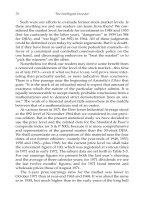
TABLE 11-4 Annual Earnings Multipliers Based on Expected Growth Rates,
Based on a Simplified Formula
Expected growth rate
0.0% 2.5% 5.0% 7.2% 10.0%
14.3% 20.0%
Growth in 10 years
0.0 28.0% 63.0% 100.0% 159.0%
280.0% 319.0%
Multiplier of current earnings 8.5 13.5
18.5 22.9 28.5 37.1 48.5
TABLE 11-5 Implicit or Expected Growth Rates, December 1963 and December 1969
Projected
a
Earned Actual Annual
Projected
a
P/E Ratio, Growth Rate, Per Share Growth,
P/E Ratio, Growth Rate,
Issue
1963
1963 1963 1969 1963–1969 1969
1969
American Tel. & Tel. 23.0
ϫ
7.3% 3.03 4.00 4.75% 12.2
ϫ
1.8%
General Electric
29.0
10.3 3.00 3.79
b
4.0
20.4
6.0
General Motors
14.1
2.8 5.55 5.95 1.17
11.6
1.6
IBM
38.5
15.0 3.48
c
8.21 16.0
44.4
17.9
International Harvester 13.2
2.4 2.29
c
2.30 0.1
10.8
1.1
Xerox
25.0
32.4
.38
c
2.08 29.2
50.8
21.2
DJIA
18.6
5.1 41.11 57.02 5.5
14.0
2.8
a
Based on formula on p. 295.
b
Average of 1968 and 1970, since 1969 earnings were reduced by strike.
c
Adjusted for stock splits.
pares with an actual annual increase of 3.4% (compounded)
between 1951–1953 and 1961–1963.
We should have added a caution somewhat as follows: The val-
uations of expected high-growth stocks are necessarily on the low
side, if we were to assume these growth rates will actually be real-
ized. In fact, according to the arithmetic, if a company could be
assumed to grow at a rate of 8% or more indefinitely in the future its
value would be infinite, and no price would be too high to pay for
the shares. What the valuer actually does in these cases is to intro-
duce a margin of safety into his calculations—somewhat as an engi-
neer does in his specifications for a structure. On this basis the
purchases would realize his assigned objective (in 1963, a future
overall return of 7
1
⁄2% per annum) even if the growth rate actually
realized proved substantially less than that projected in the for-
mula. Of course, then, if that rate were actually realized the
investor would be sure to enjoy a handsome additional return.
There is really no way of valuing a high-growth company (with
an expected rate above, say, 8% annually), in which the analyst
can make realistic assumptions of both the proper multiplier for
the current earnings and the expectable multiplier for the future
earnings.
As it happened the actual growth for Xerox and IBM proved
very close to the high rates implied from our formula. As just
explained, this fine showing inevitably produced a large advance
in the price of both issues. The growth of the DJIA itself was also
about as projected by the 1963 closing market price. But the moder-
ate rate of 5% did not involve the mathematical dilemma of Xerox
and IBM. It turned out that the 23% price rise to the end of 1970,
plus the 28% in aggregate dividend return received, gave not far
from the 7
1
⁄2% annual overall gain posited in our formula. In the
case of the other four companies it may suffice to say that their
growth did not equal the expectations implied in the 1963 price
and that their quotations failed to rise as much as the DJIA. Warn-
ing: This material is supplied for illustrative purposes only, and
because of the inescapable necessity in security analysis to project
the future growth rate for most companies studied. Let the reader
not be misled into thinking that such projections have any high
degree of reliability or, conversely, that future prices can be
Security Analysis for the Lay Investor 297
counted on to behave accordingly as the prophecies are realized,
surpassed, or disappointed.
We should point out that any “scientific,” or at least reasonably
dependable, stock evaluation based on anticipated future results
must take future interest rates into account. A given schedule of
expected earnings, or dividends, would have a smaller present
value if we assume a higher than if we assume a lower interest
structure.* Such assumptions have always been difficult to make
with any degree of confidence, and the recent violent swings in
long-term interest rates render forecasts of this sort almost pre-
sumptuous. Hence we have retained our old formula above, sim-
ply because no new one would appear more plausible.
Industry Analysis
Because the general prospects of the enterprise carry major
weight in the establishment of market prices, it is natural for the
security analyst to devote a great deal of attention to the economic
position of the industry and of the individual company in its
industry. Studies of this kind can go into unlimited detail. They are
sometimes productive of valuable insights into important factors
that will be operative in the future and are insufficiently appreci-
ated by the current market. Where a conclusion of that kind can be
drawn with a fair degree of confidence, it affords a sound basis for
investment decisions.
Our own observation, however, leads us to minimize some-
what the practical value of most of the industry studies that are
made available to investors. The material developed is ordinarily
of a kind with which the public is already fairly familiar and that
has already exerted considerable influence on market quotations.
298 The Intelligent Investor
* Why is this? By “the rule of 72,” at 10% interest a given amount of money
doubles in just over seven years, while at 7% it doubles in just over 10 years.
When interest rates are high, the amount of money you need to set aside
today to reach a given value in the future is lower—since those high interest
rates will enable it to grow at a more rapid rate. Thus a rise in interest rates
today makes a future stream of earnings or dividends less valuable—since
the alternative of investing in bonds has become relatively more attractive.
Rarely does one find a brokerage-house study that points out,
with a convincing array of facts, that a popular industry is head-
ing for a fall or that an unpopular one is due to prosper. Wall
Street’s view of the longer future is notoriously fallible, and this
necessarily applies to that important part of its investigations
which is directed toward the forecasting of the course of profits in
various industries.
We must recognize, however, that the rapid and pervasive
growth of technology in recent years is not without major effect on
the attitude and the labors of the security analyst. More so than in
the past, the progress or retrogression of the typical company in the
coming decade may depend on its relation to new products and
new processes, which the analyst may have a chance to study and
evaluate in advance. Thus there is doubtless a promising area for
effective work by the analyst, based on field trips, interviews with
research men, and on intensive technological investigation on his
own. There are hazards connected with investment conclusions
derived chiefly from such glimpses into the future, and not sup-
ported by presently demonstrable value. Yet there are perhaps
equal hazards in sticking closely to the limits of value set by sober
calculations resting on actual results. The investor cannot have it
both ways. He can be imaginative and play for the big profits that
are the reward for vision proved sound by the event; but then he
must run a substantial risk of major or minor miscalculation. Or he
can be conservative, and refuse to pay more than a minor premium
for possibilities as yet unproved; but in that case he must be pre-
pared for the later contemplation of golden opportunities foregone.
A Two-Part Appraisal Process
Let us return for a moment to the idea of valuation or appraisal
of a common stock, which we began to discuss above on p. 288. A
great deal of reflection on the subject has led us to conclude that
this better be done quite differently than is now the established
practice. We suggest that analysts work out first what we call the
“past-performance value,” which is based solely on the past
record. This would indicate what the stock would be worth—
absolutely, or as a percentage of the DJIA or of the S & P compos-
ite—if it is assumed that its relative past performance will continue
Security Analysis for the Lay Investor 299
unchanged in the future. (This includes the assumption that its rel-
ative growth rate, as shown in the last seven years, will also con-
tinue unchanged over the next seven years.) This process could be
carried out mechanically by applying a formula that gives individ-
ual weights to past figures for profitability, stability, and growth,
and also for current financial condition. The second part of the
analysis should consider to what extent the value based solely on
past performance should be modified because of new conditions
expected in the future.
Such a procedure would divide the work between senior and
junior analysts as follows: (1) The senior analyst would set up the
formula to apply to all companies generally for determining past-
performance value. (2) The junior analysts would work up such
factors for the designated companies—pretty much in mechanical
fashion. (3) The senior analyst would then determine to what
extent a company’s performance—absolute or relative—is likely to
differ from its past record, and what change should be made in
the value to reflect such anticipated changes. It would be best if the
senior analyst’s report showed both the original valuation and the
modified one, with his reasons for the change.
Is a job of this kind worth doing? Our answer is in the affirma-
tive, but our reasons may appear somewhat cynical to the reader.
We doubt whether the valuations so reached will prove sufficiently
dependable in the case of the typical industrial company, great or
small. We shall illustrate the difficulties of this job in our discus-
sion of Aluminum Company of America (ALCOA) in the next
chapter. Nonetheless it should be done for such common stocks.
Why? First, many security analysts are bound to make current or
projected valuations, as part of their daily work. The method we
propose should be an improvement on those generally followed
today. Secondly, because it should give useful experience and
insight to the analysts who practice this method. Thirdly, because
work of this kind could produce an invaluable body of recorded
experience—as has long been the case in medicine—that may lead
to better methods of procedure and a useful knowledge of its pos-
sibilities and limitations. The public-utility stocks might well
prove an important area in which this approach will show real
pragmatic value. Eventually the intelligent analyst will confine
himself to those groups in which the future appears reasonably
300 The Intelligent Investor
predictable,* or where the margin of safety of past-performance
value over current price is so large that he can take his chances on
future variations—as he does in selecting well-secured senior secu-
rities.
In subsequent chapters we shall supply concrete examples of
the application of analytical techniques. But they will only be illus-
trations. If the reader finds the subject interesting he should pursue
it systematically and thoroughly before he considers himself quali-
fied to pass a final buy-or-sell judgment of his own on a security
issue.
Security Analysis for the Lay Investor 301
* These industry groups, ideally, would not be overly dependent on such
unforeseeable factors as fluctuating interest rates or the future direction of
prices for raw materials like oil or metals. Possibilities might be industries
like gaming, cosmetics, alcoholic beverages, nursing homes, or waste man-
agement.
COMMENTARY ON CHAPTER 11
“Would you tell me, please, which way I ought to go from
here?”
“That depends a good deal on where you want to get to,” said
the Cat.
—Lewis Carroll, Alice’s Adventures in Wonderland
Putting a Price on the Future
Which factors determine how much you should be willing to pay for a
stock? What makes one company worth 10 times earnings and
another worth 20 times? How can you be reasonably sure that you are
not overpaying for an apparently rosy future that turns out to be a
murky nightmare?
Graham feels that five elements are decisive.
1
He summarizes them as:
• the company’s “general long-term prospects”
• the quality of its management
• its financial strength and capital structure
• its dividend record
• and its current dividend rate.
Let’s look at these factors in the light of today’s market.
The long-term prospects. Nowadays, the intelligent investor
should begin by downloading at least five years’ worth of annual
reports (Form 10-K) from the company’s website or from the EDGAR
302
1
Because so few of today’s individual investors buy—or should buy—individ-
ual bonds, we will limit this discussion to stock analysis. For more on bond
funds, see the commentary on Chapter 4.
database at www.sec.gov.
2
Then comb through the financial state-
ments, gathering evidence to help you answer two overriding ques-
tions. What makes this company grow? Where do (and where will) its
profits come from? Among the problems to watch for:
• The company is a “serial acquirer.” An average of more than two
or three acquisitions a year is a sign of potential trouble. After all,
if the company itself would rather buy the stock of other busi-
nesses than invest in its own, shouldn’t you take the hint and look
elsewhere too? And check the company’s track record as an
acquirer. Watch out for corporate bulimics—firms that wolf down
big acquisitions, only to end up vomiting them back out. Lucent,
Mattel, Quaker Oats, and Tyco International are among the com-
panies that have had to disgorge acquisitions at sickening losses.
Other firms take chronic write-offs, or accounting charges proving
that they overpaid for their past acquisitions. That’s a bad omen
for future deal making.
3
• The company is an OPM addict, borrowing debt or selling stock
to raise boatloads of Other People’s Money. These fat infusions of
OPM are labeled “cash from financing activities” on the statement
of cash flows in the annual report. They can make a sick company
appear to be growing even if its underlying businesses are not
generating enough cash—as Global Crossing and WorldCom
showed not long ago.
4
Commentary on Chapter 11 303
2
You should also get at least one year’s worth of quarterly reports (on Form
10-Q). By definition, we are assuming that you are an “enterprising” investor
willing to devote a considerable amount of effort to your portfolio. If the
steps in this chapter sound like too much work to you, then you are not tem-
peramentally well suited to picking your own stocks. You cannot reliably
obtain the results you imagine unless you put in the kind of effort we
describe.
3
You can usually find details on acquisitions in the “Management’s Discus-
sion and Analysis” section of Form 10-K; cross-check it against the foot-
notes to the financial statements. For more on “serial acquirers,” see the
commentary on Chapter 12.
4
To determine whether a company is an OPM addict, read the “Statement
of Cash Flows” in the financial statements. This page breaks down the
• The company is a Johnny-One-Note, relying on one customer (or
a handful) for most of its revenues. In October 1999, fiber-optics
maker Sycamore Networks, Inc. sold stock to the public for the
first time. The prospectus revealed that one customer, Williams
Communications, accounted for 100% of Sycamore’s $11 million
in total revenues. Traders blithely valued Sycamore’s shares at
$15 billion. Unfortunately, Williams went bankrupt just over two
years later. Although Sycamore picked up other customers, its
stock lost 97% between 2000 and 2002.
As you study the sources of growth and profit, stay on the lookout
for positives as well as negatives. Among the good signs:
• The company has a wide “moat,” or competitive advantage. Like
castles, some companies can easily be stormed by marauding
competitors, while others are almost impregnable. Several forces
can widen a company’s moat: a strong brand identity (think of
Harley Davidson, whose buyers tattoo the company’s logo onto
their bodies); a monopoly or near-monopoly on the market;
economies of scale, or the ability to supply huge amounts of goods
or services cheaply (consider Gillette, which churns out razor
blades by the billion); a unique intangible asset (think of Coca-
Cola, whose secret formula for flavored syrup has no real physical
value but maintains a priceless hold on consumers); a resistance
to substitution (most businesses have no alternative to electricity,
so utility companies are unlikely to be supplanted any time soon).
5
304 Commentary on Chapter 11
company’s cash inflows and outflows into “operating activities,” “invest-
ing activities,” and “financing activities.” If cash from operating activities is
consistently negative, while cash from financing activities is consistently
positive, the company has a habit of craving more cash than its own
businesses can produce—and you should not join the “enablers” of that
habitual abuse. For more on Global Crossing, see the commentary on
Chapter 12. For more on WorldCom, see the sidebar in the commentary on
Chapter 6.
5
For more insight into “moats,” see the classic book Competitive Strategy
by Harvard Business School professor Michael E. Porter (Free Press, New
York, 1998).
• The company is a marathoner, not a sprinter. By looking back at
the income statements, you can see whether revenues and net
earnings have grown smoothly and steadily over the previous 10
years. A recent article in the Financial Analysts Journal confirmed
what other studies (and the sad experience of many investors)
have shown: that the fastest-growing companies tend to overheat
and flame out.
6
If earnings are growing at a long-term rate of 10%
pretax (or 6% to 7% after-tax), that may be sustainable. But the
15% growth hurdle that many companies set for themselves is
delusional. And an even higher rate—or a sudden burst of growth
in one or two years—is all but certain to fade, just like an inexperi-
enced marathoner who tries to run the whole race as if it were a
100-meter dash.
• The company sows and reaps. No matter how good its products
or how powerful its brands, a company must spend some money
to develop new business. While research and development
spending is not a source of growth today, it may well be tomor-
row—particularly if a firm has a proven record of rejuvenating its
businesses with new ideas and equipment. The average budget
for research and development varies across industries and com-
panies. In 2002, Procter & Gamble spent about 4% of its net
sales on R & D, while 3M spent 6.5% and Johnson & Johnson
10.9%. In the long run, a company that spends nothing on R & D
is at least as vulnerable as one that spends too much.
The quality and conduct of management. A company’s execu-
tives should say what they will do, then do what they said. Read the
past annual reports to see what forecasts the managers made and
if they fulfilled them or fell short. Managers should forthrightly admit
their failures and take responsibility for them, rather than blaming
all-purpose scapegoats like “the economy,” “uncertainty,” or “weak
demand.” Check whether the tone and substance of the chairman’s
letter stay constant, or fluctuate with the latest fads on Wall Street.
(Pay special attention to boom years like 1999: Did the executives of
Commentary on Chapter 11 305
6
See Cyrus A. Ramezani, Luc Soenen, and Alan Jung, “Growth, Corporate
Profitability, and Value Creation,” Financial Analysts Journal, November/
December, 2002, pp. 56–67; also available at />