High Cycle Fatigue: A Mechanics of Materials Perspective part 37 pot
Bạn đang xem bản rút gọn của tài liệu. Xem và tải ngay bản đầy đủ của tài liệu tại đây (274.81 KB, 10 trang )
346 Effects of Damage on HCF Properties
0
0.5
1
1.5
2
0 0.2 0.4 0.6 0.8
1
Static (J)
Pend KE (J)
Bal KE (J)
Energy (J)
Depth (mm)
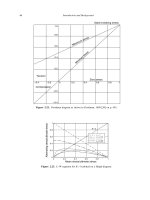
Figure 7.20. Relation between depth of crater and energy.
The energy plotted in the figure represents the input kinetic energy only. There was no
information obtained experimentally about the residual velocity of the spheres. If it is
assumed that the spheres did not rebound, then the energy plotted can be considered to
be an upper bound of what went into deforming or fracturing the target. At any given
energy level, the figure shows that there is a lot of scatter in the permanent depth.
Careful examination of the individual points revealed that at the highest energy level,
obtained with the 2.0 mm diameter spheres at 305m/s impact velocity, most of the leading
edge specimens were chipped or fractured and showed what has been termed loss of
material (LOM) [9, 13]. Such a condition is shown in the SEM photo, Figure 7.21(a).
The points having such a fracture appearance lie to the right and below the trend line of
the quasi-static data. Some of the data points to the left had only permanent deformation
as seen in the SEM photo in Figure 7.21(b). This shows that the energy required to
produce a fracture is less than that needed to produce a crater of equivalent size through
500 µm
(a) (b)
500 µm
Figure 7.21. SEM photos of indents showing: (a) loss of material and (b) indentation.
Foreign Object Damage 347
plastic deformation. A similar observation was made for the data points to the right at an
energy level of approximately 0.5 J which represent the 1.33 mm diameter sphere impacts
at 305 m/s. Here, again, chipping and local fracture led to the formation of the crater
rather than extensive plastic deformation. Thus, the depth of penetration of all of the
impacts can be correlated well with impact energy, as would be expected, except for
cases where fracture occurred locally. In that case, the depth of penetration is generally
higher and represents the worst case scenario regarding fatigue strength debit as noted
also in previous research [9, 13]. Of significance is the observation that the two types of
permanent distortion, LOM and crater formation, occur under nominally identical impact
conditions. In these cases, the differences were in the location of the actual impact with
respect to the targeted point exactly in the middle of the airfoil leading edge.
As an overall observation, for the range of conditions covered in [12], quasi-static and
pendulum indenting used to produce craters of the same depth as the ballistic impacts
resulted in plastic deformation in all cases. While the depth of penetration was correlated
with the input energy, this quantity cannot be predicted a priori because the unloading
load-displacement curve or rebound velocity is not known for the quasi-static or pendulum
indenting, respectively. These types of FOD simulations that produce plastic deformation
can over-predict the fatigue strength for the same depth of penetration compared to the
ballistic case where LOM occurs.
7.9. FATIGUE LIMIT STRENGTH
For different impact conditions that produce craters, the reduction of fatigue strength can
be characterized by a fatigue notch factor, k
f
, defined as the ratio of the smooth bar
fatigue strength to that of the notched bar based on net cross-sectional area, as indicated
in earlier in the discussion of notches, Section 5.4,
k
f
=
unnotched fatigue limit stress
notched fatigue limit stress
(7.1)
In [12], predicted values of k
f
were calculated based on the elastic stress concentration
factor, k
t
, through an empirical formula that fits experimental data. The notch was assumed
to have a radius equal to the impacting sphere or the static indentor, an assumption
that was verified in prior investigations on the same material [9, 13, 14]. Finite element
analyses of ideal 30
notches were used to determine k
t
for several different combinations
of radius and depth. These values were found to be close to those calculated for a circular
notch of depth, d, and radius, r, from Peterson [15],
k
t
=1+2
d
r
(7.2)
348 Effects of Damage on HCF Properties
The fatigue notch factor used was that given by Peterson [16] in the form,
k
f
=1+
k
t
−1
1+
a
p
r
(7.3)
where a
p
=300 m is a material constant obtained from fitting notch fatigue data on the
same material [17].
The results for the FLS, normalized with respect to the smooth bar fatigue strength
at R = 01, 10
7
cycles (568 MPa), are presented in Figure 7.22 as a function of the
measured notch depth. Most of the data in this investigation were obtained for impacts
with a ball diameter of 1.33 mm and quasi-static indents with the same diameter chisel.
Shown also is a reference line corresponding to the fatigue notch factor as calculated for a
notch radius of 0.67 mm from Equation (7.3). In the nomenclature used, hollow symbols
refer to stress-relieved (SR) specimens, whereas solid symbols are for specimens tested
as-received (AR) after impacting or indenting. Data obtained at three different ballistic
velocities (having significantly different kinetic energies) are noted, as well as results for
the quasi-static and pendulum indents of similar impact depths.
A prediction, based solely on notch geometry using k
f
, is also shown in the figure.
(Since the fatigue strength is normalized, the prediction appears as a line calculated as
FOD depth (mm)
(inches)
1.33 mm Dia.
305 m/s (0.48 J)
67
m/s (0.02 J)
518
m/s (1.38 J)
quasi-static (AR)
quasi-static (SR)
pendulum (AR)
pendulum (SR)
machined notch
305,67,518 m/s (SR)
1/K
f
σ
smooth
= 568 MPa @ R = 0.1
Norm. Fat. Str. (
σ
FOD
/
σ
smooth
)
0.0
0.0
0.2
0.2
0.4
0.4
0.6
0.6
0.8
0.8
1.0
1.0
0.00 0.01 0.02 0.03 0.04
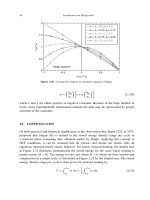
Figure 7.22. Normalized fatigue strength as a function of FOD depth for 1.33 mm diameter indents.
Foreign Object Damage 349
1/k
f
.) It should be noted that this line does not take into consideration any microstructural
damage imparted by the impacts or any residual stresses produced during the impacts.
The data of the as-impacted (AR) specimens follow essentially the same trend, which is
slightly lower than the prediction regardless of the impacting technique. By comparison,
the fatigue strength of specimens with machined notches
∗
of depths of approximately
0.2 and 0.4 mm were essentially that as predicted by the k
f
formula. This confirms the
validity of the k
f
formulation for these notch geometries.
The hollow triangles, in Figure 7.22, show the effect of removing residual stress effects
from the quasi-static and pendulum indents, which indicates that the fatigue strength
increases due to stress relief. This would imply that the indenting procedures imparted
tensile residual stresses. The apparent strengthening effect over that predicted by k
f
analysis can be partially explained by observing the geometry of the non-ballistic notch
after indentation as compared to a machined notch, as shown in Figure 7.23. The indent
produced by quasi-static methods produces substantial bulging, plastic deformation, and
distortion of the notch, as shown in Figure 7.23(b). The net effect seems to be a shielding
effect on the notch and invalidates the k
t
approximation because of the distorted geometry.
By comparison, the fatigue strength of specimens with machined notches of depths of
approximately 0.2 and 0.4 mm was essentially that as predicted by the k
f
formula.
Another possible contribution to the apparent strengthening effect on the SR samples
is the strain hardening that takes place during the deformation process when the crater
is formed. Both the quasi-static and pendulum impacts show an apparent strengthening
effect when stress relieved, but the net effect produces fatigue strengths above that
predicted solely by the geometry. In addition to the difference in deformation pattern
discussed above, it is thought that some strengthening in fatigue from strain hardening in
compression during the impact event may have occurred.
(a)
500 µm 500 µm
(b)
Figure 7.23. Comparison of (a) machined notch with (b) quasi-static indentation.
∗
The machined notches were not stress relieved because low stress grinding (LSG) was used in machining the
notches. It was assumed that LSG produced little or no residual stress and that final polishing reduced any
possible residual machining stresses even further.
350 Effects of Damage on HCF Properties
Stress relief of the specimens that were ballistically impacted, on the other hand,
produced little or no change in fatigue strength as shown by the hollow circles and
crosses in Figure 7.22. Here it would appear that the ballistic impacting produces minimal
residual stresses and perhaps beneficial compressive stresses dominate. (A downward
arrow in a data point indicates that it failed during the first loading block of the step test
procedure.) This observation of apparent compressive residual stresses is consistent with
observations from numerical simulations of spherical ball impacts on this leading edge
geometry, which show tendencies for compressive stresses to develop near the exit side
of the crater for an ideal impact [8].
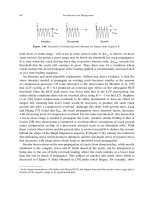
Data for the impacts with the 2.0 mm diameter spheres/indentor is shown in Figure 7.24.
For these spheres causing the deepest notches, the formula corresponding to k
f
tends to
over-predict the FLSs, particularly when the notch depth approaches 1 mm. Here, for the
ballistic impacts, the stress relief procedure has little or no effect on the fatigue strength,
indicating the absence of significant residual stresses in the vicinity of the damage site.
The quasi-static indented specimens, on the other hand, exhibit the same type of behavior
as seen in the 1.33 mm diameter specimens described above. Again, this may be attributed
to some combination of the deformation pattern observed (Figure 7.23) and possible
strain-hardening effects.
Data from the impacts using the 0.5 mm diameter spheres, Figure 7.25, show that these
smaller diameter spheres produce FLSs which are higher in the stress relieved case than
0.0
0.0
0.2
0.4
0.6
0.8
1.0
0.010.00 0.02 0.03 0.04
0.2
0.4
0.6
0.8
1.0
FOD depth (mm)
open symbols: stress-relieved
(inches)
1/K
f
2.0 mm Dia.
305
m/s (1.6
J)
166
m/s (0.5
J)
41
m/s (0.02
J)
quasi-static
pendulum
Norm. Fat. Str. (
σ
FOD
/σ
smooth
)
Figure 7.24. Normalized fatigue strength as a function of FOD depth for 2.0 mm diameter indents.
Foreign Object Damage 351
FOD depth (mm)
0.0
0.0
0.2
0.2
0.4
0.4
0.6
0.6
0.8
0.8
1.0
1.0
Norm. Fat. Str. (
σ
FOD
/
σ
smooth
)
0.00
(inches)
0.01 0.02 0.03
0.5
mm Dia.
305 m/s (0.025
J)
305
m/s (SR)
quasi-static (AR)
quasi-static (SR)
pendulum (AR)
pendulum (SR)
1/kf
0.04
Figure 7.25. Normalized fatigue strength as a function of FOD depth for 0.5 mm diameter indents.
for those without SR. This would tend to indicate that some residual tensile stresses were
present in the impacted specimens, the opposite of which was observed for the 1.33 mm
diameter sphere impacts (Figure 7.22). Note that for the 0.5 mm case, the depths of craters
are less than 0.1 mm whereas for the 1.33 mm case, the depths are typically five times as
large.
One reason for the lower strength of ballistic damage after stress relief is attributable
to the physical appearance of the damage sites. For the impacts with the larger ballistic
damage sites, most of the leading edge specimens were chipped or fractured and exhibited
what has been termed LOM, discussed earlier (see Figure 7.21a). Some of the specimen
impacts had only permanent deformation (dents) (see Figure 7.21b).
A general observation that can be made is that residual stresses that are produced by
ballistic impact depend on the size and velocity of the impacting sphere. These stresses
may be different in magnitude and type (tension versus compression) depending on their
appearance when going from ballistic impacts to quasi-static indentation. One significant
observation is that the FLS of a ballistically impacted leading edge specimen can be
reduced by as much as 70–80% in the specimens that have the largest amount of damage.
While these were the most severe impact conditions in the reported experiments, they
still involved rather small impacting objects compared to the stones, tools, and even some
352 Effects of Damage on HCF Properties
sand particles that have caused FOD in gas turbine engines in both military and civilian
aircraft.
We can conclude that the fatigue limit strength of a ballistically impacted leading
edge specimen is influenced not only by the geometry of the notch produced by the
impact, but by the residual stress field and mechanisms producing the notch. For notches
with lesser amounts of damage, the impact site was predominately plastic deformation
that resulted in a notch fatigue strength that was reasonably predicted by conventional
notch analysis using k
f
. Some strengthening effect, observed after stress relief annealing,
was attributed to possible strain hardening. Residual stresses, which tend to alter these
strengths somewhat, are very sensitive to the nature of the impact and can be either tensile
or compressive and very hard to predict. For larger ballistic damage levels, the notch
crater exhibited damage such as chipping, local failure, and LOM. In these cases, the
fatigue strength was degraded compared to that predicted by k
f
analysis and the energy
absorbed was lower than for a similar geometry notch caused by plastic deformation. The
fatigue strength was degraded most when LOM occurred. The types of FOD simulations
that provide low impact velocities (pendulum) or are quasi-static, where only plastic
deformation occurs, can slightly over-predict the fatigue strength for the same depth of
penetration when compared to the ballistic case where LOM occurs. While some of the
quasi-static and pendulum impacts produced fatigue strengths that were similar to those
from ballistic impacts of the same depths, the mechanisms producing the altered strengths
were not always the same in the ballistic case compared to the simulated indents at much
lower velocities. Of greatest concern, however, is the scatter in fatigue strengths that is
attributed to the sensitivity of deformation and damage to the exact location of impact in
a leading-edge geometry.
7.9.1. Simulations using a flat plate
While it is both common and desirable to study FOD and the resulting fatigue strength in
actual components, the extreme difficulty and variability in results led to the use of simple
leading edge geometries under axial fatigue loading to better understand the problem.
While the use of axial loading as opposed to axial and bending loads in a real component
simplified the problem, and complexities such as twist and camber in real blades were
avoided, variability in results due to extreme sensitivity to the impact conditions has made
a thorough understanding of the FOD event rather difficult as noted above. Noting this
large amount of scatter in evaluating FOD in leading edge geometries, simpler geometries
were evaluated by Nicholas et al. [18]. They followed the procedure of Peters et al. [2]
who investigated the ballistic impact damage on the same Ti-6Al-4V alloy in a flat plate
geometry under normal impact and tensile fatigue loading. However, they extended the
study to a wider range of test conditions involving both axial and torsional loading on
rectangular specimens as well as introducing extensive use of stress relief (SR) annealing
Foreign Object Damage 353
to separate out the role of residual stresses as was done in the LE studies described above.
The conditions chosen covered those found to impart deformation only at low velocities as
well as microcracking under higher velocity ballistic impact [2]. In addition, low velocity
pendulum impacts and quasi-static indenting were used. Because of the simple impact
geometry of a flat plate impacted normally, as opposed to impacting a leading edge at a
non-zero angle of incidence, the scatter in material behavior was reduced somewhat.
The procedures that were followed are close to those described in the previous section
for leading edge impact studies where ballistic impact, pendulum impact, and quasi-static
indentation were used to produce damage of similar depths. For the ballistic impacts,
steel spheres, 3.18 mm in diameter, were impacted normally at velocities of either 200
or 300 m/s onto 3.18 mm thick flat plates. Half of the specimens were stress relief (SR)
annealed in order to eliminate any residual stresses produced during the impact event.
For either the quasi-static ball indentation or the low velocity pendulum, the ball used for
producing the indent was of the same diameter and material as that used in the ballistic
impacts. The depth of indent for the quasi-static and pendulum indents was chosen to be
the same as the average value for the ballistic impacts, 0.22 and 0.41 mm for the 200 and
300 m/s impacts, respectively.
All of the plate specimens were fatigue tested in tension or torsion using the step-
loading technique to determine the FLS,
FLS
, corresponding to a life of 10
6
cycles. The
torsion tests were added to axial testing previously performed on airfoil samples in order
to produce different failure locations where residual stresses might be different.
For the simple plate geometry with an indent, the stress distribution and a modified
elastic stress concentration factor were determined for the two notch depths using FEM.
In the analysis it was assumed that the notch had a spherical surface with a radius of
one-half of the impacting sphere whose diameter was 3.18 mm. A schematic of the cross
section at the indent or notch is shown in Figure 7.26.
Results for the axial stresses on the notched specimen due to an average axial stress
of 100 MPa or a torque that produces 100 MPa at the surface were calculated and are
presented in Figure 7.27 for the deep notch as a function of the y-axis location, denoted
y
s
z
r
d
s
A
B
C
Figure 7.26. Geometry of half cross section through middle of notch.
354 Effects of Damage on HCF Properties
100
120
140
160
180
200
3.5 4.0 4.5 5.0
Tension
Torsion
Axial stress (MPa)
y -coordinate from edge of plate (mm)
Edge of
notch
Large notch
Figure 7.27. Axial stress distribution along surface of plate with large notch.
1
1.2
1.4
1.6
1.8
2
3.5 4.0 4.5 5.0
Axial
Torsion
Elastic SCF, k
t
y
-coordinate from edge of plate (mm)
Edge of
notch
Small notch
Figure 7.28. Elastic stress concentration factor along surface of small notch.
in Figure 7.26. The stresses for the shallow notch are shown in Figure 7.28. The center of
the notch corresponds to y =5 mm (10 mm wide plate) and the coordinates for the point
A in Figure 7.26, where the notch intersects the surface of the plate, are y =4201 and
y = 3939mm for the shallow and deep notches, respectively. This location is shown as
the edge of notch using a dotted line in the figures.
Values of k
t
can be obtained based on the true definition of a stress concentration
factor: the actual stress at a location divided by the stress at that same location if the
notch were not present. For axial loading, this is no problem since the smooth bar stresses
are uniform across the cross section. However, for bending or torsion where the stresses
Foreign Object Damage 355
in a smooth bar vary linearly through the cross section, the value of the smooth bar stress
decreases from the surface towards the notch bottom. A better measure of the notch effect
is to use an effective stress concentration factor, denoted by k
t
, defined as the local stress
in the notched specimen divided by the maximum stress at the surface in the smooth bar.
The value of k
t
is then simply the value of the stress, shown in Figure 7.27 for the deep
notch or in Figure 7.28 for the shallow notch, divided by the reference far field stress,
100 MPa in this case. Values for the effective stress concentration factor are summarized
in Table 7.1. For most cases, the locations for the maximum value of the local stress
concentration are either at A along the surface at the edge of the notch or at B at the root
of the notch as shown in Figure 7.26. However, for the deep notch under torsion, the
maximum value of k
t
occurs at point C at the interior of the notch as seen in Figure 7.27.
It is slightly higher than the value at point A on the surface for the torsion case.
The FLS,
FLS
, corresponding to a life of 10
6
cycles was determined from step tests
in both tension and torsion. For reference purposes, the value of
FLS
for smooth bar
tension tests on this material at 10
6
cycles is 600 MPa at R = 01. The results for the
average value of k
f
from two tests at each of the conditions shown are summarized in
Table 7.2 for tension tests conducted at R = 01. The symbol “AR” is used to denote
as-received material (material as tested without stress relief after the indents were put in)
while “SR” denotes samples that were stress relieved after indentation. Three types of
indentation are represented in this database: ballistic, pendulum, and quasi-static, all to
the same depth. The results of the tensile fatigue tests show that SR improved the fatigue
strength in all cases, although the improvement was not very large. This implies that
some tensile residual stresses were present after all three indentation procedures, since
Table 7.1. Computed values of k
t
for notches
Small notch Large notch
Bottom Surface Bottom Surface
Axial 151 1.24 167 1.35
Torsion 113 1.26, 1.32
∗
110 1.38, 1.46
∗∗
∗
@y =425mm,
∗∗
@y =400mm
Table 7.2. Experimental values of k
f
for notches under tension, R =01.
Notch type Ballistic Pendulum Quasi-static
AR shallow 131 120 119
AR deep 169 131 126
SR shallow 126 110 107
SR deep 153 111 109