The Oxford Handbook of Cognitive Linguistics Part 38 ppt
Bạn đang xem bản rút gọn của tài liệu. Xem và tải ngay bản đầy đủ của tài liệu tại đây (207.14 KB, 10 trang )
5.4. The Analysis of Spatial Polysemy
A claim often made in cognitive semantic analyses is that lexical items, and par-
ticularly spatial ones, are strongly polysemous, that is, characterized by a multi-
ple set of distinct, but systematically related senses (Lakoff 1987; Langacker 1987;
Deane 1988; Cuyckens 1991; Geeraerts 1993; Regier 1996; Tuggy 1999, this volume,
chapter 4). These analyses are usually represented by networks of nodes standing
for different senses connected via asymmetrical links. The terms for these asym-
metrically linked nodes/senses may vary with the particular network model (e.g.,
‘‘prototypical’’ vs. ‘‘extended,’’ Langacker 1987; ‘‘central’’ vs. ‘‘peripheral’’ Lakoff
1987), but in all cases one node of the relation is seen as cognitively more basic than
the other. One of the best-known applications for this kind of analysis has been
precisely the semantic study of spatial expressions, where nonspatial senses are
(nearly) always treated as extensions from the spatial ones.
But what exactly is the status of such polysemy networks? Are they a charac-
terization of psychologically real structures and/or processes and thus relate to the
individual psychological level or are they descriptive generalizations over the use
potential of the expressions in question? Since the latter is derived on the basis of
speakers’ intuitions of the appropriateness (or ‘‘correctness’’) of a particular ex-
pression when applied to a particular situation, they obviously represent theo-
retical explications of the normative (nonobservable) level of language. As pointed
out in section 2.2, the two kinds of linguistic reality (the individual-psychological
and the collective-normative) do not coincide, and therefore it cannot be assumed
that a particular analysis (of polysemy) would satisfy simultaneously the criteria
of linguistic explication and psychological explanation. This pervasive mistake of
equating ‘‘linguistically real’’ with ‘‘psychologically real’’ seems to be inherited by
Cognitive Linguistics from the Chomskyan tradition and can be seen with respect
to polysemy in the following statement: ‘‘The central member is thus the member
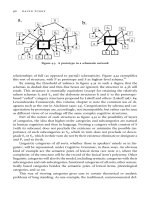
Figure 13.2. A representation of form-meaning mapping within
Holistic Spatial Semantics (from Zlatev 1997)
340 jordan zlatev
from which all others can be most plausibly and most economically related.
Degree of centrality certainly seems to be a psychologically and linguistically real
notion’’ (Taylor 1989: 119). What is ‘‘central’’ from the standpoint of analysis need
not be so psychologically, and vice versa.
The question of the status of polysemy networks is raised poignantly in the ti-
tle of Sandra and Rice’s ( 1995) study: ‘‘Network Analyses of Prepositional Mean-
ing: Mirroring Whose Mind—the Linguist’s or the Language User’s?’’ The focus of
Sandra and Rice’s critique is on the representational and methodological vague-
ness of network analyses. In particular, the authors consider ‘‘the problem of
determining whether the fine distinctions are part of the mental representation (as
predicted by the prepositional network approach) or the result of an interaction
between monosemous mental representations and a process of contextual sup-
plementation’’ (125). It is significant that the evidence adduced in a number of
psycholinguistic studies, most of which are summarized in Cuyckens, Sandra, and
Rice (1997), by and large does not support the (active) mental representation of
polysemous networks with spatial prototypes and metaphorical extensions. In
brief, first-language acquisition studies do not show spatially ‘‘transparent’’ uses
to be regularly acquired before the more abstract and idiomatic ones (van Geert
1986; Rice 1999; Zlatev 2003a). In second-language acquisition, speakers tend not to
transfer hypothetically polysemous L1 representations into L2 (Frisson et al. 1996;
Rice, Sandra, and Vanrespaille 1999). In sentence sorting and similarity judgment
tasks, subjects do not regard supposedly polysemous spatial and nonspatial senses
to be more closely related than homonymous (i.e., nonrelated) controls (Sandra
and Rice 1995; Rice, Sandra, and Vanrespaille 1999). Finally, and most crucially,
primed lexical decision tasks (Sandra and Rice 1995) show that spatial senses of the
prepositions at, on, and in do not facilitate, but rather inhibit, the recognition of
examples with temporal senses, thus attesting to separate mental representations
for the prepositions’ spatial and temporal usages. While individually each one of
these studies may not yield conclusive results, taken together, they strongly ques-
tion both the existence of polysemy networks and the primacy of space—as far as
the individual-psychological level of linguistic reality is concerned—thereby si-
multaneously going against two of the foremost tenets in Cognitive Linguistics.
At the same time, this does not invalidate analyses of polysemy as explications
of the level of linguistic norms/conventions. Such explications do need to be made
accountable to criteria of ‘‘descriptive economy, naturalness, generality and ex-
planatory power’’ (Cuyckens, Sandra, and Rice 1997: 51), pace the comments of
these authors on this issue. As pointed out in section 2.2, it is exactly these criteria
which have been adduced in arguing for and against various analyses of the
polysemy of over in the Cognitive Linguistics literature. In one of the latest con-
tributions to this debate, Tyler and Evans (2001: 733) state the need for a ‘‘meth-
odology that provides a rigorous and relatively consistent way of making
judgments about whether a sense is distinct, and can be used in an intersub-
jective way’’ and propose one such methodology which they call the ‘‘principled
polysemy’’ approach. Endeavors such as this are just as important for the analyses
spatial semantics 341
of polysemy on the normative level as experimentation is for the psychological
one. Only with more progress in each may we hope that the two levels can be
eventually meaningfully related.
6. Summary and Guidelines
for Future Research
The review of cognitive linguistic research in spatial semantics presented in this
chapter involved a discussion of the theoretical self-understanding and method-
ological practices within the field (section 2); a description of basic spatial semantic
concepts, showing a rather unexpected degree of cross-theoretical similarity (sec-
tion 3); a brief survey of spatial semantic descriptive work (section 4); and finally
an outline of four important theoretical controversies that any theory of spatial
meaning would need to address (section 5). On this basis, the following general-
izations concerning the present status and guidelines for future development can
be suggested:
a. Conceptually: The existence of different ontological levels of linguistic
meaning, each with its appropriate methodology, should be more widely
acknowledged, and along with that, the social normative level, accessible
through ‘‘intersubjectively valid intuitions’’ should be rehabilitated.
b. Theoretically: Further analytic work should be carried out in relating the
conceptual and descriptive systems of various authors, showing where
disagreements are only terminological and where they are substantial. In
the latter case, one could attempt to find a theoretical synthesis, offering
a resolution of the persistent theoretical controversies.
c. Descriptively: The typological database should be extended with new lan-
guages, allowing even better cross-linguistic generalizations. Furthermore,
diachronic evidence (when available) should be taken into account to a
greater degree, since it is likely that language change can help to provide an
explanation of patterns of polysemy and the (supposed) primacy of the
spatial domain, which may or may not correspond to synchronic psy-
chological processes.
d. Psychologically: The psychological studies reviewed have provided more
questions than answers: Is there a principled way to distinguish polysemy
from homonymy, on the one hand, and from semantic generality (or
‘‘vagueness’’), on the other? In which way does language mediate spatial
thinking? and so on. The existing experimental paradigms need to be cross-
checked for converging evidence, and new types of experiments should be
considered. A valuable new source of evidence for uncovering parallels
342 jordan zlatev
between the linguistic and conceptual structures of space may be provided
by gesture studies (e.g., McNeill 2000; Kita and O
¨
zyu
¨
rek 2003).
e. Computationally: Computational simulations should be explicitly related
to the appropriate level of linguistic reality they intend to model. A more
adequate basis for the study of ‘‘embodied’’ spatial representations could
possibly be found in the emerging paradigm of ‘‘epigenetic robotics’’
(Dautenhahn 1999; Steels 1999; Zlatev 2001; Zlatev and Balkenius 2001).
Finally, these studies will stand to profit if they can be carried out in parallel, in a
collaborative nonreductionist manner—avoiding fruitless arguments concerning
which level and methodology is properly entitled to the adjective ‘‘cognitive.’’ In
accordance with the interdisciplinary and nonmodular character of Cognitive Lin-
guistics, the modifier ‘‘cognitive’’ would be most appropriate for the approach that
manages to integrate the different ontological levels and methodologies most
coherently.
NOTES
I am indebted to the thorough and insightful comments of the editors, which have
helped improve this text considerably, and furthermore to Esa Itkonen, Chris Sinha, Tim
Rohrer, Lena Ekberg, Hans Hultqvist, Lars Hermere
´
n, and Svetlana Ozol for helpful
feedback on an earlier draft.
1. This approach bears similarities to Rohrer’s (1998, 2001), who proposes a frame-
work of ‘‘levels of investigation’’ and applies this to the study of metaphor and frames
of reference. The major difference between Rohrer’s approach and mine is in the way
the levels are defined: Rohrer refers to ‘‘size’’ and ‘‘physiological structures,’’ while I
hold that the differences are basically ontological: language exists differently at the
three basic levels—as a social institution, as mental representation, and as a neural
implementation.
2. A crucial point is that one should distinguish intuitions about the normative realm,
which are in general ‘‘intersubjectively valid’’ from introspection, which is about the con-
tents of individual minds. Notions such as ‘‘image-schema transformations’’ (e.g., Lakoff
1987; Ekberg 2001), deriving originally from introspection, will be useful as a tool for
explicating our shared intuitions only to the extent that they help capture (cross-linguistic)
generalizations.
3. Cuyckens, Sandra, and Rice (1997) provide a summary of most of the work referred
to in study types (b)–(d).
REFERENCES
Ameka, Felix. 1995. The linguistic construction of space in Ewe. Cognitive Linguistics 6:
139–81.
spatial semantics 343
Anderson, John M. 1971. The grammar of case: Towards a localistic theory. Cambridge:
Cambridge University Press.
Bellavia, Elena. 1996. The German u
¨
ber. In Martin Pu
¨
tz and Rene
´
Dirven, eds., The con-
strual of space in language and thought 73–107. Berlin: Mouton de Gruyter.
Berman, Ruth A., and Dan I. Slobin. 1994. Relating events in narrative: A crosslinguistic
developmental study. Hillsdale, NJ: Lawrence Erlbaum.
Bloom, Paul, Mary A. Peterson, Lynn Nadel, and Merrill Garret, eds. 1996. Language and
space. Cambridge, MA: MIT Press.
Bowerman, Melissa. 1996. Learning how to structure space for language—A cross-
linguistic perspective. In Paul Bloom, Mary A. Peterson, Lynn Nadel, and Merrill
Garret, eds., Language and space 385–436. Cambridge, MA: MIT Press.
Brown, Penelope. 1994. The INs and ONs of Tzeltal Locative Expressions. Linguistics
32: 743–90.
Brugman, Claudia. 1981. Story of Over. MA thesis, University of California at Berkeley.
(Published as The story of Over: Polysemy, semantics, and the structure of the lexicon.
New York: Garland, 1988)
Brugman, Claudia. 1983. The use of body-part terms as locatives in Chalcatongo Mixtec. In
Alice Schlichter, Wallace L. Chafe, and Leanne Hinton, eds., Survey of California and
other Indian languages 235–90. Studies in Mesoamerican Linguistics, report no. 4.
Berkeley, CA: University of California at Berkeley.
Carlson-Radvansky, Laura A., and David A. Irwin. 1993. Frames of reference in vision and
language: Where is above? Cognition 46: 223–44.
Casad, Eugene H. 1982. Cora locationals and structured imagery. PhD dissertation, Uni-
versity of California at San Diego.
Casad, Eugene H. 1993. ‘‘Locations,’’ ‘‘Paths’’ and the Cora verb. In Richard A. Geiger and
Brygida Rudzka-Ostyn, eds., Conceptualizations and mental processing in language
593–645. Berlin: Mouton de Gruyter.
Choi, Soonja, and Melissa Bowerman. 1991. Learning to express notion events in English
and Korean: The influence of language-specific lexicalization patterns. Cognition 41:
83–121.
Cienki, Alan. 1998. straight : An image schema and its metaphorical extensions. Cognitive
Linguistics 9: 107–49.
Clark, Herbert H. 1973. Space, time, semantics and the child. In Timothy E. Moore, ed.,
Cognitive development and the acquisition of language 27–63. New York: Academic
Press.
Cuyckens, Hubert. 1991. The semantics of spatial prepositions in Dutch: A cognitive-
linguistic exercise. PhD dissertation, University of Antwerp.
Cuyckens, Hubert, Dominiek Sandra, and Sally Rice. 1997. Towards an empirical lexical
semantics. In Birgit Smieja and Meike Tasch, eds., Human contact through language
and linguistics 35–54. Frankfurt am Main: Peter Lang Verlag.
Dautenhahn, Kerstin. 1999. Embodiment and interaction in socially intelligent life-like
agents. In Chrystopher L. Nehaniv, ed., Computation for metaphors, analogy and
agents. 102–42. Heidelberg: Springer Verlag.
Deane, Paul D. 1988. Polysemy and cognition. Lingua 75: 325–61.
Deane, Paul D. 1994. Grammar in mind and brain: Explorations in cognitive syntax. Berlin:
Mouton de Gruyter.
Dewell, Robert. 1994. Over again. Image-schema transformations in semantic analysis.
Cognitive Linguistics 5: 351–80.
344 jordan zlatev
Dodge, Ellen, and George Lakoff. 2005. Image schemas: From linguistic analysis to neural
grounding. In Beate Hampe, ed., From perception to meaning: Image schemas in Cog-
nitive Linguistics 57–91. Berlin: Mouton de Gruyter.
Durst-Andersen, Per. 1992. Mental grammar, Russian aspect and related issues. Columbus,
OH: Slavica Publishers.
Ekberg, Lena. 2001. Transformations on the Path-schema, and a minimal lexicon. Studia
Linguistica: 53: 301–23.
Engberg-Pedersen, Elisabeth. 1999. Space and time. In Jens Allwood and Peter Ga
¨
rdenfors,
eds., Cognitive semantics: Meaning and cognition 131–52. Amsterdam: John Benjamins.
Evans, Vyv. 2003. The structure of time. Language, meaning and temporal cognition.
Amsterdam: John Benjamins.
Fauconnier, Gilles. 1985. Mental spaces: Aspects of meaning construction in natural lan-
guage. Cambridge, MA: MIT Press. (2nd ed., Cambridge: Cambridge University Press,
1994)
Feldman, Jerome, and Srini Narayanan. 2004. Embodied meaning in a neural theory of
language. Brain and Language 89: 385 –92 .
Frisson, Steven, Dominiek Sandra, Frank Brisard, and Hubert Cuyckens. 1996. From one
meaning to the next: The effects of polysemous relationships in lexical learning. In
Martin Pu
¨
tz and Rene
´
Dirven, eds., The construal of space in language and thought
613–47. Berlin: Mouton de Gruyter.
Ga
¨
rdenfors, Peter. 2000. Conceptual spaces. Cambridge, MA: MIT Press.
Geeraerts, Dirk. 1992. The semantic structure of Dutch over. Leuvense Bijdragen 81: 205–30.
Geeraerts, Dirk. 1993. Vagueness’s puzzles, polysemy’s vagaries. Cognitive Linguistics 4: 223–72.
Geeraerts, Dirk. 1999. Idealist and empiricist tendencies in cognitive linguistics. In Theo
Janssen and Giela Redeker, eds., Cognitive linguistics: Foundations, scope, and method-
ology 163–94. Berlin: Mouton de Gruyter.
Goddard, Cliff. 2002. On and on: Verbal explications for a polysemic network. Cognitive
Linguistics 13: 277–94.
Grice, H. Paul. 1975. Logic and conversation. In Peter Cole and Jerry Morgan, eds., Syntax
and semantics, vol. 3, Speech acts 41–58. New York: Academic Press.
Gruber, Jeffrey S. 1965. Studies in lexical relations. PhD dissertation, MIT. (Published as
Lexical structures in syntax and semantics. Amsterdam: North-Holland, 1976)
Hampe, Beate, ed. 2005. From perception to meaning. Image schemas in Cognitive Lin-
guistics. Berlin: Mouton de Gruyter.
Hawkins, Bruce W. 1984. The semantics of English spatial prepositions. PhD dissertation,
University of California at San Diego.
Heine, Bernd, Ulrike Claudi, and Friederike Hu
¨
nnemeyer. 1991. Grammaticalization: A
conceptual framework. Chicago: University of Chicago Press.
Herskovits, Annette. 1986. Language and spatial cognition: An interdisciplinary study of the
prepositions in English. Cambridge: Cambridge University Press.
Itkonen, Esa. 1983. Causality in linguistic theory: A critical investigation into the philosophical
and methodological foundations of ‘non-autonomous’ linguistics. Bloomington: Indiana
University Press.
Itkonen, Esa. 1997. The social ontology of meaning. SKY 1997 Yearbook of the Linguistic
Association of Finland: 49–80.
Itkonen, Esa, and Jussi Haukioja. 1997. A rehabilitation of analogy in syntax (and else-
where). In Andra
´
s Kerte
´
sz, ed., Metalinguistik im Wandel: Die kognitive Wende in
Wissenschaftstheorie und Linguistik 131–77. Frankfurt am Main: Peter Lang Verlag.
spatial semantics 345
Jackendoff, Ray. 1983. Semantics and cognition. Cambridge, MA: MIT Press.
Jackendoff, Ray. 1990. Semantic structures. Cambridge, MA: MIT Press.
Jackendoff, Ray. 1996. The architecture of the linguistic-spatial interface. In Paul Bloom,
Mary A. Peterson, Lynn Nadel, and Merrill Garret, eds., Language and space 1–30.
Cambridge, MA: MIT Press.
Johnson, Mark. 1987. The body in the mind: The bodily basis of meaning, imagination and
reason. Chicago: University of Chicago Press.
Kant, Immanuel. [1787] 1964. The critique of pure reason. Trans. Norman Kemp Smith.
London: MacMillan.
Kemmerer, David. 1998. Is syntax based on spatial image schemas in the inferior parie-
tal cortex? Evidence against Deane’s Parietal Hypothesis. Cognitive Linguistics 9: 180–
88.
Kita, Sotaro. 1999. Japanese ENTER/EXIT verbs without motion semantics. Studies of
language 23: 317–40.
Kita, Sotaro, and Asli O
¨
zyu
¨
rek. 2003. What does cross-linguistic variation in semantic
coordination of speech and gesture reveal? Evidence for an interface representation of
spatial thinking and speaking. Journal of Memory and Language 48: 16–32.
Kreitzer, Anatol. 1997. Multiple levels of schematization: A study in the conceptualization
of space. Cognitive Linguistics 8: 291–325.
Lakoff, George. 1987. Women, fire, and dangerous things: What categories reveal about the
mind. Chicago: University of Chicago Press.
Lakoff, George, and Mark Johnson. 1980. Metaphors we live by. Chicago: University of
Chicago Press.
Lakoff, George, and Mark Johnson. 1999. Philosophy in the flesh: The embodied mind and its
challenges to Western thought. New York: Basic Books.
Landau, Barbara, and Ray Jackendoff. 1993. ‘‘What’’ and ‘‘Where’’ in spatial language and
spatial cognition. Behavioural and Brain Sciences 16: 217–65.
Langacker, Ronald W. 1982. Space grammar, analysability, and the English passive. Lan-
guage 58: 22–80.
Langacker, Ronald W. 1987. Foundations of cognitive grammar. Vol. 1, Theoretical pre-
requisites. Stanford, CA: Stanford University Press.
Levelt, Willem J. M. 1996. Perspective taking and ellipsis in spatial description. In Paul
Bloom, Mary A. Peterson, Lynn Nadel, and Merrill Garret, eds., Language and space
77–108. Cambridge, MA: MIT Press.
Levinson, Stephen C. 1991. Relativity in spatial conception and description. Working paper
no. 1, Cognitive Anthropology Research Group, Max Planck Institute for Psycho-
linguistics, Nijmegen, Netherlands.
Levinson, Stephen C. 1994. Vision, shape, and linguistic description: Tzeltal body-part
terminology and object description. Linguistics 32: 791–855.
Levinson, Stephen C. 1996. Frames of reference and Molyneux’s question: Crosslinguistic
evidence. In Paul Bloom, Mary A. Peterson, Lynn Nadel, and Merrill Garret, eds.,
Language and space 109–70. Cambridge, MA: MIT Press.
Levinson, Stephen C. 2003. Space in language and cognition: Explorations in cognitive di-
versity. Cambridge: Cambridge University Press.
Lindner, Susan. 1981. A lexico-semantic analysis of English verb-particle constructions with
OUT and UP. PhD dissertation, University of California at San Diego. (Published as
A lexico-semantic analysis of English verb-particle constructions. LAUT Paper, no.
101. Trier, Germany: Linguistic Agency of the University of Trier, 1983)
346 jordan zlatev
Mandler, Jean, M. 1996. Preverbal representation and language. In Paul Bloom, Mary A.
Peterson, Lynn Nadel, and Merrill Garret, eds., Language and space 365–84. Cam-
bridge, MA: MIT Press.
McNeill, David. 2000. Analogic/analytic representations and cross-linguistic differences in
thinking for speaking. Cognitive Linguistics 11: 43–60.
Miller, George A., and Phillip N. Johnson-Laird. 1976. Language and perception. Cam-
bridge, MA: Harvard University Press.
Nelson, Katherine. 1996. Language in cognitive development: The emergence of the mediated
mind. Cambridge: Cambridge University Press.
Pederson, Eric. 1995. Language as context, language as means: Spatial cognition and ha-
bitual language use. Cognitive Linguistics 6: 33–62.
Pederson, Eric, Eve Danziger, David Wilkins, Steven Levinson, Sotaro Kita, and Gunter
Senft. 1998. Semantic typology and spatial conceptualization. Language 74: 557–89.
Petersen, Mary A., Lynn Nadel, Paul Bloom, and Merrill F Garret. 1996. Space and lan-
guage. In Paul Bloom, Mary A. Peterson, Lynn Nadel, and Merrill Garret, eds.,
Language and space 555–77. Cambridge, MA: MIT Press.
Pettit, Philip. 1996. The common mind. 2nd ed. Oxford: Oxford University Press.
Popper, Karl. 1962. Objective knowledge. Oxford: Oxford University Press.
Pourcel, Stephanie S. 2005. Relativism in the linguistic representation and cognitive
conceptualization of motion events across verb-framed and satellite-framed lan-
guages. PhD dissertation, University of Durham.
Pu
¨
tz, Martin, and Rene
`
Dirven, eds. 1996. The construal of space in language and thought.
Berlin: Mouton de Gruyter.
Regier, Terry. 1996. The human semantic potential: Spatial language and constrained con-
nectionism. Cambridge, MA: MIT Press.
Rice, Sally. 1999. Patterns of acquisition in the emerging mental lexicon: The case of to and
for in English. Brain and Language 68: 268–76.
Rice, Sally, Dominiek Sandra, and Mia Vanrespaille. 1999. Prepositional semantics and the
fragile link between space and time. In Masako Hiraga, Chris Sinha, and Sherman
Wilcox, eds., Cultural, typological and psycholinguistic issues in cognitive linguistics
107–27. Amsterdam: John Benjamins.
Rohrer, Tim. 1998. When metaphors bewitch, analogies illustrate and logic fails: Contro-
versies over the use of metaphoric reasoning in philosophy and science. PhD dis-
sertation, University of Oregon at Eugene.
Rohrer, Tim. 2001. Pragmatism, ideology and embodiment: William James and the phil-
osophical foundations of cognitive linguistics. In Rene
´
Dirven, Bruce Hawkins, and
Esra Sandikcioglu, eds., Language and ideology, vol 1, Theoretical cognitive approaches
49–81. Amsterdam: John Benjamins.
Russell, Bertrand. 1961. History of Western philosophy. London: George Allan and Unwin.
Sandra, Dominiek. 1998. What linguists can and can’t tell you about the human mind:
A reply to Croft. Cognitive Linguistics 9: 361–78.
Sandra, Dominiek, and Sally Rice. 1995. Network analyses of prepositional meaning: Mir-
roring whose mind—the linguist’s or the language user’s? Cognitive Linguistics 6: 89–130.
Senft, Gunter, ed. 1997. Referring to space: Studies in Austronesian and Papuaan languages.
Oxford: Clarendon Press.
Sinha, Chris. 1999. Grounding, mapping and acts of meaning. In Theo Janssen and
Gisela Redeker, eds., Cognitive linguistics: Foundations, scope and methodology 223–55.
Berlin: Mouton de Gruyter.
spatial semantics 347
Sinha, Chris, and Kristine Jensen de Lo
´
pez. 2000. Language, culture and the embodiment
of spatial cognition. Cognitive Linguistics 11: 17–41.
Sinha, Chris, and Tanya Kuteva. 1995. Distributed spatial semantics. Nordic Journal of
Linguistics 18: 167–99.
Sinha, Chris, and Lis Thorseng. 1995. A coding system for spatial relational reference.
Cognitive Linguistics 6: 261–309.
Sinha, Chris, Lis Thorseng, Mariko Hayashi, and Kim Plunkett. 1994. Comparative spatial
semantics and language acquisition: Evidence from Danish, English and Japanese.
Journal of Semantics 11: 253–87.
Slobin, Dan I. 1997. Two ways to travel: Verbs of motion in English and Spanish. In
Masayoshi Shibatani and Sandra Thompson, eds., Grammatical constructions: Their
form and meaning 195–220. Oxford: Oxford University Press.
Slobin, Dan I. 2003. The many ways to search for a frog: Linguistic typology and the
expression of motion events. In Sven Stro
¨
mqvist and Ludo Verhoeven, eds., Relating
events in narrative: Crosslinguistic and cross-contextual perspectives 219–58. Mahwah,
NJ: Lawrence Erlbaum.
Slobin, Dan I., and Nini Hoiting. 1994. Reference to movement in spoken and signed
languages: Typological considerations. Berkeley Linguistics Society 20: 487–505.
Steels, Luc. 1999. The synthetic modeling of language origins. Evolution of Communication
Journal 1: 1–35.
Stro
¨
mqvist, Sven, and Ludo Verhoeven, eds. 2003, eds. Relating events in narrative:
Crosslinguistic and cross-contextual perspectives. Mahwah, NJ: Lawrence Erlbaum.
Svorou, Soteria. 1994. The grammar of space. Amsterdam: John Benjamins.
Takahashi, Kiyoko. 2001. Expressions of emanation fictive motion in Thai. PhD disser-
tation, Chulalongkorn University, Thailand.
Talmy, Leonard. 1975. Semantics and syntax of motion. In John Kimball, ed., Syntax and
semantics 4: 181–238. New York: Academic Press.
Talmy, Leonard. 1983. How language structures space. In Herbert L. Pick, Jr., and Linda
Acredolo, eds., Spatial orientation: Theory, research, and application 225–82. New York:
Plenum Press.
Talmy, Leonard. 1985. Lexicalization patterns: Semantic structure in lexical forms. In
Timothy Shopen, ed., Language typology and syntactic description, vol. 3, Grammatical
categories and the lexicon 57–149. Cambridge: Cambridge University Press.
Talmy, Leonard. 1988. The relation of grammar to cognition. In Brygida Rudska-Ostyn,
ed., Topics in cognitive linguistics 165–205. Amsterdam: John Benjamins.
Talmy, Leonard. 1991. Path to realization: A typology of event conflation. Berkeley Lin-
guistics Society 17: 480–519.
Talmy, Leonard. 1996. Fictive motion in language and ‘‘ception.’’ In Paul Bloom, Mary A.
Peterson, Lynn Nadel, and Merrill Garret, eds., Language and space 211–76. Cambridge,
MA: MIT Press.
Talmy, Leonard. 2000. Toward a cognitive semantics. Vol 2, Typology and process in concept
structuring. Cambridge, MA: MIT Press.
Talmy, Leonard. 2001. How spoken language and signed language structure space differ-
ently. Lecture notes in computer science, vol. 2205, 247–62. Heidelberg: Springer Verlag.
Taylor, John R. 1988. Contrasting prepositional categories: English and Italian. In
Brygida Rudzka-Ostyn, ed., Topics in cognitive linguistics 299–326. Amsterdam: John
Benjamins.
Taylor, John R. 1989. Linguistic categorization: Prototypes in linguistic theory. Oxford:
Clarendon Press. (2nd ed., 1995; 3rd ed., 2003)
348 jordan zlatev
Taylor, John R. 1996. The syntax and semantics of locative nouns in Zulu. In Martin Pu
¨
tz
and Rene
´
Dirven, eds., The construal of space in language and thought 287–306. Berlin:
Mouton de Gruyter.
Tuggy, David. 1999. Linguistic evidence for polysemy in the mind: A response to William
Croft and Dominiek Sandra. Cognitive Linguistics 10: 343–68.
Tyler, Andrea, and Vyvyan Evans. 2001. Reconsidering prepositional polysemy networks:
the case of over. Language 77: 724– 65 .
Tyler, Andrea, and Vyvyan Evans. 2003. The semantics of English prepositions: Spatial scenes,
embodied meaning, and cognition. Cambridge: Cambridge University Press.
van Geert, Paul. 1986. In, on, under: An essay on the modularity of infant spatial com-
petence. First Language 6: 7–28.
Vandeloise, Claude. 199 0. Representation, prototypes and centrality. In Savas Tsohatzidis, ed.,
Meanings and prototypes: Studies in linguistic categorization 403–37. London: Routledge.
Vandeloise, Claude. 1991. Spatial prepositions: A case study from French. Chicago: University
of Chicago Press.
Vygotsky, Lev S. 1978. Mind in society. The development of higher psychological processes.
Cambridge, MA: Harvard University Press.
Whorf, Benjamin L. 1956. Language, thought and reality: Selected writings of Benjamin
Lee Whorf. Cambridge, MA: MIT Press.
Wienold, Go
¨
tz. 1995. Lexical and conceptual structures in expressions for movement and
space: With reference to Japanese, Korean, Thai, and Indonesian as compared to
English and German. In Urs Egli, Peter Pause, Christoph Schwarze, Arnim Stechow,
and Go
¨
tz Wienold, eds., Lexical knowledge in the organization of language 301–40.
Amsterdam: John Benjamins.
Wierzbicka, Anna. 1996. Semantics: Primes and universals. Oxford: Oxford University Press.
Wittgenstein, Ludwig. 1953. Philosophical investigations. Trans. G. E. M. Anscombe.
Oxford: Basil Blackwell.
Zlatev, Jordan. 1997. Situated embodiment: Studies in the emergence of spatial meaning.
Stockholm: Gotab Press.
Zlatev, Jordan. 1999. Situated embodied semantics and connectionist modeling. In Jens
Allwood and Peter Ga
¨
rdenfors, eds., Cognitive semantics: Meaning and cognition
173–94. Amsterdam: John Benjamins
Zlatev, Jordan. 2000. Connectionism and language understanding. In Dennis Burnham,
Sudaporn Luksaneeyanawin, Chris Davis, and Mathieu Lafourcade, eds., Interdisci-
plinary approaches to language processing 166 –92. Bangkok: NECTEC.
Zlatev, Jordan. 2001. The epigenesis of meaning in human beings, and possibly in robots.
Minds and Machines 11: 155–95.
Zlatev, Jordan. 2003a. Beyond cognitive determination: Interactionism in the acquisition
of spatial semantics. In Jonathan Leather and Jet van Dam, eds., Ecology of language
acquisition 83–107. Amsterdam: Kluwer Academic Publishers.
Zlatev, Jordan. 2003b. Holistic spatial semantics of Thai. In Eugene H. Casad and Gene
Palmer, eds., Cognitive linguistics and non-Indo European languages 305–36. Berlin:
Mouton de Gruyter
Zlatev, Jordan. 2003c. Polysemy or generality? Mu. In Hubert Cuyckens, Rene
´
Dirven, and
John R. Taylor, eds., Cognitive approaches to lexical semantics 447–94. Berlin: Mou-
ton de Gruyter.
Zlatev, Jordan. Forthcoming. Embodiment, language and mimesis. In Tom Ziemke, Jor-
dan Zlatev and Roslyn Frank, eds., Body, language and mind, vol. 1, Embodiment.
Berlin: Mouton de Gruyter.
spatial semantics 349