Spinal Disorders: Fundamentals of Diagnosis and Treatment Part 94 pot
Bạn đang xem bản rút gọn của tài liệu. Xem và tải ngay bản đầy đủ của tài liệu tại đây (543.63 KB, 10 trang )
Figure 2. Bone mineral density
Distribution of bone mineral density (BMD) in
healthy women aged 30 –40 years [46].
ence population. This so-called T-score is the number of SDs that the bone den-
sity isabove or below the average value for thereference population. Four general
diagnostic categories have been distinguished:
BMD can be differentiated
into four categories
normal: BMD equal to or more than –1 SD (T-score –1)
osteopenia: BMD between –1 SD and –2.5 SD (T-score <–1)
osteoporosis: BMD less than –2.5 SD (T-score <–2.5)
severe osteoporosis: BMD less than –2.5 SD in the presence of one or more
fragility fractures.
For diagnosis, measurements of BMD at the hip and the lumbar spine are the gold
standard.
Besides the diagnostic use of bone densitometry, these measurements have an
additional prognostic value with respect to fracture probability: the age-adjusted
relative increase in risk (e.g., of vertebral fracture) is 2.3 for every one SD
decrease in lumbar BMD [61].
Classification of Vertebral Body Compression Fractures
Unlike traumatic fractures, osteoporotic vertebral body fractures can be difficult
to diagnose on conventional radiographs. The fracture patterns often do not fit
into fracture classifications known from spinal trauma [60]. For this purpose
morphometric criteria were established for diagnosing incident fractures (
Fig. 3)
[28, 68]. From the spine surgeon’s perspective, the assessment of an osteoporotic
fracture includes c onsideration of the following criteria (
Fig. 4):
From a surgical perspective,
the differentiation of acute
and old fractures is most
important
acute and subacute single level fractures
fractures with persistent instability
(multiple) fractures with progressive/creeping vertebral collapse and loss of
sagittal balance and posture
vertebral fractures with subsequent spinal stenosis/neural compression
Osteoporotic Spine Fractures Chapter 32 929
Figure 3. Morphometric criteria
Typical morphometric criteria for diagnosing incident fractures: Melton
[68] defines a vertebral fracture as present if any of the ratios AH/PH, MH/
PH, PH/PH1, PH/Ph-1 of a vertebra are less than 85% of the mean ratio in
normal women for that vertebral level. Semiquantitative evaluation
describes a mild grade 1 deformity as a 20–25% reduction in anterior,
middle and/or posterior height and a 10– 20 % reduction in area. A mod-
erate grade 2 deformity is defined as a 25 – 40% reduction in any height
and a 20–40% reduction in area, and a severe grade 3 deformity is
defined as a 40 % reduction in any height and area [28].
ab c d
Figure 4. Spectrum of osteoporotic vertebral fractures
a Simple compression fracture with ongoing pain 2 months after onset. b Non-union 6 months after fracture of T11. The
persisting instability causes pain during change of position.
c Fractures of multiple vertebrae are responsible for loss of
posture and neck pain in order to compensate for the deformed thoracic spine.
d Fracture of T7 with concomitant spinal
canal encroachment and compression of the spinal cord.
Clinical Presentation
History
The medical history appears crucial for the clinical appraisal. However, the
symptoms are often misinterpreted. Overall, only about one-third of all vertebral
Less than 10 % of VBCFs
necessitate in-hospital
treatment
fractures come to clinical attention and less than 10% necessitate admission to
hospital.Theincidenceofvertebralfracturesisunderreported.Thelowrateof
clinical vertebral fracture diagnosis may be related in part to the lack of a trau-
matic precipitating event (only 25% of vertebral fractures result from falls), and
930 Section Fractures
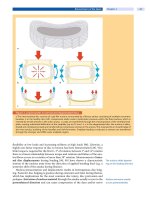
Figure 5. The scale of
vertebral fractures
Data according to Cooper et
al. [16].
therefore the symptoms are often misinterpreted as muscle strain instead. Most
clinically diagnosed fractures (84%) are detected during investigation for back
pain; the remaining 16% without pain may be old fractures that are detected
incidentally during a radiological work-up (
Fig. 5)[92].
Most VBCFs cause acute
sharp localized pain
The cardinal symptoms of acute osteoporotic vertebral fractures are:
acute onset, often initially breathtaking
sharp localized, girdle like pain
sensation of a crack in the back
Pain persistence indicates
further collapse risk
Fractures are most often associated with physical activity (lifting of weights).
However, they can also occur spontaneously. In the majority of patients, the pain
subsides spontaneously within a couple of weeks. Persisting pain is a hallmark of
ongoing instability with progressive loss of vertebral body height.
Severe positional pain
indicates putative
non-union
Therefore, patients should be monitored carefully with repeated X-ray examina-
tions. Severe mechanical back pain for weeks or even months during positional
changes (e.g., getting up from the supine position) leads one to suspect a non-union
with persisting instability. This can be verified by comparing the standing X-ray
with an investigation taken with the patient in the supine position such as an MRI
scan (
Fig. 6
). However, a hyperextension cross table view depicts the difference
between the standing and supine positions more accurately. Diffuse mechanical
back pain of the whole thoracic or lumbarspine can be found in severe osteoporosis.
More and more frequently, we observe patients complaining about claudica-
tion like symptoms or sciatica after a VBCF. Usually, the symptoms subside while
lying down and are accentuated in the upright position. If a narrowing of the spi-
nal canal occurs, the patient can present with:
radiculopathy
claudication symptoms
myelopathic symptoms with gait abnormalities and/or ataxia (thoracic frac-
tures)
Osteoporotic Spine Fractures Chapter 32 931
ab
Figure 6. Positional differences
Patient with persisting pain 6 months after a T11 fracture. The pain is severe during the change from supine to sitting
position.
a The radiograph shows a nearly complete collapse of T11 with a severe kyphotic deformity. b In the MRI scan
there is some degree of spontaneous correction of the kyphosis in comparison to the standing X-ray, which demon-
strates the segmental instability.
The history should also include a search for risks of a new osteoporotic fracture
(
Table 2)[45].
Table 2. Risk factors for VBCF
Age
previous fragility fracture
low bone mineral density (BMD, T-score)
glucocorticoid therapy
high bone turnover
family history of hip fracture
poor visual acuity
low body weight
neuromuscular disorders
cigarette smoking
excessive alcohol consumption
long-term immobilization
low dietary calcium intake
vitamin D deficiency
According to Kanis [45]
932 Section Fractures
Physical Findings
The clinical examination
is rarely helpful for the
diagnosis of a VBCF
The clinical examination is not conclusive in the majority of cases. Frequent but
non-specific physical findings are:
local tenderness
painful motion examination
painprovocationinflexionandrarelyinextension
A thorough neurological
exam is compulsory
However, a thorough neurological examination is absolutely mandatory to rule
out a neural compression syndrome. It is recommended to measure the body
height of patients. This can be used as a reference in further follow-up controls.
Thesagittalbalanceofthespineshouldbeassessedbecauseasagittaldecompen-
sation indicates an increased risk of progressive kyphosis. Furthermore, a thor-
ough general medical assessment is required to rule out secondary causes of the
fracture and to establish a differential diagnosis.
Diagnostic Work-up
Imaging Studies
Standard Radiographs
Standard radiographs
remain essential
for diagnosis
The investigation of choice remains a standing X-ray of the region of interest in
two planes. If there is a concordance of the clinical and imaging investigations, no
further examinations are needed. The comparison with older X-rays can be help-
ful (patients may have had previous chest X-rays). If the fracture pattern or the
patient’s history (red flags, see Chapter
6 ) is not clear, further imaging studies
are necessary. “Instability” can be identified by comparing a standing X-ray with
the MRI or CT scan taken with the patient in a supine position. Alternatively, a
hyperextension cross table view can provide the same information (
Fig. 6). This
provides further information about the potential for achieving some reduction
when the patient is positioned prone during surgery [66].
Computed Tomography
CT best depicts
the bony anatomy
A CT scan can be useful for assessment of the bony anatomy. If the exact fracture
pattern is difficult to appraise, a CT scan with reformatted pictures in the sagittal
and coronal planes should be performed. The evaluation of tumors with a CT
scan shows the exact bony destruction and is recommended before cement rein-
forcement is considered.
Magnetic Resonance Imaging
MRI differentiates acute
and old fractures
An MRI investigation is recommended if the findings on standard X-rays
are not obvious, especially if there are preexisting fractures of which the age is
not known. The MRI though allows fresh osteoporotic fractures to be iden-
tified.
MRI differentiates tumor
and osteoporosis
Also a metastatic lesion can be ruled out on the MRI scan. The T2-weighted
(T2W) image can depict a bone marrow edema which can be verified further
with a fluid sensitive sequence [e.g., short tau inversion recovery sequence
(STIR),
Fig. 7, Table 3]. An osteoporotic fracture is differentiated from another
pathologic fracture if the pattern of signal change in the T1W and especially in
the T2W image is not as homogeneous. A high signal intensity in T1W images
(resembling fat) argues for an osteoporotic fracture. Sometimes imaging is not
Osteoporotic Spine Fractures Chapter 32 933
Figure 7. Differential diagnosis
Comparison of MR findings of a metastatic lesion (rhabdomyosarcoma) and an osteoporotic fracture with T1- and
T2-weighted images as well as with STIR sequences (see
Table 2).
Table 3. MR findings
Pathology MR sequence
T1W T2W STIR
Osteoporotic fracture Dark signal Clear signal, located close to
the fractured endplate
Clear signal involving the whole
vertebra
Metastatic lesion Different patterns depending
on the underlying tumor
Signal change includes the
major part of the vertebra
Clear signal of the whole vertebra
able to give a definitive answer. In these cases, a CT-guided biopsy should be
obtained prior to cement reinforcement.
Radionuclide Studies
Radionuclide studies are
helpful in differentiating
tumors and generalized
bone disease
When a tumorous lesion or another generalized bone disease is suspected, a bone
scan is indicated. Furthermore, if a patient is not suitable for an MRI scan (e.g.,
pacemaker, claustrophobia), a bone scan can be performed to detect a fresh frac-
ture. Of note, a bone scan shows a high sensitivity but is not specific.
Densitometry
If a patient presents with an osteoporotic spine, the BMD should be determined.
There are two methods for the assessment of the BMD.
934 Section Fractures
Dual-Energy X-ray Absorptiometry
DEXA has become
the modality of choice
for BMD assessment
Dual-energy X-ray absorptiometry (DEXA) determines the bone density per
area measured (mg/cm
2
). For diagnosis, measurements of BMD at the hip and
the lumbar spine are the gold standard. The method is simple, fast and reliable.
It became the standard assessment for osteoporosis and is especially helpful in
monitoring the effect of medical treatment. Besides the diagnostic use of bone
densitometry, these measurements have an additional prognostic value with
respect to fracture probability.
High-Resolution Quantitative Peripheral Computed Tomography
High-resolution quantitative peripheral computed tomography (hrpQCT) is a
more sophisticated method for the assessment of the BMD. It allows a volumetric
measure of the bone density (mg/cm
3
) and can differentiate between cancellous
and cortical bone. Despite the higher sensitivity of this method compared to
DEXA, which allows small changes of bone density and structure also to be
detected, it did not gain widespread use in clinical practice and is of more impor-
tance in the scientific field [19].
Bone Biopsy
A bone biopsy is required
in equivocal cases of a
tumorous lesion
A biopsy is indicated if the preexisting cause of a fracture cannot be determined
in order to rule out a tumorous lesion. It is not performed routinely although the
incidence of unexpected cases of plasma cell dyscrasia in a series of 142 patients
undergoing a kyphoplasty procedure was 3% [96]. In rare instances, assessment
of bone metabolism necessitates a biopsy.
Laboratory Investigations
The laboratory work aims to rule out secondary osteoporosis and to investigate
the bone metabolism:
alkaline phosphatase: Raised serum levels are found in the presence of an
increased bone turnover or mineralization disorders. In osteoporosis, the
valuesareusuallywithinthenormalrangeorslightlyraised.
osteocalcin: plays a role in the mineralization of the osteoid. Increased
levels are found in renal failure and during treatment with calcitriol.
deso xypyridinoline: This substance is released during bone resorption and
secreted by the kidneys and can be traced in the urine.
Table 4 provides an overview of the specific laboratory parameters for the evalu-
ation of different aspects of bone metabolism disorders.
Table 4. Laboratory assessment
Level 1 (exclusion of secondary osteoporosis):
Ca, P, alkaline phosphatase, osteocalcin, creatinine, bilirubin, SGOT, SGPT, BSR, serum and
urine immunoelectrophoresis, blood cell count, urine status
Level 2 (clinical suspicion of secondary osteoporosis):
25(OH)D
3
(malabsorption), parathyroid hormone, T4, TSH, testosterone, 1,25(OH)
2
D
3
(renal
osteodystrophy)
Level 3 (dynamics of bone metabolism):
Osteocalcin (bone formation parameter), desoxypyridinoline/creatinine ratio (bone resorp-
tion parameter)
Osteoporotic Spine Fractures Chapter 32 935
Non-operative Treatment
Conservative Fracture Management
Carefully monitor patients
to avoid progressive
kyphotic collapse
and sagittal imbalance
Treatment of VBCF is empirical. Only about one-third of all fractures come to clin-
ical attention and less than 10% necessitate hospital admission (
Fig. 5
) [16]. In the
latter group, however, a high percentage become chronically painful due to non-
union or spinal deformity [16, 92]. Bed rest for a few days and pain medication are
the first measures of treatment. Bracing may be applied, but this is often not suit-
able in the older age group and the effect is questionable [51]. The first aim of con-
servative treatment is to monitor the patient and avoid a collapse of a vertebral
body with consecutive kyphosis and loss of sagittal balance. Pain is the crucial
parameter.If there is any doubt,serial radiographic controlsshould be performed.
Medical Treatment
Every patient with VBCF
should be evaluated
by an osteologist
Patients with fractures after inadequate trauma are likely to be osteoporotic.
Besides the treatment of the fracture, patients should be evaluated by an osteolo-
gist with regard to a formal assessment of bone metabolism and adequate medi-
cal treatment.
Osteoporosis requires
appropriate systemic
medical treatment
Treatment of osteoporosis focuses on agents that:
prevent bone loss
increase bone mass
Themaingoalofconservativetreatmentistoreducethenumberoffragilityfrac-
tures. Osteoporosis, however, is a multifactorial disease, and skeletal fragility
results from various factors. Thus, achievement of optimal bone metabolism
should be the aim throughout life, by age-specific non-pharmacological inter-
vention first and adequate medication where needed.
In the past 10 years, large double-blind placebo-controlled trials have been
performed to assess the efficacy of medical treatment in postmenopausal women
with incident vertebral and non-vertebral fractures as a primary endpoint
(
Table 5). The treatment focuses on:
restoration/maintenance of calcium and vitamin D metabolism
inhibition of bone resorption by biphosphonates
Therelativefractureriskisreduced30–60%bythesedrugs.Theabsoluterisk
reductionisbetween5%and10%.Outof1000womenwithosteoporosis,about
Table 5. Pharmacological treatment for fracture prevention
Drug V ertebral fractures Non-vertebral fractures
Alendronate +++ ++
Calcitonin (nasal) + 0
Etidronate + 0
Fluoride ± –
Hormone replacement therapy
a
+0
Parathyroid hormone
b
+++ ++
Raloxifene +++ 0
Risedronate +++ ++
Vitamin D derivatives ± 0
+++ strong evidence, ++ good evidence, + some evidence for the efficacy of treatment to pre-
vent fractures (in addition to the effects of calcium and/or vitamin D based on RCT [20]),
± equivocal, 0 no effects, – negative effects.
a
Evidence derived mainly from observational studies.
b
Effect on hip fractures not documented.
936 Section Fractures
Table 6. Risk reduction for vertebral fractures (according to Delmas [20])
Drug Mean age
(years)
Number of patients
randomized
Fracture incidence (%) Risk reduction (%)
Placebo Drug Rel. Abs.
Alendronate 5–10 mg 71 2007 15 8 47 7
Calcitonin 200 IU 69 557 16 11 25 4
Raloxifene 60 mg 68 1539 21 15 29 6
Risendronate 5 mg 69 1 628 16 11 25 5
Risendronate 5 mg 71 815 29 18 38 11
Recombinant human 1 –34
PTH 20 μg
69 892 14 5 64 9
150 will show a VBCF within one year. With medical treatment the number of
fractures will be about 80 (9%). The absolute risk reduction is 6%, and the relative
Approximately 15 %
of individuals continue
to experience pain despite
osteoporosis treatment
risk reduction is 60 out of 150 (40%) [20] (Table 6). However, as many as one-
third of patients continue to experience pain. Approximately 15% of individuals
continue to sustain fractures despite therapy. Furthermore there is a consider-
able number of non-responders and non-compliant patients [20, 24, 58, 83].
Medical treatment includes (
Tables 4, 5):
calcium
vitamin D
bisphosphonates
raloxifene
hormone replacement
parathormone
A calcium intake of at least 1 g per day should be achieved and is supplemented
if dietary intake is not sufficient. Vitamin D intake is about 200–400 IU per day.
Operative Treatment
General Principles
The majority of VBCFs respond well to non-operative treatment. However, about
one-third of vertebral fractures become chronically painful [16] and 10% need
hospital admission [92]. However, the number of patients who need surgical
treatment remains obscure. The indications for and the goals of surgical treat-
ment are (
Table 7):
Table 7. Indications and goals for surgical treatment
Indication Goal
Mechanical pain Stabilization of the spine/vertebra
Claudication/sciatica Decompression of the spinal canal
(Severe) deformity Restoration of anatomy
Surgical Principles
ThesurgicalprinciplesapplicableforthetreatmentofVBCFsdepend on:
fracture location
type of fracture
number of involved vertebrae
compromise of neural structures
Osteoporotic Spine Fractures Chapter 32 937
The spectrum of surgical options includes:
simple percutaneous cement reinforcement (vertebroplasty)
restoration of vertebral body height by kyphoplasty or lordoplasty
open surgical intervention with decompression and instrumentation
combined procedures with internal fixation and cement reinforcement
Vertebroplasty
Over the last decade, the approach towards osteoporotic VBCF has changed. The
possibility of percutaneous cement injection into the vertebral body offers a new
and extremely efficient treatment option. The technique is rather simple from a
spine surgeon’s perspective. However, the critical aspect of the treatment repre-
sents cement leakage. Following the technical recommendations (
Tables 8, 9), the
procedure can be performed safely.
Vertebroplasty is indicated
after failed non-operative
treatment
The indications and contraindications for vertebroplasty (VB) are listed in
Tables 10 and 11. The main indication represents acute and subacute VBCF due
to osteoporosis after non-operative treatment has failed.
In this group of patients, percutaneous reinforcement provides a major pain
improvement in more than 80% of cases and prevents the further vertebral col-
Table 8. Key points of surgical technique
high quality C-arm
direct cement application with small syringes (1 cc, 2 cc)
guidewire cement with high radiopacity
large diameter cannulas (8G)
Cement with high/adapted viscosity
Table 9. Steps of surgical technique
positioning and monitoring of patient, i.v. line
image control previous to draping, marking of levels to be treated
local anesthesia in line with the pedicle (unless general anesthesia is used)
stab incision and preliminary placement of guidewire(s)
readjustment and definitive placement of guidewire(s)
placement of filling cannulas
preparation of cement according to recommendations of producer, distribution into
small syringes
cement application with adequate viscosity, high viscous cement is inserted with the aid
of 1 cc syringes or the trocar
cannula removal after curing of the cement
Table 10. Indications for vertebroplasty
ongoing pain for more than 2 weeks after occurrence of a new fracture
severe pain; patients remain bedridden for more than 4 days
progressive compression fractures of one or multiple vertebrae with subsequent loss of
posture
non-union with persisting instability (Kummel-Verneuil disease)
combined procedures with internal fixation in severe osteoporosis
Table 11. Contraindications for vertebroplasty
pain unlikely to be related to a fracture
infection
blood clotting disorders
neurological compromise
impaired visibility during surgery
poor general state of patient, unable to stand in prone position
if an open procedure appears more appropriate
938 Section Fractures