Spinal Disorders: Fundamentals of Diagnosis and Treatment Part 86 pps
Bạn đang xem bản rút gọn của tài liệu. Xem và tải ngay bản đầy đủ của tài liệu tại đây (445.07 KB, 10 trang )
a
b
c
Figure 10. Halo
a, b Correct positioning of the skull pins, c halo vest.
aspect of the head perimeter. Vest size is determined by measurement of chest
circumference with a tape measure. The halo vest (
Fig. 10c)seemstobethefirst
choice for conservative treatment of unstable injuries of the upper cervical spine,
although pin track problems, accurate fitting of the vest, and a lack of patient
compliance lead to clinical failures [165]. Because of these drawbacks, the
authors’ preference is a Minerva cast.
Spinal Cord Injuries
Spinal cord injury frequently
results from cervical
fracture/dislocation
Spinal cord injuries are frequently associated with traumatic cervical spine frac-
tures and cervical facet dislocation injuries due to a displacement of fracture
fragments or subluxation of one vertebra over another. Reduction of the defor-
mity helps to restore the diameter of the bony canal and eliminates bony com-
pression of the spinal cord. Theoretically, early decompression of the spinal cord
after injury may lead to improved neurological outcome. However, indication
and timing of surgical interventions in patients with complete and incomplete
spinal cord injuries has been debated in the literature [6]. Yablon et al. [211]
found that patients who underwent operative stabilization more frequently
improved regarding neurological level than patients who were treated conserva-
tively. In tetraplegic patients, such improvement can be essential for quality of
life.
848 Section Fractures
Role of Steroids in Acute Spinal Cord Injury
High-dose methylpredniso-
lone is highly controversial
in acute SCI
The role of steroids in acute spinal cord injury is very controversial [35, 122].
Although the use of corticosteroids can usually be considered safe in surgical
patients [166, 168, 190], the potential side effects of high dose methylpredniso-
lone such as infections [84, 86], pancreatitis [100], myopathies [157], psychosis
[194], and lactate acidosis in combination with intravenous adrenaline treatment
[98] are important arguments against this treatment. After the release of the
NASCIS (National Acute Spinal Cord Injury Study) II study [36], the use of high-
dose methylprednisolone in spinal cord injury became the standard of care.
However, many researchers found the study methodology and statistics ques-
tionable. Short [180] revisited this concern within the evidence-based frame-
work of a critical appraisal of the accumulation of clinical studies and concluded
that high-dose methylprednisolone cannot be justified as a standard treatment in
acute spinal cord injury within current medical practice. On the other hand, the
fact that there may be some hope of benefit and that adverse medicolegal implica-
tions are feared has led many centers to adhere to the NASCIS II guidelines. Nev-
ertheless, many centers are currently revising these guidelines to limit or discon-
tinuetheuseofmethylprednisolone[131].Weonlyconsiderhigh-dosemethyl-
prednisolone treatment for young patients with a monotrauma of the spine, i.e.,
without significant additional injuries.
Role and Timing of Spinal Cord Decompression
Secondary SCI due
to additional fracture/
dislocation must be avoided
Particularly in unstable fractures, further mechanical injury to the spinal cord by
secondary dislocations must be avoided. The severity of the injury is related to
the force and duration of compression, the displacement and the kinetic energy.
Many animal models, including those of primates, have demonstrated that neu-
rological recovery is enhanced by early decompression [72].
However, this experimental evidence has not been translated to patients with
acute spinal cord injury. This may in part be due to:
heterogeneous injury patterns
absence of well-designed RCTs
Even delayed decompression
may improve neurology
While one randomized controlled trial (RCT) showed no benefit of early (<72 h)
decompression [197], several recent prospective series suggest that early decom-
pression (<12 h) can be performed safely and may improve neurological outcomes
[72]. Aebi et al. [12] demonstrated in 100 retrospectively examined patients that
reduction within the first 6 h revealed the best neurological results. Lee et al. [124]
found that 26% of patients who were reduced within 12 h improved the Frankel
scale two or more grades, whereas only 8% improved if reduction was performed
after 12 h. Immediate closed reduction is the most rapid and effective procedure
for decompression in patients presenting with significant motor deficits [90].
However, pre-reduction MRI performed in patients with cervical fracture disloca-
tion injury will demonstrate disrupted or herniated intervertebral discs in one-
third to one-half of patients with facet subluxation [3, 90]. These findings do not
seem to significantly influence outcome after closed reduction in awake patients
and the usefulness of pre-reduction MRI can be questioned in this setting. A num-
ber of studies have documented recovery of neurological function even after
delayed decompression of the spinal cord (months to years) after the injury [21, 33,
34, 123, 193]. The improvement in neurological function with delayed decompres-
sion in patients with cervical or thoracolumbar spinal cord injury who have pla-
teaued in their recovery is noteworthy and suggests that compression of the cord is
an important contributing cause of neurological dysfunction [3].
Cervical Spine Injuries Chapter 30 849
Urgent decompression
is indicated for an
incomplete SCI
There are currently no standards regarding the role and timing of decompression
in acute spinal cord injury. An immediate operative intervention is recom-
mended in patients with incomplete spinal cord injury or progressive neurologi-
cal deterioration, and in whom there is a persistent mechanical compression of
thespinalcordbyfracturefragmentsordiscmaterial[6,72].
Specific Treatment of Upper Cervical Spine Injuries
For the vast majority of cervical injuries, there is insufficient scientific evidence
to support diagnostic and treatment standards or guidelines. At best it is possible
to indicate options which are evidence enhanced but not evidence based [2]. We
acknowledge that the anecdotal experience of the authors has been used to
attempt to fill in the gap in those areas where scientific evidence is lacking. We
therefore ask the reader to cr itically evaluate any t reatment recommendation
before adaptation.
Fractures of the Occipital Condyle
Occipital condyle fractures
are rare and require
CT/MRI assessment
Traumatic occipital condyle fracture (OCF) was first described by Bell in 1817 [28].
Occipital condyle fractures are rare injuries. Clinical suspicion should be raised by
the presence of one or more of the following criteria: blunt trauma patients sustain-
ing high-energy craniocervical injuries, altered consciousness, occipital pain or
tenderness, impaired cervical motion, lower cranial nerve paresis, or retropharyn-
geal soft tissue swelling. Computed tomographic imaging allows the establishment
of the diagnosis of OCF and for a precise assessment of fracture displacement. MRI
is recommended to assess the integrity of the craniocervical ligaments [8].
Classification
Occipital condyle fracture can be distinguished into three types (Fig. 11):
Figure 11. Classification of occipital condyle fractures
Type I: fractures may occur with axial loading. Type II: fractures are extensions of a cranial basilar fracture. Type III: frac-
tures result from an avulsion of the condyle during rotation, lateral bending, or a combination of these mechanisms.
Treatment
Occipital condyle fractures
are usually treated by exter-
nal immobilization
The choice of treatment depends on the extent of fracture displacement (as seen
in CT) and ligamentous injury. Depending on the severity of injury, the treat-
ment ranges from collar immobilization to more rigid halo jacket or cast immo-
850 Section Fractures
bilization [8]. Patients with untreated OCF may develop lower cranial nerve defi-
cits which then require rigid immobilization [8]. However, OCFs are rarely asso-
ciated with neurological deficits and can usually be treated conservatively [212].
In 2002, a review of the literature of OCF revealed 47 articles including a total of
91 patients. Based on this review, treatment with external cervical immobiliza-
tion is recommended [8]. Although Type III OCFs are considered unstable, not
all patients will develop neurological deficits and require surgery [8].
Atlanto-occipital Dislocation
Atlanto-occipital dislocation
is a rare and often fatal
condition
Atlanto-occipital dislocation (AOD) is a rare and often fatal traumatic injury that
is difficult to diagnose. Immediate death may result from injuries to the brain,
spinalcord,andlesionstothevascularstructures,particularlythevertebral
arteries [1]. In individuals who have survived the initial injury, the diagnosis is
often overlooked because AOD is frequently combined with traumatic brain
injury or multiple organ trauma. Patients who survive often have neurological
impairment, such as unilateral or bilateral weakness, lower cranial neuropathies,
or tetraplegia. The diagnosis is frequently missed on initial lateral cervical X-rays
[1]. Interestingly, nearly 20% of patients with acute traumatic AOD will have a
normal neurological examination on presentation [1]. Prevertebral soft tissue
swelling on a lateral cervical radiograph or craniocervical subarachnoid hemor-
rhage on axial CT has been associated with AOD and should increase the suspi-
cion of this lesion. CT with 3D image reformation, MRI and angiography are the
imaging modalities that will allow the diagnosis of AOD and to exclude addi-
tional concomitant injuries [121]. Avulsion fractures of the occipital condyles,
apical dens fractures, and a retropharyngeal hematoma may lead to the diagnosis
of an AOD [63]. The presence of upper cervical prevertebral soft tissue swelling
on an otherwise non-diagnostic plain X-ray should prompt additional imaging
[1]. If there is clinical suspicion of AOD, and plain X-rays do not suffice, CT and/
or MRI is necessary [1].
Classification
A lateral cervical radiograph is recommended for the diagnosis of AOD to calcu-
late the ratio of basion/posterior arch of C1 to anterior arch of C1/opisthion
according to Kricun [120] (
Fig. 5c). Three types of AOD can be classified accord-
ing to Traynelis [196] (
Fig. 12).
A systematic review of the literature published between 1966 and 2001
revealed 48 articles including a total of 79 patients with AOD (29 Type I, 32 Type
II, 4 Type III). However, 14 cases were unclassifiable because these fractures were
lateral, rotational, and multidirectional dislocations not fitting the three types of
Traynelis [196].
Treatment
Rule out AOD before
applying traction
All patients with AOD should be treated [1]. Without treatment, nearly all
patients develop neurological deterioration and recovery is unlikely. In the pres-
ence of AOD, traction may result in devastating neurological deficits [1]. There-
fore, AOD must be ruled out before applying traction.
Internal fixation and fusion
is indicated in all patients
with AOD
Therapeutic options aim to stabilize the cervico-occipital junction and to
avoid secondary neurological deterioration [185]. Consequently, craniocervical
fusion with internal fixation (using a Y-plate or newer generation occipital plate-
rod systems) is recommended for the treatment of patients with acute traumatic
AOD to allow for early mobilization [1].
Cervical Spine Injuries Chapter 30 851
Figure 12. Atlanto-occipital dislocations
Type I: anterior dislocation. Type II: vertical dislocation. Type III: posterior dislocation.
Fractures of the Atlas
Fractures of the atlas account for approximately 1–2% of all fractures and for
2–13% of all acute cervical spine fractures [94, 129, 179]. Cooper was the first to
demonstrate a fracture of the atlas in 1822 at autopsy. In 1920, Jefferson [114]
reviewed 42 previously described cases of atlas fractures adding 4 of his own
cases. Although his article documentsa variety of atlas fracture patterns, it is best
known for the characterization of the “Jefferson fracture,” i .e. , a b ur st f r ac tu re
injury of the atlas ring [99]. Acute atlas fractures comprise a large variety of frac-
ture types. These fractures are frequently associated with other cervical fractures
or ligamentous traumatic injuries [95, 150].
Classification
Burst fractures of the atlas are caused by massive axial loads and often occur at
the sulcus vertebralis, the weakest site of the arch. These fractures are very fre-
quently associated with other fractures of the craniocervical junctions. Accord-
ing to Jefferson [114], five types can be differentiated (
Fig. 13).
Treatment
The extent of lateral mass
displacement is decisive
for the treatment
The treatment of atlas fractures in combination with other cervical fracture inju-
ries is most commonly linked to the treatment of the associated injury [95]. The
decision for the treatment of atlas fracture depends on the stability of the frac-
ture. The main criteria to determine C1–C2 instability due to transverse atlantal
ligament injury include the sum of displacement of the lateral masses of C1 com-
852 Section Fractures
Figure 13. Classification of atlas fractures
pared to C2 of more than 8 mm on plain X-rays (rule of Spence [183] corrected
for magnification [102]), a predental space of more than 4 mm in adults [206],
and MRI evidence of ligamentous disruption or avulsion [4].
Unstable burst fractures
should be treated with rigid
external fixation or
instrumented fusion
The literature does not allow treatment recommendations to be given on solid
scientific evidence. So far, treatment options are based on the specific atlas frac-
ture type [4]. It is recommended to treat isolated fractures of the atlas with intact
transverse alar ligaments (implying C1–C2 stability) with cervical immobiliza-
tion alone (rigid collar, halo vest, or Minerva cast) for a duration of 10–12 weeks
[4]. It is recommended to treat isolated fractures of the atlas with disruption of
the transverse ligament with rigid external fixation (halo vest or Minerva cast) or
with atlantoaxial screw fixation and fusion [4].
Atlantoaxial Instabilities
Atlantoaxial instabilities
are rare after trauma
Atlantoaxial instability results from either a purely ligamentous injury or avulsion
fractures. While atlantoaxial dislocation and subluxation is relatively common in
patients with rheumatoid arthritis [40], a traumatic origin due to a rupture of the
transverse ligament is rare [62]. Atlantoaxial dislocations occur more frequently in
elderly patients when compared to other traumatic cervical injuries [112]. These
injuries are significant, because complete bilateral dislocation of the articular pro-
cesses can occur at approximately 65° of atlantoaxial rotation. When the transverse
ligament is intact, a significant narrowing of the spinal canal and subsequent
potential spinal cord damage is possible [54]. With a deficient transverse ligament,
complete unilateral dislocation can occur at approximately 45° with similar conse-
quences. In addition, the vertebral arteries can be compromised by excessive rota-
tion which may result in brain stem or cerebellar infarction and death [173, 202].
A special form of atlantoaxial instability is referred to as atlantoaxial rotatory
subluxations, which may occur with or without an initiating trauma. Non-trau-
matic etiologies include juvenile, rheumatoid arthritis, surgical interventions
such as tonsillectomy or mastoidectomy, and infections of the upper respiratory
tract (“Grisel syndrome”).
Cervical Spine Injuries Chapter 30 853
Classification
Atlantoaxial instabilities can be classified according to the direction of the dislo-
cation as [20]:
anterior (transverse ligament disruption, dens or Jefferson fracture)
posterior (dens fracture, see Fielding Type IV)
lateral (lateral mass fracture of C1, C2, or unilateral alar ligament ruptures)
rotatory (see Fielding Types I–III)
vertical (rupture of the alar ligaments and tectorial membrane)
Rotatory Atlantoaxial Instability
Only Types I and II occur
as a result of trauma
Rotatory injuries of the atlantoaxial joint are a spectrum of rare lesions that range
from rotatory fixation within the normal range of C1–C2 motion to frank rota-
tory atlantoaxial dislocation [51, 74, 75, 128]. Atlantoaxial rotatory dislocations
frequently occur in children but rarely in adults. According to Fielding et al. [74,
75], four types can be differentiated (
Fig. 14):
Figure 14. Atlantoaxial rotatory subluxation
Type I: rotatory fixation with no anterior displacement (transverse ligament intact) and the dens working as pivot. Type II:
rotatory fixation with anterior displacement of 3–5 mm and one lateral articular process acting as the pivot. Type III: rota-
tory fixation with anterior displacement of more than 5 mm. Type IV: rotatory fixation with posterior displacement. Type
III and IV were only observed in non-traumatic conditions.
Treatment
Reduction and
instrumented fusion
is the treatment of choice
Anterior dislocations of more than 3 mm are regarded as unstable and usually
fail to heal conservatively. Therefore, reduction and atlantoaxial fusion is recom-
mended as the treatment of choice [101]. The internal fixation should reduce and
prevent further translation of C1 on C2. In both cases, the transarticular screw
technique or the C1–C2 fusion technique described by Harms [96] is a good sur-
gical option. A Gallie or Brooks fusion should be added to obtain long-term sta-
bility. The treatment of posterior and lateral instabilities depends largely on the
concomitant injury (e.g., dens fracture). Ver tical instability is treated by an occi-
pitocervical fusion [20]. Type I rotatory instabilities are often stable and can be
treated by reduction, and rigid external fixation for 4–6 weeks. In recurrent Type
I rotatory instabilities as well as in unstable Type II instabilities, an atlantoaxial
fusion is indicated [20].
Dens Fractures
Themostcommonaxisinjuryisafracturethroughtheodontoidprocess.Atlan-
toaxial motion is primarily rotational, accounting for about one-half of the axial
854 Section Fractures
rotation of the head on the neck [203]. Translational motion of C1 on C2 is
restricted by the transverse atlantal ligaments that center the odontoid process to
the anterior arch of C1. With a fracture of the odontoid process, restriction of
translational atlantoaxial movement is lost [205].
Classification
According to the classification of Anderson and D’Alonzo [19], three types can be
differentiated (
Fig. 15):
Figure 15. Odontoid fractures
Type I: oblique fractures through the upper portion of the odontoid process. Type II: across the base of the odontoid pro-
cess at the junction with the axis body. Type III: through the odontoid that extends into the C2 body.
Comminuted (Type IIA)
fractures are associated
with severe instability
In 1988, Hadley et al. [94] added a comminuted fracture involving the base of the
odontoid as a Subtype IIA. The incidence of a Type IIA fracture was 5% of all
Type II fractures. Importantly, Type IIA fractures were associated with severe insta-
bility and inability to obtain and maintain fracture reduction and realignment.
Treatment
A variety of non-operative and operative treatment alternatives have been pro-
posed for odontoid fractures based on [5]:
fracture type
degree of (initial) dens displacement
extent of angulation
patient’s age
Non-operative Treatment
The non-operative treatment options consist of:
cervical collar
traction
Cervical Spine Injuries Chapter 30 855
Minerva cast
halo jacket
Cervical collar is an option
for Type I fractures
Several authors proposed treatment of odontoid fractures with cervical collars.
In a series by Polin et al. [156], 36 Type II fractures were treated either with a Phil-
adelphia collar or with halo vest immobilization. The fusion rate was lower in the
patients treated with collars compared with patients managed in halos (53% vs.
74%, respectively). The infrequent Type I odontoid fracture seems to have an
acceptable rate of fusion with rigid cervical collar immobilization, approaching
100% in one study [19, 47, 49]. Type III odontoid fractures have been treated
with cervical collars as well, but the fusion rates are in the range 50–65% in small
series.
Traction and cervical collars
are inappropriate
for Type II fractures
Reviews by Traynelis [195] and Julien et al. [118] address the treatment of
odontoid fractures with traction and subsequent immobilization in a cervical
collar. The authors concluded that the non-union rate of Type II dens fractures is
almost 50% indicating that traction and cervical collar immobilization is not
appropriate for Type II fracture patients.
Halo immobilization is an
option for Type I and III
odontoid fractures
Greene et al. [91] reviewed 199 odontoid fractures and reported that successful
fusion was obtained with halo vest immobilization in the Type I (100%) and
Type III fractures (98.5%). Non-union resulted in 28% of Type II fractures
treated with external immobilization for a median of 13 weeks. A displacement of
the dens of 6 mm or more was associated with a high non-union rate (86% failure
rate), irrespective of patient age, direction of displacement, or neurological defi-
cit. Julien et al. [118] reviewed nine articles that dealt with treatment of odontoid
fractures (total of 269 patients) using halo/Minerva fixation for 8–12 weeks. The
non-union rate for Type I, II and III odontoid fractures was 0%, 35% and 16%,
respectively.
The high non-union rate of
Type II dens fractures is due
to inadequate fracture
immobilization
White and Panjabi [205] have outlined that it is unlikely that the high non-
unionrateofTypeIIfracturesisduetoalimitedbloodsupplytothefracture
fragments but rather due to the inadequate immobilization of the fracture.
Operative Treatment
Surgical techniques to stabilize the atlantoaxial joint complex are technically
demanding. Proper understanding of the fracture, careful preoperative planning
(e.g., CT studies of the anatomical landmarks), adequate knowledge of the surgi-
cal anatomy, good intraoperative fluoroscopic control, and precise surgical tech-
nique will yield the best results. Based on recent literature reviews [5, 118, 195],
TypeIIandTypeIIIodontoidfracturesshouldbeconsideredforsurgicalfixation
in cases of:
dens displacement of 5 mm or more
dens fracture (Type IIA)
inability to achieve fracture reduction
inability to achieve main fracture reduction with external immobilization
Greene et al. [91] have found that patients with dens displacement of 6 mm or
more had a non-union rate of 86%, compared with a non-union rate of 18% for
patients with displacement of less than 6 mm.
The surgical armamentarium consists of:
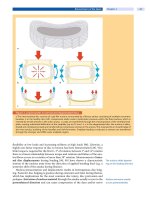
anterior dens screw fixation (
Fig. 16a–d)
anterior atlantoaxial screw fixation and fusion (
Fig. 16e, f)
posterior atlantoaxial fusion (Gallie or Brooks) (
Fig. 17a–d)
posterior atlantoaxial screw fixation and fusion (
Fig. 17e, f)
posterior atlas and axis screw-rod fixation and fusion (
Fig. 17g, h)
856 Section Fractures
ab
cd
ef
Figure 16. Anterior surgical stabilization of dens fractures
Anterior dens screw fixation: a The dens fracture is reduced prior to surgery by traction and patient positioning. Two Kir-
schner wires are inserted in an anterior-caudal to posterior-cranial direction.
b The Kirschner wires should be convergent
but must allow for enough interspace for the insertion of the cannulated screws.
c, d Cannulated screws are inserted over
the Kirschner wires. When inserting the screw care must be taken that the screw is not angulated to the guide wire in
order not to cause breakage or proximal advancement of the guide wire. After screw insertion the wires are removed.
e,
f
Anterior transarticular screw fixation: As an augmentation of the anterior dens screw or in cases of a salvage proce-
dure, screws can be inserted over Kirschner wires from a medial-anterior-caudal to a lateral-posterior-cranial direction
crossing the atlantoaxial joint.
Anterior screw fixation is
indicated in Type II fractures
Anterior odontoid screw fixation is indicated in Type II fractures with either a
horizontal or anterior cranial to posterior caudal direction of the fracture line. In
cases in which the fracture line is running in the anterior caudal to posterior cra-
nial direction, fracture displacement is likely and therefore a contraindication.
This direct osteosynthesis technique aims to maintain rotational motion at the
atlantoaxial joint. Transverse alar ligament disruption is a contraindication for
anterior screw fixation because of persistent transverse instability. In the review
by Julien et al. [118], the fusion rate of Type II fractures treated with anterior
screw fixation was 89%.
Cervical Spine Injuries Chapter 30 857