Spinal Disorders: Fundamentals of Diagnosis and Treatment Part 82 doc
Bạn đang xem bản rút gọn của tài liệu. Xem và tải ngay bản đầy đủ của tài liệu tại đây (484.37 KB, 10 trang )
ab
c
d
e
Case Study 1
A 9-month-old male child was brought for consultation because of a “tail-like” structure in the low back since birth.
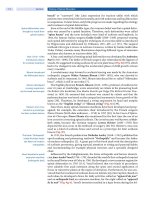
Examination revealed a subtle thinning of the right lower extremity and a caudal appendage (pseudotail) in the lower
lumbosacral region (
a). Plain radiographs revealed spina bifida at L5. MRI revealed a tethered cord with fatty filum termi-
nale. The pseudotail is a short, stump-like structure (
b). Spinal dysraphism is the most frequent coexisting anomaly in
both anatomical variants (50%). Other associated lesions include tethered cord syndrome, lipomas, teratomas and glio-
mas. Investigation of children born with human tail appendages should include a thorough neurological examination,
plain X-ray films of the lumbosacral region and contrast MRI to look for dysraphism and associated lesions. During sur-
gery, a fibrous, fatty filum terminale was seen extending from the base of the appendage through the defect in the bone
and dura. The hypertrophied and fat-infiltrated filum ended at the tip of the low lying conus (
c). The filum is coagulated
with bipolar coagulation as there is typically a small vein within the filum (
d). We prefer to remove a segment of the
affected filum (
e) and submit it to pathological examination for confirmation. After surgery, there was no change in the
neurological status of the patient.
and are found in patients with caudal agenesis [32]. They are usually discovered
in older children or adults complaining of low back pain, urinary incontinence or
constipation.
Myelocystocele
A myelocystocele represents
a cystic dilatation of the
spinal cord in the cervical
or lumbar spine
A myelocystocele consists of a cystic dilatation of the lower end of the spinal cord
or the cervical region enclosed in a skin covered back mass [5, 39]. The spinal
cord is low lying and tethered [5]. The subcutaneous fat lines the cyst but does
not extend into the sac or the cord.
Malformations of the Spinal Cord Chapter 29 805
The inner terminal cyst communicates with the central canal of the spinal cord,
whereas the outer dural sac communicates with the subarachnoid space. The
outer and inner fluid spaces usually do not communicate. Tethering results from
the attachment of the myelocystocele to the inferior aspect of the spinal cord. The
syringocele lies caudal to the meningocele in all cases and bulges through a wide
spina bifida, producing a skin-covered subcutaneous mass that may be huge.
Patients with terminal myelocystoceles typically have no bowel or bladder con-
trol and poor lower-extremity function [32].
Lipomyelomeningocele/Lipomyeloschisis
In lipomyeloschisis and lipomyelomeningocele, the intraspinal lipoma is a por-
tion of a larger subcutaneous lipoma, extending into the spinal canal through a
wide posterior spina bifida and tethering the spinal cord; it consists of a skin-cov-
ered back mass that contains neural tissue, CSF and meninges [5, 39]. The bony
anomalies include a large defect in the posterior elements of the spine, segmenta-
tion anomalies and sacral dysgenesis. Association with Chiari I malformation
may be seen [5]. In lipomyelomeningoceles, a subcutaneous lumbosacral mass is
found in 90% of patients [48]. Additional skin abnormalities are found in 50% of
patients and may include an area of hypertrichosis, a capillary hemangioma, a
dermal sinus tract, a dimple, or an additional appendage. Because the mass is
clinically evident at birth, the diagnosis is usually obtained before neurological
deterioration ensues [5].
Differentiation between lipomyeloschisis and lipomyelomeningocele is based
on whether the placode-lipoma interface lies within the anatomic boundary of
the spinal canal or outside (i.e. within an meningeal outpouching). A further
classification widely used by neurosurgeons divides these lipomas into three sub-
categories: dorsal, transitional, and caudal, depending on whether the placode is
segmental, parietal, or terminal [26].
Spinal Lipoma (Intradural and/or Intramedullary)
Differentiation of the
different entities is crucial
Intradural and intramedullary lipomas are similar to lipomas with dural defects.
However, they are contained within an intact dural sac. In other words, they are
localized within the intradural space [1, 5, 26, 32, 39]. Failure to differentiate
between lipomyelomeningoceles, intradural lipomas and filum terminale lipo-
mas may lead to inaccurate assumptions regarding prognosis [4]. These lesions
have different clinical presentations, courses and outcomes [4].
Intradural lipomas account for 24.1% of all spinal lipomas [39].
The cord is low lying and tethered to the lipomatous tissue [5]. Intradural lipo-
mas are commonly located at the lumbosacral level, but may be found anywhere
in the spinal canal, which may be focally or diffusely expanded depending on the
size of the mass (
Fig. 1).
Spinal lipomas can be
associated with
diastematomyelia
The lipoma may be associated with other cord anomalies such as diastemato-
myelia. Associated vertebral anomalies consisting of spina bifida at one or sev-
eral vertebral levels may be present [5]. Lipomas located at the bottom of the the-
cal sac usually present clinically with tethered cord syndrome, whereas cervico-
thoracic lipomas generally produce insidious signs of spinal cord compression. It
is widely accepted that congenital intraspinal lipomas are anatomically stable
lesions. However, the subcutaneous and intraspinal components may grow as
part of the normal increase of adipose tissue that occurs throughout childhood,
other than in particular conditions such as obesity or pregnancy [48]; therefore,
clinical worsening may ensue if the lesion is left untreated.
806 Section Spinal Deformities and Malformations
ab
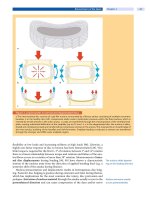
Figure 1. Intradural spinal lipoma
MRI of intradural spinal lipoma in a 37-year-old man. a Sagittal T1W image shows the spinal cord tethered to the anterior
surface of an intradural lipoma.
b Axial images show indistinct fat-cord interface.
Anterior Sacral/Lateral Thoracic Meningocele
Anterior sacral meningocele occurs when there is communication between the
retroperitoneal or infraperitoneal space and spinal subarachnoidal space
throughadefectintheanteriorsacrum.Themassthatdevelopsisafibrouscon-
nective tissue capsule filled with spinal fluid, and may contain some sacral nerve
root elements. This malformation is three times more common in females. Simi-
lar abnormalities may occur at the lumbosacral and thoracic levels.
Tight Filum Terminale/Filum Terminale Lipoma
The filum terminale is a viscoelastic formation usually <2.0 mm wide [40],
which allows the conus to ascend during flexion of the spine. The tight filum ter-
minale (9% of all closed spinal dysraphisms) is characterized by a short, hyper-
trophic, fatty filum terminale that produces tethering of the spinal cord and
Malformations of the Spinal Cord Chapter 29 807
a
b
Figure 2. Fatty filum terminale
Fatty filum terminale in a 35-year-old woman with tethered cord syn-
drome.
a, b Sagittal and axial T1-weighted images show that the filum
terminale is largely replaced by fat and moved dorsally. The spinal cord is
tethered and low.
impaired ascent of the conus medullaris [32]. A filum terminale greater than
2 mm in diameter refers to the thick-tight filum terminale [5, 19, 48].
The thickening is caused by lipomatous or fibrous tissue. The occurrence of
incidental fat within the terminal filum in a normal adult population has been
estimated to be 3.7% in cadaveric studies [48]. Radiologically, the conus is
either normal in location or low-lying with a thickened filum terminale [5]. In
86% of patients, the tip of the conus medullaris lies inferior to L2 [19, 32]. This
anomaly may be difficult to diagnose, although the association of clinical and
A filum terminale of > 2 mm
is defined as a fibrolipoma
neurological features may lead one to suspect it. The filum terminale must not
be >2 mm in diameter and no fatty tissue must be present; otherwise, the
abnormality is best defined as a filar lipoma or fibrolipoma [39]. The terminal
filum is the tethering agent, and these patients respond to sectioning of the
filum (
Fig. 2
). In the majority of patients, there are no cutaneous anomalies, but
posterior spina bifida, scoliosis, and kyphoscoliosis are associated in a high
percentage of cases.
Dermal Sinus, Fistula, Dermoid/Epidermoid Tumors
The dermal sinus is an epithelium-lined fistula that extends inward from
the skin surface and can connect with the central nervous system and the
meninges coating, thereby causing tethering [5, 48]. It is found more fre-
quently in the lumbosacral region, although cervical, thoracic, and occipital
locations are possible [32, 39]. Although the cutaneous abnormality is usually
evident at birth, some patients are not referred to medical attention until they
develop complications such as local infection or meningitis and abscesses that
may result from bacteria invading the CNS through the dermal sinus tract
[48].
808 Section Spinal Deformities and Malformations
They also may connect to a hypertrophic or fibrolipomatous filum terminale, as
well as to a low-lying conus medullaris or intraspinal lipoma. In a considerable
percentage of cases, dermal sinuses are associated with dermoid and epidermoid
tumors, generally located at the level of the cauda equina or near the conus
medullaris [5, 13, 32]. This association was found in 11.3% of cases [32].
Neuroenteric/Bronchogenic Cysts and Fistula (Split Notochord Syndrome)
There is abnormal splitting of the notochord with persistent connection between
the gut and the dorsal skin [5, 19, 22]. The abnormal communication may involve
esophagus, bronchus, and intestines. The abnormal tract may become obliterated
at any point with consequent variable outcome such as a cyst (neuroenteric cyst,
bronchogenic cyst), diverticulum or fistula [5, 32]. These cysts are lined with a
mucin secreting epithelium that resembles the alimentary or bronchogenic epi-
thelium. Whereas the cyst is frequently associated with anterior or posterior spina
bifida, it may be found without any associated dysraphic anomalies [48].
Split Cord Malformations (Diastematomyelia, Diplomyelia)
Split cord malformation (SCM) is a form of occult spinal dysraphism that also
produces spinal cord tethering [5, 42]. Split cord malformations are classically
defined as diastematomyelia. Two forms of split cord malformation have been
described. From a strict point of view, diastematomyelia refers to cord splitting
and diplomyelia to cord duplication [26, 34, 39].
Split cord malformations
are commonly located in
the lumbar and thoracic
spine
Split cord malformations are usually located in the lumbar and thoracic
regions and are more common in girls [5, 42].
Type I split cord malformation accounts for 40–50 % of all SCMs. There is a
double dural sac, a double spinal canal and two hemicords separated by an
extradural bony spur [26, 34, 39].
Type II split cord malformation accounts for 50– 60% of all SCMs. There is
one dural sac, one spinal canal, and two equal hemicords between which
there may be an anterior-posterior, fibrous intradural spur [26, 34, 39, 48].
Klippel-Feil syndrome (ranging from congenital fusion of only the vertebral
bodies to entire fusion of the vertebrae and can be associated withhemivertebrae
and spilt posterior elements) is known to have a potential association with split
cord malformations [42] (
Fig. 3).
Caudal Regression/Agenesis
Caudal regression syndrome is a heterogeneous constellation of caudal anomalies
comprising total or partial agenesis of the spinal column [5, 39], anal imperfora-
tion, genital anomalies, bilateral renal dysplasia or aplasia, and pulmonary hypo-
plasia. The lower limbs usually are dysplastic and show distal leg atrophy and a
short intergluteal cleft. Agenesis of the sacrococcygeal spine may be part of syndro-
mic complexes such as OEIS (omphalocele, cloacal exstrophy, imperforate anus,
and spinal deformities), VACTERL (vertebral abnormality, anal imperforation, tra-
cheoesophageal fistula, renal abnormalities, limb deformities), and the Currarino
triad (partial sacral agenesis, anorectal malformation, and presacral mass: tera-
toma and/or meningocele) [19] (
Fig. 4
). Lipomyelomeningocele and terminal mye-
locystocele are associated in 20% of cases. There is a definite association with
maternal diabetes mellitus (1% of offspring of diabetic mothers) [19]. It is believed
that hyperglycemia occurring early during gestation could influence further devel-
opment of Hensen’s node and the tail bud in genetically predisposed embryos.
Malformations of the Spinal Cord Chapter 29 809
ab
c
d
e
Figure 3. Split cord malformation
Thoracal Type I split cord malformation in a 50-year-old man with tethered cord syndrome. a Sagittal bony spur is visible.
b T2-weighted image shows bony spur projecting into spinal canal. Vertebral segmentation pathology of T5–7 is also
visible.
c Coronal T1-weighted image shows the midline bony spur and split cord. d Axial CT presented bony spur. e Axial
MRI shows nicely dural dual sacs and intervening bony spur.
810 Section Spinal Deformities and Malformations
a
b
Figure 4. Caudal regression syndrome
Two patients (10-month-old and 9-day-old) with Currarino triad. Both have caudal regression syndrome Type II (lesser
degree of sacrococcygeal agenesis). In case
a the spinal cord is tethered to a sacral lipoma and epidermoid, in case b to
a malformative tumor.
There are two types of caudal regression abnormality depending on the position
of the conus medullaris [22, 26, 39]:
Type I: If the derangement is severe (spine ending at S2 or above), then not
onlythecaudalcellmassbutalsopartofthetruenotochordfailstodevelop.
Type II: With a minor degree of dysgenesis (S3 or lower levels present), only
thewhole,orapart,ofthecaudalcellmassfailstodevelop.
Neuroectodermal Appendages
Neuroectodermal appendages are tail-like appendages arising in the posterior
midline that have sinus tracts extending into the neural canal. It has been pro-
posed that these develop initially as dermal sinus tracts with continued epitheli-
alization outward to form an appendage (
Case Study 1).
Classification of Tethered Spinal Cord
Tethered cord syndrome
may even occur
with the conus at L1/2
Spinal cord anomalies can also be presented based on the conceptual framework
of a tethered cord because of their association with spinal malformations and the
implications for treatment. The original description of spinal cord tethering in
association with a thickened filum terminale was offered by Garceau (1953). The
term tethered spinal cord was coined by Hoffman et al. (1976) [9]. Classically
tethered cord is defined as having the tip of conus below the L2 disc space and
pathologically elongated spinal cord.
However, in the medical literature, there are many publications of tethered
cord syndrome with the conus in a normal position [37, 40, 46, 48]. Tethered cord
canbedifferentiatedintotwogroups(
Table 5):
primary tethered cord
secondary tethered cord
Malformations of the Spinal Cord Chapter 29 811
Table 5. Classification of tethered cord
Primary tethered cord Secondary tethered cord
spinal cord malformations with back mass postsurgical spinal cord malformations (retethering by scar, dermoid,
arachnoid, cysts)
spinal cord malformations without back mass postsurgical intradural operations (tumors, infections)
The term primary tethered cord has been used by Sarwar et al. [33] with regard
to associated spinal malformations. Secondary tethered cord applies to scarring
of the spinal cord or within the spinal canal due to previous myelomeningocele/
meningocele repair [8, 10] and other intradural spinal operations such as spinal
cord tumors [35, 58]. When closed spinal dysraphism becomes symptomatic
they present as a tethered cord syndrome.
Clinical Presentation
History
Open spinal dysraphism is discovered at birth because of the back mass and pri-
mary associated conditions (cutaneous markers, neurological deficits and ortho-
pedic deformities). But a significant number of patients with closed spinal dysra-
Tethered cord can remain
undiagnosed until a late age
phism may reach adulthood with their disease undiagnosed. Some cases are dis-
covered even as late as 72 years of age [17, 57, 58]. Often, adult patients with teth-
ered cord syndrome are misdiagnosed as having a “failed back syndrome” [58].
These patients present for medical assessment because of:
development of new symptoms
progression of previously established neurological deficits
orthopedic deformities
acute neurological deterioration after mechanical stresses
Tethered Cord Syndrome
The prevailing clinical symptoms in closed spinal dysraphism are those of a teth-
ered cord syndrome [12, 30, 53, 58]. This syndrome is a functional disorder which
is almost universally associated with spinal dysraphism [5, 19], such as lipomyelo-
meningocele, split cord malformation, dermal sinus as well as previously oper-
ated on myelomeningoceles, which tether the spinal cord within the spinal canal
and result in excessive tension of spinal cord. It is associated with a progressive
neurological, orthopedic and urologic deterioration that results from spinal cord
tethering due to various dysraphic spinal abnormalities [19, 43, 58]. Yamada et al.
introduced the term tethered cord syndrome for patients suffering from a teth-
ered cord. In the neurosurgical literature, McLone and Pang and Yamada popular-
ized this entity [48, 58, 59, 60]. In 1982, Pang and Wilberger showed that tethered
cord syndrome exists not only in children but also in adults [2, 25, 60].
The late onset symptomatic presentation is related to cumulative effects of
repeated stretching-microtrauma during flexion and extension [48]. Tethered
cord syndrome can become symptomatic quite subtly and be slowly progressive,
but can also result from sudden stretching of the mechanically fixed spinal cord
at any age [9, 19]. Some precipitating events have been reported in the literature
as follows [12, 30, 36, 48]:
Precipitating events can make
tethered cord symptomatic
heavy lifting
bending movements
812 Section Spinal Deformities and Malformations
traumatic injury
sudden movements
lithotomy position
sexual intercourse
childbirth
sport activities
Consider the possibility
of a low conus before
a lumbar puncture
There are also various reports in the literature of spinal neuronal damage, follow-
ing spinal anesthesia, with patients who have previously undiagnosed tethered
cord with a low lying conus [49, 62].
The cardinal sy mptom of tethered cord is:
The cardinal symptom
of tethered cord is pain
pain. The pain is usually located in the lower back [30]. The pain is increased
with activity and relieved by rest. Yamada et al. described three postural
changes (postural pain triade) that typically worsen pain in tethered cord
syndrome patients [15]. They called these signs the “three Bs” [15, 58]:
the inability to sit with legs crossed like buddha
difficulty with slight bending at the waist
inability to hold a baby or light material at the waist level while standing
Additional findings are:
low back pain and leg pain
anorectal and perineal pain
fatigue
recurrent bladder infections
progressive leg weakness
patchy sensory loss
sacral sensory loss
gait disturbance
bladder and bowel dysfunction (incontinence)
sexual dysfunction
progressive deformity (scoliosis, foot and leg deformities)
Physical F indings
Regardless of the etiology of the primary tethering, children present to special-
ists with one or more of its typical abnormalities. In newborns and infants, the
diagnosisoftetheredcordsyndromeisoftenconfusedwithcerebralpalsy[36].
Cutaneous Markers
Midline cutaneous
abnormality may indicate
tethered cord
Most patients with a tethered cord have a mark of discoloration or lesion of some
type on their skin in the midline [14, 19, 35, 48]. These skin markers are mostly
localized in the lumbosacral area and are present in 50–60% of patients who pre-
sent with tethered cord syndrome [2, 7, 19, 32, 35, 48]. Most common findings in
decreasing frequency are:
myelomeningocele sac over the back
subcutaneous lipoma
deviation of the gluteal furrow
hypertrichosis
cutaneous hemangioma, port-wine stain
dermal sinus, dimple
skin tag-tail (caudal appendages)
pigmentary nevus
Malformations of the Spinal Cord Chapter 29 813
A midline dimple
or pinpoint ostium can
indicate a dermal sinus
A midline dimple or pinpoint ostium can indicate a dermal sinus. It is often
found in association with hairy nevus, capillary hemangioma, or hyperpig-
mented patches. The cutaneous opening of a dermal sinus tract differs from
that of a sacrococcygeal fistula [5, 39]. While dermal sinus tracts are found
above the natal cleft and are usually directed superiorly, sacrococcygeal pits are
found within the natal cleft with a tract extending either straight down or infe-
riorly.
Neurological Presentation
Individual patients often have more than one symptom or sign. However, one of
the clinical features is usually predominant over the other [14, 19, 35, 48, 50].
Most common findings in decreasing frequency are:
weakness of the lower limbs
reflex changes
muscle atrophy
muscle spasticity and contractures
patchy sensory loss
sphincter (bowel, bladder) dysfunction
trophic painless ulcers
Or thopedic Deformities
Examine shoes
for signs of wear
Various orthopedic deformities are common in spinal dysraphism patients.
Often more than one deformity is seen in a single patient [14, 19, 48]. Approxi-
mately 75% of patients with tethered cord present with orthopedic anomalies
[48]. Most common findings in decreasing frequency are:
scoliosis
kyphosis, exaggerated lordosis
lower limb length discrepancy
foot deformities (equinovarus, pes cavus, pes planus)
hip subluxations
Asymmetric foot size
may be an indicator
of tethered cord
Asymmetric foot size may also be an indicator for a tethered cord. It is also
important to examine the worn shoes of patients to look for wearing out of the
tips and soles of the shoes [36].
Diagnostic Work-up
Prenatal Diagnosis
Serum maternal -fetoprotein examination and ultrasonography can identify a
large number of these afflicted fetuses with myelomeningoceles between 16 and
20 weeks gestation [20, 24, 28]. Many parents then make the decision to interrupt
the pregnancy, which probably is why there has been a significant decrease in the
number of those born with this anomaly in western countries. Dietary supple-
mentation with folic acid via the mother prior to and during pregnancy is protec-
tive and has contributed to the decreased incidence of this disease [39].
Ultrasonography
An ultrasound examination is recommended for women at-risk (positive serum
-fetoprotein screening, previously affected child, maternal drug intake associ-
ated with spinal malformations in the fetus). Ultrasound can detect spina bifida
814 Section Spinal Deformities and Malformations