Spinal Disorders: Fundamentals of Diagnosis and Treatment Part 81 pps
Bạn đang xem bản rút gọn của tài liệu. Xem và tải ngay bản đầy đủ của tài liệu tại đây (234.28 KB, 10 trang )
39. Lowe TG (1987) Double L-rod instrumentation in the treatment of severe kyphosis second-
ary to Scheuermann’s disease. Spine 12:336–41
40. Lowe TG (1999) Scheuermann’s disease. Orthop Clin North Am 30(3):475–485
41. Lowe TG, Kasten MD (1994) An analysis of sagittal curves and balance after Cotrel-Dubous-
set instrumentation for kyphosis secondary to Scheuermann’s disease. A review of 32
patients. Spine 19(15):1680 –1685
42. MacLean WE Jr, Green NE, Pierre CB, Ray DC (1989) Stress and coping with scoliosis: psy-
chological effects on adolescents and their families. J Ped Orthop 9:257–61
43. Montgomery SP, Erwin WE (1981) Scheuermann’s kyphosis – Long-term results of Milwau-
kee brace treatment. Spine 6:5–8
44. Murray PM, Weinstein SL, Spratt KF (1993) The natural history and long-term follow-up of
Scheuermann’s kyphosis. J Bone Jt Surg [Am] 75(2):236–248
45. Newton PO, Shea KG, Granlund KF(2000) Defining the pediatric spinal thoracoscopy learn-
ing curve. Sixty-five consecutive cases. Spine 25:1028–35
46. Nissinen M (1995) Spinal posture during pubertal growth. Acta Paediatr 84:308–12
47. Nissinen M, Heliövaara M, Seitsamo J, Alaranta H, Poussa M (1994) Anthropometric mea-
surements and the incidence of low back pain in a cohort of pubertal children. Spine
19:1367–70
48. NissinenM,HeliövaaraM,SeitsamoJ,PoussaM(1995)Lefthandednessandriskofthoracic
hyperkyphosis in prepubertal school children. Int J Epidemiol 24:1178–81
49. Noonan KJ, Dolan LA, Jacobson WC, Weinstein SL (1997) Long-term psychosocial charac-
teristics of patients treated for idiopathic scoliosis. J Ped Orthop 17:712 –17
50. Normelli HCM, Svensson O, Aaro SI (1991) Cord compression in Scheuermann’s kyphosis.
A case report. Acta Orthop Scand 62:70–72
51. O’Brien MF, Kuklo TR, Blanke KM, Lenke LG (2004) Radiographic measurement manual.
Medtronic Sofamor Danek USA, Inc., pp 1–110
52. Olafsson Y, Saraste H, Almgren RM (1999) Does bracing affect self-image? A prospective
study on 54 patients with adolescent idiopathic scoliosis. Eur Spine J 8:402–5
53. Otsuka NY, Hall JE, Mah JY (1990) Posterior fusion for Scheuermann’s kyphosis. Clin
Orthop 251:134–139
54. Payne WK 3rd, Ogilivie JW, Resnick MD, Kane RL, Transfeld EE, Blum RW (1997) Does sco-
liosis have a psychological impact and does gender make a difference? Spine 22:1380–84
55. Ponte A, Gebbia F, Eliseo F (1984) Nonoperative treatment of adolescent hyperkyphosis.
Paper. 19th Annual Meeting of the Scoliosis Research Society, Orlando, FL
56. Poolman RW, Been HD, Ubags LH (2002) Clinical outcome and radiographic results after
operative treatment of Scheuermann’s disease. Eur Spine J 11:561–569
57. Poussa MS, Heliövaara MM, Seitsamo JT, Könönen MH, Hurmerinta KA, Nissinen MJ
(2005) Anthropometric measurements and growth as predictors for low-back pain: a cohort
study of children followed up from the age of 11 to 22 years. Eur Spine J 14:595–598
58. Reinhardt P, Bassett GS (1990) Short segmental kyphosis following fusion for Scheuer-
mann’s disease. J Spinal Disord 3(2):162–168
59. Ryan MD, Taylor TKF (1982) Acute spinal cord compression in Scheuermann’s disease.
JBoneJtSurg[Br]64B:409–12
60. Sachs B, Bradford D, Winter R, Lonstein J, Moe J, Willson S (1987) Scheuermann kyphosis.
Follow-up of Milwaukee-brace treatment. J Bone Joint Surg Am 69:50–7
61. Schanz A (1911) Schule und Skoliose. Kritische Betrachtungen. Jahrb f Kinderrheilkunde
73:1–26
62. Scheuermann HW (1920) Kyphosis dorsalis juvenilis. Ugeskr Laeger 82:385–393
63. Scheuermann HW (1921) Kyphosis dorsalis juvenilis. Z Orthop Chir 41:305–317
64. Scheuermann HW (1936) Kyphosis juvenilis (Scheuermann’s Krankheit). Fortschr Geb
Röntgenstr 53:1– 16
65. Sörensen KH (1964) Scheuermann’s juvenile kyphosis. Munksgaard, Copenhagen
66. Soo CL, Noble PC, Esses SI (2002) Scheuermann kyphosis: long-term follow-up. Spine J
2:49–56
67. Speck GR, Chopin DC (1986) The surgical treatment of Scheuermann’s kyphosis. J Bone Jt
Surg [Br] 68B:189–93
68. Stagnara P (1981) Cyphoses dorsales regulieres pathologiques. In: SOFCOT – Conferences
d’enseignement 1980. Expansion Scientifique, Paris, pp 51–76
69. Stagnara P, De Mauroy JC, Dran G, Gonon GP, Costanzo G, Dimnet J, Pasquet A (1982)
Reciprocal angulation of vertebra bodies in a sagittal plane: Approach to references for the
evaluation of kyphosis and lordosis. Spine 7:335–42
70. Tallroth K, Schlenzka D (1990) Spinal stenosis subsequent to juvenile lumbar osteochondro-
sis. Skeletal Radiol 19:203–5
71. Taylor TC, Wenger DR, Stephen J, Gillespie R, Bobechko WP (1979) Surgical management of
thoracic kyphosis in adolescents. J Bone Jt Surg [Am] 61A:496–503
72. Timm H (1971) Zahl und Ausmass der Kyphosen in verschiedenen Altersstufen. Z Orthop
109:927–31
Juvenile Kyphosis (Scheuermann’s Disease) Chapter 28 795
73. Vaz G, Roussouly P, Berthonnaud E, Dimnet J (2002) Sagittal morphology and equilibrium
of pelvis and spine. Eur Spine J 11:80– 87
74. Wenger DR (1993) Roundback. In: Wenger DR, Rang M (eds) The art and practice of chil-
dren’s orthopaedics. Raven Press, New York, pp 422–454
75. Willner S, Johnson B (1983) Thoracic kyphosis and lumbar lordosis during the growth
period in children. Acta Paediatr Scand 72:873–78
76. Yablon JS, Kasdon DL, Levine H (1988) Thoracic cord compression in Scheuermann’s dis-
ease. Spine 13:896–98
796 Section Spinal Deformities and Malformations
29
Malformations of the Spinal Cord
Dilek Könü-Leblebicioglu, Yasuhiro Yonekawa
Core Messages
✔
Spinal cord malformations ( =spinal dysra-
phisms) are usually diagnosed at birth or early
infancy (open spinal dysraphism, closed spinal
dysraphisms with a back mass) but are some-
times not discovered before adulthood
✔
Spinal cord malformations arise from defects
occurring in the embryological stages of gas-
trulation (weeks 2–3), neurulation (weeks 3–6)
and caudal regression
✔
The term “spina bifida” merely refers to a defec-
tive fusion of posterior spinal bony elements
but is still incorrectly used to refer to spinal dys-
raphism in general
✔
“Tethered spinal cord” is a broadly used
umbrella term for numerous spinal cord abnor-
malities, such as lipomyelomeningocele, previ-
ously operated on myelomeningoceles, or
thickened filum terminale, which tether (fasten,
fix) the spinal cord in the spinal canal
✔
Tethered cord syndrome is a stretch-induced
functional disorder of the spinal cord worsened
by daily, repeated mechanical stretching, and
distortion may even occur in patients who have
the conus at normal level
✔
Patients with spinal cord malformation are
either diagnosed at birth or present later
because of unexplained pain, neurological defi-
cits, unclear recurrent urologic infections, cuta-
neous markers or orthopedic deformities
✔
MRI is the imaging modality of choice and has
increased the number of tethered spinal cord
diagnoses
✔
Prenatal treatment encompasses prophylactic
folic acid substitution and intrauterine surgery
✔
Open spinal dysraphism is best surgically treated
postpartum to untether the spinal cord, prevent
infections, repair the dural/cutaneous defect, and
restore normal anatomy as far as possible
✔
Closed spinal dysraphism with tethered spinal
cord warrants early untethering, when mini-
mum or mild symptoms are detected
✔
Surgery after development of the deficits only
stops progression, but symptoms may even fur-
ther progress after detethering
✔
Individuals with spinal malformations need
both lifelong surgical and medical manage-
ment, which should be provided by a multidis-
ciplinary team
Epidemiology
Myelomeningocele
is the most common form
of open spinal dysraphism
Spine and spinal cord malformations are often collectively summarized under
the term of spinal dysraphisms [39]. This term was first employed by Lichten-
stein (1940) [36]. Open spinal dysraphism is a common congenital midline defect
of the nervous system and has been historically reported in 2–4/1000 live births
[14]. However, the true incidence of spinal dysraphism is not well studied. Myelo-
meningocele accounts for the vast majority of open spinal dysraphisms (98.8%)
[32, 39].
The incidence
of myelomeningocele
is 0.6 per 1 000 live births
My elomeningocele occurs in 0.6 patients per 1000 live births, and females are
affected slightly more often than males (by a ratio of 1.3 to 3), with the first-born
usually affected [5, 39]. Myelocele is a rare malformation and represents only
1.2% of all open spinal dysraphisms [39]. The most common locations for these
malformationsare,indecreasingfrequency,lumbosacral,thoracolumbarand
Spinal Deformities and Malformations Section 797
a
b
c
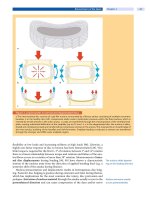
Case Introduction
A 17-year-old patient presented with progressive tethered
cord syndrome with worsening of hand functions and
some leg weakness and increasing spasticity. Postnatally
he had had a cervical myelomeningocele and had had
only “cosmetic” closure after the birth. The MRI showed a
widened spinal canal at C6–C1 (
a, c), cord tethering dor-
sally at C6–7 and dorsal limited myeloschisis. It is possible
to see the hypotrophic right hand (
b). This clinical worsen-
ing recovered after an intradural exploration and dissec-
tion of the stalk placode.
cervical spine [5, 39]. The incidence of myelomeningocele varies from country to
country and from one geographical region to another [20]. Since the early 1980s,
estimation of the prevalence of open spinal dysraphism in many industrialized
countries has been decreased by folic acid administration to pregnant women
and the availability of prenatal diagnosis and elective termination [20, 29, 48].
Patients with open spinal dysraphism almost always have associated Chiari II
malformation. There are also reports in the medical literature of an association
between closed spinal dysraphisms and Chiari II [41].
Spina bifida is present
in 90 –100 % of patients
with tethered cord
Spina bifida occulta occurs in approximately 17–30% of the total population
and is present in 90–100% of patients with tethered cord [35, 61]. The dermal
sinus is a common abnormality and accounts for 23.7%of all closed spinal dysra-
phisms. Overall, caudal regression syndrome is not uncommon, accounting for
798 Section Spinal Deformities and Malformations
16.3% of all closed spinal dysraphisms. Sacral agenesis occurs in approximately
one per 7500 births without a gender predisposition.
The conus normally
terminates at L2
In the normal adult population the conus terminates at L2 in 95% of cases [19,
48]. In its classical form, tethered cord implies a low-lying conus, but tethered
cord syndrome may occur in the presence of a conus in normal position [19, 37,
40, 46, 48, 54, 56]. Up to 15% of patients with repaired myelomeningoceles will
experience a secondary tethered cord syndrome later in life [36].
Pathogenesis
Embr yological Aspects
Knowledge of normal embryology is essential for the understanding of the path-
ogenesis and a wide spectrum of pathoanatomy of spine and spinal cord anoma-
lies as well as tethered cord. The most comprehensive embryonic staging system
is that of O’Rahilly [23] and most of the information on early human develop-
ment has been obtained through study of the Carnegie collection [23]. Early neu-
ral development has been reviewed in various basic science articles [21].
O’Rahilly provides a timetable for each important event in early neural morpho-
genesis: the embryonic p eriod begins at conception with stage 1 and ends at
stage 23. Beyond this time, the developing human enters the fetal period [6, 23]
(
Table 1).
Table 1. Human embryogenesis
Weeks Days Carnegie
stage
Process Size (mm) Somite
number
Events
Embryonal
period
Week 1 1 1 fertilization 0.1–0.15 fertilized oocyte, pronuclei
2– 3 2 cleavage 0.1–0.2
cell division with reduction in cytoplasmic
volume, formation of inner and outer
cell mass
4– 5 3 blastula 0.1– 0.2 loss of zona pellucida, free blastocyst
5– 6 4 0.1– 0.2 attaching blastocyst
Week 2 7–12 5 0.1 – 0.2 implantation
13–15 6 0.2 extraembryonic mesoderm, primitive
streak
Week 3 15–17 7 gastrulation 0.4 gastrulation, notochordal process
17–19 8 neurulation 1.0–1.5 primitive pit, notochordal canal
19–21 9 somatization 1.5 – 2.5 1– 3 neural folds, cardiac primordium, head
fold
Week 4 22–23 10 2– 3.5 4–12 neural fold fuses
23–26 11 2.5 – 4.5 13–20 rostral neuropore closes
26–30 12 3– 5 21 – 29 caudal neuropore closes
Week 5 28–32 13
organogenesis
4–6 30 leg buds, lens placode, pharyngeal arches
31–35 14 5–7 lens pit, optic cup
35–38 15 7– 9 lens vesicle, nasal pit, hand plate
Week 6 37–42 16 8– 11 nasal pits moved ventrally, auricular
hillocks, foot plate
42–44 17 11 – 14 finger rays
Week 7 44–48 18 13 – 17 ossification commences
48–51 19 16 – 18 straightening of trunk
Week 8 51–53 20 18– 22 upper limbs longer and bent at elbow
53–54 21 22 – 24 hands and feet turned inward
54–56 22 23 – 28 eyelids, external ears
Fetal
period
Week 9 56–60 23 phenogenesis 27 – 31 rounded head, body and limbs longer
Malformations of the Spinal Cord Chapter 29 799
Relevant Embryogenetic Steps
Spinal cord embryological development occurs through three consecutive peri-
ods [11, 19, 26, 39, 48, 58]:
Gastrulation
The trilaminar embryo develops by day 18 of gestation. At this point, the embryo
is composed of endoderm, mesoderm and ectoderm. Shortly thereafter, the
mesoderm releases factors which induce the differentiation of the overlying neu-
roectoderm, thereby forming the neural tube.
Neurulation
After gastrulation the ectoderm above the notochord folds to form a tube, the
neural tube; this gives rise to the brain and the spinal cord, a process known as
neurulation. Primary neurulation (weeks 3–4): The process of fusion begins in
the region of the lower medulla and proceeds rostrally and caudally. The anterior
neuropore closes at about 24 days and the posterior neuropore at 26–28 days.
The brain and the spinal cord are formed by primary neurulation, which involves
the shaping, folding, and midline fusion of the neural plate. It is completed about
the 25–26th day of conception. The central canal is formed and is lined by epen-
dyma. The caudal cell mass, a group of undifferentiated cells at the caudal end of
the neural tube, develops vacuoles. These vacuoles merge together and expand,
ultimately meeting the central canal of the rostral cord and causing elongation of
theneuraltubeinaprocesscalledcanalization.Secondar y neurulation and ret-
rogressive differentiation (weeks 5–6) results in formation of the conus tip and
Filum terminale and conus
medullaris are formed
during the process
of neurulation
filum terminale. The formation of the lower lumbar, sacral, and coccygeal por-
tions of the neural tube are by canalization and retrogressive differentiation.
Overlapping with canalization, the process of retrogressive differentiation of the
caudalcellmasstakesplace.Inthisprocess,thefilumterminale,conusmedulla-
ris, and ventriculus terminalis are formed.
Caudal Regression
The conus medullaris
ascends during spinal
growth
At the time when the neurulation process is complete (weeks 6–7), the terminal
filum and cauda equina are formed from the caudal portion of the neural tube by
regression. The conus medullaris initially rests in the coccygeal region and
appearstoascendasthespinegrowsmorerapidlythanthecord.Atbirththe
conusisusuallyatthecaudallevelofL2–L3andby3monthsofageitisatL1–L2,
where it remains (relative ascent of the spinal cord). The spinal cord terminates
at or above the inferior aspect of the L2 vertebral body in 95% of the population
andatorabovetheL1–L2discspacein57%ofthepopulation.Theconusmedul-
laris has reached its mature adult level at term in most infants and 100% of cases
at approximately 3 months after full-term gestation [39, 48, 58]. The conus
medullaris initially rests in the coccygeal region and appears to ascend as the
spine grows more rapidly than the cord. At birth the conus is usually at the caudal
level of L2–L3 and by 3 months of age it is at L1–L2, where it remains.
Interference with normal development at any stage is responsible for the vari-
ous abnormalities seen in the cases of spinal malformations [19, 26, 38, 39, 58]
(
Table 2).
800 Section Spinal Deformities and Malformations
Table 2. Embryological classification of spinal dysraphisms
Embryological stage Dysraphism
Gastrulation Notochordal integration neuroenteric cysts and fistula
split cord malformations (diastematomyelia, diplomyelia)
dermal sinus, fistula
dermoid/epidermoid tumors
Notochordal formation
caudal regression syndrome
segmental spinal dysgenesis
Primary neurulation
myelomeningocele
myelocele
lipomyelomeningocele
lipomyeloschisis
intradural spinal lipoma
Secondary neurulation
tight filum terminale, filum terminale lipoma
Canalization
Retrogressive differentiation
intrasacral meningocele, sacral cysts
Risk Factors
Most spinal cord anomalies result from a complex interaction between several
genes and poorly understood environmental factors. A list of variables have been
implicated as risk factors for spinal dysraphisms but only a few have been estab-
lished.
Genetic Factors
Family history is an
important risk factor
Spinal cord anomalies occur in many syndromes and chromosome disorders.
However, a spinal dysraphism may be the only anomaly in a member of a family,
in which case the relatives have an increased risk for all types of tethered cord.A
family history is one of the strongest risk factors [20, 26].
Environmental Factors
Periconceptual folic acid
substitution reduces the
incidence of neural tube
defects
Periconceptual multiple vitamin supplements containing folic acid reduce the
incidence of neural tube defects. In England and the United States, it is recom-
mended that women planning pregnancy take 0.4 mg folic acid daily before con-
ception and during the first 12 weeks of pregnancy [14, 44]. Up to 70% of spina
bifida cases can be prevented by periconceptional folic acid supplementation [20,
26].
Maternal Diabetes
Pre-gestational diabetes
is a risk faktor for spinal
malformation
In women with pre-gestational diabetes, the risk of having a child with a central
nervous system malformation (including spinal malformations) is twofold
higher than the risk in the general population [20].
Medication
Valproic acid or carbama-
zepine increases the risk
of spinal malformation
Some drugs taken during pregnancy may increase the risk. These include sodium
valproate and folic acid antagonists such as trimethoprim, triamterene, carb-
amazepine, phenytoin, phenobarbital and primidone [20].
Malformations of the Spinal Cord Chapter 29 801
Pathophysiology of Tethered Cord Syndrome
Tethering of the spinal cord
results in progressive
neurological deficits
Tethered cord is a spinal cord malformation in which the spinal cord is fixed in an
abnormally low position and in a relatively immobile state [2, 19, 39, 46, 58]. In
this context, the term “tether” refers to “fasten” or “restrain”.Tethered cord exists
in open and occult forms of spinal dysraphisms [15, 48]. The normal spinal cord
is free, i.e. it is not attached to any surrounding structures in the spinal canal
except for denticulate ligaments and nerve roots. A tethered cord is tightly fixed
so that there is not a normal movement of the spinal cord. During the formation
of the embryonic spinal cord, it fills the entire length of the spinal canal. As the
fetus grows, the vertebral column grows faster than the spinal cord. Thus, the dis-
tal end of the spinal cord is located at the level of the first or second lumbar verte-
bral body (L1–L2).If there is an abnormality affecting this “ascension” of the spi-
nal cord (e.g. myelomeningocele, tight filum terminale, diastematomyelia, sec-
ondary scar formations, tumors), the spinal cord is tethered [50]. This results in
stretching of the spinal cord and causes neurological damage even during the
fetal period. By the time a child is born, the spinal cord is normally located
between the first or second lumbar vertebral body. After birth, continuing
growth puts further stretch on the tethered spinal cord; this damages the spinal
cord both by directly stretching it, and by interfering with the blood supply and
oxidative metabolism [51].
Atetheredcord
canoccurevenwith
a normal level conus
If neurological findings are already present the further clinical deterioration
can be anticipated. Since an adult spine is no longer growing, children are obvi-
ouslymoreatriskthanadults.However,evenadultswithtetheredcordcanshow
deterioration. This is due to daily repetitive-cumulative stretching on the teth-
ered cord. A sudden flexion movement of the spine can also produce symptom-
atic onset of the tethered cord syndrome [9, 51]. Irreversible neuronal damage
can occur when there is sudden stretching of the already chronically tethered
conus [51]. Yamada and coworkers have nicely demonstrated changes in spinal
cord blood flow and oxidative metabolism following tethering of the spinal cord
Atetheredcordcanoccur
with the conus at a
normal level
both in experimental animals and humans [9, 51, 52, 55, 58]. Usually a tethered
cord results in a low conus position. However, there are many cases of tethered
cord syndrome reported with the conus at a normal level [37, 40, 46].
Terminology and Classification
Spinal cord malformations can be categorized as:
open spinal dysraphisms
closed (occult) spinal dysraphism
Open spinal dysraphism is characterized by exposure of the abnormal spinal
nervous tissue and/or meninges to the environment through a bony and skin
defect. Open spinal dysraphism basically includes myelocele and myelomeningo-
cele. In closed spinal dysraphism, there is no exposure of neural tissue (covered
by skin). However, some kind of cutaneous stigmata, such as hairy patch, dim-
ples,orsubcutaneousmasses,canberecognizedinupto50%ofclosedforms
[15, 32, 47].
Spina bifida results from a defective fusion of posterior spinal bony elements
and leads to a bony cleft in the spinous process and lamina (L5 and S1). The term
has incorrectly been used to refer to spinal dysraphism in general [32, 39]. The
terms spina bifida aperta or cystica and spina bifida occulta were used to refer
to open spinal dysraphism and closed spinal dysraphism, respectively. These
terms have been progressively discarded [32].
802 Section Spinal Deformities and Malformations
Table 3. Chiari malformations
Type 1 caudal displacement of the cerebellum
cerebellar tonsils below the plane of the foramen magnum
no involvement of the brainstem
associated with occult spinal dysraphism (e.g. spinal lipomas)
note – cerebellar ectopia can be a normal finding (up to 5 mm)
Type II
small and crowded posterior fossa
caudal displacement of the fourth ventricle and medulla into the upper
cervical canal
tonsils can be at or below the level of the foramen magnum usually
association with a variety of cerebral anomalies frequently associated with
myelomeningoceles
Type III
displacement of the posterior fossa structures into the cervical canal (seldom
compatible with life)
Type IV
cerebellar hypoplasia without herniation
Placode (neural placode) is a segment of non-neurulated embryonic neural tis-
sue. It is in contact with air in open spinal dysraphism and covered by the integu-
ment in closed spinal dysraphism. A terminal placode lies at the caudal end of
the spinal cord and may be apical or parietal depending on whether it involves
the apex or a longer segment of the cord. A segmental placode may lie at any level
along the spinal cord [32, 39].
Differentiate hydromyelia
from syringomyelia
Hydromyelia is the simple dilatation of the central canal and is lined by the
ependyma. An extension into cord parenchyma constitutes a true syringomyelia.
Two forms of syringomyelia can be differentiated:
communicating syringomyelia
non-communicating syringomyelia
Communicating syringomyelia is related to a primary dilatation of the central
canal and is usually associated with abnormalities of the craniocervical junction
(e.g. Chiari malformations). Non-communicating syringomyelia may result
from trauma, tumors or inflammation and does not communicate with the cen-
tral canal or the subarachnoidal space.
Chiari malformations are hind brain abnormalities and are observed in con-
junction with spinal cord malformations. They are categorized into four types,
with Types I and II accounting for 99% of the clinical cases (
Table 3).
Classification of Spinal Malformation
From a clinical perspective, a practicable classification system of spinal cord
anomalies is needed. However, the large variety of features associated with these
anomalies makes such classification difficult. Classical classifications rely on the
embryological development cascade [11, 19, 22, 39, 58] (
Table 4). We find the
mixed clinical-neuroradiological classification system presented by Donati et al.
[5, 32, 39] useful.
From the clinical perspective, a question framework to approach the spec-
trum of spinal cord malformation is useful:
Is there a back mass?
Is it covered with skin?
Are there cutaneous markers?
Is there a tethered cord syndrome?
Malformations of the Spinal Cord Chapter 29 803
Table 4. Classification of spinal malformations
Spinal malformations with back mass
Open spinal dysraphism With a non-skin-covered back mass (spina bifida aperta)
myelomeningocele Almost always associated with
Chiari II malformation
myelocele (myeloschisis)
Closed (occult) spinal
dysraphism
Withaskin-coveredbackmass(spinabifidacystica)
meningocele (posterior)
myelocytocele
lipomyelomeningocele/lipomyeloschisis
Spinal malformations without back mass
spinal lipoma (intradural and/or intramedullary)
anterior sacral/lateral thoracic meningocele
tight filum terminale/filum terminale lipoma
dermal sinus, fistula, dermoid/epidermoid tumors
neuroenteric/bronchogenic cysts and fistula (split notochord syndrome)
split cord malformations (diastematomyelia, diplomyelia)
caudal regression/agenesis
intrasacral meningocele/sacral cysts
neuroectodermal appendages
Myelomeningocele and Myelocele
Myelomeningoceles and myeloceles are characterized by exposure of spinal
intradural elements through a midline defect to the air. The basic defect of mye-
lomeningocele is caused by an abnormality, which occurs at the stage of neurula-
tion that prevents the neural tube from closing dorsally [5, 19, 22, 27, 39]. A mye-
lomeningocele consists of a sac of exposed neural tissue-placode, which is clef-
ting dorsally, splayed open and herniates through a large dysraphic defect
through the bone and dura beyond the surface of the back. The cord is tethered
posteriorly at this level. In myelocele (synonym: myeloschisis), however, the neu-
ral placode is flush with the plane of the back and identifiable on the surface. All
children with myelomeningocele have tethered cord from the time of birth. One
can easily visualize how tethering of the spinal cord might occur (
Case Study 1).
Patients with myelomeningocele and myelocele almost always (75–100%)
have associated Chiari II malformation (
Table 3) [5, 14, 20, 32, 39]. Distortion
and maldevelopment of the medulla and midbrain can cause lower cranial nerve
palsies and central apnea (which may be misdiagnosed as epilepsy) [44].
Patients with myelo-
meningocele and myelocele
almost always have
associated Chiari II
malformation
Hydrocephalusmaybepresentatbirth,butusuallyappearswithin2–3days
after surgery [14, 32, 45]. The rate of hydrocephalus in patients with occult spi-
nal dysraphism has been reported to be over 80% [14, 43]. Hydromyelia may
occurinasmanyas80%ofthesepatients,andmaybelocalizedorextend
throughthewholecord.Itmaycauserapiddevelopmentofscoliosisifleft
untreated [18, 29, 32].
Meningocele
The posterior meningocele consists of a herniated sac of meninges with CSF
protruding from the back and covered with skin. It is commonly lumbar or sacral
in location, but thoracic and even cervical meningoceles may be found. The spi-
nal cord and conus are seen in the normal position [5, 32, 39], although both
nerve roots and, more rarely, a hypertrophic filum terminale may course within
the meningocele. No part of the spinal cord is contained within the sac by defini-
tion [5]. The spinal cord itself is completely normal structurally, although it is
usually tethered to the neck of sacral meningoceles [39]. A Chiari II malforma-
tion is found only exceptionally. Anterior meningoceles are typically presacral,
804 Section Spinal Deformities and Malformations