Spinal Disorders: Fundamentals of Diagnosis and Treatment Part 79 docx
Bạn đang xem bản rút gọn của tài liệu. Xem và tải ngay bản đầy đủ của tài liệu tại đây (365.35 KB, 10 trang )
In Type II Scheuermann’s kyphosis, the typical clinical features are diminished
lumbar lordosis (flat back) (
Fig. 5f) or a very mild lumbar kyphosis, stiffness of
the lumbar spine, and local pain.
Diagnostic Work-up
Imaging Studies
The definitive diagnosis of juvenile kyphosis can often be made by conventional
radiographs alone. However, MRI best shows endplate abnormalities, premature
disc degeneration, and vertebral wedging.
Computed tomography very seldom provides additional information and is
rarely indicated.
Standard Radiographs
Juvenile kyphosis
is diagnosed on standard
radiographs
Plain lateral and posteroanterior radiographs of the whole spine with the patient in
the standing position are the primary radiological investigations. In the lateral pro-
jection a more or less sharp hyperkyphosis of the thoracic spine with compensatory
lumbarhyperlordosisisseen(
Fig. 4b
). If necessary, close-up radiographs are taken
or MRI is performed to elucidate the bony structures in the area of interest.
The vertebrae around the apex of the thoracic kyphosis show typical radio-
graphic changes (
Fig. 6):
irregularity of the endplates
wedging of vertebral bodies
increased length of vertebral bodies
loss of disc space height
Schmorl’s nodes (not pathognomonic)
a bc d
Figure 6. Typical radiographic features (Type I)
Wedge shape and increased sagittal diameter of vertebral bodies, irregularity of endplates, and disc space narrowing: a
schematic drawing; b radiographic example. Radiographic changes with age: c 14-year-old boy and d 17-year-old boy.
Juvenile Kyphosis (Scheuermann’s Disease) Chapter 28 775
Thoracic kyphosis and lumbar lordosis are measured according to Cobb. The
posteroanterior radiograph is checked for secondary scoliosis. Sagittal and fron-
tal spinal balance is assessed. Extension films of the kyphotic area obtained with
the patient in the supine position with a sandbag under the apex of the deformity
are used to assess flexibility of the deformity. In the immature patient, the skeletal
age and the remaining spinal growth are determined from a radiograph of the
hand and wrist [24] and the pelvis (Risser sign) for assessment of the risk of pro-
gression and treatment decision-making.
Magnetic Resonance Imaging
In juvenile kyphosis, MRI is the imaging modality of choice to demonstrate:
irregularity of the ossification
wedge shape of the vertebral bodies (
Fig. 7)
premature degeneration of intervertebral discs
Schmorl’s nodes
spinal cord compression at the curve apex (in severe cases)
MRI is indicated
in unclear cases
or for surgical planning
MRI of the whole spine should be performed if spinal cord compression, congen-
ital anomalies, tumor or infection is suspected. For safety reasons, MRI is
included in the preoperative work-up even if the patient’s neurology is normal.
There is no indication for an MRI on the first visit if the patient’s clinical neuro-
a bc
Figure 7. MRI findings
a MRI characteristics of juvenile kyphosis at different ages. In a 14-year-old boy (same as Fig. 5c), endplate defects, disc
narrowing and disc dehydration are visible. In a 17-year-old boy (same as
Fig. 5d), b vertebral wedging and disc space
narrowing is more pronounced. In a 57-year-old male the final stage is visible. Note kinking of the myelon over the apex
of the relatively sharp-angled kyphosis.
c The patient has no neurological symptoms.
776 Section Spinal Deformities and Malformations
logical examination is normal, plain radiographs show the typical picture of
juvenile kyphosis and observation or non-operative treatment is planned.
Neurophysiological Tests
SSEPs and MEPs are helpful
in identifying spinal cord
compromise
Somatosensory evoked potentials (SSEPs) and motor evoked potentials (MEPs)
are obtained in patients with neurological symptoms and in connection with
preoperativework-up.MEPsareofgreaterimportanceasinkyphoticdefor-
mities cord compression is to be expected mainly from the anterior direction
affecting primarily the motor tracts. Pathologic evoked potentials should
alert the surgeon. The spine should be stabilized and, depending on the clinical
situation and the imaging findings, anterior decompression should be consid-
ered.
Lung Function Test
The data in the literature on lung function in juvenile kyphosis are sparse. Mur-
ray et al. found in their long-term follow-up of untreated patients decreased vital
capacity only in cases with a kyphosis exceeding 100 degrees [44].
Differential Diagnosis (Table 3)
Several clinical entities must be differentiated from juvenile kyphosis:
Roundback is an important
differential diagnosis
Idiopathic thoracic hyperkyphosis (“roundback”, “poor posture”) (Fig. 8)
Clinically, postural thoracic hyperkyphosis is mobile, more harmonic, and
not as localized as Scheuermann’s kyphosis. On radiographs, there is no
wedge deformation of vertebral bodies. Disc space height is not decreased.
Usually, the deformity corrects on extension.
Congenital kyphosis
A defect of segmentation is sometimes difficult to see on lateral radiographs
especially if it is incomplete. The anterior bar may still not be ossified. If the
disc spaces are not clearly visible on plain radiographs in a rigid kyphosis,
MRI should be performed.
Skeletal dysplasias
Different forms of systemic skeletal diseases can be ruled out based on the
history, clinical appearance of the patient, and radiographs of long bones,
joints, etc.
Infection and tumor
The patient’s history, pain pattern, and clinical presentation should raise
suspicions. Laboratory tests, radiographs, MRI, and (if necessary) biopsy
will provide the diagnosis.
Table 3. Differential diagnosis of juvenile kyphosis
idiopathic hyperkyphosis (“roundback”)
neuromuscular (paralytic, spastic)
spinal cord tumor
post-laminectomy kyphosis
post-traumatic kyphosis
connective tissue disorders
congenital kyphosis
skeletal dysplasia
infection (tuberculosis, pyogenic, fungal)
tumor
Juvenile Kyphosis (Scheuermann’s Disease) Chapter 28 777
a
b
c
d e
Figure 8. Idiopathic thoracic hyperkyphosis
Idiopathic thoracic hyperkyphosis (“roundback”) in a 19-year-old male. a Tho-
racic kyphosis is increased
b but harmonic in flexion. The patient suffers from
thoracic back pain during prolonged standing and sitting. He is neurologically
intact. c On the standing lateral radiograph the thoracic kyphosis measures
66 degrees. There are no structural vertebral changes.
d On the supine exten-
sion radiograph, the kyphosis has corrected to 26 degrees.
e There are no path-
ologic changes on MRI.
778 Section Spinal Deformities and Malformations
Non-operative Treatment
The general objectives of treatment are shown in Table 4.
Table 4. General objectives of treatment
to prevent progression to correct severe deformity
to relieve pain to improve cosmesis
The choice of the treatment modality in Scheuermann’s kyphosis depends on:
age of the patient
degree of the kyphosis
subjective symptoms
The vast majority of patients with juvenile kyphosis can be treated non-surgi-
cally. Favorable indications for non-operative treatment are shown in
Table 5.
Physical exercises may
influence pain but not the
kyphosis
They include exercise, bracing and casting.However,physicalexercisehasnot
been shown to be clinically effective in terms of kyphosis improvement. It offers
the advantage of increasing the patient’s awareness of his or her own condition.
Physiotherapy combined with strengthening exercises of the paraspinal muscles
and stretching of abdominal and chest muscles is of value in painful patients dur-
ing and after the growth spurt.
Table 5. Favorable indications for non-operative treatment
radiologic signs of the disease are present before/during the growth spurt
mobile curves painful curves
When consulting patients on the most appropriate treatment, a thorough knowl-
edge of the natural history is mandatory. The results of treatment must be
weighed against natural history.
Natural History
The natural history of
juvenile kyphosis is benign
The natural history of the deformity is benign in the majority of cases. Murray et
al. reported on the natural history of Scheuermann’s disease over a 32-year
period [44]. Patients’ pain was usually mild and rarely interfered with daily activ-
ities or professional career. Cardiorespiratory problems were seen only in very
severe deformities (kyphosis >100 degrees). In kyphosis of more than 70 degrees
the cosmetic impairment is considerable and clinical symptoms are more com-
mon. In these cases, further progression of the deformity can be expected during
adult life due to the unadvantageous biomechanical situation. However, no data
Curve progression is not
observed after the end of
growth
on the risk of progression after cessation of growth could be found from the liter-
ature. The cosmetic appearance may cause psychological distress to the patient.
There are no specific data on psychological problems in these patients. But it is
known that patients with idiopathic scoliosis are self-conscious about their body
shape and cosmetic appearance [18, 22]. The patient’s cosmetic concerns there-
fore often play a role in the decision-making toward operation.
Neurological deficits rarely
occur in juvenile kyphosis
Neurological problems are rare in Scheuermann’s kyphosis. If neurological
complications occur, they are usually due to mechanical compression of the cord
at the apex of the kyphosis. Normelli et al. reported on one such observation in
Juvenile Kyphosis (Scheuermann’s Disease) Chapter 28 779
a 20-year-old male and collected 16 additional cases from the literature [50]. The
majority were teenagers or young adults. Interestingly, male gender was overrep-
resented. This was attributed possibly to the fact that the adolescent growth spurt
occurs later in boys than in girls and progression is possible still during early
adulthood. The kyphosis was not very severe, ranging from 37 to 80 (mean
A neurological deficit
is usually correlated with a
sharp-angled kyphosis
56) degrees but was usually sharp-angled. There was no obvious correlation
between the degree of kyphosis and the neurological deficit. Anterior decom-
pression with fusion was the most common treatment with good results in the
majority of patients. Other possible reasons for neurological complications in
Scheuermann’s kyphosis are a coincidental disc herniation, or other spinal
pathology, e.g., extradural cyst [6, 13, 17, 38, 59, 76].
Bracing and Casting
Bracing has a significant
psychological impact and is
therefore not harmless
It is well known from scoliosis patients that bracing can cause substantial psy-
chological distress in an adolescent child [20, 42, 49, 54] and should therefore not
be considered a harmless treatment. It has, however, also been shown that these
adverse effects do not occur if the patient is well supported by the family [52]
(
Case Study 1). The indication for bracing should be based on correct indica-
tions, i.e.:
a mobile kyphotic deformity over 45 degrees
substantial remaining growth (>1 year)
abcd
Case Study 1
A 15-year-old otherwise healthy boy was referred by the school doctor. Within 1 year, he had developed a thoracic hyper-
kyphosis with disturbing thoracolumbar pain at rest, exacerbating after activity. There was no radiating pain (
a). During
physical examination a mobile slightly painful hyperkyphosis reaching from the midthoracic to the upper lumbar spine
was noticed. Bilateral hamstring tightness was 45 degrees. No pathologic neurological signs were present (
b). On the
standing lateral radiograph, thoracic kyphosis measured 85 degrees with typical Scheuermann’s changes from T6 to L2 (
c).
The standing posteroanterior film did not show anything pathologic (
d).Onthesupineextensionradiograph,thekypho-
sis decreased to 44 degrees.
780 Section Spinal Deformities and Malformations
e
fgh
Case Study 1 (Cont.)
As the kyphosis was very mobile and a considerable amount of growth was left (Risser 0, skeletal age 13.5 years), brace
treatment (23 h/day) in combination with spinal extensor muscle strengthening exercises was started. The deformity
corrected in the brace to 44 degrees (
e). The compliance of the patient was excellent. Weaning from the brace was
started after 2 years of treatment. One year after weaning, the patient was free of symptoms. Thoracic kyphosis mea-
sured 47 degrees (
f). Sixteen years after weaning, the patient is free of symptoms. The cosmetic appearance is acceptable
(
g). On the standing lateral radiograph, the thoracic kyphosis measures 58 degrees (h).
During growth, brace
treatment is indicated
for mobile deformities
over 45 degrees
Bracing and/or casting is known to become ineffective once the patient’s Risser
signis4or5.Bradfordetal.reportedontheresultswiththeMilwaukeebrace
treatment [14, 60]. Compliant patients had stabilization or a slight improvement
of their deformity. Patients with initial curves above 75 degrees required surgery
in 30% of cases [14, 60]. Montgomery and Erwin treated 39 patients with a Mil-
waukee brace for 18 months on average. The mean kyphosis at the beginning of
treatment was 62 (43–87) degrees. At the end of brace treatment, mean kyphosis
measured 41 degrees. During follow-up, they saw on average a loss of correction
of 15 degrees. Thus, the final mean result was 54 degrees [43]. Soo et al. stated in
their long-term follow-up study that patients treated by bracing or surgery had
improved self-image. Patients with kyphosis over 70 degrees at follow-up had an
inferior functional result [66]. Because of compliance problems with the Milwau-
kee brace, other braces such as the modified Boston or the modified Milwaukee
have been tried and have also been shown to be effective. Gutowski and Renshaw
usedaMilwaukeebraceandaBostonlumbarorthosis.Forcompliantpatients
they achieved an average kyphosis improvement of 27% with the Boston brace
and 35% with the Milwaukee. Compliance with the Boston brace, however, was
Brace treatment is not
effective for a shorter
duration than 18 months
twiceasgoodaswiththeMilwaukeebrace(61vs.29%)[26].Bracetreatment
must usually be carried out for a minimum of 18 months to have an effect on the
vertebral wedging. In cases of rigid juvenile kyphosis, serial casting has been
advocated by some authors [55, 68], but it is increasingly being abandoned
because it is very inconvenient for the patient.
Juvenile Kyphosis (Scheuermann’s Disease) Chapter 28 781
Table 6. Indications for surgery
Absolute indications Relative indications
neurological compromise progressive curves
adolescents with curves >75 degrees
painful curves
cosmetic aspects
Operative Treatment
Indication for operation
is not well defined
Indications for surgery in juvenile kyphosis are still not well defined, due to the
benign natural history of this condition and the lack of comparative long-term
follow-up data after operation.
Neurological compromise
is the only absolute surgical
indication
The only absolute indication for surgery is a neurological compromise due to
an increase in kyphosis, a disc protrusion or other intraspinal pathology with
neurological compromise. Such complications are fortunately exceptional and
would require spinal cord decompression through an anterior approach. Apart
from these rare neurological complications, there is no evidence based indica-
tion for surgery.
Relative indications for surgical correction of the juvenile kyphosis are:
kyphoticdeformityover75degrees
rapidly progressive severe curve
persistent pain unresponsive to non-operative care
According to the literature, operative treatment should be considered in patients
presenting with a kyphotic deformity of over 75 deg rees as severe curves tend to
progress over time for biomechanical reasons. The assessment and the decision-
making should not be based only on the Cobb angle, i.e. the degree of kyphosis.
The localization of the apex of the deformity is of equal great importance. A low
thoracic kyphosis with an apex close to the thoracolumbar junction has a more
significant effect on the sagittal alignment of the spine than a deformity with the
apex in the midthoracic area.
Kyphosis over 75 degrees
and/or persistent pain
are generally accepted
indications for operation
Another indication for operation is significant pain not responding to conser-
vative measures. The problem with pain as an indication, however, is that pain is
impossible to measure objectively and the causal relation between pain and
kyphosis is unclear. In addition, it has not been possible to establish a correlation
so far between the amount of postoperative kyphosis correction and the patient’s
clinical outcome [31, 56].
Surgerymustbeweighed
against natural history
and potential complications
The surgical indications can only be looked at on a case-by-case basis because
the natural history is generally benign and complications from surgery cannot be
ruled out. Overtreatment must be avoided. According to Ascani and La Rosa [2],
subjects who enjoy relatively good health and have a relatively benign prospect
for adult life must not be “normalized” from a morphologic point of view.
Preoperative Assessment
The preoperative work-up will focus on the patient’s pain and/or cosmetic con-
cerns, trying to identify the motivation of the patient. Preoperative assessment
should include:
assessment of hamstring tightness
search for neurological findings
pulmonary function tests (in severe deformities)
782 Section Spinal Deformities and Malformations
radiographs (standing up, lateral, extension views)
MRI
clinical photograph (for outcome evaluation)
Hamstring tightness in adolescent patients with thoracic hyperkyphosis was
observedbyLambrinudi[34].Hebelievedthatitwouldbetheprimarycauseof
the deformity. This theory, however, could not be proven. The importance of
Tight hamstrings are a
potential cause of
postoperative sagittal
decompensation
tight hamstrings has recently been emphasized as a possible cause of sagittal
decompensation after operation. Preoperative hamstring tightness predicts a
limited lumbar and pelvic range of motion, i.e. a limited ability to adapt to curve
correction. Therefore, patients with tight hamstrings have a significantly higher
risk of postoperative sagittal imbalance [30]. MRI before surgery is recom-
mended to rule out any cord compression, thoracic disc herniation, epidural cyst,
possible spinal stenosis and concomitant spondylolysis (frequent). The literature
has shown exceptional cases in various case reports of neurological complica-
tions in Scheuermann’s kyphosis [6, 13, 16, 17, 38, 50, 74].
General Principles
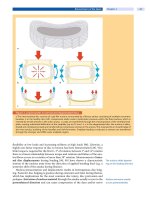
The operative approach is based on the analysis of the pathoanatomical features
of the deformity. The hyperkyphosis is the result of marked structural changes in
the bones and in the soft tissues of the affected area (
Table 7, Fig. 9a).
For optimal correction of the deformity these obstacles of reduction have to be
assessed and addressed individually. Several questions should be answered while
planning the operative strategy:
Does the curve need a n anterior release?
Posterior surgery alone is sufficient if the rigidity of the anterior structures
is not too severe, for instance in patients before growth arrest. Bradford et
al. described significant loss of correction after posterior Harrington instru-
mentation especially in patients with a kyphosis greater than 70 degrees
despite postoperative casting [15]. They therefore proposed combined sur-
Table 7. Structural changes in juvenile kyphosis
Anterior column Posterior column
wedged vertebral bodies
disc space narrowing
premature disc degeneration
contracture of the anterior longitudinal ligament
relative overgrowth of posterior elements (broad laminae, long
spinous processes)
reduced mobility of intervertebral joints
narrow interlaminar spaces
Figure 9. Surgical release
Structural changes to be addressed during surgery: a, b anterior release: stiffness of intervertebral disc and anterior lon-
gitudinal ligament; and
c, d posterior release: overgrowth of the posterior elements.
Juvenile Kyphosis (Scheuermann’s Disease) Chapter 28 783
gery in these severe cases. Lowe recommends posterior surgery alone only
for immature patients. In his opinion adolescents and adults need combined
surgery [40]. With modern third generation instrumentation systems, loss
of correction after posterior surgery no longer seems to be a problem. Hos-
man et al. did not see any differences in radiological or clinical outcome in a
comparison of anterior surgery alone versus combined surgery. They con-
cluded that anterior release is indicated only if bony bridges between the
vertebrae are present or in kyphosis greater than 100 degrees [31].
Whatlevelshavetobeincludedinthefusion?
Instrumentation should be carried out proximally from the upper end-ver-
tebra of the kyphosis (usually T2, T3, or T4) down to the upper lumbar
spine including the first lordotic disc space (usually L1, L2, or L3).
Which technique of correction should be used?
The correction principle preferred by most surgeons nowadays is cantilever
correction performed using two or four rods, which results in a tension
bend with posterior segmental compression. The vertebrae around the apex
of the deformity are usually not instrumented.
What is the target correction?
In the individual patient, it is impossible to define the optimal degree of tho-
racic kyphosis. The amount of correction should not exceed the ability of
the adjacent mobile spinal segments to realign. The degree of hamstring
tightness should be assessed and taken into consideration during planning.
A kyphosis correction of more than 50% of its initial value should be
The clinical outcome is not
dependent on the amount
of correction but rather
on sagittal balance
avoided as it bears the risk of imbalance or junctional kyphosis [31]. Correc-
tionofthedeformitytothehigh“normal”kyphosisrangeof40–50degrees
seems to be advisable in order to avoid postoperative imbalance [31]. There-
fore, straighter is not necessarily better in the operative treatment of Scheu-
ermann’s kyphosis (
Table 3).
Operative Technique
The first long-term results of Scheuermann’s kyphosis correction by posterior
instrumentation using flexible Harrington compression rods and fusion were
published by Bradford et al. in 1975 [15]. They reported on 22 patients with very
satisfactory subjective outcome but a significant loss of correction, as seen also
by other authors [25, 35]. Therefore, they changed their technique by adding
anterior release and bone grafting to achieve circumferential fusion. Because of
the flexibility of the instrumentation, postoperative cast immobilization from 9
to 12 months was deemed necessary. Using this technique in 24 patients, signifi-
cant loss of correction (>10 degrees) was observed only in five patients outside
the fusion area due to insufficient length of the instrumentation. Radiographi-
cally, mean kyphosis improved from 77 degrees preoperatively to 47 degrees at
follow-up. There were no neurological complications and no fatalities. Pulmo-
nary embolus, atelectasis, and hemothorax occurred in two patients each, vascu-
lar obstruction of the duodenum, deep wound infection, and pericardial effusion
in one patient each. The clinical appearance was markedly improved in all
patients. Twenty-three of the 24 patients experienced significant pain relief [12].
Using modern rigid posterior double-rod instrumentation allows for immediate
Additional anterior release
appears not to influence
clinical outcome
mobilization of the patients without a brace or cast. The rate of correction loss
has diminished considerably, and in our time anterior surgery has become neces-
sary only in extreme cases. Hosman et al., who used rigid posterior double-rod
instrumentation, did not see any difference in outcome on comparing patients
who had posterior surgery only with patients who had undergone additional
anterior release [31].
784 Section Spinal Deformities and Malformations