Spinal Disorders: Fundamentals of Diagnosis and Treatment Part 71 ppt
Bạn đang xem bản rút gọn của tài liệu. Xem và tải ngay bản đầy đủ của tài liệu tại đây (428.46 KB, 10 trang )
25
Congenital Scoliosis
Francis H. Shen, Vincent Arlet
Core Messages
✔
Most cases of congenital scoliosis are sporadic
and therefore are non-hereditary
✔
Up to 60 % of patients with congenital scoliosis
may have malformations of other organ sys-
tems, particularly the genitourinary, cardiovas-
cular, and nervous systems
✔
The classification system is based on either fail-
ure of formation, failure of segmentation, or
mixed (failure of both formation and segmenta-
tion)
✔
Curve progression in congenital scoliosis is
based on both the type and location of verte-
bral anomaly
✔
MRI searching for associated neurologic malfor-
mations is mandatory
✔
The treatment of congenital scoliosis is primar-
ily surgical
✔
The goal of prophylactic surgery is to prevent
curve progression or attempt a slow progres-
sive correction over time through fusions in situ
and/or hemiepiphysiodeses
✔
The principle of corrective surgery focuses on
attempting to correct the spinal deformity at
the time of spinal fusion through either osteo-
tomies or spinal resections
✔
Neurologic monitoring is essential during cor-
rection of congenital curves
Epidemiology
Most cases of congenital
scoliosis are sporadic and
therefore non-hereditary
Thepresenceofacoronal plane curvature secondary to an anomalous congenital
vertebral defect that is present at birth is known as congenital scoliosis. This can be
distinguished from infantile idiopathic scoliosis by the presence of a structural ver-
tebral abnormality. If the vertebral anomaly results in a sagittal plane deformity it
will result in congenital k yphosis or lordosis. Frequently, the resulting deformity is
a combination of both planes, with congenital kyphoscoliosis being more common
than congenital lordoscoliosis. The true incidence of congenital scoliosis is
unknown. Among the large studies reported there do not appear to be any signifi-
cant ethnic or geographic differences, although there is a greater female to male
ratio (1.4–2.5 to 1). Most cases of congenital scoliosis are non-hereditary and pose
little risk to subsequent siblings or offspring [3, 45, 47]. In a review of 1250 congeni-
tal deformities at a single institution, Winter found that approximately 1% of
patients with congenital spinal deformities had a known relative with the problem
[43]. In fact, the majority of identical twin studies have shown the congenital defect
to exist in one of the siblings, but not in the other [15, 29, 40]. Rare reports of both
twins having congenital spinal anomalies do exist [1]. Cases with a syndromic asso-
ciation (Jarcho-Levine, spondylothoracic dysplasia, spondylocostal dysplasia) can
have a hereditary component, and are typically associated with multiple levels of
bilateral failuresof segmentation, multiple fused ribs, and missing segments [11, 27,
30]. In these cases, where multiple complex anomalies exist, the related risk is up to
10% for similar lesions in siblings or subsequent generations [22]. The incidence of
associated malformation has been reported to be as high as 25% for urologic condi-
tions [25], 10% for cardiac conditions [4], and 28–40% for neuroaxis anomalies
[4,8,33,34,46].
Spinal Deformities and Malformations Section 693
ab
c
d
e
Case Introduction
Technique for surgical excision of a
hemivertebra through a posterior
only approach. A 7-month-old girl
was diagnosed with a congenital
hemivertebra. An MRI was obtained
revealing a tethered cord which
was subsequently released. She
was otherwise healthy and the
remaining work-up did not reveal
any other associated genitourinary,
cardiac, or neurologic malforma-
tions. Radiographs (
a) demonstrate
a fully segmented hemivertebra
located at the lumbosacral junc-
tion. Due to the magnitude of the
curve, location of the anomaly
resulting in an oblique take-off of
the spine, and associated pelvic
obliquity. The patient developed a
substantial clinical deformity (
b)
with coronal imbalance. These
cases are perhaps the best indica-
tion for early surgical intervention.
As a result, at 7 years of age the
patient underwent an excision of
thehemivertebrathroughaposte-
rior approach only (
Fig. 4). Intra-
operative images (
c) and postoperative radiographs (d) confirm the position of the instrumentation and correction of the
deformity. Clinically, the patient has immediate improvement in her coronal balance (
e).
Pathogenesis
Upto60%ofpatients
may have malformations
of other organ systems
The etiology in sporadic cases is believed to be related to an insult to the fetus
during the 4th–6th week of gestation during spine embryological development
[24]. It is also during this gestational period that other organ systems are devel-
oping in the fetus. As a result, up to 60% of children with congenital scoliosis
have malformations in other organ systems, particularly the genitourinary, car-
diovascular, and nervous systems [4]. Therefore, a careful search for associated
anomalies should be conducted in these patients.
694 Section Spinal Deformities and Malformations
Classification
Congenital spinal anomalies
can be classified as failure
of formation, failure of
segmentation or mixed
The congenital anomalies are classified as either failure of formation, failure of
segmentation, or mixed (failure of both formation and segmentation) [27, 44].
Examplesoffailureofformationarehemivertebraandwedgevertebra,while
unilateral unsegmented bars and block vertebra are examples of failure of seg-
mentation (
Fig. 1).
A wedge vertebra represents a partial failure of formation on one side of the
vertebra. A complete unilateral failure of vertebral formation is known as a hemi-
vertebra, and depending on the presence, or absence, of the disc space(s) is fur-
ther described as:
fully segmented
partially segmented, or
non-segmented
Fully segmented hemivertebrae have a normal disc space both superior and infe-
rior to the vertebral anomaly, while a partially segmented hemivertebra has only
one normal disc space and is fused to the adjoining vertebra on the remaining
side. A non-segmented hemivertebra has no intervening disc space at all and is
fused to both the superior and inferior vertebrae. Furthermore, depending on its
relationship to the spine, a hemivertebra can be further described as:
incarcerated or
non-incarcerted
Wedge vertebra and hemi-
vertebra are examples of
failure of formation
An incarcerated hemivertebra appears to be “tucked into” the spine with its pedi-
cle falling in-line with the adjacent pedicles, while a non-incarcerated hemiverte-
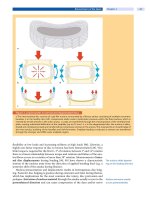
a
Figure 1. Classification of congenital scoliosis
Congenital anomalies of the spine can be classified either as failure of formation or failure of segmentation. a Hemiverte-
bra and wedge vertebra are two common examples of failure of formation. Notice that hemivertebra can be further sub-
classified as fully segmented, semi- (or partially) segmented, non-segmented, incarcerated and non-incarcerated.
Congenital Scoliosis Chapter 25 695
b
Figure 1. (Cont.)
b Block vertebra is an example of a bilateral failure of segmentation while unilateral bars are examples of unilateral failure
of segmentation. A unilateral bar with a contralateral hemivertebra has the worst prognosis for progression and is an
example of a mixed anomaly (both failure of formation and failure of segmentation).
bra protrudes out of the spine with its pedicle lying outside the line of the adja-
cent pedicles [26]. In general, a non-incarcerated vertebra has a worse prognosis
for progression when compared to an incarcerated vertebra.
Unilateral unsegmented
bars and block vertebra
are examples of failure
of segmentation
A unilateral unsegmented bar is a vertebral bar fusing the discs and facets on
one side of the vertebral column, while a block vertebra is the result of bilateral
failure of segmentation with complete fusion of the disc between the involved
vertebrae. In some cases, fused ribs may also be present, typically on the same
side as the unsegmented bar. Mixed anomalies are combinations of both failure
of formation and failure of segmentation and can occur in any combination.
Clinical Presentation
History
Congenital spinal anomaly
may be found incidentally
Patients with congenital scoliosis can present at any time. Often the diagnosis
of the spinal deformity is made in utero at the time of the prenatal ultrasound
[5]. Although in most cases the exact anomaly cannot be diagnosed at that
time, it is essential that the ultrasonographer also look for other associated
conditions such as spina bifida, and cardiovascular, urogenital or other syn-
dromic malformations. Prenatal counseling and awareness of the overall prog-
Congenital scoliosis is often
associated with other
non-spinal anomalies
nosis of these kinds of deformities is essential to provide appropriate informa-
tion to the parents. The congenital curve may also be discovered incidentally
on routine radiographs performed for any other reason, such as a chest X-ray
for respiratory problems or congenital heart disease, or abdominal films for
belly pain. The importance of these images should not be overlooked, because
later they can provide essential information in assessing progression of the
deformity.
696 Section Spinal Deformities and Malformations
ab c
d
Figure 2. Physical findings suggestive of congenital spinal anomaly
A careful physical examination of the whole body is mandatory. Findings may
be as obvious as a gross coronal imbalance; however, often the signs are more
subtle. Evidence of
a spinal asymmetry, b a hairy patch, c calf or d foot asymme-
try is suggestive of an underlying congenital malformation.
Otherwise, the child will be referred for the evaluation of a spinal deformity that
was picked up by the family, school nurse, or their physician. Findings that
should raise the suspicion of an underlying congenital malformation are:
ahairypatch
midline skin hemangioma
a sacral dimple
afootmalformation
leg asymmetry
urinary symptoms
an unusual or rigid curve (
Fig. 2)
Skin stigmata or musculo-
skeletal anomalies may
indicate congenital anomaly
In extreme cases, congenital scoliosis is only discovered at the time of the surgical
procedure (of what was thought to be an idiopathic scoliosis), as it may not have
been visible on the radiographs due to the rotation of the vertebrae.
Physical Findings
Theevaluationofthepatientfollowsthesamerulesasforanyspinaldeformity
examination. An assessment is made of:
balance of the trunk (plumb line dropped from C7 and the skull)
balance of the shoulders
Congenital Scoliosis Chapter 25 697
rigidity of the curve
the rib hump
associated malformations
The physical examination should include:
whole spine
skin
a complete musculoskeletal status
a thorough neurologic examination
The evaluation must follow
the same rules
as for any spinal deformity
examination
The clinical assessment should also search for:
craniofacial malformations
Klippel-Feil web neck
cardiac malformation
urinary malformations
Serial clinical photographs
are helpful for monitoring
progression
Clinical digitalized photographs should be obtained because they best reflect the
patient’s clinical presentation. It is important to note that sometimes, although
the Cobb angle does not change, the clinical deformity may worsen and may be
picked up as an increased shoulder imbalance, trunk shift or a worsening of the
compensatory curve requiring early surgical intervention.
Diagnostic Work-up
The high frequency of associated malformations necessitates a thorough diag-
nostic work-up of the patient and it is mandatory to not only concentrate on the
spinal deformity.
Imaging Studies
Standard Radiographs
Standard radiographs are still the method of choice for an initial screening and
assessment. The appropriate initial work-up of patients with congenital scoliosis
should include:
whole spine radiographs
functional views
cervical spine radiographs
spot views of the malformation
chest radiographs
Whole spine posteroanterior (PA)and lateral radiographs are essential to assess the
deformity comprehensively. The best X-rays are usually ones taken at birth, and one
should track them down if they are available. After 1 year of age, radiographs
should be taken as upright standing films, with the legs in extension and the pelvis
level, to compensate for any leg length discrepancy. The Cobb angle should be mea-
sured from endplate to endplate or, if not feasible, one should use the pedicle lines.
It is essential that the same landmarks be used during subsequent follow-up mea-
surements. Several Cobb angles may have to be calculated and recorded, including
the Cobb angle measuring the congenital deformity and one of the overall curve.
The same landmarks
should be used during
each follow-up radiographic
measurement
Functional views (flexion/extension, side bending, or traction views) can be
used to provide information about instability, flexibility, and rigidity of the
deformity. It is accepted that in congenital scoliosis a worsening of the Cobb
angle of at least 10° is sufficiently significant to be termed as progression [23].
698 Section Spinal Deformities and Malformations
The diagnosis of progression is based on serial clinical and radiographic exami-
nations (every 6–9 months from birth to 5 years of age, every year from 5 to 10,
Always compare the mea-
surements with the first
assessment
and every 6 months from puberty to the end of skeletal maturity). Serial radio-
graphs should always be compared with the initial radiographs, and measure-
ments should include:
Cobb angle of the whole curve
Cobb angle of the deformity
Cobb angle of any compensatory curves
assessment of vertebral rotation
rib vertebral angle (ribs becoming more vertical)
Additional cervical spine X-rays are indicated to rule out a Klippel-Feil syn-
drome or a cervical hemivertebra. The association between congenital scoliosis
and Klippel-Feil syndrome has been well described and may present with the
classic clinical triad of short neck and low posterior hairline, with a limited neck
range of motion. These malformations are often not very well visualized in whole
spine radiographs, and spot views of the malformation and flexion-extension lat-
eral radiographs may also be necessary. Recently, studies have noted that the
increased anterior atlantoaxial interval (ADI) frequently seen in these patients
may not necessarily be related to clinical symptoms and that the presence of occi-
pitalization and decreased posterior ADI may provide additional information for
Search for rib synostosesidentifying patients at risk for developing subsequent neurologic sequelae [34,
36]. In addition, chest cage X-rays will be required in the case of a thoracic curve
to look for rib synostoses, which may behave as a bar if they areclose to the spine.
Magnetic Resonance Imaging
When a further assessment is needed or in the process of surgical planning, MRI
can provide valuable anatomic detail. MRI with cartilage sequences provides the
best quality pictures of the cartilage endplates, possibly giving the best informa-
tion on growth potential and contact with the intramedullary elements. In addi-
tion to better defining the congenital anomaly, MRI has become the modality of
choice for the diagnosis of commonly associated intramedullary disorders such
as syrinx, tethered cord, or Chiari malformations (
Fig. 3a–c).
Obtaining an MRI scan
to search for associated
neurologic malformations
is mandatory
Thepatientwithatethered cord may be asymptomatic or present with a range
of neurologic symptoms ranging from increased spasticity or gait disturbances,
to progressive loss of motor or bowel and bladder function. MRI findings may
include the presence of a low lying conus or thickened filum terminale. If present,
surgical untethering is typically warranted to avoid incurring further neurologic
deficits. Another association frequently identified on MRI includes the Chiari
malformation. Although the clinical presentation in these patients is extremely
variable, the common MRI finding is characterized by caudal displacement of the
cerebellar vermis, tonsils, and cervicomedullary junction into the spinal canal
(
Fig. 3c).
Computed Tomography
CT can help define the
congenital anomaly better
Tomographs are classic for showing a bony bar, but have lost their role in the
diagnostic assessment with the advent of thin-slice high resolution computed
tomography (CT). CT with thin slices and with reconstruction is useful in very
complex deformities and to facilitate surgical planning.
Congenital Scoliosis Chapter 25 699
abc
Figure 3. MRI identifies common associated intramedullary disorders
Spinal cord anomalies can occur in up to 40% of patients with congenital spinal scoliosis. Common associated findings
include
a syrinx, b tethered cord with low lying conus, or c Chiari malformation.
Specific Investigations
Renal and bladder ultrasound imaging is recommended for all patients on their
initial presentation and further genitourinary imaging is obtained as indicated.
A cardiac assessment is also required by the cardiologist, as congenital scoliosis
has a 12% incidence of associated cardiac malformation. Echocardiography is
therefore often indicated to rule out an underlying cardiac problem.
Non-operative Treatment
Bracing usually is ineffective
in congenital scoliosis
Non-operative treatment of congenital scoliosis will consist in either observation
of the curve or bracing. Observation should be applied only for non-progressive
balanced curves. In most instances bracing is ineffective in congenital scoliosis. It
may be indicated for long flexible curves, controlling compensatory lumbar
curves, helping to rebalance the spine, orpostoperative use until the fusion is solid.
A prerequisite for counseling patients on the choice of treatment is a thorough
knowledge of the natural history particularly when surgery is considered. In con-
genital scoliosis, natural history is predominately influenced by the risk of curve
progression.
Natural History and Progression
Curve progression in
congenital scoliosis is related
to the type and location
Because of the wide range of deformities that can occur in congenital scoliosis,
predicting the risk of curve progression can be difficult. As a general rule, the
rate of progression is directly related to:
the potential for asymmetric growth, and therefore related to the presence
or absence of an intervening disc(s)
the location of the vertebral anomaly (
Case Introduction)
700 Section Spinal Deformities and Malformations
Therefore, it follows that a fully segmented vertebra, with the presence of two
disc spaces (and therefore two sites of growth potential), has a greater risk for
curve progression than a non-segmented hemivertebra that is completely fused
to the two adjoining vertebrae and has no available disc spaces. Similarly, block
vertebrae have no growth potential and therefore remain stable.
Table 1 provides
guidelines for the risks of progression for each type of anomaly and average
degree of progression per year.
Table 1. Risk of progression for common vertebral anomalies
Greatest risk of progression
unilateral unsegmented bar with contralateral hemivertebra (5 –10 degrees/year)
unilateral unsegmented bar (3–9 degrees/year)
two unilateral fully segmented hemivertebrae (2 –5 degrees/year)
one fully segmented hemivertebra (1 –3 degrees/year)
wedge vertebra (minimal to no growth potential)
block vertebra (stable)
Lowest risk of progression
While these examples are fairly straightforward, the anatomy in many mixed
anomalies can be unclear, with a prognosis that is unknown. In these instances,
the patient must be followed closely for evidence of curve progression. In gen-
eral, the overall average progression per patient is 5 degrees per year [44].
Early surgical intervention
may be required to address
curves that result in
significant shoulder,
pelvic, or trunk imbalance
Location of the congenital anomaly can affect both curve progression and
overall appearance of the patient. Upper thoracic curves tend to progress less
than thoracolumbar and lumbar curves. However, although these upper thoracic
curves seldom reach 30°, they can cause significant shoulder imbalance that may
require early surgical intervention. Similarly, low lumbar curves can induce an
oblique take-off from the spine resulting in pelvic obliquity and truncal imbal-
ance. Mid-thoracic curves, with the apex centered at T5–T7, can induce a pro-
gressive compensatory low thoracic or lumbar curve that may need to be
included in the fusion if they become bigger and structural. In these instances it
may be important to consider early surgical intervention before these changes
occur [3].
Operative Treatment
General Principles
The treatment of congenital
scoliosis is primarily surgical
The treatment of congenital scoliosis is primarily surgical [14, 46]. The goal is to
achieve a solid fusion and prevent further progression, and if possible decrease
the deformity to achieve as straight a spine as possible at the end of growth. How-
ever, the curves are often rigid and correction difficult to achieve; therefore the
best approach is early recognition and careful monitoring [22]. In this manner,
early “prophylactic” surgery is possible by anticipating and halting progression
before significant deformity occurs [3]. It is even possible in some cases to
achieve partial correction over time. However, in many cases some degree of
immediate correction is desired. In these cases, the surgical procedures are
designed to correct the curve through the use of spinal instrumentation, osteoto-
mies, and spinal column and vertebral resections.
Congenital Scoliosis Chapter 25 701
Surgical Techniques
“Prophylactic” Surgical Procedures
These procedures are predominantly referred to as “in situ fusions and hemiepi-
physiodesis.” The general principle is to balance the growth by slowing or stop-
ping the convex side growth while allowing the remaining concave growth poten-
tial to catch up.
In situ fusion can be done with a single posterior fusion with or without
instrumentation, or with an anterior fusion, or as an anterior-posterior fusion.
These operations can be performed if the three-dimensional aspects of the defor-
mity have been fully understood. However, the compensatory curve above or
below the fused segment may still progress after such procedures. Some correc-
tion of the so-called fusions can be achieved if one uses a corrective cast postop-
eratively.
Asymmetric growth
is balanced by arresting
growth on the convex side
Hemiepiphysiodesis tends to achieve progressive correction over time, taking
advantage of the intact growth plates on the concave side of the deformity (
Case
Study 1
). In most cases it requires an anterior and posterior approach to the
spine. Anteriorly, one-third of the disc space and corresponding endplates on the
convexity of the curve are removed and fused. The hemiepiphysiodesis can be
performed through a mini-thoracotomy, thoracoscopically, or even transpedicu-
larly [17, 31]. Posteriorly only the convex side is approached and fused. The
patient is then immobilized in a cast in the position of maximum correction to
take advantage of the flexibility of the curve. The results are, however, somewhat
unpredictable [13, 18, 42], and these procedures are typically limited to young
The outcome of
hemiepiphysiodesis
is not easily predictable
patients (under 5 years of age) and to curves of less than 50°. They should not be
carried out if there is a kyphosis component to the deformity. A very careful fol-
low-up is necessary, as progression of the deformity can still occur during the
adolescent growth spurt.
Corrective Surgery Procedures
Posterior Curve Corrections
Neurologic monitoring
is essential during correc-
tion of congenital curves
Posterior spine fusion without instrumentation and correction with a cast is an
option in young children, but the lack of anterior fusion exposes the spine to the
crankshaft phenomenon if the anterior growth plates overcome the posterior
fusion. Posterior spine fusion with instrumentation is indicated in older patients,
where there is no risk of crankshafting [46]. Anterior and posterior spine fusion
with discectomies and instrumentation can achieve a significant correction in
the mobile segments of the spine. The danger with all corrective procedures is
overcorrection and distraction of the curve with subsequent neurologic compli-
cations.Insuchcasesthedistractionshouldnotbedonefirst.Thecompression
rod should be inserted first and then only minimal distraction applied on the
concave rod. The use of spinal cord monitoring and/or a wake-up test after cor-
rection is mandatory. Neurologic monitoring can never be emphasized enough
during such corrections (
Case Study 2). Anterior stabilization of the spine with a
strut graft done through a convex, or for biomechanical reasons from a concave,
approach should be considered if there is a significant kyphotic component to
the deformity.
702 Section Spinal Deformities and Malformations