Spinal Disorders: Fundamentals of Diagnosis and Treatment Part 70 ppt
Bạn đang xem bản rút gọn của tài liệu. Xem và tải ngay bản đầy đủ của tài liệu tại đây (371.78 KB, 10 trang )
Figure 4. Luque-Galveston fixation
a Entry point of iliac fixation at the posterior superior iliac spine (PSIS). b Bending rod for Galveston fixation comprises
two bends, one 90° and one 45° in two different planes.
c Contouring of the rod to adapt to the sagittal profile. d Luque-
Galveston fixation for neuromuscular scoliosis.
are crucial for the unit rod and Galveston techniques as this will determine if the
pelvis will be leveled after the reduction maneuver. For severe pelvic obliquity a
maximal width (MW) segmental pelvic fixation has also been described and
shown to be effective [2]. MW pelvic fixation comprises a pedicle screw inserted
in a Galveston fashion down the iliac wing 1 cm above the sciatic notch. As an
added lever arm to correct the pelvis, a sublaminar hook pushes or pulls on an ili-
osacral screw, as described by Dubousset [31]. The construct has a maximal
The MW fixation allows
for a very stable sacropelvic
fixation
width fixation across the lumbosacral junction and on the AP and axial imaging
has an “M&W” configuration; hence the eponym MW fixation (
Fig. 5). The hook
placement obviously is dependent on the obliquity of the pelvis; hence the hook
facing down is on the iliosacral screw of the elevated hemipelvis side while the
hook going up is on the iliosacral screw on the lower hemipelvis. Great forces can
be exerted across these iliosacral screws, thus allowing significant correction
Neuromuscular Scoliosis Chapter 24 683
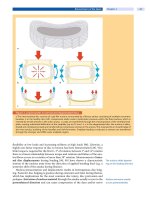
Figure 5. MW fixation
The drawings illustrate the placement and appearance of MW fixation. The pelvis anchorage points comprise an iliac
screw (1) and iliosacral screws (2) which have downgoing (3) and upgoing hooks (4) to provide leverage in opposite
directions to level the pelvis. Inset view of pelvis illustrates placement of screws. Note the iliosacral screws end in the
promontory of S1. Note the location of the hooks harnessing the added lever arm of the iliosacral screws.
Figure 6. Cantilever correction with MW sacropelvic fixation
a The initial step of reduction is to achieve solid distal pelvic fixation. In this illustration MW pelvic fixation is achieved.
Rods must be as perpendicular as possible to the pelvis.
b The second step is to cantilever the proximal rod to the spine,
thus achieving initial correction of the pelvic obliquity.
c The third step consists of correcting if needed the residual pelvis
obliquity by distracting down via the hook resting on the iliosacral screw on the higher hemipelvis. In contrast, on the
lower hemipelvis, the hook will pull up (compressing) the iliosacral screw proximally to level the pelvis.
684 Section Spinal Deformities and Malformations
of oblique pelvis (Fig. 6). From a technical point of view, to improve our accuracy
of the insertion of the iliosacral screws we identify and delineate the medial wall
of the pedicle of S1 via a small laminotomy. We then identify our entry point on
theoutertableoftheiliacbone,aimingjustabovethesacralalaanddowntheS1
pedicle, entering the vertebral body of S1. As one establishes their entry point on
the iliac bone one must ensure that the screw will be superficial to the sacral ala,
thus allowing some room for the laminar hook to pass underneath it and catch
the iliosacral screw (
Case Study 1).
Bone Grafting
Allograft fusion is well
accepted for fusion
of neuromuscular scoliosis
The general consensus is that an allograft is a well-accepted bone grafting substi-
tute for spinal fusion in neuromuscular scoliosis [52]. Many factors have led to
this consensus. In part the pelvises of neuromuscular patients tend to be small,
never providing enough bone. Furthermore they are often used as a fixation
point. It is therefore standard treatment to supplement a local bone graft (spi-
nous process, facets and lamina) with an allograft.
Anterior vs Posterior Surgery vs Combined Surgery
The classic surgical management of neuromuscular scoliosis comprises a single
posterior spinal fusion. Undertaking anterior spinal surgery has been associated
with an increased morbidity especially in NMD patients [12]. Indications for
anterior spinal surgery are threefold:
skeletal immaturity
rigidity of the deformity
risk of non-union
The literature remains unclear on the absolute indications because of the added
morbidity.
Patients at risk of crank-
shafting should undergo
additional anterior fusion
The general principle is that patients who are at risk of a crankshaft phenome-
non (i.e., progressive rotation of the anterior column around the fused posterior
elements) after posterior fusion should undergo an anterior growth arrest and
fusion. Keeping in mind that patients with neuromuscular disorders have altered
growth patterns [16, 25], patients younger than 10 years of age, Risser 0, with
open triradiate cartilage, and who have not yet reached their peak growth veloc-
ity are at risk of crankshaft. It is recommended for these patients to proceed with
an anterior spinal fusion if they can tolerate the surgical insult.
Anterior release may be
necessary for the correction
of rigid deformity
The second indication for anterior surgery is the need for an anterior release
to allow the pelvis to be leveled. If one is unable to correct the pelvis manually by
bringing it within 10° of the perpendicular of the trunk by applying external
forces over the iliac crests and the trunk with the patient in a prone position with
the legs hanging free in flexion, then it is recommended that an anterior release
should be done or even an apical vertebrectomy considered. Curve flexibility can
be assessed with traction films and supine bending films. However, in some cases
of severe spasticity, only intraoperative examination and imaging with the
patient under general anesthetic will provide curve flexibility (
Case Study 4).
Patients at risk of non-union
(e.g. myelodysplasia) should
undergo interbody fusion
Thirdly, anterior spinal fusion should be also considered when the risk of non-
union is elevated. The typical example is that patients with myelomeningocele
with deficient posterior spinal elements should systematically have an anterior
interbody fusion [45]. The biology of posterior grafting remains in tension
mode, while anterior grafting is in compression mode, which favors a solid
fusion. Achieving solid anterior fusion can be crucial, as about half of myelome-
ningocele patients with posterior spinal fusion [20] will develop a deep posterior
Neuromuscular Scoliosis Chapter 24 685
ab
c
d
e
f
Case Study 4
This is a 16-year-old boy with a T10 myelomeningocele with a progressive severe coronal and sagittal spinal deformity
(
a–d). His deformity led him to have recurrent pressure sores over the gibbus, constant GI problems secondary to the
increased abdominal pressure, as well as severe pulmonary restrictive disease. Surgical management required preopera-
tive gravity halo traction and aggressive chest physiotherapy to minimize perioperative respiratory collapse. The patient
then underwent a kyphectomy with a retroperitoneal extraperiosteal resection of the proximal kyphotic segment (
e)
allowing a maximal distal fixation point. To minimize distal instrumentation, pull-out Dunn-McCarthy presacral rods
were used supplemented with far lateral pedicle screws almost behaving as anterior vertebral screws. Once the proximal
bone was excised (yellow shadow), the deformity was corrected in a cantilever maneuver closing the gap (
f) and correct-
ing the deformity.
686 Section Spinal Deformities and Malformations
g
h
Case Study 4 (Cont.)
The patient then had an anterior structural tibial graft inserted via a thoraco-abdominal approach to ensure solid ante-
rior spinal fusion across the residual kyphosis (
g, h).
spinal infection with the possible necessity of hardware removal [27, 30, 38].
Finally, patients with severe kyphotic deformities requiring significant correc-
tions should also have anterior structural bone grafting (tibia or ribs) to prevent
the deformity from recurring. Itis preferable to achieve sagittal balance with nor-
malization of the sagittal alignment but moderating the urge to overcorrect the
kyphosis.
Single anterior only surgery
is indicated only in minor
curves without the need
for sacropelvic fixation
Single anterior only spine surgery canbedoneforspecificcurvepatternsand
patients with specific contraindications to posterior surgery, i.e., chronic
infected wounds. The surgical indications that Sponseller recommends for ante-
rior spinal fusion in myelomeningocele are: a relatively small supple curve of less
than 70 degrees with no need to extend the fusions down to the pelvis [44].
If combined anterior and posterior surgery is required, the ideal timing of the
anterior surgery is still controversial [10]. Anterior surgery can be done on the
same day or staged with a period of halo traction, achieving some gradual cor-
rectionovertime.Gravity halo traction [5] and intraoperative halo femoral
traction [17] are options. Irrespective of the type of traction, close neurological
examination including cranial nerve testing, muscle strength in the upper and
lower extremities, sensory examination and long tract signs is mandatory to
avoid injury to the spinal cord. Complications in staged surgery have been found
tobehigherandsomeadvocatesamedayfrontandbacksurgery[10].
Severe Rigid Spinal Deformities
Some of the neuromuscular spinal deformities can be severe, and particularly
rigid spinal osteotomies, vertebrectomies, or even kyphectomies may be
required to rebalance patients. When one needs to proceed to a kyphectomy, the
neuromuscular kyphoscoliosis has reached its end stage disease and is an exam-
Neuromuscular Scoliosis Chapter 24 687
ple of what can happen with neuromuscular curves. The severe spinal deformity
canleadhasledtosignificantlossofspinalcolumnheight,resultinginsignifi-
cant disability and morbidity. This child’s kyphotic deformity was not addressed
at an early age, as there was a false perception that delaying surgical manage-
ment would allow for better pulmonary function. The problem is that kyphosis
will always progress in this population and that the complexity of the case will
only increase. There are two types of kyphosis in myelomeningocele. The more
classic collapsing C shape type kyphosis that can be addressed by pedicle sub-
traction type osteotomies [27] is classically performed in the newborn and
young infant by removing the ossific nuclei. The second type is described as
Rigid S shape kyphosis
requires spinal column
resection
a so-called rigid S shape kyphosis [21] due to the associated thoracic lordosis
above the lumbar kyphosis. To address such a deformity a spinal column resec-
tion is required.
When planning a spinal resection, one must achieve solid fixation above and
below the resection. Distal fixation can be problematic if distal vertebrae have
been resected, thus keeping as many distal spinal vertebrae as possible, to maxi-
mize distal spinal anchorage points. Pelvic/sacral fixation is best achieved with a
modified Dunn-McCarthy presacral rod [28] augmented with pedicle screws in
the most distal vertebral bodies. The entry points for these screws tend to be
much more lateral (in the remnant pedicle) and must converge much more than
theusualpediclescrews.AstheDunn-McCarthyrodsareanteriortothesacrum
and sacral alae, one is able to exert a significant corrective force across an osteo-
porotic pelvis and sacrum. With such a construction one is able to flex in a canti-
lever fashion the distal spine and pelvis, thus correcting the deformity. Proximal
fixation can be performed with sublaminar wire, hooks or pedicle screws. Shar-
rard first described this as apical vertebral resection [43]. We tend to identify and
isolate the dural sac [40]. If it poses a physical barrier to our dissection, we ligate
the sac and transect the cord; however, we prefer to spare it by mobilizing it and
then transecting the roots. We then proceed in an extraperiosteal dissection just
as one would do a classic anterior approach. We identify the disc levels, then, by
Apical vertebral resection is
technically very demanding
and associated with
significant blood loss
using a blunt dissection we reflect the great vessel and the peritoneum off of the
spine from either side. We then ligate the segmental vessels, and reflect anteriorly
the peritoneum and the abdominal contents. This is facilitated by the prone posi-
tion as the abdominal contents fall forward. Once the vertebrae identified have
been circumferentially dissected, we place blunt retractors around the spine and
proceed to cut the vertebra at a bony surface with an oscillating saw above and
below the planned resected spine, thus providing bony apposition. As one does
this, significant blood loss is encountered, and it persists until the two ends of the
vertebrectomy are reapproximated. Therefore the spinal anchorage points must
already be in place and the actual kyphectomy is done last (
Case Study 4).
Spinal Cord Monitoring
Spinal cord monitoring
remains mandatory though
not always feasible
In patients with neuromuscular scoliosis, one sometimes cannot have any form
of intraoperative spinal monitoring due to inadequate somatosensory evoked
potential (SSEP) or even motor evoked potential (MEP) and one must rely on the
Stagnara wake-up [14, 50]. Sometimes, the wake-up test is also not feasible if
patients are uncooperative.
The wake-up test
is often unreliable
In such situations we tend to keep all our instruments sterile on the back table
untilwellafterthesurgeryhasendedanduntilthepatienthasmovedalllimbs.
If there is a problem then we do not need to wait for the resterilization of the
instruments and proceed to immediate hardware removal or decrease the
amount of correction.
688 Section Spinal Deformities and Malformations
Recapitulation
Epidemiology.
Scoliosis, in the presence of a neuro-
muscular disorder (NMD), behaves entirely differ-
ently than the more predictable idiopathic scolio-
sis. The overall incidence of spinal deformity varies
between underlying NMDs but it also varies accord-
ing to the severity of the underlying NMD. In gener-
al, the greater the neuromuscular involvement,
the greater the likelihood of having a spinal defor-
mity and the greater the deformity will be.
Pathogenesis. The pathophysiology of neurogenic
spinal deformities remains unclear.
Clinical presentation. The classical spinal deformi-
ties encountered in NMD consist of kyphoscoliosis,
scoliosis, kyphosis, lumbar hyperlordosis and pelvic
obliquity. On taking the history one needs to find
clues, which may confirm the presence of neuromus-
cular scoliosis. Clues suggestive of neuromuscular
scoliosis are birth anoxia, delayed developmental
milestone, acquired or familial neuropathies and/or
myopathies, spinal deformity before the age of
7 years, or a painful scoliosis. A systemic examination
is mandatory of head to toes and further clues can be
found confirming the presence of neuromuscular spi-
nal deformity. Neurocutaneous skin markings such as
hairy patches or midline nevi (or vascular lesion) can
be superficial clues to intradural pathologies. If pelvic
obliquity is present, one should assess whether its or-
igin is: suprapelvic, intrapelvic, or infrapelvic. Dubo-
usset saw the pelvis as the 6th lumbar vertebra and
the pelvis being a simple extension of the scoliotic
deformity resulting in pelvic obliquity. In contrast, in-
frapelvic obliquity is secondary to hip contractures,
whichresultinpelvicobliquity.Thecontractures,
which drive the pelvic obliquity, tend to be abduction
or adduction hip contractures. It is crucial to know if
the patient is a walker, sitter (wheelchair bound) or
non-sitter. In the walker, one must determine gait
pattern and mode of ambulation, as it determines the
extent of instrumented fusion (whether or not to in-
clude the pelvis). The neurological examination
needs to be thorough: Flaccid faces can be sugges-
tive of subtle myopathies while asymmetrical shoe
size can be a subtle sign of syringomyelia.
Diagnostic work-up. Confirming the diagnosis of
neuromuscular scoliosis is best done in multidisci-
plinary fashion by including the neurologist and
geneticist. Patients with neuromuscular scoliosis
tend to have severe deformities with associated pa-
thologies that are directly or indirectly related to
their spinal deformity that puts them at higher risk
of morbidity and mortality. The onus is on the
treating surgeon to exclude hidden pathologies
that can worsen the deformities as well as harm the
general health of the patient. Pulmonary function
less than 35% of predicted is associated with a pro-
tracted postoperative course with an increased risk
of ventilation dependency. Cardiac dysfunctions
can be seen in the muscular dystrophic patients. A
large proportion of patients with neuromuscular
scoliosis have concomitant dietary problems lead-
ing to malnutrition which may require supplemen-
tation. Part of the preoperative imaging, supine
bending films and/or traction films should be ob-
tained to guide surgical planning. Any scoliotic pa-
tients with a hint of neurological signs or symptoms
or with neuroectodermal skin lesions must have an
MRI scan of the entire spine taken (occiput to sa-
crum) to assess any presence of intradural lesions:
syringomyelia, tethered cord, or spinal tumor.
Non-operative treatment. The natural history of
neuromuscular spinal deformity is one of curve pro-
gression irrespective of etiology. Factors influencing
curve progression are as follows: age of onset of
NMD, severity and rapidity of weakness, evolving or
static neuromuscular disease, skeletal maturity, am-
bulation status, and severity of curves. Their curve
progression has been reported to be from 7° to 40°
per year. In patients with cerebral palsy, because their
onset of puberty is highly variable (8 –20 years), it is
difficult to quantify the risk of curve progression and
it has been shown that their scoliosis does progress
into adulthood. Bracing for neuromuscular scoliosis
is “functional bracing”. It provides an external sup-
port to the spine, allowing some patients to be more
functional. Bracing has not been shown to prevent
curve progression in the neuromuscular scoliosis.
Operative treatment. In contrast to idiopathic sco-
liosis, neuromuscular deformities tend to alter the
patient’s functional status by interfering with their
ability to sit, stand, and walk. This loss of function is
the more common indication to proceed with sur-
gical management as all of these curves progress.
One must prepare for and expect longer surgical
times with greater blood loss. Surgical planning is
crucial not to miss the associated sagittal deformi-
ties. The majority of these patients will need the
postoperative intensive care unit mainly to monitor
Neuromuscular Scoliosis Chapter 24 689
for fluid shift and respiratory status. The cornerstone
of the surgical management of these types of curve
is to achieve perfect spinal balance both in the
coronal and sagittal planes. Classically these
patients do not have compensatory mechanisms
(muscle tone, intact proprioception) to rebalance
themselves. Their curves tend to be long and they
often have associated pelvic obliquity necessitating
long fusions to the pelvis. Treating neuromuscular-
spinal deformity requires a vast knowledge of pelvic
and spinal fixation techniques such as the Luque-
Galveston techniques, unit rods, and MW pelvic fix-
ation. One should apply all the modern principles of
spinal deformity correction to these cases in order to
minimize the extent of the approach, to maximize
their postoperative function (walking capacity or sit-
ting balance) and to achieve a successful outcome
with no postoperative immobilization.
Key Articles
Mazur J, Melelaus MB, Dicksen DR, et al. (1986) Efficacy of surgical management for
scoliosis in myelomeningocele: correction of deformity and alteration of functional sta-
tus. J Pediatr Orthop 6:568
Paper summarizing the impact of spinal surgery on the myelomeningocele patient.
Askin G, Hallett R, Hare N, Webb JK (1997)Theoutcomeofscoliosissurgeryinthe
severely physically handicapped child: An objective and subjective assessment. Spine
22(1):44 – 50
A broad summary of the subjective impact of spinal surgery on patients with neuromus-
cular scoliosis.
Lonstein J, Akbarnia B (1983) Operative treatment of spinal deformities in patients with
cerebral palsy or mental retardation. J B one Joint Surg Am 65:43 – 55
Landmark paper providing insight into management of neuromuscular scoliosis.
Winter S (1994) Preoperative assessment of the child with neuromuscular scoliosis.
Orthop Clin North Am 25:239 – 2 45
Thorough review and clear recommendations for preoperative work-up of patients with
neuromuscular scoliosis going for surgery.
The following papers describe surgical techniques for pelvic fixation, which are required
for management of spinal surgery in this patient population:
Allen BL, Ferguson RL (1984) The Galveston technique of pelvic fixation with L-rod
instrumentation of the spine. Spine 9(4):388 –94
This article describes the classic sacral fixation technique in neuromuscular scoliosis.
Bulman W, Dormans J, Ecker M, et al. (1996) Posterior spinal fusion for sc oliosis in
patients with cerebral palsy: a comparison of Luque rod and unit rod instrumentation.
J Pediatr Orthop 16:314 – 323
In this study the results of 15 patients who underwent arthrodesis with dual Luque rod
instrumentation are compared with the results of 15 patients in whom unit rod instru-
mentation was used. The unit rod instrumentation allowed a significantly greater correc-
tion of both the major curve and pelvic obliquity.
McCarthy RE, Bruffett WL, McCullough FL (1999) S rod fixation to the sacrum in
patients with neurom uscular spinal deformities. Clin Orthop Relat Res 364:26 – 31
This article describes anewform ofpelvic fixationforusein patientswith neuromuscularspi-
nal deformities to overcome the problems imposed by the Galveston technique. One end of
a Luque rod is prebent into an S-shaped configuration and placed over the sacral ala, supply-
ing firm fixation acrossthe lumbosacral junction withoutcrossing thesacroiliac joint.It fixes
firmly against the sacral ala by distracting against a hook or screw in the lumbar spine
Arlet V, Marchesi D, Papin P, Aebi M (1999) The ‘MW’ sacropelvic construct: an
enhanced fixation of the lumbosacral junction in neuromuscular pelvic obliquity. Eur
Spine J 8(3):229 – 31
The authors introduce a new fixation system, in which iliosacral screws are combined
withiliacscrews.ThisismadepossiblebyusingtheAOUniversalSpineSystemwithside
opening hooks above and below the iliosacral screws and iliac screws below it. The whole
sacropelvisisthusencompassedbyamaximumwidth(MW)fixation,whichgivesan’M’
appearance on the pelvic radiographs and a ‘W’ appearance in the axial plane.
690 Section Spinal Deformities and Malformations
References
1. Allen BL, Ferguson RL (1984) The Galveston technique of pelvic fixation with L-Rod instru-
mentation of the spine. Spine 9(4):388–94
2. Arlet V, Marchesi D, Papin P, Aebi M (1999) The ’MW’ sacropelvic construct: an enhanced
fixation of the lumbosacral junction in neuromuscular pelvic obliquity. Eur Spine J
8(3):229–31
3. Askin G, Hallett R, Hare N, Webb JK (1997) The outcome of scoliosis surgery in the severely
physically handicapped child: An objective and subjective assessment. Spine 22(1):44–50
4. Berven S, Bradford DS (2002) Neuromuscular scoliosis: causes of deformity and principles
for evaluation and management. Semin Neurol 22(2):167–78. Review
5. Bridwell KH (2001) Adolescent idiopathic scoliosis: surgery. In: Weinstein SL (ed) The pedi-
atric spine: Principles and management, 2nd edn. Chap. 21. Philadelphia: Lippincott Willi-
ams & Wilkins, pp 385–411
6. Brooke M, Fenichel G, Griggs R, et al. (1989) Duchenne muscular dystrophy, patterns of
clinical progression and effects of supportive therapy. Neurology 39:475–481
7. Bulman W, Dormans J, Ecker M, et al. (1996) Posterior spinal fusion for scoliosis in patients
with cerebral palsy: a comparison of Luque rod and Unit Rod instrumentation. J Pediatr
Orthop 16:314–323
8. Charry O, Koop S, Winter RB, Lonstein JE, Denis F, Bailey W (1992) Syringomyelia and sco-
liosis: A review of twenty-five pediatric patients. Proceedings of the Scoliosis Research Soci-
ety Meeting. Orthopaedic Transactions 16:167
9. Deacon P, Archer IA, Dickson RA (1987) The anatomy of spinal deformity: a biomechanical
analysis. Orthopedics 10(6):897–903
10. Ferguson RL, Hansen MM, Nicholas DA, Allen BL Jr (1996) Same-day versus staged anteri-
or-posterior spinal surgery in a neuromuscular scoliosis population: the evaluation of med-
ical complications. J Pediatr Orthop 16(3):293–303
11. Gau Y, Lonstein J, Winter R, et al. (1991) Luque-Galveston procedure for correction and sta-
bilization of neuromuscular scoliosis and pelvic obliquity: a review of 68 patients. J Spinal
Disord 4:399–410
12. Grossfeld S, Winter B, et al. (1997) Complications of anterior spinal surgery in children.
J Pediatr Orthop 17(1):89–95
13. Haas S (1942) Spastic scoliosis and obliquity of the pelvis. J Bone Joint Surg 24:775
14. Hall JE, Levine CR, Sudhir KG(1978) Intraoperative awakening to monitor spinal cord func-
tion during Harrington instrumentation and fusion: description of procedure and report of
three cases. J Bone Joint Surg Am 60:533–536
15. Hart D, McDonald C (1998) Spinal deformity in progressive neuromuscular disease. Phys
Med Rehab Clin North Am 9(1)
16. Horstman H, Boyer B (1984) Progression of scoliosis in cerebral palsy patients after skeletal
maturity. Dev Med Child Neurol 26:261
17. Huang MJ, Lenke LG (2001) Scoliosis and severe pelvic obliquity in a patient with cerebral
palsy: surgical treatment utilizing halo-femoral traction. Spine 26(19):2168–70
18. Koman A, Paterson B, Shilt J (2004) Cerebral palsy – Seminar; Lancet 363
19. Lee GA, Betz RR Clements DH 3rd, Huss GK (1999) Proximal kyphosis after posterior spinal
fusion in patients with idiopathic scoliosis. Spine 24(8):795–9
20. Lindseth RE (1991) Spine deformity in myelomeningocele. Instr Course Lect 40:276
21. Lindseth RE (2001) Myelomeningocele spine. In: Weinstein SL (ed) The pediatric spine:
Principles and practice, 2nd edn, Chap 49, pp 859–60
22. Lonstein J, Akbarnia B (1983) Operative treatment of spinal deformities in patients with
cerebral palsy or mental retardation. J Bone Joint Surg Am 65:43–55
23. Luhmann SJ, Lenke LG, Kim YJ, Bridwell KH, Schootman M (2005) Thoracic adolescent idi-
opathic scoliosis curves between 70 degrees and 100 degrees: is anterior release necessary?
Spine 30(18):2061–7
24. Luque E (1982) Segmental spinal instrumentation in correction of scoliosis. Clin Orthop
163:192–198
25. Majd ME, Muldowny DS, Holt RT (1997) Natural history of scoliosis in the institutionalized
adult cerebral palsy population. Spine 22:1416–1466
26. Marchesi D, Arlet V, Stricker, Aebi M (1997) Modification of the original Luque technique in
the treatment of Duchenne’s neuromuscular scoliosis. J Pediatr Orthop 17(6):743–9
27. Mazur J, Melelaus MB, Dicksen DR, et al. (1986) Efficacy of surgical management for scolio-
sis in myelomeningocele: correction of deformity and alteration of functional status. J Pedi-
atr Orthop 6:568
28. McCarthy RE, Bruffett WL, McCullough FL (1999) S rod fixation to the sacrum in patients
with neuromuscular spinal deformities. Clin Orthop Relat Res 364:26–31
29. McDonald C, Abresch T, Carter G, et al. (1995) Profiles of neuromuscular diseases: Becker
muscular dystrophy, Am J Phys Med Rehabil 74: S93–103
Neuromuscular Scoliosis Chapter 24 691
30. McMaster MJ (1987) Anterior and posterior instrumentation and fusion of thoracolumbar
scoliosis due to myelomeningocele. J Bone Joint Surg Br 69:20
31. Miladi LT, Ghanem IB, Draoui MM, Zeller RD, Dubousset JF (1997) Iliosacral screw fixation
for pelvic obliquity in neuromuscular scoliosis. A long-term follow-up study. Spine 22(15):
1722–9
32. Miller A, Temple T, Miller F (1996) Impact of orthoses on the rate of scoliosis progression in
children with cerebral palsy. J Pediatr Orthop 16(3):332–335
33. Miller RG, Chalmers AC, Dao H, et al. (1991) The effect of spine fusion on respiratory func-
tion in Duchenne muscular dystrophy. Neurology 41:38–40
34. Global Polio Eradication Initiative Strategic Plan (2004) Centers for disease. MMWR Morb
Mortal Wkly Rep 53(5):107–8
35. Moseley CF, Musca V, Laden L, et al. (1985)Improved stability in segmental instrumentation
of neuromuscular scoliosis. Presented at the Annual Meeting of Pediatric Orthopedic Soci-
ety of North America, San Antonio, Texas 1985
36. Oda T, Shimizu N, Yonenobu K, et al. (1993) Longitudinal study of spinal deformity in
Duchenne muscular dystrophy. J Pediatr Orthop 13:478–188
37. Olafsson Y, Sarast H, et al. (1999) Brace treatment in neuromuscular spine deformity. J Pedi-
atr Orthop 19(3):376–9
38. Osebold WR, Mayfield JK, Winter RB, et al. (1982) Surgical treatment of the paralytic scolio-
sis associated with myelomeningocele. J Bone Joint Surg Am 64:841
39. Ouellet JA, LaPlaza J, Erickson MA, Birch JG, Burke S, Browne R (2003) Sagittal plane defor-
mity in the thoracic spine: a clue to the presence of syringomyelia as a cause of scoliosis.
Spine 28(18):2147–51
40. Pontari MA, Bauer SB, Hall JE, et al. (1998) Adverse urologic consequence of spinal cord
resection at the time of kyphectomy: value of preoperative urodynamic evaluation. J Pediatr
Orthop 18:820–823
41. RRTC/NMD Roundtable Conference 2001
42. Shapiro GS, Taira G, Boachie-Adjei O (2003) Results of surgical treatment of adult idiopathic
scoliosis with low back pain and spinal stenosis: a study of long-term clinical radiographic
outcomes. Spine 2003 28(4):358–63
43. Sharrard WJW (1968) Spinal osteotomy for congenital kyphosis in myelomeningocele.
J Bone Joint Surg Br 50:466
44. Sponseller PD, Young AT et al. (1999) Anterior only fusion for scoliosis in patients with mye-
lomeningocele. Clin Orthop 364:117–24
45. Sriram K, Bobrtchko WT, Hall JE (1972) Surgical management of spinal deformities in spina
bifida. J Bone Joint Surg Br 54:666
46. Stagnara P (1974) D´eviations lat´erales du rachis: scoliotic. In: Encyclop´edie m´edicochirur-
gicale. Paris: Appareil Locomoteur
47. Strauss DJ, Shavelle RM (1998) Life expectancy of adults with cerebral palsy. Dev Med Child
Neurol 40:369–375
48. Thomson JD, Banta JV (2001) Scoliosis in cerebral palsy: an overview and recent results.
J Pediatr Orthop B 10:6–9
49. Williams B (1979) Orthopaedic features in the presentation of syringomyelia. J Bone Joint
Surg Br 61:314–23
50. Wilson-Holden TJ, Padberg AM, Lenke LG, Larson BJ, Bridwell KH, Bassett GS (1999) Effi-
cacy of intraoperative monitoring for pediatric patients with spinal cord pathology under-
going spinal deformity surgery. Spine 24(16):1685–92
51. Winter S (1994) Preoperative assessment of the child with neuromuscular scoliosis. Orthop
Clin North Am 25:239–245
52. Yazici M, Asher M (1997) Freeze-dried allograft for posterior spinal fusion in patients with
neuromuscular spinal deformities. Spine 22:1467–1471
692 Section Spinal Deformities and Malformations