Spinal Disorders: Fundamentals of Diagnosis and Treatment Part 51 ppt
Bạn đang xem bản rút gọn của tài liệu. Xem và tải ngay bản đầy đủ của tài liệu tại đây (364.55 KB, 10 trang )
A positive Las`egue sign with
radicular pain is indicative
of a radiculopathy
Testing of the Las`egue sign (straight leg raising) is crucial for the diagnosis of a
radiculopathy (see Chapter
8 ). The definition of a Las`egue test is largely vari-
able in the literature [120, 128]. Most articles do not determine radicular pain as
a criterion for a positive Las`egue test. We define the Las`egue sign based on the
original publication as positive if the patient reports radicular leg painwhile rais-
ing the ipsilateral straight leg. Radicular pain must be differentiated from non-
radicular leg pain, which is frequent and often related to tight hamstrings.The
key feature is the occurrence of radicular leg pain which is pathologic regardless
of whether it occurs at 10 or 70 degrees of hip flexion. The positive contralateral
straight-leg raising test is most specific for disc herniation indicating a large her-
niation ranging to the contralateral side. The reverse straight leg raising test or
femoral stretch test causes root tension at L2, L3 and L4 (see Chapter
8 ). A posi-
tive ipsilateral straight leg raising test is a sensitive (72–97%) but less specific
finding (11–66%).However,theresults are critically dependent on the definition
of the test. The criterion of radicular leg pain substantially increases the diagnos-
tic accuracy.In contrast, apositive crossed straightleg raising test isless sensitive
(23–42%), but much more specific (85–100%) [6].
In children and adolescents key findings are [135, 157]:
tight hamstrings
and severely restricted spinal motion
The neurologic examination
is often diagnostic
Beside the neurologic findings, the physical assessment (see Chapter 8 )in
patients with disc herniation is less diagnostic.
In patients with thoracic disc hern iations, the physical findings are subtle
unless the patients present with an obvious paraparesis or paraplegia. However,
a careful examination may reveal [137]:
disturbed gait
sensory deficits (non-dermatomal)
decreased motor weakness of the lower extremities (uni- or bilateral)
increased muscle reflexes
Symptomatic thoracic disc
herniation presents with
signs of a myelopathy
clonus
decreased abdominal reflexes
positive Babinski reflex
bowel and bladder dysfunction
Diagnostic Work-up
Imaging Studies
Standard Radiographs
Standard radiographs are not helpful for the diagnosis of disc herniation and
radiculopathy. Disc height decrease is not a reliable indicator of the correct level.
However, the images are useful in eliminating confusion with regard to lumbosa-
cral transitional anomalies.
Magnetic Resonance Imaging
MRI is the imaging
modality of choice
Magnetic resonance imaging (MRI) has become the imaging modality of choice
for the assessment of degenerative disc disorders. Compared to computed
tomography (CT), the advantages of MRI are:
absence of radiation
better visualization of conus/cauda
488 Section Degenerative Disorders
ab
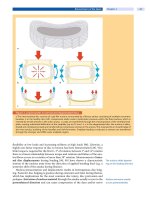
Figure 3. Postoperative MRI
MRI is helpful in differentiating recurrent herniation and scar formation. a T1 weighted contrast-enhanced MR image
showing a small recurrent disc protrusion (arrows). Note the slight contrast enhancement around the disc herniation
(arrowheads).
b T1 weighted contrast-enhanced MR image demonstrating intense contrast medium uptake (arrow-
heads) around the nerve root (arrow) indicating scar formation.
assessment of the grade of disc degeneration
better assessment of the neural compromise
MRI is also better than CT in the postoperative period in differentiating scar
from recurrent herniations. In this context, debate continues on the value of con-
trast enhancement to improve diagnostic accuracy. Contrast medium (gadolin-
ium-DTPA) administered intravenously helps to differentiate between epidural
fibrosis and recurrent herniations only in the late postoperative period [45]
(
Fig. 3a, b). However, MRI may be less sensitive in the diagnosis of a bony nerve
root entrapment.
Large disc extrusions and
sequestrations are rare in
asymptomatic individuals
The diagnostic accuracy of MRI (and any other imaging modality) is ham-
pered by the frequent occurrence of asymptomatic disc herniations [23]. The
prevalence of asymptomatic disc herniations ranges from 0% (sequestration) to
67% (protrusions) depending on the asymptomatic population studied and the
classification/definition of disc herniation [22, 23, 58, 148].
In children, simple disc protrusion must be differentiated from a slipped ver-
tebral apophysis, which most frequently occurs at the inferior rim of the L4 verte-
bral body and at the superior rim of the sacrum. Often T1-weighted images dem-
onstrate interposed tissue connected with the intervertebral disc. Adjacent verte-
bral discs may demonstrate a decrease in signal intensity [56].
Thoracic disc abnormalities
are frequent
Similar to the lumbar spine, disc alterations are frequently found in the tho-
racic spine of asymptomatic individuals. In an MRI study, 73% of the 90 asymp-
tomatic individuals had positive anatomical findings at one level or more. These
findings included disc herniation (37%), disc bulging (53%), annular tears
(58%) and deformations of the spinal cord (29%). This study documented the
high prevalence of anatomical irregularities, including herniation of a disc and
deformation of the spinal cord, on the magnetic resonance imagesof the thoracic
spine in asymptomatic individuals. The authors emphasized that these findings
represent MRI abnormalities without clinical significance [153].
Disc Herniation and Radiculopathy Chapter 18 489
Computed Tomography
Although CT has made substantial advances such as multiplanar reformations
due to multislice acquisitions, and the diagnostic accuracy has substantially
improved to the level of MRI, the vast majorityof surgeons today prefer MRI. The
In patients with contraindi-
cations for MRI, CT suffices
to diagnose disc herniation
application is therefore mostly limited to patients with contraindications for MRI
such as pacemakers and metal implants. However, in these cases CT is often com-
bined with myelography for better depiction of the nerve roots. Forristall et al.
studied MRI and CT myelography in the examination of 25 patients with a sus-
pected disc herniation who underwent surgery [46]. Compared with the surgical
findings, the accuracy of MRI was 90.3% and of CT myelography 77.4% [52]. In
another controlled comparison of myelography, CT, and MRI in 80 patients with
monoradicular sciatica, the largest amount of diagnostic information was gained
fromCT,followedbyMRIandmyelography.ItwasconcludedthatbothCTand
MRI were significantly informative and should be the first choice for imaging in
patients with suspected lumbar disc herniation [52].
Injection Studies
Selective nerve root blocks (SNRBs) were first described by Macnab [86] in 1971
as a diagnostic test for the evaluation of patients with negative imaging studies
Nerve root blocks
are applied for diagnostic
and therapeutic objectives
and clinical findings of nerve root irritation. Indications for selective nerve root
block are applied for a diagnostic as well as a therapeutic purpose. Diagnostic
selective nerve root blocks are indicated in cases with:
equivocal radicular leg or atypical arm pain
discrepancy between the morphologic alterations and the patient’s symp-
toms
multiple nerve root involvement
abnormalities related to a failed back surgery syndrome
Numerous studies [33, 38, 130, 139, 143] have shown that nerve root blocks are
helpfulincaseswherethisclosecorrelationislacking.Inthecaseofapositive
response (i.e., resolution of leg pain), the nerve root block allows the affected
nerveroottobediagnosedwithasensitivityof100%incaseswithdiscprotru-
sions and with a positive predictive value of 75–95% in cases of foraminal steno-
sis [33, 139] (see Chapter
10 ).
Neurophysiologic Assessment
Neurophysiologic studies do not offer any added diagnostic value in patients pre-
senting with the typical radicular symptoms and concordant imaging findings.
Neurophysiologic studies
can differentiate peripheral
and radicular neural
compromise
Furthermore, the neurophysiology has the disadvantage of exhibiting a latency in
the detection of neural compromise. Neurophysiologic studies are helpful in
equivocal cases and allow the differentiation of (see Chapter
12 ):
radicular versus peripheral nerve entrapment
additional neuropathic disease
symptomatic level in multilevel nerve encroachment
Urologic Assessment
Patients with severe back pain and sciatica frequently present with subjective dif-
ficulties in emptying their bladder, prompting the suspicion of a cauda equina
lesion. In this context, an ultrasonographic assessment of a putative urinary
retentio n is indicated. In the case of a normal neurologic assessment (i.e., normal
490 Section Degenerative Disorders
Ultrasonic assessment of
urinary retention is helpful
in diagnosing cauda equina
syndrome
perianal sensitivity and normal sphincter tonus), a urinary retention of less than
50 ml rules out a cauda lesion with a very high probability. If the neurologic
assessment is somewhat questionable, uroflowmetry is the next diagnostic step.
The absence of urinary retention together with a normal uroflow profile rules out
an acute cauda equina lesion.
Differential Diagnosis
A slipped vertebral
apophysis should not be
confused with a simple
disc herniation in children
A related entity inchildren is theso-called slipped vertebral apophysis, which can
be confused with a common disc herniation [29]. The ring apophysis is a weak
point during growth which can dislocate and migrate [19, 20]. It is believed that
disc material displaces the posterior ring apophysis from the vertebra and pro-
duces symptoms. Takata et al. [134] suggested a classification into three types:
simple separation of the entire margin
vertebral body avulsion fracture including the margin
localized fracture
In patients presenting with a typical radicular syndrome, an extraspinal etiology
is very rare [68] (see Chapter
11 ). Kleiner et al., in a study of 12125 patients who
had been referred during a 7-year period to a spine specialist, reported on 12 in
whom an extraspinal cause of radiculopathy or neuropathy of the lower extrem-
ity was discovered. The cause of the symptoms was an occult malignant tumor in
nine patients, a hematoma, an aneurysm of the obturator artery and a neurile-
moma of the sciatic nerve. The clinical course was characterized by a delayed
diagnosis (range 1 month to 2 years). In one-third of these patients, an operation
was performed on the basis of an incorrect diagnosis [68]. The most important
aspect is to search for rare differential diagnosis in cases with minor disc hernia-
tion and non-concordant symptoms.
Classification
Disc herniations can be classified according to their localization as:
median
posterolateral
lateral (intra-/extraforaminal)
Most disc herniations are located posterolaterally, i.e., where the posterior longi-
tudinal ligament is the weakest or absent. Mediolateral herniations are the main
localizations in the axial plane, whereas lateral disc herniations (
Fig. 4)areless
common (3–12%) [113].
Two anatomically different types of lumbar disc herniation have been
described with regard to a penetration of the posterior anulus and longitudinal
ligament, respectively. Disc herniations can be classified as:
contained
non-contained
Contained discs, which are completely covered by outer annular fibers or poste-
rior longitudinal ligament, are not in direct contact with epidural tissue. By con-
trast, non-contained discs are in direct contact with epidural tissue. This differ-
entiation is of importance for minimally invasive surgical procedures such as
chemonucleolysis or percutaneous disc decompression.
The most commonly used classification today is based on the MR morphology
of the disc herniation [90] (
Fig. 5).
Disc Herniation and Radiculopathy Chapter 18 491
ab
Figure 4. Lateral disc
herniation
a T2 weighted parasagit-
tal MR image of the fora-
men clearly showing the
sequestrated disc material
(arrow) pushing the nerve
root (arrowhead) cranially.
b Axial T2 weighted MR
image demonstrating a
large extraforaminal disc
extrusion (arrows).
ab
cd
Figure 5. Classification of lumbar disc herniation
Modified from Masaryk et al. [90].
Particularly the definition of disc bulging is problematic because of the frequent
finding (51%) in discs of asymptomatic individuals [23]. Therefore, this classifi-
cation is not helpful in discriminating symptomatic and asymptomatic disc her-
niation. A large disc extrusion in a wide spinal canalmay not produce symptoms.
On the contrary, a small disc protrusion in a congenitally narrow spinal canal
may cause a significant sensorimotor deficit (
Case Introduction). In a matched
pair control study, Boos et al. [23] demonstrated that the best discriminator
The size of the spinal canal
determines whether
a disc herniation becomes
symptomatic
between symptomatic and asymptomatic disc herniation is nerve root compro-
mise. Dora et al. [40] have shown that a symptomatic disc herniation is critically
dependent on the size of the spinal canal. These findings have led to the sugges-
tion [109] of a classification based on neural compromise (
Fig. 6).
492 Section Degenerative Disorders
63
Figure 6. Classification of nerve root compromise
Modified from Pfirrmann et al. [109].
Non-operative Treatment
Symptomatic lumbar disc herniation is acondition which exhibits a benign natu-
ral history. The patients who exhibit an absolute but rare indication for surgery
The natural history of disc
herniation is benign
are those who present with a cauda equina syndrome or a severe paresis (< MRC
Grade 3). The general goals of treatment are shown in
Table 1:
Table 1. General objectives of treatment
relief of pain regaining of activities of daily living
reversal of neurologic function return to work and leisure activities
Disc Herniation and Radiculopathy Chapter 18 493
Although based more on anecdotal experience than scientific evidence, several
factors have been associated with a favorable outcome of non-operative treat-
ment (
Table 2):
Table 2. Favorable indications for non-operative treatment
sequestrated disc herniation small herniation
young age mild disc degeneration
minor neural compromise mild to moderate sciatica
A detailed knowledge of the natural history is a prerequisite for advising patients
on the appropriate choice of treatment.
Natural History
Radicular symptoms
have a benign course
Thenaturalhistoryofsciaticaisgenerallybenign.Inmostcases,anacuteepi-
sode of sciatica takes a brief course. This phase is normally followed by a sub-
acute or chronic period of residual symptoms. Most patients recover within
1 month, but the recurrence rate is approximately 10–15% [21]. In most patients
with an extruded or sequestered herniation, the symptoms disappear with the
herniationwithinafewweeksormonths[112](
Case Introduction).
Extruded and sequestrated
discs have a strong
tendency to resolve
Bozzao et al. [25] evaluated prospectively the evolution of lumbar disc hernia-
tion using MRI. Follow-up MRI scan performed 6–15 months after baseline dem-
onstrated that 48% of patients had a reduction in size of their lumbar disc hernia-
tion greater than 70%, 15% had a reduction of 30–70%, 29% had no change in
size, and only 8% had an increase in size. There was a good clinical outcome in
71% of patients, and outcome correlated with the size reduction of the lumbar disc
herniation. The largest disc herniations showed the greatest degree of reduction in
size of lumbar disc herniation [25]. Komori et al. [69] investigated the morpho-
logic changes in 77 patients with disc herniation and radiculopathy by sequential
MRI. In 64 patients clinical improvement corresponded to a decrease of herniated
disc, and in 13 patients no changes on MRI could be noticed despite symptom
improvement. A decrease in size was observed in 46% of herniated discs within
3 months. Patients with marked morphologic changes showed significantly lower
duration of leg pain compared to patients with slight clinical improvement. In this
study morphologic changes corresponded to clinical outcome. Clinical improve-
ment tended to be earlier than morphologic changes. Dislocated herniated discs
frequently showed an obvious decrease in size, and in seven cases complete disap-
pearance was observed. The further the herniated disc migrated, the more
decrease in size could be observed [69]. However, disc protrusion, i.e., contained
discs, did not have a tendency to resolve over a 5-year period [24]. These findings
indicate that the highest chance for a resolution is exhibited by a sequestrated disc
in a young patient. The exact mechanism of disc disappearance is not known. The
contact between disc material and the vascular system may lead to an inflamma-
tory response, invasion of macrophages and phagocytosis of the fragment.
Conservative Measures
The key measures of non-operative treatment include:
Bed rest (<3 days)
Analgesics
Anti-inflammatory medication
Physiotherapy
494 Section Degenerative Disorders
Conservative treatment
has a 70 – 80 % success rate
Acute sciatica may be so severe that the patient cannot be mobilized. In this first
period, the most important goal is to reduce pain and gradually increase the
physical activity. It is also very important to reassure the distressed patient that
thecourseisusuallybenign.However,bedrestshouldnotbeprolongedformore
than 3 days [50, 140]. Anti-inflammatory drugs aim to tackle the inflammatory
component. Physiotherapy in the acute phases focuses on a pain reducing posi-
tioning. After the acute phases therapeutic exercises which strengthen the back
muscles and improve health status of the patients represent a cornerstone of con-
servative treatment. Exercise that improves trunk strength and balance and does
not exacerbate leg pain appears to be preferable.
Non-operative treatment
consists of analgesics,
NSAIDs and physiotherapy
However, the clinical course is quite different in patients with severe sciatica
and sensorimotor deficits. In a prospective study performed by Balague et al., 82
consecutive patients with severe acute sciatica were evaluated after 3, 6 and
12 months of conservative treatment. Only a minority of the patients (29%) had
fully recovered after 12 months and one-third had surgery within 1 year. The
The natural history of severe
sciatica is not benign
recovery of clinical symptoms and signs was observed mainly in the first
3months[14].
Nerve Root and Epidural Blocks
Nerve root blocks are
ausefuladjunctto
non-operative care
Epidural corticoid therapy of patients with sciatica is done in many centers based
on anecdotal experience, but the scientific evidence is still lacking for the effec-
tiveness of this treatment [81]. We prefer the transforaminal route for the appli-
cation of the steroids because the medication can be injected directly at the site
of the nerve root compromise under fluoroscopic guidance. The pain resolution
usually starts immediately with the main effect evident after 3 days. In patients
with minor sensorimotor deficits and radiculopathy, an effective pain treatment
can facilitate non-operative care and bridge the time until a potential resolution
of the herniation (
Case Introduction).
Buttermann reported on a prospective, non-blinded study in which patients
were randomly assigned to receive either epidural steroid injection or discec-
tomy after a minimum of 6weeks of non-invasive treatment. Patients who under-
went discectomy had the most rapid decrease in symptoms, with 92–98% of
patients reporting that the treatment had beensuccessful over the variousfollow-
up periods. Only 42–56% of the50 patients who had undergone the epidural ste-
roid injection reported that the treatment had been effective [27]. Carette et al.
reported on a randomized, double blind trial with 158 patients who had sciatica
due to herniated nucleus pulposus. Patients with epidural injections of methyl-
prednisolone acetate had no significantly better outcome after 3 months com-
pared to patients in the placebo group. They found no reduction of the cumula-
tive probability of back surgeryafter 12 months [30]. In another prospective, ran-
domized, double blind study, 55 patients with lumbar radicular pain and radio-
graphic confirmation of nerve root compression underwent a selective nerve-
root injection with either bupivacaine alone or bupivacaine with betamethasone.
Nerve root blocks can
reduce the need for surgery
by an effective pain
treatment
Of the 27 patients who had bupivacaine alone, nine elected not to have decom-
pression surgery, compared to 20 of the 28 patients who had bupivacaine with
betamethasone [114]. The authors concluded that selective nerve-root injections
of corticosteroids are significantly more effective than those of bupivacaine alone
in obviating the need for a decompression for a period of 13–28 months (see
Chapter
10 ).
Disc Herniation and Radiculopathy Chapter 18 495
Operative Treatment
General Principles
The goal of surgery in degenerative disc herniation is decompression of neural
structures. There must be a strong correlation between clinical symptoms and
radiological compression of nerve root [138]. Under these conditions, the results
of lumbar disc surgery are very favorable.
Absolute indications for surgery are a cauda equina syndrome or acute/sub-
acute compression syndrome of the spinal cord. In this case, surgerymust be per-
formed early. A further indication is significant muscle paresis (MRC Grade <3)
and severe incapacitating pain that do not respond to any form of pharmacologi-
cal therapy. A relative indication is a persistent radiculopathy unresponsive to an
adequate trial of non-operative care for at least 4 weeks (
Table 3):
Table 3. Indications for surgery
Absolute indications Relative indications
caudaequinasyndrome severe sciatica with large herniation non-responsive to analgesics and NSAIDs
severe paresis (MRC < 3) persistent mild sensorimotor deficit (MRC >3) and sciatica > 6 weeks
paraparesis/paraplegia (thoracic disc
herniation)
persistent radicular leg pain unresponsive to conservative measures for
6–12weeks
persistent radicular leg pain in conjunction with a narrow spinal canal
The indications for surgery in children and adolescents with slipped apophysis
are similar to those of true disc herniation and consist of removal of both the
slipped apophysis and prolapsed disc material [29, 47].
Surgery is indicated for
thoracic herniations with
spinal cord compromise
Indications for the surgical treatment of thora cic disc herniation must be
made very carefully because of the high rate of asymptomatic disc alterations.
However, indications for surgery are progressive myelopathy, lower extremity
weakness and pain refractory to conservative treatment.
Timing of Surgery
Cauda equina syndrome or
a progressive paresis should
be operated on as early
as possible
In the case of a cauda equina syndrome (Case Study 1), debate continues about
the correcttiming of surgery. Although it is recommended that surgeryshould be
performed as early as possible, Kostuik [73] has found that decompression does
not have to be performed in less than 6 h if recovery is to occur, as has been sug-
gested in the past. A meta-analysis of surgical outcomes of 322 patients with
cauda equina syndrome due to lumbar disc herniation showed no significantly
better outcome if surgery was performed within 24 h from the onset of cauda
equina syndrome compared to patients treated within 24–48 h. Significantly bet-
ter resolutions of sensory and motor deficits as well as urinary and rectal func-
tion were found in patients treated within 48 h compared to those operated on
after 48 h after onset of cauda syndrome [4]. Further, the study showed that pre-
operative back pain was associated with worse outcomes in urinary and rectal
function, and preoperative rectal dysfunction was associated with a worsened
outcome in urinary continence [4].
Prolonged conservative care
may be associated
with poorer outcome
in patients requiring surgery
McCulloch [93] stated that surgical intervention in patients with acute radicu-
lopathy who do not respond to conservative management should occur before
3 months of symptoms to avoid chronic pathologic changes within a nerve root.
It is an anecdotal finding that patients with long-standing preoperative symp-
toms are less likely to obtain satisfactory results from surgery than those in
whom symptoms are of short duration. In a prospective study, Rothoerl et al.
496 Section Degenerative Disorders
ab
cd
Case Study 1
A 35-year-old female felt a sharp pain in her back while bending down. Within 6 h she developed severe incapacitating
back pain. She realized there was increasing numbness in her buttocks and weakness in both feet which was more pro-
nounced on the left side. During the night, she consulted her family practitioner, who immediately referred her to our
emergency department. On admission, the patient was diagnosed with a sensorimotor deficit of S1 (MRC Grade 2), flac-
cid sphincter tonus, and inability to urinate with a full bladder. An emergency MRI was indicated. T1 and T2 weighted
images (
a, b) demonstrate a massive sequestrated disc filling up the lumbosacral spinal canal. Axial T1 and T2 weighted
MR images (
c, d) show the severe obliteration of the thecal sac and cauda equina compression (arrowheads). Immediate
surgery was indicated to decompress the cauda equina. Surgery consisted of a complete removal of the yellow ligament
and a partial laminectomy of S1 and L5 to completely remove the massive herniation. The patient completely recovered
from her pain but bladder dysfunction only resolved 6 months later.
[116] found that patients suffering for more than 60 days from disc herniation
have a statistically worse outcome than patients suffering for 60 days or less. The
authors recommend not to extend conservative treatment beyond 2 months and
are in favor of surgery after that time period.
Surgical Techniques
Chemonucleolysis
Chemonucleolysis
is effective for
selected indications
Chemonucleolysis is a percutaneous intradiscal injection of chymopapain into
the intervertebral disc. In 1963, Smith first described the dissolution of the disc
by chemopapain [126]. The role of chemonucleolysis as an alternative to disc sur-
Disc Herniation and Radiculopathy Chapter 18 497