Spinal Disorders: Fundamentals of Diagnosis and Treatment Part 45 doc
Bạn đang xem bản rút gọn của tài liệu. Xem và tải ngay bản đầy đủ của tài liệu tại đây (224.46 KB, 10 trang )
major reduction in the undesirable sequelae of surgical injury with improved recovery
and reduction in postoperative morbidity and overall costs.
Blumenthal S, Min K, Nadig M, Borgeat A (2005)Doubleepiduralcatheterwithropiva-
caineversusintravenousmorphine:acomparisonforpostoperativeanalgesiaaftersco-
liosis correction surgery. Anesthesiology 102:175 – 180
In this prospective study, following scoliosis correction surgery, continuous epidural
local anesthetics administered through two epidural catheters have been shown not only
to provide better postoperative analgesia compared to intravenous morphine, but also to
reduce side effects, improve bowel function and increase patient satisfaction.
References
1. Blumenthal S, Dullenkopf A, Rentsch K, Borgeat A (2005) Continuous infusion of ropiva-
caine for pain relief after iliac crest bone grafting for shoulder surgery. Anesthesiology
102:392–397
2. Blumenthal S, Min K, Nadig M, Borgeat A (2005) Double epidural catheter with ropivacaine
versus intravenous morphine: a comparison for postoperative analgesia after scoliosis cor-
rection operation. Anesthesiology 102:175–180
3. Blumenthal S, Borgeat A, Nadig M, Min K (2006) Postoperative analgesia after anterior cor-
rection of thoracic scoliosis: a prospective randomized study comparing continuous double
epidural catheter technique with intravenous morphine. Spine 31:1646–51
4. Blumenthal S, Min K, Marquardt M, Borgeat A (2007) Postoperative intravenous morphine
consumption, pain scores, and side effects with perioperative oral controlled-release oxyco-
done after lumbar disectomy. Anesth Analg 105:233–7
5. Boezaart AP, Eksteen JA, Spuy GV, Rossouw P, Knipe M (1999) Intrathecal morphine. Dou-
ble-blind evaluation of optimal dosage for analgesia after major lumbar spinal surgery.
Spine 24:1131–7
6. Carli F (1999) Perioperative factors influencing surgical morbidity: what the anesthesiolo-
gistsneedtoknow.CanJAnesth46:R70–79
7. Dearborn JT, Hu SS, Tribus CB, Bradford DS (1999) Thromboembolic complications after
major thoracolumbar spine surgery. Spine 24:1471–6
8. Ebraheim NA, Lu J, Yang H, Heck BE, Yeasting RA (2000) Vulnerability of the sympathetic
trunk during the anterior approach to the lower cervical spine. Spine 25:1603–6
9. Fang A, Hu SS, Endres N, Bradford DS (2005) Risk factors for infection after spinal surgery.
Spine 30:1460–5
10. Fujibayashi S, Shikata J, Yoshitomi H, Tanaka C, Nakamura K, Nakamura T (2001) Bilateral
phrenic nerve palsy as a complication of anterior decompression and fusion for cervical
ossification of the posterior longitudinal ligament. Spine 26:E281–6
11. Furnary AP, Zerr KJ, Grunkemeier GL, Starr A (1999) Continuous intravenous insulin infu-
sion reduces the incidence of deep sternal wound infection in diabetic patients after cardiac
surgical procedures. Ann Thorac Surg 67:352–60
12. Gajraj NM (2003) The effect of cyclooxygenase-2 inhibitors on bone healing. Reg Anesth
Pain Med 28:456–65
13. Gall O, Aubineau JV, Berniere J, Desjeux L, Murat I(2001) Analgesic effect of low-dose intra-
thecal morphine after spinal fusion in children. Anesthesiology 94:447–52
14. Glassman SD, Alegre G, Carreon L, Dimar JR, Johnson JR (2003) Perioperative complica-
tions of lumbar instrumentation and fusion in patients with diabetes mellitus. Spine J 3:
496–501
15. Jung A, Schramm J, Lehnerdt K, Herberhold C (2005) Recurrent laryngeal nerve palsy dur-
ing anterior cervical spine surgery: a prospective study. J Neurosurg Spine 2:123–7
16. Kehlet H (1994) Postoperative pain relief – what is the issue? Br J Anaesth 72:375–8
17. Kehlet H (1997) Multimodal approach to control postoperative pathophysiology and reha-
bilitation. Br J Anaesth 78:606– 17
18. Kehlet H (2000) Manipulation of the metabolic response in clinical practice. World J Surg
24:690–5
19. Kurz LT, Garfin SR, Booth RE, Jr. (1989) Harvesting autogenous iliac bone grafts. A review
of complications and techniques. Spine 14:1324–31
20. Mineiro J, Weinstein SL (1997) Delayed postoperative paraparesis in scoliosis surgery. A
case report. Spine 22:1668–72
21. Reuben SS, Connelly NR (2000) Postoperative analgesic effects of celecoxib or rofecoxib
after spinal fusion surgery. Anesth Analg 91:1221–5
22. RoderickP,FerrisG,WilsonK,HallsH,JacksonD,CollinsR,BaigentC(2005)Towardsevi-
424 Section Peri- and Postoperative Management
dence-based guidelines for the prevention of venous thromboembolism: systematic reviews
of mechanical methods, oral anticoagulation, dextran and regional anaesthesia as thrombo-
prophylaxis. Health Technol Assess 9:1–78
23. Sagi HC,Beutler W, Carroll E,Connolly PJ (2002) Airway complications associated with sur-
gery on the anterior cervical spine. Spine 27:949–53
24. Schmid RL,Sandler AN, Katz J (1999) Use and efficacy of low-dose ketamine inthe manage-
ment of acute postoperative pain: a review of current techniques and outcomes. Pain
82:111–25
25. Sprung J, Abdelmalak B, Gottlieb A, Mayhew C, Hammel J, Levy PJ, O’Hara P, Hertzer NR
(2000) Analysis of risk factors for myocardial infarction and cardiac mortality after major
vascular surgery. Anesthesiology 93:129–40
26. Stockl B, Wimmer C, Innerhofer P, Kofler M, Behensky H (2005) Delayed anterior spinal
artery syndrome following posterior scoliosis correction. Eur Spine J 14:906–9
27. Tobias JD (2004) A review of intrathecal and epidural analgesia after spinal surgery in chil-
dren. Anesth Analg 98:956–65
28. van den Berghe G, Wouters P, Weekers F, Verwaest C, Bruyninckx F, SchetzM, Vlasselaers D,
Ferdinande P, Lauwers P, Bouillon R (2001) Intensive insulin therapy in the critically ill
patients. N Engl J Med 345:1359–67
29. Vedantam R, Lenke LG, Bridwell KH, Haas J, Linville DA (2000) A prospective evaluation of
pulmonary function in patients with adolescent idiopathic scoliosis relative to the surgical
approach used for spinal arthrodesis. Spine 25:82–90
Postoperative Care and Pain Management Chapter 16 425
17
Degenerative Disorders of the
Cervical Spine
Massimo Leonardi, Norbert Boos
Core Messages
✔
Age-related changes of the cervical spine can
lead to cervical spondylosis, disc herniation and
spondylotic radiculopathy/myelopathy
✔
Neck pain often lacks a clear morphological
correlate (i.e. is non-specific)
✔
Cervical spondylosis more frequently causes
radiculopathy than disc herniation and pre-
dominantly affects C5/6 and C6/7
✔
Mechanical compression and inflammatory
changes cause the clinical syndrome of radicu-
lopathy
✔
Cervical spondylotic myelopathy is caused by
static (spinal canal stenosis), dynamic (instabil-
ity), vascular and cellular (cell injuries, apopto-
sis) factors
✔
The cardinal symptom of cervical radiculopathy
is radicular pain with or without a sensorimotor
deficit
✔
Early symptoms of cervical myelopathy are
“numb, clumsy, painful hands” and disturbance
of fine motor skills. Late symptoms comprise
atrophy of the interosseous muscles, gait dis-
turbance, ataxia and symptoms of progressive
tetraparesis
✔
The diagnostic accuracy of functional radio-
graphs to reliably identify segmental instability
is low. Instability remains a clinical diagnosis
✔
MRI is the imaging modality of choice for quan-
tifying the extent of degenerative alterations
and spinal cord compression
✔
CT myelography favorably demonstrates spurs,
ossifications and foraminal stenosis in relation
to the neural structures
✔
Neurophysiological studies are helpful in diag-
nosing subclinical myelopathy and differentiat-
ing radiculopathy from peripheral neuropathy
✔
The natural history of radiculopathy is benign
while the spontaneous course of myelopathy is
characterized either by long periods of stable
disability followed by episodes of deterioration
or a linear progressive course
✔
Scientific evidence for treatment guidelines of
degenerative cervical disorders is poor
✔
Neck pain is treated non-operatively in the vast
majority of patients. Indications for surgery are
rare
✔
Cervical radiculopathy frequently responds
favorably to conservative care. Surgery is indi-
cated in patients with persistent symptoms or
progressive neurological deficits
✔
The gold standard of treatment of radiculopa-
thy is anterior discectomy and fusion, resulting
in a favorable outcome in 80– 90% of patients
✔
Alternative methods (i.e. additional anterior
plate fixation, cage fusions, total disc arthropla-
sty, or minimally invasive decompressions with-
outfusion)havenotbeenshowntoresultina
superior outcome
✔
Mild cervical myelopathy without progression
can be treated conservatively. Surgery is indi-
cated in moderate to severe myelopathy. Com-
plete recovery of advanced myelopathy is rare
and early surgery is therefore indicated
✔
The principal aim of surgery for cervical spon-
dylotic myelopathy is the decompression of the
spinal cord. The surgical techniques include
multilevel discectomies or corpectomies with
or without instrumented fusion, laminectomy
with or without instrumented fusion or lamino-
plasty.
✔
The choice of technique is dependent on the
target pathology and patient characteristics
Degenerative Disorders Section 429
ab
c
d
Case Introduction
A 28-year-old female suffered from neck and arm pain for
3 weeks without neurological deficits. She was referred for
physical therapy and manipulation. At the fourth session,
the patient felt an excruciating sharp pain in her neck subse-
quent to a manipulation. She was unable to stand and
developed a rapidly progressive tetraparesis sub C6. The
patient was referred for emergency diagnosis and treat-
ment. A lateral radiograph (
a) did not show any evidence for
a fracture/dislocation. MRI revealed a massive disc hernia-
tion (arrow) with severe spinal cord compression (arrow-
heads)atthelevelofC6/7(
b, c). Immediate spinal cord
decompression was prompted by anterior cervical discec-
tomy, sequestrectomy and fusion (Robinson-Smith tech-
nique) (
d). The patient improved rapidly after the surgery. At
1-year follow, the patient had full neurological recovery and
was symptom-free.
Epidemiology
Degenerative alterations of the cervical spine are usually referred to as cervical
spondylosis. This entity represents a mixed group of pathologies involving the
intervertebral discs, vertebrae, and/or associated joints and can be due to aging
(“wear and tear”, degeneration) or secondary to trauma. The predominant clini-
cal symptom is neck pain, which is often associated with shoulder pain. The
degenerative alterations can lead to a central or foraminal stenosis compromising
nerve roots or spinal cord (
Fig. 1
). These pathologies are termed cervical spondy-
lotic radiculopathy (CSR) and cervical spondylotic myelopathy (CSM), respec-
tively. CSR should be differentiated from disc herniation related radiculopathy.
The annual incidence of
neck pain is about 15 %
In a Dutch national survey, there was an incidence of 23.1 per 1000 person-
years for neck pain and 19.0 per 1000 person-years for shoulder symptoms [38].
Dutch general practitioners were consulted approximately seven times each week
for a complaint relating to the neck or upper extremity; of these, three were new
complaints or new episodes [38]. The annual incidence of neck pain was14.6% in
a cohort of 1100 randomly selected Saskatchewan adults, 0.6% of whom devel-
oped disabling neck pain [66]. Women were more likely to develop neck pain
430 Section Degenerative Disorders
ab
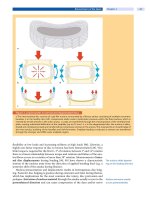
Figure 1. Cervical spondylosis
a, b Age-related changes can lead to disc herniations, cervical spondylosis, osteophyte formations, facet joint osteoar-
thritis, and compromise of the exiting nerve roots and the spinal cord.
than men [66]. In a Swedish survey on 4415 subjects, a prevalence rate of 17% for
neck pain was found. Fifty-one percent of the neck pain subjects also had chronic
low back pain [108]. A history of a neck injury was reported by 25% of patients
with neck pain [108]. In a prospective longitudinal investigation in France, the
prevalence and incidence rates of neck and shoulder pain were assessed in an
Neck pain is often
associated with shoulder
pain and LBP
occupational setting [48]. The authors found that the prevalence (men 7.8%,
women 14.8% in 1990) and incidence (men 7.3%, women 12.5% for the period
1990–1995) of chronic neck and shoulder pain increased with age, and were
higher among women than men in every birth cohort examined. The disappear-
ance rate of chronic neck and shoulder pain decreased with age. The paper high-
lighted that adverse working conditions (e.g. repetitive work under time con-
straints, awkward work for men, repetitive work for women) contributed to the
development of neck and shoulder pain, independently of age [48].
The most frequent
radiculopathy is C6 and C7
Cervical radiculopathy is much less frequent than neckand shoulder pain with
a prevalence of 3.3 cases per 1000 people. The peak annual incidence is 2.1 cases
per 1000 and it occurs in the 4thand 5th decades of life [278]. In a Sicilian popula-
tion of 7653 subjects [237], a prevalence of 3.5 cases per 1000 was found for cervi-
cal spondylotic radiculopathy, which increased to a peak at age 50–59 years, and
decreased thereafter. The age-specific prevalence was consistently higher in
women [237]. An epidemiological survey of cervical radiculopathy at the Mayo
Clinic in Rochester [222] revealed that the average annual age-adjusted incidence
rate per 100000 population for cervical radiculopathy was 83.2 (107.3 for males,
63.5 for females). The age-specific annual incidence rate per 100000 population
reached a peak of 202.9 for the age group 50–54 years. A history of physical exer-
tion or trauma preceding the onset of symptoms occurred in only 14.8% of cases.
Themediandurationofsymptomspriortodiagnosiswas15days.Amono-radi-
culopathy involving C7 nerve root was most frequent, followed by C6.
The most frequent cause
of cervical radiculopathy
is spondylosis
A confirmed disc protrusion was responsible for cervical radiculopathy in
21.9% of patients; in 68.4% it was related to spondylosis. During the median
duration of follow-up of 4.9 years, recurrence of the condition occurred in 31.7%,
Degenerative Disorders of the Cervical Spine Chapter 17 431
and 26% underwent surgery for cervical radiculopathy. At last follow-up, 90% of
patients were asymptomatic or only mildly incapacitated due to cervical radicu-
lopathy [222].
OPLL is a frequent cause
of cervical myelopathy
in Asians
The epidemiology data of cervical spondylotic myelopathy have not been well
explored. The aging process results in degenerative changes of the cervical spine
that,inadvancedstages,cancausecompressionofthespinalcord.Itisthemost
common cause of spinal cord dysfunction in the elderly [300]. A special form of
cervical myelopathy is caused by the ossification of theposterior longitudinal lig-
ament (OPLL). It is a multifactorial disease in which complex genetic and envi-
ronmental factors interact. This disease is especially found in the Asian popula-
tion[134].IntheJapanesepopulation,thereportedprevalenceraterangesfrom
1.8% to 4.1% [169, 196, 254]. The prevalence rate of OPLL in the cervical spine
was significantly lower in the Chinese (0.2%) and Taiwanese populations (0.4%)
[169]. A radiographic evaluation of cervical spine films at the Rizzoli Orthopae-
dic Institute in Bologna, Italy, revealed a prevalence of 1.83% with a peak in the
45–64 year age group (2.83%). This prevalence was much higher than that so far
reported in Caucasians [266].
Pathogenesis
Age-related changes
areonlyweaklycorrelated
with symptoms
Age-related changes of the intervertebral disc initiate the degenerative cascade
and lead to a progressive deterioration of the motion segment (see Chapter
4 ).
The disc height decreases leading to disc bulging as a result of progressive
changes to the extracellular matrix of the disc. Microinstability results in reactive
hyperostosis with formation of osteophytes at the vertebral endplates which can
penetrate into the spinal canal and compromise the spinal cord and nerve roots
(
Fig. 1). Osteophytes of the uncovertebral and facet joints reduce the mobility of
the segment. Segmental instability leads to a hypertrophy of the yellow ligament
and causes a narrowing of the spinal canal and foramen. During later stages of
segmental degeneration, kyphosis of the cervical spine can occur and further
compromise the spinal cord and nerve roots [250]. Although cervical spondylo-
sis can lead to symptoms such as neck pain, CSR and CSM, we should bear in
mind that the vast majority of changes are asymptomatic [29].
Neck Pain
A morphological correlate
is rarely found for neck pain
The most common causes of subaxial neck pain are muscular and ligamentous
factors related to improper posture, poor ergonomics and muscle fatigue [223].
The intervertebral disc and facet joints are richly innervated [51, 81, 176]. Degen-
erative alterations can therefore lead to pain generation (see Chapters
4 , 5 )
representing a specific cause of neck pain. In the vast majority of cases, however,
no structural correlate can be found to explain axial neck pain, i.e. neck pain
most often is non-specific.
Cervical Disc Herniation
Disc extrusions
and sequestrations tend
to resorb with time
Cervical radiculopathy due to disc herniation usually occurs during early stages
of motion segment degeneration and mainly affects individuals in the 4th and
5th decades of life [222]. The main causes of disc herniation are age-related
changesoftheintervertebraldiscmakingtheanulusfibrosussusceptibletofis-
suring and tearing (see Chapter
4 ). The so-called “soft herniation” exhibits a
chance for spontaneous resorption particularly in cases with disc extrusion and
sequestration. Vascular supply probably plays a role in the mechanism of resorp-
432 Section Degenerative Disorders
tion [177]. The phase and position of the extrusion were identified as significant
factors affecting cervical disc herniation resorption [177].
Spondylotic radiculopathy
is caused by mechanical
and inflammatory factors
The pathophysiology of radiculopathy involves both mechanic al deformation
and chemical irritation of the nerve roots [232]. The release of proinflammatory
cytokines and nerve growth factor (NGF) was recently identified to play a major
role in the development of radicular arm pain [272]. Our current understanding
of the pathogenesis of disc herniation related radiculopathy is mainly based on
studies of the lumbar spine. We therefore prefer to provide a detailed overview of
this issue in Chapter
18 .
Cervical Spondylotic Radiculopathy
Mechanical nerve root
compromise is not closely
related to symptoms
Spondylotic radiculopathy develops during later stages of motion segment
degeneration and is caused by osteophytes of the endplates, facet and uncoverte-
bral joints narrowing the spinal canal and neuroforamen (
Fig. 1). These radicular
entrapments (often referred to as “hard herniations”) do not spontaneously
improve and usually exhibit a slowly progressing deterioration. Humphreys et al.
[130] showed that in symptomatic patients foraminal heights, widths and areas
are smaller than in asymptomatic controls. Foraminal stenosis can cause perma-
nent or intermittent mechanical irritation of the nerve roots and can lead to hyp-
oxia of the nerve root and dorsal root ganglion. The subsequent release of proin-
flammatory cytokines and NGF is responsible for the generation of radicular
pain [272]. Spontaneous resolution of these inflammatory processes can occur
and explain why some patients can have long asymptomatic periods. This is sup-
ported by the finding that the incidence of radiculopathy does not closely corre-
late with age although there is an age-related increase of radiological alterations
[278].
Cervical Spondylotic Myelopathy
Cervical spondylosis
is the most frequent cause
of myelopathy in Caucasians
In contrast to the lumbar spine, obliteration of the spinal canal by a disc hernia-
tion or osseous spurs can lead to severe neurological deficits because of a direct
compromise of the spinal cord resulting in the clinical syndrome of myelopathy.
Myelopathy can result from (
Table 1):
Table 1. Etiology of cervical myelopathy
Acute Chronic
large disc herniation cervical spondylosis
traumatized narrow spinal canal ossified posterior longitudinal ligament (OPLL)
CSM generally can cause a variety of neurological disturbances like spastic gait,
ataxia, hyperreflexia, sensory impairment, sphincter disturbances, and motor
deficit. The degree and combination of each symptom can vary extensively and
there is no close relationship between the extent of compression and clinical
symptoms. The pathophysiology of CSM involves [16, 32, 80]:
static factors
dynamic factors
biologic and molecular factors
Static Factors
A narrow spinal canal
predisposes to CSM
The normal sagittal diameter of the spinal canal (C3–7) is 14–22 mm [44, 74,
119, 207] with enough space for the neural elements, ligaments and epidural fat.
Degenerative Disorders of the Cervical Spine Chapter 17 433
The spinal cord occupies about three-quarters of the size of the spinal canal in
the subaxial spine [80]. A narrowing of the spinal canal size can result from disc
degeneration, vertebral osseous spurs, osteophyte formation at the level of the
facet joints, and yellow ligament hypertrophy, calcification or ossification [205].
Patients with a congenitally narrow spinal canal (<13 mm) have a higher risk
for the development of symptomatic cervical myelopathy [9, 74]. Penning et al.
[209] showed that concentric compression of the cord resulted inlong tract signs
only after the cross-sectional area of the cord had been reduced by about 30% to
avalueofabout60mm
2
or less. This is in line with findings by Teresi et al. [267],
who reported that spinal cord compression was observed in seven of 100 asymp-
tomatic patients. The percentage of cord area reduction never exceeded 16%
andaveragedapproximately7%.Oginoetal.[194]foundthatthedegreeofcord
compromise was in good correlation with the ratio of the anteroposterior diam-
eter to the transverse diameter, designated as an anteroposterior compression
ratio.
Dynamic Factors
Instability and kyphosis
aggravate CSM
Dynamic compression appearstoplayamajorroleinCSM.Flexionofthecervi-
cal spine causes a lengthening of the spinal cord which can be stretched over pos-
terior vertebral spondylosis. In an already narrow canal this motion may damage
anterior spinal cord structures [80]. Extension of the cervical spine provokes a
buckling of the ligamentum flavum with dorsal compression of the spinal cord
combined with anterior compression due to posterior disc bulging and/or verte-
bralbodyosteophytes[80].Thisresultsinapincer effect that places the neurons
of the spinal cord at great risk [40, 201, 205]. Advanced disc degeneration and
height loss may allow for a translative movement with spondylolisthesis in an
anterior or posterior direction decreasing the spinal canal by 2–3 mm. Loss of
disc height and hypermobility of facet joints can lead to loss of lordosis and
finally to ky phosis. Dynamic changes and increasing kyphosis place increased
strain and shear forces on the spinal cord [16].
Biologic and Molecular Factors
Corticospinal tracts are very
vulnerable to ischemia
Vascular factors can play a significant role in the development of myelopathy.
Mechanical and vascular mechanisms can add to each other. A compressed spi-
nal cord will not tolerate a diminished perfusion and a marginally vascularized
cord will not tolerate compression [98, 252]. Blood supply of the different tracts
in the spinal cord impacts on the pattern of ischemia and subsequent axonal
degeneration. Transverse perforating vessels arising from the anterior sulcal
arterial system are very susceptible to tension and likely to cause early ischemia
and degeneration of the gray matter and medial white matter (anterior spinal
cord syndrome) [87]. Spinal cord ischemia especially affects oligodendrocytes,
which results in demyelination exhibiting features of chronic degenerative disor-
ders (e.g. multiple sclerosis) [67]. Particularly the corticospinal tracts are very
vulnerable and undergo early demyelination initiating the pathologic changes of
cervical myelopathy [40, 80, 95, 255].
Static mechanical factors causing compression, shear and distraction and
dynamic repetitive compromise are seen as primary injury whereas ischemia
and the subsequent cascade at the cellular and molecular level are considered as
secondary injury. These secondary mechanisms include [80, 151, 204]:
glutamatergic toxicity
free radical-mediated cell injury
434 Section Degenerative Disorders
cationic-mediated cell injury
apoptosis
Secondary cellular and
molecular changes further
compromise spinal cord
function
Traumatic and ischemic injuries lead to an increase in extracellular levels of glu-
tamate, which is assumed to be excitotoxic leading to neuronal death. The gener-
ation of free radicals and lipid peroxidation reactions may render neurons sensi-
tive to the excitotoxic effects of glutamate [80]. The failure of the Na
+
-K
+
-adeno-
sine triphosphatase pump results in an accumulation of axonal Na
+
through non-
inactivated Na
+
channels. The Na
+
channels can permit intracellular Ca
2+
entry
activating enzymes (e.g. calpain, phospholipases and protein kinase C) resulting
in cytoskeletal injury [80]. Apoptosis represents a fundamental biological pro-
cess that contributes to the progressive neurological deficits observed in spondy-
lotic cervical myelopathy [151]. A common finding of many investigations of spi-
nal cord disorders is the observation that oligodendrocytes appear to be particu-
larly sensitive to a wide range of oxidative, chemical, and mechanical injuries, all
of which lead to oligodendrocyte apoptosis [67, 167, 255]. The early apoptotic
loss of oligodendrocytes is assumed to precede axonal degeneration and partici-
pate in the expression of profound and irreversible neurological deficits caused
by destructive pathologic spinal cord changes under chronic mechanical com-
pression seen in CSM [16, 151].
Gene polymorphism
is associated with OPLL
Aparticularentityistheossification of the posterior longitudinal ligament
(OPLL), which particularly affects Japanese individuals and leads to a progres-
sive stenosis of the cervical spinal canal and subsequently CSM [254]. OPLL is a
multifactorial disease in which complex genetic as well as environmental factors
play a major role [134, 282]. Gene analysis studies identified specific collagen
gene polymorphisms that may be associated with OPLL, which encode for extra-
cellular matrix proteins [134]. Recently, it has been shown that polymorphism of
the n ucleotide pyrophosphatase (NPPS) gene plays an important role in the
pathogenesis of OPLL [155, 186]. NPPS is a membrane-bound glycoprotein
assumed to produce inorganic pyrophosphate which acts as a major inhibitor of
calcification and mineralization. Furthermore, the involvement of many growth
factors and cytokines, including bone morphogenetic proteins and transforming
growth factor- , were identified in various histochemical and cytochemical anal-
yses. Recent epidemiological studies confirmed an earlier finding that diabetes
mellitus is a distinct risk factor for OPLL [134, 282].
Clinical Presentation
Patients with a degenerative cervical disorder can present with a spectrum of
symptoms ranging from benign, self-limiting neck pain to excruciating upper
extremity pain with progressive severe neurological deficits. Theprimary goal of
the clinical assessment is to differentiate (see Chapter
8 ):
specific cervical disorders, i.e. with pathomorphological correlate
non-specific cervical disorders, i.e. without evident pathomorphological
correlate
In specific cervical disorders a pathomorphological (structural) correlate can be
found which is consistent with the clinical presentation. Accordingly, in non-spe-
cific cervical disorders no such correlate can be detected. Patients can only be
classified in the latter group after they have undergone a thorough clinical and
diagnostic work-up. Patients frequently present with pain syndrome located in
the neck-shoulder-arm region, which sometimes makes it difficult to differenti-
ate neck and shoulder problems. Before the diagnosis of non-specific neck pain
Degenerative Disorders of the Cervical Spine Chapter 17 435
can be made, it is mandatory to exclude differential diagnoses, e.g. shoulder
pathology,or nerve entrapment syndromes. In this chapter,we focus on a pathol-
ogy oriented approach. General aspects of history-taking and physical examina-
tion are presented in Chapter
8 .
History
Differentiate neck
and arm pain
The predominant symptom for patients with degenerative cervical disorders is
pain. Rarely, patients present with neurological symptoms without pain. The key
question in differentiating the origin of patients’ pain is (
Table 2):
Table 2. Key question
How much of your pain is in your arm(s)/hand(s) and in your neck/shoulder(s)?
In patients with predominant arm pain, the patients’ symptoms are frequently
part of a radicular or myelopathic syndrome (
Table 3):
Table 3. Cardinal symptoms of radiculopathy and myelopathy
Radicular syndrome Myelopathic syndrome
radicular pain numb, clumsy, painful hands
sensory disturbances difficulty writing
motor weakness disturbed fine motor skills
reflex deficits difficulty walking
symptoms of progressive tetraparesis (late)
bowel and bladder dysfunction (late)
The key finding in patients with a radicular syndrome is radicular pain,i.e.pain
following a dermatomal distribution. The sensory, motor and reflex deficits are
dependent on the affected nerve root. It is important to note that the pain not
only radiates into the skin (dermatome) but also into the muscles (my otomes)
and bone (sclerotomes)(seeChapter
8 ).
Differentiation of radicular
and referred arm pain
is sometimes difficult
The referred type of pain is sometimes difficult to differentiate from non-spe-
cific radiating pain, which is not caused by a nerve root compromise. The radicu-
lar pain can be preceded by neck pain which results from an incipient disc herni-
ation, i.e. stretching of the anulus.
Cer vical radiculopathy can be caused by a:
disc herniation
spondylotic stenosis
Disturbed fine motor skills
may indicate CSM
In contrast to radiculopathy, a myelopathic syndrome can begin very subtly and
can therefore pose a diagnostic challenge. The leading symptoms are numb,
clumsy, painful hands [192, 198]. The examiner should particularly ask for dis-
turbed fine motor skills (particularly writing skills). The degree of neck pain is
largely variable. The pathoanatomical cause of the myelopathy characterizes the
clinical presentation. Patients with cervical myelopathy can present with a broad
spectrum of signs and symptoms. Cervical myelopathy is a clinical syndrome
and dysfunction of the spinal cord, depending on the magnitude of spinal cord
dysfunction and its chronicity. Early symptoms include diminished dexterity
and subtle changes in balance and gait. Difficulty in manipulating small objects
(e.g. buttons, needles) is typical. Myelopathy can concomitantly appear with
radiculopathy since central stenosis is often combined with foraminal stenosis.
In patients with predominant neck pain, the patients’ symptoms are fre-
quently part of a so-called spondylotic syndrome (
Table 4).
436 Section Degenerative Disorders