Spinal Disorders: Fundamentals of Diagnosis and Treatment Part 29 doc
Bạn đang xem bản rút gọn của tài liệu. Xem và tải ngay bản đầy đủ của tài liệu tại đây (185.38 KB, 10 trang )
The diagnostic accuracy
of imaging studies is limited
in neck and back pain
However, the vast majority of patients with back and neck pain present with no
or only minor structural alterations (e.g. disc protrusion, minor nerve root com-
pression and mild facet joint osteoarthritis). The same alterations can be found
with high prevalence in an asymptomatic population [5, 6, 12, 56]. The predictive
value of MRI in diagnosing symptomatic disc alterations is therefore limited [12].
Spinal injection studies have been advocated to differentiate a symptomatic from
an asymptomatic lesion because of the low positive predictive value of imaging
studies [56, 74, 110].
The rationale for spinal injections is therefore either to:
provoke spinal pain or
eliminate spinal pain
The rationale of injection
studies is to eliminate or
provoke the patient’s pain
which is presumably related to the target spinal structure. A large number of
studies have accumulated in the literature which describe application, techniques
and potential benefits. However, the lack of a clear understanding of the pain
pathogenesis and therefore a missing gold standard makes it difficult to decide
on the diagnostic impact of these injections [11, 96].
Injection studies can have
a therapeutic effect
The frequent use of spinal injections as a diagnostic tool has indicated that
these injections may also have a therapeutic value. The second rationale is to use
spinal injections to support non-operative treatment in patients suffering from
nerve root compromise, spinal stenosis, or facet joint osteoarthritis. However,
debate continues whether the rationale for the use of spinal injections is evidence
based [80, 119, 124]. Despite the widespread use of these spinal injections, their
application is widely based on anecdotal experience and at best is evidence
enhanced but definitely is not evidence based.
Lumbar and Cervical Nerve Root Blocks
Selective nerve root blocks (SNRBs) were first described by Macnab [67] and co-
workers in 1971 as a diagnostic test for the evaluation of patients with negative
imaging studies and clinical findings of nerve root irritation.
Radiculopathy is caused
by a combination of
mechanical compression
and inflammation
The high prevalence of asymptomatic disc herniations [6, 12, 13, 56] is often
a prompt for a verification of the morphological correlate for equivocal radicu-
lar pain. Pain pathogenesis in cases with nerve root compromise is caused not
only by a mechanical compression but also by a chemical irritation due to pro-
inflammatory cytokines [17, 18, 83–85]. The rationale for nerve root blocks is
therefore to tackle the inflammatory component of the nerve root compromise
Nerverootblockstacklethe
inflammatory component
of radiculopathy
[83–85]. The peri-radicular foraminal nerve root block is always performed
under image intensifier control, allowing for a direct application of the anti-
inflammatory agent to the target nerve root [87]. The objective of a therapeutic
selective nerve root block is not to cure the patient by interfering with pathoge-
netic factors that are responsible for sciatica but rather to provide temporary
relief from peak pain during the time required for spontaneous resolution of
radiculopathy.
Indications
Indications for selective nerve root blocks are applied for a diagnostic as well as
a therapeutic purpose (
Table 1).
262 Section Patient Assessment
Table 1. Indications for selective nerve root blocks
Diagnostic indications
equivocal radicular leg or arm pain
discrepancy between the morphological alterations and the patient’s symptoms
multiple nerve root involvement
abnormalities related to a failed back surgery syndrome
Therapeutic indications
acute radicular leg or arm pain in the absence of major neurological deficits
subacute radiculopathy not responsive to non-operative care
mild to moderate foraminal stenosis
Technique
Perineural infiltrations are
performed at the foraminal
exit
It must be stressed that injections into the nerve root must be avoided because of
the potential risk of permanent nerve root damage. The injection which is rec-
ommended is a perineural infiltration. The treatment agent used for this proce-
dure varies between studies. Most authors use a mixture of 2 ml 0.25% bupiva-
caine and 40 mg methylprednisolone [57, 81, 91]. Others have used 1.5 ml 2%
lidocaine with 9 mg betamethasone acetate [65]. There is no study to suggest
whichisbestintermsoftreatmentoutcome.Wereportherethetechniques
which work best in our hands.
Lumbar Nerve Root Blocks
Lumbar nerve root blocks
are done under fluoroscopy
control
The standard technique is an outpatient procedure without premedication
which can be done either in a radiology suite or an operating theater. The
patients lie prone, with the injected side elevated approximately at a 30° angle.
The final degree of rotation is determined with fluoroscopy. The goal of position-
ing is to allow for a perpendicular needle tract towards the classic injection site
underneath the pedicle. The so-called safe triangle is defined by the pedicle
superiorly, the lateral border of the vertebral body laterally, and the outer margin
of the spinal nerve medially (
Fig. 1). After skin disinfection, a local anesthetic is
administered using a 25-gauge needle. With fluoroscopic guidance, a 22-gauge
needle is then advanced through a shorter 18-gauge needle to the region of the
safe triangle. For accessing the L5 and S1 nerve root the standardized technique
is adapted slightly. For the L5 root, the needle usually has to be tilted in a cranio-
caudal direction in order to bypass the iliac wing. The S1 infiltration is per-
formed through the dorsal S1 foramen. The needle position is checked with
biplanar fluoroscopy, followed by an injection of 0.3 ml of contrast material.
Anteroposterior spot radiographs are obtained for the documentation of the
contrast material distribution. Two milliliters of 0.2% ropivacaine and 40 mg of
triamcinolone are slowly injected.
Pain and neurology must
be assessed prior to and
after the block
After the procedure, the subjective perception of numbness in the dermatome
is regarded as a quality control for a correct injection and should be noted. Some-
times muscle weakness occurs in accordance with the innervation pattern. Pain
relief should be assessed prior to and 15–30 min after the injection using a visual
analogue scale.
Cervical Nerve Root Blocks
Cervical nerve root blocks
should be done under
CT fluoroscopic guidance
We recommend performing cervical foraminal injections with CT fluoroscopic
guidance to improve safety (
Fig. 2). Misplacement of the needle can have deleteri-
ous consequences. The patient lies supine, with the head turned to the contralat-
eral side. After skin disinfection and administration of local anesthetics, a
Spinal Injections Chapter 10 263
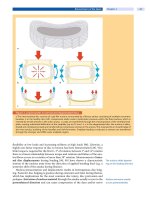
Figure 1. Lumbar nerve root block
The needle is positioned in the so-called “safe triangle”
directly underneath the pedicle but superior and lateral to
the existing nerve root. The image shows correct needle
placement and an indirect radiculography.
Figure 2. Cervical nerve root block
CT guidance for cervical facet nerve root blocks is pre-
ferred because of the spatial relationships to the spinal
cord to avoid neurological damage. The image shows a
CT-guided nerve root block after application of contrast
medium at the foramen intervertebrale C5/6.
264 Section Patient Assessment
22-gauge needle is introduced under fluoroscopic guidance by using a lateral or
slightlyanterolateralapproachdorsaltothelargecervicalvessels.Theneedleis
aimed at the posterior border of the neural foramen, dorsal to the vertebral
artery. Initially, 0.3 ml of iopamidol is injected to verify the correct position of the
needle tip. The intraforaminal distribution of the contrast material is docu-
mented with a single CT-fluoroscopic scan. A maximum of 40 mg of crystalloid
corticosteroid suspension-triamcinolone plus 1 ml of 0.2% ropivacaine is slowly
injected. Pain relief should be assessed prior to and 15–30 min after the injection
using a visual analogue scale.
Complications
Complications are rare after
lumbar nerve root blocks
Complications associated with nerve root blocks are rare. However, the following
complications have been reported [14, 52]:
transient non-positional headache (3.1%)
increased backache (2.4%)
increased leg pain (0.6%)
facial flushing (1.2%)
vasovagal reaction (0.3%)
hypertension (0.3%)
increased blood sugar (0.3%)
dural puncture
Houten et al. [51] presented three cases with persisting paraparesis and paraple-
gia which occurred immediately after administration of a lumbar nerve root
block. In each instance, penetration of the dura was not thought to have
occurred. The sudden onset of neurological deficit and the imaging changes
pointed to a vascular causation. A devastating complication reported by Rozin et
Cervical nerve root blocks
mayresultinspinalcord
injury
al. [95] described a case of a death associated with a C7 cervical nerve root block
performed in a 44-year-old female. The patient died of massive cerebral edema
secondary to the dissection of the left vertebral artery and subsequent thrombo-
sis due to the perforation of that artery by a 25-gauge spinal needle. Brouwers et
al. [15] described a case of a 48-year-old man who underwent diagnostic C6
nerve root blockade. Immediately following the uneventful procedure he devel-
oped an MRI-proven fatal cervical spinal cord infarction. The authors suggest
that the infarction resulted from an impaired perfusion of the major feeding
anterior radicular artery of the spinal cord.
Diagnostic and Therapeutic Efficacy
Nerve root blocks allow
for a rapid pain reduction
Selective nerve root blocks are useful tools in the diagnosis of radicular pain in
atypical presentation, especially when the clinical presentation does not correlate
with imaging study. This can be the case when the root is compressed only under
load. Diagnostic help is also provided in cases of multilevel disease. The thera-
peutic effect lies mainly in an immediate pain reduction (
Table 2). If there is an
inflammatory component, pain resolution will last for a few weeks and could be
permanent because of the benign natural course of this disease.
Lumbar Nerve Root Blocks
Selective lumbar nerve root blocks were originally used with contrast agent and
lidocaine and aimed to differentiate different sources of leg pain in an equivocal
clinical situation [67]. Frequently, it is not possible to localize exactly the com-
promised nerve root either by clinical neurological examination or by imaging
Spinal Injections Chapter 10 265
Table 2. Therapeutic efficacy of nerve root injections
Author/year Study design Technique Patients Indication Follow-up Outcome
Weiner et al.
1997 [126]
cohort pro-
spective single
blinded, uncon-
trolled
lumbar forami-
nal injection
30 lumbar radicu-
lopathy
3, 4 y 78.5 % improved at 3, 4 y
Lutz et al.
1998 [65]
open study
prospective
blinded, uncon-
trolled
lumbar transfo-
raminal
69 sciatica due to
disc herniation
80 w 75% positive outcome
Riew et al.
2000 [91]
prospective,
randomized,
double blind
nerve root
injection bupi-
vacaine with/
without beta-
methasone
28 vs 27 lumbar radicu-
lar pain
13 – 28 m 20 improved vs 9, 8 vs 18
had operation (significant
difference)
Kolsi et al.
2000 [60]
prospective,
controlled dou-
ble blind
transforaminal
vs interspinous
17 vs 13 sciatica 7 and 28 d significant benefit in both,
mean pain score fell from 70
to 26 vs 63 to 23, no differ-
ences
Pfirrmann et
al. 2001 [86]
cohort, pro-
spective
lumbar SNRB 36 sciatica 2w pain relief in 86%
Karppinen et
al. 2001 [57]
randomized,
double blind
lumbar perira-
dicular steroid
infiltration vs
saline
160 unilateral sci-
atic pain for
1–6 months
2w,3and
6m,1y
after 2 w significant benefit
for leg pain, spinal mobility
and patient satisfaction in
steroid group, 65% improve-
ment in both groups late
Narozny et
al. 2001 [79]
cohort, retro-
spective
lumbar, perira-
dicular steroid
+ bupivacaine
30 monoradicular
leg pain with
unequivocal
morphological
correlate
immediate
(1– 4 d),
2–3 w, and
mean 16 m
87% rapid pain regression,
60% permanent pain resolu-
tion
Vad et al.
2002 [119]
prospective,
randomized
not blinded
transforaminal
vs trigger
points with
saline
25 vs 23 lumbosacral
radiculopathy
due to HNP
16 m 84 % improvement (mean
Roland Morris score, VAS, fin-
ger floor distance, patient
satisfaction) in transforami-
nal vs 48% in trigger points
Thomas et al.
2003 [117]
randomized,
double blind
transforaminal
vs interspinous
epidural
16 vs 15 discal radicular
pain
6and30d,
6m
significantly better pain relief
on Dallas pain scale in the
transforaminal group at all
end points
Ng et al.
2004 [81]
cohort, pro-
spective
lumbar selec-
tive nerve root
block
55 LDH,
62 steno-
sis
unilateral radic-
ular pain
6 and 12 w no statistical difference in
VAS improvement 57% vs
37%, statistically better out-
come in functional outcome
for LDH
Note:d=day,w=week,m=months
studies. This is particularly valid for multilevel nerve root compromise shown by
MRI. Numerous studies [28, 36, 112, 122, 126, 132] have shown that nerve root
Postinjection pain relief
is indicative of the
involvement of the target
nerve root
blocks are helpful in cases where this close correlation is lacking. In the case of a
positive response (i.e. resolution of leg pain), the nerve root block allows the
diagnosis of the affected nerve root with a sensitivity of 100% in cases with disc
protrusions and with a positive predictive value of 75–95% in cases of foraminal
stenosis [28, 122]. Only a few controlled studies analyzing the therapeutic effi-
cacy of selective nerve root blocks have been published (
Table 2).
266 Section Patient Assessment
Cervical Nerve Root Blocks
Similarly to the lumbar spine, cervical disc herniation or spondylosis can cause
discogenic or foraminal osseous nerve root compression, resulting in cervical
radiculopathy with or without neurological compromise. However, there are only
a few studies regarding selective cervical nerve root blocks. In 60 patients with
cervical radiculopathy, Strobel et al. [114] investigated whether magnetic reso-
nance imaging findings can predict pain relief after CT-guided cervical root
Patients with foraminal
compromise appear
to have the best outcome
nerve block. The mean percentage of pain reduction (VAS) was 46%. Patients
with foraminal disc herniation, foraminal nerve root compromise, and no spinal
canal stenosis appear to have the best pain relief after this procedure.
Berger et al. [4] performed CT-guided foraminal injections and reported
effective long term pain relief in 11 of 18 patients with cervical radiculopathy
(61%). In a retrospective study, Slipman et al. [107] investigated fluoroscopically
guided cervical nerve root block in 20 patients with cervical spondylotic radicu-
lar pain. An overall good or excellent result was observed in 12 (60%) patients.
The authors concluded that there is a role for SNRB in the treatment of atrauma-
tic cervical spondylotic radicular pain.
In a prospective cohort study presented by Vallee et al. [121], 30 patients with
cervical radicular pain of more than 2 months duration due to foraminal stenosis
were given transforaminal injection of steroids. After 3 months, 29 % of patients
had complete pain resolution. They observed complete or more than 75% pain
relief in 53% of patients at 6 months. After 12 months 20% had complete pain
relief.
Epidural and Caudal Blocks
Multisegmental neural
compromise may be treated
with epidural blocks
Treatment of cervical and lumbar pain syndromes via an epidural injection of
corticosteroids was first described in 1952 [92]. Cervical epidural corticosteroid
injection was first mentioned in 1972 by Winnie [133] but has not found wide-
spread application, probably because of the fear of complications. The rationale
for epidural injections is comparable to those for nerve root blocks and aims to
diminish the inflammatory component of a neural compromise. Epidural injec-
tions include a variety of injection techniques such as caudal (sacral), interlami-
nar lumbar and cervicothoracic. In contrast to the selective nerve root blocks,
The spatial pharmacological
effect is difficult to control
epidural steroid injections have the drawback that the pharmacological agent has
to diffuse to the site of inflammation and there is no guarantee that it does so.
Indications
In cases with multilevel involvement or non-specific leg pain the epidural route
has some advantages compared to selective nerve root blocks (
Table 3).
Table 3. Indications for epidural/caudal steroid injections
multilevel nerve root compromise
equivocal cases with abnormal radicular leg pain
central spinal stenosis
Spinal Injections Chapter 10 267
Technique
Lumbar Blocks
The preferred level is one level above the target level. Other authors favor the level
which corresponds to the segment of origin of the patient’s symptoms. One or
Steroid injections
are possible via the epidural
as well as the sacral route
two percent anesthetic agent is injected to anesthetize the needle track. Using an
interlaminar approach, a 22- or 25-gauge spinal needle is advanced between the
spinous processes of the target level. Aiming at the upper edge of the lower lam-
ina, the needle is inserted into the posterior epidural space with or without fluo-
roscopic control depending on one’s personal experience with this technique.
The location is confirmed using a small amount of contrast material.
Caudal Epidural Blocks
Alternatively a caudal approach placing the needle into the sacral hiatus is used.
This technique is relatively easy to perform. However, as the sacral epidural space
must be filled before solutions can be delivered into the target region, large vol-
umes are required. Furthermore, it has been shown that the sacral epidural space
can be blocked in a considerable proportion of patients [33]. It is strongly recom-
mended to use a small amount of contrast medium to ensure that the steroid is
The correct needle position
should be documented
by contrast agent
administration
applied in the epidural space. Employing contrast agents, the specialist may doc-
ument whether the drug has reached the potential pain generator. Patients are
asked to rate their pain before and after the procedure on a visual analogue scale.
However, the steroid injection may take several days to be effective. Therefore,
the assessment of the pain level directly after the injection is unreasonable.
Cervicothoracic Blocks
The patient is placed prone and the skin is draped in sterile fashion. The C-arm
fluoroscopic axis is angled 10° to 15° off midline and caudal for this alignment.
The entry point is 1–2 cm from the midline, slightly caudal to the interlaminar
gap, normally at C7/T1 or C6/7. After local anesthesia of the skin a spinal needle
Do not inject anesthetic
agents in cervical blocks
(22 or 25 gauge) is advanced with cephalad angulation into the dorsal midline
epidural space. After confirmation of the right position the steroid injection is
performed. Anesthetic agent is not injected into the cervicothoracic space to
avoid the risk of a high cervical anesthesia.
Complications
Although complications are possible with any invasive procedure, reports on
series of thousands of lumbosacral epidural steroid injections reveal that they are
relatively safe. However, serious complications such as epidural abscess, arach-
noiditis, epidural hematoma, cerebrospinal fluid fistula, paraparesis and death
have been reported [14, 15, 30, 51, 131].
Therapeutic Efficacy
Most reports in the literature are of uncontrolled, retrospective observational
studies (
Table 4). Despite major methodological flaws the average success rate of
The therapeutic effect is
often only short term
epidural injections is in the order of 70% [59]. The efficacy of epidural steroid
blocks is short term and minor in comparison to selective infiltration due to lack
of a determined target.
268 Section Patient Assessment
Table 4. Therapeutic efficacy of epidural injections
Author/
year
Study design Technique Indication Patients Follow-
up
Outcome
Beliveau
1971 [3]
controlled, ran-
domized
epidural caudal pro-
caine + steroid vs
procaine
sciatica 24 vs 24 1 w, 3 m no significant improve-
ment 18 vs 16 patients
Dilke et al.
1973 [35]
controlled, pro-
spective ran-
domized, double
blind
lumbar translaminar
saline + steroid vs
saline alone
unilateral
sciatica
44 vs 38 3 m significantly less pain in
steroid group (40
improved vs 28)
Snoek et
al. 1977
[111]
controlled, pro-
spective ran-
domized, double
blind
lumbar translaminar
steroid vs saline
sciatica due
to nerve
root com-
pression
27 vs 24 3 d no difference LBP (33 vs
25%), radicular pain (26
vs 13 %), sciatic nerve
stretch (36 vs 25 %)
Yates 1978
[135]
randomized,
double-blind,
patient acted as
his own control
steroid with/without
lignocaine vs saline
with/without ligno-
caine, each patient 4
injections
low back
pain, sciat-
ica
150 injections,
analysis of 49
injections in
20 consecu-
tive patients
immedi-
ately,
after
30 min
steroid groups better
than without steroid in
straight leg raising
Klenerman
et al. 1985
[58]
controlled, pro-
spective ran-
domized, double
blind
lumbar translaminar
saline + steroid vs
saline/bupivacaine
sciatica 19 vs 16 2 m benefit 15 vs 11 pts., no
significant difference
Cuckler
et al. 1985
[34]
controlled, pro-
spective ran-
domized, double
blind
lumbar translaminar
steroid + procaine vs
saline + procaine
clinical and
radiograph-
ic nerve
root com-
pression
42 vs 31 1 d and
13–30m
early improvement 42 %
vs 44 %, no significant
difference in both
groups
Matthews
et al. 1987
[71]
controlled, pro-
spective ran-
domized, double
blind
epidural caudal ste-
roid + bupivacaine vs
lignocaine subcuta-
neous
sciatica 23 vs 34 1, 3 m,
1y
after 1 m no significant
difference (67 vs 56%),
after 3 m steroid group
significantly better
Ridley
et al. 1988
[90]
controlled, pro-
spective ran-
domized, double
blind
lumbar translaminar
saline + steroid vs
saline
low back
pain +
sciatica
19 vs 16 2 w, 6 m after 2 w significant pain
relief in steroid group
(90% vs 19), late none
Glynn
et al. 1988
[45]
randomized,
double blind
epidural bupivacaine
+ morphine vs bupi-
vacaine + clonidine
low back
pain
10 vs 10 3 h no statistical difference
Rocco
et al. 1989
[93]
randomized,
double blind
epidural translaminar
lignocaine + steroid vs
lignocaine + steroid +
morphine, vs ligno-
caine + morphine
low back
pain
8vs7vs7 1,6m after1mmeanVAS
improvement 0.6 vs –0.6
vs 0.4, after 6 m
improved 1 pt. vs 0 vs 0
Bush et al.
1991 [19]
prospective ran-
domized, double
blind
caudal epidural ste-
roid + procaine vs
saline
lumbar
nerve root
compro-
mise
12 vs 11 4 w, 1 y significant pain relief and
better mobility after 4 w,
at 1 y no benefit
Serrao
et al. 1992
[105]
randomized,
double blind
epidural interlaminar
saline + steroid +
dextrose vs saline +
midazolam + dex-
trose
mechanical
low back
pain
14 vs 14 < 2 w,
2m
early benefit 3 vs 10,
after 2 m 5 vs 7, signifi-
cantly less medication in
control group
Carette
et al. 1997
[20]
prospective ran-
domized, double
blind
lumbal translaminar low back
pain, radic-
ular pain
78 vs 80 6 w, 3 m early benefit = better spi-
nal mobility, less radicu-
lar pain, lower sensitivity
dysfunction, at 3 m no
difference
Spinal Injections Chapter 10 269
Table 4. (Cont.)
Author/
year
Study design Technique Indication Patients Follow-up Outcome
Fukusaki
et al. 1998
[43]
randomized,
single blind
epidural translami-
nar saline vs anes-
thetic vs anesthetic
+steroid
uni- or bilateral
pseudoclaudi-
cation due to
stenosis
16 vs 18
vs 19
1w,1m,
3m
early benefit with anesthetic
alone, steroids no effect
Buchner
et al. 2000
[16]
prospective
randomized,
double blind
lumbar epidural
methylprenisolone
+ bupivacaine vs
nothing
sciatica due to
LDH
17 vs 19 2 w, 6 w,
6m
after2wVAS,straightlegrais-
ing, functional status better in
the steroid group, no differ-
ence after 6 w and 6 m
McGregor
et al. 2001
[73]
prospective
randomized
interlaminar vs cau-
dal route
low back pain
and leg pain
19 vs 17 6 m no benefit
Valat et al.
2003 [120]
randomized,
double blind
translaminar epidu-
ral, steroid vs saline
sciatica 42 vs 43 20 d, 35 d after d 20: improvement 51%
vs 36 % (not significant), after
d 35: 49 % vs 48% success
Note:d=day,w=week,m=months
Lumbar Epidural Blocks
The therapeutic effect
is not well based
on scientific evidence
Koes et al. [59] reviewed 12 randomized clinical trials on the efficacy of lumbar
epidurally steroid injections for low back pain and sciatica. Of the four method-
ologically better studies, two reported positive outcomes and two reported nega-
tive results. Overall, only six studies indicated that the epidural steroid injection
was more effective than the reference treatment and six reported there was no
better or worse efficacy than the reference treatment. The author concluded that
the benefits of epidural steroid injections, if any, seem to be of short duration
only [59]. Watts et al. [125] performed a meta-analysis of 11 placebo-controlled
trials on the efficacy of epidural steroid injections in the treatment of sciatica.
The methodological quality of the trials was considered generally to be good for
the five studies that scored the maximum number of points. Improvement of at
least 75% or reduction in pain was considered to be a clinically useful response.
Watts et al. [125] concluded that epidural steroid injections are effective in the
management of patients with sciatica [125].
The controversy regarding the efficacy of epidural steroid injections is partly
due to the methodological and technical flaws [59, 65]. According to Cluff et al.
[32], there is no consensus as to the ideal method to perform epidural injection
of steroids. No recommendations can be based on the literature in terms of the
ideal dose and type of steroid [32].
Cervical Epidural Blocks
The few clinical outcome studies for cervical epidural steroid injection showed
similar success rates and exhibit similar methodological flaws to the publications
that focused on lumbar regions [27, 29, 40, 69, 94]. Stojanovic et al. [113] ana-
The “loss of resistance” tech-
nique does not suffice for a
correct needle placement
lyzed the role of fluoroscopy in cervical epidural steroid injections. In 38 epidu-
rograms of 31 patients the loss of resistance technique was found to be false posi-
tive in 53%. They concluded that the loss of resistance technique may not be an
adequate method for accurate needle placement in blindly performed cervical
epidural injections. Rowlingson and Kirschenbaum found that patients with cer-
vical radiculopathy who exhibited a dermatomal pattern of sensory loss were
very likely to benefit [94]. In a study of 58 patients, Cicala et al. [31] reported 41%
excellent and 21% good results after 6 months. In the absence of controlled ran-
270 Section Patient Assessment
domized studies on cervical epidural steroid blocks, the value of this procedure
remains undetermined.
Provocative Discography
Provocative discography
distinguishes symptomatic
and asymptomatic disc
degeneration
In the pre-MRI era, discography provided an excellent assessment of the intradis-
cal structure which was not possible with any other imaging modality at that
time (
Fig. 3). Discography has been used as the basis of the diagnosis of disco-
genic pain. Today,the role of discography lies not so much in an assessment of the
disc structure but rather in the possibility of provoking pain which can be com-
pared to the patients’ symptoms. The mechanism of pain provocation during dis-
cography is largely unknown. It is hypothesized that pathological metabolites
such as neuropeptides or cytokines are expelled from the disc during discogra-
phy and cause nociception at the outer annular nerve fibers that are innervated,
resulting in pain [17, 127]. So far, discography remains the only method to differ-
entiate symptomatic and asymptomatic disc degeneration.
Discography remains
controversial
However, debate continues on the diagnostic value of discography because of
a lack of understanding of pain pathogenesis [22–24, 78, 123].
Indications
Inourservice,patientsareonlyselectedforprovocativediscographyiftheyare
potential candidates for surgery, i.e. the diagnostic test will influence treatment
strategy. Provocative discography is indicated to differentiate symptomatic from
asymptomatic disc alterations and less frequently in cases with equivocal neural
compression caused by a minor disc protrusion or in the presence of annular
tears (
Table 5).
Figure 3. Provocative discography
Image showing a “normal” disc at level L4/5 (Adams I) and
severe disc degeneration with contrast medium in the spi-
nal canal of L5/S1 (Adams V).
Spinal Injections Chapter 10 271