Asia Diagnostic Guide to Aquatic Animal Diseases ppsx
Bạn đang xem bản rút gọn của tài liệu. Xem và tải ngay bản đầy đủ của tài liệu tại đây (3.37 MB, 240 trang )
Asia Diagnostic Guide to
Aquatic Animal Diseases
F
A
O
F
I
A
T
P
A
N
I
S
Food
and
Agriculture
Organization
of
the
United
Nations
N
A
C
A
NETWORK OF
AQUACULTURE
CENTRES
IN ASIA-PACIFIC
ISSNO0428-9345
FAO
FISHERIES
TECHNICAL
PAPER
402/2
Asia Diagnostic Guide to
Aquatic Animal Diseases
F
A
O
F
I
A
T
P
A
N
I
S
Food
and
Agriculture
Organization
of
the
United
Nations
N
A
C
A
NETWORK OF
AQUACULTURE
CENTRES
IN ASIA-PACIFIC
Edited by
Melba G. Bondad-Reantaso
NACA, Bangkok, Thailand
(E-mail: )
Sharon E. McGladdery
DFO-Canada, Moncton, New Brunswick
(E-mail: )
Iain East
AFFA, Canberra, Australia
(E-mail: )
and
Rohana P. Subasinghe
FAO, Rome
(E-mail: )
ISSNO0428-9345
FAO
FISHERIES
TECHNICAL
PAPER
402/2
4
The designations employed and the presentation of material in this
publication do not imply the expression of any opinion whatsoever
on the part of the Food and Agriculture Organization of the United
Nations (FAO) or of the Network of Aquaculture Centres in Asia-Pa-
cific (NACA) concerning the legal status of any country, territory, city
or area or of its authorities, or concerning the delimitation of its fron-
tiers or boundaries.
ISBN 92-5-104620-4
All rights reserved. No part of this publication may be reproduced,
stored in a retrieval system, or transmitted in any form or by any means,
electronic, mechanical, photocopying or otherwise, without the prior
permission of the copyright owner. Applications for such permis-
sion, with a statement of the purpose and extent of the reproduction,
should be addressed to the Co-ordinator, Network of Aquaculture
Centres in Asia-Pacific (NACA), Suraswadi Building, Department of
Fisheries, Kasetsart University Campus, Ladyao, Jatujak, Bangkok
10900, Thailand, or the Chief, Publishing and Multimedia Service,
Information Division, FAO, Viale delle Terme di Caracalla, 00100 Rome,
Italy or by e-mail to .
© FAO and NACA 2001
iii
5
The Asia Diagnostic Guide to Aquatic Animal Diseases or ‘Asia Diagnostic Guide’ is a com-
prehensive, up-datable diagnostic guide in support of the implementation of the Asia Regional
Technical Guidelines on Health Management for the Responsible Movement of Live Aquatic
Animals or ‘Technical Guidelines’. It was developed from technical contributions of members
of the Regional Working Group (RWG) and Technical Support Services (TSS) and other aquatic
animal health scientists in the Asia-Pacific region and outside who supported the Asia-Pacific
Regional Aquatic Animal Health Management Programme. The Asia Diagnostic Guide is a third of
a series of FAO Fisheries Technical Papers developed as part of an FAO Technical Co-operation
Project – Assistance for the Responsible Movement of Live Aquatic Animals – implemented
by NACA, in collaboration with OIE and several other national and regional agencies and organi-
zations. The Technical Guidelines and the associated Beijing Consensus and Implementation
Strategy (BCIS) was published as first (FAO Fisheries Technical Paper 402) of the series. The
Manual of Procedures for the Implementation of the Asia Regional Technical Guidelines on
Health Management for the Responsible Movement of Live Aquatic Animals or ‘Manual of
Procedures’, which provides background material and detailed technical procedures to assist
countries and territories in the Asia-Pacific region in implementing the Technical Guidelines was
the second of the series (FAO Fisheries Technical Paper 402, Supplement 1). The Asia Diagnostic
Guide (FAO Fisheries Technical Paper 402, Supplement 2) is published as the third document of
the series. All of the above-mentioned documents, developed in a highly consultative process
over a period of three years (1998-2001) of consensus building and awareness raising, are in
concordance with the OIE International Aquatic Animal Code (Third Edition) and the OIE Di-
agnostic Manual for Aquatic Animal Diseases (Third Edition) and the WTO’s Sanitary and
Phytosanitary Agreement (SPS) and in support of relevant provisions of FAO’s Code of Con-
duct for Responsible Fisheries (CCRF).
Distribution
Aquatic animal health personnel
FAO Fishery Regional and Sub-Regional Officers
FAO Fisheries Department
NACA
PREPARATION OF THIS DOCUMENT
iv
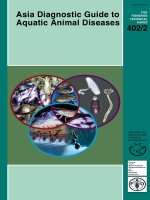
Cover page: Representation of relationship between host, pathogen and the environment in
disease development.
6
Bondad-Reantaso, M.G., McGladdery, S.E., East, I., and Subasinghe, R.P. (eds.)
Asia Diagnostic Guide to Aquatic Animal Diseases.
FAO Fisheries Technical Paper No. 402, Supplement 2. Rome, FAO. 2001. 240 p.
ABSTRACT
The Asia Diagnostic Guide to Aquatic Animal Diseases or 'Asia Diagnostic Guide' is a
comprehensive, up-datable diagnostic guide for the pathogens and diseases listed in the
NACA/FAO/OIE Quarterly Aquatic Animal Disease Reporting System including a number of
other diseases which are significant in the Asia region. It was developed from technical
contributions of members of the Regional Working Group (RWG) and Technical Support
Services (TSS) and other aquatic animal health scientists in the Asia-Pacific region who
supported the Asia-PacificRegional Aquatic Animal Health Management Programme. The
objective was to produce an Asia diagnostic guide, that could be of specific use in the
region, for both farm and laboratory level diagnostics, to complement the Manual of
Procedures for the implementation of the "Asia Regional Technical Guidelines on Health
Management for the Responsible Movement of Live Aquatic Animals". This Asia Diagnostic
Guide could then be used to expand national and regional aquatic animal health diagnostic
capabilities that will assist countries in upgrading technical capacities to meet the
requirements in the OIE International Aquatic Animal Code (Third Edition) and the OIE
Diagnostic Manual for Aquatic Animal Diseases (Third Edition) and WTO's Sanitary and
Phytosanitary Agreement (SPS), and in support of relevant provisions in the FAO's Code of
Conduct for Responsible Fisheries. The information in the Asia Diagnostic Guide is presented
in a format that spans from gross observations at the pond or farm site (Level 1), to guidance
for information on technologically advanced molecular or ultrastructural diagnostics and
laboratory analyses (Levels II and III, and OIE aquatic animal health standards), thus, taking
into account international, regional, and national variations in disease concerns, as well as
varying levels of diagnostic capability between countries of the Asia-Pacific region.
(Key Words: Asia, Aquaculture, Diagnostics, Health Management, Aquatic Animal Diseases,
Guidelines, Disease Reporting)
v
7
The Food and Agriculture Organization of the
United Nations (FAO) and the Network of
Aquaculture Centres in Asia-Pacific (NACA) are
pleased to present this document entitled Asia
Diagnostic Guide to Aquatic Animal Diseases
or ‘Asia Diagnostic Guide’. The Asia Diagnos-
tic Guide is the third and last of a series of FAO
Fisheries Technical Papers (FAO Fish. Tech.
Pap. No. 402 and 402 Supplement 1), which
was developed by representatives from 21
Asian governments, scientists and experts on
aquatic animal health, as well as by represen-
tatives from several national, regional and in-
ternational agencies and organizations. The
Asia Diagnostic Guide provides valuable diag-
nostic guidance for implementing the Asia Re-
gional Technical Guidelines on Health Manage-
ment for the Responsible Movement of Live
Aquatic Animals and their associated imple-
mentation plan, the Beijing Consensus and
Implementation Strategy (BCIS) (see FAO Fish.
Tech. Pap. No. 402). It also complements the
Manual of Procedures for implementing the
Technical Guidelines (see FAO Fish. Tech. Pap.
No. 402, Supplement 1). The entire series is
meant for assisting national and regional ef-
forts in reducing the risks of diseases due to
trans-boundary movement (introduction and
transfer) of live aquatic animals. The implemen-
tation of the Technical Guidelines will contrib-
ute to securing and increasing income of
aquaculturists in Asia by minimizing the dis-
ease risks associated with trans-boundary
movement of aquatic animal pathogens. In
many countries in Asia, aquaculture and cap-
ture fisheries provide a mainstay of rural food
security and livelihoods, and effective imple-
mentation of the Technical Guidelines will con-
tribute to regional efforts to improve rural live-
lihoods, within the broader framework of re-
sponsible management, environmental
sustainability and protection of aquatic
biodiversity.
An FAO Technical Co-operation Programme
(TCP) Project (TCP/RAS 6714 (A) and 9065 (A)
- “Assistance for the Responsible Movement
of Live Aquatic Animals”) was launched by
NACA in 1998, with the participation of 21
countries from throughout the region. This pro-
gram complemented FAO’s efforts in assisting
member countries to implement the relevant
provisions in Article 9 - Aquaculture Develop-
ment - of the Code of Conduct for Respon-
sible Fisheries (CCRF), at both the national and
regional levels. A set of Guiding Principles, for-
mulated by a group of aquatic animal health
experts at the Regional Workshop held in 1996
in Bangkok, formed the basis for an extensive
PREFACE
consultative process, between 1998-2000, in-
volving input from government-designated Na-
tional Co-ordinators (NCs), NACA, FAO, OIE,
and regional and international specialists.
Based on reports from these workshops, as
well as inter-sessional activities co-ordinated
by FAO and NACA, the final Technical Guide-
lines were presented and discussed at the Fi-
nal Project Workshop on Asia Regional Health
Management for the Responsible Trans-bound-
ary Movement of Live Aquatic Animals, held in
Beijing, China, 27
th
-30
th
June 2000.
The Technical Guidelines were reviewed and
discussed by the participants of this meeting,
which included the NCs, FAO, NACA, OIE (Rep-
resentatives of the Fish Disease Commission
and Regional Representation in Tokyo), and
many regional and international aquatic animal
health management specialists. The NCs gave
unanimous agreement and endorsement of the
Technical Guidelines, in principle, as providing
valuable guidance for national and regional ef-
forts in reducing the risks of disease due to the
trans-boundary movement of live aquatic ani-
mals.
Recognizing the crucial importance of imple-
mentation of the Technical Guidelines, the par-
ticipants prepared a detailed implementation
strategy, the Beijing Consensus and Implemen-
tation Strategy (BCIS), focussing on National
Strategies and with support through regional
and international co-operation. This compre-
hensive implementation strategy was unani-
mously adopted by the workshop participants.
The countries that participated in the develop-
ment of the Technical Guidelines and BCIS, and
the associated Manual of Procedures and Asia
Diagnostic Guide are Australia, Bangladesh,
Cambodia, China P.R., Hong Kong China, In-
dia, Indonesia, Iran, Japan, Korea (D.P.R.), Ko-
rea (R.O.), Lao (P.D.R.), Malaysia, Myanmar,
Nepal, Pakistan, the Philippines, Singapore, Sri
Lanka, Thailand and Vietnam.
vi
8
FAO and NACA extend special thanks to all the
governments, agencies, and organizations that
took part in this significant, and sometimes
daunting endeavor, as well as to all the indi-
viduals who generously contributed time, ef-
fort and expertise to the compilation of this
document and other information produced
during the process.
Ichiro Nomura
Assistant Director General
Fisheries Department
Food and Agriculture Organization of the United
Nations
Viale delle Terme di Caracalla
00100 Rome, Italy
Fax: + 39 06 570-53020
E-mail: or
Website: />Pedro Bueno
Co-ordinator
Network of Aquaculture Centres in Asia-Pacific
(NACA)
Department of Fisheries,
Kasetsart University Campus, Ladyao, Jatujak
Bangkok 10900, Thailand
Fax: (662) 561-1727
E-mail:
Website:
vii
PREFACE
9
Movement of live aquatic animals is a neces-
sity for development of aquaculture on both
subsistence and commercial levels. However,
such movements increase the probability of in-
troducing new pathogens, which can have dire
consequences on aquaculture, capture fisher-
ies and related resources, as well as the liveli-
hoods which depend on them. In order to mini-
mize or avoid the risk of pathogen transfer via
aquatic animal movements, it is essential that
the individuals and organizations involved in
such activities appreciate, and participate in,
the overall health management process.
The adverse social, economic and environmen-
tal impacts that have resulted from the irrespon-
sible or ill-considered movement of live aquatic
animals and their products have led to global
recognition of the need for health management
protocols to protect aquaculture, fisheries re-
sources and the aquatic environment. In many
cases, these impacts have been a direct result
of the absence of effective national and regional
health management strategies. However, for-
mulation of effective quarantine measures,
health certification and guidelines applicable on
an international scale is complicated. A wide
range of social, economic and environmental
circumstances have to be considered, along
with the range of aquatic animal species in-
volved and their pathogens and diseases. In
addition, differing reasons for moving live
aquatic animals and products impose a further
set of variables to the process. Nevertheless,
the serious impacts of unrestricted regional and
international movement of aquatic animals merit
international recognition - a fact clearly reflected
in the International Aquatic Animal Health Code
and the Diagnostic Manual of Aquatic Animal
Diseases of the Office International des
Épizooties
1
, which provide guidelines and rec-
ommendations for reducing the risk of spread-
ing specific pathogens considered relevant to
international trade of aquatic animals.
Since present international protocols are not
always applicable to the disease concerns of
aquatic food production and trade in the Asia
Region, the need for effective health manage-
ment protocols that focus on the species and
disease problems of this region has been rec-
ognized for many years. A regional, as opposed
to national, approach is considered appropri-
FOREWORD
ate, since many countries in the region share
social, economic, industrial, environmental, bio-
logical and geographical characteristics. Many
countries also share waterbodies with
neighbours and the watersheds of several ma-
jor Asian rivers transcend national boundaries.
A regionally adopted health management pro-
gram will facilitate trade, and protect aquatic
production (subsistence and commercial) and
the environment upon which they depend, from
preventable disease incursions.
A joint FAO/NACA Asia-Regional Programme
on Aquatic Animal Health Management was un-
dertaken to review the need for better health
management to support safe movement of live
aquatic animals and the applicability of exist-
ing international codes on aquatic animal health
management, quarantine and health certifica-
tion, including those of the OIE, the European
Inland Fisheries Advisory Commission (EIFAC),
and the International Council for Exploration of
the Sea (ICES) to Asian circumstances. This
review
2
highlighted the fact that the disease
risks associated with pathogen transfer in the
Asia Region can only be reduced through a
broader approach to aquatic animal health
management than currently outlined in disease-
specific codes of practice (e.g., the OIE code)
or in codes and protocols developed specifi-
cally for northern hemisphere countries (e.g.,
the ICES and EIFAC codes). In addition, it un-
derlined the need for pre-border (exporter), bor-
der and post-border (importer) involvement in
the program, to ensure co-operative health
management of aquatic animal movement. With
the support of an FAO Technical Co-operation
Programme (TCP) implemented by NACA, the
Asia Regional Technical Guidelines on Health
Management for the Responsible Movement of
Live Aquatic Animals is a document that was
compiled by a group of aquatic animal health
experts within and outside the region to assist
the development of effective health manage-
ment procedures for safe movement of live
aquatic animals within and between countries
in the region. The first companion document,
the Manual of Procedures for the Implementa-
tion of the Asia Regional Technical Guidelines
on Health Management for the Responsible
Movement of Live Aquatic Animals, provides
background material and detailed technical pro-
cedures to assist countries and territories in the
1
see OIE. 2000a. International Aquatic Animal Health Code. 3rd edn. Office International des Epizooties, Paris, 153 p.; and OIE.
2000b. Diagnostic Manual for Aquatic Animal Diseases. 3rd edn, Office International des Epizooties, Paris, 237 p.
2
see Humphrey, J.D., J.R. Arthur, R.P. Subasinghe and M.J. Phillips. 1997. Aquatic Animal Quarantine and Health Certification
in Asia. Proceedings of the Regional Workshop on Health and Quarantine Guidelines for the Responsible Movement (Introduction
and Transfer of Aquatic Organisms), Bangkok Thailand, 28 January 1996. FAO Fish. Techn. Pap. No. 373, 153 p.
viii
10
Asia Region in implementing the Technical
Guidelines. This second companion document,
Asia Diagnostic Guide, provides valuable di-
agnostic guidance for implementing the Tech-
nical Guidelines and also complementary to the
Manual of Procedures.
ix
FOREWORD
11
ACKNOWLEDGEMENTS
3
The contact addresses and e-mail of persons listed are indicated elsewhere in the Asia Diagnostic Guide.
x
There are many persons
3
whom we sincerely
acknowledge for their generous contributions
in compiling and peer-reviewing the various
sections of the Asia Diagnostic Guide despite
very short notice, and for providing valuable
technical comments and information and pho-
tographs. Arranged alphabetically, we are grate-
ful to the following:
• Dr. Rob Adlard (Queensland Museum -
Australia) for reviewing Section 3 - Molluscan
Diseases.
• Dr. Victoria Alday de Graindorge (CSA – Ec-
uador; e-mail: ) for re-
viewing Sections C.2 - YHD, C.3 - IHHN, C.4
- WSD, C.5 - BMN and C.8 - TS.
• Dr. Eva-Maria Bernoth (AFFA - Australia) for
initiating the earlier drafts of the Guide and
constant encouragement to complete the
Guide.
• Dr. Supranee Chinabut (AAHRI – Thailand)
and Dr. Kamonporn Tonguthai (OIE Reference
Laboratory for EUS, AAHRI - Thailand) for re-
viewing Section 2 – Finfish Diseases and pro-
viding information on section F.2 - EUS.
• Mr. Dan Fegan (Biotec – Thailand) and Prof.
Tim Flegel (Mahidol University – Thailand) for
extensive assistance with development of
Section 4 – Crustacean Diseases, and sec-
tions C.1 - General Techniques, C.2 – YHD,
C.3 – IHHN and C.4 -WSD.
• Dr. Ken Hasson (Super Shrimp – USA; e-mail:
) for reviewing
Section 4 – Crustacean Diseases, and sec-
tions C.1 – General Techniques, C.5 -BMN,
C.8 -TS and C.10 – NH.
• Dr. Mike Hine (MAF - New Zealand), Dr. Su-
san Bower (DFO-Canada), Dr. Robert Adlard
(Queensland Museum – Australia), Dr. Mi-
Seon Park and Dr. Dong Lim Choi (NFRDI –
Korea RO), Dr. Brian Jones (Fisheries WA -
Australia), and Ms. Daisy Ladra (BFAR - Phil-
ippines) generously provided photographs for
Section 3 - Molluscan Diseases.
• Prof. Don Lightner (University of Arizona –
USA; e-mail: ) and Dr.
Pornlerd Chanratchakool (AAHRI – Thailand)
generously permitted reprint of many pho-
tos from Lightner (1996) and Chanratchakool
et al. (1998); Prof. Tim Flegel (Mahidol Uni-
versity – Thailand) and Dr. Victoria Alday de
Graindorge (CSA – Ecuador) provided pho-
tographs from CD-ROM on Diagnosis of
Shrimp Diseases; Prof. M. Shariff, Dr. Peter
Walker and Dr. Fernando Jimenez
(SEMARNAP – Mexico, e-mail:
) provided photo-
graphs for Section 4 - Crustacean Diseases.
• Dr Leigh Owens (James Cook University –
Australia, e-mail: ) for
reviewing C.7 – SMVD.
• Prof. Md. Shariff (UPM – Malaysia) provided
the information contained in Section C.4a –
BWSS.
• Dr. Peter Walker (CSIRO – Australia) for re-
viewing and rewriting C.6 - GAV.
• Prof. Mamori Yoshimizu (Hokkaido Univer-
sity – Japan), Prof. Kazuo Ogawa (University
of Tokyo – Japan), Prof. Kishio Hatai (Nippon
Veterinary and Animal Science University –
Japan), Dr. Hiroshi Yokoyama (University of
Tokyo – Japan, e-mail:
tokyo.ac.jp), Dr. Chau Shi Shi (National Tai-
wan University; e-mail:
); Dr. J Richard
Arthur (Canada), Dr. Roger Chong (Fisheries
and Conservation Department – Hong Kong
China), Dr. Richard B. Callinan (NSW Fisher-
ies – Australia) and Dr. Mark Crane (AAHL –
Australia) generously provided photographs
for Section 2 – Finfish Diseases.
• Prof. Jiang Yulin (Shenzen Exit and Entry In-
spection and Quarantine Bureau – China PR)
provided valuable information and comments
on Section 2 – Finfish Diseases and many
photographs.
The National Coordinators, members of the
Regional Working Group and Technical Support
Services supported the development of the Asia
Diagnostic Guide. The European Association of
Fish Pathologists (EAFP) granted permission to
reprint numerous photographs from “What
Should I Do?”. The experts listed in the Annexes
also agreed to provide information and health
advice based on their particular expertise. We
thank you all.
12
xi
Very special thanks go to Dr. Michael J. Phillips
of NACA for his vision and constant encour-
agement; NACA Co-ordinators, Mr. Hassanai
Kongkeo (1996-2001) and Mr. Pedro Bueno
(2001 to present) for their strong support to the
Asia regional program on aquatic animal health;
and the team from Multimedia Asia for their cre-
ative ideas and friendly cooperation and quick
response to the sometimes untimely demands
to complete the Asia Diagnostic Guide.
The Editors
ACKNOWLEDGEMENTS
13
TABLE OF CONTENTS
Title Page
Disclaimer and Copyright Statements
Preparation of This Document
Abstract
Preface
Foreword
Acknowledgements
Table of Contents
Glossary
Abbreviations
Scientific and Common Names
SECTION 1- INTRODUCTION
I. INTRODUCTION
I.1 Background
I.2 Objectives and Scope
I.3 Guide for Users
I.4 Health and Aquatic Animals
I.5 Role of Diagnostics in Aquatic Animal Health
I.6 Levels of Diagnostics
I.7 References
Basic Anatomy of a Typical Bony Fish
SECTION 2 - FINFISH DISEASES
F. 1 GENERAL TECHNIQUES
F.1.1 Gross Observations
F.1.1.1 Behaviour
F.1.1.2 Surface Observations
F.1.1.2.1 Skin and Fins
F.1.1.2.2 Gills
F.1.1.2.3 Body
F.1.1.3 Internal Observations
F.1.1.3.1 Body Cavity and Muscle
F.1.1.3.2 Organs
F.1.2 Environmental Parameters
F.1.3 General Procedures
F.1.3.1 Pre-Collection Preparation
F.1.3.2 Background Information
F.1.3.3 Sample Collection for Health Surveillance
F.1.3.4 Sample Collection for Disease Diagnosis
F.1.3.5 Live Specimen Collection for Shipping
F.1.3.6 Dead or Tissue Specimen Collection for Shipping
F.1.3.7 Preservation of Tissue Samples
F.1.3.8 Shipping Preserved Samples
F.1.4 Record-Keeping
F.1.4.1 Gross Observations
F.1.4.2 Environmental Observations
F.1.4.3 Stocking Records
F.1.5 References
ii
iii
iv
v
vi
viii
x
13
17
33
35
39
40
40
40
42
43
43
46
50
50
50
50
50
51
52
52
52
52
53
53
53
54
54
54
55
55
56
56
57
57
57
57
57
48
14
VIRAL DISEASES OF FINFISH
F. 2 Epizootic Haematopoietic Necrosis (EHN)
F. 3 Infectious Haematopoietic Necrosis (IHN)
F. 4 Oncorhynchus masou Virus (OMV)
F. 5 Infectious Pancreatic Necrosis (IPN)
F. 6 Viral Encephalopathy and Retinopathy (VER)
F. 7 Spring Viraemia of Carp (SVC)
F. 8 Viral Haemorrhagic Septicaemia (VHS)
F. 9 Lymphocystis
BACTERIAL DISEASE OF FINFISH
F.10 Bacterial Kidney Disease (BKD)
FUNGUS ASSOCIATED DISEASE FINFISH
F.11 Epizootic Ulcerative Syndrome (EUS)
ANNEXES
F.AI OIE Reference Laboratories for Finfish Diseases
F.AII List of Regional Resource Experts for Finfish
Diseases in Asia-Pacific
F.AIII List of Useful Diagnostic Manuals/Guides to
Finfish Diseases in Asia-Pacific
Basic Anatomy of an Oyster
SECTION 3 - MOLLUSCAN DISEASES
M.1 GENERAL TECHNIQUES
M.1.1 Gross Observations
M.1.1.1 Behaviour
M.1.1.2 Shell Surface Observations
M.1.1.3 Inner Shell Observations
M.1.1.4 Soft-Tissue Surfaces
M.1.2 Environmental Parameters
M.1.3 General Procedures
M.1.3.1 Pre-Collection Preparation
M.1.3.2 Background Information
M.1.3.3 Sample Collection for Health Surveillance
M.1.3.4 Sample Collection for Disease Diagnosis
M.1.3.5 Live Specimen Collection for Shipping
M.1.3.6 Preservation of Tissue Samples
M.1.3.7 Shipping Preserved Samples
M.1.4 Record Keeping
M.1.4.1 Gross Observations
M.1.4.2 Environmental Observations
M.1.4.3 Stocking Records
M.1.5 References
DISEASES OF MOLLUSCS
M.2 Bonamiosis (Bonamia sp., B. ostreae)
M.3 Marteiliosis (Marteilia refringens, M. sydneyi)
M.4 Mikrocytosis (Mikrocytos mackini, M. roughleyi)
TABLE OF CONTENTS
59
62
65
68
72
76
79
82
86
90
95
98
105
108
110
111
111
111
111
114
114
116
116
116
116
116
116
117
118
118
118
119
119
119
121
125
129
15
M.5 Perkinsosis (Perkinsus marinus, P. olseni)
M.6 Haplosporidiosis (Haplosporidium costale,
H. nelsoni)
M.7 Marteilioidosis (Marteilioides chungmuensis,
M. branchialis)
M.8 Iridovirosis (Oyster Velar Virus Disease)
ANNEXES
M.AI OIE Reference Laboratories for
Molluscan Diseases
M.AII List of Regional Resource Experts for
Molluscan Diseases in Asia-Pacific
M.AIII List of Useful Diagnostic Guides/Manuals to
Molluscan Health
Internal and External Anatomy of a Penaeid Shrimp
SECTION 4 - CRUSTACEAN DISEASES
C.1 GENERAL TECHNIQUES
C.1.1 Gross Observations
C.1.1.1 Behaviour
C.1.1.1.1 General
C.1.1.1.2 Mortalities
C.1.1.1.3 Feeding
C.1.1.2 Surface Observations
C.1.1.2.1 Colonisation and Erosion
C.1.1.2.2 Cuticle Softening, Spots and Damage
C.1.1.2.3 Colour
C.1.1.2.4 Environmental Observations
C.1.1.3 Soft-Tissue Surfaces
C.1.2 Environmental Parameters
C.1.3 General Procedures
C.1.3.1 Pre-collection Preparation
C.1.3.2 Background Information
C.1.3.3 Sample Collection for Health Surveillance
C.1.3.4 Sample Collection for Disease Diagnosis
C.1.3.5 Live Specimen Collection for Shipping
C.1.3.6 Preservation of Tissue Samples
C.1.3.7 Shipping Preserved Samples
C.1.4 Record-Keeping
C.1.4.1 Gross Observations
C.1.4.2 Environmental Observations
C.1.4.3 Stocking Records
C.1.5 References
VIRAL DISEASES OF SHRIMP
C.2 Yellowhead Disease (YHD)
C.3 Infectious Hepatopancreas and Haematopoietic
Necrosis (IHHN)
C.4 White Spot Disease (WSD)
C.4a Bacterial White Spot Syndrome (BWSS)
TABLE OF CONTENTS
133
138
144
147
149
150
152
156
157
157
157
157
157
158
158
158
158
158
160
160
160
160
160
162
162
162
162
164
165
165
165
165
166
166
167
173
178
183
16
C.5 Baculoviral Midgut Gland Necrosis (BMN)
C.6 Gill-Associated Virus (GAV)
C.7 Spawner Mortality Syndrome
("Midcrop mortality syndrome")
C.8 Taura Syndrome (TS)
C.9 Nuclear Polyhedrosis Baculovirosis (NPD)
BACTERIAL DISEASE OF SHRIMP
C.10 Necrotising Hepatopancreatitis (NH)
FUNGAL DISEASE OF CRAYFISH
C.11 Crayfish Plague
ANNEXES
C.AI OIE Reference Laboratories for
Crustacean Diseases
C.AII List of Regional Resource Experts for Crustacean
Diseases in the Asia-Pacific
C.AIII List of Useful Manuals/Guide to Crustacean
Diseases in Asia-Pacific
List of National Coordinators(NCs)
Members of Regional Working Group (RWG) and
Technical Support Services (TSS)
List of Figures
TABLE OF CONTENTS
186
189
192
194
201
207
211
215
216
219
221
225
230
17
GLOSSARY
1
Abscess an aggregation of haemocytes (blood cells) associated with necrotic
(decaying) host cells. Abscesses may or may not contain debris from
invasive organisms which have been killed by host defences. In advanced
abscesses there is a decrease in cell definition (especially the nuclei)
towards the centre of the lesion, compared to cells around the periphery.
Abscesses frequently involve breakdown of epithelial linings and may be
surrounded by phagocytic and/or fibrocytic haemocytes.
Abiotic factors physical factors which affect the development/survival of an organism
Acquired immunity defence response developed following recovery from an infection (or
vaccination) to a specific infectious agent (or group of agents)
Acute infection or clinical manifestation of disease which occurs over a short
period of time (cf 'Chronic')
Adhesion (Crustacea) binding of subcuticular tissues to the cuticle due to destruction
of the cuticle by chitinolytic bacteria or fungi. This may impede moulting.
Aetiologic Agent the primary organism responsible for changes in host animal, leading to
(Etiologic) disease
Aetiology (Etiology) the study of the cause of disease, including the factors which enhance
transmission and infectivity of the aetiologic agent.
Alevins fry of certain species of fish, particularly trout and salmonids that still have
the yolk-sac attached
Anaemia (Vertebrate) a deficiency in blood or of red blood cells
Anorexia loss of appetite
Antennal gland (Crustacea) excretory pores at the base of the antennae (also known as
kidney gland, excretory organ and green gland)
Antibody (Ab) a protein capable of cross-reacting with an antigen. In vertebrates,
antibody is produced by lymphoid cells in response to antigens. The
mechanism of antibody production in shellfish is not known.
Antigen a substance or cell that elicits an immune reaction. An antigen may have
several epitopes (surface molecules) to which antibody can bind (cf
Monoclonal and Polyclonal Antibodies).
Aquatic animals live fish, molluscs and crustaceans, including their reproductive products,
fertilised eggs, embryos and juvenile stages, whether from aquaculture
sites or from the wild
Aquaculture commonly termed "fish farming", it refers more broadly to the commercial
hatching and rearing of marine and freshwater aquatic animals and plants
Ascites accumulation of serous fluid in the abdominal cavity; dropsy
Aseptic free from infection; sterile
1
Definitions of words with * were adopted from OIE International Aquatic Animal Health Code. 3rd Edition. 2000. All other
definitions were taken from the following references: FAO/NACA (2000); Dorland's Illustrated Medical Dictionary (27th Edition);
"Virology Glossary" copyright 1995 by Carlton Hogan and University of Minnesota (permission to copy and distribute granted to
individuals and non-profit groups On-line Medical Dictionary at
/>18
Atrophy decrease in amount of tissue, or size of an organ, after normal growth has
been achieved
Autolysis(-lytic) enzyme induced rupture of cell membranes, either as a normal function of
cell replacement or due to infection
Avirulent an infection which causes negligible or no pathology (cf Virulent).
Axenic culture culture containing cells of a single species (bacterial culture) or cell-type
(tissue culture) (uncontaminated or purified)
Bacteriology science that deals with the study of bacteria
Bacteriophage (abbreviation - Phage) any virus that infects bacteria
Bacterium (bacteria) unicellular prokaryotic (nuclear material not contained within a
nucleus) microorganisms that multiply by cell division (fission), typically
have a cell wall; may be aerobic or anaerobic, motile or non-motile, free-
living, saprophytic or pathogenic
Basophilic acidic cell and tissue components staining readily with basic dyes (i.e.
hematoxylin); chromatin and some secretory products in stained cells
appear blue to purple
Bioassay a quantitative procedure that uses susceptible organisms to detect toxic
substances or pathogens.
Broodstock* sexually mature fish, molluscs or crustaceans
Calcareous pertaining to or containing lime or calcium
Cannibalism the eating of a species of animal by the same species of animal
Carrier an individual who harbors the specific organisms of a disease without
manifest symptoms and is capable of transmitting the infection; the
condition of such an individual is referred to as carrier state
Ceroid non-staining metabolic by-product found in many bivalves. Abnormally
high concentrations indicate possible environmental or pathogen-induced
physiological stress.
Chelating agent chemical agent used to decalcify calcium carbonate in mollusc shells or
pearls, e.g., ethylenediaminetetracetic acid (EDTA)
Chemotherapeutant chemical used to treat an infection or non-infectious disorder
Chitin linear polysaccharide in the exoskeletons of arthropods, cell walls of most
fungi and the cyst walls of ciliates
Chitinolytic (Mycology and Bacteriology) chitin degrading organisms with enzymes
(chitinoclastic) capable of breaking down the chitin component of arthropod exoskeletons
Chronic long-term infection which may or may not manifest clinical signs
Clinical pertaining to or founded on actual observation
Chromatin nucleoprotein complex containing genomic DNA and RNA in the nucleus
of most eukaryotic cells
GLOSSARY
19
Chromatophores motile, pigment-containing epidermal cells responsible for colour
Ciliostatic exotoxin toxin secreted by some bacteria that inhibits ciliary functions
Clone a population derived from a single organism
Coagulation clotting (adhesion of haemocytes)
Conchiolin nitrogenous albuminoid substance, dark brown in colour, that forms the
organic base of molluscan shells
Concretions non-staining inclusions in the tubule and kidney cells of scallops and pearl
oysters, produced during the digestive cycle. Similar inclusions are also
found in the gut epithelia of other bivalves.
Contagious a disease normally transmitted only by direct contact between infected
and uninfected organisms
Crustaceans* aquatic animals belonging to the phylum Arthropoda, a large class of
aquatic animals characterized by their chitinous exoskeleton and jointed
appendages, e.g. crabs, lobsters, crayfish, shrimps, prawns, isopods,
ostracods and amphipods
Cuticle (Crustacea) the protein structure of arthropods consisting of an outer layer
(epicuticle), an underlying exocuticle (pigmented), endocuticle (calcified)
and membranous uncalcified layer. Chitin is in all layers except the
epicuticle.
Cyst (a) a resilient dormant stage of a free-living or parasitic organism, or
(b) a host-response walling off a tissue irritant or infection
Cytology the study of cells, their origin, structure, function and pathology
Cytopathic effect pertaining to or characterized by pathological changes in cells
Decalcification the process of removing calcareous matter
Decapitation cutting of the head portion
Deoxyribovirus (DNA-virus) virus with a deoxyribonucleic acid genome (cf Ribovirus)
DFAT Direct Fluorescent Antibody Test/Technique; an immunoassay technique
using antibody labelled to indicate binding to a specific antigen
Diapedesis migration of haemocytes across any epithelium to remove metabolic by-
product, dead cells and microbial infections
Disease any deviation from or interruption of the normal structure or function of any
part, organ, or system (or combination thereof) of the body that is
manifested by a characteristic set of symptoms and signs and whose
aetiology, pathology and prognosis may be known or unknown
Disease agent an organism that causes or contributes to the development of a disease
Diagnosis* determination of the nature of a disease
Disinfection* the application, after thorough cleansing, of procedures intended to
destroy the infectious or parasitic agents of diseases of aquatic animals;
this applies to aquaculture establishments (i.e. hatcheries, fish farms,
GLOSSARY
20
objects that may have been directly or indirectly contaminated
DNA (ssDNA, deoxyribonucelic acid. Nucleic acid comprised of deoxyribonucleotides
dsDNA) containing the bases adenine, guanine, cytosine and thymine.
Single strand DNA (ssDNA) occurs in some viruses (usually as a closed
circle). In eukaryotes and many viruses, DNA is double-stranded (dsDNA).
DNA probes segments of DNA labelled to indicate detection of homologous segments
of DNA in samples of tissues or cultures (see RNA probes)
Dropsy the abnormal accumulation of serous fluid in the cellular tissues or in a
body cavity
Ecdysal gland (Crustacea) see Y-organ
Ectoparasite a parasite that lives on the outside of the body of the host
ELISA Enzyme Linked Immunosorbent Assay, used to detect antigen (antigen
capture ELISA) or antibody (antibody capture ELISA)
Emaciation a wasted condition of the body
Endemic present or usually prevalent in a population or geographical area at all
times
Endothelial pertaining to or made up of endothelium
Endothelium the layer of epithelial cells that lines the cavities of the heart and of the
blood and lymph vessels, and the serous cavities of the body originating
from the mesoderm
Endosymbiosis an association between two organisms (one living within the other) where
both derive benefit or suffer no obvious adverse effect
Envelope (Virology) lipoprotein membrane composed of host lipids and viral
proteins (non-enveloped viruses are composed solely of the capsid and
nucleoprotein core)
Enzootic present in a population at all times but, occurring only in small numbers
of cases
Eosinophilic basic cell and tissue components staining readily with acidic dyes (i.e.
eosin); stained cells appear pink to red
Epibiont organisms (bacteria, fungi, algae, etc.) which live on the surfaces (cf
fouling) of other living organisms
Epipodite (Crustacea) cuticular extension of the base (protopodite) of the walking
legs (pereiopods)
Epitope the component of an antigen which stimulates an immune response and
which binds with antibody
Epizootic affecting many animals within a given are at the same time; widely diffused
and rapidly spreading (syn. Epidemic - used for human disease)
Epidemiology science concerned with the study of the factors determining and influenc
ing the frequency and distribution of disease or other health related events
GLOSSARY
21
and their causes in a defined population for the purpose of establishing
programs to prevent and control their development and spread
Epizootiology the study of factors influencing infection by a pathogenic agent
Epithelium the layer of cells covering the surface of the body and all gastrointestinal
linings. Epithelia are usually one cell thick and supported by a basal
membrane.
Epitope structural component of an antigen which stimulates an immune response
and which binds with antibody.
Erosion destruction of the surface of a tissue, material or structure
Eukaryotean organism that contains the chromosones within a membrane-bound
nucleus (cf Prokaryote)
Exoenzyme extracellular enzyme released by a cell or microorganism
Exopthalmia abnormal protrusion of the eyeballs
Exoskeleton (Crustacea) the chitin and calcified outer covering of crustaceans (and
other arthropods) which protects the soft-inner tissues
Exudate material, such as fluid, cells, or cellular debris, which has escaped from
blood vessels and has been deposited in tissues or on tissue surfaces,
usually as a result of inflammation
Euthanasia an easy or painless death
Filtration passage of a liquid through a filter, accomplished by gravity, pressure or
vacuum (suction)
Finfish* fresh or saltwater fish of any age
Fry newly hatched fish larvae
Fingerling a young or small fish
Fixation preservation of tissues in a liquid that prevents protein and lipid
breakdown and necrosis; the specimen is hardened to withstand further
processing; and the cellular and sub-cellular contents are preserved in a
manner close to that of the living state
Fixative a fluid (e.g. aldehyde or ethanol-based solutions)) that prevents denatur
ation and autolysis by cross-linking of proteins
Foreign bodies any organism or abiotic particle not formed from host tissue
Formalin a 37% solution of formaldehyde gas
Fouling the mass colonisation of hard substrates by free-living organisms. Extreme
fouling of living organisms, such as molluscs or shrimp, can impede their
normal body-functions leading to weakening and death
Fungus any member of the Kingdom Fungi, comprising single-celled or multinucle
ate organisms that live by decomposing and absorbing the organic
material in which they grow
oyster farms, shrimp farms, nurseries), vehicles, and different equipment/
GLOSSARY
22
Gaping weakened molluscs that cannot close their shells when removed from
water; this rapidly lead to desiccation or predation of the soft-tissues and
is indicative of molluscs in poor condition (including possible infection)
Gram's Stain stain used to differentiate bacteria with permeable cells walls (Gram-
negative) and less permeable cell walls (Gram-positive)
Granulomas any small nodular delimited aggregation of granular haemocytes, or
modified macrophages resembling epithelial cells (epithelioid cells)
Granulomatosis any condition characterized by the formation of multiple granulomas
Granulosis virus Baculoviridae belonging to subgroup (B), characterised by a single
nucleocapsid within an envelope. Granulosis viruses form intra-nuclear
ellipsoid or rounded occlusion bodies (granules or capsules) containing
one or two virions.
Gross signs signs of disease visible to the naked eye
Haematopoietic pertaining to or effecting the formation of blood cells
Haematopoietic (Decapoda) a sheet of tissue composed of small lobules
tissue surrounded by fibrous connective tissue which lies along the dorso-lateral
surfaces of the posterior portion of the cardiac stomach (Brachyura) or
surrounding the lateral arterial vessels, secondary maxillipeds and
epigastric tissues (Penaeidae and Nephropidae); (Bivalves) unknown;
(Vertebrates) spleen
Haemocytes blood-cells
Haemolymph cell-free fraction of the blood containing a solution of protein and non-
proteinaceous defensive molecules
Haemocyte accumulation of haemocytes around damaged or infected tissues; since
infiltration the type of haemocytes most commonly responsible for phagocytosis are
granulocytes, focal infiltration is often referred to as a "granuloma"
Haemocytopenia a reduction in the number of cells in the circulatory system, usually
associated with a reduction in blood-clotting capability
Haemocytosis systemic destruction of blood cells (syn. Haemolysis)
Haemorrhage (Vertebrate) escape of blood from the vessels; bleeding
(Invertebrate) uncontrolled loss of haemocytes due to tissue trauma,
epithelial rupture, chronic diapedesis
Hatcheries* aquaculture establishments raising aquatic animals from fertilized eggs
Hepatopancreas digestive organ composed of ciliated ducts and blind-ending tubules,
which secrete digestive enzymes for uptake across the digestive tubule
epithelium; also responsible for release of metabolic by-products and other
molecular or microbial wastes (cf Metaplasia, Diapedesis)
Histology the study that deals with the minute structure, composition and function of
tissues
Histolysis breakdown of tissue by disintegration of the plasma membranes
Histopathology structural and functional changes in tissues and organs of the body which
GLOSSARY
23
cause or are caused by a disease seen in samples processed by
histology
Homogenate tissue ground into a liquid state in which all cell structure is disinte
grated
Host individual organism infected by another organism
Husbandry management of captive animals to enhance reproduction, growth and
health
Hyperplasia abnormal increase in size of a tissue or organ due to an increase in
number of cells
Hypertrophy abnormal enlargement of cells due to irritation or infection by an
intracellu lar organism.
Hyphae (Mycology) tubular cells of filamentous fungi; may be divided by cross-
walls (septae) into multicellular hyphae, may be branched. Inter-
connecting hyphae are called mycelia.
Icosahedral shape of viruses with a 5-3-2 symmetry and 20, approximately
equilateral, triangular faces
IFAT Indirect Fluorescent Antibody Test/Technique; a technique using
unlabelled antibody and a labelled anti-immunoglobulin to form a
'sandwich' with any antigen-bound antibody
Immunity protection against infectious disease conferred either by the immune
response generated by immunization or previous infection or by other
non-immunologic factors
Immunization protection against disease by deliberate exposure to pathogen
antigens to induce defence system recognition and enhance subse
quent responses to exposure to the same antigens (syn Vaccination)
Immunoassay any technique using the antigen-antibody reaction to detect and
quantify the antigens, antibodies or related substances (see ELISA,
IFAT, DFAT)
Immunodepression decrease in immune system response to antigens due to an infection
(same or different agent) or exposure to an immunosupressant
chemical.(syn. Immunosupression)
Immunofluorescence any immuno-histochemical method using antibody labeled with a
fluorescent dye
Direct - if a specific antibody or antiserum with a fluorochrome and
used as a specific fluorescent stain
Indirect - if the fluorochrome is attached to an antiglobulin, and a
tissue constituent is stained using an unlabeled specific antibody and
the labeled antiglobulin, which binds the unlabeled antibody
Immunoglobulin (Ig) family of proteins constructed of light and heavy molecular weight
chains linked by disulphide bonds; usually produced in response to
antigenic stimulation
Immunohistochemistry application of antigen-antibody interactions to histochemical tech
GLOSSARY
24
niques, as in the use of immunofluorescence
Immunology branch of biomedical science concerned with the response of the
organisms to antigenic challenge, the recognition of self and not self, and
all the biological (in vivo), serological (in vitro), and physical chemical
aspects of immune phenomena
Immunostimulation enhancement of defense responses, e.g., with vaccination
Immunization induction of immunity
Inclusion body non-specific discrete bodies found within the cytoplasm or nucleus of a
cell. Frequently viral (cf Cowdry body, Polyhedrin Inclusion /Occlusion
Bodies), or bacterial microcolonies (cf RLOs) (syn. Inclusions)
Infectious capable of being transmitted or of causing infection
Infection invasion and multiplication of an infectious organism within host tissues.
May be clinically benign (cf sub-clinical or 'carrier') or result in cell or tissue
damage. The infection may remain localized, subclinical, and temporary if
the host defensive mechanisms are effective or it may spread an acute,
sub-acute or chronic clinical infection (disease).
Infiltration (Invertebrates) haemocyte migration to a site of tissue damage or infection
by a foreign body/organism ('inflammation'). Infiltration may also occur for
routine absorption and transport of nutrients and disposal of waste
products.
Inflammation (Vertebrate) initial response to tissue injury characterised by the release of
amines which cause vasodilation, infiltration of blood cells, proteins and
redness that may be associated with heat generation
(Invertebrates) infiltration response to tissue damage or a foreign body. The
infiltration may be focal, diffuse or systemic (syn. Infiltration).
Innate immunity host defence mechanism that does not require prior exposure to the
pathogen
Intensity of the number of infectious agents in an individual organism or specimen;
infection "mean" intensity is the average number of infectious agents present in all
infected individuals in a sample
Intercellular situated or occurring between the cells in a tissue
Interstitial tissue tissue or cells between epithelial bound organ systems; also known as (cells)
Leydig tissue (molluscs) or connective tissue
Intracellular situated or occurring within a cell
Intrapallial (Bivalves) space between the mantle, gills and other soft-tissues; the
space between the mantle and inner shell is the extrapallial space
Karyolysis a form of necrosis where the chromatin leaches out of the nucleus without
disrupting the nuclear membrane, leaving an 'empty' appearing nucleus
Karyorrhexic rupture of the nucleus and nuclear membrane, releasing chromatin
granules into the cytoplasm
Lesion any pathological or traumatic change in tissue form or function
GLOSSARY
25
Lethargy abnormal drowsiness or stupor (response only to vigorous stimulation); a
condition of indifference
Liquefaction conversion of a tissue into a semi-solid or fluid mass due to necrosis
Luminescent marine or euryhaline bacteria which contain luciferase (a fluorescent, bacte-
riaenzyme) e.g., Vibrio harveyi and V. splendidus
Lymphoid organ (Crustacea) an organ situated between the anterior and posterior stomach
chambers which connects the sub-gastric artery to the anterior aorta, via a
mass of interconnected tubules
Lymphoid organ spherical cellular masses composed of presumed phagocytic haemocytes,
spheres which sequester Taura Syndrome Virus (TSV) and aggregate
within intertubular spaces of the lymphoid organs
Macrophages (Vertebrates) large (10-20 mm) amoeboid blood cells, responsible for ph
agocytosis, inflammation, antibody and cytotoxin production.
Mandibular organ (Crustacea) large glandular organ close to the ventral epidermis between
the mandibles; believed to be related to the moulting cycle, although it
does not produce a known moult-inducing hormone
Mantle retraction/ during periods of no growth in molluscs, the mantle retracts away from
recession the edge of the shell. Prolonged mantle retraction leaves the inner shell
edge open to erosion and fouling.
Melanin dark brown-black polymer (pigment) of indole quinone which has enzyme
inhibiting properties. It forms part of the primary defence mechanism
against cuticle and epidermal damage in many crustaceans
Melanisation abnormal deposits of dark pigment in various organs or tissues
Melanophores (Crustacea) dermal cells containing melanin (syn. melanocytes)
Metaplasia the change in shape of any epithelial cell, e.g., from columnar to cuboidal
or squamous (flattened)
Microcolonies membrane-bound populations of Chlamydia bacteria or non-membrane
bound Rickettsial colonies (cf Inclusion bodies)
Microorganism principally, viruses, bacteria and fungi (microscopic species, and taxo
nomically-related macroscopic species). Microscopic protistans (Protozoa)
and algae may also be referred to as microoorganisms.
Molecular probes see DNA probes
Molluscs* aquatic organism belonging to the Phylum Mollusca in the Kingdom
Metazoa characterized by soft unsegmented bodies. Most forms are
enclosed in a calcareous shell. The different developmental stages of
molluscs are termed larvae, postlarvae, spat, juvenile and adult.
Monoclonal identical antibody molecules produced by clonage of the antibody
antibody producing cell and responsive to a single antigen epitope (cf Epitope)
(MaB)
Moribund diseased; near death
Mortality death
GLOSSARY