skkn cấp tỉnh using mind maps to teach reading comprehension and applying mind maps to essay writing for tenth graders in trieu son 5 high school
Bạn đang xem bản rút gọn của tài liệu. Xem và tải ngay bản đầy đủ của tài liệu tại đây (239.71 KB, 15 trang )
<span class="text_page_counter">Trang 1</span><div class="page_container" data-page="1">
THANH HOA DEPARTMENT EDUCATION AND TRAINING
<b>TRIEU SON 5 HIGH SCHOOL </b>
</div><span class="text_page_counter">Trang 2</span><div class="page_container" data-page="2">TABLE OF CONTENTS
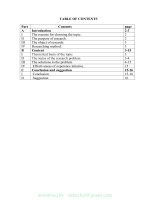
2.2. Current situation of teaching reading comprehension and essay
writing in classroom in Trieu Son 5 high school <sup>3</sup>2.3. Using mind maps to teach reading comprehension and then apply
them to essay writing in Trieu Son 5 high school <sup>4</sup>
2.3.2. Benefits of using the mind map to teach reading comprehension 52.3.3. Steps to build mind maps from a reading comprehension and then
2.3.4. Examples of using mind maps in teaching reading comprehension 72.3.5. Effectiveness of applying mind mapping technique to teach
reading comprehension and then apply them to essay writing in Trieu Son 5 high school
18
</div><span class="text_page_counter">Trang 3</span><div class="page_container" data-page="3"><b>1. INTRODUCTION1.1. Rationale</b>
In the evolving landscape of education, the need for innovative teachingstrategies that cater to diverse learning styles has become increasingly critical.At Trieu Son 5 High School, we recognize the importance of equipping ourtenth graders with the skills necessary to excel in reading comprehension andessay writing. As students prepare for the academic challenges of highereducation and future careers, mastering these foundational skills is essential. Toaddress this need, we are introducing an experiential initiative that leverages thepower of mind maps to enhance students’ understanding and application ofreading materials, ultimately improving their essay writing abilities.
Mind maps are a visual representation technique that organizes informationin a hierarchical and interconnected manner. Developed by Tony Buzan, mindmapping capitalizes on the brain's natural ability to process visual and spatialinformation. By presenting information graphically, mind maps make complexconcepts more accessible and easier to understand. This approach alignsperfectly with the cognitive development of tenth graders, who are transitioningfrom concrete to abstract thinking and benefit greatly from visual learning tools.
Reading comprehension and essay writing are not only crucial foracademic success but also for personal and professional development. Effectivereading comprehension allows students to grasp the main ideas, analyzesupporting details, and understand the relationships within a text. This skill isindispensable for academic assessments and lifelong learning. Similarly, essaywriting teaches students to organize their thoughts, articulate their arguments,and communicate effectively. These skills are foundational for higher educationand many professional fields.
However, traditional methods of teaching these skills often fall short inengaging students and catering to their diverse learning needs. Many studentsstruggle with organizing their thoughts and understanding complex texts, whichcan hinder their academic performance and confidence. Mind maps offer a solutionby providing a structured yet flexible way to visually organize information, makinglearning more interactive and effective.
Implementing Mind Maps in Trieu Son 5 High School: my initiative atTrieu Son 5 High School involves integrating mind maps into the curriculum forteaching reading comprehension and essay writing. This process will beimplemented in several stages, ensuring that students not only understand howto create mind maps but also how to use them effectively in their studies.
Stage 1: Introduction and Demonstration: The first stage involves introducingstudents to the concept of mind mapping. Teachers will explain the benefits ofmind maps and demonstrate how to create them using simple, familiar topics.This initial exposure will help students understand the basic principles andvisualize how mind maps can organize information.
Stage 2: Guided Practice: In the second stage, students will engage in guidedpractice, creating mind maps with the teacher’s assistance. This collaborative
</div><span class="text_page_counter">Trang 4</span><div class="page_container" data-page="4">approach will help students become comfortable with the process and seedifferent ways to structure their maps.
Stage 3: Independent Application: Once students are familiar with mindmapping, they will begin to use this technique independently. They will createmind maps for reading assignments, identifying main ideas, supporting details,and key concepts. This practice will reinforce their comprehension skills andprepare them for the next step—using mind maps for essay writing.
Stage 4: Transition to Essay Writing: In the final stage, students will apply theirmind maps to essay writing. They will use their maps to brainstorm ideas,organize their arguments, and structure their essays. This visual representationwill help them maintain coherence and logical flow in their writing, resulting inclearer and more effective essays.
The experience initiative <i><b>“Using Mind Maps to Teach Reading Comprehension</b></i>
<i><b>and Applying Mind Maps to Essay Writing for Tenth Graders in Trieu Son 5High School”</b></i><b> aims to transform the way tenth graders approach reading</b>
comprehension and essay writing. By providing a visual and interactive learningtool, we hope to enhance students’ understanding, retention, and critical thinkingskills. This innovative approach will not only improve their academic performancebut also prepare them for the complexities of higher education and beyond. As weimplement this initiative, we are confident that mind maps will become an integralpart of our teaching strategy, fostering a more engaging and effective learningenvironment for our students.
<b>1.2. Aims of the study</b>
The aims of the study can be summarized as follows:
- Enhancing Reading Comprehension: The primary aim of the initiative isto improve students' reading comprehension skills by introducing them to theuse of mind maps as a visual tool for organizing and understanding textualinformation.
- Facilitating Essay Writing Skills: The initiative seeks to extend the benefitsof improved reading comprehension to essay writing by teaching students how totranslate their understanding of texts into coherent and well-structured essays.
- Promoting Active Learning.
- Supporting Differentiated Instruction. - Fostering Critical Thinking.
<b>- Developing Organizational Skills.1.3. Scope of the study</b>
Given the rationale and the aims of the study, it is necessary to limit thestudy to the areas which are manageable. The topic revolves around the study ofthe use of mind maps to for 10th grade students at Trieu Son 5 high school,which focus on two factors: reinforcing the knowledge and developing studentslanguage understanding.
<b>1.4. Methods of the study</b>
To complete this study, the following steps implemented:- Pre-Implementation Assessment
- Integration into Curriculum
</div><span class="text_page_counter">Trang 5</span><div class="page_container" data-page="5">- Implementation of Mind Mapping Activities- Monitoring and Support
- Assessment and Evaluation.- Data Analysis
<b>2. DEVELOPMENT2.1. Scientific background</b>
In modern educational settings, the integration of innovative learning toolsis essential for enhancing student engagement and comprehension. At Trieu Son5 High School, the experiential initiative of using mind maps to teach readingcomprehension and apply them to essay writing for tenth graders is grounded insubstantial scientific research from cognitive psychology, neuroscience, andeducational theory.
Cognitive Psychology and Dual Coding Theory: Cognitive psychology providesa foundation for understanding how students learn and process information. AllanPaivio’s dual coding theory, a cornerstone of cognitive psychology, posits that humansprocess information through two distinct channels: verbal and visual. Mind mapseffectively leverage this theory by combining textual information creates strongermemory traces, enhancing comprehension and retention.
Neuroscience and Brain Function: Neuroscientific research supports theuse of visual learning tools. The brain's neocortex, responsible for higher-ordercognitive functions, is particularly adept at processing visual information.Studies indicate that visual aids can significantly improve information retentionand recall. For instance, research by Wong et al. (2018) found that incorporatingvisual elements can enhance retention by up to 42%. Mind maps capitalize onthis by organizing information visually, making it easier for students to encodeand retrieve knowledge.
Cognitive Load Theory: John Sweller’s cognitive load theory emphasizesthe limitations of working memory and the importance of managing cognitiveload to enhance learning. Reading comprehension involves decoding text,understanding vocabulary, and integrating new information, which can beoverwhelming. Mind maps help mitigate this by breaking down complexinformation into smaller, more manageable segments, reducing cognitiveoverload. This allows students to process and integrate information moreefficiently, improving comprehension.
The scientific basis for using mind maps in teaching readingcomprehension and essay writing is robust, integrating insights from cognitivepsychology, neuroscience, and educational theory. By harnessing the brain’snatural tendencies for visual learning and active engagement, mind mapsprovide a powerful tool for enhancing educational outcomes. Theimplementation of this experiential initiative at Trieu Son 5 High School aims tocapitalize on these scientific principles, offering a dynamic and effectiveapproach to improving students’ reading and writing skills.
</div><span class="text_page_counter">Trang 6</span><div class="page_container" data-page="6"><b>2.2. Current situation of teaching reading comprehension and essaywriting in classroom in Trieu Son 5 high school</b>
In Trieu Son 5 High School, a rural educational institution nestled in theheart of Vietnam, the traditional method of teaching reading comprehension tostudents follows a structured approach that emphasizes fundamental skills andsystematic instruction.
While traditional reading methods have their strengths, they also come withlimitations, especially in the context of Trieu Son 5 High School in ruralVietnam. These limitations may impact students' reading comprehension andoverall learning outcomes in several ways:
Rote Learning vs. Critical Thinking: Traditional reading methods oftenprioritize rote learning and memorization over critical thinking and analysis.Students may be taught to memorize vocabulary lists and answer comprehensionquestions without deeply engaging with the text or developing higher-orderthinking skills. This approach limits students' ability to critically evaluate andinterpret texts, hindering their overall comprehension skills.
Limited Student Engagement: Traditional reading methods may lackopportunities for active student engagement and participation. In a traditionalclassroom setting, students may passively receive instruction through lectures,drills, and worksheets, without opportunities for meaningful discussion,collaboration, or hands-on activities. This passive learning environment can leadto disengagement and boredom among students, diminishing their motivation toread and comprehend texts effectively.
Limited Application to Real-World Contexts: Traditional reading methodsmay focus solely on academic texts and literary classics, overlooking theimportance of connecting reading comprehension skills to real-world contextsand experiences. Students may struggle to see the relevance of their readingskills outside the classroom, limiting their motivation to apply these skills inreal-life situations such as interpreting informational texts, understanding newsarticles, or navigating everyday tasks that require reading comprehension.
In conclusion, while traditional reading methods have their merits, theyalso have limitations that can hinder students' reading comprehension andoverall learning outcomes. Addressing these limitations requires a thoughtfulapproach that balances traditional instructional practices with innovativestrategies that cater to the diverse needs and interests of students in Trieu Son 5High School.
<b>2.3. Using mind maps to teach reading comprehension and then applythem to essay writing in Trieu Son 5 high school</b>
<i><b>2.3.1. Concept of mind maps</b></i>
Mind mapping is a visual representation technique that organizes informationhierarchically and shows relationships among pieces of the whole. Introduced byTony Buzan in the 1970s, mind maps mimic the brain’s natural way of processinginformation. They start with a central idea and branch out into related subtopics,using keywords, images, and colors to create a structured yet flexible representationof information.
</div><span class="text_page_counter">Trang 7</span><div class="page_container" data-page="7"><i><b>2.3.2. Benefits of using the mind map to teach reading comprehension</b></i>
Using mind maps to teach reading comprehension offers a range of benefitsthat can significantly enhance students' understanding and retention of thematerial. Here are some key advantages:
- Visual Organization:
+ Structure and Clarity: Mind maps provide a clear, visual representation ofthe main ideas and supporting details in a text. This helps students see therelationships between different pieces of information and how they fit into theoverall structure.
+ Engagement: The visual nature of mind maps can make readingcomprehension activities more engaging and enjoyable for students, particularlyfor those who are visual learners.
- Improved Memory and Recall:
+ Enhanced Retention: By organizing information visually and spatially, mindmaps can improve memory retention. The use of colors, images, and symbols helpsto reinforce learning and makes it easier to recall information later.
+ Active Participation: Creating a mind map requires active engagementwith the text, which promotes deeper processing and better recall.
- Comprehension and Critical Thinking:
+ Understanding Relationships: Mind maps help students identify andunderstand the relationships between different concepts, such as cause andeffect, problem and solution, or comparison and contrast.
+ Higher-Order Thinking: The process of creating a mind map encouragesstudents to analyze, synthesize, and evaluate information, which are higher-order thinking skills essential for deep comprehension.
- Organization and Summarization:
+ Condensing Information: Mind maps allow students to condense largeamounts of information into a concise, easy-to-understand format. This helps themfocus on the most important points and avoid getting bogged down in details.
+ Summarization Skills: Creating a mind map helps students practicesummarizing information, which is a key skill for reading comprehension.
- Individual and Collaborative Learning:
+ Personalized Learning: Mind maps can be tailored to suit individuallearning styles and needs, allowing each student to organize information in away that makes the most sense to them.
+ Collaboration: Mind maps can also be used as a collaborative tool, wherestudents work together to create a comprehensive map of the text. Thisencourages discussion, idea sharing, and collaborative problem-solving.
- Assessment and Feedback:
+ Formative Assessment: Teachers can use mind maps as a form offormative assessment to gauge students’ understanding of the text and identifyareas where they may need further instruction.
+ Immediate Feedback: Mind maps provide a clear visual representation ofwhat students understand and where they may have misconceptions, allowingteachers to provide immediate and targeted feedback.
</div><span class="text_page_counter">Trang 8</span><div class="page_container" data-page="8">- Creativity and Motivation:
+ Creative Expression: Mind mapping allows for creative expressionthrough the use of colors, drawings, and different layouts. This can makelearning more enjoyable and motivate students to engage more deeply with thereading material.
+ Intrinsic Motivation: The process of creating a mind map can beintrinsically rewarding, fostering a positive attitude toward reading and learning.Incorporating mind maps into reading comprehension instruction can thusoffer a multi-faceted approach that supports students in developing a deeperunderstanding of texts, enhancing their critical thinking skills, and makinglearning a more engaging and interactive process.
<i><b>2.3.3. Steps to build mind maps from a reading comprehension and thenapply them to essay writing</b></i>
Building mind maps from reading comprehension and applying them toessay writing involves several steps that help students organize their thoughts,understand the text better, and structure their essays effectively. Here are thesteps to build mind maps from reading comprehension and apply them to essaywriting:
- Select a Text: Choose a passage or text relevant to the essay topic orlearning objectives. The text should be engaging and appropriate for thestudents' reading level.
- Identify Main Ideas: Read the text carefully and identify the main ideas,themes, and key concepts. These main ideas will serve as the central branches ofthe mind map.
- Create Central Branches: Write down the main ideas as central brancheson the mind map. Each main idea should be concise and represent a significantaspect of the text.
- Add Supporting Details: Under each main idea, add supporting details,examples, evidence, or quotes from the text that reinforce and elaborate on themain idea. These details will serve as sub-branches of the mind map.
- Make Connections: Identify connections between the main ideas andsupporting details. Use arrows or lines to show how different elements of thetext relate to each other and contribute to the overall understanding of the topic.
- Visualize Relationships: Use symbols, colors, and images to visualizerelationships between ideas and enhance the visual appeal of the mind map.Visual elements help students understand complex concepts and rememberinformation more effectively.
- Review and Revise: Review the mind map to ensure that it accuratelyrepresents the key elements of the text and effectively organizes the information.Make revisions as needed to clarify connections and improve the overallstructure.
- Plan Essay Structure: Use the mind map as a guide to plan the structure of theessay. Determine the main points or arguments to be covered in each paragraph, basedon the main ideas and supporting details identified in the mind map.
</div><span class="text_page_counter">Trang 9</span><div class="page_container" data-page="9">- Write the Essay: Begin writing the essay, using the mind map as a reference toorganize thoughts and structure the content. Start with an introduction that providescontext and outlines the main points to be covered. Then, develop each main point inseparate paragraphs, using evidence from the mind map to support arguments.
- Revise and Edit: After completing the essay, revise and edit the content toensure clarity, coherence, and accuracy. Refer back to the mind map to check forconsistency and relevance of ideas. Make revisions as needed to strengthen theargument and improve the overall quality of the essay.
- By following these steps, students can effectively build mind maps fromreading comprehension and use them to guide their essay writing process. Mind mapsserve as valuable tools for organizing thoughts, understanding complex concepts, andstructuring essays in a logical and coherent manner.
<i><b>2.3.4. Examples of using mind maps in teaching reading comprehensionand then apply them to essay writing in Trieu Son 5 high school</b></i>
Here are some lessons of reading section in 10 grade English Textbookwhich I used mind maps to teach and then applied these mind maps to write anessay about a topic related to reading text.
<b>UNIT 6: GENDER EQUALITY</b>
<b>III. READING (Page 69 in 10 grade English Textbook)For an equal world</b>
<b>Passage:Mind map:</b>
<b>Student’s mind map:</b>
<b>Student’s writing:</b>
<b>UNIT 7: VIETNAM AND INTERNATIONAL ORGANIZATIONSIII. READING (Page 79 in 10 grade English Textbook)Passage:</b>
<b>Student’s mind map: Student’s writing:<small>Topic for unit 7:</small></b>
write an essay (about 200 words) about THE BENEFITS FOR VIETNAMAS A MEMBER OF INTERNATIONAL ORGANISATIONS, take Unicef asan example.
<b>Essay: </b>
</div><span class="text_page_counter">Trang 10</span><div class="page_container" data-page="10"><b>UNIT 8: NEW WAYS TO LEARN</b>
<b>III. READING (Page in 89 grade English Textbook)Passage:</b>
<b>Student’s mind map:Student’s writing:Topic for unit 8:</b>
Online education is becoming more and more popular. Some people claim thate-learning has so many benefits that it will replace face-to-face education soon.Others say that traditional education is irreplaceable. Discuss both views and giveyour opinion. ( traditional methods of teaching versus the modern ones).
<b>UNIT 9: PROTECTING THE ENVIRONMENTIII. READING (Page 103 in 10 grade English Textbook)Passage:</b>
<b>Student’s mind map:</b>
<b>Student’s writing:</b>
<small>Topic for unit 9:</small>
Explain some of the ways in which humans are damaging theenvironment. What can governments do to address these problems? What canindividual people do?
<b>UNIT 1: FAMILY LIFE</b>
<b>III. READING (Page 11 in 10 grade English Textbook)</b>
</div>