Britannica Discovery Library: Views of Africa docx
Bạn đang xem bản rút gọn của tài liệu. Xem và tải ngay bản đầy đủ của tài liệu tại đây (7.58 MB, 66 trang )
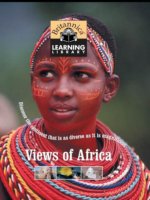
Views of Africa
Discover the continent that is as diverse
as it is magnificent
CHICAGO LONDON NEW DELHI PARIS SEOUL SYDNEY TAIPEI TOKYO
LEARNING
LIBRARY
B
r
i
t
a
n
n
i
c
a
®
© 2008 BY ENCYCLOPÆDIA BRITANNICA,INC.
Cover photos (front): Anthony Bannister—Gallo Images/Corbis; (back): Sharna Balfour—Gallo Images/Corbis. Cover insert photos (left): Roger Wood/Corbis;
(center): Lawson Wood/Corbis; (right): Robert Holmes/Corbis
International Standard Book Number:978-1-59339-513-1
No part of this work may be reproduced or utilized in any form or by any means, electronic or mechanical, including photocopying, recording, or by any
information storage and retrieval system, without permission in writing from the publisher.
BRITANNICA LEARNING LIBRARY:VIEWS OF AFRICA 2008
Britannica.com may be accessed on the Internet at .
(Trademark Reg. U.S. Pat. Off.) Printed in U.S.A.
PROJECT TEAM
Judith West, Editorial Project Manager
Christopher Eaton, Editor and Educational
Consultant
Kathryn Harper, U.K. Editorial Consultant
Marilyn L. Barton, Senior Production
Coordinator
Editors
Theodore Pappas
Anthony L. Green
Mary Rose McCudden
Andrea R. Field
Michael J. Anderson
Colin Murphy
Locke Petersheim
Indu Ramchandani (Encyclopædia
Britannica India)
Bhavana Nair (India)
Rashi Jain (India)
Design and Media Specialists
Nancy Donohue Canfield, Design
Megan Newton-Abrams, Design
Karen Koblik, Photos
Joseph Taylor, Illustrations
Amy Ning, Illustrations
Jerry A. Kraus, Illustrations
Michael Nutter, Maps
Copy Editors
Barbara Whitney
Laura R. Gabler
Dennis Skord
Lisa Braucher, Data Editor
Paul Cranmer, Indexer
ENCYCLOPÆDIA BRITANNICA
PROJECT SUPPORT TEAM
EDITORIAL
Linda Berris
Robert Curley
Brian Duignan
Kathleen Kuiper
Kenneth Pletcher
Jeffrey Wallenfeldt
Anita Wolff
Charles Cegielski
Mark Domke
Michael Frassetto
James Hennelly
Sherman Hollar
Michael R. Hynes
Sandra Langeneckert
Gene O. Larson
Michael I. Levy
Robert Lewis
Tom Michael
Janet Moredock
DESIGN
Steven N. Kapusta
Carol A. Gaines
Cate Nichols
ART
Kathy Nakamura
Kristine A. Strom
Nadia C. Venegas
ILLUSTRATION
David Alexovich
Christine McCabe
Thomas Spanos
MEDIA ASSET MANAGEMENT
Jeannine Deubel
Kimberly L. Cleary
Kurt Heintz
Quanah Humphreys
COPY
Sylvia Wallace
Jennifer F. Gierat
Glenn Jenne
Mary Kasprzak
Thad King
Larry Kowalski
Joan Lackowski
Dawn McHugh
Julian Ronning
Chrystal Schmit
Sarah Waterman
INFORMATION MANAGEMENT/
INDEXING
Carmen-Maria Hetrea
Edward Paul Moragne
Marco Sampaolo
Sheila Vasich
Mansur G. Abdullah
Keith DeWeese
Catherine Keich
Stephen Seddon
EDITORIAL TECHNOLOGIES
Steven Bosco
Gavin Chiu
Bruce Walters
Mark Wiechec
COMPOSITION TECHNOLOGY
Mel Stagner
MANUFACTURING
Dennis Flaherty
Kim Gerber
INTERNATIONAL BUSINESS
Leah Mansoor
Isabella Saccà
ENCYCLOPÆDIA BRITANNICA, INC.
Jacob E. Safra,
Chairman of the Board
Jorge Aguilar-Cauz,
President
Michael Ross,
Senior Vice President, Corporate Development
Dale H. Hoiberg,
Senior Vice President and Editor
Marsha Mackenzie,
Managing Editor and Director of Production
In
Views of
Africa
, you’ll
discover answers to these
questions and many more.
Through pictures, articles,
and fun facts, you’ll
learn about the people,
traditions, landscapes, and
history that make up many
of the countries and cities
of Africa.
INTRODUCTION
Who were the pharaohs? What country was created as a home for freed slaves?
On what river would you find the Aswan High Dam? What was apartheid?
Views of Africa
To help you on your journey, we’ve provided the following guideposts in
Views of Africa
:
■ Subject Tabs—The colored box in the upper corner of each right-hand
page will quickly tell you the article subject.
■ Search Lights—Try these mini-quizzes before and after you read the
article and see how much—and how quickly—you can learn. You can even
make this a game with a reading partner. (Answers are upside down at the
bottom of one of the pages.)
■ Did You Know?—Check out these fun facts about the article subject.
With these surprising “factoids,” you can entertain your friends, impress
your teachers, and amaze your parents.
■ Picture Captions—Read the captions that go with the photos. They
provide useful information about the article subject.
■ Vocabulary—New or difficult words are in bold type. You’ll find
them explained in the Glossary at the end of the book.
■ Learn More!—Follow these pointers to related articles in the book. These
articles are listed in the Table of Contents and appear on the Subject Tabs.
■ Maps—You’ll find lots of information in this book’s many maps.
■ The Country Maps point out national capitals. Globes beside
Subject Tabs show where countries are located in the world.
■ The Continent Maps have a number key showing the location of
all countries.
■ The Icons on the maps highlight major geographic features and climate.
Here’s a key to what the map icons mean:
Deserts and Other Dry Areas
Polar Regions and Other Frozen Areas
Mountains
Rainforests
General Forests
© 2008 Encyclopædia Britannica, Inc.
The rocky islands of Seychelles are rugged and beautiful.
© Nik Wheeler/Corbis
© 2008 Encyclopædia Britannica, Inc.
Views of Africa
TABLE OF CONTENTS
INTRODUCTION . . . . . . . . . . . . . . . . . . . . . . . . . . . . . 3
Africa: Land of Splendor . . . . . . . . . . . . . . . . . . . . . . 6
CENTRAL AND WESTERN AFRICA
Congo: Two Countries, One Name . . . . . . . . . . . . . . . . . 8
Ghana:
Gold Coast of Africa . . . . . . . . . . . . . . . . . . . . 10
Accra, Ghana: From Trading Post to Modern City . 12
Guinea: Forests and Minerals . . . . . . . . . . . . . . . . . 14
Liberia: Africa’s Oldest Republic . . . . . . . . . . . . . . . 16
Nigeria: Land of 500 Languages . . . . . . . . . . . . . . . 18
Senegal: Land of
Teranga
. . . . . . . . . . . . . . . . . . . . 20
EASTERN AFRICA
Ethiopia: Ancient Country in Africa’s Horn. . . . . . . . 22
Addis Ababa, Ethiopia: The City Called
“New Flower” . . . . . . . . . . . . . . . . . . . . . . . . . . 24
Kenya: Cradle of Humanity . . . . . . . . . . . . . . . . . . . 26
Nairobi, Kenya: From Swamp to Capital City. . . . . 28
Seychelles: An Island Paradise . . . . . . . . . . . . . . . . 30
Mogadishu, Somalia: Seaside Somalian Capital. . . . 32
Kampala, Uganda: City on the Hill of Antelopes . . . . 34
NORTH AFRICA
Algeria: Desert Land on the Sea. . . . . . . . . . . . . . . . 36
Egypt: The Pharaohs and the Pyramids . . . . . . . . . . 38
Suez Canal, Egypt: Joining Two Seas for a
Shortcut. . . . . . . . . . . . . . . . . . . . . . . . . . . . . . . . 40
Libya: Oil Country of Africa . . . . . . . . . . . . . . . . . . . 42
Rabat, Morocco: Built for Victory . . . . . . . . . . . . . . . 44
The Sudan: Giant of Africa. . . . . . . . . . . . . . . . . . . . 46
SOUTHERN AFRICA
Angola: Land of Oil and Diamonds. . . . . . . . . . . . . . 48
Botswana: The Jewel of the Kalahari. . . . . . . . . . . . 50
Madagascar: Island Sanctuary . . . . . . . . . . . . . . . . 52
Lilongwe, Malawi: On Malawi’s Fertile Plains . . . . . 54
Windhoek, Namibia: Namibia’s Windy Corner . . . . . 56
South Africa: A People Apart . . . . . . . . . . . . . . . . . . 58
Harare, Zimbabwe: City in a Garden . . . . . . . . . . . . 60
GLOSSARY . . . . . . . . . . . . . . . . . . . . . . . . . . . . . . . 62
INDEX . . . . . . . . . . . . . . . . . . . . . . . . . . . . . . . . . . . 63
LEARNING
LIBRARY
B
r
i
t
a
n
n
i
c
a
®
Have a great trip!
© 2008 Encyclopædia Britannica, Inc.
Alabaster sphinx at Memphis, Egypt.
© Roger Wood/Corbis
Giraffe, Kenya.
© Royalty-Free/Corbis
1
20
38
2
21
39
3
22
40
4
23
15
27
28
44
35
11
37
41
5
13
42
6
24
43
7
25
26
45
8
46
9
47
10
29
30
50
14
31
36
53
34
18
52
33
49
17
12
48
16
19
32
01. Algeria
02. Angola
03. Benin
04. Botswana
05. Burkina Faso
06. Burundi
07. Cameroon
08. Central African Republic
09. Chad
10. Comoros
11. Congo, Dem. Rep. of the*
12. Congo, Republic of the
13. Côte d’Ivoire
14. Djibouti
15. Egypt
16. Equatorial Guinea
17. Eritrea
18. Ethiopia
19. Gabon
20. Gambia
21. Ghana
22. Guinea
23. Guinea-Bissau
24. Kenya
25. Lesotho
26. Liberia
27. Libya
28. Madagascar
29. Malawi
30. Mali
31. Mauritania
32. Mayotte (France)
33. Morocco
34. Mozambique
35. Namibia
36. Niger
37. Nigeria
38. Rwanda
39. São Tomé and Príncipe
40. Senegal
41. Seychelles
42. Sierra Leone
43. Somalia
44. South Africa
45. Sudan
46. Swaziland
47. Tanzania
48. Togo
49. Tunisia
50. Uganda
51. Western Sahara†
52. Zambia
53. Zimbabwe
0
COUNTRIES OF AFRICA
2
51
* Full name is the Democratic Republic of the Congo (formerly Zaire)
† Annexed by Morocco
* Islands of Cape Verde, Mauritius, R
é
union off map
© 2008 Encyclopædia Britannica, Inc.
AFRICA
7
Answer: Africa is one of the largest continents.
★
L
a
n
d
o
f
S
p
l
e
n
d
o
r
Africa’s splendor is seen in its beautiful
landscapes, its amazing animal life, and its diverse
human culture. The African continent is the home of
more than 800 million people living in more than 50
countries. Africa is the second largest continent on
Earth, after Asia.
Africa’s long coastline is shaped by the Atlantic and
Indian oceans and the Mediterranean and Red seas. In
the north of the continent lies the Sahara. It is the world’s
largest desert and covers almost all of northern Africa. Located in
southwestern Africa are two other major deserts, the Kalahari and
the Namib.
The African continent has two major rivers, the Nile and the Congo.
The Nile is the longest river in the world. At the southern end of the Nile is
Lake Victoria, Africa’s largest lake. Not far to the southeast of Lake
Victoria is Mount Kilimanjaro, the highest point in Africa. One of the
world’s major waterfalls, Victoria Falls, is also in Africa.
Africa is known for its wildlife. There are elephants, rhinoceroses,
hippopotamuses, lions, and leopards. Other animals include antelope,
gazelles, giraffes, baboons, gorillas, hyenas, and chimpanzees. Most
of these animals live in Africa’s open grasslands or in tropical
rainforests.
The people of Africa belong to hundreds of ethnic groups. Each
group has its own language, traditions, religion, arts, and history.
During its political history, Africa has been the site of Egyptian
dynasties, African kingdoms, European colonies, and independent
countries.
Find and
correct the
error in the
following sentence:
Africa is one of the
smallest continents.
S
E
A
R
C
H
L
I
G
H
T
DID YOU KNOW?
Surprisingly, the coastline of Africa is
shorter than the coastline of Europe,
the second smallest continent. This is
because Africa has few inlets, large
bays, or gulfs—features that add to
coastal length by causing “detours”
away from a straight coastline.
LEARN MORE! READ THESE ARTICLES…
ALGERIA • CONGO • SOUTH AFRICA
© 2008 Encyclopædia Britannica, Inc.
8
Women gather firewood in the Democratic Republic
of the Congo, which is also called Congo (Kinshasa).
More than two-thirds of the people live in small towns
and villages.
© Gallo Images/Corbis
How
did the
Congo
get its name?
S
E
A
R
C
H
L
I
G
H
T
DID YOU KNOW?
The Congo River is one of the
great rivers of the world. Only the
Amazon River (in South America)
drains a larger area than the
Congo River does.
© 2008 Encyclopædia Britannica, Inc.
CONGO
9
As long as 25,000 years ago, people began to live in the
forests of the Congo River basin in west-central Africa.
They gathered food from the forests and dug up roots to eat.
Today the Congo basin contains two countries
separated by the Congo River. Both of the countries are
called Congo. To tell them apart, they are sometimes
referred to by the names of their capital cities. One of the
countries is called Congo (Brazzaville), and the other is
Congo (Kinshasa). Congo (Brazzaville) is officially
known as the Republic of the Congo. Congo (Kinshasa) is
officially called the Democratic Republic of the Congo.
The Congo region got its name from the Kongo, or Bakongo, one of
the main groups of people who live there. These people have been in the
area for centuries, from the time when the Congo was ruled by various
kingdoms.
The Portuguese arrived in the kingdom called Kongo in 1483. At first
the newcomers were friendly to the people of the kingdom. But by the
1530s the Portuguese were sending the Kongolese away as slaves.
By the late 1800s other European countries had become interested in
the Congo region. They valued the Congo River as a route for trade
between the west coast of Africa and the interior part of the continent. The
French and the Belgians took over different parts of the Congo. The local
people didn’t win their independence until 1960. Though
free, each of the two Congos faced many problems. Both
countries experienced periods of fierce internal
fighting and struggles for power.
Answer: It was named for the Kongo, or Bakongo, people, who
have lived there for centuries.
★
Congo (Brazzaville).
Congo (Kinshasa).
Brazzaville
Kinshasa
O
n
e
N
a
m
e
T
w
o
C
o
u
n
t
r
i
e
s
,
LEARN MORE! READ THESE ARTICLES…
GHANA • GUINEA • KAMPALA,UGANDA
© 2008 Encyclopædia Britannica, Inc.
10
Why do you
think people
from so many other
countries wanted
to take over Ghana?
(Hint: Think of
Ghana’s former name.)
S
E
A
R
C
H
L
I
G
H
T
These miners work at the Ashanti gold mine in Obuasi,
Ghana. Ghana has long been one of the world’s leading
producers of gold. Mining provides work for many
of Ghana’s people.
© Penny Tweedie/Corbis
© 2008 Encyclopædia Britannica, Inc.
GHANA
11
The country of Ghana has so much gold that it was once
called the Gold Coast of Africa. It still has the largest gold
reserves in the world. Ghana is in western Africa. Accra
is its capital and largest city.
Ghana has coastal plains in the south, savanna in the north, and hills
and rainforests in between. The oddly shaped baobab tree grows in the
savanna and coastal plains. There you will also find giant anthills, some
of which are 14 feet high. In the rainforests are tall trees such
as the mahogany. And there are many kinds of animals—lions,
leopards, elephants, buffalo, monkeys, and snakes, to name
a few.
Many of Ghana’s people work in fishing, logging, or gold
mining. Farming is very important as well. Much of the
farmland is used for growing cacao. These trees produce cocoa
beans, which are used to make chocolate. Cacao, timber, and
gold are sold to other countries.
Long ago the Almoravids from northern Africa
conquered Ghana and forced its people to become slaves.
Since then, many other groups have gone to Ghana. The
Portuguese arrived in the 1400s. They traded in gold, ivory,
and slaves. Later came the British, the French, the Dutch, the
Swedes, and the Danes. In 1901 the British made the Gold Coast a colony.
In 1957 the colony won its independence and became the new country of
Ghana. Today Ghana is one of Africa’s leading democracies.
L
EARN MORE! READ THESE ARTICLES…
ACCRA,GHANA • LIBERIA • NIGERIA
Answer: Ghana was called the Gold Coast because of its vast
reserves of gold. Many different people have wanted to control
Ghana over the years so that they could take its gold.
★
Accra
DID YOU KNOW?
Ghana’s weavers are famous for their
colorful kente cloth, which is made in
narrow strips in beautiful patterns. The
patterns have such names as
“thousand shields,” “the lion catcher,”
and “gold dust.” The strips are sewn
together to make clothing.
o
f
A
f
r
i
c
a
G
o
l
d
C
o
a
s
t
© 2008 Encyclopædia Britannica, Inc.
12
Accra is the capital of the West African country of Ghana. It lies on the
coast of the Gulf of Guinea, which is part of the Atlantic Ocean. The city is
built partly on a low cliff. The rest spreads northward across the Accra
plains.
Accra reflects the cultures of the many people who have settled in the
area where it now stands. The Ga people
had villages there when the Portuguese
arrived in 1482. The British, the Danes,
and the Dutch came later. The Europeans
built fortified trading posts along the
coast. They traded in gold, ivory, and
slaves. Because of the area’s gold, it
became known as the Gold Coast. In
1877 Accra became the capital of the
British Gold Coast colony.
The Gold Coast gained its
independence from British rule in 1957 and took the name Ghana. Accra
became the capital of the new country. Today it is a modern city of more
than 1.5 million people.
Accra is Ghana’s business and educational center. The national
museum and national archives and the Accra Central Library are located in
the city. The University of Ghana is in nearby Legon. Black Star Square is
the site of the Independence Arch. This large square is used for parades.
For those who like sports, Accra has a football (soccer) stadium and a
racecourse. Not far from Accra are the Aburi Botanical Gardens, which
were created by the British more than 100 years ago. And the
city’s large open markets receive most of the
food supply each day.
L
EARN MORE! READ THESE ARTICLES…
ANGOLA • GHANA • NIGERIA
Children in Ghana enjoying a game called
mancala
,
played with stones and cups.
© Margaret Courtney-Clarke/Corbis
DID YOU KNOW?
Accra’s name comes from
nkran
, a
word in the language of the Akan
people of Ghana.
Nkran
are black
ants that are found all over the city
and the surrounding area.
F
r
o
m
T
r
a
d
i
n
g
P
o
s
t
t
o
M
o
d
e
r
n
C
i
t
y
© 2008 Encyclopædia Britannica, Inc.
Accra, GHANA
13
Answer: The British once ruled there.
Part of the city is built on a cliff.
★
Which of
the following can
be said of Accra?
a) The British once
ruled there.
b) It is located on the
Pacific Ocean.
c) Part of the city is
built on a cliff.
S
E
A
R
C
H
L
I
G
H
T
Accra lies along the Gold Coast, an area in southern Ghana that has rich
deposits of gold. The Portuguese built this strong fort, now called Elmina
Castle, in the Gold Coast in 1482. They wanted to keep all of the area’s
gold trade for themselves.
© Liba Taylor/Panos Pictures
© 2008 Encyclopædia Britannica, Inc.
14
Guinea is a country in western
Africa on the Atlantic Ocean. Its
capital city, Conakry, is a major
port. Ships stop there to load up on
Guinea’s minerals and other products and transport
them to markets around the world.
The land is divided into four main areas. A flat plain
lies along the coast. Northern Guinea has open grasslands called
savannas. The grass there grows as high as ten feet during the rainy season.
To the east the Fouta Djallon highlands rise sharply from the plain. In the
southeast is a hilly area with large forests. There are valuable teak,
mahogany, and ebony trees in this area. But much of the forest is becoming
open grassland. People have cut down many of the trees so that they can
use the land for farming.
Most people in Guinea work as farmers, growing their own food. They
grow rice, cassava, sweet potatoes, bananas, coffee, pineapples, peanuts,
yams, and corn. Some crops are grown for export, or to sell to other
countries. Guinea also has large amounts of such minerals as bauxite, iron
ore, gold, and diamonds. These are mined and exported.
The people of Guinea belong to several different groups. In the Fouta
Djallon region many people are Fulani. In northern Guinea are the
Malinke. Other major groups in the country are the Susu, the Kissi,
and the Kpelle. Until 1958 Guinea was a colony of France.
Because of that the official language in Guinea is French. But
many African languages are spoken there as well.
L
EARN MORE! READ THESE ARTICLES…
CONGO • GHANA • NIGERIA
Conakry
The savannas of northern Guinea have
some trees scattered among the grasses.
© David Reed/Panos Pictures
True
or false?
Most of the
people in Guinea
work as miners.
S
E
A
R
C
H
L
I
G
H
T
a
n
d
M
i
n
e
r
a
l
s
F
o
r
e
s
t
s
© 2008 Encyclopædia Britannica, Inc.
GUINEA
Answer: FALSE. Most of the country’s people are farmers.
★
DID YOU KNOW?
All three of western Africa’s major
rivers begin in Guinea. The country’s
Fouta Djallon region is the source of
the Niger, the Gambia, and the
Senegal rivers.
© 2008 Encyclopædia Britannica, Inc.
16
Women try to catch fish in a small pond north
of Monrovia, Liberia. Fish are a major source of
protein for many Liberians.
© Jan Dago/Magnum Photos
DID YOU KNOW?
Liberia means “land of the free,” a
fitting name for a country created for
freed slaves.
© 2008 Encyclopædia Britannica, Inc.
LIBERIA
17
In the 1820s some Americans who opposed slavery
bought land in West Africa. They used it to create a
new country for freed slaves, whose ancestors had
been taken from Africa. This country was called
Liberia. Its government was set up as a republic modeled on the United
States government. Liberia is now the oldest republic in Africa.
Despite the origins of the country, most of its citizens are not the
descendants of former slaves.
Today you can find out about Liberia’s past by visiting the
Malima Gorblah Village and Besao Village. These villages
preserve the country’s old culture. They are like living
museums of Liberia’s past.
Liberia’s climate is warm and humid all year and
rainy from May to October. The country’s forests and
rolling hills are home to such wild animals as
monkeys, chimpanzees, antelopes, elephants,
crocodiles, and poisonous snakes. There are two rare
animals found in Liberia. One is the pygmy
hippopotamus, which looks like a baby hippo even
when it’s full-grown. The other is the manatee, a big
seal-shaped mammal that lives in the water.
The rubber trees, coffee, and cocoa that grow in Liberia
provide products that can be sold to other countries. Liberian
farmers also grow rice, sugarcane, bananas, and yams. Liberia
is rich in mineral resources. It is one of the world’s leading
producers of iron ore.
Liberia suffered through a civil war in the early 1990s.
It made life dangerous and difficult for many people.
The war officially ended in 1996, but some fighting continued.
L
EARN MORE! READ THESE ARTICLES…
GHANA • NIGERIA • SENEGAL
Answer: Liberia is the oldest republic in Africa.
★
Monrovia
Fill in
the blank:
Liberia
is the oldest
___________
in Africa.
S
E
A
R
C
H
L
I
G
H
T
O
l
d
e
s
t
R
e
p
u
b
l
i
c
A
f
r
i
c
a
’
s
© 2008 Encyclopædia Britannica, Inc.
18
Nigeria is a country on the west coast of Africa. It’s a
place of great variety, in both land and people. More
people call Nigeria home than any other country on
the continent. There are about 250 different groups
of people living there. Each has its own traditions and ways of life. And
each group has its own language. More than 500 different languages
are spoken in Nigeria. But English is the official language.
The weather is not the same in all parts of the country.
Some areas get a lot of rain. Other areas are very dry.
Because there are different kinds of weather in different
parts of the country, there are many kinds of animals
and plants. There are thick rainforests as well as
mangrove and freshwater swamps. There is also
open grassland called “savanna.” There are small
trees all over the vast savanna.
DID YOU KNOW?
It is said that more twins are born in
Nigeria than anywhere else in the
world. Twins are so common that
they usually get the same set of
names. For example, the Yoruba
people usually name their twins
Taiwo and Kehinde.
L
a
n
d
o
f
5
0
0
L
a
n
g
u
a
g
e
s
© 2008 Encyclopædia Britannica, Inc.
NIGERIA
19
Once, camels, antelope, hyenas, lions, baboons,
and giraffes lived in the savanna. Red river hogs, forest
elephants, and chimpanzees lived in the rainforest.
Animals found in both forest and savanna included
leopards, monkeys, gorillas, and wild pigs. Today these
animals generally are found only in special parks.
Nigeria has many cities. The capital of Nigeria used to be Lagos.
But in 1991 the capital changed to Abuja. Lagos is a very large
coastal city with many businesses. But Abuja is in the middle of the
country, which makes it easier for people to travel there. Lagos was
overcrowded too, and Abuja had more open land for building.
Answer: FALSE. Parts of the country do get a lot of rain, but parts
of it are very dry.
★
Abuja
Wase Rock rises sharply above the surrounding
countryside near Wase, Nigeria. This part of the
country consists of savanna, or open grassland,
with scattered short trees.
© Bruce Paton/Panos Pictures
True
or false?
Nigeria
is a very
rainy country.
S
E
A
R
C
H
L
I
G
H
T
LEARN MORE! READ THESE ARTICLES…
CONGO • GHANA • SENEGAL
© 2008 Encyclopædia Britannica, Inc.
20
The religion
followed by
most of the people
of Senegal is
a) Islam.
b) Christianity.
c) Buddhism.
S
E
A
R
C
H
L
I
G
H
T
A Soninke mother and child stand in the doorway of a traditional-
style mud house on a bank of the Senegal River. Like most of the
other peoples in Senegal, the Soninke are Muslim.
© Margaret Courtney-Clarke/Corbis
© 2008 Encyclopædia Britannica, Inc.
SENEGAL
21
Long ago there was a house packed with
men and women. They were inspected
and priced like animals. The
weaker ones died, and the stronger
ones were shipped to the Americas to work as
slaves. This slave house was on Gorée Island, which
lies off the coast of Senegal, in westernmost Africa.
Exactly what went on there is not known for sure. But
Senegal was at one time involved in selling Africans
as slaves.
But that was long ago. Today Senegal’s culture is known for its
teranga, a spirit of warm welcome toward outsiders. Teranga means
“hospitality,” or “welcoming heart,” in the language of the Wolof. Many
different groups of people make up the Senegalese nation. The Wolof are
one of the largest of Senegal’s seven main ethnic groups.
Despite their different backgrounds, the people of Senegal tend to live
in similar ways. Most of the people practice Islam. And most live in small
villages in the countryside. Each village has a water source, a mosque, and
a public gathering place. France ruled Senegal until 1960. The different
groups of Senegal speak several different African languages, but French is
still widely used as a common language. This helps people from different
groups talk to each other.
Senegal is one of the world’s main producers of peanuts. The country
has wide rivers and good soil. The light-colored sandy soil in the
northwestern part of the country is especially good
for growing peanuts. Dakar, the country’s capital, is
a major center for the peanut trade.
L
EARN MORE! READ THESE ARTICLES…
GHANA • LIBERIA • NIGERIA
Answer: a) Islam.
★
L
a
n
d
o
f
T
e
r
a
n
g
a
Dakar
DID YOU KNOW?
Léopold Senghor, the first president
of independent Senegal, was also an
important writer. He was a leading
poet of a movement that celebrated
African culture.
© 2008 Encyclopædia Britannica, Inc.
Find and
correct the
error in the
following sentence:
Ethiopia is a young
country located in the
Horn of Africa region
of eastern Africa.
S
E
A
R
C
H
L
I
G
H
T
A village lies in a typically rugged
part of Ethiopia’s landscape.
© Jacques Langevin–Corbis/Sygma
DID YOU KNOW?
In the early 1970s the remains of
some of the bones of “Lucy” were
found in Ethiopia. Lucy is believed to
be an early ancestor of humans who
lived between 3 million and 4 million
years ago.
22
© 2008 Encyclopædia Britannica, Inc.
ETHIOPIA
Answer: Ethiopia is an ancient country located in the Horn of
Africa region of eastern Africa.
★
Not very long ago, a lot of people in Ethiopia, a
country in eastern Africa, went hungry. In 1992-
93 the Ethiopian government had to ask countries
to donate food for its people. Some 10 million
people faced starvation. Although many countries helped, hundreds of
thousands of Ethiopians still suffered. Many later died because they
had no food.
Most Ethiopians are farmers. But sometimes the government makes
bad decisions on how to use the country’s farmland. That’s one reason
why there’s not always enough food. Another reason is lack of rain.
Ethiopia has two rainy seasons. But once in a while it suffers from
droughts, times when it does not rain enough. Often Ethiopia must buy
food from other countries. But Ethiopia sells things such as sugarcane,
beeswax, leather goods, and coffee. Ethiopia is the place where coffee
first came from.
Ethiopia is one of the oldest countries in Africa. It lies within a
region that’s called the Horn of Africa because on a map it looks like
an animal’s horn. The capital is Addis Ababa. Most of the people in
Ethiopia are Christian. Some follow Islam. Others follow traditional
animism, the belief that there is life in the forces of nature or even in
inanimate objects.
One of the exciting things in Ethiopia is the rich
variety of wildlife. But many of the animals have
become rare, including lions, leopards, elephants,
giraffes, rhinoceroses, and wild buffalo. In order to
protect the remaining animals, the government has
set aside 20 special parks and sanctuaries.
A
n
c
i
e
n
t
C
o
u
n
t
r
y
i
n
A
f
r
i
c
a
’
s
H
o
r
n
Addis Ababa
LEARN MORE! READ THESE ARTICLES…
ADDIS ABABA,ETHIOPIA • KENYA
MOGADISHU,SOMALIA
© 2008 Encyclopædia Britannica, Inc.
24
How did
Addis Ababa
get so many
eucalyptus trees?
S
E
A
R
C
H
L
I
G
H
T
DID YOU KNOW?
Many of the places in Addis Ababa
don’t have regular addresses. Many
of the city’s streets don’t even have
names. So if you go to Addis Ababa,
be sure to get a guide.
© 2008 Encyclopædia Britannica, Inc.