Leading HR delivering competitive advantage_6 pptx
Bạn đang xem bản rút gọn của tài liệu. Xem và tải ngay bản đầy đủ của tài liệu tại đây (226.37 KB, 30 trang )
CHAPTER 9
Understanding the Value of Engagement:
Building Belief in Performance
SHASHI BALAIN AND PAUL SPARROW
9.1. Introduction: Why is employee engagement seen as important
by organizations?
C
hapter 1 argued that the complexities of business model change often
involve a change in “mindset” or an employee’s “mental model” of exactly
what the organization’s business model is. There is an essential process of
communication and involvement of the workforce in which the human resource
(HR) Director plays a leading role, attempting to create this mental mobility in the
attitudes held by the workforce. This becomes especially true when, as argued in
Chapter 4, there are likely to be relatively few people – especially at the outset of a
change – who have really grasped the nature of the change and have made the
“mental” shift to a new model.
The challenge for chief executive officers (CEOs) and HR Directors in periods
of rapid change is to ask whether they can take their people with them. The aim of
this chapter is to help us understand – and test – the assumptions that HR
engagement strategies are based on.
Understanding the value of engagement
Headline issue:
Is engagement a future-proof HR strategy?
Strategic imperative:
Construct and develop much better insight into how it influences organizational
performance – reverse engineer the performance recipes that managers have in mind.
Investigate the “performance recipes” in the organization with transformation,
capability, and operational directorates. Help line managers understand the complex
business performance benchmarks that they report to, and how these performance
162
Shashi Balain and Paul Sparrow 163
outcomes are best engineered through people management. Help employees understand
the benefits of engaging with that particular view of performance.
Design engagement surveys using the analogy of a medical diagnosis, including the
complaint, history, examination of the condition, ancillary tests if needed, diagnosis,
treatment, and prognosis with and without treatment in a single examination.
Deal with the issue of employee identification with the organization – why should
employees live the organization’s values if it does not live theirs?
Research how customer satisfaction affects the relationship between employee
experiences and financial performance, and how employee satisfaction is associated with
specific components of the service model.
Step into the void that currently exists in the prediction of organizational performance
on the back of strategic change management projects. Work side-by-side with corporate
communications, internal and external marketing, and operations experts and share
respective models and insights into how employees truly impact operational and strategic
performance
Must-win battle:
The HR Director “reverse engineer” the type of performance that the organization is trying
to create, and to understand the depth to which – and the ways in which – the organization
needs to foster links and bonds with its employees.
In examining the issues raised by this challenge, we argue that
The key messages that emerge from this chapter
1) Engagement is used in practice inside organizations in three different ways: as
internal marketing, as process improvement, and as being predictive of corporate
performance. Each makes very different assumptions about what needs to be
measured under the label “engagement,” what the consequence of positive or
negative scores on such measurement will be, and what remedial action by the
organization needs to be made dependent on that measurement.
2) Work from Harvard introduced the concept of the Service-profit chain and Balanced
Scorecard and proved influential for HR Directors in assuming that business
performance has direct and less direct causes and these can be put in a cause-effect
order. Employee factors act as important antecedents.
3) Psychologists begged to differ in some of the conclusions that might get drawn. They
had been working on the topic of engagement for many years, under the guise of
specific employee constructs, such as employee job satisfaction, commitment, or
burnout and only saw intermediate performance effects, not a link to organizational
performance.
4) Practitioner approaches, rather than being driven by theory, have been more
empirical. Items in the questionnaire are a measure of attitudinal outcomes
164 Understanding the Value of Engagement
The key messages that emerge from this chapter: (Continued)
(principally satisfaction, loyalty, pride, customer service intent, and intent to stay with
the company). It lumps items that are significantly related to performance together to
form the core of what is then called engagement.
5) Engagement is brought down to: belief in the organization, a desire to work to make
things better, understanding of business context and the “bigger picture,” being
respectful of, and helpful to, colleagues, a willingness to “go the extra mile,” and
keeping up-to-date with developments in the field. HR practitioners make different
assumptions as to how this type of engagement is best created.
6) There is a risk that organizations are “asking” too much when they expect significant
proportions of their people to be so “engaged.” What is being measured at the moment
may lead to misdirected effort.
7) Psychological approaches either view engagement as an attitude (having the three
components of cognition, affect, and behavior) and is therefore similar to the concept
of job satisfaction, or is more akin to motivation (i.e., is a heightened state of
goal-directed behavior as in vigor).
8) The idea that employees are either engaged or not, and that once engaged, the impact
on performance is linear (a bit more engagement equals just that bit more performance)
is of course absurd (yet much of the practitioner literature presents this picture).
9) Many definitions confuse the condition of engagement with the outcome that it is
supposed to create. Some of these desired outcomes can be seen to exist at the
individual or employee level, whilst others really exist (and are best managed) at a
group or collective level.
10) Empirical evidence suggests that the service-profit chain is generally supported at the
business unit level. But there have been few tests of the whole chain, and those carried
out provide a more sober conclusion on the size of effect between individual-level
engagement and organizational performance outcomes.
Credit crunches and recessions have a habit of breaking acts of faith. Is engagement
a future-proof HR strategy? We argue that it is, but we must be far more critical
about the construct and develop much better insight into how it influences
organizational performance. We have taken far too much on trust. There are three
streams of management thinking that have all led to the importance of employee
engagement as both an idea, and as a basis for HR strategy:
1. Engagement as internal marketing;
2. Engagement as process improvement; and
3. Engagement as predictive of service and corporate performance.
In practice, organizations, or the people made responsible for managing
engagement strategies, often see a little of each of these three purposes within their
HR strategy. This is understandable, yet we argue also dangerous. The danger is
Shashi Balain and Paul Sparrow 165
that each of the three purposes makes very different assumptions about what needs
to be measured under the label “engagement,” what the consequence of positive or
negative scores on such measurement will be, and what remedial action by the
organization needs to be made dependent on that measurement.
Given the general lack of development in employee communication
mechanisms, the first type of engagement strategy used by many organizations,
sees it as a process to help articulate and sell complex change and strategy to the
workforce, with the intention of creating a sense of emotional attachment and
identification to the goals of the change.
Engagement as internal marketing
1. Goal is to develop a shared mental model of the change or strategy;
2. Employees asked to “engage with” something – a brand, a particular strategy, a value
proposition;
3. Employee engagement process must be preceded by an important prior period of
business engagement (education of the line and of employees about the strategy);
4. Organization uses customer relationship management (CRM) principles, to see how
employees (as internal customers) feel about the proposition;
5. Organization assesses whether both sides deliver the “deal” that is seen as necessary,
that is, behaviors and emotions desired by the organization and the employee need for
internal support;
6. Internal marketing is used to target and shape communications in ways that resonate
with key employee communities;
7. The engagement survey represents an employee feedback mechanism, and a
management control device;
8. Periodic assessment is used as a barometer to show how well the organization seems
to be doing against the strategy.
The second strategy carries a performance expectation, but engagement is still seen
as having an indirect contribution to performance. The assumption made by the
organization is that motivated employees, when also encouraged to act as good
citizens, will self-manage, thereby taking initiative to improve on processes.
Engagement as process improvement
1. Engagement is seen as part of a quid pro exchange relationship. The organization has
to create a “blanket of trust” before motivated employees will pay back the
investments made by the organization to motivate them by taking care of the
organization and its customers.
166 Understanding the Value of Engagement
Engagement as process improvement: (Continued)
2. Seen as a necessary ingredient for – or precursor of – subsequent performance but no
claims are made by managers that engagement necessarily improves bottom-line
organizational performance.
3. Rather, senior managers believe that indirectly it makes the execution of a strategic
change smoother and easier, and that they are capable of putting in place more
complex and testing changes once engagement scores are high.
A third view comes from the customer services literature and draws upon models
of what is called “emotional contagion” and “service climate.” This suggests that
there is a direct and causal “service-profit chain.” HR practitioners have picked up
on this and assumed that the message must be that more employee engagement
means more business unit performance.
Engagement predictive of service and corporate performance
1. Asserts that there is an association between employee perceptions of the organization
climate (especially its focus on service) and subsequent levels of employee
satisfaction, and then between employee satisfaction and customer satisfaction levels.
2. Asserts that there is then an association between customer satisfaction and customer
behaviors, such as intention to purchase, which in turn has an impact on financial
performance.
3. HR practitioners assume the whole chain is triggered, such that more employee
engagement means more business unit performance.
4. Certain HRM practices that create engagement must also have the power to influence
employee behavior in a desired manner, so that good HR equals good engagement.
This view developed out of the simple proposition by James Heskett and
colleagues
1
from Harvard University that organizational profitability can be
influenced by chain of events starting with internal service quality proved to be a
landmark paper for HRM. T hey argued that this chain involved strong and direct
relationships between:
profit; growth; customer loyalty; customer satisfaction; the value of goods
and services delivered to customers; and employee capability, satisfaction,
loyalty and productivity.
Within this hypothesized causal sequence lie important employee variables such as
employee satisfaction. These are considered vital to achieve important customer
outcomes, which in turn directly influence profitability and revenue growth of a
Shashi Balain and Paul Sparrow 167
company. The original work by Heskett and colleagues provided persuasive
case-study-based evidence to support their proposed model and created a new
research agenda, which is now popularly referred to as “the service-profit chain.” It
proved very influential for HR Directors and many refer to it when describing their
engagement strategy.
Soon after, following similar research methodolog y, Robert Kaplan and David
Norton,
2
also from Harvard, introduced the concept of Balanced Scorecard. The
basic idea was the same: business performance has direct and less direct causes and
these can be put in a cause-effect order. In their model too, employees figured
prominently under the learning and growth perspec tive. Their ideas proved very
influential on HR thinking and were developed by Brian B ecker, Mark Huselid,
and David Ulrich
3
with the publication of their book the HR Scorecard, which
again inferred a chain of cause-effect constructs that final ly lead to organizational
performance. All of these authors argue that certain HRM practices have the power
to influence employee behavior in a desired manner, such that it finally leads to
improved organizational performance.
At the same time as this work on service-profit chain and HR str ategy,
psychologists began to raise their sights beyond the individual. They begged to
differ in some of the conclusions that might get drawn. They had been working on
the topic of engagement for many years, under the guise of specific employee
constructs, such as employee job satisfaction, commitment, or burnout. However,
this was a critical difference. Psychologists had been reporting some tenuous links
between employee attitudes toward their work with a range of what were called
employee-level (intermediate) performance outcomes – such as organizational
commitment, job satisfaction, and low intention to leave. However, the idea that
employee attitudes could also influence organizational-level performance was still
seen as an untested proposition.
As new work was carried out, ambitious claims were made about the “effect
sizes” that attitudes such as satisfaction and commitment had on
organizational-level outcomes (effect size is a measure of the strength of the
relationship between two variables showing not only whether this relationship has
a statistically significant effect, but also the size of any observed effect when
replicated across samples).
This generated a huge research and consultancy interest. Research was then
initiated to find the mechanisms through which individual-level attitudes could
possibly translate into organizational-level performance outcomes. A plethora of
new constructs came into existence to fill this void. Employee engagement was one
of them.
9.2. Engagement in the practitioner perspective
In this chapter we analyze how the concept of engagement has been understood,
defined and used from the perspective of, practitioners, researchers, and
organizations. This is not to say that one perspective is better than the other, but it
is important to highlight that the approaches might not reflect the same thing and
168 Understanding the Value of Engagement
may be based on different assumptions about how engagement works as a process.
Even within the practitioner or academic field, different approaches are often
taken. Organizations should benchmark their scores on engagement with caution.
The term “employee engagement” initially caught the eye of practitioners.
A stream of consultancy reports seemed to find out how important it was for
organizational performance and how a lack of it could lead to disastrous
consequences. For example, a study conducted by Sirota Consultancy reported that
organizations that have highly engaged employees exhibited a 16 per cent rise in
their share prices as compared to an industry average of 6 per cent. Similar
outstanding results were claimed by other consultancy and research organizations.
It seemed that HR functions had found a tool that could guarantee them a voice at
the highest echelons of management. Now they had in their power something that
could influence shareholder value! Every progressive organization with a
responsible HR function started significant exercises to measure, and yearly
benchmark, the level of engagement of their employees.
The strategic use of engagement benchmarking
As employee engagement was being shown to influence shareholder value, many
organizations chose to make it an important benchmark in their annual Human Capital
Reports (HCR). Engagement became a “must improve” agenda on every HR function’s
performance dashboard. It has been used by organizations as their employer brand
endorsement – being seen as one of the best companies to work for. It became an essential
indicator for any organization aspiring to achieve various employer brand recognitions.
Consultancies offered internal HCRs using engagement as predictive and diagnostic data,
as a risk mitigation strategy, intended to identify parts of the organization, or key pools of
talent, who might be suspected of under-performing in future, or of leaving, given
engagement survey data trends.
One might assume they were all measuring the same thing . We take it for granted
that there is a universally accepted operational and empirical definition. Leaving
aside the question of whether it is empir ically useful or not, there is not. So what is
engagement?
We begin with the practitioner v iew. An organization that many practitioners’
draw upon is that of Gallup Inc. The questionnaire to measure employee
engagement developed by Gallup – known as Gallup Workplace Audit (GWA, also
popularly known as the Q12) – comprises of 12 questions plus an overall
satisfaction question. The items were found to have a highly significant relation to
unitlevelmeasuresofacompany’sperformance.
4
Rather than being driven by
theory, Gallup’s approach has been more empirical. The items measure attitudinal
outcomes (principally satisfaction, loyalty, pride, customer service intent, and
intent to stay with the company), chosen in part because they measure issues that
are within the remit of a supervisor in charge of a given business unit. Gallup had a
Shashi Balain and Paul Sparrow 169
rich database of employee surveys built up over 30 years. Based on their
understanding of those employee behaviors that had maximal impact on a firm’s
performance, they defined engagement as
the individual’s involvement and satisfaction with as well as enthusiasm for
work.
5
Three different types of employee
Based on their national survey of US workers using their engagement questionnaire, Gallup
argues there are three types of employees:
1. Engaged: employees work with passion and feel profound connection to their
company. They drive innovation and move the company forward.
2. Not-engaged: employees are essentially “checked out.” They are sleepwalking
through their workday, putting time – but not energy or passion – into t heir
work.
3. Actively disengaged: employees aren’t just unhappy at work; they are busy acting out
their unhappiness. Every day, these workers undermine what their engaged coworkers
accomplish.
Towers Perrin
6
adopted a similar approach and define employee engagement in
terms of the preferred characteristics that engaged employees exhibit, as different
from the non-engaged employees. They note three key features of such
engagement.
Three key features of an engaged workforce: Towers Perrin
1. Rational/cognitive understanding of the organization’s strategic goals, values, and their
“fit” within it (also known as the “Think” sector);
2. Emotional/affective attachment to the organization’s strategic goals, values, and their
“fit” within it (also known as the “Feel” sector); and
3. The motivation/willingness to do more than the minimum effort in their role (i.e., to be
willing to invest discretionary effort, to “go the extra mile”) for the organization (also
known as the “Act” sector).
The Institute of Employment Studies
7
argues that three important requirements
must be met before engagement can exist:
1. A healthy “psychological contract,” that is, an unwritten, fragile relationship
between the employee and employer that is underpinned by a two-way and
trustful relationship;
170 Understanding the Value of Engagement
2. A need for employees to identify with their organization and its values, believe
in its products and services, that is, to embrace what the organization
stands for;
3. A need for employees to understand the context in which the organization
operates: that is, not just show a commitment to the organization, but a desire
for business appreciation.
The IES view of engagement
1. Belief in the organization
2. Desire to work to make things better
3. Understanding of business context and the “bigger picture”
4. Respectful of, and helpful to, colleagues
5. Willingness to “go the extra mile”
6. Keeping up-to-date with developments in the field
IES pointed out, however, that HR pract itioners make different assumptions as to
how this type of engagement is best created, subscribing to one of two contrasting
views:
1. A “Bottom-up” philosophy, which contends that levels of engagement are
primarily a function of employees’ experiences in their jobs. In which case
engagement is therefore largely a result of factors controlled by first-level
supervisors.
2. A “Top-down” philosophy, which contends that engagement is created by
behavior of an organization and its top-level leaders. In which case
engagement primarily flows out of the organization’s values and the quality of
its strategic leadership.
Making your mind up as to which view you subscribe to is important. If it is the
first one, then the reaction to a set of low engagement scores tends to focus on the
(re-)education of first line management, and the skilling of the line to enable them
to both sell the strategy down and manage the employee needs upward. If it is the
second one, then the reaction is to create an attractive and compelling vision that
employees will find desirable and meaningful.
The practitioner view has progressively expanded the range of constructs
measured under the umbrella term of engagement – in many instances stressing
not just a sense of “cognitive attachment” and “identification” to the organization
and its mission – but also a strong emotional element as well. The Conference
Board offers a synthesized definition – derived from those scale items, amongst all
those used by its various clients to measure the engagement level of their
employees that could be seen as common – that sees employee engagement as
Shashi Balain and Paul Sparrow 171
a heightened emotional connection that an employee feels for his or her
organization, that influences him or her to exert greater discretionary effort to
his or her work.
To summarize, practitioner and consultancy views on engagement are largely
driven from their respective survey databases, designed for problem description,
tracking, and benchmarking, and are based on non-theoretical but empirical
models.
Problems with the practitioner approach to engagement
Practitioner work looks for key differences in employee surveys between high- and
low-performing business units, then lumps the items that are significantly related to
performance together to form the core of what is then called engagement. There are three
major problems with this:
1. Most survey-based research tends to infer causality in a way that suggests that it is the
answers to the engagement items that can be presumed to “cause” performance, not
merely correlated with it. However, there is very little support from their research
designs that in reality enables them to make such a strong assertion.
2. There is little “construct validity” behind the items being clubbed under a single name
of engagement. The scale items are not embedded in any validated theory, so it is
unclear exactly how they enable and deliver performance. Performance cannot always
be predicted. If you don’t know how a measure delivers its assumed outcome, you can’t
manage the use of it.
3. Perhaps reflecting this, although all the major consultancies use different items in their
measures, they all label it as engagement.
This creates a problem for Leading HR. Much good work has been done by the
consultancies on behalf of HR in bringing the issue of engagement to the
attention of line managers. But here is the problem. In difficult economic times,
imagine that you were asked to bet your organization’s money that an increase in a
collection of attitude survey items answered by individuals, and then averaged
together, automatically, and in all future circumstances, leads to higher business
performance. Would you do it? Then imagine you had to bet your own dwindling
personal financial resources, your future pension, on the same proposition. Would
you still do it, or would you want to know a bit more about how this engagement
game really works? We believe the wise person would want to do the latter.
More proactive strategies that ultimately revolve around engagement are
covered in Chapters 10, 11, and 12. However, for many organizations, measuring
top-sliced scales of engagement, based on a smal l subset of empirically useful data,
their HR functions may get dragged into managing the symptoms and side effects
as expressed by each and every patient, rather than the disease and its curative
treatments! There is no point in measuring engagement if its management
172 Understanding the Value of Engagement
can not be modeled – what is needed is measurement of a generic model of human
functioning, with engagement being one of the functions that is modeled, but the
impact of each factor upon the other understood beforehand. Surveys that
measure long lists of factors – or short composite scales – that may have
something to do with employee engagement can serve to merely confuse.
9.3. What is engagement? The academic perspective
The definitions of engagement used by academic researchers are sadly not
necessarily any better than practitioner ones in producing an operational
definition that clearly differentiates engagement from other (similar) practices. In
this section we
1. analyze the main research that has investigated the condition, causes, and
consequences of engagement at the individual level and
2. present a model that helps to capture and model the various individual-level
factors that are being measured by organizations.
A more theoretical approach helps to understand the phenomenon of engagement.
Only then can we better understand what needs to be managed as part of an
engagement strategy. However, psychologists have examined engagement at the
individual level of analysis. We shall argue that the more fruitful way of thinking
about engagement is to see it as a team or business-unit level construct – rather
than something to be managed at the individual level.
But most organizations have not yet made this jump. They still think about
engagement at the individual level – they see it as gaining the “hearts and minds”
of their employees.
How does your engagement survey measure up?
Engagement surveys need to be designed using the analogy of a medical diagnosis. What is
the point in running a survey that tells you about the state a patient is in, if the diagnosis
does not also consider all the other symptoms that exist, and if the measurement is not
guided by a model of how these all fit together and so can best be treated? The medical
analogy suggests a single examination of the complaint, history, examination of the
condition, ancillary tests if needed, diagnosis, treatment, and prognosis with and without
treatment. It aims to find the treatments for diagnosed symptoms and syndromes and treats
the human as a very complex mechanism. Engagement thinking needs to follow the
same logic.
Whilst we persist in focusing on the individual, we should at least use a medical
model to think about engagement. If you want to measure all the things that will
Shashi Balain and Paul Sparrow 173
give you the “hearts and minds” of your employees, what are the key things that
have to happen for people to be “engaged”?
Reviewing the ev idence in the next section, we might ask:
1. Are organizations “asking” much when they expect significant proportions of
their people to be so “engaged”?
2. Is what is being measured at the moment by many organizations going to lead
to misdirected effort? Items included in surveys may produce results that look
good on the surface – but hide the more difficult and enduring employee
pathology that lies beneath.
Surveys may therefore not prove to be a sustainable diagnosis, especially as
organizations experience the more testing “hard times” associated with a recession
and recovery.
To be confident that the survey findings are authentic, organizations need to
be clear about some basic principles:
1. Is engagement primarily a psychological reaction to job design and role,
readily switched on or off?
2. Is engagement the opposite of burnout, and so a more diffuse and difficult to
address outcome?
3. Is engagement more like an attitude (e.g., job satisfaction), or is it a state of
motivation?
4. How is engagement a ny different to related ideas, such as job involvement, job
commitment, and organizational citizenship behavior (OCB)?
That we still have to ask such fundamental questions shows that we are pursuing
an HR strategy about which we know less than we think.
What are the psychological reactions that create the condition of
engagement? Two sets of assumptions:
The first psychological approach considers the condition of engagement as a psychological
reaction to the job role people are required to play in their work. It is akin to the concept of
“psychological presence” – a dedicated focus on the job which enables people to move
away from any mental distractions that may lower job performance. Such a condition
comprises three aspects common to all attitudes (each of which must be measured to
understand if the condition of engagement exists):
1. cognitive (i.e., relating to mental processes of perception, memory, judgment, and
reasoning);
2. affective (i.e., relating to mood, emotion, feeling, and sensibilities); and
3. behavioral.
174 Understanding the Value of Engagement
(Continued)
This is a very different condition to the second way in which the idea of engagement is
discussed, which has its basis within the realm of job stress research. This group of
researchers define the condition of engagement
8
as: a positive, fulfilling, work-related
state of mind that is characterized by vigour, dedication, and absorption (p. 74). There are
significant differences between these two definitions of engagement.
In the first definition, job engagement is very role specific – it is in fact the role that
determines what type of self will be elicited (engaged versus disengaged). The condition of
engagement is therefore more easily switched on and off. In the second, the condition of
engagement (as the opposite to burnout) is a diffuse and long-lasting state, and it has more
pervasive impacts.
To compound the problem, many definitions of engagement do not take enough
care to distinguish it as a condition in relation to a number of other similar ideas –
such as job involvement, job commitment, and OCB. In terms of our medical
analogy, these related conditions form some of the ancillary tests that are necessary
in order to produce an accurate diagnosis.
9.4. Can we model engagement?
To understand what causes engagement, and therefore what it causes in turn, we
need to embed the idea in a well-founded theory. The “condition” of engagement
forms part of the social exchange that takes place within the organization.
Fortunately, the nature of this exchange is much better understood. Feelings of
loyalty, commitment, and discretionary effort are all in some form a social
reciprocation by employees to a good employer. Being an engaged employee is one
of the ways employees repay their organization, and according to Saks
9
there are
two ways in which this engagement is paid back:
1. job engagement, which is specific to the role task an employee is principally
hired to perform;
2. organizational engagement, which is a more diffuse concept referring to other
roles that an employee plays being a part of the larger organization.
Employee engagement is not the same thing as job satisfaction or organizational
commitment; rather it is best thought of as an antecedent cause for these
intermediate performance outcomes.
So if engagement helps cause satisfaction and commitment, what first causes
engagement? Psychologists tend to focus on five factors. If these antecedents are
not in place, HR Directors should not even think about building future
engagement.
Shashi Balain and Paul Sparrow 175
Aspects of the social climate that act as antecedents to employee
engagement
1. The perception that the organization’s systems, procedures, and ways of allocating
resources (financial and non-financial) are fair i.e., that there is no perceived breach in
key forms of justice.
10
When employees look at the budget mechanisms, the rewards
systems, the promotions and performance systems, do they think they are fair, reliable
and equitable?
2. The perceived support received from the organization (this is called Perceived
Organizational Support (POS)
11
). This describes the quality of the
employee–organization relationship and is defined as a general perception
by the employee about the extent to which the organization values their general
contribution and cares about their well-being. Employees might understand that times
are hard and there is little their organization can do for them at the moment, but
they may still sincerely believe that if the organization could do something,
it would.
3. The support received from the supervisory relationship. This describes the perceived
supervisor support, but also importantly also describes the quality of – and the
existence of a positive two-way relationship – between a supervisor and an employee.
It is often measured using the construct of what psychologists call Leader–Member
Exchange (LMX).
12
4. The level of trust that exists in the employment relationship,
13
notwithstanding the fact
that the nature and focus of trust these days is changing (employees might be more
likely to trust their profession, their team, their project or mission, rather than
necessarily trust their organization).
5. The existence of sound job characteristics and designs that provide employees with
the necessary job variety and challenge, autonomy, control, and power to deliver the
strategy the organization wants them to engage with.
Returning to our medical analogy, in terms of conducting ancillary tests,
organizations need to measure (all) the primary antecedents to engagement –
perceptions of job characteristics, organizational support, quality of leadership,
fairness, rewards, and trust. They also need to understand the bonds that these are
intended to create – the sorts of linkages between the individual and the
organization that good performance dictates. Not all performance requires the
same level of engagement.
Psychologists still question whether the condition of engagement
1. is an attitude (having the three components of cognition, affect, and behavior
as noted earlier) and therefore is similar to the concept of job satisfaction), or
2. is more akin to motivation (i.e., is a heig htened state of goal directed behavior
as in vigor).
176 Understanding the Value of Engagement
However, they agree on a number of different types of relationship, bond, or
attachment to the organization that capture the human experience and social
exchange. This is a “Hearts and Minds” way of thinking about engagement. For an
employee to be “engaged” with their organization – for the organization to have
their hearts and minds – four bonds, or states of mind (psychologists see these as
different types and le vels of employee–organization linkage) arguably have to be in
place. Again, any measurement of engagement needs to assure the organization
that the necessary linkages that enable performance are actually operating, or to
help diagnose which linkages are not working! There is no point in measuring
engagement if the diagnosis does not suggest the cure.
The necessary bonds of engagement: Progressive levels of linkage
1. Motivation and incentive to bond: first, people have to have a reason and a desire for
social membership (with the organization), which includes feelings and/or beliefs
regarding the reasons why they want to maintain a relationship with, or their
membership of the organization.
14
2. Organizational identification: then, people have to think about the use of characteristics
of the organization to define themselves and where people socially classify themselves
in terms of what they believe to be distinctive and admirable attributes of the
organization.
15
Are employees engaging with your mission, your values, your goals,
your brand? Just because senior managers engage with a new business model, why
should they expect that most employees will or should identify with the sorts of
performance that now needs to be engineered?
3. Internalization: the personal learning, internal recognition, and personal adoption of the
values and goals of the organization.
16
Do employees “live” the organization’s values –
are they enacted in key situations?
4. Psychological ownership: an attitudinal state of mind involving feelings of being
psychologically tied to an object.
17
Do employees treat the organisation’s resources as
if they were their own? Is there a sense of responsibility and obligation that comes from
the feeling of ownership?
For each of these linkages, imagine the call for more sophisticated measurement and
assessment approaches. The good news is that they are all considered to be learned
responses, more than they are inherited predispositions.
18
Of these bonds, psychologists currently stress the importance of the second –
the issue of employee identification with the organization – noting that it is often
under-stated in the work that has been carried out on engagement. The idea that
employees are either engaged or not, and that once engaged, the impact on per-
formance is linear (a bit more engagement equals just that bit more performance)
is absurd (yet much of the practitioner literature presents this picture).
Leading HR involves the ability to “reverse engineer” the type of performance
that the organization is trying to create, and to understand the depth to
Shashi Balain and Paul Sparrow 177
which – and the ways in which – the organization needs to foster links and bonds
with its employees.
9.5. The consequences of engagement: Intermediate
performance effects
Many definitions therefore confuse the condition of engagement with the outcome
that it is supposed to create. Some of these desired outcomes can be seen to exist at
the individual or employee level, whilst others really exist (and are best managed)
at a group or collective level. These individual and group-level conditions are
created through very different types of HRM intervention.
Is engagement best seen as an employee or group-level intermediate
performance outcome?
Which of these outcomes do HR Directors try and create through an engagement strategy?
How does each intermediate outcome impact actual organizational performance
metrics?
Employee-level variables with intermediate performance effects
Whereby HR practices improve factors such as
1. job satisfaction (how content an individual is with his/her job),
2. motivation (a state of arousal and reason to act toward a desired goal),
3. discretionary effort, and
4. job and organizational commitment (being bound intellectually or emotionally to a
course of action and displaying sincere and steadfast purpose).
Collective or group-level variables with intermediate effects
which are in turn strongly influenced by the culture and climate of an organization. The
factors involved here have variously been called
1. morale (group climate exhibited by confidence, cheerfulness, discipline, and
willingness to perform assigned tasks);
2. OCBs (being a “good soldier” through positive social behaviors such as helping others,
innovating, and volunteering); and
3. closely related to the above, contextual performance (defined as discretionary
behaviors that go above and beyond the requirements of the job description, such as
following organizational rules and procedures even when personally inconvenient and
assisting and cooperating with coworkers).
An important challenge facing employers is to better understand the individual
factors that are associated with, shape and explain the employee’s relationship with
the organization, and produce outcomes that appear to fit the practitioners’ view
178 Understanding the Value of Engagement
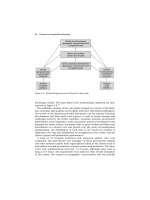
Figure 9.1: The antecedents, bonds, condition and consequences of
individual-level engagement at intermediate level
Antecedents (ancillary measurement)
Job characteristics (job enablers)
Perceived organizational support
Leader–member exchange
Reward and recognition
Fairness: Procedural and distributive
justice
Trust
Performance bonds: Levels of
engagement (mindset, emotions, and
behaviors)
Motivation for social membership
Identification
Internalization
Psychological ownership
Condition of engagement
Job engagement
Organizational engagement
Consequences (intermediate
performance outcomes)
Employee-level variables
Job satisfaction
Motivation
Discretionary effort
Job and organizational commitment
Group/collective-level variables
Morale
Organization citizenship behaviors
Contextual performance
of engagement. We believe that organizations interested in managing enga gement
as part of a HR strategy should consider it to operate according to the model
shown in Figure 9.1.
Important questions remain to be addressed:
1. How does this model fit in with the existing understanding of the link between
HRM practices and organizational performance?
2. How must this link be moderated and mediated by employee reactions to
these HR practices?
3. How is employee engagement assumed to predict organization-level
performance outcomes?
4. And does good HRM impact this particular v iew of engaged performance and
organizational performance?
5. If so, do the HR practices themselves impact engagement, or do they have an
impact through the conditions they create (such as a good employer brand)?
The role of HR practices and policies in influencing org anizational performance
has been of interest to both researchers and practitioners alike for many years.
There has been an increase in research publications that have claimed significant
causal links between HR practices/policies and a firm’s performance. However, an
exhaustive systematic review of research on this topic from the early 1940s to the
year 2006 found that there are very few longitudinal studies in this field to
Shashi Balain and Paul Sparrow 179
affirmatively claim a causal link between any definite set of HR practices to a
company’s financial performance.
19
What this research does show is a robust statistical and theoretical link
between various HR practices and intermediate-level performance outcomes, such
as job satisfaction, organizational commitment, motivation, absenteeism, and
employee turnover. Most of these intermediate outcomes are at the level of the
employee and not the organization. Good HR practices may lead to high employee
commitment and low employee turnover, but the question as to whether it will it
lead to better organizational performance is a totally different one.
If engagement is created by influences beyond the traditional range
of HR practices and policies (rewards, talent management, performance
management, etc.) that the HR function designs and implements – for example, if
engagement is primarily created by factors such as corporate reputation, the
quality of strategic leadership, or simply be existing good per formance of the
organization – then HR functions should only claim an indirect role in managing
engagement.
9.6. Understanding organizational performance recipes
It should be clear that we believe that when measured at the individual level,
engagement is too complex, too big a concept, to be able to consistently and
reliably explain much corporate performance. Consider all the components that
have to be measured (as suggested in Figure 9.1), compound this with the problem
that different employee segments exist alongside multiple internal models of
engagement even within a single organization. It should be clear that we measure
the symptoms of performance, not the causes.
Is there robust evidence of a link between engagement and organizational
performance? We began this chapter by noting that many HR functions – and
supportive line managers – fall back upon the service-profit chain to argue a link
between engagement and performance.
The basic tenets and assumptions of service-profit chain theory:
It assumes there is a clear link between employee’s work experiences and financial
performance in the service sector, with customer satisfaction acting as a critical
intervening variable. This is based on a series of presumed causal links:
1. An association between employee satisfaction and customer satisfaction.
20, 21, 22
2. An association between employee perceptions of the organization climate
(especially its focus on service) and customer satisfaction levels,
23
followed by an
association between favorable climates and levels of employee satisfaction and
commitment.
24, 25
3. An association between customer satisfaction and financial performance.
26, 27, 28
180 Understanding the Value of Engagement
Figure 9.2: The service-profit chain
Internal
service
quality
workplace design
job design
employee selection
and development
employee rewards
and recognition
tools for serving customers
service concept:
results for customers
service designed and
delivered to meet
targeted customers’ needs
retention
repeat business
referral
Employee
satisfaction
Operating strategy and
service delivery system
The links in the service-profit chain
Employee
retention
Employee
productivity
External
service
value
Customer
satisfaction
Customer
loyalty
Revenue
growth
Profitability
Empirical evidence generally supports the existence of some key components of
the service-profit chain (see Figure 9.2) at the business unit level. However, there
have been very few tests of the whole chain, and those tests that have been carried
out provide a much more sober conclusion on the size of effect between
individual-level engagement and organizational performance outcomes. Despite
strident claims in the practitioner literature that engagement (as measured by
respective scales) is a key contr ibutor to the financial bottom lines of the
organizations from where the data have been collected, such claims fail to stand up
in the face of rigorous checks on the methodology adopted and the scales used to
carry out the research work.
What is not known with any certainty is how customer satisfaction affects the
relationship between employee experiences and financial performance, and how
employee satisfaction is associated with specific components of the service model.
29
Why should engagement have the same performance impact across different
service models? We need to be more circumspect in overstating the impact that
individual-level engagement can have on corporate performance measures. There
is a general relationship assumed between employee satisfaction and customer
satisfaction, but
1. is there any difference in the sensitivity or influence that employee
engagement has over organization performance – especially when
organizations operate to different service (industry) models?
2. why should we expect the same impact across all service (and indeed less
service-orientated) settings?
Shashi Balain and Paul Sparrow 181
Table 9.1: Contextual differences in service model that impact the
engagement–performance relationship?
Personal versus nonpersonal/possessions
30
1. Personal services (e.g., healthcare and fitness): Require “up-close” interactions between
employee and customer throughout the encounter and high visibility of service processes
to the customer. Versus
2. Nonpersonal/possession services (e.g., equipment repair and call center) where service
production can take place away from the customer, interactions can be limited to the
transactional, and service processes can remain hidden in a service factory.
Encounter versus relationship
31
1. Encounter (e.g., airlines and fast food). Convenience is a main driver for choice of service
provider. Systems designed to satisfy customer’s needs, employees can be scripted.
Transactions mainly brief and transactional. Versus
2. Relationship Business (e.g., hairstylist, doctor, and dentist). Customers incentivized to seek
same service provider for each encounter; employees more able to internalize customer’s
personal needs and expectations; personal and commercial bonds can be formed; and
display of emotions have more lasting impact on customer perceptions.
Collaborative versus single service interface relationship
32
1. Employees working in a collaborative, team-based and mutually supportive work process
can create “inter-dependence” effects, realizing synergies by feeding off mood state of
one or two lynchpin employees. Versus
2. Single employee interface more dependent on personality and mood state of one
employee.
Relative strength of B2B or B2C interactions at different points of the value chain
33
1. Business to Consumer (B2C). Dependent on above distinctions at the point of customer
interface. Versus
2. Business to Business (B2B). Organizational buying potentially more impersonal and
objective. Subject to B2C dynamics but buying behavior also determined by personal
networks and corporate reputation attributes.
There are a number of different service business models in which the potential
contribution that employee engagement should make to organizational
performance must differ (see Table 9.1).
In some sectors the intensity or richness of customer contact creates unique
conditions. The airlines industry (an “encounter” services model) was famous for
the original customer service work by SAS on “moments of truth”
34
and the
importance of “thin slices of employee behavior.” Jan Carlson famously pointed
out that each of his 10 million customers on average only ever interacted with 5
customer service facing employees. In the US Airline industry – an industry famed
for poor service – a recent study using the SERVQUAL measures of expected versus
182 Understanding the Value of Engagement
experienced service qualit y, found that employee personal touch (individual
attention, helpfulness, courtesy, and promptness) explains 54 per cent of reported
airline passenger satisfaction.
35
But:
1. Should ser vice quality and customer satisfaction be expected to be less closely
associated with employee satisfaction in an encounter service business
compared to a relationship service business model? The evidence surprisingly
says that this difference in service model does not make a difference, nor does
it differ across B2B versus B2C service models.
2. Why should customer-perceived service quality always result from employee
satisfaction? Walmart finds that it has been able to computerize schedules to
vary staff numbers according to the number of shoppers in the store, because
the increases in customer satisfaction caused by having an optimal number of
staff on hand outweigh minor losses in employee satisfaction caused by having
less predictable work schedules and pay.
Research evidence then shows that employee satisfaction determines the perception
of service quality – this perception comes first (like service value, service quality
is a mental judgment and assessment of the service delivered). Once made this
judgment then explains three quarters of measured customer satisfaction (a more
emotional response to overall service). Service quality and customer satisfaction
are different ways in which employee performance may be evaluated by customers,
and employee satisfact ion is assumed to be linked to both these outcomes
through three main processes: helping behav iours, the display of certain emotions
as part of your job (called emotional labour), and commitment to a service ethic.
Engagement can have positive impacts on organizational performance
outcomes – but these effects are not as large as often claimed, and they work
through complex dynamics and sets of causal processes. Relying on simple models
that are assumed to apply across all business and service models and across all
groups of employees whatever their talent or strategic centrality, is naïve.
So HR Directors have a fantastic opportunity to step into the void that
currently exists. On the back of strategic change management projects, new
alliances are being forged between HR professionals and other professional groups.
They now work side-by-side with corporate communications, internal and
external marketing, and operations experts, all sharing their models and insights
into how employees truly impact operational and strategic performance. Leading
HR can shape this thinking, but from a more realistic perspective than current
human capital and employee engagement work suggests.
Performance recipes: Managerial “theories of action”
Managers believe that specific business performance outcomes only result from engaged
employees – what we call a “performance recipe.” Some of these presumed links
between employees and organizational-level performance outcomes may be misguided,
Shashi Balain and Paul Sparrow 183
and not supported by data, but other knowledge is extremely insightful. HR professionals
need to help line managers understand the complex business performance benchmarks
that they report to, and how these performance outcomes are best engineered through
people management. And employees need to understand the benefits of engaging with that
particular view of performance.
If engagement is to continue to be a strategic priority for HR Directors, it has to be
designed to work at the level of strategic business units (SBU) or the team. HR
Directors need to “reverse engineer” the sorts of performance that is required by
the particular service model that their organization pursues. They need to
understand the logic that suggests why a range of employee attributes (whether
you call them engagement or not) must serve a central purpose in delivering that
ty pe of performance.
9.7. Conclusion
Engagement is a widely accepted concept by practitioners in industry. Having
reviewed the approaches taken by the likes of Gallup, Towers Perrin, and
Conference Board we believe that the construct of engagement needs to have
clearer boundaries as to what it is and what it is not. In this there is much to learn
from other disciplines that have been working on similar concepts but in a
different context.
We believe that such work provides a convincing case for us in the HR profes-
sion to delayer the idea of engagement. It is time to move away from using a hotch-
potch of multiple definitions comprising of cognitions, affect, and behavior. In
times of significant business change, the most fruitful way of thinking about engage-
ment is to look at it just as a cognitive construct. The appropriate feelings, emotion,
andbehaviorshouldbeseenasanoutcomeof–andanaccompanimentof–the
employee’s perceptions. Engagement should have the following core components:
Five core components of engagement
1. Engagement should be seen as a “belief” and not an attitude. Therefore it is largely a
cognitive construct (it needs to be information-based) rather than an affective or
behavioral one. Obviously, it will have affective and behavioral outcomes, but for the
sake of clarity of construct, we need to separate out the cause from the effect.
2. Very importantly, it is best seen as a “shared belief of a team” and therefore should be
managed as a team-level idea. To distinguish engagement from other similar ideas we
need to agree on a space where it exists. We have drawn attention to a number of
individual-level items (such as job satisfaction, job involvement, and job commitment)
184 Understanding the Value of Engagement
Five core components of engagement: (Continued)
and also organizational-level (such as organizational commitment, culture, and
climate). In order to explain individual-level performance (task performance), the
individual employee items modeled in Figure 9.1 may be the right measures. However, in
order to predict group-level performance outcomes, such as the performance of SBU
as a whole, we need to have a collective team-level idea of engagement.
3. This collective perception of employees of their workplace and organization can have
silent but far-reaching consequences for any organization. In large multinational
corporations it might not be very productive or even possible to understand each
employee’s judgment process. But if a significant number of employees have a common
judgment about their work place, then understanding what these perceptions are and
why employees think what they think can be extremely valuable information for refining
the HR practices at the given organization.
4. We need to have a more fine-grain analysis of the various levels of performance
outcomes in a work setting. Engagement is being used by organizations as a proxy for
their performance. Yet there is little theoretical rationale for why any employee-level
item should directly influence organizational-level performance outcomes, such as
annual profits. Some of these outcomes will not be directly influenced by employee
efforts alone; some will be outcomes which can be directly influenced by employees’
abilities and effort.
5. It makes more sense to treat engagement as an aggregated perception that certain
core team abilities, resource availability, goal clarity, and leadership attributes, when
directed toward achieving some common goal, are within the instrumental capacity of
the employees. Therefore, engagement needs to be directly linked to measurable
performance outcomes, customized to measure team-level performance (as distinct
from individual and organizational-level performance outcomes).
Given these core components, we redefine engagement as follows:
Engagement is a shared belief of a team that it has the required ability, resources,
goal clarity and leadership to achieve the desired performance outcomes.
The rationale behind providing this definition of engagement is to help us
disentangle it from the current state of affairs – where it is seen as an
all-encompassing cognitive, behavior al, affective, motivational, values, and
identity phenomenon. Instead we should identify employees’ beliefs and attitudes
about their work, their colleagues, and their own abilities as instrumental in
“engaging” them on the task at hand, and thereby delivering the desired level of
performance. Our definition above – intended to provide us with an operational
definition and a reliable and valid measure – draws much upon research that has
been carried out in the field of work design, attributions, and teams
In our view engagement is a shared belief amongst team members that they
have the right resources to achieve the targets expected of them. Such resources
Shashi Balain and Paul Sparrow 185
may be adequate staff and/or staffing mix in a busy hospital, retail superstore, or a
restaurant; it may be tools for mechanics on a shop floor or technicians in a lab; or
a good library and access to the required journals for a researcher!
All jobs have their own unique set of resource requirements, and every job
needs to be analyzed to know what they are. Statements asking employees about
the availability of these resources need to be more specific to the job in question;
this again reinforces our view that rather than having a very generic questionnaire
that asks broad questions about resource requirements, employee engagement
surveys need to be more customized to the job that a given team of employees is
required to do.
To achieve a given goal requires more than resources. Goal theory
advocates that clear and precise goals are a prerequisite for good performance.
These shared beliefs, in our definition of engagement, therefore extend to other
requirements for better performance. An engaged team should also have clearly
defined goals.
Employees should also believe that they have the required control over their
work environment and backing of the team leadership to achieve the desired
results. This part of the definition draws from both the goal theory and the
demand and control research, which advocate that employees should have the
relevant resources and control on their work environment for better performance.
Therefore, in the final analysis, it is the role of team leadership that often plays a
critical role in the team being engaged or disengaged.
NOTES
1 Heskett, J.L., Sasser, W.E. and Schlesinger, I.A. (1997) The Service Profit Chain.New
York: Free Press, p. 11.
2 Kaplan, S. and Norton, D. (1996) The Balanced Scorecard. Boston: Harvard Business
School Press.
3 Becker, B.E., Huselid, M. and Ulrich, D. (2001) The HR Scorecard: Linking People,
Strategy and Performance. Cambridge, MA: Harvard Business School Press.
4 Harter, J.K., Schmidt, F.L. and Hayes, T.L. (2002) Business-unit-level relationship between
employee satisfaction, employee engagement, and business outcomes: A
meta-analysis. Journal of Applied Psychology, 87: 268–279.
5 Ibid., p. 269.
6 Towers Perrin (2007/8) Confronting Myths: What Really Matters in Attracting, Engaging
and Retaining Your Workforce? Global Workforce Study.
7 Robinson, D., Perryman, S. and Hayday, S. (2004) The Drivers of Employee Engagement.
Institute of Employment Studies Report No. 408. Brighton: IES.
8 Schaufeli, W.B., Salanova, M., Gonzalez-Roma, V. and Bakker, A.B. (2002) The
measurement of engagement and burnout: A two-sample confirmatory factor analytic
approach. Journal of Happiness Studies, 3: 71–92.
9 See: Saks, A.M. (2006) Antecedents and consequences of employee engagement.
Journal of Managerial Psychology, 21 (6): 600–619; Saks, A.M. (2008) The meaning
186 Understanding the Value of Engagement
and bleeding of employee engagement: How muddy is the water? Industrial and
Organizational Psychology, 1: 40–43.
10 For example: Cropanzano, R. (1993) Justice in the Workplace: Approaching Fairness in
Human Resource Management. Hillsdale, NJ: Erlbaum; Greenberg, J. (1990)
Organisational justice: Yesterday, today and tomorrow. Journal of Management,16:
399–432; Sheppard, B.H., Lewicki, R.J. and Minton, J.W. (1992) Organisational Justice:
The Search for Fairness in the Workplace. Lexington, MA: Lexington Books.
11 For example: Eisenberger, R., Huntington, R., Hutchison, S. and Sowa, D. (1986)
Perceived organisational support. Journal of Applied Psychology, 71 (3): 500–507;
Shore, L.M. and Shore, T.H. (1995) Perceived organisational support and organisational
justice. In R.S. Cropanzano and K.M. Kacmar (eds), Organisational Politics, Justice and
Support: Managing the Social Climate of the Workplace. Westport, CT: Quorum Books.
12 Settoon, R.P., Bennett, N. and Liden, R.C. (1996) Social exchange in organisations:
Perceived organisational support, leader-member exchange and employee reciprocity.
Journal of Applied Psychology, 81: 219–227; Liden, R.C., Sparrowe, R.T. and Wayne,
S.J. (1997). Leader–member exchange theory: The past and potential for the future. In
G.R. Ferris (ed.), Research in Personnel and Human Resources Management, Volume
15. pp. 47–119. Greenwich, CT: JAI Press.
13 For example: Konovoksy, M.A. and Pugh, S.D. (1984) Citizenship behavior and social
exchange. Academy of Management Journal, 37: 656–669; Whitener, E.M. (1997) The
impact of human resource activities on employee trust. Human Resource
Management Review, 7: 389–404; Bradach, J.L. and Eccles, R.G. (1989) Price,
authority, and trust: From ideal types to plural forms. Annual Review of Sociology,15:
97–118; Clark, M.C. and Payne, R.L. (1997) The nature and structure of workers’ trust in
management. Journal of Organisational Behavior, 18 (3): 205–224; Miles, R. and
Creed, D. (1995) Organisational forms and managerial philosophies: A descriptive and
analytical review. In L.L. Cummings and B.M. Staw (eds), Research in Organisational
Behavior, Volume 17. Greenwich: JAI Press.
14 Meyer, J. and Allen, N. (1991) A three-component conceptualisation of organisational
commitment. Human Resource Management Review, 1: 61–89.
15 For example: Mael, F.A. and Tetrick, L.E. (1992) Identifying organisational identification.
Educational and Psychological Measurement, 52: 813–824; and Wan-Huggins, V.N.,
Riordam, C. and Griffeth, R.W. (1998) The development and longitudinal test of a model
of organisational identification. Journal of Applied Social Psychology, 28: 724–749.
16 For example: O’Reilly, C. III and Chatman, J. (1986) Organisational commitment and
psychological attachment: The effects of compliance, identification and internalisation
on pro-social behaviour. Journal of Applied Psychology, 71: 492–499; and Mael, F.A. and
Ashforth, B.E. (1992) Alumni and their alma mater: A partial test of the reformulated
model of organisational identification. Journal of Organisational Behavior, 13: 103–123.
17 Pierce, J.L., Kostova, T. and Dirks, K.T. (2001) Toward a theor y of psychological ownership
in organisations. Academy of Management Review, 26 (2): 298–310.
18 Seligman, M.E.P. (1975) Helplessness. San Francisco: Freeman.
19 Patterson, M., Rick, J., Wood, S., Carroll, C., Balain, S. and Booth, A. (2008) Review of the
validity and reliability of measures of human resource management. NCCRM Report.
20 See for example: Heskett, J.L., Sasser, W.E. and Schlesinger, I.A. (1997) The Service
Profit Chain. New York: Free Press; Rucci, A.J., Kirn, S.P. and Quinn, R.T. (1998) The
employee-customer-profit chain at Sears. Harvard Business Review, January–February,
83–97; Wiley, J.W. and Brooks, S.M. (2000) The high-performance organisational