Organization and Development of Russian Business A Firm-Level Analysis_7 pot
Bạn đang xem bản rút gọn của tài liệu. Xem và tải ngay bản đầy đủ của tài liệu tại đây (239.03 KB, 23 trang )
146 Organization and Development of Russian Business
Basargin, V. & Perevalov, Yu. (2000) Analiz zakonomernostei formirovaniya korpora-
tiv
nogo kontrolya na privatizirovannykh predpriyatiyak, Problemy Prognozirovaniya,
5: 120–138.
Bevan, A. A., Estrin, S., Kuznetsov, B., Schaffer, M. E., Angelucci, M., Fennema, J., &
Mangiarotti, G. (2001) The determinants of privatized enterprise performance in
Russia. Working paper No. 452, Ann Arbor: William Davidson Institute, University
of Michigan Business School.
Coughlan, A. T. & Schmidt, R. M. (1985) Executive compensation, management
turnover, and firm performance: An empirical investigation, Journal of Accounting
and Economics, 7: 43–66.
Denis, D. J., Denis, D. K., & Sarin, A. (1997) Ownership structure and top executive
turnover, Journal of Financial Economics, 45: 193–221.
Dolgopyatova, T. (2003) Ownership and corporate control structures as viewed by
statistics and surveys, Russian Economic Barometer, 12: 12–20.
Dolgopyatova, T. (2004) Sobstvennost’ i korporativnyi kontrol’ v rossiiskikh kom-
paniyakh v usloviyakh aktivizatsii integratsionnykh protsessov, Rossiiskii Zhurnal
Menedzhenta, 2: 3–26.
Dolgopyatova, T. & Iwasaki, I. (2006) Exploring Russian corporations: Interim report
on the Japan–Russia joint research project on corporate governance and integra-
tion processes in the Russian economy. Discussion paper No. B35, Tokyo: Institute
of Economic Research, Hitotsubashi University.
Dolgopyatova, T. & Kuznetsov, B. (2004) Faktory adaptatsii promyshlennykh pred-
priyatii. In: E. Yasin (ed.), Modernizatsiya Ekonomiki Rossii: Sotsial’nyi Kontekst, Vol. 2
(Moscow: Gosudarstvennyi Universitet – Vysshaya Shkola Ekonomiki).
Elenkov, D. S. (1997) Differences and similarities in management values between
U.S. and Russian managers, International Studies of Management and Organization,
27: 85–106.
Elenkov, D. S. (1998) Can American management concepts work in Russia? A cross-
cultural comparative study, California Management Review, 40: 133–156.
Filatotchev, I., Wright, M., & Bleaney, M. (1999a) Privatization, insider control, and
managerial entrenchment in Russia, Economics of Transition, 7: 481–504.
Filatotchev, I., Wright, M., Buck, T., & Dyomina, N. (1999b) Exporting and restructuring
in privatized firms from Russia, Ukraine, and Belarus, World Economy, 22: 1013–1037.
Frydman, R., Pistor, K., & Rapaczynski, A. (1996) Exit and voice after mass privatiza-
tion, European Economic Review, 40: 581–588.
Goltsman, M. (2000) Empirical analysis of managerial turnover in Russian firms.
Working paper No. BSP/00/035, Moscow: New Economic School.
Goyal, V. K. & Park, C. W. (2002) Board leadership structure and CEO turnover,
Journal of Corporate Finance, 8: 49–66.
Gurkov, I. (2002) Raspredelenie rabochego vremeni rukovoditelei rossiiskikh promy-
shlennykh predpriyatii, EKO, 8: 69–79.
Holt, D. H., Ralston, D. A., & Terpstra, R. H. (1994) Constraints on capitalism in Russia:
The managerial psyche, social inflastructure, and ideology, Calfornia Management
Review, 36: 124–141.
Hunter, J. E. & Schmidt, F. L. (2004) Method of Meta-Analysis: Correcting Error and Bias
in Research Findings (Thousand Oaks: Sage Publications).
Huson, M. R., Malatesta, P. H., & Parrino, R. (2004) Managerial succession and firm
performance, Journal of Financial Economics, 74: 237–275.
Iwasaki, I. (2007a) Corporate law and governance mechanism in Russia. In: Dallago,
B. & Iwasaki, I. (eds), Corporate Restructuring and Governance in Transition Economies
(Basingstoke: Palgrave Macmillan).
9780230_217287_07_cha05. dd 146 5/14/2009 3:48:00 PM
Corporate Governance and Managerial Turnover 147
Iwasaki, I. (2007b) Enterprise reform and corporate governance in Russia: A quantita-
tive su
rvey, Journal of Economic Surveys, 21: 849–902.
Kang, J. & Shivdasani, A. (1995) Firm performance, corporate governance, and top
executive turnover in Japan, Journal of Financial Economics, 38: 29–58.
Kapelyushnikov, R. (2001) Sobstvennost’ i kontrol’ v rossiiskoi promyshlennosti,
Voprosy Ekonomiki, 12: 103–124.
Kapelyushnikov, R. & Demina, N. (2005) Concentrated ownership and management
turnover: The case of Russia, Russian Economic Barometer, 14/1: 10–21; 14/2: 29–35.
Klepach, A., Kuznetsov, P., & Kryuchkova, P. (1996) Korporativnoe upravlenie v Rossii
v 1995–1996 gg., Voprosy Ekonomiki, 12: 73–87.
Kornai, J. (2006) The great transformation of Central Eastern Europe: Success and
disappointment, Economics of Transition, 14: 207–244.
Krueger, G. (2004) Enterprise Restructuring and the Role of Managers in Russia: Case
Studies of Firms in Transition (New York: M. E. Sharpe).
Linz, S. J. (1996) Red executives in Russia’s transition economy, Post-Soviet Geography
and Economics, 37: 633–651.
Martin, K. & McConnell, J. (1991) Corporate performance, corporate takeovers, and
management turnover, Journal of Finance, 46: 671–687.
Muravyev, A. (2001) Turnover of top executives in Russian companies, Russian
Economic Trends, 10: 20–24.
Muravyev, A. (2003a) Turnover of senior managers in Russian privatized firms,
Comparative Economic Studies, 45: 148–172.
Muravyev, A. (2003b) Obnovlenie direktorskogo korpusa na rossiiskikh privatizirov-
annykh predpriyatiyakh, Rossiiskii Zhurnal Menedzhenta, 1: 77–90.
Peng, M. W., Buck, T., & Filatotchev, I. (2003) Do outside directors and new managers
help improve firm performance? An exploratory study in Russian privatization,
Journal of World Business, 38: 348–360.
Puffer, S. M. & McCarthy, D. J. (1995) Finding the common ground in Russian and
American business ethics, California Management Review, 37: 29–46.
Rachinsky, A. (2001) Managerial turnover and firm performance in Russia. Working
paper No. BSP/2001/044E, Moscow: New Economic School.
Rachinsky, A. (2002) Self-enforced mechanism of corporate governance: Evidence
from managerial turnover in Russia. Working paper, Moscow: Center for Economic
and Financial Research.
Radygin, A. & Arkhipov, S. (2000) Sobstvennosti, korporativnye konflikty i effek-
tivnosti: Nekotorye empiricheskie otsenki, Voprosy Ekonomiki, 11: 114–133.
Ralston, D. A., Holt, D. H., Terpstra R. H., & Kai-Cheng, Y. (1997) The impact of national
culture and economic ideology on managerial work values: A study of the United
States, Russia, Japan, and China, Journal of International Business Studies, 28: 177–207.
Stern, S. (1997) Simulation based estimation, Journal of Economic Literature, 35: 2006–
2039.
Weisbach, M. (1988) Outside directors and CEO turnover, Journal of Financial
Economics, 20: 431–460.
Wright, M., Filatotchev, I., Buck, T., & Bishop, K. (2003) Is stakeholder corporate gov-
ernance appropriate in Russia? Journal of Management and Governance, 7: 263–290.
Yasin, E. (ed.) (2004) Strukturnye Izmeneniya v Rossiiskoi Promyshlennosti (Moscow:
Izdatel’skii dom GU VSHE).
9780230_217287_07_cha05. dd 147 5/14/2009 3:48:00 PM
148
6
Management Team and
Firm Restructuring
Victoria V. Golikova
Introduction
The privatization of state-owned enterprises in Russia and the subsequent
redistribution of property rights made up a large cohort of manager- owners.
This group, according to surveys of the Russian Economic Barometer,
became the major category of owners for the first time in 2003, with a 25%
share in ownership structure, and maintained their leading position into
2007 with a 35% share (Aukutsionek et al. 2007). Therefore, a considerable
number of management teams of Russian JSCs are headed by (or include)
manager-owners. On the other hand, in the last decade, a tendency toward
the separation of ownership and management has become more and more
noticeable, and the old Soviet-style managerial teams are being substituted
by a new generation of professionally trained hired managers. They are
expected to be more effective at improving company performance by facili-
tating the large-scale market-oriented restructuring needed by the majority
of privatized enterprises. However, the results of empirical surveys provide
evidence that the privatization of initially state-owned manufacturing firms
in Russia did not result in significant increases in productivity (Brown et al.
2004). Bhaumik and Estrin (2005) discovered that Russian industrial firms
were unresponsive to almost all the normal economic drivers. In an attempt
to explain the difference between two transitional countries, China and
Russia, they discussed the managerial quality in the economies in transition
and its influence on company performance.
Due to methodological constraints and lack of information available for
analysis, the composition of management teams and the role of CEO char-
acteristics in enterprise restructuring do not very often become a subject of
empirical research. For example, even public companies, which were obliged
by law to disclose information about their activities, were not ready to present
the information regarding the work of the general directors. S&P showed
that, in 2006, the terms and conditions of the agreement with the general
director were disclosed by only 1% of the companies, the remuneration of
9780230_217287_08_cha06. dd 148 5/12/2009 5:30:04 PM
Management Team and Firm Restructuring 149
senior managers, by 16%, and information about the manner in which man-
agement remuneration depended on company performance, by only 17%
(Standard & Poor’s 2006, p. 13). Information arrays, available for experts,
are related to specific groups of companies, such as, for example, a study
of Rachinsky (2002) based on a sampling of 110 large Russian enterprises,
which are members of the Russian Trading System Stock Exchange (RTS),
or a study by Roschin and Solntsev (2006) containing information about
job dismissals and appointments of CEOs, published in 1999–2004 by the
Vedomosti newspaper.
1
Little is known regarding how and to what extent
new company owners respond to changes in the composition of manage-
ment teams in a situation of broadly recognized shortages of professionals,
especially in the regions of Russia. Furthermore, the same could be said for
the poor level of trust between owners and managers.
By 2005, the cohort of general directors of Russian industrial enterprises
consisted of former “red executives” and a new generation of managers who
came from business or from government bureaucracy (so-called politically
connected CEOs). It is not clear which of the two is really driving the restruc-
turing of enterprises. Neither is it clear whether the status of the general
director, that is, owner or hired manager, is correlated with the intensity
of a company’s modernization and restructuring. The main trends for the
formation of a cohort of CEOs and managerial teams are discovered on the
basis of a comparative analysis of independent companies and enterprises,
included in the holding company groups (HCG).
2
The analysis is based on
the results of a Japan–Russia large-scale survey of Russian joint-stock com-
panies (JSCs) conducted in 2005.
3
The remainder of this chapter is organized as follows: The first section
is a comparative analysis of the basic characteristics of Russian JSC general
directors and an exploration of common features and differences from the
top managers in countries with developed market economies. The second
section is an exploration of how the composition of the management team
depends on the arrival of new company owners. The third section contains
the main hypothesis regarding the influence of the composition of the man-
agement teams, changes of principal owners, and business environment on
the intensity of enterprise restructuring and a discussion of the results of
their empirical testing. The fourth section includes a summary of the results
and the conclusion.
General directors of Russian JSCs: “Red executives,”
politically connected CEOs, and new professional managers
Our survey data make it possible to present a portrait of recent general
directors of JSCs and to compare the findings with those of other empiri-
cal studies. First, we discover that the average age of a JSC general director
is 49.4 years.
4
This is very close to the recent results received by the Center
9780230_217287_08_cha06. dd 149 5/12/2009 5:30:04 PM
150 Organization and Development of Russian Business
of Labor Studies of SU-HSE based on the information of Rosstat statistical
data (49 years old)
5
and is compared to the earlier estimations of Rachinsky
(2002) (50 years of age) related to 2001. Second, the directors in independ-
ent JSCs and group-member companies have essential qualitative differ-
ences: directors at independent enterprises, on the average, are considerably
older; among them, the share of directors under 40 years old is lower, and
the share of directors above retirement age is higher. One explanation for
this is the fact that a considerable percentage of CEOs had already become
shareholders in the course of privatization.
Both in independent JSCs and in holding members, the director’s age
is essentially related to whether he is a hired manager or a large business
owner. For example, the average age of directors who are large shareholders
exceeds that of hired top managers without stake in company stock owner-
ship by four to six years. Among them, the share of directors younger than
40 is twice as low, and for managers/heads of holding companies, it is three
times as low. Furthermore, directors who are large shareholders at group-
member companies are younger than those at independent JSCs: for exam-
ple, if only 33% of them are older than 50 in the first group, more than 59%
of them are above that age in independent businesses.
There are differences, although not very significant, regarding the level of
education of the chief executive officers. In group-member companies, in
contrast with independent JSCs, the share of professional managers having
education in economics or management or an MBA (28.4% in the entire sam-
ple) is higher (by almost 7 and 3 percentage points, respectively). The most
prominent trend is the employment of professional managers in HCGs.
At present, almost 15% of Russian JSCs have managers with job expe-
rience at a Western company, but, in the group-member companies, the
share of managers with such job experience is two times higher (20.1%
and 11.3%, respectively) than in independent JSCs. As far as hired manag-
ers is concerned, the share of directors having job experience at a Western
company is practically the same, but, among the directors-large owners in
group-member companies, the share of managers with such experience is
significantly larger (20.0% and 7.8%, respectively).
According to survey results, 35.6% of general directors were hired manag-
ers without a share in company stock ownership. In new appointments of
2005, their share was 50%, which is evidence of the tendency for the separa-
tion of ownership and control in stable economic growth.
6
“Red executives”
who became large owners in the course of privatization are gradually leav-
ing CEO positions. By the time of our survey in 2005, only 39% of general
directors-large owners in the entire sample had more than 10 years of job
experience as company CEOs.
We found that, in Russian companies, the turnover of hired managers is
rather high: one-third of directors in the whole sample and as many in inde-
pendent JSCs were appointed within one year of the time when the survey
9780230_217287_08_cha06. dd 150 5/12/2009 5:30:05 PM
Management Team and Firm Restructuring 151
was conducted. The average number of years in the position of a Russian JSC
general director, according to our survey results, is 8.4 years. This number
is not much higher than it is in other countries, where, according to Booz
Allen Hamilton’s study of CEO turnover in the world’s 2,500 largest public
companies defined by their market capitalization, it is 7.8 years (Lucier et al.
2007). However, in our case, the average number of years in a CEO posi-
tion in the entire sample of general directors masked essential differences
between directors-large owners and directors that do not own shares. For
example, in the first case, it is more than twice as high, 9.6 years vs. 4.5.
In all categories of top managers analyzed in the survey conducted in the first
half of 2005, the average time in one position was 6.5 years. At the same time,
it was 5.3 years when large owners did not take a direct part in the enterprise
management and 4.0 years when the managerial team was headed by a hired
general director and large owners were not involved in the management.
Let us briefly overview the recruiting sources of general directors, that
is, the prior job occupation of the current general director. On the whole,
according to our data, incumbents, , that is, those who previously worked
at the same enterprise in another position, made up the larger part, 61%,
of the general directors. This is typical for JSCs situated in different settle-
ments (Moscow, regional capitals, noncapital cities, urban settlements, and
villages). We found no differences in the share of directors-incumbents in
terms of industry affiliation, except for chemistry and petrochemistry.
7
Recruiting sources have essential differences depending on the status of
the general director (Table 6.1). Therefore, in independent enterprises and
in group-member companies, three-quarters of the directors, who are large
shareholders of the JSC, are incumbents.
8
With regard to hired directors with-
out company shares, at independent enterprises, almost half of them (47.7%)
are incumbents as well. The share of incumbents among hired managers in
group-member companies is much smaller (30.2%). The modest share of the
incumbents within group-member companies corresponds with the fact that
the main source of the general directors’ recruitment within group-member
companies is the rotation of the CEOs within the group. The appointment of
successful CEOs from one group-member firm to another contributes to the
rapid transfer of management knowledge and skills and, therefore, is a prereq-
uisite for the dissemination of common management standards within the
group and of faster adaptation of new group entrants. At independent JSCs,
outside owners quite frequently appoint successful top managers without job
experience in a particular industry (in 28.4% of cases). In contrast, in group-
member companies, such practices occur at one half that rate.
One in four directors has work experience in government bodies in the post-
privatization period; meanwhile, directors in group-member companies have
such experience even more frequently, one in three. On the whole, the share
of general directors with job experience at the state bodies is by 11 percentage
points larger at JSCs with more than 1,000 employees, since the administrative
9780230_217287_08_cha06. dd 151 5/12/2009 5:30:05 PM
Table 6.1 Recruiting sources of general directors at independent enterprises and in HCGs (percentage of respondents who
answered)
Status of the JSC general director
% by line
Previous job of general director
a
This
enterprise
This HCG, group
of companies,
business partners
Another company
from the same
industry
Company
from another
industry
Total Number
of JSC
Independent
(autonomous)
enterprise
Large owner 75.8 1.9 12.6 9.7 100 207
Hired manager 47.7 2.3 21.6 28.4 100 88
Total group 67.5 2.0 15.3 15.3 100 295
Significance of differences 0.000
b
HCG member Large owner 80.0 12.7 5.5 1.8 100 55
Hired manager 30.2 36.8 19.8 13.2 100 106
Total group 47.2 28.6 14.9 9.3 100 161
Significance of differences 0.000
b
Whole sample,
including
management or
parent company of
HCG
Large owner 76.6 4.0 11.5 7.9 100 278
Hired manager 37.9 20.7 21.2 20.2 100 203
Total group
60.3 11.0 15.6 13.1 100 481
Significance of differences 0.000
b
Notes:
a
A small category that came to business directly from the state bodies was excluded.
b
2
test.
Source: Author’s calculations based on survey data.
9780230_217287_08_cha06. dd 152 5/12/2009 5:30:05 PM
Table 6.2 Characteristics of managerial skills and experience by different status of company location (percentage of respondents who
answered)
Company location Total
sample
Significance of
differences
a
Moscow Capital of
the region
Noncapital
city
Urban type
settlement/
village
Share of companies with directors under
40 years of age
25.0 16.5 13.7 19.4 16.3 0.239
Share of companies with directors with
higher education in economics and
management
25.0 25.4 27.6 33.3 26.2 0.653
Share of companies with top managers
who have job experience in a foreign
company
17.2 15.0 12.5 18.8 14.7 0.730
Share of companies with top managers
with job experience in governmental
bodies
12.5 8.8 6.6 2.8 8.2 0.374
Note:
a
2
test.
Source: Author’s calculations based on survey data.
9780230_217287_08_cha06. dd 153 5/12/2009 5:30:05 PM
154 Organization and Development of Russian Business
resources of the state bureaucracy in the 1990s–2000s made it easier for the
officials to acquire the most attractive (and as a rule, larger) enterprises.
On the other hand, the survey results prove evidence that, among CEOs
in the past elite of functionaries, the share of directors-large shareholders
and directors-hired managers is equal. This demonstrates that, in an unsta-
ble institutional environment and with an increased involvement of the
state in the economy, business owners are interested in developing neces-
sary relationships with state officials by appointing managers with appro-
priate experience and personal contacts.
The question of whether or not there are any qualitative differences in the
top managers in the capital and provinces will be examined. We compare
the key indicators of age, education, and job experience by status of location
(Table 6.2).
9
A comparison of the main qualitative characteristics of CEOs by
status of location has shown the absence of significant differences, which
proves a trend toward the formation of a national market of top managers.
The leading recruitment companies report that two–three years is the average
amount of time spent in a management position. More and more often, mid-
dle-level managers of large companies receive a promotion in other regions of
Russia and change location (Pal’shin & Goverdovskaya 2007). Many compa-
nies with their units in other regions of Russia prefer to send managers from
the central office or from smooth-running large regional offices to improve
the quality of management in the provinces (Goncharova 2008).
The composition of management teams as
the decision of main shareholders
In 2001–2004, as proved by the survey data, general directors were changed
at more than one-third of joint-stock companies (almost 39%). The intensity
of the turnover was the same in different types of settlements (Moscow,
regional capitals, noncapital cities, urban settlements, and villages).
It is evident that changing the controlling owner, with a high likelihood
ratio, entails not only changing the general directors (Table 6.3) but also
subsequently renewing managers at economic departments in order to pro-
vide control over financial flows.
10
This trend has become common for inde-
pendent enterprises and for group-member companies. According to the
results of our survey, at least in one half of the cases, changing owners is
accompanied by changing general directors. The scale of such a change of
general directors following the arrival of new controlling owners in Russia
is considerably higher (more than twice) than it is in countries with a stable
market economy. For example, Booz Allen Hamilton’s survey provides evi-
dence that the share of CEOs who left their company after the controlling
owner changed was 18% in 2005 and 22% in 2006 (Lucier et al. 2007). For
group-member companies, the frequency of the appearance of a new gen-
eral director is still higher due to the fact that entering HCGs introduces
9780230_217287_08_cha06. dd 154 5/12/2009 5:30:05 PM
Management Team and Firm Restructuring 155
significant changes in the ownership and corporate control structures
(Avdasheva 2007).
The turnover of general directors on the shareholders’ initiative, as evi-
denced by numerous studies, is determined by the achieved and expected
results of JSCs (efficiency and growth of market capitalization) and lack of
trust on behalf of the shareholders (an agent problem). Recent results pre-
sented by Jenter and Kanaan (2008) suggest that the standard CEO turnover
model should be extended by capturing bad industry or market perform-
ance. They show that a decline in the industry component of firm per-
formance from its 75th to its 25th percentile increases the probability of
forced CEO turnover by approximately 50%. In Russian joint-stock com-
panies, a considerable percentage of general directors (exceeding 59%) are
forced to leave their positions on the shareholders’ initiative. This percent-
age is much higher than that in other countries, where, according to Booz
Allen Hamilton’s research of 2006, approximately one in three CEOs was
dismissed due to a decision of shareholders who were unsatisfied with the
results of the past activity of the director or concerned about the current
situation and the company prospects (the last reason has become a more
and more noticeable trend in the recent years) (Lucier et al. 2007).
In the opinion of Shekshnya (2006), based on the results of a survey and
interviews with general directors, shareholders, and company personnel,
11
a hired Russian general director has not yet become a CEO in the Western
sense. He “plays a restricted number of parts, consciously excluding oth-
ers from the field of his responsibility; he is concentrated on himself, the
Table 6.3 Change of general director/board chairman at independent enterprises
and HCGs depending on changes of main company shareholders in 2001–2004 (per-
centage of respondents who answered)
Change of main shareholder
in 2001–2004. % by line.
Change of general director/
board chairman in 2001–2004
Significance of
differences
a
No Yes Total Number
of JSCs
Independent
(autonomous) enterprise
Yes 50.0 50.0 100 126 0.000
No 73.4 26.6 100 357
HCG member Yes 38.3 61.7 100 94 0.028
No 52.2 47.8 100 178
Management or parent
company of HCG
Yes 52.9 47.1 100 17 0.009
No 88.5 11.5 100 26
Whole sample Yes 45.6 54.4 100 237 0.000
No 67.3 32.7 100 562
Note:
a
2
test.
Source: Author’s calculations based on survey data.
9780230_217287_08_cha06. dd 155 5/12/2009 5:30:05 PM
156 Organization and Development of Russian Business
shareholders and the important officials to the prejudice of paying atten-
tion to the customers, employees and partners; he considers his work to be
a means for achievement of more important life objectives not related to it,
he plans his actions, predominantly bearing in mind a short-term planning
horizon” (p. 30, translated from Russian). Such an assessment seems reason-
able. Shekshnya explains this situation in several ways: the higher social
status of the entrepreneur as compared to that of a comparably or highly
paid employee and the orientation of the most capable potential CEOs to
entrepreneurship; the presence of a redundantly high part of the owners in
the operational management, which prevents managers from realizing their
potentials; and, most importantly, the absence of professional training of
the business leaders in the companies, which should be a priority task for
its first executive. The additional characteristics completing the portrait of
a Russian CEO derived from our survey came from the survey of 300 firms
in 26 regions and 39 Russian cities (Radaev 2008). The evidence is clear
that managers of new firms established after privatization tend to be more
authoritarian than managers appointed under the socialist regime.
An ideal top manager, as clearly shown by Adizes (2006), does not exist
because the roles the individual is required to play are too large; therefore,
the task of the general director should be to build a team, in which a syner-
getic effect is achieved from using certain capabilities and strong competen-
cies of team members. Therefore, there are only a few such managers in the
Russian market. A usually effective trend in Russia is for owners to keep in
mind that the most difficult questions of operative management are to be
resolved at the moment and, therefore, to appoint those CEOs who could
do such tasks quickly using strict and authoritarian methods. When a com-
pany is in a new business and institutional environment, the owners find it
necessary to replace the general director and redefine his/her key objective
for a limited period of time. For these reasons, the median term of a hired
general direction in a Russian JSC is only three years. Such a term might per-
mit an individual to fulfill one or two relatively important responsibilities
but would be absolutely inadequate for the implementation of a developed
strategy.
The survey results show that, differently from turnover of the general
director, managerial turnover at the middle level is not significantly related
to the arrival of new enterprise owners. Developing a management team
is mainly a prerogative of the first executive officer. The arrival of a new
CEO, as evidenced by the work practice of Russian companies, has grave
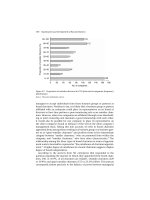
consequences for the entire managerial team and the personnel (Figure 6.1).
In the case of a director’s dismissal on the shareholders’ initiative, the eco-
nomic departments were considerably renovated at almost half of the inde-
pendent enterprises and group-member companies. At the same time, the
management staff of manufacturing departments was subject to a lesser
degree of personnel reshuffling. Such practice was mentioned by 22% of the
9780230_217287_08_cha06. dd 156 5/12/2009 5:30:05 PM
Management Team and Firm Restructuring 157
0
10
20
30
%
40
50
Economic departments R&D servicesManufacturing departments
No change of
general director
Change of
general director
by shareholders’
decision
No change of
general director
Change of
general director
by shareholders’
decision
No change of
general director
Change of
general director
by shareholders’
decision
Independent (autonomous) enterprise HCG member
Figure 6.1 Change of managers in the departments following a new general director
appointment by shareholders’ decision (percentage of respondents who answered)
Source: Survey data.
Table 6.4 Change of middle-level managers in JSCs in which the general director
was changed by the status of the current director (percentage of respondents who
answered)
Change among managers of
departments in 2001–2004.
% by line.
Minimum
or several
changes
Many changes
or almost all
members changed
Total Number
of JSCs
Economic
departments
Director-large
owner
40.6 59.4 100 286
Director-hired
manager
22.5 77.5 100 187
Significance of differences 0.000
a
Manufacturing
departments
Director-large
owner
37.4 62.6 100 289
Director-hired
manager
26.6 73.4 100 203
Significance of differences 0.001
a
R&D services Director-large
owner
49.7 50.3 100 193
Director-hired
manager
41.5 58.5 100 130
Significance of differences 0.044
a
Note:
a
2
test.
Source: Author’s calculations based on survey data.
9780230_217287_08_cha06. dd 157 5/12/2009 5:30:05 PM
158 Organization and Development of Russian Business
respondents at independent enterprises and 33% in HCGs. The managers of
R&D services experienced even less reshuffling. Regarding the managerial
turnover of manufacturing and R&D departments, considerable changes
were more frequent in group-member companies than they were in inde-
pendent enterprises.
The most active managerial turnover takes place when a general direc-
tor who is not a company shareholder is appointed at an enterprise. In this
case, considerable changes of managers in the economic and manufactur-
ing departments take place 1.5 times more often due to the two following
circumstances (Table 6.4). First, hired directors pursue, as a rule, more radi-
cal policies on personnel renovation, and second, they provoke, to a higher
extent, the voluntary leave of those managers who do not adjust to the new
style and methods of management.
Propensity of proactive restructuring of joint-stock
companies:
12
The role of business environment, ownership
changes, and reorganized management teams
Theoretically, property rights should be transferred from an inefficient
owner to a more effective one without considering cases involving raider
attacks at successful enterprises or Russian variants of de facto nationaliza-
tion. In this sense, it can be assumed that the owners of new JSCs and,
correspondingly, new managers appointed by shareholders should also be
more active in enterprise modernization and proactive restructuring in
order to gain better performance results and efficiency growth. It would
be extremely interesting to determine whether there is empirical evidence
that the new generation of hired managers who obtained their knowledge
and skills in the transitional economy were more active in restructuring
in 2001–2004. Our survey data, unfortunately, does not allow us to clearly
determine the exact time when the main enterprise owners and manage-
rial teams changed. In the survey questionnaire, the questions concerning
the changes in owners and general directors and firm restructuring activi-
ties refer to the same period of time. In this chapter, we assume that the
turnover of key owners and managers took place at least no later than the
restructuring measures.
Hypotheses and empirical methodology
Taking the above discussions into consideration, we examine the following
five hypotheses:
Hypothesis H1: First, in Russia, where the institutional environment is char-
acterized by weak protection of property rights, the transfer of a JSC under
control of new owners places a high-priority task on them to create mechanisms
of property protection. One of the mechanisms is the radical change in the
9780230_217287_08_cha06. dd 158 5/12/2009 5:30:06 PM
Management Team and Firm Restructuring 159
managerial team, which includes the general director and the managers of the
economic departments. With the current managerial personnel shortage, time
is required to replace individuals, and it is likely that qualified individuals for
the positions are not available. The difficulties of building-up a new managerial
team that is loyal to the owner for the protection of assets necessarily shift the
proper tasks of enhancing the business efficiency and extend the restructuring
terms thereof. In the context of this reasoning, we intended to check a hypoth-
esis according to which activity in modernizing those JSCs which changed their
main owners in 2001–2004 was unlikely to have been higher than that of the
enterprises with stable ownership structure.
Hypothesis H2: Second, we argue that the characteristics of ownership and
patterns of ownership and management separation are significant moderniza-
tion factors. Many directors who are large shareholders are successful at devel-
oping their businesses when relieved of the necessity to solve the agency problem
and usurp power. We expect that their efforts to modernize will be, at least, on
par with those of the firms headed by hired managers. Along with it, it is logical
to assume that, with concentrated ownership characterized by the availability
of large owners, making decisions on launching modernization programs and
requesting large-scale and long-term investments are easier and faster, since
there are no longer outdated procedures for obtaining approvals from numerous
minority shareholders, whose interests could be related to the current profits
and thus undermine any long-term business development plans. Therefore, we
expect that the presence of large owners will be positively correlated with enter-
prise restructuring measures.
Hypothesis H3: Third, we argue that management team characteristics are
significant factors correlating with enterprise restructuring. As far as the educa-
tion of a general director is concerned, theoretically, the education of a CEO in
economics and management should positively correlate with more active and
sophisticated restructuring. Unfortunately, the formal professional education in
economics and management obtained by the CEOs in the Soviet era or at the
beginning of the transition period was inadequate. Therefore, it was impossible
to quickly introduce new content that was appropriate for a market economy in
new institutional environment. Therefore, we do not anticipate the discovery of
any significant positive correlations with restructuring efforts. Prior job experi-
ence and skills could be more significant than formal education. Considering
the information above, Western managerial experience facilitates the trans-
formation, since this cohort of managers is more sophisticated at conducting
business in a globally competitive market environment. In contrast, prior gov-
ernment job experience does not have a direct effect upon the modernization
scale, although it is important for the provision of the predictability of the devel-
opment trajectory and facilitation of different bureaucratic procedures. On the
other hand, keeping network ties as an additional resource might reduce the
incentives of politically connected CEOs for market restructuring.
13
Therefore,
9780230_217287_08_cha06. dd 159 5/12/2009 5:30:06 PM
160 Organization and Development of Russian Business
we assume that firms with CEOs who first worked in bureaucracies will be less
likely to implement modernization measures. Changes of middle-level manag-
ers are more likely to have a positive impact. This is especially so for privatized
companies due to the necessity of breaking the routines and introducing new
standards of everyday operational management.
14
Hypothesis H4: Fourth, we hypothesize that the availability of a long-term
planning horizon, providing evidence of strategic goals of business development,
will have a positive correlation with the scale of work in firm restructuring.
Hypothesis H5: Finally, the self-sufficiency of the majority of Russian enter-
prises in the local markets, still beyond the boundaries of the sphere of the
interests of the strong players (Kuznetsov 2005, 2007; Avdasheva et al. 2006),
allows putting forward a hypothesis about the relatively weak influence of
competition on the modernization efforts of JSCs, that is, we expect that the
competition has not already become a serious driver in stimulating large-scale
restructuring.
15
Econometric model
To provide a comprehensive analysis of determinants that could predict
the probability of a company to implement modernization and proac-
tive restructuring and test the abovementioned hypotheses, we estimate a
binary logistic regression model with dependent variables that are assigned
a value of “1” if the firm has demonstrated restructuring efforts in introduc-
ing new products, technologies, production facilities, ISO certification, and
marketing and “0” otherwise. To estimate improvements in marketing, the
value “1” indicates the same level or an increase in marketing budgets, and
“0” indicates their decrease.
Independent variables show the characteristics of stock ownership: dum-
mies for the presence of large owners (with more than blocking stock), state
and foreign owners, and change of key owners in 2001–2004; the patterns
of separation of ownership from management (with a general director being
a hired manager as a basic category). The characteristics of management
teams include a long planning horizon in excess of three years and the
following indicators of human capital: the presence of sufficient changes
in economic and manufacturing departments (dummy); the change of the
general director by a shareholders’ decision (dummy); CEOs’ previous job
experience at governmental bodies (dummy, a 10-year period is considered).
Other variables are included as categorical: the age of the general director
(basic category: less than 40 years old); education of the general director
(basic category: lack of profile high education in economics and manage-
ment); and prior job occupation of the current general director (incumbent
as a basic category). The level of competition with specific competitors
(Russian companies, foreign companies in Russia, firms from CIS, developed
countries, Turkey, China, and Baltic countries) was included as a dummy
9780230_217287_08_cha06. dd 160 5/12/2009 5:30:06 PM
Management Team and Firm Restructuring 161
variable with “0” as a respondent’s estimation of the absence of competitive
pressure and “1” indicating a sufficient level of competition.
Control variables characterize industry affiliation (communications as a
basic category), company size measured as a logarithm of employees, dum-
mies for being a new company established after 1992, membership in a busi-
ness group, location in capital cities (Moscow or oblast capitals), legal status
(open vs. closed JSCs), and availability of exports.
Results
The estimation results are shown in Table 6.5. Of the basic company charac-
teristics, size increases the chance for the implementation of restructuring,
whereas the significance of membership in a business group and history is
limited to certification. Marketing budgets increase for those firms located
in capitals because this strategy rewards potentially larger markets. Legal
status is not significant in the majority of models except for the probability
of the introduction of new production facilities. In this case, being a closed
JSC multiplies the chances. Export activities were found to be significantly
correlated with ISO certification. The certification contributes to firm repu-
tation, which provides evidence of well-organized business processes and,
therefore, multiplies the chances to enter new foreign markets. In addition,
exporting is correlated with the introduction of new production facilities,
although the causality of this correlation should be investigated.
Change of key owners and shareholder decisions to change the general
director have no impact on measures of proactive restructuring in the time
period analyzed. Moreover, for the introduction of new production facili-
ties, there is a strong negative correlation with new director appointments
that is significant at the 5% level. One possible interpretation of this puz-
zle could be connected with the lag needed before new owners change the
organizational structure, develop a new business model, form a new appro-
priate management team, and start modernization.
As far as the correlation with the changes of managers at the middle level
is concerned, we revealed a significant positive correlation of managerial
turnover in manufacturing departments, which multiplies the chances to
introduce new products, technologies, and production facilities. This may
indicate that CEOs are giving more attention to their production units,
including investing in more advanced human capital capable of working
with modern equipment and technologies. As far as changes in the eco-
nomic departments are concerned, we found no correlation with most
restructuring measures except a significant negative correlation in the case
of the introduction of new technologies. One possible interpretation of this
puzzle is connected with the abundance of managerial turnover in eco-
nomic departments. Furthermore, for appointments in these departments,
trust might be more important for owners than the professional skills of the
invited managers.
16
9780230_217287_08_cha06. dd 161 5/12/2009 5:30:06 PM
Table 6.5 Logistic regression analysis of the propensity of proactive restructuring
Dependent variable Development
of new
products
Introduction of
new technology
ISO certification Introduction of
new production
facilities
Same level
or increase
of marketing
budgets
Constant 0.813 (1.054) Ϫ0.280*** (0.594) Ϫ4.065*** (0.845) Ϫ0.944 (1.035) Ϫ2.941** (1.292)
Company size (log of number of
total workers)
0.220** (0.098) 0.294*** (0.090) 0.411*** (0.102) 0.392*** (0.107) 0.427*** (0.147)
New enterprise (= 1)
0.734** (0.312)
Legal status (open JSC = 1)
0.542** (0.235)
HCG member (= 1)
0.771*** (0.242)
Planning horizon of more than
3 years (= 1)
0.536** (0.229)
Location in capitals (= 1)
1.057*** (0.324)
Export (= 1)
1.116*** (0.234) 0.675*** (0.243)
Sufficient level of competition
with Russian companies (= 1) 0.989*** (0.319)
1.310*** (0.390)
with foreign companies in
Russia (= 1)
with firms from CIS countries (= 1)
with firms from developed
countries (= 1)
0.613** (0.239) 0.831** (0.406)
with Turkey, China, and Baltic
countries (= 1)
Large owners (with more than
blocking stock) (= 1)
Separation of ownership and management (general director-hired manager as a basic category)
General director-large owner (=1) 0.775*** (0.240) 1.450*** (0.398)
9780230_217287_08_cha06. dd 162 5/12/2009 5:30:06 PM
Large owners are managers, general
director is not a shareholder (=1)
1.525*** (0.412) 1.151* (0.671)
Large shareholders are not
managers, general director is a
shareholder (=1)
Change of key owners in
2001–2004 (= 1)
Change of general director by
shareholders’ decision (= 1)
Ϫ0.819*** (0.245)
Age of general director (less than 40 years as a basic category)
41–50 years (=1)
51–60 years (=1) Ϫ0.174
More than 60 years (=1)
Job experience of general director
or board chairman at governmental
bodies in previous 10-year period
(= 1)
Ϫ0.510** (0.218)
Job experience of top managers in
Western companies (= 1)
0.948*** (0.283)
Level of education of general director (lack of higher education in economics and management as a basic category)
Higher education in economics and
management (=1)
MBA in economics and management
(=1)
Change of general director in
2001–2004 (= 1)
Sufficient changes of managers in
economic departments (=1)
Ϫ0.620*** (0.221)
Sufficient changes of managers in
manufacturing departments (= 1)
0.776*** (0.275) 0.978*** (0.273)
Continued
9780230_217287_08_cha06. dd 163 5/12/2009 5:30:06 PM
Table 6.5 Continued
Dependent variable Development
of new
products
Introduction of
new technology
ISO certification Introduction of
new production
facilities
Same level
or increase
of marketing
budgets
Sources of recruitment of general director (incumbent as a basic category)
Holding or business partners (=1)
Ϫ0.865** (0.382)
Governmental bodies (=1)
From the same industry (=1)
From another industry (=1)
Ϫ0.714** (0.333)
Industry dummies Yes Yes Yes Yes Yes
Number of observations 522 522 522 522 521
Ϫ2Log likelihood 610.69 650.99 581 555.61 304.15
Pseudo R
2
0.200 0.156 0.318 0.218 0.322
Wald test (
2
) 83.238 64.789 142.03 87.786 99.486
Notes: ***: significant at the 1% level, **: at the 5% level, *: at the 10% level. Standard errors are reported in parentheses. The forward stepwise method
was used; blank cells, coefficients were not included into the final equation.
Source: Author’s estimation based on survey data.
9780230_217287_08_cha06. dd 164 5/12/2009 5:30:06 PM
Management Team and Firm Restructuring 165
The patterns of separation of ownership and management have basically
turned out to be essential for all considered directions of restructuring. We
found empirical evidence that directors-large owners are not worse in mod-
ernization efforts than hired managers. In contrast, they are much better at
introducing relatively new technologies and increasing marketing budgets.
This finding raises the question of whether Russian manager-owners have
“insufficient incentives to restructure firms and maximize their value over
the long run,” as explained by Desai and Goldberg (2000). Our understand-
ing is that the era of stripping assets is already over and the current genera-
tion of manager-owners has strategic goals in regard to their business.
It is surprising that the availability of a long-term planning horizon in
excess of three years is only significant for introducing basically new tech-
nologies; in other words, the hypotheses on the role of strategic planning
have been only partially confirmed. This correlation is positive with a 5%
level of significance.
Interesting results have been received regarding the role of a top man-
ager’s job experience in a Western company on the scale of restructuring.
These results clearly point out to a significant positive correlation with the
introduction of basically new technologies (the correlation is significant at
the 1% level). This finding proves that the invitation of foreign profession-
als
17
and Russian managers with Western experience has significant rewards
in speeding up the technological updating of the firms.
In contrast, the state service experience of CEOs and the introduction
of new technologies are negatively correlated. In fact, these results agree
with the conclusions presented by Kramarz and Thesmar (2006), who also
found that former state officials performed worse than the CEOs without
such experience. The researchers showed that French companies headed
by former bureaucrats more often produced less profit for the shareholders.
However, inefficient top CEOs are more likely to retain their positions in
cases of poor performance. Corresponding results were obtained by Chen
et al. (2004) for privatized companies in China. A comparison of general
directors-outsiders with directors-incumbents did not reveal any more
significant incentives for restructuring. Moreover, regarding the introduc-
tion of new facilities, the former, that is, general directors-outsiders, were
less active. Therefore, training potential team leaders among incumbents
appears to be a rational strategy for the owners of Russian JSCs. For general
directors, having an education in economics and management, even an
MBA, is an insignificant factor for all analyzed restructuring measures. As
we expected, in the mid-2000s, skills obtained in practical experience in
an unfriendly institutional environment tend to be more essential than
formal training which, in the opinion of many entrepreneurs, does not
meet their requirements. Practically, in all models, the age of the director
is insignificant. Older general directors are as active in restructuring as
their younger colleagues. The only exception is the negative correlation
9780230_217287_08_cha06. dd 165 5/12/2009 5:30:06 PM
166 Organization and Development of Russian Business
with the introduction of new products for directors who are 51–60 years
old; however, it is significant only at a 10% level.
The results were predictable concerning the influence of competition on
the modernization scale and efforts that are in compliance with the find-
ings of other studies (Golikova et al. 2007). A significant positive effect has
been revealed in relation to the influence of competition with the Russian
producers for the development of new products and increase of marketing
budgets. This result confirms information from the business press on the
growth of marketing expenses for companies in which strong large domes-
tic players have appeared, as in, for example, the food industry. Strong com-
petitive pressure from developed countries stimulates ISO certification and
more efforts in marketing. For the introduction of new production facilities
and technologies, respondents’ estimations of competition are insignifi-
cant. In general, competitive pressure is still not a very strong determinant
of enterprise restructuring.
Concluding remarks
The majority of the tested hypotheses regarding factors correlated with
restructuring efforts have a positive proof, except for the less than impres-
sive role of a strategic planning horizon, which is weakly significant only
for the introduction of new technologies. Former state officials have been
proven to be worse managers than other categories of CEOs in terms of
their efforts to modernize business. It is quite likely that the performance of
Russian companies with CEOs from state bodies will be less effective than
those with managers with other backgrounds. This is certainly an interest-
ing topic for future research regarding social networks and their roles in
providing effective firm performance.
We found that changes of major owners do not correlate with the restruc-
turing scale on the considered time horizon. The role of such changes is neu-
tral, as is that of general directors’ turnover in the most analyzed directions.
However, directors-large owners have proved to be no worse than hired
managers, as we anticipated, even though they are significantly stronger in
important areas of modernization, such as the introduction of new technol-
ogies and the formation of marketing budgets. Hired managers, as we know
from the practice of Russian JSCs, often turn out to be severely restricted
by the owner, who formally does not participate in operative management
but is the final decision-maker regarding the distribution of resources and
influences operating decisions (perhaps not always effectively). Such inter-
actions between owners and hired CEOs are typical of the actual level of
separation of ownership from management in a transitional period. The
consequences of such interactions for enterprise performance are also inter-
esting for future studies.
9780230_217287_08_cha06. dd 166 5/12/2009 5:30:07 PM
Management Team and Firm Restructuring 167
We found that, currently, the Russian market for CEOs has more differ-
ences than commonalities with Western ones. The results of the analysis
show that neither changes of key owners nor CEO and manager turnover
in economic departments had a significantly positive influence on the scale
of restructuring in the period analyzed. This might be due to the limited
market for professional managers and, second, to the weak enforcement of
property rights that influence the choice of attracting managers who are
loyal to the owner but less effective. More promising positive trends are
revealed in the manufacturing units, in which changes of managers are cor-
related with the development of new products and technologies. Due to the
globalization process, more managers with experience in Western compa-
nies and leading Russian companies appear among the members of man-
agement teams not only in the capitals of Russia but also in the provinces,
providing opportunity to improve the managerial quality in Russia. On the
other hand, the existing shortage of qualified management personnel in the
regions limits the potential of growth of Russian firms.
The separation of ownership and management has a significant correla-
tion with the scale of enterprise restructuring; on the other hand, direc-
tors-large owners are, as a general rule, not losers in comparison to other
categories of managers. A considerable part of this group consists of former
“red directors,” who, by our estimates, make up approximately 39% of the
JSC managers (45% in autonomous business). Their exit from operative
management is expected to increase considering that they are generally
four–five years older than hired managers. Time will tell who will inherit
the helm, the heirs or hired managers. As foreign experience shows, in the
case of transforming Russian JSCs on the model of family businesses, there
is some risk that these companies could lose their footing.
Acknowledgments
This research was conducted with financial support of SU-HSE (funds from
the Program for Fundamental Studies granted by the Ministry of Economic
Development and Trade of the Russian Federation in 2007–2008). I would
like to thank Andrei Yakovlev and Yurii Simachyev for their useful com-
ments and suggestions. Special thanks are given to Olga Uvarova for her
assistance with data processing and manuscript preparation.
Notes
1. The newspaper monitors job dismissals and appointments at large companies
from a limited number of regions. Therefore, this source of information inevitably
suffers from bias of estimations. Nevertheless, we considered it useful to compare
the assessments received by various authors with the related references to the
information sources and their limitations.
9780230_217287_08_cha06. dd 167 5/12/2009 5:30:07 PM
168 Organization and Development of Russian Business
2. A differentiated approach is necessary here, since these two types of legal entities
have principally different centers of decision-making concerning the manage-
rial team and the extent of consideration given to the interests of a particular
enterprise.
3. For a detailed description of the data and sampling procedure, see the Appendix
of this book.
4. The question was asked on the interval scale with a spacing of 10 years; for the
calculations, the medians of the of the intervals have been taken.
5. These estimations are related to all chief executive officers without selection of a
cohort of general directors (Belokonnaya et al. 2007).
6. Significant events in the corporate history of Russian JSCs (such as IPO compa-
nies) or a rapidly changing financial and economic situation in the framework
of a crisis quite often forces owners to once again become CEOs.
7. According to the data of Kapelyushnikov & Dyomina (2005), 67% of the general
directors in the Russian Economic Barometer (REB) sample were incumbents.
The assessments of Roschin & Solntsev (2006) also correspond with ours at 51%,
but they are related not only to general directors but to all categories of CEOs.
8. According to a Booz Allen Hamilton survey (Lucier et al. 2007) conducted in
2006, the number of outsiders among the CEOs of the 2,500 largest public com-
panies by market capitalization was 14% in 1995; it rose to 30% in 2003 and then
dropped to 18% in 2006. This reflects the preferences of the Board of Directors
regarding the training of leaders within the company.
9. According to expert opinion, location is a better indicator of the territory than
population (Zubarevitch 2006).
10. As demonstrated in practice, for effective transformation in a company, new
owners quite often prefer to import a practically full poll of the experienced
managerial team from successful companies rather than changing specific
specialists.
11. The sample multitude structure is unknown. The author has summarized the
results of polling 73 general directors, the shareholders of 57 companies, and the
employees of 25 companies, as well as 34 nonformalized interviews with repre-
sentatives of the abovementioned groups of the respondents.
12. We follow the definition of propensity to restructure as expressed by Krueger
(2004), who stressed the significance of proactive measures.
13. Chen et al. (2004) discovered that, in China, the underperformance of firms
run by politically connected CEOs exceeds that of those without politically con-
nected CEOs by 37%. The first are more likely to include other bureaucrats on the
management teams, paying less attention to relevant professional background or
prior business experience.
14. On the other hand, the presence of sufficient changes of managers in economic
departments who are responsible for company cash flow might be evidence for
the lack of owner trust in key personnel (principal–agent problem); i.e., we could
not ignore that these changes are caused by the necessity for more loyal but less
professional staff members.
15. Nevertheless, the subjectivity of the respondents’ estimates of the competition
level should not be forgotten, either.
16. We support this explanation, which is in line with the findings of Landier et al.
(2005).
17. According to the survey of 50 large international companies working in Russia
implemented by Kelley Services in August, 2008, the average share of foreign
9780230_217287_08_cha06. dd 168 5/12/2009 5:30:07 PM