Wireless Sensor Networks Application Centric Design Part 6 pptx
Bạn đang xem bản rút gọn của tài liệu. Xem và tải ngay bản đầy đủ của tài liệu tại đây (2.75 MB, 30 trang )
Wireless Sensor Network for Ambient Assisted Living 139
Fig. 5. Motes for PRO(totype)DIA project
ad-hoc, mesh networking protocol driven for events (Al-Karaki & Kamal, 2004; Li et al., 2008;
Sagduyu & Ephremides, 2004). This protocol is a modified protocol based on Xmesh de-
veloped by Crossbow for wireless networks. A multihop network protocol consists of WN
(Motes) that wirelessly communicate to each other and are capable of hopping radio mes-
sages to a base station where they are passed to a PC or other client. The hopping effectively
extends radio communication range and reduces the power required to transmit messages. By
hopping data in this way, our multihop protocol can provide two critical benefits: improved
radio coverage and improved reliability. Two nodes do not need to be within direct radio
range of each other to communicate. A message can be delivered to one or more nodes in-
between which will route the data. Likewise, if there is a bad radio link between two nodes,
that obstacle can be overcome by rerouting around the area of bad service. Typically the nodes
run in a low power mode, spending most of their time in a sleep state, in order to achieve
multi-year battery life. On the other hand, the node is woke up when a event happened by
means of an interruption which is activated by sensor board when an event is detected. Also,
the mesh network protocol provides a networking service that is both self-organizing and self-
healing. It can route data from nodes to a base station (upstream) or downstream to individual
nodes. It can also broadcast within a single area of coverage or arbitrarily between any two
nodes in a cluster. QOS (Quality of Service) is provided by either a best effort (link level ac-
knowledgement) and guaranteed delivery (end-to-end acknowledgement). Also, XMesh can
be configured into various power modes including HP (high power), LP (low power), and
ELP (extended low power).
t
4
t
t
2
t
1
µC activity
t
3
t
5
t
6
t
7
t
8
t
9
Int
x
Int
x
Int
x
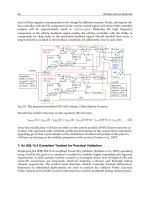
Fig. 6. Composite interruption chronogram
3.2 Sensor Data Monitoring
Inside the sensor node, the microcontroller and the radio transceiver work in power save
mode most of the time. When a state change happens in the sensors (an event has happened),
an external interrupt wakes the microcontroller and the sensing process starts. The sensing is
made following the next sequence: first, the external interrupt which has fired the exception
is disabled for a 5 seconds interval; to save energy by preventing the same sensor firing con-
tinuously without relevant information. This is achieved by starting a 5 seconds timer which
we call the interrupt timer, when this timer is fired the external interrupt is rearmed. For it,
there is a fist of taking the data, the global interrupt bit is disabled until the data has been cap-
tured and the message has been sent. Third, the digital input is read using the TinyOS GPIO
management features. Fourth, battery level and temperature are read. The battery level and
temperature readings are made using routines based on TinyOS ADC library. At last, a mes-
sage is sent using the similar TinyOS routines. In this way, the message is sent to the sensor
parent in the mesh. The external led of the multisensor board is powered on when the sending
routine is started; and powered off when the sending process is finished. This external led can
be disabled via software in order to save battery power.
As an example, an events chronogram driven for interruption is shown in Figure 6, where
next thresholds was established: t
2
− t
1
< 125 ms, t
3
− t
1
< 5 s, t
4
− t
1
< 5 s, t
5
− t
1
= 5
s, t
6
− t
5
< 1 ms, t
7
− t
6
< 125 ms, t
8
− t
6
= 5 s and t
9
− t
8
< 1 ms. Figure 6 can be
descripted as follows: at t
1
an external interrupt Int
x
has occurred due to a change in a sensor.
The external interrupt Int
x
is disabled and the interrupt timer started. The sensor data is
taken. The message is sent and the external led of our multisensor board is powered on. At
t
2
the send process is finished. The external led is powered off. At t
3
, an external interrupt
Int
x
has occurred. The exception routine is not executed because the external interrupt Int
x
is disabled. The interrupt flag for Int
x
is raised. At t
4
, another interruption has occurred
but the interruption flag is already raised. At t
5
, the interrupt timer is fired. The external
interrupt Int
x
is enabled. At t
6
, the exception routine is executed because the interrupt flag
is raised. The external interrupt Int
x
is disabled and the interrupt timer started. The sensor
data is taken. The message is sent and the external led powered on. At t
7
: The send process
has finished. The external led is powered off. At t
8
, the interrupt timer is fired. The external
interrupt Int
x
is enabled.At t
9
, there are not more pending tasks.
3.3 Base Station
The event notifications are sent from the sensors to the base station. Also commands are
sent from the gateway to the sensors. In short, the base station fuses the information and
Wireless Sensor Networks: Application-Centric Design140
therefore is a central and special mote node in the network. This USB-based central node
was developed by us also. This provides different services to the wireless network. First, the
base station is the seed mote that forms the multihop network. It outputs route messages that
inform all nearby motes that it is the base station and has zero cost to forward any message.
Second, for downstream communication the base station automatically routes messages down
the same path as the upstream communication from a mote. Third, it is compiled with a
large number of message buffers to handle more children than other motes in the network.
These messages are provided for TinyOS, a open-source low-power operative system. Fourth,
the base station forwards all messages upstream and downstream from the gateway using
a standard serial framer protocol. Five, the station base can periodically send a heartbeat
message to the client. If it does not get a response from the client within a predefined time it
will assume the communication link has been lost and reset itself.
This base station is connected via USB to a gateway (miniPC) which is responsible of deter-
mining an appropriate response by means of an intelligent software in development now, i.e.
passive infra-red movement sensor might send an event at which point and moment towards
the gateway via base station for its processing. The application can monitor the events to de-
termine if a strange situation has occurred. Also, the application can ask to the sensors node
if the event has finished or was a malfunction of sensor. If normal behavior is detected by
the latter devices, then the event might just be recorded as an incident of interest, or the user
might be prompted to ask if they are alright. If, on the other hand, no normal behavior is
detected then the gateway might immediately query the user and send an emergency signal if
there is no response within a certain (short) period of time. With the emergency signal, access
would be granted to the remote care provider who could log in and via phone call.
3.4 Gateway
Our system has been designed considering the presence of a local gateway used to process
event patterns in situ and take decisions. This home gateway is provided with a java-based
intelligent software which is able to take decision about different events. In short, it has java
application for monitoring the elderly and ZigBee wireless connectivity provided by a USB
mote-based base station for our prototype. This layer stack form a global software archi-
tecture. The lowest layer is a hardware layer. In the context awareness layer, the software
obtains contextual information provided by sensors. The middle level software layer, model
of user behavior, obtains the actual state of attendee, detecting if the resident is in an emer-
gency situation which must be solved. The deep reasoning layer is being developed to solve
inconsistencies reached in the middle layer.
The gateway is based on a miniPC draws only 3-5 watts when running Linux (Ubuntu 7.10
(Gutsy) preloaded) consuming as little power as a standard PC does in stand-by mode. Ultra
small and ultra quiet, the gateway is about the size of a paperback book, is noiseless thanks
to a fanless design and gets barely warm. Gateway disposes a x86 architecture and integrated
hard disk. Fit-PC has dual 100 Mbps Ethernet making it a capable network computer. A
normal personal computer is too bulky, noisy and power hungry.
The motherboard of miniPC is a rugged embedded board having all components– including
memory and CPU– soldered on-board. The gateway is enclosed in an all-aluminum anodized
case that is splash and dust resistant. The case itself is used for heat removal- eliminating the
need for a fan and venting holes. Fit-PC has no moving parts other than the hard-disk. The
CPU is an AMD Geode LX800 500 MHz, the memory has 256 MB DDR 333 MHz soldered
on-board and the hard disk has 2.5" IDE 60 GB. To connect with base station, the gateway
Fig. 7. Gateway based on miniPC, Mote board and base station
disposes of 2
× USB 2.0 HiSpeed 480 Mbps, also it has 2 × RJ45 Ethernet ports 100 Mbps to
connect with Internet. Figure 7 shows the gateway ports base station and our mote board.
4. Results and Discussions
Figure 7 shows the hardware of the built wireless sensor node provides for mote board. In this
prototype, a variable and heterogeneous number of wireless sensor nodes are attached to mul-
tisensor boards in order to detect the activities of our elderly in the surrounding environment,
and they send their measurements to a base station when an event (change of state) is pro-
duced or when the gateway requires information in order to avoid inconsistencies. The base
station can transmit or receive data to or from the gateway by means of USB interface. It can
be seen that the sensor nodes of the prototype house detect the elderly activity. The infrared
passive, magnetic and pressure sensors have a high quality and sensitivity. Also, the low-
power multihop protocol works correctly. Therefore, the system can determine the location
and activity patterns of elderly, and in the close future when the intelligent software will learn
of elderly activities, the system will can take decisions about strange actions of elderly if they
are not stored in his history of activities. By now, the system knows some habitual patterns
of behavior and therefore it must be tuning in each particular case. Additionally, connectivity
between the gateway exists to the remote caregiver station via a local ethernet network. The
gateway currently receives streamed sensor data so that it can be used for analysis and al-
gorithm development for the intelligent software and the gateway is able potentially to send
data via ethernet to the caregiver station.
Wireless Sensor Network for Ambient Assisted Living 141
therefore is a central and special mote node in the network. This USB-based central node
was developed by us also. This provides different services to the wireless network. First, the
base station is the seed mote that forms the multihop network. It outputs route messages that
inform all nearby motes that it is the base station and has zero cost to forward any message.
Second, for downstream communication the base station automatically routes messages down
the same path as the upstream communication from a mote. Third, it is compiled with a
large number of message buffers to handle more children than other motes in the network.
These messages are provided for TinyOS, a open-source low-power operative system. Fourth,
the base station forwards all messages upstream and downstream from the gateway using
a standard serial framer protocol. Five, the station base can periodically send a heartbeat
message to the client. If it does not get a response from the client within a predefined time it
will assume the communication link has been lost and reset itself.
This base station is connected via USB to a gateway (miniPC) which is responsible of deter-
mining an appropriate response by means of an intelligent software in development now, i.e.
passive infra-red movement sensor might send an event at which point and moment towards
the gateway via base station for its processing. The application can monitor the events to de-
termine if a strange situation has occurred. Also, the application can ask to the sensors node
if the event has finished or was a malfunction of sensor. If normal behavior is detected by
the latter devices, then the event might just be recorded as an incident of interest, or the user
might be prompted to ask if they are alright. If, on the other hand, no normal behavior is
detected then the gateway might immediately query the user and send an emergency signal if
there is no response within a certain (short) period of time. With the emergency signal, access
would be granted to the remote care provider who could log in and via phone call.
3.4 Gateway
Our system has been designed considering the presence of a local gateway used to process
event patterns in situ and take decisions. This home gateway is provided with a java-based
intelligent software which is able to take decision about different events. In short, it has java
application for monitoring the elderly and ZigBee wireless connectivity provided by a USB
mote-based base station for our prototype. This layer stack form a global software archi-
tecture. The lowest layer is a hardware layer. In the context awareness layer, the software
obtains contextual information provided by sensors. The middle level software layer, model
of user behavior, obtains the actual state of attendee, detecting if the resident is in an emer-
gency situation which must be solved. The deep reasoning layer is being developed to solve
inconsistencies reached in the middle layer.
The gateway is based on a miniPC draws only 3-5 watts when running Linux (Ubuntu 7.10
(Gutsy) preloaded) consuming as little power as a standard PC does in stand-by mode. Ultra
small and ultra quiet, the gateway is about the size of a paperback book, is noiseless thanks
to a fanless design and gets barely warm. Gateway disposes a x86 architecture and integrated
hard disk. Fit-PC has dual 100 Mbps Ethernet making it a capable network computer. A
normal personal computer is too bulky, noisy and power hungry.
The motherboard of miniPC is a rugged embedded board having all components– including
memory and CPU– soldered on-board. The gateway is enclosed in an all-aluminum anodized
case that is splash and dust resistant. The case itself is used for heat removal- eliminating the
need for a fan and venting holes. Fit-PC has no moving parts other than the hard-disk. The
CPU is an AMD Geode LX800 500 MHz, the memory has 256 MB DDR 333 MHz soldered
on-board and the hard disk has 2.5" IDE 60 GB. To connect with base station, the gateway
Fig. 7. Gateway based on miniPC, Mote board and base station
disposes of 2
× USB 2.0 HiSpeed 480 Mbps, also it has 2 × RJ45 Ethernet ports 100 Mbps to
connect with Internet. Figure 7 shows the gateway ports base station and our mote board.
4. Results and Discussions
Figure 7 shows the hardware of the built wireless sensor node provides for mote board. In this
prototype, a variable and heterogeneous number of wireless sensor nodes are attached to mul-
tisensor boards in order to detect the activities of our elderly in the surrounding environment,
and they send their measurements to a base station when an event (change of state) is pro-
duced or when the gateway requires information in order to avoid inconsistencies. The base
station can transmit or receive data to or from the gateway by means of USB interface. It can
be seen that the sensor nodes of the prototype house detect the elderly activity. The infrared
passive, magnetic and pressure sensors have a high quality and sensitivity. Also, the low-
power multihop protocol works correctly. Therefore, the system can determine the location
and activity patterns of elderly, and in the close future when the intelligent software will learn
of elderly activities, the system will can take decisions about strange actions of elderly if they
are not stored in his history of activities. By now, the system knows some habitual patterns
of behavior and therefore it must be tuning in each particular case. Additionally, connectivity
between the gateway exists to the remote caregiver station via a local ethernet network. The
gateway currently receives streamed sensor data so that it can be used for analysis and al-
gorithm development for the intelligent software and the gateway is able potentially to send
data via ethernet to the caregiver station.
Wireless Sensor Networks: Application-Centric Design142
Fig. 8. Iris mote board and our first Multisensor board prototype (2007)
As the transmission is digital, there is no noise in the signals. It represents an important
feature because noise effects commonly hardly affect telemedicine and assistence systems.
The baud rate allows the transmission of vital and activity signals without problems. The
discrete signals (movement, pressure and temperature, for example) are quickly transmitted.
Nevertheless, spending 5 s to transmit an signal sample or event does not represent a big
problem. Moreover, the system can interact with other applications based on information
technologies. Using standards represents an important step for integrating assisted living at
home systems. The system was implemented as previously we have described. As mentioned,
the system uses Java programming language in order to describe the activity of the elderly
and take a decision. The system guaranteed the transmission of a packet per less to 1 seconds,
e.g. the baud rate is 57 600 bits
−1
. Other signals, such as temperature, need the same time.
Furthermore, lost packets are tracked, once it is using a cyclic redundancy code (CRC). There
are a lot of sensors which can measure activities and environmental parameters unobtrusively.
Among them, just a few sensors are used in our prototype home. In the future, other useful
sensors will be used in experiments. For fall measurement (Sixsmith & Johnson, 2004b), a
method can be used applied using infrared vision. In addition, microphone/speaker sensors
can be used for tracking and ultrasound sensors also can be used for movement. Other sensors
can be easily incorporated into our system because we have already developed a small-size
multisensor board.
In this sense, we have decided design an accelerometer mote that is small and lightweight that
can be worn comfortably without obstructing normal activities. The wearable mote board has
mounted a 3-axis accelerometer with high resolution (13-bit) measurement at up to
±16 g
(Analog Devices ADXL345). Digital output data is formatted as 16-bit twos complement and
is accessible through either a SPI (3- or 4-wire) (or I2C digital interface). The wearable mote
measures the static acceleration of gravity in tilt-sensing applications, as well as dynamic ac-
celeration resulting from motion or shock. High resolution provided by ADXL345 (4 mg/LSB)
enables measurement of inclination changes less than 1.0
◦
. Several special sensing functions
are provided. Activity and inactivity sensing detect the presence or lack of motion and if
the acceleration on any axis exceeds a user-set level. Tap sensing detects single and double
taps. Free-fall sensing detects if the device is falling. These functions can be mapped to one
of two interrupt output pins. An integrated, patent pending 32-level first in, first out (FIFO)
buffer can be used to store data to minimize host processor intervention. Low power modes
Fig. 9. Actor with accelerometer in his waist, log of data and accelometer sensor node proto-
type
enable intelligent motion-based power management with threshold sensing and active accel-
eration measurement at extremely low power dissipation. The mote fits inside a plastic box
measuring 4
×4×1cm, where the button battery is enclosed in the same package. Clearly, the
placement of the device on the body is of primary concern. Some of the criteria are that it
should be comfortable and that the device itself should not pose a threat to the wearer in the
event of a fall. For our experiments, we attached the mote to a belt worn around the waist.
We have not done sufficient experiments on elderly people. In this work, the experiments
should be considered preliminary and more data is needed. Figure 9 shows some pictures of
accelerometer sensor node and our proofs.
In the literature there is an absence of research data on a persons movement in his or her own
house that is not biased by self-report or by third party observation. We are in the process
of several threads of analysis that would provide more sophisticated capabilities for future
versions of the intelligent software. The assisted living system is a heterogenous wireless
network using and ZigBee radios to connect a diverse set of embedded sensor devices. These
devices and the wireless network can monitor the elderly activity in a secure and private
manner and issue alerts to the user, care givers or emergency services as necessary to provide
additional safety and security to the user. This system is being developed to provide this
safety and security so that elder citizens who might have to leave their own homes for a
group care facility will be able to extend their ability to remain at home longer. This will in
most cases provide them with better quality of life and better health in a cost effective manner.
Wireless Sensor Network for Ambient Assisted Living 143
Fig. 8. Iris mote board and our first Multisensor board prototype (2007)
As the transmission is digital, there is no noise in the signals. It represents an important
feature because noise effects commonly hardly affect telemedicine and assistence systems.
The baud rate allows the transmission of vital and activity signals without problems. The
discrete signals (movement, pressure and temperature, for example) are quickly transmitted.
Nevertheless, spending 5 s to transmit an signal sample or event does not represent a big
problem. Moreover, the system can interact with other applications based on information
technologies. Using standards represents an important step for integrating assisted living at
home systems. The system was implemented as previously we have described. As mentioned,
the system uses Java programming language in order to describe the activity of the elderly
and take a decision. The system guaranteed the transmission of a packet per less to 1 seconds,
e.g. the baud rate is 57 600 bits
−1
. Other signals, such as temperature, need the same time.
Furthermore, lost packets are tracked, once it is using a cyclic redundancy code (CRC). There
are a lot of sensors which can measure activities and environmental parameters unobtrusively.
Among them, just a few sensors are used in our prototype home. In the future, other useful
sensors will be used in experiments. For fall measurement (Sixsmith & Johnson, 2004b), a
method can be used applied using infrared vision. In addition, microphone/speaker sensors
can be used for tracking and ultrasound sensors also can be used for movement. Other sensors
can be easily incorporated into our system because we have already developed a small-size
multisensor board.
In this sense, we have decided design an accelerometer mote that is small and lightweight that
can be worn comfortably without obstructing normal activities. The wearable mote board has
mounted a 3-axis accelerometer with high resolution (13-bit) measurement at up to
±16 g
(Analog Devices ADXL345). Digital output data is formatted as 16-bit twos complement and
is accessible through either a SPI (3- or 4-wire) (or I2C digital interface). The wearable mote
measures the static acceleration of gravity in tilt-sensing applications, as well as dynamic ac-
celeration resulting from motion or shock. High resolution provided by ADXL345 (4 mg/LSB)
enables measurement of inclination changes less than 1.0
◦
. Several special sensing functions
are provided. Activity and inactivity sensing detect the presence or lack of motion and if
the acceleration on any axis exceeds a user-set level. Tap sensing detects single and double
taps. Free-fall sensing detects if the device is falling. These functions can be mapped to one
of two interrupt output pins. An integrated, patent pending 32-level first in, first out (FIFO)
buffer can be used to store data to minimize host processor intervention. Low power modes
Fig. 9. Actor with accelerometer in his waist, log of data and accelometer sensor node proto-
type
enable intelligent motion-based power management with threshold sensing and active accel-
eration measurement at extremely low power dissipation. The mote fits inside a plastic box
measuring 4
×4×1cm, where the button battery is enclosed in the same package. Clearly, the
placement of the device on the body is of primary concern. Some of the criteria are that it
should be comfortable and that the device itself should not pose a threat to the wearer in the
event of a fall. For our experiments, we attached the mote to a belt worn around the waist.
We have not done sufficient experiments on elderly people. In this work, the experiments
should be considered preliminary and more data is needed. Figure 9 shows some pictures of
accelerometer sensor node and our proofs.
In the literature there is an absence of research data on a persons movement in his or her own
house that is not biased by self-report or by third party observation. We are in the process
of several threads of analysis that would provide more sophisticated capabilities for future
versions of the intelligent software. The assisted living system is a heterogenous wireless
network using and ZigBee radios to connect a diverse set of embedded sensor devices. These
devices and the wireless network can monitor the elderly activity in a secure and private
manner and issue alerts to the user, care givers or emergency services as necessary to provide
additional safety and security to the user. This system is being developed to provide this
safety and security so that elder citizens who might have to leave their own homes for a
group care facility will be able to extend their ability to remain at home longer. This will in
most cases provide them with better quality of life and better health in a cost effective manner.
Wireless Sensor Networks: Application-Centric Design144
Fig. 10. Monitoring proofs with ssh communication at a patient residence
Also think that this assisted living system can be used in diagnostic because the activity data
can show indicators of illness. We think that changes in daily activity patterns can suggest
serious conditions and reveal abnormalities of the elderly resident. In summary, we think that
our Custodial Care system could be quite well-received by the elderly residents. We think
that the infrastructure will need to, i) deal robustly with a wide range of different homes and
scenarios, ii) be very reliable in diverse operating conditions, iii) communicate securely with
well-authenticated parties who are granted proper access to the information, iv) respect the
privacy of its users, and v) provide QoS even in the presence of wireless interference and
other environmental effects. We are continuing working on these issues. Figure 10 shows a
real scenario where we can see the log in the left when a resident is lying in the bed.
5. Summary
Assistence living at home care represents a growing field in the social services. It reduces costs
and increases the quality of life of assisted citizen. As the modern life becomes more stressful
and acute diseases appear, prolonged assistence become more necessary. The same occurs
for the handicapped patients. Home care offers the possibility of assistence in the patients
house, with the assistance of the family. It reduces the need of transporting patients between
house and hospital. The assistence living at home routines can be switched by telemedicine
applications. Actually, this switch is also called telehomecare, which can be defined as the use
of information and communication technologies to enable effective delivery and management
of health services at a patients residence.
Summing up, we have reviewed the state of the art of technologies that allow the use of wire-
less sensor networks in AAL. More specifically, technology based on the sensor nodes (WNs)
that conform it. We have proposed a wireless sensor network infrastructure for assisted liv-
ing at home using WSNs technology. These technologies can reduce or eliminate the need for
personal services in the home and can also improve treatment in residences for the elderly
and caregiver facilities. We have introduced its system architecture, power management, self-
configuration of network and routing. In this chapter, a multihop low-power network pro-
tocol has been presented for network configuration and routing since it can be considered
as a natural and appropriate choice for ZigBee networks. This network protocol is modified
of original protocol of Crossbow because our protocol is based in events and is not based
in timers. Moreover, it can give many advantages from the viewpoint of power network and
medium access. Also, we have developed multisensors board for the nodes which can directly
drive events towards an USB base station with the help of our ZigBee multihop low-power
protocol. In this way, and by means of distributed sensors (motes) installed in each of rooms
in the home we can know the activities and the elderly location. A base station (a special mote
developed by us too) is connected to a gateway (miniPC) by means an USB connector which
is responsible of determining an appropriate response using an intelligent software, i.e. pas-
sive infra-red movement sensor might send an event at which point and moment towards the
gateway via base station for its processing. This software is in development in this moment
therefore is partially operative.
DIA project intends to be developed with participatory design between the users, care
providers and developers. With the WSN infrastructure in place, sensor devices will be iden-
tified for development and implemented as the system is expanded in a modular manner to
include a wide selection of devices. In conclusion, the non-invasive monitoring technologies
presented here could provide effective care coordination tools that, in our opinion, could be
accepted by elderly residents, and could have a positive impact on their quality of life. The
first prototype home in which this is being tested is located in the Region de Murcia, Spain.
Follow these tests, the system will be shared with our partners for further evaluation in group
care facilities, hospitals and homes in our region.
6. Acknowledgments
The authors gratefully acknowledge the contribution of Spanish Ministry of Ciencia e Inno-
vación (MICINN) and reviewers’ comments. This work was supported by the Spanish Min-
istry of Ciencia e Innovación (MICINN) under grant TIN2009-14372-C03-02.
7. References
Al-Karaki, J. & Kamal, A. (2004). Routing techniques in wireless sensor networks: a survey,
11(6): 6–28.
Biemer, M. & Hampe, J. F. (2005). A mobile medical monitoring system: Concept, design and
deployment, ICMB ’05: Proceedings of the International Conference on Mobile Business,
IEEE Computer Society, Washington, DC, USA, pp. 464–471.
Bilstrup, U. & Wiberg, P A. (2004). An architecture comparison between a wireless sensor
network and an active rfid system, Local Computer Networks, 2004. 29th Annual IEEE
International Conference on, pp. 583–584.
Botía-Blaya, J., Palma, J., Villa, A., Pérez, D. & Iborra, E. (2009). Ontology based approach to
the detection of domestic problems for independent senior people, IWINAC09, Inter-
national Work-Conference on the Interpalay Between Natural and Artificial Compu-
tation, IWINAC, pp. 55–64.
Cho, N., Song, S J., Kim, S., Kim, S. & Yoo, H J. (2005). A 5.1-µw uhf rfid tag chip integrated
with sensors for wireless environmental monitoring, Solid-State Circuits Conference,
2005. ESSCIRC 2005. Proceedings of the 31st European, pp. 279–282.
Fernández-Luque, F., Zapata, J., Ruiz, R. & Iborra, E. (2009). A wireless sensor network for
assisted living at home of elderly people, IWINAC ’09: Proceedings of the 3rd Inter-
national Work-Conference on The Interplay Between Natural and Artificial Computation,
Springer-Verlag, Berlin, Heidelberg, pp. 65–74.
Wireless Sensor Network for Ambient Assisted Living 145
Fig. 10. Monitoring proofs with ssh communication at a patient residence
Also think that this assisted living system can be used in diagnostic because the activity data
can show indicators of illness. We think that changes in daily activity patterns can suggest
serious conditions and reveal abnormalities of the elderly resident. In summary, we think that
our Custodial Care system could be quite well-received by the elderly residents. We think
that the infrastructure will need to, i) deal robustly with a wide range of different homes and
scenarios, ii) be very reliable in diverse operating conditions, iii) communicate securely with
well-authenticated parties who are granted proper access to the information, iv) respect the
privacy of its users, and v) provide QoS even in the presence of wireless interference and
other environmental effects. We are continuing working on these issues. Figure 10 shows a
real scenario where we can see the log in the left when a resident is lying in the bed.
5. Summary
Assistence living at home care represents a growing field in the social services. It reduces costs
and increases the quality of life of assisted citizen. As the modern life becomes more stressful
and acute diseases appear, prolonged assistence become more necessary. The same occurs
for the handicapped patients. Home care offers the possibility of assistence in the patients
house, with the assistance of the family. It reduces the need of transporting patients between
house and hospital. The assistence living at home routines can be switched by telemedicine
applications. Actually, this switch is also called telehomecare, which can be defined as the use
of information and communication technologies to enable effective delivery and management
of health services at a patients residence.
Summing up, we have reviewed the state of the art of technologies that allow the use of wire-
less sensor networks in AAL. More specifically, technology based on the sensor nodes (WNs)
that conform it. We have proposed a wireless sensor network infrastructure for assisted liv-
ing at home using WSNs technology. These technologies can reduce or eliminate the need for
personal services in the home and can also improve treatment in residences for the elderly
and caregiver facilities. We have introduced its system architecture, power management, self-
configuration of network and routing. In this chapter, a multihop low-power network pro-
tocol has been presented for network configuration and routing since it can be considered
as a natural and appropriate choice for ZigBee networks. This network protocol is modified
of original protocol of Crossbow because our protocol is based in events and is not based
in timers. Moreover, it can give many advantages from the viewpoint of power network and
medium access. Also, we have developed multisensors board for the nodes which can directly
drive events towards an USB base station with the help of our ZigBee multihop low-power
protocol. In this way, and by means of distributed sensors (motes) installed in each of rooms
in the home we can know the activities and the elderly location. A base station (a special mote
developed by us too) is connected to a gateway (miniPC) by means an USB connector which
is responsible of determining an appropriate response using an intelligent software, i.e. pas-
sive infra-red movement sensor might send an event at which point and moment towards the
gateway via base station for its processing. This software is in development in this moment
therefore is partially operative.
DIA project intends to be developed with participatory design between the users, care
providers and developers. With the WSN infrastructure in place, sensor devices will be iden-
tified for development and implemented as the system is expanded in a modular manner to
include a wide selection of devices. In conclusion, the non-invasive monitoring technologies
presented here could provide effective care coordination tools that, in our opinion, could be
accepted by elderly residents, and could have a positive impact on their quality of life. The
first prototype home in which this is being tested is located in the Region de Murcia, Spain.
Follow these tests, the system will be shared with our partners for further evaluation in group
care facilities, hospitals and homes in our region.
6. Acknowledgments
The authors gratefully acknowledge the contribution of Spanish Ministry of Ciencia e Inno-
vación (MICINN) and reviewers’ comments. This work was supported by the Spanish Min-
istry of Ciencia e Innovación (MICINN) under grant TIN2009-14372-C03-02.
7. References
Al-Karaki, J. & Kamal, A. (2004). Routing techniques in wireless sensor networks: a survey,
11(6): 6–28.
Biemer, M. & Hampe, J. F. (2005). A mobile medical monitoring system: Concept, design and
deployment, ICMB ’05: Proceedings of the International Conference on Mobile Business,
IEEE Computer Society, Washington, DC, USA, pp. 464–471.
Bilstrup, U. & Wiberg, P A. (2004). An architecture comparison between a wireless sensor
network and an active rfid system, Local Computer Networks, 2004. 29th Annual IEEE
International Conference on, pp. 583–584.
Botía-Blaya, J., Palma, J., Villa, A., Pérez, D. & Iborra, E. (2009). Ontology based approach to
the detection of domestic problems for independent senior people, IWINAC09, Inter-
national Work-Conference on the Interpalay Between Natural and Artificial Compu-
tation, IWINAC, pp. 55–64.
Cho, N., Song, S J., Kim, S., Kim, S. & Yoo, H J. (2005). A 5.1-µw uhf rfid tag chip integrated
with sensors for wireless environmental monitoring, Solid-State Circuits Conference,
2005. ESSCIRC 2005. Proceedings of the 31st European, pp. 279–282.
Fernández-Luque, F., Zapata, J., Ruiz, R. & Iborra, E. (2009). A wireless sensor network for
assisted living at home of elderly people, IWINAC ’09: Proceedings of the 3rd Inter-
national Work-Conference on The Interplay Between Natural and Artificial Computation,
Springer-Verlag, Berlin, Heidelberg, pp. 65–74.
Wireless Sensor Networks: Application-Centric Design146
Horton, M. & Suh, J. (2005). A vision for wireless sensor networks, Proc. IEEE MTT-S Interna-
tional Microwave Symposium Digest, p. 4pp.
JLHLabs (2008). WSN Lab.
URL: />Kahn, J. M., Katz, R. H. & Pister, K. S. J. (1999). Next century challenges: mobile network-
ing for "smart dust", MobiCom ’99: Proceedings of the 5th annual ACM/IEEE interna-
tional conference on Mobile computing and networking, ACM Press, New York, NY, USA,
pp. 271–278.
URL: />Li, Y., Thai, M. T. & Wu, W. (2008). Wireless Sensor Networks And Applications, Springer.
Lubrin, E., Lawrence, E. & Navarro, K. F. (2006). Motecare: an adaptive smart ban health
monitoring system, BioMed’06: Proceedings of the 24th IASTED international conference
on Biomedical engineering, ACTA Press, Anaheim, CA, USA, pp. 60–67.
Martin, H., Bernardos, A., Bergesio, L. & Tarrio, P. (2009). Analysis of key aspects to manage
wireless sensor networks in ambient assisted living environments, Applied Sciences in
Biomedical and Communication Technologies, 2009. ISABEL 2009. 2nd International Sym-
posium on, pp. 1 –8.
MIT (2008). MIT WSN Research Group.
URL : />html.
Pister, K. (2008). Smart dust, autonomous sensing and communication in a cubic millimeter.
URL: />Ross, P. (2004). Managing care through the air [remote health monitoring], Spectrum, IEEE
41(12): 26–31.
Rowan, J. & Mynatt, E. D. (2005). Digital family portrait field trial: Support for aging in place,
CHI ’05: Proceedings of the SIGCHI conference on Human factors in computing systems,
ACM, New York, NY, USA, pp. 521–530.
Sagduyu, Y. & Ephremides, A. (2004). The problem of medium access control in wireless
sensor networks, 11(6): 44–53.
Sixsmith, A. & Johnson, N. (2004a). A smart sensor to detect the falls of the elderly, Pervasive
Computing, IEEE 3(2): 42–47.
Sixsmith, A. & Johnson, N. (2004b). A smart sensor to detect the falls of the elderly, 3(2): 42–47.
Sohraby, K., Minoli, D. & Znati, T. (2007). Wireless Sensor Networks: Technology, Protocols, and
Applications, John Wiley and Sons.
URL : />productCd-0471743003.html.
TinyOS (2009). Tinyos website.
URL: />UCLA (2009). UCLA WSN Projects.
URL: />Monitoring of human movements for fall detection and activities
recognition in elderly care using wireless sensor network: a survey 147
Monitoring of human movements for fall detection and activities
recognition in elderly care using wireless sensor network: a survey
Stefano Abbate, Marco Avvenuti, Paolo Corsini, Alessio Vecchio and Janet Light
0
Monitoring of human movements for fall
detection and activities recognition in elderly
care using wireless sensor network: a survey
Stefano Abbate
IMT Institute for Advanced Studies Lucca
Italy
Marco Avvenuti, Paolo Corsini and Alessio Vecchio
University of Pisa
Italy
Janet Light
University of New Brunswick
Canada
1. Introduction
The problem with accidental falls among elderly people has massive social and economic
impacts. Falls in elderly people are the main cause of admission and extended period of stay
in a hospital. It is the sixth cause of death for people over the age of 65, the second for people
between 65 and 75, and the first for people over 75. Among people affected by Alzheimer’s
Disease, the probability of a fall increases by a factor of three.
Elderly care can be improved by using sensors that monitor the vital signs and activities of
patients, and remotely communicate this information to their doctors and caregivers. For
example, sensors installed in homes can alert caregivers when a patient falls. Research teams
in universities and industries are developing monitoring technologies for in-home elderly
care. They make use of a network of sensors including pressure sensors on chairs, cameras,
and RFID tags embedded throughout the home of the elderly people as well as in furniture
and clothing, which communicate with tag readers in floor mats, shelves, and walls.
A fall can occur not only when a person is standing, but also while sitting on a chair or lying on
a bed during sleep. The consequences of a fall can vary from scrapes to fractures and in some
cases lead to death. Even if there are no immediate consequences, the long-wait on the floor
for help increases the probability of death from the accident. This underlines the importance
of real-time monitoring and detection of a fall to enable first-aid by relatives, paramedics or
caregivers as soon as possible.
Monitoring the activities of daily living (ADL) is often related to the fall problem and requires
a non-intrusive technology such as a wireless sensor network. An elderly with risk of fall
can be instrumented with (preferably) one wireless sensing device to capture and analyze the
9
Wireless Sensor Networks: Application-Centric Design148
body movements continuously, and the system triggers an alarm when a fall is detected. The
small size and the light weight make the sensor network an ideal candidate to handle the fall
problem.
The development of new techniques and technologies demonstrates that a major effort has
been taken during the past 30 years to address this issue. However, the researchers took many
different approaches to solve the problem without following any standard testing guidelines.
In some studies, they proposed their own guidelines.
In this Chapter, a contribution is made towards such a standardization by collecting the most
relevant parameters, data filtering techniques and testing approaches from the studies done
so far. State-of-the-art fall detection techniques were surveyed, highlighting the differences in
their effectiveness at fall detection. A standard database structure was created for fall study
that emphasizes the most important elements of a fall detection system that must be consid-
ered for designing a robust system, as well as addressing the constraints and challenges.
1.1 Definitions
A fall can be defined in different ways based on the aspects studied. The focus in this study
is on the kinematic analysis of the human movements. A a suitable definition of a fall is
“Unintentionally coming to the ground or some lower level and other than as a consequence
of sustaining a violent blow, loss of consciousness, sudden onset of paralysis as in stroke or an
epileptic seizure.” (Gibson et al., 1987). It is always possible to easily re-adapt this definition
to address the specific goals a researcher wants to pursue.
In terms of human anatomy, a fall usually occurs along one of two planes, called sagittal and
coronal planes. Figure 1(a) shows the sagittal plane, that is an X-Z imaginary plane that travels
vertically from the top to the bottom of the body, dividing it into left and right portions. In
this case a fall along the sagittal plane can occur forward or backward. Figure 1(b) shows the
coronal Y-Z plane, which divides the body into dorsal and ventral (back and front) portions.
The coronal plane is orthogonal to the sagittal plane and is therefore considered for lateral
falls (right or left). Note that if the person is standing without moving, that is, he or she is
in a static position, the fall occurs following in the down direction. The sense of x, y and z
are usually chosen in order to have positive z-values of the acceleration component when the
body is falling.
(a) Along sagittal plane (b) Along coronal plane
Fig. 1. Fall directions
Toppling simply refers to a loss in balance. Figure 2(a) shows the body from a kinematic point
of view. When the vertical line through the center of gravity lies outside the base of support
the body starts toppling. If there is no reaction to this loss of balance, the body falls on the
ground (Chapman, 2008).
Let us now consider the fall of a body from a stationary position at height h
= H. Initially the
body has a potential energy mgh which is transformed into kinetic energy during the fall with
the highest value just before the impact on the floor (h
= 0). During the impact the energy
is totally absorbed by the body and, after the impact, both potential and kinetic energy are
equal to zero. If the person is conscious the energy can be absorbed by the his muscles, for
example, using the arms (see Figure 2(b)), whereas if the person is unconscious it can lead to
sever injuries (see Figure 2(c)).
(a) Toppling
(b) Conscious fall (c) Unconscious fall
Fig. 2. Kinematic analysis of a fall
Strictly related to a fall is the posture, a configuration of the human body that is assumed inten-
tionally or habitually. Some examples are standing, sitting, bending and lying. A posture can
be determined by monitoring the tilt transition of the trunk and legs, the angular coordinates
of which are shown in Figure 3(a) and Figure 3(b) (Li et al., 2009; Yang & Hsu, 2007). The
ability to detect a posture helps to determine if there has been a fall.
(a) Trunk (b) Legs
Fig. 3. Angular coordinates
Monitoring of human movements for fall detection and activities
recognition in elderly care using wireless sensor network: a survey 149
body movements continuously, and the system triggers an alarm when a fall is detected. The
small size and the light weight make the sensor network an ideal candidate to handle the fall
problem.
The development of new techniques and technologies demonstrates that a major effort has
been taken during the past 30 years to address this issue. However, the researchers took many
different approaches to solve the problem without following any standard testing guidelines.
In some studies, they proposed their own guidelines.
In this Chapter, a contribution is made towards such a standardization by collecting the most
relevant parameters, data filtering techniques and testing approaches from the studies done
so far. State-of-the-art fall detection techniques were surveyed, highlighting the differences in
their effectiveness at fall detection. A standard database structure was created for fall study
that emphasizes the most important elements of a fall detection system that must be consid-
ered for designing a robust system, as well as addressing the constraints and challenges.
1.1 Definitions
A fall can be defined in different ways based on the aspects studied. The focus in this study
is on the kinematic analysis of the human movements. A a suitable definition of a fall is
“Unintentionally coming to the ground or some lower level and other than as a consequence
of sustaining a violent blow, loss of consciousness, sudden onset of paralysis as in stroke or an
epileptic seizure.” (Gibson et al., 1987). It is always possible to easily re-adapt this definition
to address the specific goals a researcher wants to pursue.
In terms of human anatomy, a fall usually occurs along one of two planes, called sagittal and
coronal planes. Figure 1(a) shows the sagittal plane, that is an X-Z imaginary plane that travels
vertically from the top to the bottom of the body, dividing it into left and right portions. In
this case a fall along the sagittal plane can occur forward or backward. Figure 1(b) shows the
coronal Y-Z plane, which divides the body into dorsal and ventral (back and front) portions.
The coronal plane is orthogonal to the sagittal plane and is therefore considered for lateral
falls (right or left). Note that if the person is standing without moving, that is, he or she is
in a static position, the fall occurs following in the down direction. The sense of x, y and z
are usually chosen in order to have positive z-values of the acceleration component when the
body is falling.
(a) Along sagittal plane (b) Along coronal plane
Fig. 1. Fall directions
Toppling simply refers to a loss in balance. Figure 2(a) shows the body from a kinematic point
of view. When the vertical line through the center of gravity lies outside the base of support
the body starts toppling. If there is no reaction to this loss of balance, the body falls on the
ground (Chapman, 2008).
Let us now consider the fall of a body from a stationary position at height h
= H. Initially the
body has a potential energy mgh which is transformed into kinetic energy during the fall with
the highest value just before the impact on the floor (h
= 0). During the impact the energy
is totally absorbed by the body and, after the impact, both potential and kinetic energy are
equal to zero. If the person is conscious the energy can be absorbed by the his muscles, for
example, using the arms (see Figure 2(b)), whereas if the person is unconscious it can lead to
sever injuries (see Figure 2(c)).
(a) Toppling
(b) Conscious fall (c) Unconscious fall
Fig. 2. Kinematic analysis of a fall
Strictly related to a fall is the posture, a configuration of the human body that is assumed inten-
tionally or habitually. Some examples are standing, sitting, bending and lying. A posture can
be determined by monitoring the tilt transition of the trunk and legs, the angular coordinates
of which are shown in Figure 3(a) and Figure 3(b) (Li et al., 2009; Yang & Hsu, 2007). The
ability to detect a posture helps to determine if there has been a fall.
(a) Trunk (b) Legs
Fig. 3. Angular coordinates
Wireless Sensor Networks: Application-Centric Design150
1.2 Related Surveys of Research on Patient Monitoring Technologies
So far, a few surveys on fall detection systems have been written and extended. Some of them
propose their own standards and this is useful for people already working on the problem
of fall detection. This survey provides a comprehensive, if not exhaustive, guide from the
first-hand approach of the problem, highlighting the best practices to merge valid but hetero-
geneous procedures.
The first survey on fall detection by Noury et al. (2007) describes the systems, algorithms and
sensors used in the detection of a fall in elderly people. After an overview of the state-of-
the-art techniques, they discovered the lack of a common framework and hence proposed
some performance evaluation parameters in order to compare the different systems. These
parameters had to be evaluated for a set of falling scenarios that included real falls and actions
related to falls.
Yu (2008) focused on a classification of the approaches and principles of existing fall detection
methods. He also provided a classification of falls and a general framework of fall detection,
alert device and system schema.
The authors of Noury et al. (2007) described the in-depth sequence of falling (Noury et al.,
2008). They stated that it was difficult to compare academic studies because the conditions
of assessment are not always reported. This led to the evaluation of not only the above de-
scribed parameters and scenarios, but also of other objective criteria such as detection method,
usability and lifespan of a device.
In applications involving accelerometers, Kangas et al. (2007) used accelerometry-based pa-
rameters to determine thresholds for fall detection. The posture information was used to
distinguish between falls and activities of daily living. Their experiments showed the most
suitable placement for the sensor to be waist and the head, whereas placing the sensor on the
wrist gave rise to additional problems.
2. Fall risk factors
A person can be more or less prone to fall, depending on a number of risk factors and hence
a classification based on only age as a parameter is not enough. In fact, medical studies have
determined a set of so called risk factors:
• Intrinsic:
Age (over 65)
Low mobility and bone fragility
Poor balance
Chronic disease
Cognitive and dementia problems
Parkinson disease
Sight problems
Use of drugs that affect the mind
Incorrect lifestyle (inactivity, use of alcohol, obesity)
Previous falls
• Extrinsic:
Individual (incorrect use of shoes and clothes)
Drugs cocktail
• Internal Environment:
Slipping floors
Stairs
Need to reach high objects
• External Environment:
Damaged roads
Crowded places
Dangerous steps
Poor lighting
There is a clear correlation between the above list and the probability of fall. The number of
people that fall are as follows (Tinetti et al., 1988):
• 8% of people without any of risk factors
• 27% of people with only one risk factor
• 78% of people with four or more risk factors
The history of the falls is also important since people who have already fallen two times are
more at risk to fall again. This can be due to psychological (fear, shame, loss of self-esteem),
and/or physical (injuries, lack of exercise) reasons.
3. How, where and why people fall
Among elderly people that live at home, almost half of the falls take place near or inside the
house (Campbell et al., 1990; Lipsitz et al., 1991). Usually women fall in the kitchen whereas
men fall in the garden (Lord et al., 1993).
The rate of falls increases significantly among elderly people living in nursing homes: at least
40% of the patients fell twice or more within 6 months. This rate is five times more with
respect to the rate of fall when people live at home. This may be due to people having to
aquaint themselves with the new living enviroment and its obstacles.
3.1 Physical causes
The factors that lead to most of the falls in people over 65 are to stumble on obstacles or steps
and to slip on a smooth surface. The fall is usually caused by loss of balance due to dizziness.
Approximately 14% of people do not know why they fall and a smaller number of people
state that the fall is due to the fragility of the lower limbs (Lord et al., 1993).
Further researchers determined that traditional fall prevention measures such as bed rails can
make the fall worse (Masud & Morris, 2001).
3.2 Activities
Most of the falls happen during the activities of daily living (ADL) that involve a small loss of
balance such as standing or walking. Fewer falls happen during daily activities that involve
a more significant movement such as sitting on a chair or climbing the stairs. Conversely,
activities usually defined “dangerous”, such as jogging or physical exercises are less likely to
increase the probability of a fall (Tinetti et al., 1988). There are more falls during the day than
during the night (Campbell et al., 1990).
Monitoring of human movements for fall detection and activities
recognition in elderly care using wireless sensor network: a survey 151
1.2 Related Surveys of Research on Patient Monitoring Technologies
So far, a few surveys on fall detection systems have been written and extended. Some of them
propose their own standards and this is useful for people already working on the problem
of fall detection. This survey provides a comprehensive, if not exhaustive, guide from the
first-hand approach of the problem, highlighting the best practices to merge valid but hetero-
geneous procedures.
The first survey on fall detection by Noury et al. (2007) describes the systems, algorithms and
sensors used in the detection of a fall in elderly people. After an overview of the state-of-
the-art techniques, they discovered the lack of a common framework and hence proposed
some performance evaluation parameters in order to compare the different systems. These
parameters had to be evaluated for a set of falling scenarios that included real falls and actions
related to falls.
Yu (2008) focused on a classification of the approaches and principles of existing fall detection
methods. He also provided a classification of falls and a general framework of fall detection,
alert device and system schema.
The authors of Noury et al. (2007) described the in-depth sequence of falling (Noury et al.,
2008). They stated that it was difficult to compare academic studies because the conditions
of assessment are not always reported. This led to the evaluation of not only the above de-
scribed parameters and scenarios, but also of other objective criteria such as detection method,
usability and lifespan of a device.
In applications involving accelerometers, Kangas et al. (2007) used accelerometry-based pa-
rameters to determine thresholds for fall detection. The posture information was used to
distinguish between falls and activities of daily living. Their experiments showed the most
suitable placement for the sensor to be waist and the head, whereas placing the sensor on the
wrist gave rise to additional problems.
2. Fall risk factors
A person can be more or less prone to fall, depending on a number of risk factors and hence
a classification based on only age as a parameter is not enough. In fact, medical studies have
determined a set of so called risk factors:
• Intrinsic:
Age (over 65)
Low mobility and bone fragility
Poor balance
Chronic disease
Cognitive and dementia problems
Parkinson disease
Sight problems
Use of drugs that affect the mind
Incorrect lifestyle (inactivity, use of alcohol, obesity)
Previous falls
• Extrinsic:
Individual (incorrect use of shoes and clothes)
Drugs cocktail
• Internal Environment:
Slipping floors
Stairs
Need to reach high objects
• External Environment:
Damaged roads
Crowded places
Dangerous steps
Poor lighting
There is a clear correlation between the above list and the probability of fall. The number of
people that fall are as follows (Tinetti et al., 1988):
• 8% of people without any of risk factors
• 27% of people with only one risk factor
• 78% of people with four or more risk factors
The history of the falls is also important since people who have already fallen two times are
more at risk to fall again. This can be due to psychological (fear, shame, loss of self-esteem),
and/or physical (injuries, lack of exercise) reasons.
3. How, where and why people fall
Among elderly people that live at home, almost half of the falls take place near or inside the
house (Campbell et al., 1990; Lipsitz et al., 1991). Usually women fall in the kitchen whereas
men fall in the garden (Lord et al., 1993).
The rate of falls increases significantly among elderly people living in nursing homes: at least
40% of the patients fell twice or more within 6 months. This rate is five times more with
respect to the rate of fall when people live at home. This may be due to people having to
aquaint themselves with the new living enviroment and its obstacles.
3.1 Physical causes
The factors that lead to most of the falls in people over 65 are to stumble on obstacles or steps
and to slip on a smooth surface. The fall is usually caused by loss of balance due to dizziness.
Approximately 14% of people do not know why they fall and a smaller number of people
state that the fall is due to the fragility of the lower limbs (Lord et al., 1993).
Further researchers determined that traditional fall prevention measures such as bed rails can
make the fall worse (Masud & Morris, 2001).
3.2 Activities
Most of the falls happen during the activities of daily living (ADL) that involve a small loss of
balance such as standing or walking. Fewer falls happen during daily activities that involve
a more significant movement such as sitting on a chair or climbing the stairs. Conversely,
activities usually defined “dangerous”, such as jogging or physical exercises are less likely to
increase the probability of a fall (Tinetti et al., 1988). There are more falls during the day than
during the night (Campbell et al., 1990).
Wireless Sensor Networks: Application-Centric Design152
3.3 Consequences
Accidental falls are the main cause of admission in a hospital and the sixth cause of death for
people over 65. For people aged between 65 and 75 accidental falls are the second cause of
death and the first cause in those over 75 (Bradley et al., 2009).
3.3.1 Physical damage
Scratches and bruises are the soft injures due to a fall (Bradley et al., 2009). In the worst
cases the injuries are concentrated on the lower part of the body, mainly on the hip. On the
upper part of the body the head and the trunk injuries are the most frequent. About 66% of
admissions to an hospital are due to at least one fracture. The fracture of elbow and forearm
are more frequent but hip fracture is the most difficult to recover from. Such a fracture in fact
requires a long recovery period and involves the loss of independence and mobility.
Sometimes, when a person falls and is not able to stand up by himself, he lies down on the
floor for long time. This leads to additional health problems such as hypothermia, confusion,
complications and in extreme cases can cause death (Lord et al., 2001).
3.3.2 Psychological damage
A fall also involves hidden damages that affect the self-confidence of a person (Lord et al.,
2001). Common consequences are fear, loss of independence, limited capabilities, low self-
esteem and generally, a lower quality of life.
3.3.3 Economic damage
The direct costs associated with falls are due to the medical examinations, hospital recoveries,
rehabilitation treatments, tools of aid (such as wheelchairs, canes etc.) and caregivers service
cost (Englander & Hodson, 1996).
Indirect costs concern the death of patients and their consequences. Recent studies have de-
termined that in the year 2000 alone fall-related expenses was above 19 billion dollars and it
is estimated to reach 54.9 billion in 2020. This shows that year by year, health costs due to the
falls are increasing dramatically (Massachusetts Department of Public Health, 2008).
3.4 Anatomy of a fall
A fall is generally the consequence of a normal activity of daily living and is triggered by a
hard-predictable event such as tripping over, slipping or loss of balance. Once the fall and
thus the impact on the floor occur, the subject usually lies down for some seconds or even
hours and then tries to recover by himself or with the help of someone else. Just before the
impact, the body of the subject is in a free-fall, its acceleration is the same as the gravitational
acceleration. Thus, it is possible to distinguish five phases as depicted in Figure 4:
1. Activity of Daily Living
2. Hard-predictable event
3. Free-fall
4. Impact
5. Recovery (optional)
(a) Activity of
Daily Living
(b) Hard pre-
dictable event
(c) Free-fall (d) Impact (e) Recovery
Fig. 4. Anatomy of a fall
Note that there are activities of daily living that can be wrongly detected as falls, e.g. “falling”
on a chair.
4. Typical fall scenarios
The most important scenarios of falls are described by Yu (2008) in detail:
• Fall from standing
1. It lasts from 1 to 2 seconds.
2. In the beginning the person is standing. At the end the head is stuck on the floor
for a certain amount of time.
3. A person falls along one direction and the head and the center of mass move along
a plane.
4. The height of the head varies from the height while standing and the height of the
floor.
5. During the fall the head is in free-fall.
6. After the fall the head lays in a virtual circle that is centered in the position of the
feet before the fall and has radius the height of the person.
• Fall from chair
1. It lasts from 1 to 3 seconds.
2. In the beginning the height of the head varies from the height of the chair to the
height of the floor.
3. During the fall the head is in free-fall.
4. After the fall the body is near the chair.
• Fall from bed
1. It lasts from 1 to 3 seconds.
2. In the beginning the person is lying.
3. The height of the body varies from the height of the bed to the height of the floor.
4. During the fall the head is in free-fall.
5. After the fall the body is near the bed.
Monitoring of human movements for fall detection and activities
recognition in elderly care using wireless sensor network: a survey 153
3.3 Consequences
Accidental falls are the main cause of admission in a hospital and the sixth cause of death for
people over 65. For people aged between 65 and 75 accidental falls are the second cause of
death and the first cause in those over 75 (Bradley et al., 2009).
3.3.1 Physical damage
Scratches and bruises are the soft injures due to a fall (Bradley et al., 2009). In the worst
cases the injuries are concentrated on the lower part of the body, mainly on the hip. On the
upper part of the body the head and the trunk injuries are the most frequent. About 66% of
admissions to an hospital are due to at least one fracture. The fracture of elbow and forearm
are more frequent but hip fracture is the most difficult to recover from. Such a fracture in fact
requires a long recovery period and involves the loss of independence and mobility.
Sometimes, when a person falls and is not able to stand up by himself, he lies down on the
floor for long time. This leads to additional health problems such as hypothermia, confusion,
complications and in extreme cases can cause death (Lord et al., 2001).
3.3.2 Psychological damage
A fall also involves hidden damages that affect the self-confidence of a person (Lord et al.,
2001). Common consequences are fear, loss of independence, limited capabilities, low self-
esteem and generally, a lower quality of life.
3.3.3 Economic damage
The direct costs associated with falls are due to the medical examinations, hospital recoveries,
rehabilitation treatments, tools of aid (such as wheelchairs, canes etc.) and caregivers service
cost (Englander & Hodson, 1996).
Indirect costs concern the death of patients and their consequences. Recent studies have de-
termined that in the year 2000 alone fall-related expenses was above 19 billion dollars and it
is estimated to reach 54.9 billion in 2020. This shows that year by year, health costs due to the
falls are increasing dramatically (Massachusetts Department of Public Health, 2008).
3.4 Anatomy of a fall
A fall is generally the consequence of a normal activity of daily living and is triggered by a
hard-predictable event such as tripping over, slipping or loss of balance. Once the fall and
thus the impact on the floor occur, the subject usually lies down for some seconds or even
hours and then tries to recover by himself or with the help of someone else. Just before the
impact, the body of the subject is in a free-fall, its acceleration is the same as the gravitational
acceleration. Thus, it is possible to distinguish five phases as depicted in Figure 4:
1. Activity of Daily Living
2. Hard-predictable event
3. Free-fall
4. Impact
5. Recovery (optional)
(a) Activity of
Daily Living
(b) Hard pre-
dictable event
(c) Free-fall (d) Impact (e) Recovery
Fig. 4. Anatomy of a fall
Note that there are activities of daily living that can be wrongly detected as falls, e.g. “falling”
on a chair.
4. Typical fall scenarios
The most important scenarios of falls are described by Yu (2008) in detail:
• Fall from standing
1. It lasts from 1 to 2 seconds.
2. In the beginning the person is standing. At the end the head is stuck on the floor
for a certain amount of time.
3. A person falls along one direction and the head and the center of mass move along
a plane.
4. The height of the head varies from the height while standing and the height of the
floor.
5. During the fall the head is in free-fall.
6. After the fall the head lays in a virtual circle that is centered in the position of the
feet before the fall and has radius the height of the person.
• Fall from chair
1. It lasts from 1 to 3 seconds.
2. In the beginning the height of the head varies from the height of the chair to the
height of the floor.
3. During the fall the head is in free-fall.
4. After the fall the body is near the chair.
• Fall from bed
1. It lasts from 1 to 3 seconds.
2. In the beginning the person is lying.
3. The height of the body varies from the height of the bed to the height of the floor.
4. During the fall the head is in free-fall.
5. After the fall the body is near the bed.
Wireless Sensor Networks: Application-Centric Design154
With the description of the main falls it is possible to simplify the complexity of a fall. This
enables in turn to focus on the resolution of the detection fall problem, rather than on the
reconstruction of a detailed scenario. The simplified and theoretical description often reflects
the practical sequence of a fall.
5. Risk assessment tools
A risk assessment tool determines which people are at risk of falls that invoke specific coun-
termeasures, to avoid or at least reduce any injuries (Perell et al., 2001; Vassallo et al., 2008).
There are three fundamental types:
1. Medical exams performed by a geriatrician or other qualified people.
2. Risk factors evaluation performed in a hospital.
3. Evaluation of movement ability performed by a physiotherapist.
Medical exams take into account many parameters including the history of falls, drug therapy,
strength, balance, diet and chronic diseases. However, they are only “descriptive” tools and
hence do not provide numerical indexes. The risk factors evaluation is performed once a
patient is admitted to a hospital and is based on specific methods and indexes. The evaluation
is then periodically updated and is therefore more useful than the single assessment in the
previous category. The analysis of a person at home performed by a physiotherapist can be
more detailed but also more intrusive. Nevertheless, many researchers do not agree on the
validity of such tools. Oliver (2008) suggests the characteristics essential to an effective risk
assessment tool:
• Short-time period to be completed
• Parameters to address:
1. High-risk faller
2. Low-risk faller
3. Falls prediction probability
4. Non-falls prediction probability
5. Prediction accuracy
An integrated and on-line monitoring service would provide updated data about the condi-
tion of a patient, a condition that can vary frequently especially in elder people. A step further
from the monitoring of human movements is the monitoring of physiological parameters.
6. Technological approaches to fall detection
There are three main categories of devices based on the technology used:
• Vision-based
• Environmental
• Wearable
A Vision-based approach uses fixed cameras that continuously record the movement of the
patients. The acquired data is submitted to specific image algorithms that are able to recognize
the pattern of a fall to trigger an alarm. Vision-based approaches can be classified as:
1. Inactivity detection, based on the idea that after a fall, the patient lies on the floor without
moving.
2. Body shape change analysis, based on the change of posture after the fall.
3. 3D head motion analysis, based on the monitoring the position and velocity of the head.
The main limits of this approach are the time and cost of installation, the limited space of
application (only where there are the cameras) and privacy violation.
The use of Environmental devices is an approach based on the installation of sensors in the
places to be monitored. When people interact with the environment, infrared or pressure
sensors on the floor are able to detect a fall. The problem here is the presence of false-negatives,
for example, a fall that occurs on a table is not detected.
Both Visual-based and Environmental device approaches require a pre-built infrastructure,
and this enables their use in hospitals and houses, but it is hard to use them outdoor.
In the Wearable approach, one or more wearable devices are worn by the patient. They are usu-
ally equipped with movement sensors such as accelerometers and gyroscopes, whose values
are transmitted via radio and analyzed. This solution offers advantages such as low installa-
tion cost (indoor and outdoor), small size and offers the possibility to also acquire physiolog-
ical data (blood pressure, ECG, EEG etc.).
7. Wireless sensor networks and general system architecture
A wireless sensor network is a set of spatially distributed sensing devices, also called nodes,
that are able to communicate with each other in a wireless ad-hoc network paradigm (Akyildiz
et al., 2002). Each device is usually battery-powered and can be instrumented with one or
more sensors which enable acquisition of physical data such as temperature, body acceleration
and so on. The nodes are able to organize themselves in order to create an ad-hoc routing tree,
whose root is represented by a sink node. The sink node is usually connected to a personal
computer, also called the base station, that will receive all the data sent by nodes (see Figure 5).
Besides the sensing and wireless communication capabilities, the nodes feature a processing
unit that enables local data treatment and filtering. This is important in order to reduce the
use of the radio communication which is the most energy expensive task performed by a node
with respect to sensing and processing.
Fig. 5. Wireless Sensor Network topology
Monitoring of human movements for fall detection and activities
recognition in elderly care using wireless sensor network: a survey 155
With the description of the main falls it is possible to simplify the complexity of a fall. This
enables in turn to focus on the resolution of the detection fall problem, rather than on the
reconstruction of a detailed scenario. The simplified and theoretical description often reflects
the practical sequence of a fall.
5. Risk assessment tools
A risk assessment tool determines which people are at risk of falls that invoke specific coun-
termeasures, to avoid or at least reduce any injuries (Perell et al., 2001; Vassallo et al., 2008).
There are three fundamental types:
1. Medical exams performed by a geriatrician or other qualified people.
2. Risk factors evaluation performed in a hospital.
3. Evaluation of movement ability performed by a physiotherapist.
Medical exams take into account many parameters including the history of falls, drug therapy,
strength, balance, diet and chronic diseases. However, they are only “descriptive” tools and
hence do not provide numerical indexes. The risk factors evaluation is performed once a
patient is admitted to a hospital and is based on specific methods and indexes. The evaluation
is then periodically updated and is therefore more useful than the single assessment in the
previous category. The analysis of a person at home performed by a physiotherapist can be
more detailed but also more intrusive. Nevertheless, many researchers do not agree on the
validity of such tools. Oliver (2008) suggests the characteristics essential to an effective risk
assessment tool:
• Short-time period to be completed
• Parameters to address:
1. High-risk faller
2. Low-risk faller
3. Falls prediction probability
4. Non-falls prediction probability
5. Prediction accuracy
An integrated and on-line monitoring service would provide updated data about the condi-
tion of a patient, a condition that can vary frequently especially in elder people. A step further
from the monitoring of human movements is the monitoring of physiological parameters.
6. Technological approaches to fall detection
There are three main categories of devices based on the technology used:
• Vision-based
• Environmental
• Wearable
A Vision-based approach uses fixed cameras that continuously record the movement of the
patients. The acquired data is submitted to specific image algorithms that are able to recognize
the pattern of a fall to trigger an alarm. Vision-based approaches can be classified as:
1. Inactivity detection, based on the idea that after a fall, the patient lies on the floor without
moving.
2. Body shape change analysis, based on the change of posture after the fall.
3. 3D head motion analysis, based on the monitoring the position and velocity of the head.
The main limits of this approach are the time and cost of installation, the limited space of
application (only where there are the cameras) and privacy violation.
The use of Environmental devices is an approach based on the installation of sensors in the
places to be monitored. When people interact with the environment, infrared or pressure
sensors on the floor are able to detect a fall. The problem here is the presence of false-negatives,
for example, a fall that occurs on a table is not detected.
Both Visual-based and Environmental device approaches require a pre-built infrastructure,
and this enables their use in hospitals and houses, but it is hard to use them outdoor.
In the Wearable approach, one or more wearable devices are worn by the patient. They are usu-
ally equipped with movement sensors such as accelerometers and gyroscopes, whose values
are transmitted via radio and analyzed. This solution offers advantages such as low installa-
tion cost (indoor and outdoor), small size and offers the possibility to also acquire physiolog-
ical data (blood pressure, ECG, EEG etc.).
7. Wireless sensor networks and general system architecture
A wireless sensor network is a set of spatially distributed sensing devices, also called nodes,
that are able to communicate with each other in a wireless ad-hoc network paradigm (Akyildiz
et al., 2002). Each device is usually battery-powered and can be instrumented with one or
more sensors which enable acquisition of physical data such as temperature, body acceleration
and so on. The nodes are able to organize themselves in order to create an ad-hoc routing tree,
whose root is represented by a sink node. The sink node is usually connected to a personal
computer, also called the base station, that will receive all the data sent by nodes (see Figure 5).
Besides the sensing and wireless communication capabilities, the nodes feature a processing
unit that enables local data treatment and filtering. This is important in order to reduce the
use of the radio communication which is the most energy expensive task performed by a node
with respect to sensing and processing.
Fig. 5. Wireless Sensor Network topology
Wireless Sensor Networks: Application-Centric Design156
The light-weight characteristics of a wireless sensor network perfectly fit the needs of a fall
detection system based on the wearable approach. The size, shape and weight of the nodes
enable them to be worn easily by a person. Moreover, many general purpose nodes are com-
mercially available at low-cost. According to the specific need of the study it is possible to
obtain customized hardware with reduced form factor still maintaining the same functional
characteristics. Figure 6(a) shows Tmote-Sky, a general purpose node that is able to sense tem-
perature, humidity and light (Polastre et al., 2005), whereas Figure 6(b) shows SHIMMER, a
smaller size version of the Tmote Sky which is more suitable to be worn by a person (Realtime
Technologies LTD, 2008). The SHIMMER is equipped with a tri-axial accelerometer for move-
ment monitoring and a Secure Digital (SD) slot to locally log a large amount of data. These
platforms enable addition of other sensors such as gyroscopes, in the same board.
(a) Tmote-Sky (b) SHIMMER
Fig. 6. Examples of nodes
Figure 7 shows the general architecture for a human movement monitoring system based on
a wireless sensor network. One or more sensing nodes are used to collect raw data. Analysis
of the data can be performed on the node or on the base station by a more powerful device
such as a smartphone or a laptop. The wireless connectivity standard between the nodes (e.g.
ZigBee) can be different from the one that connects the sink node with the base station (e.g.
Bluetooth). The base station in turn acts as a gateway to communicate with the caregivers
through wireless and/or wired data connection (e.g. Internet or other mobile phones).
Fig. 7. Traditional system architecture
7.1 Node sensors and position
A node for kinematic monitoring is typically instrumented with the following sensors:
• Accelerometer, to measure the acceleration.
• Gyroscope, to measure the angular velocity.
In particular, the gyroscope requires more energy than the accelerometer. If we connect the
acceleration of the movements with the position of the node worn by the patient, it would be
possible to detect the posture of a person.
The placement of one or more nodes on the body is the key to differentiate the influences
of various fall detection algorithms. It is not possible to neglect the usability aspect, since it
strongly affects the effectiveness of the system. A node placed on the head gives an excellent
impact detection capability, but more hardware efforts are required to ensure its usability for
wearing the node continuously. The wrist is not recommended to be a good position, since
it is subject to many high acceleration movements that would increase the number of false
positives. The placement at the waist is more acceptable from the user point of the view, since
this option fits well in a belt and it is closer to the center of gravity of the body. There are
many other node locations selected by researchers, such as the armpit, the thigh or the trunk,
quoting their own advantages and disadvantages as explained later. Sometimes the nodes are
inserted in clothes, for example jackets, or in accessories such as watches or necklaces.
8. Performance evaluation parameters and scenarios
8.1 Indexes
A real working fall detection system requires to be sufficiently accurate in order to be effective
and alleviate the work of the caregivers. The quality of the system is given by three indexes
that have been proposed based on the four possible situations shown in Table 1:
A fall occurs A fall does not occur
A fall is detected True Positive (TP) False Positive (FP)
A fall is not detected False Negative (FN) True Negative (TN)
Table 1. Possible outputs of a Fall Detection system
• Sensitivity is the capacity to detect a fall. It is given by the ratio between the number of
detected falls and the total falls that occurred:
Sensitivity
=
TP
TP
+ FN
(1)
• Specificity is the capacity to avoid false positives. Intuitively it is the capacity to detect a
fall only if it really occurs:
Specificity
=
TN
TN
+ FP
(2)
• Accuracy is the ability to distinguish and detect both fall (TP) and non-fall movement
(TN):
Accuracy
=
TP + TN
P
+ N
(3)
Where P and N are, respectively, the number of falls performed and the number of
non-falls performed.
Monitoring of human movements for fall detection and activities
recognition in elderly care using wireless sensor network: a survey 157
The light-weight characteristics of a wireless sensor network perfectly fit the needs of a fall
detection system based on the wearable approach. The size, shape and weight of the nodes
enable them to be worn easily by a person. Moreover, many general purpose nodes are com-
mercially available at low-cost. According to the specific need of the study it is possible to
obtain customized hardware with reduced form factor still maintaining the same functional
characteristics. Figure 6(a) shows Tmote-Sky, a general purpose node that is able to sense tem-
perature, humidity and light (Polastre et al., 2005), whereas Figure 6(b) shows SHIMMER, a
smaller size version of the Tmote Sky which is more suitable to be worn by a person (Realtime
Technologies LTD, 2008). The SHIMMER is equipped with a tri-axial accelerometer for move-
ment monitoring and a Secure Digital (SD) slot to locally log a large amount of data. These
platforms enable addition of other sensors such as gyroscopes, in the same board.
(a) Tmote-Sky (b) SHIMMER
Fig. 6. Examples of nodes
Figure 7 shows the general architecture for a human movement monitoring system based on
a wireless sensor network. One or more sensing nodes are used to collect raw data. Analysis
of the data can be performed on the node or on the base station by a more powerful device
such as a smartphone or a laptop. The wireless connectivity standard between the nodes (e.g.
ZigBee) can be different from the one that connects the sink node with the base station (e.g.
Bluetooth). The base station in turn acts as a gateway to communicate with the caregivers
through wireless and/or wired data connection (e.g. Internet or other mobile phones).
Fig. 7. Traditional system architecture
7.1 Node sensors and position
A node for kinematic monitoring is typically instrumented with the following sensors:
• Accelerometer, to measure the acceleration.
• Gyroscope, to measure the angular velocity.
In particular, the gyroscope requires more energy than the accelerometer. If we connect the
acceleration of the movements with the position of the node worn by the patient, it would be
possible to detect the posture of a person.
The placement of one or more nodes on the body is the key to differentiate the influences
of various fall detection algorithms. It is not possible to neglect the usability aspect, since it
strongly affects the effectiveness of the system. A node placed on the head gives an excellent
impact detection capability, but more hardware efforts are required to ensure its usability for
wearing the node continuously. The wrist is not recommended to be a good position, since
it is subject to many high acceleration movements that would increase the number of false
positives. The placement at the waist is more acceptable from the user point of the view, since
this option fits well in a belt and it is closer to the center of gravity of the body. There are
many other node locations selected by researchers, such as the armpit, the thigh or the trunk,
quoting their own advantages and disadvantages as explained later. Sometimes the nodes are
inserted in clothes, for example jackets, or in accessories such as watches or necklaces.
8. Performance evaluation parameters and scenarios
8.1 Indexes
A real working fall detection system requires to be sufficiently accurate in order to be effective
and alleviate the work of the caregivers. The quality of the system is given by three indexes
that have been proposed based on the four possible situations shown in Table 1:
A fall occurs A fall does not occur
A fall is detected True Positive (TP) False Positive (FP)
A fall is not detected False Negative (FN) True Negative (TN)
Table 1. Possible outputs of a Fall Detection system
• Sensitivity is the capacity to detect a fall. It is given by the ratio between the number of
detected falls and the total falls that occurred:
Sensitivity
=
TP
TP + FN
(1)
• Specificity is the capacity to avoid false positives. Intuitively it is the capacity to detect a
fall only if it really occurs:
Specificity
=
TN
TN + FP
(2)
• Accuracy is the ability to distinguish and detect both fall (TP) and non-fall movement
(TN):
Accuracy
=
TP + TN
P + N
(3)
Where P and N are, respectively, the number of falls performed and the number of
non-falls performed.
Wireless Sensor Networks: Application-Centric Design158
Accuracy (Equation 3) is a global index whereas sensitivity and specificity (Equations 1 and 2)
enable a better understanding of the some limits of a system.
A fall exhibits high acceleration or angular velocity which are not normally achievable during
the ADL. If we use a fixed low threshold to detect a fall, the sensitivity is 100% but the speci-
ficity is low because there are fall-like movements like sitting quickly on a chair, a bed or a
sofa which might involve accelerations above that threshold.
8.2 Amplitude parameters
The logged data is sometimes pre-processed by applying some filters: a low-pass filter is used
to perform posture analysis and a high-pass filter is applied to execute motion analysis. How-
ever, this processing is not mandatory and it strongly depends on the fall detection algorithm.
The calibration of the sensors is sometimes neglected or not mentioned in research studies,
but it is an important element that ensures a stable behavior of the system over time.
Amplitude parameters are useful during specific phases of the fall (Dai et al., 2010; Kangas
et al., 2007; 2009).
The Total Sum Vector given in Equation 4 is used to establish the start of a fall:
SV
TOT
(t) =
(A
x
)
2
+ (A
y
)
2
+ (A
z
)
2
(4)
where A
x
, A
y
, A
z
are the gravitational accelerations along the x, y, z-axis.
The Dynamic Sum Vector is obtained using the Total Sum Vector formula applied to accelera-
tions that are filtered with a high-pass filter taking into account fast movements.
The MaxMin Sum Vector given in Equation 5 is used to detect fast changes in the acceleration
signal, which are the differences between the maximum and minimum acceleration values in
a fixed-time (∆t
= t
1
−t
0
) sliding window for each axis.
SV
MaxMin
(∆t) = max
t
0
≤i≤t
1
SV
TOT
(i) − min
t
0
≤j≤t
1
SV
TOT
(j) (5)
Vertical acceleration given in Equation 6 is calculated considering the sum vectors SV
TOT
(t) and
SV
D
(t) and the gravitational acceleration G.
Z
2
=
SV
2
TOT
(t) − SV
2
D
(t) − G
2
2G
(6)
8.3 Fall Index
Fall Index in Equation 7 is proposed by (Yoshida et al., 2005). For any sample i in a fixed time
window, the Fall Index can be calculated as:
FI
i
=
i
∑
i−19
((A
x
)
i
−(A
x
)
i−1
)
2
+
i
∑
i−19
((A
y
)
i
−(A
y
)
i−1
)
2
+
i
∑
i−19
((A
z
)
i
−(A
z
)
i−1
)
2
(7)
Since the Fall Index (FI) requires high sampling frequency and fast acceleration changes, it
will miss falls that happen slowly. Hence, FI is not used unless researchers want to compare
the performances of their systems with previous studies that have used it.
8.4 Standard trial scenarios and characteristics
Researcher should agree on a common set of trials in order to test and compare different fall
detection systems. In Table 2 we propose a set of actions for which a fall detection system
should always detect a fall. In Table 3 we propose a set of fall-like activities of daily living that
can lead the system to output false positives. In addition to performing tests on all the listed
36 actions, each research group can combine them in sequential protocols, called circuits (e.g.
sitting, standing, walking, falling).
# Name Symbol Direction Description
1 Front-lying FLY Forward From vertical going forward to the floor
2 Front-protecting-lying FPLY Forward From vertical going forward to the floor
with arm protection
3 Front-knees FKN Forward From vertical going down on the knees
4 Front-knees-lying FKLY Forward From vertical going down on the knees
and then lying on the floor
5 Front-right FR Forward From vertical going down on the floor,
ending in right lateral position
6 Front-left FL Forward From vertical going down on the floor,
ending in left lateral position
7 Front-quick-recovery FQR Forward From vertical going on the floor and
quick recovery
8 Front-slow-recovery FSR Forward From vertical going on the floor and
slow recovery
9 Back-sitting BS Backward From vertical going on the floor, ending
sitting
10 Back-lying BLY Backward From vertical going on the floor, ending
lying
11 Back-right BR Backward From vertical going on the floor, ending
lying in right lateral position
12 Back-left BL Backward From vertical going on the floor, ending
lying in left lateral position
13 Right-sideway RS Right From vertical going on the floor, ending
lying
14 Right-recovery RR Right From vertical going on the floor with
subsequent recovery
15 Left-sideway LS Left From vertical going on the floor, ending
lying
16 Left-recovery LR Left From vertical going on the floor with
subsequent recovery
17 Syncope SYD Down From standing going on the floor follow-
ing a vertical trajectory
18 Syncope-wall SYW Down From standing going down slowly slip-
ping on a wall
19 Podium POD Down From vertical standing on a podium go-
ing on the floor
20 Rolling-out-bed ROBE Lateral From lying, rolling out of bed and going
on the floor
Table 2. Actions to be detected as falls
Monitoring of human movements for fall detection and activities
recognition in elderly care using wireless sensor network: a survey 159
Accuracy (Equation 3) is a global index whereas sensitivity and specificity (Equations 1 and 2)
enable a better understanding of the some limits of a system.
A fall exhibits high acceleration or angular velocity which are not normally achievable during
the ADL. If we use a fixed low threshold to detect a fall, the sensitivity is 100% but the speci-
ficity is low because there are fall-like movements like sitting quickly on a chair, a bed or a
sofa which might involve accelerations above that threshold.
8.2 Amplitude parameters
The logged data is sometimes pre-processed by applying some filters: a low-pass filter is used
to perform posture analysis and a high-pass filter is applied to execute motion analysis. How-
ever, this processing is not mandatory and it strongly depends on the fall detection algorithm.
The calibration of the sensors is sometimes neglected or not mentioned in research studies,
but it is an important element that ensures a stable behavior of the system over time.
Amplitude parameters are useful during specific phases of the fall (Dai et al., 2010; Kangas
et al., 2007; 2009).
The Total Sum Vector given in Equation 4 is used to establish the start of a fall:
SV
TOT
(t) =
(A
x
)
2
+ (A
y
)
2
+ (A
z
)
2
(4)
where A
x
, A
y
, A
z
are the gravitational accelerations along the x, y, z-axis.
The Dynamic Sum Vector is obtained using the Total Sum Vector formula applied to accelera-
tions that are filtered with a high-pass filter taking into account fast movements.
The MaxMin Sum Vector given in Equation 5 is used to detect fast changes in the acceleration
signal, which are the differences between the maximum and minimum acceleration values in
a fixed-time (∆t
= t
1
−t
0
) sliding window for each axis.
SV
MaxMin
(∆t) = max
t
0
≤i≤t
1
SV
TOT
(i) − min
t
0
≤j≤t
1
SV
TOT
(j) (5)
Vertical acceleration given in Equation 6 is calculated considering the sum vectors SV
TOT
(t) and
SV
D
(t) and the gravitational acceleration G.
Z
2
=
SV
2
TOT
(t) − SV
2
D
(t) − G
2
2G
(6)
8.3 Fall Index
Fall Index in Equation 7 is proposed by (Yoshida et al., 2005). For any sample i in a fixed time
window, the Fall Index can be calculated as:
FI
i
=
i
∑
i−19
((A
x
)
i
−(A
x
)
i−1
)
2
+
i
∑
i−19
((A
y
)
i
−(A
y
)
i−1
)
2
+
i
∑
i−19
((A
z
)
i
−(A
z
)
i−1
)
2
(7)
Since the Fall Index (FI) requires high sampling frequency and fast acceleration changes, it
will miss falls that happen slowly. Hence, FI is not used unless researchers want to compare
the performances of their systems with previous studies that have used it.
8.4 Standard trial scenarios and characteristics
Researcher should agree on a common set of trials in order to test and compare different fall
detection systems. In Table 2 we propose a set of actions for which a fall detection system
should always detect a fall. In Table 3 we propose a set of fall-like activities of daily living that
can lead the system to output false positives. In addition to performing tests on all the listed
36 actions, each research group can combine them in sequential protocols, called circuits (e.g.
sitting, standing, walking, falling).
# Name Symbol Direction Description
1 Front-lying FLY Forward From vertical going forward to the floor
2 Front-protecting-lying FPLY Forward From vertical going forward to the floor
with arm protection
3 Front-knees FKN Forward From vertical going down on the knees
4 Front-knees-lying FKLY Forward From vertical going down on the knees
and then lying on the floor
5 Front-right FR Forward From vertical going down on the floor,
ending in right lateral position
6 Front-left FL Forward From vertical going down on the floor,
ending in left lateral position
7 Front-quick-recovery FQR Forward From vertical going on the floor and
quick recovery
8 Front-slow-recovery FSR Forward From vertical going on the floor and
slow recovery
9 Back-sitting BS Backward From vertical going on the floor, ending
sitting
10 Back-lying BLY Backward From vertical going on the floor, ending
lying
11 Back-right BR Backward From vertical going on the floor, ending
lying in right lateral position
12 Back-left BL Backward From vertical going on the floor, ending
lying in left lateral position
13 Right-sideway RS Right From vertical going on the floor, ending
lying
14 Right-recovery RR Right From vertical going on the floor with
subsequent recovery
15 Left-sideway LS Left From vertical going on the floor, ending
lying
16 Left-recovery LR Left From vertical going on the floor with
subsequent recovery
17 Syncope SYD Down From standing going on the floor follow-
ing a vertical trajectory
18 Syncope-wall SYW Down From standing going down slowly slip-
ping on a wall
19 Podium POD Down From vertical standing on a podium go-
ing on the floor
20 Rolling-out-bed ROBE Lateral From lying, rolling out of bed and going
on the floor
Table 2. Actions to be detected as falls
Wireless Sensor Networks: Application-Centric Design160
# Name Symbol Direction Description
21 Lying-bed LYBE Lateral From vertical lying on the bed
22 Rising-bed RIBE Lateral From lying to sitting
23 Sit-bed SIBE Backward From vertical sitting with a certain accel-
eration on a bed (soft surface)
24 Sit-chair SCH Backward From vertical sitting with a certain accel-
eration on a chair (hard surface)
25 Sit-sofa SSO Backward From vertical sitting with a certain accel-
eration on a sofa (soft surface)
26 Sit-air SAI Backward From vertical sitting in the air exploiting
the muscles of legs
27 Walking WAF Forward Walking
28 Jogging JOF Forward Running
29 Walking WAB Backward Walking
30 Bending BEX Forward Bending of about X degrees (0-90)
31 Bending-pick-up BEP Forward Bending to pick up an object on the floor
32 Stumble STU Forward Stumbling with recovery
33 Limp LIM Forward Walking with a limp
34 Squatting-down SQD Down Going down, then up
35 Trip-over TRO Forward Bending while walking and than con-
tinue walking
36 Coughing-sneezing COSN - -
Table 3. Activities that must not be detected as falls
8.4.1 Participant characteristics
Different people have different physical characteristics and therefore it is extremely important
to specify, for each trial, the following five parameters:
• Gender
• Age
• Weight
• Height
• Body Mass Index
1
8.4.2 Hardware characteristics
Variation among the technology of the nodes depends on their level of the development and
manufacturing cost. It is therefore important to define some basic characteristics for the hard-
ware used in trials:
• Model
• Sampling frequency
• Update rate
• Movement detection delay time
• Range of measurement
• Size
1
Body mass index (BMI) is a measure of body fat based on height and weight that applies to adult men
and women.
• Weight
• Wired/wireless communication protocol
9. Falls study database
Data acquisition is probably the most difficult and time-consuming portion in a fall-detection
study. In the best case, log files of fall trials contain raw accelerations measured during the
simulation of an action (fall or ADL). If other researchers want to access and use such raw ac-
celerations, it is necessary to provide an accurate description of the trials. Moreover, previous
studies generally describe the tests performed and the results obtained, but the acceleration
data is usually not publicly made available. This points out the need for a database with a
standard structure to store all the logs. Such a database is intended to be available to the
scientific community and has two main advantages: on one hand the possibility of storing
and sharing data coming from sensors following a standard format; on the other hand, the
availability of raw sensed data before, during, and after a fall or an activity of daily living that
enables the researchers to test and validate fall detection algorithms using the same test-beds.
A trial or experiment is described in terms of the action performed, the configuration used for
the wearable device and the user’s profile. Human actions under study are all characterized
by the following aspects: i
) posture: users have a particular body orientation before and after
the action is performed; ii
) surface: user’s body is supported by a particular kind of surface
before and after the action is performed. A configuration establishes a particular way to sense
kinematic data, and it can be described in terms of the following: i
) position: the device is
worn at some body position; ii
) device used: the type of sensor node adopted for the collection
of data. The Entity-Relationship model depicted in Figure 8 is derived from the previous
considerations.
Posture Surface Device
Action
Experiment User
Config
Position
Fig. 8. Database Entity-Relationship diagram
A possible structure of the table is the following:
Postures (ID, posture)
Surfaces (ID, surface)
Action (ID, starting_posture, starting_surface, ending_posture,
ending_surface, description)
Monitoring of human movements for fall detection and activities
recognition in elderly care using wireless sensor network: a survey 161
# Name Symbol Direction Description
21 Lying-bed LYBE Lateral From vertical lying on the bed
22 Rising-bed RIBE Lateral From lying to sitting
23 Sit-bed SIBE Backward From vertical sitting with a certain accel-
eration on a bed (soft surface)
24 Sit-chair SCH Backward From vertical sitting with a certain accel-
eration on a chair (hard surface)
25 Sit-sofa SSO Backward From vertical sitting with a certain accel-
eration on a sofa (soft surface)
26 Sit-air SAI Backward From vertical sitting in the air exploiting
the muscles of legs
27 Walking WAF Forward Walking
28 Jogging JOF Forward Running
29 Walking WAB Backward Walking
30 Bending BEX Forward Bending of about X degrees (0-90)
31 Bending-pick-up BEP Forward Bending to pick up an object on the floor
32 Stumble STU Forward Stumbling with recovery
33 Limp LIM Forward Walking with a limp
34 Squatting-down SQD Down Going down, then up
35 Trip-over TRO Forward Bending while walking and than con-
tinue walking
36 Coughing-sneezing COSN - -
Table 3. Activities that must not be detected as falls
8.4.1 Participant characteristics
Different people have different physical characteristics and therefore it is extremely important
to specify, for each trial, the following five parameters:
• Gender
• Age
• Weight
• Height
• Body Mass Index
1
8.4.2 Hardware characteristics
Variation among the technology of the nodes depends on their level of the development and
manufacturing cost. It is therefore important to define some basic characteristics for the hard-
ware used in trials:
• Model
• Sampling frequency
• Update rate
• Movement detection delay time
• Range of measurement
• Size
1
Body mass index (BMI) is a measure of body fat based on height and weight that applies to adult men
and women.
• Weight
• Wired/wireless communication protocol
9. Falls study database
Data acquisition is probably the most difficult and time-consuming portion in a fall-detection
study. In the best case, log files of fall trials contain raw accelerations measured during the
simulation of an action (fall or ADL). If other researchers want to access and use such raw ac-
celerations, it is necessary to provide an accurate description of the trials. Moreover, previous
studies generally describe the tests performed and the results obtained, but the acceleration
data is usually not publicly made available. This points out the need for a database with a
standard structure to store all the logs. Such a database is intended to be available to the
scientific community and has two main advantages: on one hand the possibility of storing
and sharing data coming from sensors following a standard format; on the other hand, the
availability of raw sensed data before, during, and after a fall or an activity of daily living that
enables the researchers to test and validate fall detection algorithms using the same test-beds.
A trial or experiment is described in terms of the action performed, the configuration used for
the wearable device and the user’s profile. Human actions under study are all characterized
by the following aspects: i
) posture: users have a particular body orientation before and after
the action is performed; ii
) surface: user’s body is supported by a particular kind of surface
before and after the action is performed. A configuration establishes a particular way to sense
kinematic data, and it can be described in terms of the following: i
) position: the device is
worn at some body position; ii
) device used: the type of sensor node adopted for the collection
of data. The Entity-Relationship model depicted in Figure 8 is derived from the previous
considerations.
Posture Surface Device
Action
Experiment User
Config
Position
Fig. 8. Database Entity-Relationship diagram
A possible structure of the table is the following:
Postures (ID, posture)
Surfaces (ID, surface)
Action (ID, starting_posture, starting_surface, ending_posture,
ending_surface, description)
Wireless Sensor Networks: Application-Centric Design162
Position (ID, position)
Device (ID, manufacturer, model, description, characteristics)
Configuration (ID, record_content, Mote, scale_G, sample_frequency,
Body_position, x_direction, y_direction, z_direction)
Users (ID, age, gender, height_cm, weight_kg, body_mass_index)
Experiments (ID, Configuration, Action, User, content)
Note that we decided to collect, represent, and store extra information, such as the posture
of the user before and after a potential fall, the separate acceleration values and acceleration
magnitude as-well. This has been done to foster the reuse of the collected data and to enable
the evaluation of future techniques on the same sets of data.
10. Overview of fall detection algorithms
From what has been explained so far, many different approaches have been taken to solve the
fall detection problem using accelerometers. The basic and trivial system uses a threshold to
establish if a person falls, which is subject to many false positives. Some researchers have tried
to introduce computationally-hard type of intensive algorithms but the goal has been always
to find a trade-off between the system accuracy and the cost.
Depeursinge et al. (2001) used a two-level neural network algorithm to analyze the accelera-
tions given by two sensors placed in distinct parts of the body. Such accelerations are trans-
lated into spatial coordinates and fed into the algorithm. The output of the system represents
the probability that a fall is happening: if the probability is low, the system continues moni-
toring whereas if the probability is medium or high, the system generates an alarm unless the
person presses a button.
Clifford et al. (2007) developed a system composed of a series of accelerometers, a processor
and a wireless transceiver. The acquired acceleration data is constantly compared with some
standard values. If there is a fall event, the processor sends an alarm signal to a remote re-
ceiver. A similar approach is given by Lee et al. (2007) using a sensor module and an algorithm
to detect posture, activity and fall. For long range communication with the base station, there
are intermediate nodes that act as repeaters. The sensitivity was 93.2%.
Lindemann et al. (2005) used an acoustic device on the rear side of the ear, to measure velocity
and acceleration. Also Wang et al. (2008) used a sensor on the head of the patient since it
increases the accuracy of the detection.
The Inescapable Smart Impact detection System ISIS (Prado-Velasco et al., 2008) used a sensor
with an accelerometer and a smartphone as base station. Moving the processing to the smart-
phone extended the lifetime of the batteries and the usability of the sensor. They achieved
100% sensitivity with reduction in specificity.
Other methods are based on the body posture and use more than one sensor. Some researchers
divided the human activities into two parts: static position and dynamic transition (Li et al.,
2009). They used two sensors both with an accelerometer and a gyroscope, one placed on the
chest and the other on the thigh. The gyroscope helped to decrease the false positives.
Noury et al. (2003) used a sensor with two accelerometers, one orthogonal to the other and
placed under the armpit. The fall is detected on the basis of the inclination of the chest and
its velocity. The alarm is not raised if the patient presses a button on time, avoiding thus false
alarms. An experimental evaluation showed levels of sensitivity and specificity equal to 81%.
In a similar study researchers used a device with three different sensors for body posture
detection, vibration detection and to measure vertical acceleration (Noury et al., 2000). Data
was processed by the base station. The sensitivity and specificity here were 85%.
Other researchers developed a real-time algorithm for automatic recognition of physical ac-
tivities and their intensities (Tapia et al., 2007). They used five accelerometers placed on the
wrist, the ankle, the upper arm, the upper thigh and the hip. In addition, they used a heart rate
monitor placed on the chest. Trials have been conducted on 21 people for 30 different physical
activities such as lying down, standing, walking, cycling, running and using the stairs. Data
analyzed both in time and frequency domain were classified using the Naive Bayes classi-
fier. Results showed an accuracy of 94.6% for a person using the training set of that person,
whereas the accuracy was 56.3% using the training sets of all the other people.
Another research work exploited an accelerometer placed on the waist (Mathie et al., 2001).
The device was so small that it fitted in a belt. The authors analyzed the duration, velocity,
angle of a movement and its energy consumption to distinguish between activity and rest. The
processing of the information was conducted by a base station. The authors used a threshold
of 2.5G to detect a fall under the assumption that the subjects are not in good health and
therefore unable to perform actions with acceleration above that threshold. This means that,
to avoid false positives, they had to reduce the activity recognition capability of the system.
Hwang et al. (2004) used a node placed on the chest featuring an accelerometer, a gyroscope,
a tilt sensor, a processing unit and a Bluetooth transmitter. The accelerometer measured the
kinetic force whereas the tilt sensor and the gyroscope estimated the body posture. The goal
was to detect some activities of daily living and falls. The authors experimented on three
people, aged over 26 years, studying the four activities: forward fall, backward fall, lateral fall
and sit-stand. In this study, the system could distinguish between fall and daily activities. The
accuracy of fall detection was 96.7%.
Recently, smartphones with embedded accelerometers have been used to act both as fall de-
tector and as gateway to alert the caregivers (Dai et al., 2010; Sposaro & Tyson, 2009). The
problems associated with this approach are related to the device placement (in a fixed posi-
tion or not) and to the short battery lifetime. Usually in these applications there is a trivial fall
detection algorithm and to avoid false positives, the user should press a button to dismiss the
alarm when there is no real fall.
11. Issues and challenges for designing a robust system
The review of the above proposed solutions shows some pitfalls for a real implementation.
The system found more promising is the one that takes into account postures given by the
accelerometers and gyroscopes to reduce false positives (Li et al., 2009). But the authors used
two nodes and did not detect activities of daily living such a “falling” on a chair or a bed. The
reported sensitivity is 92% and specificity 91%.
Hence the first challenge is to improve the performance of systems, to assist the patient only
when there is a real fall. If we imagine to deploy the system in a hospital, it would be very
annoying to run frequently to a patient because of false alarms.
The next challenge is to take into account the usability. The ideal system should be based on
only one wearable sensor with small form factor, possibly placed in a comfortable place such
as a belt. This may complicate the posture detection. Moreover the energy consumption must
be low to extend the battery lifetime. This requires careful management of radio communica-
tions (the activity with the highest consumption of energy), flash storage and data sampling
Monitoring of human movements for fall detection and activities
recognition in elderly care using wireless sensor network: a survey 163
Position (ID, position)
Device (ID, manufacturer, model, description, characteristics)
Configuration (ID, record_content, Mote, scale_G, sample_frequency,
Body_position, x_direction, y_direction, z_direction)
Users (ID, age, gender, height_cm, weight_kg, body_mass_index)
Experiments (ID, Configuration, Action, User, content)
Note that we decided to collect, represent, and store extra information, such as the posture
of the user before and after a potential fall, the separate acceleration values and acceleration
magnitude as-well. This has been done to foster the reuse of the collected data and to enable
the evaluation of future techniques on the same sets of data.
10. Overview of fall detection algorithms
From what has been explained so far, many different approaches have been taken to solve the
fall detection problem using accelerometers. The basic and trivial system uses a threshold to
establish if a person falls, which is subject to many false positives. Some researchers have tried
to introduce computationally-hard type of intensive algorithms but the goal has been always
to find a trade-off between the system accuracy and the cost.
Depeursinge et al. (2001) used a two-level neural network algorithm to analyze the accelera-
tions given by two sensors placed in distinct parts of the body. Such accelerations are trans-
lated into spatial coordinates and fed into the algorithm. The output of the system represents
the probability that a fall is happening: if the probability is low, the system continues moni-
toring whereas if the probability is medium or high, the system generates an alarm unless the
person presses a button.
Clifford et al. (2007) developed a system composed of a series of accelerometers, a processor
and a wireless transceiver. The acquired acceleration data is constantly compared with some
standard values. If there is a fall event, the processor sends an alarm signal to a remote re-
ceiver. A similar approach is given by Lee et al. (2007) using a sensor module and an algorithm
to detect posture, activity and fall. For long range communication with the base station, there
are intermediate nodes that act as repeaters. The sensitivity was 93.2%.
Lindemann et al. (2005) used an acoustic device on the rear side of the ear, to measure velocity
and acceleration. Also Wang et al. (2008) used a sensor on the head of the patient since it
increases the accuracy of the detection.
The Inescapable Smart Impact detection System ISIS (Prado-Velasco et al., 2008) used a sensor
with an accelerometer and a smartphone as base station. Moving the processing to the smart-
phone extended the lifetime of the batteries and the usability of the sensor. They achieved
100% sensitivity with reduction in specificity.
Other methods are based on the body posture and use more than one sensor. Some researchers
divided the human activities into two parts: static position and dynamic transition (Li et al.,
2009). They used two sensors both with an accelerometer and a gyroscope, one placed on the
chest and the other on the thigh. The gyroscope helped to decrease the false positives.
Noury et al. (2003) used a sensor with two accelerometers, one orthogonal to the other and
placed under the armpit. The fall is detected on the basis of the inclination of the chest and
its velocity. The alarm is not raised if the patient presses a button on time, avoiding thus false
alarms. An experimental evaluation showed levels of sensitivity and specificity equal to 81%.
In a similar study researchers used a device with three different sensors for body posture
detection, vibration detection and to measure vertical acceleration (Noury et al., 2000). Data
was processed by the base station. The sensitivity and specificity here were 85%.
Other researchers developed a real-time algorithm for automatic recognition of physical ac-
tivities and their intensities (Tapia et al., 2007). They used five accelerometers placed on the
wrist, the ankle, the upper arm, the upper thigh and the hip. In addition, they used a heart rate
monitor placed on the chest. Trials have been conducted on 21 people for 30 different physical
activities such as lying down, standing, walking, cycling, running and using the stairs. Data
analyzed both in time and frequency domain were classified using the Naive Bayes classi-
fier. Results showed an accuracy of 94.6% for a person using the training set of that person,
whereas the accuracy was 56.3% using the training sets of all the other people.
Another research work exploited an accelerometer placed on the waist (Mathie et al., 2001).
The device was so small that it fitted in a belt. The authors analyzed the duration, velocity,
angle of a movement and its energy consumption to distinguish between activity and rest. The
processing of the information was conducted by a base station. The authors used a threshold
of 2.5G to detect a fall under the assumption that the subjects are not in good health and
therefore unable to perform actions with acceleration above that threshold. This means that,
to avoid false positives, they had to reduce the activity recognition capability of the system.
Hwang et al. (2004) used a node placed on the chest featuring an accelerometer, a gyroscope,
a tilt sensor, a processing unit and a Bluetooth transmitter. The accelerometer measured the
kinetic force whereas the tilt sensor and the gyroscope estimated the body posture. The goal
was to detect some activities of daily living and falls. The authors experimented on three
people, aged over 26 years, studying the four activities: forward fall, backward fall, lateral fall
and sit-stand. In this study, the system could distinguish between fall and daily activities. The
accuracy of fall detection was 96.7%.
Recently, smartphones with embedded accelerometers have been used to act both as fall de-
tector and as gateway to alert the caregivers (Dai et al., 2010; Sposaro & Tyson, 2009). The
problems associated with this approach are related to the device placement (in a fixed posi-
tion or not) and to the short battery lifetime. Usually in these applications there is a trivial fall
detection algorithm and to avoid false positives, the user should press a button to dismiss the
alarm when there is no real fall.
11. Issues and challenges for designing a robust system
The review of the above proposed solutions shows some pitfalls for a real implementation.
The system found more promising is the one that takes into account postures given by the
accelerometers and gyroscopes to reduce false positives (Li et al., 2009). But the authors used
two nodes and did not detect activities of daily living such a “falling” on a chair or a bed. The
reported sensitivity is 92% and specificity 91%.
Hence the first challenge is to improve the performance of systems, to assist the patient only
when there is a real fall. If we imagine to deploy the system in a hospital, it would be very
annoying to run frequently to a patient because of false alarms.
The next challenge is to take into account the usability. The ideal system should be based on
only one wearable sensor with small form factor, possibly placed in a comfortable place such
as a belt. This may complicate the posture detection. Moreover the energy consumption must
be low to extend the battery lifetime. This requires careful management of radio communica-
tions (the activity with the highest consumption of energy), flash storage and data sampling