Advances in Spacecraft Technologies Part 3 potx
Bạn đang xem bản rút gọn của tài liệu. Xem và tải ngay bản đầy đủ của tài liệu tại đây (3.06 MB, 40 trang )
Advances in Spacecraft Technologies
70
x
[mm]
y [mm]
x
[mm]
y [mm]
-30
-25
-20
-15
(b)
(c)
x
[mm]
y [mm]
(a)
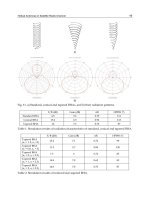
[dB]
0
-100
100
140
-140
0
-100
100
140
-140
0
-100
100
140
-140
0 100 200 300 340
0 100 200 300 340
0 100 200 300 340
Measurements and Characterization of Ultra Wideband Propagation within Spacecrafts
Proposal of Wireless Transmission for Replacing Wired Interface Buses
71
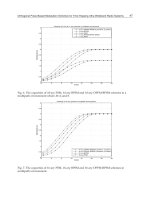
0246810121416
0
0.2
0.4
0.6
0.8
1
Delay spread [ns]
CDF
High-band UWB
Full UWB
Low-band UWB
0 0.02 0.04 0.06 0.08 0.1
02468
-10
-8
-6
-4
-2
0
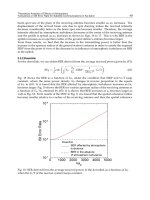
Area of radio absorber [m
2
]
Relative area of radio absorber [%]
Total received energy [dB]
5. Conclusions
•
•
•
Advances in Spacecraft Technologies
72
x
[mm]
y [mm]
x
[mm]
y [mm]
2
4
6
8
10
12
14
16
x
[mm]
y [mm]
0
-100
100
140
-140
0
100 200 300 340
0
100 200 300 340
0
100 200 300 340
0
-100
100
140
-140
0
-100
100
140
-140
(a)
(b)
(c)
[ns]
2
Measurements and Characterization of Ultra Wideband Propagation within Spacecrafts
Proposal of Wireless Transmission for Replacing Wired Interface Buses
73
02468
0 20406080100120
-30
-25
-20
-15
-10
-5
0
Frequency bandwidth [GHz]
Fractional bandwidth [%]
Fading depth [dB]
(the empty shield box as the 0-dB reference)
0
0.023
0.047
0.093
Area of radio absorber [m
2
]
110
•
•
•
6. Acknowledgment
7. References
IEICE Trans. Fundamentals
Ultra Wideband Signals and Systems in
Communication Engineering
Advances in Spacecraft Technologies
74
IEEE J. Select. Areas Commun.
IEEE Trans. Antennas Propag.
IEICE Trans. Fundamentals
Proceedings of
2009 Loughborough Antennas and Propagat. Conf. (LAPC 2009)
International Journal on Wireless and Optical
Communications,
WiMedia UWB − Technology of Choice for Wireless USB and Bluetooth
4
Lubrication of Attitude Control Systems
Sathyan Krishnan
1
, Sang-Heon Lee
1
Hung-Yao Hsu
1
and Gopinath Konchady
2
1
University of South Australia,
2
Indian Institute of Technology Chennai,
Australia
1. Introduction
The spacecraft attitude control system contains attitude error sensors such as gyroscopes
and actuators such as momentum wheels and reaction wheels. The control moment gyros
(CMG), in which the momentum wheels are mounted in gimbals, are also used in attitude
control of spacecrafts. All these systems are designed to operate continuously till the end of
the mission at varying speeds of several thousand rpm. The on-orbit performance of
spacecrafts depends largely on the performance of the momentum/reaction wheels which in
turn depends on the bearings used and its lubrication, since the only component which
undergoes wear in these systems are the ball bearings. Currently, the life cycle of spacecrafts
are aimed to be around 20–30 years. However, the increases in size, complexity and life
expectancy of spacecrafts demand advanced technologies especially in tribology and in turn
the development of more innovative lubrication systems for long-term operation.
Space tribology is a subset of the lubrication field dealing with the reliable performance of
satellites and spacecraft including the space station. Lubrication of space system is still a
challenging task confronting the tribologists due to the unique factors encountered in space
such as near zero gravity, hard vacuum, weight restriction and unattended operation. Since
the beginning of space exploration, a number of mission failures have been reported due to
bearing system malfunction (Robertson & Stoneking 2003; Kingsbury, et.al., 1999;
Bedingfield, et. al., 1996) and the most recent is the bearing failure in the control moment
gyro (CMG) of the international space station on July 2002 (Burt and Loffi, 2003).
1.1 Momentum/reaction wheels
Momentum/reaction wheels are spacecraft actuators used for control and stabilization of
spacecraft attitude to the required level. These are momentum exchange devices that works
by the principle of conservation of angular momentum. The torque produced by changing
angular momentum of the wheel is used to turn the satellite to the required direction. Since
the inertia of the satellite is large compared to the inertia of the wheels, a very precise
control of the satellite orientation is possible with these systems. A typical
momentum/reaction wheel contains a flywheel which is driven by an electric motor,
generally, a brushless dc motor as shown in Fig. 1 (Sathyan, 2010). Its precise rotation about
a fixed axis is ensured by mounting it over a bearing unit consisting of a pair of high
precision angular contact ball bearings. The flywheel and the rotor of the motor are
Advances in Spacecraft Technologies
76
mounted on the bearing unit housing. The speed of the flywheel is controlled through a
drive electronics circuit. All these components are enclosed in a hermetically sealed metal
casing purged with an inert gas. Usually the internal pressure is less than atmospheric,
typically 15 torr. There are different designs of flywheels such as single piece machined disc
type wheels and built-up spoked type wheels. For larger angular momentum, spoked type
flywheels are generally used since it has the advantage of low mass to inertia ratio
compared to disc type flywheels. Also, built-up flywheels shows better vibration damping
properties, which is highly important in spacecraft systems.The normal operating speeds of
momentum wheels are in the range of 3000 to 10000 rpm and produces angular momentum
50 to 200 Nms (Briscoe & Aglietti, 2003; Sathyan, 2003). The reaction wheels are usually
small in size compared to the momentum wheels and has bidirectional capability. The speed
range is about 3500 rpm and angular momentum capacity upto 5 Nms.
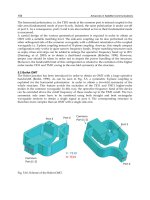
Fig. 1. Momentum wheel with top cover removed
1.2 Bearing unit
The bearing unit is the most critical subassembly of a momentum wheel. The life and
performance quality of a momentum/reaction wheels to a great extent depends on the
bearing unit. Unlike the electronic circuits, it is not possible to design a momentum wheel
with redundant bearing units, therefore utmost care is given in the design, manufacturing
and processing of bearing units. Fig. 2 shows a typical bearing unit used in a momentum
wheel (Sathyan et.al., 2008). The bearing unit is generally made of high quality steel to
ensure high strength and dimensional stability. AISI 440C is the most commonly used
material for bearing units. Usually the bearings and the bearing unit components are made
of the similar material to eliminate the effects of thermal stresses, because in service the
wheels are subjected to wide ranges of temperatures. The bearings typically used in a
momentum wheel are of light series high precision angular contact ball bearings (ABEC 9).
The size of the bearings are determined based on the angular momentum required, typically
for a 60 Nms wheel operating in a speed range 3000–6000 rpm, 20 mm bore is common (104
size). The bearings are usually arranged in back to back configuration and are separated by
a set of equal length spacers.
There are two different designs of bearing units available such as rotating shaft design and
rotating housing design. In rotating shaft design, the bearing housing is rigidly mounted on
Lubrication of Attitude Control Systems
77
the base plate of the wheel and the flywheel and the motor rotor are mounted on the shaft
(Honeywell, 2003). In the rotating housing type, the bearing unit shaft is mounted on the
base plate and the flywheel and motor rotor are mounted on the bearing housing (Auer,
1990; Jones and Jansen, 2005; Sathyan, 2003). Fig. 2 shows a typical rotating housing bearing
unit used in a momentum wheel.
In bearing units, ball bearings with non-metallic retainers [cages] are generally used.
However, retainerless bearings are also used in momentum wheel bearing units considering
its advantages such as high loadability and absence of retainer instability. Retainer
instability is one of the major causes of failure in high speed spacecraft bearings (Shogrin,
et.al., 1999; Kannel and Snediker, 1977). Bearing retainers commonly used in
momentum/reaction wheels are made from cotton based phenolic materials. The retainers
made from this material can absorb certain amount of oil in its body and can act as a
primary source of lubricant. Phenolic retainers are carefully and thoroughly dried to remove
any absorbed moisture before they are impregnated with oil. Otherwise, the retainer will
not be fully saturated and may absorb and remove oil from the bearing it is intended to
lubricate (Bertrand, 1993). The lubricant stored in the retainer is sufficient to run a wheel
continuously for 3–4 years with stable performance. A supplementary lubrication system is
included either inside the bearing unit or inside the wheel casing to augment the life of the
wheel to the required number of years.
Fig. 2. Bearing unit assembly
Being a critical part, the bearing assembly needs exceptional care. The bearings in a
momentum/reaction wheels are generally lubricated with specially developed liquid
lubricants. A wide variety of lubricants are developed and used by different manufacturers.
These lubricants possess certain important properties that are essential for successful
operation in space environments.
A bearing in a momentum/reaction wheel may fail due to multiple reasons such as chemical
degradation of lubricant, loss of lubricant from the working zone by surface migration and
evaporation, and retainer instability. Retainer instability is the most dangerous mode of
failure in spacecraft bearings. The retainer instability is related to a number of factors like
geometry and mass of the retainer, operating speed, lubricant quantity, etc. The retainer
instability problem can be totally eliminated by using retainerless bearings. Thus, with the
Advances in Spacecraft Technologies
78
selection of proper lubricant and proven retainer design, lubrication becomes the principle
life limiting problem on momentum wheels.
Generally, momentum/reaction wheels are made with high precision angular contact ball
bearings having non-metallic retainers. These retainers act as a primary source of lubricant
when it is impregnated with the lubricant. With this initial lubrication, the bearings can
perform up to 3–4 years normally, provided the retainer is running stable. However, the
current life requirement for momentum wheels and other high speed space systems are
more than 20 years or even up to 30 years. This implies the need for efficient supplementary
lubrication systems to achieve the mission life. Moreover, it is not possible to service the
spacecrafts once it is launched. Therefore, in-situ, remote lubrication systems are employed
in momentum/reaction wheels.
According to the nature of operation, the lubrication systems used in momentum wheels
can be broadly classified as passive lubrication systems and active lubrication systems. The
passive systems also known as continuous systems, supplies lubricant continuously to the
bearings and is driven by centrifugal force or by surface migration force. The active
lubrication systems, also known as positive lubrication systems, supplies a controlled
amount of lubricant to the bearings when it is actuated by external commands
2. Tribology of attitude control systems
The word “tribology“ was first introduced in the publication named “Department of
Education and Science Report“ England in 1966, and is defined as the science and
technology of interacting surfaces in relative motion and of the practices related thereto
(Hamrock, et.al., 1994). In otherwords, it is the study of friction, wear and tear, and
lubrication of interacting surfaces.
At the beginning of the space explorations in 1957 when the first satellite was launched,
scientists were unaware of the term tribology as a multidisciplinary subject. This is because,
the spacecrafts never faced any lubrication problems for the short duration exploration.
However, as the life requirement changed, especially with the development of
communication satellites, spacecraft designers realised the importance of tribology in space
system design. As a result, space tribology is emerged as a subset of the lubrication field
dealing with the reliable performance of satellites and spacecraft including the space station.
Lubrication of space system is still a challenging task before the tribologists due to the
unique factors encountered in space such as near zero gravity, hard vacuum, weight
restriction and unattended operation (Fusaro, 1992). Kannel and Dufrane (Kannel and
Dufrane, 1986) conducted a study of tribological problems of past space systems and
predicted the future tribological challenges. According to them ‘‘The development of
aerospace mechanisms has required considerable advances in the science of friction, wear,
and lubrication (tribology). Despite significant advances in tribology, the insatiable
demands of aerospace systems seem to grow faster than the solutions.’’ A qualitative chart
based on their study is shown in Fig. 3. This is a valid chart for the present and can be
extended many more years because still there are space system failures due to tribological
problems.
The main purpose of lubrication is to reduce the friction between the interacting surfaces in
relative motion by introducing a third body (called lubricant) between them. The third body
should have very low shear strength so that the mating surfaces do not undergo wear or
damage. There are different lubricant materials available in various forms such as liquids,
Lubrication of Attitude Control Systems
79
gases and solids. Attitude control systems are generally lubricated with liquid lubricants.
Depending upon the thickness of lubricant film present between the interacting surfaces,
four well defined lubrication regimes are identified such as hydrodynamic,
elastohydrodynamic (EHD), mixed and boundary lubrication regimes (Zaretsky,1990; Jones
and Jansen, 2000; Dowson, 1995; Fusaro, 2001). These four regimes are clearly understood
from the Stribeck/ Hersey curve (Fig. 4), which shows the coefficient of friction as a function
of dimensionless bearing parameter (ZN/P), where, Z is the lubricant viscosity, N is the
velocity at the contact surface and P is the bearing load. A space bearing with liquid
lubrication undergoes the last three regimes namely EHD, mixed and boundary before it
fails due to lubricant starvation. Since it is not preferred to run the bearings in the
hydrodynamic region due to the high viscous drag resultanting from the high lubricant film
thickness as seen from Fig. 4.
Fig. 3. Growth of spacecraft technology and tribology challenges
The concentrated research on elastohydrodynamic lubrication (EHD) resulted in the
identification of three subdivisions in EHD, namely starved EHD, parched EHD and
transient/non-steady state EHD (Jones and Jansen, 2005). In starved EHD lubrication, the
pressure build-up at the inlet contact region is low due to restricted oil supply. As a result the
lubricant film will be thinner than calculated by EHD theory (Hamrock and Dowson, 1981). In
parched EHD lubrication, the lubricant films are so thin that they are immobile outside the
contact zone (Kingsbury, 1985; Guangteng, et.al. 1992) and this regime is particularly
important for momentum/reaction wheel bearings. In the transient/non-steady state EHD
lubrication, the load, speed and contact geometry are not constant with time. The theoretical
behavior of this regime in point contact bearings is not well understood (Jones and Jansen,
2005) but it was studied experimentally by Sugimura et al. (Sugimura, et.al, 1998). Generally,
the momentum/reaction wheel bearings are designed to be operated in the lower boundary of
EHD region because it has the advantage of the lowest coefficient of friction.
Advances in Spacecraft Technologies
80
Boundary
Mixed
Elastohydrodynamic
Hydrodynamic
h – 0.0025
µ
m
h ~ 0.025- 0.25
µ
m
h ~ 0.0025 – 0.025
µ
m
h > 0.25
µ
m
h
0.001
0.15
Coecient of friction, μ
Viscosity ×Velocity
ZN
Load P
Fig. 4. Stribeck/Hersey curve (Fusaro, 2001)
In EHD lubrication, the load is carried by the elastic deformation of the bearing material
together with the hydrodynamic action of the lubricant (Dowson, 1995; Hamrock and
Dowson, 1981). A bearing operating in EHD region shows an indefinite life with lowest
friction torque. The most interesting practical aspect of the EHD lubrication theory is the
determination of lubricant film thickness which separates the ball and the races. The
generally used equation for calculating the film thickness is the one developed by Hamrock
and Dowson (Hamrock & Dowson, 1981):
0.68 0.49 -0.073 -0.68k
min s
H = 3.63 U G W (1- e ) (1)
and
min
min
x
h
H
R
= (2)
where
H
min
is dimensionless minimum EHD film thickness, U
s
is the dimensionless speed
parameter, G is the dimensionless material parameter, W is the dimensionless
loadparameter,
h
min
is the minimum film thickness and R
x
is the effective radius. The
effectiveness of EHD lubrication is described by the
λ ratio or film parameter, which is the
Lubrication of Attitude Control Systems
81
ratio of central film thickness at the Hertzian contact zone to the r.m.s. surface finish of the
rolling element surface:
()
min
22
rb
h
SS
λ
=
−
(3)
where
S
r
and S
b
are the r.m.s surface finish of races and balls. The EHD regime is
characterized by
λ ratio between 3 and 10, which corresponds to a film thickness between
0.1 and 1 µm. It has been pointed out that a full film can be obtained with no asperity
contact only when
λ > 3. If the value of λ < 3, it will lead to mixed lubrication with some
asperity contacts (Hamrock and Dowson, 1981). The calculated film thickness and
λ ratio for
a typical momentum wheel bearing (20 mm bore, 6.35 mm ball, ABEC 9P class) operating at
5400 rpm with a lubricant having pressure-viscosity coefficient 2 x 10
-8
m
2
/N and a bearing
preload 50 N is 0.62 mm and 13.4 for the inner race contact and 0.76 mm and 16.3 for the
outer race contact, respectively (Sathyan, 2003). Experimental verification of film thickness
has been done by Coy et.al. on 20 mm bore ball bearing using the capacitance technique and
the reported values ranging from 0.025 to 0.51 mm (Coy, et.al. 1979).
Tribological failures of momentum/reaction wheels are related to lubricant breakdown, loss
of lubricant due to evaporation and surface migration (insufficient lubricant) and retainer
instability. Lubricant breakdown failure occurs when the original liquid lubricant is
chemically changed to solid friction polymer (Kingsbury, et.al., 1999). Kingsbury
(Kingsbury, 1992) has shown that the rate of lubricant polymerization is determined by the
thickness of the EHD film, larger rate for thinner films and negligible for thicker films. Loss
of lubricant in momentum wheels occurs mainly due to evaporation, surface migration and
centrifugal action. The working temperature, which is also a function of bearing friction
torque, causes the lubricant to evaporate. The oil loss by migration is induced by
temperature gradients and capillary forces. It was demonstrated that a small temperature
gradient leads to the rapid and complete migration of thin oil films to the colder regions
(Fote, et.al., 1978). The capillary migration describes the tendency of oil to flow along surface
scratches and corners and is driven by pressure gradient in the radius of curvature of the
oil–vapor interface.
Retainer instability is the most dangerous mode of failure in momentum wheel bearings. It
has been the topic of interest for many researchers and tribologists and lot of published data
are available (Taniwaki, et.al., 2007; Gupta, 1991; Kannel and Snediker, 1977; Boesiger, et.al.,
1992). Generally, retainer instability is characterized by large variation in bearing friction
torque associated with severe audible noise. There are three types of instabilities (Stevens,
1980) such as radial instability, axial instability and instability due to chage in running
position of retainer. The radial instability is charecterised by high frequency radial vibration
of the retainer and result in abrupt torque variation. Under marginal lubrication condition,
this will cause significant torque increase and audible noise, whereas under excess
lubrication it will show a sudden reduction in torque. The axial instability is charecterized
by high frequency axial vibration of the retainer and is mainly due to excessive clearence
between the rolling element and the retainer pocket. The position instability occurs when
the retainer oscilates between its mean position of running and the races. When it runs in the
mean position, the friction will be nominal and occasionaly the retainer moves in the radial
Advances in Spacecraft Technologies
82
direction and run in that position rubbing against the race. This will result in a periodic
change in friction torque as shown in Fig. 5. Uneven cage wear, lubricant degradation and
insufficient lubrication are the prime causes for instabilities. It is also related to a number of
factors like geometry and mass of the retainer, operating speed, lubricant quantity, etc.
(Lowenthal, et.al., 1991; Boesiger and Warner, 1991; Gupta, 1988 and 1991). The retainer
instability problem in attitude control wheels can be eliminated by using retainerless
bearings (Shogrin, et.al., 1999; Kingsbury, et.al., 1999). Momentum/reaction wheels with
retainerless ball bearings are now available (Kingsbury, et.al., 1999; Boesiger and Warner,
1991; Jones, et.al., 1997; Singer and Gelotte, 1994), which overcomes the most devastating
problem observed in conventional bearings. Thus, with the selection of proper lubricant and
proven retainer design, lubrication remains the principle life limiting problem on attitude
control wheels.
Fig. 5. Bearing friction torque variation due to retainer position change
Since the bearings are still mechanically intact when the lubricant degrades, if lubricant
could be resupplied to the contact, the life of the wheels could be extended. Kingsbury
(Kingsbury, 1973) has shown that only 0.2 µg/h lubricant flow rate is needed to maintain a
continuous EHD film in instrument ball bearings. This is a very low value and is difficult to
achieve practically, but efforts are underway to develop lubricant supply systems with the
lowest possible flowrate, possibly less than 10 µg/h (Sathyan, et.al, 2010).
3. Qualities required for space lubricants
Momentum /reaction wheels are generally lubricated with liquid lubricants because of its
outstanding merits over solid lubricants such as excellent torque characteristics and means
of replenishment. The primary advantage obtained with liquid lubricants is that bearing
surfaces separated by hydrodynamic films of liquid lubricants have virtually no wear and
thereby have the potential for infinite lives. Since no single lubricant can meet the often
conflicting requirements of various applications for liquids, hundreds of specialty lubricants
have been developed for aerospace applications.
Lubrication of Attitude Control Systems
83
There are a number of factors to be considered while selecting a lubricant for attitude
control wheels. Since these wheels are designed to operate in the elastohydrodynamic
lubrication region, the EHL properties of the lubricant are of prime importance. Typically, a
momentum wheel lubricant should have the following essential properties:
Viscosity Index: Since the attitude control wheel has to work over a wide temperature range
(typically between 15 and 85°C) the change in viscosity with temperature should be
minimum to maintain the EHD film. Therefore a lubricant with high viscosity index needs
to be selected.
Vapor Pressure: The volatilization of lubricant contaminates the spacecraft systems and may
have harmful effects; therefore the vapor pressure should be low inorder to minimize losses
by evaporation and to limit the pollution due to degassing. Fig. 6 shows the relative
evaporation rates of various aerospace lubricants.
Pressure–viscosity Coefficient (): The pressure–viscosity coefficient is important in
determining the EHD film thickness at the ball-race contact inlet. From EHL theory, the
lubricant with the largest
α
value should yield the thickest film at room temperature (Jones
and Jansen, 2005).
Years to lose 1.0 ml per cm
2
outlet
20
40
60
80 100
120 160 140 180 200
3 6
9 12 15
Mineral
Z uid
(
Z-25
)
K uid
(
143 AC
)
PAO
Ester
Mil-Std 1540
(71
o
C)
Tem
p
erature
,
o
C
Fig. 6. Evaporation rates of various aerospace liquid lubricants (Jones and Jansen, 2005)
4. Space liquid lubricants
There are a number of liquid lubricants that have been used in attitude control wheel
bearing lubrication. Most of these lubricants are formulated and developed specially for
space application and some of these are not readily available in the market. These lubricants
fall under different classes based on their chemical structure such as mineral oils, silicone
fluids, esters, synthetic hydrocarbons, perfluoropolyethers (PFPE) and silahydrocarbons.
Table 1 shows the property data of some of these lubricants.
Advances in Spacecraft Technologies
84
Lubricant
Properties
Mineral Oils Esters
Silicon
fluids
Synthetic Hydrocarbons
PFPE
Silahydro-
carbons
KG 80
SRG 60
Kluber
PDP 65
BP 135
Versilube-
F 50
Nye 186A
(POA)
Nye 3001A
pennzane
®
SHFX-2000
Fomblin
™
Z-25
Krytox
™
143 AB
Demnum
SiHC
1
,
T
yp
e 1
SiHC
2
,
T
yp
e 2
Viscosity,
cSt
@100
o
C 9.44 15.5 16 14.6 15.75 14.6 49 10.3 15 12
@ 40
o
C
520
(20
o
C)
77.6 73
55
(20
o
C)
52 103 127.5 108 159 85
500±2
5
94 79
Index 101 106 235 128 146 130 137 335 113 210 170 169
Flash Point (
o
C) 232 230 248 300
Pour Point (
o
C) -9 -12 -60 -45 -73 -48 -48 -55 -66 -43 -53 -50 -15
Sp. Gravity
( g/cc)
0.88 0.915 1.045
0.85
(15
o
C)
0.83
(100
o
C)
0.85
1.85
(20
o
C)
1.89
Vapour
Pressure
(Torr) @100
o
C
1x10
-6
(20
o
C)
10
-8
7x10
-4
10
-6
5x10
-8
2.4x10
-7
1.4x10
-10
1.3x10
-8
1.5x10
-4
10
-5
Surface tension
(mN/m)
30 30 25 18.5
Table 1. Properties of commonly used space lubricants
Lubrication of Attitude Control Systems
85
4.1 Mineral oils
Mineral oils are natural hydrocarbons with a wide range of molecular weights. The
paraffinic base oils are commonly used for space applications. Super refined mineral oils
were the lubricant of choice for momentum wheels in the early periods, KG80 and Apiezon
C are examples (Zaretsky, 1990). The super refined gyroscope [SRG] oils are another class of
mineral oils widely used in momentum wheels. These are available in a wide viscosity
ranges, for example SRG-40 [27cSt at 40°C] and SRG-60 [77.6 cSt at 40°C] (Kannel and
Dufrane, 1986).
4.2 Silicon fluids
Silicon lubricants were used in the early spacecrafts. An example for silicon lubricant is GE
Versilube F50, a chloroarylalkylsiloxane [CAS]. This oil has a very low vapor pressure and
excellent low temperature properties. However, it degrades quickly under boundary
lubrication conditions (Vernier and Casserly, 1991), which limited its application in many
space systems. Silicone lubricants have a strong tendency to migrate and may adversely
affect conductivity of electrical contacts.
4.3 Esters
Esters are inherently good boundary lubricants and are available in a wide range of
viscosities. Diesters and triesters are the commonly used lubricants. The British Petroleum in
1970 developed a triester for space application and the European Space Tribology
Laboratory [ESTL] has qualified this oil for high speed space mechanisms (Jones and Jansen,
2000), but its production was stopped and was never used in spacecrafts. A series of esters
are marketed by Nye Lubricants; namely, UC4, UC7 and UC9. The ISOFLEX PDP65. A
diester oil produced by Kluber Lubrication is a proven momentum wheel lubricant
(Sathyan, 2003). This lubricant has very high viscosity index [235] and very low pour point [-
60°C].
4.4 Synthetic hydrocarbons
Synthetic hydrocarbons are of two groups, polyalphaolefins (PAO) and multiply alkylated
cyclopentanes (MACs). The PAO is typically made by oligomerization of 1-decene, for
example Nye 186A, 3001A. A more detailed study of Nye 3001A and 3001(formulated) are
presented in Ref. (Dube, et.al, 2003). MACs are synthesized by reacting cyclopentadiene
with various alcohols in the presence of a strong base (Vernier and Casserly, 1991). The
products are hydrogenated to produce the final products, which is a mixture of di-, tri-, tetra
or penta alkylated cyclopentanes. These lubricants are known as Pennzanes
®
and the two
types which currently in use are SHF X1000 and SHF X2000. It has been proved that
addition of silver nano particles to MACs base oil will significantly improve its wear
properties and load-carrying capacity and slight effect on its friction property (Ma, et.al.,
2009).
4.5 Perfluoropolyethers (PFPE)
Perfluoropolyether is clear colorless fluorinated synthetic oil. These are nonreactive,
nonflammable and long lasting lubricants. PFPE lubricants have very low outgassing
properties compared to any other lubricants (Fowzy, 1998). These lubricants have been in
use for over 30 years. This is a well known ball bearing lubricant for the international space
Advances in Spacecraft Technologies
86
station (Mia, et.al, 2007). PFPE lubricants are made by polymerization of perfluorinated
monomers. There are a number of PFPE lubricants available for space applications such as
Krytox
™
, Fomblin
™
, Demnum
™
etc. These are high density lubricants and due to this, yield
EHD film thickness twice that of other lubricant having the same kinematic viscosity (Jones,
1993). However, it has been reported that viscosity loss both temporary and permanent
occurred under EHL conditions due to high contact pressure (Mia, et.al, 2007). Also,
reported that lubricant breakdown (tribo-corrosion) occurs with PFPE lubricants under
boundary conditions (Jansen, et.al, 2001).
4.6 Silahydrocarbons
Silahydrocarbons are relatively new class of lubricants with great potential for use in space
mechanisms. They are unimolecular species consisting of silicon, carbon and hydrogen and
posses unique tribological properties. Silahydrocarbons have very low vapor pressure, high
viscosity index and are available in wider viscosity ranges. These are available as tri-, tetra-
and penta silahydrocarbons based on the number of silicon atoms present in their
molecules. Silahydrocarbons are compatible with conventional lubricant additives. A
detailed study of this class of lubricant appears in Ref. (Jones, et.al, 2001).
The EHL effectiveness of different classes of lubricant is shown in Fig. 7. The EHL
performances of lubricants are improved by adding chemical additives such as extreme
pressure, anti-wear and anticorrosion additives. The extreme pressure (EP) additive reacts
with the bearing material to form surface films which prevent metal to metal contacts under
high loads. Tricresylphosphate (TCP) is the commonly used EP additive and is usually
added as 5% of the lubricant volume. The anti-wear additives are added to reduce the
boundary lubrication wear, lead naphthenate (PbNp) is an example of such additives. Most
lubricants mentioned above are compatible with these additives except the PFPE. Effective
additives are recently developed for PFPE lubricants, but they have not yet found their
application into space lubricants. A space lubricant must be thoroughly characterized before
being put into real application. Various types of tribometers such as four ball tribometers,
spiral orbit tribometers, pin on disk tribometers, etc. are used to evaluate the EHL properties
of these lubricants. In addition to this a full scale system level life test is also recommended
to evaluate actual performance.
Fig. 7. EHD effectiveness of some oils (Roberts and Todd, 1990)
Good
Poor
Most mineral
Ester
Fluorosilicone
Silicone
Perfluoro (Z t
y
pe)
Perfluoro (Y t
y
pe)
Pol
yg
l
y
col
Lubrication of Attitude Control Systems
87
5. Lubrication systems
As mentioned before, the bearing unit of attitude control wheels are made with high
precision angular contact ball bearings having non-metallic retainers. These retainers act as
a primary source of lubricant when it is impregnated with the liquid lubricant. For example,
a phenolic retainer for 104 size bearing, when properly impregnated and soaked in oil for 60
days, holds approximately 90 mg of oil in its body. This is because the retainer materials are
made with phenolic resin reinforced with fine cotton fabric. During impregnation and
soaking, the oil penetrates into the cotton layer and is later available for lubrication. Also,
the bearing metal surface, after centrifuged to the operating speed (say 5000 rpm), hold
approximately 15–20 mg of oil. Altogether, about 100 mg of oil per bearing is available
initially. With this initial charge of lubrication, the bearings can perform up to 3–4 years
normally, provided the retainer is running stable. However, with a retainerless bearings
(full complement bearing), the retainer oil is absent and the bearing surface oil is about 20
mg (the absence of retainer fecilitates addition of more balls). The current life requirement
for momentum wheels and other high speed space systems are more than 20 years or even
up to 30 years. According to Auer (Shapiro, et.al, 1995) ‘‘the ball bearing lubrication remains
the principal life-limiting problem on momentum and reaction wheels’’. This reveals the
need for efficient supplementary lubrication systems to achieve the longer mission life.
Moreover, it is not possible to service the spacecrafts once it is launched. Therefore, in-situ,
remote lubrication systems are employed in attitude control wheels.
According to the nature of operation, the lubrication systems used in momentum/reaction
wheels can be broadly classified as active lubrication systems and passive lubrication
systems. The active lubrication systems, also known as positive lubrication systems,
supplies a controlled amount of lubricant to the bearings when it is actuated by external
commands. The positive commandable lubricators, remote in-situ systems, etc. are examples
of active systems. The passive systems, also known as continuous systems, supplies
lubricant continuously to the bearings and is driven by centrifugal force or by surface
migration force. The centrifugal lubricators, the oozing flow lubricators, wick feed systems,
porous lubricant reservoirs, etc. come under this classification.
5.1 Active lubrication systems
The active lubrication system supplies lubricant depending on the demand. Different types
of active systems are currently in use and some of these systems are briefed here.
Positive Lubrication Systems: In this type of lubrication systems, a known quantity of
lubricant is delivered to the bearings when the system is actuated by external commands.
The command to actuate the lubricator is executed when a demand for lubricant is arise. The
demand is indicated either by an increase in power consumption of the wheel or by increase
in bearing temperature resultant of increased bearing friction torque. Different versions of
positive lubrication systems are available with different actuators such as solenoid valves,
stepper motors, etc.
The commandable oiler developed by Hughes Aircraft Company (Glassow, 1976), in
which a solenoid operated piston moves inside a reservoir, one end of which acts as
cylinder. A quantity of oil equal to the cylinder volume is discharged during every
operation. The oil coming out of the cylinder is directed to the bearings through a 1.5 mm
stainless steel tubing. The capacity of the reservoir is 6 g and the quantity delivered per
stroke is 45 mg. This system had been used in the Intelsat IV satellites. The positive
Advances in Spacecraft Technologies
88
lubrication system (PLUS) developed by Smith and Hooper (Smith and Hooper, 1990) is
another kind of solenoid operated lubricator. In this system, the oil is stored in a metallic
bellows and is pressurized by a compression spring. The high pressure oil is delivered to
the bearings by actuating the solenoid valve connected to the reservoir. The amount of oil
delivered is 0.2–5 mg for 125 ms opening of the valve. The amount of oil delivered
depends on the reservoir pressure, oil temperature and plumbing resistance and the oil
viscosity.
The positive-pressure feed system proposed by James (James, 1977) consisted of a spring
loaded metallic bellows in which oil is stored under pressure, release valve, metering valve,
metering bellows and lubricant feed line. When the release valve is operated, the oil flows
out to the line through the metering bellows and the metering valve. The amount of oil
delivered is controlled by the metering bellows. The lubricant feed line terminates near the
bearing delivers oil to the bearing surface. In this case the lubricant is injected directly into
the bearing balls, which transfer it to the contact surfaces. Fig. 8 shows the arrangement.
Fig. 8. Positive commandable lubricator for satellite bearing application (James, 1977)
The command lubrication system (CLS) (Sathyan, et.al., 2010) is another active lubrication
system contains flexible metallic bellows, a micro stepping motor, frictionless ball screw,
injection nozzle and capillary tubes. The stainless steel bellows act as the oil reservoir in
which the oil is stored under ambient pressure. The pressure is usually the internal pressure
of the momentum/reaction wheel or control moment gyro (CMG), if it is placed inside the
system, and is usually varies between 15 torr and 350 torr. The bellows is of compression
type having a swept volume of approximately 1.5 cc, i.e. the difference between the normal
and fully compressed states. The micro stepping motor, which is the actuator, is a geared
motor having a torque capacity of 130 mN-m and is driven through the drive electronics.
The motor shaft is connected to the reservoir bellows through the precision ball screw (3
mm size). It is properly lubricated with space proven lubricant and protected from
contaminants. One end of the screw is rigidly connected to the motor shaft. The
housing/nut of the ball screw is attached to the bellows through the link, which houses the
ball screw. The ball screw converts the rotary motion of the motor shaft into liner motion
and thus actuates the bellow. On the delivery end of the bellows, a nozzle is attached which
connects the capillary tubes with the bellows as shown in Fig. 9.
Lubrication of Attitude Control Systems
89
Fig. 9. Command lubrication system
The CLS is operated when a demand for lubricant arises. In spacecraft, the demand is
indicated either by an increase in bearing temperature as a result of increased bearing
friction torque or increased motor current to maintain the rotational speed. In such situation,
the drive motor of the CLS is actuated for a predetermined period of time to deliver oil to
the bearings. When the motor shaft rotates, the ball screw attached to it also rotates. The
housing/nut of the ball screw which is rigidly mounted on the bellow moves linearly and
presses the bellows. As a result, the pressure of oil in the bellows increases and it flows out
through the capillary tubes. The delivery tip of the tube is placed adjecent ot the rotating
bearing. A set-off distance, i.e. the distance between the nozzle tip and the rotating element
of the bearing, is provided to prevent the tip from touching the bearing. The set-off is equal
to the diameter of the oil droplet. It was experimentally determined that the weight of a
drop of oil (Kluber PDP-65 oil) is approximately 8 mg and the size is about 2.5 mm.
therefore, the set-off distance in this case is 2 mm. At the delivery tip of the tube, oil forms
droplets and when the size of the drop is sufficiently large, it touches the rotating element of
the bearing and transfers to the contact surfaces . The nozzle tip can be suitably located near
the bearing depending on the design of the bearing unit to ensure oil discharge to bearings.
The amount of oil delivered can be precisely controlled. Fig. 10 shows the amount of oil
delivered by CLS when operated for duration of 5 s each. The bellows can hold
approximately 2.5 g oil and the quantity delivered per cycle (5 s duration) as shown in
figure is approximately 15 mg. Therefore, if two operations per year are planned, the CLS
can lubricate the wheel bearings for more than 25 years. Also, in this system, since the oil is
stored at ambient pressure, the chances of leaks are absent.
In-situ Lubrication Systems: In these systems, the lubricant is stored in a porous medium
placed adjecent to the bearings. When the porous medium is heated up by some means, it
ejects the oil stored in its pores due to differential thermal expansion. The in-situ on demand
lubricator developed by Marchetti (Marchetti, et.al, 2001, 2001) consists of a porous material
cartridge to which an electric heater is attached. The cartridge is impregnated with oil and is
attached to the stationary race of the bearing. When the cartridge is heated, due to the
higher thermal expansion of the oil compared to the porous material, oil flows out of the
cartridge. The oil coming out of the cartridge is migrated to the bearing surfaces due to the
low surface tension of oil compared to the bearing metal. It is actuated when the bearing
temperature increases due to higher friction, demanding lubricant.
Advances in Spacecraft Technologies
90
Fig. 10. Oil discharged by CLS for 50 cycles
Another type of in-situ lubrication system is the static lubricant reservoir (Sathyan, 2003),
consists of a porous material reservoir of cylindrical shape mounted on an aluminum sleeve.
An electric foil heater is pasted inside the aluminium sleeve. The porosity of the reservoir
material is about 30% by volume so that it carries sufficient amount of lubricant to support
for the entire mission period. The reservoir assembly is mounted on the static part of the
bearing unit. When the heater is put on, it heats up the oil inside the reservoir and it flows
out due to differential thermal expansion. The lubrication is effected by surface migration
and vapor condensation. Fig. 11 illustrates the lubrication process.
The major drawback of this kind of system is the delayed lubrication process because of the
delay in oil to get heated up and ejected out of the system. Moreover, the heater activation
time should be progressively increased after each operation to eject the same quantity of oil.
Fig. 11. Mechanism of oil transfer in static oil reservoir
Lubrication of Attitude Control Systems
91
5.2 Passive lubrication systems
The passive lubrication systems supplies lubricant continuously at a controlled rate
irrespective of the requirement. These systems work on centrifugal force or by surface
migration. Passive systems are simple in construction, but it is difficult to control the flow
rate to the required amount. Different techniques are used to control the flow rate in this
type of lubricators. There are a number of designs of passive lubrication systems used today
by different manufacturers of attitude control wheels for spacecraft. Some of these systems
are briefly discussed here.
Wick feed systems: In wick feed lubrication system (Loewenthal, et.al, 1985), a lightly spring
loaded cotton wick, saturated with oil is continuously in contact with a conical sleeve
adjecent to the bearings. The other end of the wick is in contact with oil in a reservoir and it
absorbs and maintains its saturation level. The frictional contact causes small amount of oil
to be deposited on to the contact surface. From this contact surface, oil migrates to the other
end of the sleeve and then to the bearing. The oil leaving the bearing after lubrication return
to the reservoir.
Rotating Lubricators: These are the most common type of lubricators currently in use and are
actuated by centrifugal force due to the rotation of the lubricator. In these lubricators, the
lubricant, either grease or oil, is filled in a cylindrical container and is assembled to the rotating
part of the bearing unit. A lubricant bleed path is provided at the outer most layer of lubricant
in the container. When the bearing unit is rotating, the lubricator attached to it also rotating at
the same speed. The centrifugal force thus generated causing the lubricant to flow out through
the bleed path. The oil oozing out of the lubricator is guided to the bearings mounted on either
side of the lubricator. Different types of rotating lubricators are briefed under.
The ooze flow lubricator invented by Hashimoto (Hashimoto, 2001) is a novel concept. In this,
the lubricator is fitted to the outer spacer of the bearing unit, the ends of which are formed as
the bearing outer race. The reservoir to store the lubricant is formed by the two cylindrical
components of the assembly. A set of precision turned helical grooves made at the interface of
the inner and outer part of the lubricator. The helical grooves run in the axial direction and
deliver lubricant to each of the bearings. The rate of flow is controlled by the dimensions of the
helical groove and speed of rotation of the bearing shaft. The design life of the system is
claimed as 15 years when operating at 12 000 rpm. The space cartridge bearing system
presented by Kingsbury et al. (Kingsbury, et.al., 1999) and the oozing flow lubricator
presented by Jones et al. (Jones, et.al., 1997) and Singer et al. (Singer, et.al., 1994) resemble the
ones mentioned above. Fig. 12 shows the space bearing cartridge with oozing flow lubricator.
Fig. 12. Space cartridge bearing system with oozing flow lubricator (Kingsbury, et.al, 1999)
Advances in Spacecraft Technologies
92
The centrifugal oil lubricator (Sathyan, et.al., 2008) contains a reservoir cup and an inner
sleeve made of aluminum and machined with a high degree of accuracy. When the outer
cup and inner sleeve are assembled, a cavity is formed where the lubricant is filled. The
capacity of the reservoir is about 5 cc. The interfaces of the outer cup and inner sleeve are
electron beam welded to make the reservoir leak proof. Two orifices of 150 µm diameter are
made on the periphery of the outer cup in diametrically opposite locations. A filling hole is
provided on one of the faces of the outer cup to fill oil as shown in Fig. 13 (a). The lubricator
is designed to mount on the rotating outer spacer of the bearing unit, which separates the
bearings. Lubrication of each bearing in the assembly is carried out by separate lubricators
mounted adjacent to each bearing as shown in Fig. 13 (b).
When the bearing unit starts rotating, the centrifugal lubricator attached to the outer spacer
of the bearing unit also rotates along with the bearings. The centrifugal force due to rotation
of the reservoir generates pressure head in the stored oil, which is the maximum at the outer
layer of oil near the orifices. The pressure thus developed forces the oil out through the
orifices provided on the outer cup. The oil coming out of the orifice is directed to the bearing
surface by suitably designed flow paths.
(a) (b)
Fig. 13. Centrifugal oil lubricator components (a), schematic view of lubricator assembly (b)
It is estimated that the pressure developed at the orifice is nearly 12,000 Pa when the
lubricator is running at 5000 rpm. Under this pressure, it is only a matter of hours to empty
the reservoir through the 150 µm orifice. To avoid this and to control the flow rate to the
lowest possible value, a flow restrictor is introduced at the orifices. Here, a piece of isotropic
porous material is used to control the flow rate as shown in Fig. 13 (b). The flow area
through the restrictor is further controlled to achieve the required flow rate. The material of
the restrictor must be homogeneous and isotropic to ensure uniform flow rate. The particle
size and porosity are the two important factors, which determine the permeability or fluid
conductivity of the porous material. It is observed that sintered polyimide is an ideal
material for this application. Polyimide spherical particles are available in a variety of sizes.
Using graded particles sintered filter porosity can be very accurately controlled. Small
pieces of branded sintered polyimide, MELDIN- 9000, is used as flow restrictor.
The rate of flow from the lubricator is given by the equation:
Lubrication of Attitude Control Systems
93
()
22
2
Aρ
q= R -r
2μL
αω
(4)
where,
α
is the permeability of the restrictor material in m
2
, A is the cross sectional area of
flow through the restrictor in m
2
,
ρ
is the density of the lubricant in kg/m
3
,
ω
is the angular
speed of the reservoir in rad/sec,
μ
is the dynamic viscosity of oil in N-sec/m
2
, L is the
thickness of the restrictor in m, R is the radius of oil outer layer in m, r is the
instantaneous radius of oil inner layer in m, and
q is the flow rate in m
3
/sec.
It is understood from Eq. 4 that the flow rate is directly proportional to the pressure of oil at
the inlet to the porous restrictor. Pressure at the inlet of the restrictor is proportional to the
speed of rotation and mass of liquid column above it. The pressure and thus the flow rate
are the maximum when the reservoir is full and both become zero at the end of life, as
shown in Fig. 14. The time to reach the zero flow rate depends on various operating
parameters such as flow diameter, operating speed, temperature, and initial quantity of oil
filled. Since the flow rate is proportional to the left out quantity of oil in the reservoir, the
required flow rate can be obtained by filling the quantity corresponding to the flow rate as
obtained from Eq. 4.
Fig. 14. Variation of oil quantity in the reservoir with time
The predicted performance of a lubricator having 150 µm flow diameter is shown in Fig. 15,
obtained for operating speed and temperature 5400 rpm and 40°C respectively. It is seen
that the initial flow rate is 0.037 mg/h and the flow rate at the 20
th
year is approximately
0.006 mg/h. The total oil expelled in 20 years is 3000 mg, which is only 60% of the total
capacity of the reservoir, 5 cc.
Another version of centrifugal oil lubricator is shown in Fig. 16 (a). This design is meant to
provide a delay in supplying the lubricant to the bearing during the initial stage of
operation. The capacity of the reservoir is 4 cc and the initial flow rate is about 0.02 mg/h. It
is understood from Section. 5 that the bearings are assembled with an initial charge of
approximately 100 mg and with this initial oil, it can perform upto 3 years. If lubricant is
supplied during this period, it may cause increased viscous drag and resultant higher power
consumption of the wheel. To avoid this and maintain the frictional loss to minimum, a
delay mechanism is introduced to the centrifugal lubricator. This is achieved by mounting a
dry porous material sleeve in between the lubricator outlet and the bearings as shown in
Fig. 16 (b). The sleeve absorbs the oil coming out of the lubricator and get saturated. Once
saturated, it start giving oil to the bearings. The porosity of the sleeve material is 28% of
volume and it can hold nearly 300 mg oil. Assuming a flow rate of 0.02 mg/h from the
lubricator, it would take about 21 months to saturate the porous sleeve with oil. The oil from
the lubricator start reach the bearings only after this period and thus prevents the bearings
from running with excess bearing friction due to high viscos drag.