66 the china study the most comprehensive phần 74
Bạn đang xem bản rút gọn của tài liệu. Xem và tải ngay bản đầy đủ của tài liệu tại đây (75.16 KB, 5 trang )
EXPERIMENTAL DESIGN OF THE (HINA STUDY
359
This was the first and only large study that investigated this range of
dietary experience and its health consequences. Chinese diets ranged
from rich to very rich in plant-based foods. In all other studies done on
Western subjects, diets ranged from rich to very rich in animal-based
foods. It was this distinction that made the China Study so different
from other studies.
MAKING IT HAPPEN
Organization and conduct of a study of this size, scope and quality was
possible because of the exceptional skills of Dr. Junshi Chen. Survey
sites were scattered across the far reaches of China. In American travel
distances, they ranged from the Florida Keys to Seattle, Washington,
and from San Diego, California, to Bangor, Maine. Travel between these
places was more difficult than in the United States, and supplies and
instructions for the survey had to be in place and standardized for all
collection sites. And this was done before e-mails, fax machines and cellular phones were available.
It was important that the twenty-four provincial health teams, each
comprised of twelve to fifteen health workers, be trained to carry out
the blood, food and urine collections and complete the questionnaires
in a systematic and standardized manner. To standardize the collection
of information, Dr. Chen divided the country into regions. Each region
sent trainers to Beijing for the senior training session. They, in tum, returned to their home provinces to train the provincial health teams.
Although the U.s. National Cancer Institute (NCI) of the National
Institutes of Health (NIH) provided the initial funding for this project,
the Chinese Ministry of Health paid the salaries of the approximately
350 health workers. It is my estimate that the Chinese contribution to
the project was approximately $5-6 million. This compares with the
U.s. contribution of about $2.9 million over a ten-year period. Were
the U.S. government to have paid for this service in a similar project in
the U.S., it would have cost at least ten times this amount, or $50-60
million.
____A ~ ~. END IX _ C___
The "Vitamin" DConnection
THE MOST IMPRESSIVE EVIDENCE favoring plant-based diets is the way that
so many food factors and biological events are integrated to maximize
health and minimize disease. Although the biological processes are exceptionally complex, these factors still work together as a beautifully
choreographed, self-correcting network. It is exceptionally impressive,
especially the coordination and control of this network.
Perhaps a couple of analogies might help to illustrate such a process.
Flocks of birds in flight or schools of fish darting about are able to shift
direction in a microsecond without bumping into each other. They
seem to have a collective consciousness that knows where they are going and when they will rest. Colonies of ants and swarms of bees also
integrate varying labor chores with great proficiency: But as amazing
as these animal activities are, have you ever thought about how their
behaviors are coordinated with such finesse? I see these same characteristics, and more, in the way that the countless factors of plant-based
foods work their magic to create health at all levels within our body,
among our organs and between our cells and among the enzymes and
other sub-cellular particles within our cells.
For those unfamiliar with biomedical research laboratories, the walls
of these labs are often covered with large posters showing thousands of
biochemical reactions operating within our bodies. These are reactions
that are known; far more remain to be discovered. The interdependence
of these reactions with each other is especially informative, even awesome in its implications.
361
362
THE CHINA STUDY
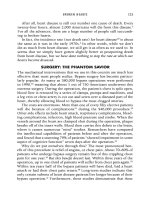
An example of a very small portion of this enormous network of reactions is the effect of vitamin D and its metabolites on several of the
diseases discussed in this book. This particular network illustrates a complex interconnection between the inner workings of our cells, the food we
eat and the environment in which we live (Chart Cl). Although some of
the vitamin D present in our bodies may come from food, we can usually
get all that we need from a few hours of sunshine each week. In fact, it
is our ability to make our vitamin D that leads to the idea that it is not a
vitamin; it is a hormone (i.e., made in one part of our body but functioning in another part). The sun's UV rays make vitamin D from a precursor
chemical located in our skin. Provided we get adequate sunshine, this is
all the vitamin D we need. I We can, of course, also get vitamin D from
fortified milk, certain fish oils and some vitamin supplements.
The vitamin D made in our skin then travels to our liver, where it is
converted by an enzyme to a vitamin D metabolite. This metabolite's
main function is to serve as the body's storage form of vitamin D (while
remaining mostly in the liver but also in body fat).
The next step is the crucial one. When needed, some of the storage form of vitamin D in the liver is transported to the kidney, where
another enzyme converts it into a supercharged vitamin D metabolite,
which is called 1,25 D. The rate at which the storage form of vitamin
D is converted to the supercharged 1,25 D is a crucial reaction in this
network. The 1,25 D metabolite does most of the important work of
vitamin D in our bodies.
This supercharged 1,25 D is about 1,000 times more active than the
storage vitamin D. Supercharged 1,25 D only survives for six to eight
hours once it is made. In contrast, our storage vitamin D survives for
twenty days or more. 2, 3 This demonstrates an important principle typically found in networks like this: the far greater activity, the far shorter
lifetime and the far lower amounts of the 1,25 D end product provide a
very responsive system wherein the 1,25 D can quickly adjust its activity minute-by-minute and microsecond-by-microsecond as long as there
is sufficient storage vitamin D to draw from. Small changes, making a
big difference, can occur quickly.
The relationship between the storage form of vitamin D and the
supercharged 1,25 D is like having a large tank of natural gas buried
in our yard (storage vitamin D) but carefully using only a very tiny
amount of gas to light the burner at our stovetop. It is critical that the
amount and timing of gas (1,25 D) coming to our stove top be carefully
THE ·VITAMIN" 0 CONNECTION
363
CHART C.l: THE VITAMIN D NETWORK
Supercllilrged
125 D
(i" li ••• ,)
Iii D~ I
regulated, regardless of how much there may be in the tank, whether it
is low or whether it is full. However, it is also useful that we maintain
an adequate supply in our storage tank. In the same way, it is critical
that the kidney enzyme in this reaction has a soft, sensitive touch, so to
speak, as it produces the right amount of the 1,25 D at the right time for
its very important work.
One of the more important things that vitamin D does, mostly
through its conversion to supercharged 1,25 D, is to control the development of a wide variety of serious diseases. For the sake of simplicity,
this is schematically represented by showing the inhibition of the conversion of healthy tissue to diseased tissue by 1,25 D. 4-12
So far, we can see how adequate sunshine exposure, by ensuring
enough storage form of vitamin D, helps to prevent cells from becoming diseased. This suggests that certain diseases might be more common
in areas of the world where there is less sunshine, in countries nearer
the North and South Poles. Indeed there is such evidence. To be more
specific: in the northern hemisphere, communities that are farther north
tend to have more Type 1 diabetes, multiple sclerosis, rheumatoid arthritis,
osteoporosis, breast cancer, prostate cancer and colon cancer, in addition to
other diseases.
Researchers have known for eighty years that multiple sclerosis,
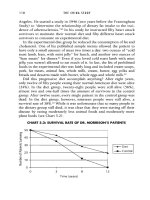
for example, is associated with increasing latitude.13 As you can see in
Chart C.2, there is a huge difference in MS prevalence as one goes away
from the equator, being over 100 times more prevalent in the far north
than at the equator. 14 Similarly, in Australia, there is less sunshine and
364
THE CHINA STUDY
CHART C.2: WORLDWIDE DISTRIBUTION
OF MS FOR 120 COUNTRIES
180 ,-------------------------------------------~
160
140
ci.
o
C-
120
o
o
o
0'
o
100
80
60
40
•
•
20
•
o ~--_r--~----~--~~_r~~L-~. .--~--_r--~
South
80
60
40
20
o
20
Latitude
40
60
80
North
Latitude
Degrees Latitude
more MS as one goes farther south (r=91 %) .15 MS is about sevenfold
greater in southern (43'S) than in northern Australia (19'5).16
A lack of sunshine, however, is not the only factor related to these
diseases. There is a larger context. The first thing to note is the control
and coordination of these vitamin D-related reactions. Control operates
at several places in this network, but, as I already said, it is the conversion of storage vitamin D into the supercharged 1,25 D in the kidneys
that is especially critical. In considerable measure, this control is exercised by another complex network of reactions involving a "manager"type hormone produced by the parathyroid gland located in our neck
(Chart C.3).
When, for example, we need more 1,25 D, parathyroid hormone induces the kidney enzyme activity to produce more 1,25 D. When there
is enough 1,25 D, parathyroid hormone slows down the kidney enzyme