8 food biochemistry and food phần 168
Bạn đang xem bản rút gọn của tài liệu. Xem và tải ngay bản đầy đủ của tài liệu tại đây (138.91 KB, 5 trang )
P1: SFK/UKS
BLBS102-c43
P2: SFK
BLBS102-Simpson
March 21, 2012
14:30
Trim: 276mm X 219mm
Printer Name: Yet to Come
43 Biogenic Amines in Foods
Bover-Cid S et al. 1999. Relationship between biogenic amine
contents and the size of dry fermented sausages. Meat Sci 51:
305–311.
Boyer EW, Shannon M. 2005. The serotonin syndrome. N Engl J
Med 352(11): 1112–1120.
Canadian Food Inspection Agency. 2005. Fish products standards
and methods manual. Canadian guidelines for chemical contaminants and toxins in fish and fish products. Available at: http://
www.inspection.gc.ca/english/fssa/fispoi/man/samnem/smnmalle.
pdf. Accessed on June 20, 2011.
Cannon WB. 1929. The interrelations of emotion as suggested by
recent physiological researches. Am J Physiol 25: 256–282.
Carelli D et al. 2007. An interference free amperometric biosensor
for the detection of biogenic amines in food products. Biosens
Bioelectron 23: 640–647.
Chander H et al. 1989. Factors affecting amine production by a selected strain of Lactobacillus bulgaricus. J Food Sci 54: 940–942.
Cinquina AL et al. 2004. Determination of biogenic amines in fish
tissues by ion-exchange chromatography with conductivity detection. J Chromatogr A 1032: 73–77.
De Vries J (ed.). 1996. Food Safety and Toxicity. CRC Press, Boca
Raton, FL.
Du WX et al. 2002. Development of biogenic amines in yellowfin
tuna (Thunnis albacares): effect of storage and correlation with
decarboxylase-positive bacterial flora. J Food Sci 67: 292–301.
Du Toit M. 2005. Biogenic amine production in wine.
Wynboer. Available at />200506bio.php3 (Accessed in October 2009).
Etkind P, Wilson ME. 1987. Bluefish-associated scombroid poisoning: an example of the expanding spectrum of food poisoning
from seafood. J Am Med Assoc 258: 3406–3410.
FDA. 2001. Fish and Fishery Products Hazards and Controls Guide,
3rd edn. Office of Seafood, Washington, DC, p. 326.
Galgano F et al. 2009. Role of biogenic amines as index of freshness
in beef meat packed with different biopolymeric materials. Food
Res Int 42: 1147–1152.
Gloria M et al. 1999. Histamine and other biogenic amines in albacore tuna. J Aquat Food Product Technol 8: 55–69.
Guerrini S et al. 2002. Biogenic amine production by Oenococcus
oeni. Curr Microbiol 44: 374–378.
Ha HC et al. 1998. The natural polyamine spermine functions directly as a free radical scavenger. Proc Nat Acad Sci USA 95:
11140–11145.
Hernandez-Jover M et al. 1997. Biogenic amine and polyamine
contents in meat and meat products. J Agric Food Chem 45:
2098–2102.
Izquierdo-Pulido M et al. 1999. Polyamine and biogenic amine
evolution during food processing. In: S Bardocz, A White (eds.)
Polyamines in Health and Nutrition. Kluwer Academic Publishers, Norwell, MA, pp. 3–26.
Jones RSG. 1983. Trace biogenic amines: a possible functional role
in the CNS. Trends Pharmacol Sci 4: 426–429.
Kalac P et al. 1999. Concentrations of seven biogenic amines in
sauerkraut. Food Chem 67(3): 275–280.
Kalac P et al. 2000a. Changes in biogenic amine concentrations
during sauerkraut storage. Food Chem 69(3): 309–314.
Kalac P et al. 2000b. The effects of lactic acid bacteria inoculants
on biogenic amines formation in sauerkraut. Food Chem 70(3):
355–359.
831
Karpas Z et al. 2002. Determination of volatile biogenic amines in
muscle food products by ion mobility spectrometry. Anal Chim
Acta 463: 155–163.
Khan AU et al. 1992. A proposed function for spermine and spermidine: Protection of replicating DNA against damage by singlet
oxygen. Proc Natl Acad Sci USA 89: 11426–11427.
Kim SH et al. 2006. Histamine production by Morganella morganii
in mackerel, albacore, mahi-mahi, and salmon at various storage
temperatures. J Food Sci 67: 1522–1528.
Koutsoumanis K et al. 1999. Biogenic amines and sensory changes
associated with the microbial flora of Mediterranean gilt-head sea
bream (Sparus aurata) stored aerobically at 0, 8, 15◦ C. J Food
Prot 62: 398–402.
Lange J et al. 2002. Comparison of a capillary electrophoresis method with high-performance liquid chromatography for
the determination of biogenic amines in various food samples.
J Chromatogr B 889: 229–239.
Lakritz L et al. 1975. Determination of amines in fresh and processed
pork. J Agric Food Chem 23: 344–346.
Lakshmanan R et al. 2002. Survival of amine-forming bacteria
during the ice storage of fish and shrimp. Food Microbiol 19:
617–625.
Lehane L, Olley J. 2000. Histamine fish poisoning revisited. Int J
Food Microbiol 58: 1–37.
Lesurtel M et al. 2006. Platelet-derived serotonin mediates liver
regeneration. Science 312: 104–107.
Loret S et al. 2005. Levels of biogenic amines as a measure of
the quality of the beer fermentation process: data from Belgian
samples. Food Chem 89: 519–525.
Mah J-H et al. 2002. Biogenic amines in Jeotkals, Korean salted
and fermented fish products. Food Chem 79(2): 239–243.
Maintz L, Novak N. 2007. Histamine and histamine intolerance. Am
J Clin Nutr 85: 1185–1196.
Maijala R et al. 1995. Influence of processing temperature on the
formation of biogenic amines in dry sausages. Meat Sci 39(1):
9–22.
Marieb EN. 2001. Human Anatomy and Physiology, 5th edn. Addison Wesley Longman, New York.
Martuscelli M et al. 2009. Effect of intensity of smoking treatment
on the free amino acids and biogenic amines occurrence in dry
cured ham. Food Chem 116: 955–962.
Masson F et al. 1996. Histamine and tyramine production by bacteria
from meat products. Food Microbiol 32: 199–207.
McInerney J et al. 1996. Scombroid poisoning. Ann Emerg Med 28:
235–238.
Middlebrooks BL et al. 1988. Effects of storage time and temperature on the microflora and amine development in Spanish
Mackerel (Scomberomorus maculates). J Food Sci 53: 1024–
1029.
Mietz JL, Karmas E. 1977. Chemical quality index of canned tuna
as determined by high-pressure liquid chromatography. J Food
Sci 42: 155–158.
Millichap JG, Yee MM. 2003. The diet factor in pediatric and adolescent migraine. Pediatr Neurol 28: 9–15.
Moreno-Arribas MV et al. 2003. Screening of biogenic amine production by lactic acid bacteria isolated from grape must and wine.
Int J Food Microbiol 84: 117–123.
Moret S, Conte LS. 1996. High-performance liquid chromatographic evaluation of biogenic amines in foods: an analysis of
P1: SFK/UKS
BLBS102-c43
P2: SFK
BLBS102-Simpson
832
March 21, 2012
14:30
Trim: 276mm X 219mm
Printer Name: Yet to Come
Part 8: Food Safety and Food Allergens
different methods of sample preparation in relation to food characteristics. J Chromatogr A 729: 353–369.
Moret S et al. 2005. A survey on free biogenic amine content of
fresh and preserved vegetables. Food Chem 89: 355–361.
Nout MJR. 1994. Fermented food and food safety. Food Res Int 27:
291–298.
Omura Y et al. 1978. Histamine-forming bacteria isolated from
spoiled skipjack tuna and jack mackerel. J Food Sci 43:
1779–1781.
Ord´on˜ ez AI et al. 1997. Formation of biogenic amines in Idiaz´abal
ewe’s-milk cheese: effect of ripening, pasteurization, and starter.
J Food Prot 60: 1375–1380.
Paleologos EK, Kontominas MG. 2004. On-line solid-phase extraction with surfactant accelerated on-column derivatization and
micellar liquid chromatographic separation as a tool for the determination of biogenic amines in various food substrates. Anal
Chem 76: 1289–1294.
Paleologos EK et al. 2004. Biogenic amines formation and its
relation to microbiological and sensory attributes in ice-stored
whole, gutted and filletes Mediterranean sea bass (Dicentrarchus
labrax). Food Microbiol 21: 549–557.
Panconesi A. 2008. Alcohol and migraine: trigger factor, consumption, mechanisms—a review. J Headache Pain. 9: 19–27.
Patsias A et al. 2006. Relation of biogenic amines to microbial and
sensory changes of precooked chicken meat stored aerobically
and under modified atmosphere packaging at 4◦ C. Eur Food Res
Technol 223: 683–689.
Paulsen P, Bauer F. 2007. Spermine and spermidine concentrations
in pork loin as affected by storage, curing and thermal processing.
Eur Food Res Technol 225: 921–924.
Pegg AE, McCann PP. 1982. Polyamine metabolism and function.
Am J Physiol Cell Physiol 243: C212–C221.
Perez ML et al. 1998. Effect of calcium chloride marination on
calpain and quality characteristics of meat from chicken, horse,
cattle and rabbit. Meat Sci 48: 125–134.
Pinho O et al. 2001. Effect of temperature on evolution of free
amino acid and biogenic amine contents during storage of Azeitao
cheese. Food Chem 75: 287–291.
Pircher A et al. 2007. Formation of cadaverine, histamine, putrescine
and tyramine by bacteria isolated from meat, fermented sausages
and cheeses. Eur Food Res Technol 226: 225–231.
Potter NN, Hotchkiss JH. 1998. Food Science. Chapman and Hall,
New York.
Predy G et al. 2003. Was it something she ate? Case report and discussion of scombroid poisoning. Can Med Assoc J 168: 587–588.
Prodromidis MI, Karayannis MI. 2002. Enzyme-based amperometric biosensors for food analysis. Electroanalysis 14: 241–261.
Ruiz-Capillas C, Moral Q. 2004. Free amino acids and biogenic
amines in red and white muscle of tuna stored in controlled
atmospheres. Amino Acids 26: 125–132.
Rupasinghe HPV, Clegg S. 2007. Total antioxidant capacity, total
phenolic content, mineral elements, and histamine concentrations in wines of different fruit sources. J Food Comp Anal 20:
133–137.
Sanchez-Guerrero IM et al. 1997. Scombroid fish poisoning: a potentially life-threatening allergic-like reaction. J Allergy Clin Immunol 100: 433–434.
Santos MHS. 1996. Biogenic amines: their importance in foods. Int
J Food Microbiol 29: 213–231.
Sarkadi LS. 2009. Biogenic amines. In: RH Stadler, DR Lineback
(eds.) Process-Induced Food Toxicants: Occurence, Formation,
Mitgation, and Health Risks. John Wiley & Sons, Hoboken,
pp. 321–361.
Schmidt N, Ferger B. 2004. The biogenic trace amine tyramine induces a pronounced hydroxyl radical production via a monoamine
oxidase dependent mechanism: an in vivo microdialysis study in
mouse striatum. Brain Res 1012: 101–107.
Schneider E et al. 2002. Trends in histamine research: new functions
during immune response and hematopoiesis. Trends Immunol 23:
255–263.
Serrar D et al. 1995. The development of a monoclonal antibodybased ELISA for the determination of histamine in food: application to fishery products and comparison with the HPLC assay.
Food Chem 54: 85–91.
Shakila RJ et al. 2001. A comparison of the TLC-densitometry and
HPLC method for the determination of biogenic amines in fish
and fishery products. Food Chem 75: 255–259.
Shalaby AR. 1996. Significance of biogenic amines to food safety
and human health. Food Res Int 29: 675–690.
Stratton JE et al. 1991. Biogenic amines in cheese and other fermented foods. J Food Prot 54(6): 460–470.
Suzzi G, Gardini F. 2003. Biogenic amines in dry fermented
sausages: a review. Int J Food Microbiol 88: 41–54.
Tabor H et al. 1958. The biosynthesis of spermidine and spermine from putrescine and methionine. J Biol Chem 233: 907–
914.
Tarjan V, Janossy G. 1978. The role of biogenic amines in foods.
Die Nahrung 22: 285–289.
Taylor SL. 1986. Histamine food poisoning: toxicology and clinical
aspects. CRH Crit Rev Toxicol 17: 91–128.
ten Brink B et al. 1990. Occurrence and formation of biologically
active amines in foods. Int J Food Microbiol 11: 73–84.
Tombelli S, Mascini M. 1998. Electrochemical biosensors for biogenic amines: a comparison between different approaches. Anal
Chim Acta 358: 277–284.
Valsamaki K et al. 2000. Biogenic amine production in feta cheese.
Food Chem 71: 259–266.
Veciana-Nogues MT et al. 1997a. Biogenic amines in fresh and
canned tuna: Effects of canning on biogenic amine contents.
J Agric Food Chem 45: 4324–4328.
Veciana-Nogues MT et al. 1997b. Biogenic amines as hygienic quality indicators of tuna: relationships with microbial counts, ATPrelated compounds, volatile amines, and organoleptic changes.
J Agric Food Chem 45: 2036–2041.
Vinci G, Antonelli ML. 2002. Biogenic amines: quality index
of freshness in red and white meat. Food Control 13: 519–
524.
Vlieg-Boerstra BJ et al. 2005. Mastocytosis and adverse reactions
to biogenic amines and histamine-releasing food: what is the
evidence? Neth J Med 63: 244–249.
Yen GC, Hsieh CL. 1991. Simultaneous analysis of biogenic amines
in canned fish by HPLC. J Food Sci 56: 158–160.
Xu Y et al. 2009. Biogenic and volatile amines in Chinese mitten
crab (Eriocheir sinensis) stored at different temperatures. Int J
Food Sci Technol 44(8): 1547–1552.
Zotos A et al. 1995. The effect of frozen storage of mackerel
(Scomber scombrus) on its quality when hot-smoked. J Sci Food
Agric 67: 43–48.
P1: SFK/UKS
BLBS102-c44
P2: SFK
BLBS102-Simpson
March 21, 2012
14:34
Trim: 276mm X 219mm
Printer Name: Yet to Come
44
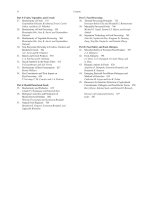
Emerging Bacterial Food-Borne Pathogens
and Methods of Detection
Catherine M. Logue and Lisa K. Nolan
Introduction
Emerging Food-Borne Pathogens
Salmonella
Campylobacter
Escherichia coli Including STEC
Listeria monocytogenes
Arcobacter
Mycobacterium avium Subsp paratuberculosis
Aeromonas hydrophila
Cronobacter sakazakii (Enterobacter sakazakii)
Clostridium difficile
Antimicrobial-Resistant Pathogens
Methods for the Detection of Food-Borne Pathogens
Culture-Dependent Methods
Automated Methods to Detect Pathogens
Automated Methods of Identification
Immunologic-Based Methods of Pathogen Detection
Immunoprecipitation (Dipstick/Lateral) flow
Immunomagnetic Separation
Latex Agglutination Assays
Gel Immunodiffusion
Nucleic Acid-based Detection
Hybridization Techniques
DNA/Colony Hybridization
Polymerase Chain Reaction (PCR)
Nested PCR
Real-time PCR
Next-Generation Technologies
Adenosine Triphosphate Detection
DNA Microarrays
Immunosensors or Biosensors
Fiber Optic Biosensor
Raman and Fourier Transform Spectroscopy
Fourier Transform Infrared Spectroscopy
Surface Plasmon Resonance
Mass Sensitive Biosensors
Electronic Nose Sensors
Nanotechnology for Pathogen Detection
Summary
References
Abstract: Bacterial food-borne pathogens cause significant human
illness and misery worldwide. In this review, we focus on an examination of the bacterial pathogens associated with food-borne
illness that are common, those that are emerging and those that
are reemerging. This overview will provide the reader with an understanding of the importance of selected pathogens, the type of
disease they cause and why they should still be considered as emerging pathogens. In this review, we also focus on some of the newer
generation pathogens such as shiga toxin-producing Escherichia
coli, Arcobacter, Mycobacterium, Cronobacter, and antimicrobialresistant pathogens. The second portion of this review provides the
reader with an overview of methods for the detection of pathogens
from culture based to automated methods as well as immunologic
and nucleic acid-based techniques. Finally, this chapter includes
some overview of the next-generation technology for the detection
and characterization of pathogens including microarray, biosensor,
mass sensitive biosensors, and nanotechnology. We recognize that
the world of food-borne pathogens is ever changing and as the
pathogen poses greater challenges to the host so too does our ability
to detect and identify it in shorter timeframes.
INTRODUCTION
The costs of food-borne illnesses in terms of human health and
economic loss remain relatively unknown, but are likely to be
substantial. However, data, as it pertains to the industrialized
countries, do exist but are typically limited to a select few microorganisms; globally, the burden of food-borne illness remains
poorly understood and presents a significant challenge to society
in how to monitor and assess disease trends.
The World Health Organization seeks to respond to this data
gap by estimating the global burden of food-borne illness. In the
United States, estimates of food-borne illness have been reported
as 48 million cases, 128,000 hospitalizations, and 3000 deaths
annually (CDC 2011) placing an economic burden of US$152
billion on the nation, with an average cost of US$1850 per
Food Biochemistry and Food Processing, Second Edition. Edited by Benjamin K. Simpson, Leo M.L. Nollet, Fidel Toldr´a, Soottawat Benjakul, Gopinadhan Paliyath and Y.H. Hui.
C 2012 John Wiley & Sons, Inc. Published 2012 by John Wiley & Sons, Inc.
833
P1: SFK/UKS
BLBS102-c44
P2: SFK
BLBS102-Simpson
834
March 21, 2012
14:34
Trim: 276mm X 219mm
Printer Name: Yet to Come
Part 8: Food Safety and Food Allergens
illness (Schraff 2010). The Centers for Disease Control (CDC)
annual food-borne disease report posted through the FoodNet
data site reports incidences of illness based on data from ten
sentinel sites across the United States. The data cover approximately 46 million people representing approximately 15% of
the population. Current data suggest that the incidence of infections caused by Campylobacter, Salmonella, Listeria, and shiga
toxin-producing Escherichia coli (STEC), Yersinia, and Shigella
(CDC 2010) is declining.
While focusing on food-borne pathogens in this review it
is important to define what this review means by an “emerging food-borne pathogen.” Mor-Mur and Yuste (2010) suggest
that there are pathogens not previously known (new pathogens),
others that have arisen as food-borne (emerging pathogens),
and others that have become more potent with other products
(evolving pathogens). Emerging pathogens are therefore present
strains that are adapting to stresses in new environments. Emerging pathogens that have newly arisen have been recognized as a
pathogen for many years and are now associated with food-borne
transmission (Meng and Doyle 1997, 1998, Sofos 2008). While
a considerable number of pathogens are present and capable of
causing disease in foods, there are over 200 recognized natural
chemical and physical agents (Acheson 1999). Perhaps the most
important and emergent are Campylobacter jejuni, Salmonella
typhimurium DT104, E coli O157:H7, and other enterohemorrhagic E. coli (EHEC) and STEC, Listeria monocytogenes,
Arcobacter butzleri, Mycobacterium avium sbsp paratuberculosis, Aeromonas hydrophila, and Cronobacter sakazakii. Other
agents of emergence include prions, viruses, (noroviruses, hepatitis A, rotavirus), severe acute respiratory syndrome (SARS),
and parasites such as Ascaris, Cryptosporidium, and Trichinella.
Also of concern is the emergence of antibiotic-resistant strains in
pathogens such as Salmonella, Campylobacter, Shigella, Vibrio,
Staphylococcus aureus, E. coli, and Enterococci.
There are a number of factors that contribute or have had an
influence on the changing trends in food-borne disease; Newell
et al. (2010) provides an excellent overview of changes that have
occurred and contribute to the changing trends in food-borne
disease. Some of the highlights include: a rapid increase in the
human population and a shift towards an aging population; an increasing global market for foods, transportation, travel, changes
in eating habits, a greater population of immunocompromised,
and changes in farming practices and so on.
Ray (2004a) cites other factors including some which overlap
with Newell et al. (2010) that can be attributed to our recognition of how we can define an emerging food-borne pathogen.
There is an overall better knowledge of food-borne pathogens:
previously, outbreaks linked to foods were screened for a range
of standard pathogens but over the years we have expanded the
repertoire to include new pathogens. Perhaps our abilities to
test for new pathogens are based on our understanding of them.
Technologies incorporating molecular analysis and the use of
genomics have expanded our capabilities of what to search for.
So too does the technology available to rapidly screen and identify greatly expand our knowledge.
Improvements in regulations and the actions of regulatory authorities have enhanced our capabilities to rapidly identify and
monitor for emerging threats. Regulatory authorities at the state
and national levels are able to collate data regarding specific
outbreaks and the modes of transmission or vehicles implicated
in food-borne outbreaks. On the basis of this type of criteria
it is possible to make recommendations regarding criteria for
what is acceptable and what is not, as well as methods to detect
pathogens of concern. These agencies have also developed or
guide the development of appropriate sanitation procedures to
reduce the risk of human disease or educate consumers in safe
handling practices. In the United States, agencies such as United
States Department of Agriculture Food Safety and Inspection
service (USDA FSIS), and the Food and Drugs Administration
(FDA) direct some of these activities, while in Europe, the European Food Safety Authority (EFSA) has a similar role.
Changes in the lifestyle habits of consumers have changed
significantly in the last 50 years. These have included traveling,
(domestic and international), changes in consumer eating habits,
(close to half of every dollar earned is spent eating out), the
types of food consumed has changed, and there are increases
in seafood consumption, exotic foods, cheeses, and minimally
processed or more fresh or natural foods as well as greater access
to a larger variety of fresh and raw foods that are imported.
New processing technologies have led to faster and more efficient ways to produce foodstuffs for larger retail markets and
consequently there is considerably more product distributed over
a wide area—examples of the effects of this have been seen in the
outbreak of listeriosis associated with the consumption of contaminated hotdogs distributed nationally (CDC 1998, Donnelly
2001).
Some additional factors that may contribute to the emergence
of food-borne pathogens include the recognition of illness associated with multiple strains of E. coli termed STEC (Eblen
2007), or strains that appear to be emergent as a result of transfer of resistance and other genetic virulence properties (Fricke
et al. 2009), additional factors that warrant inclusion here are
also related to the transfer of antimicrobial resistance and the selection of drug-resistant strains, which can become dominant in
a food system (Endtz et al. 1991, Aarestrup and Engberg 2001,
Engberg et al. 2001, Nielsen et al. 2006, Logue et al. 2010)
and have potential links to disease that is difficult to treat. Also
of interest are the capabilities of certain pathogens to grow at
refrigeration temperatures (Listeria, Yersinia, Aeromonas) and
the ability to survive in low-pH (acid) foods (E. coli O157:H7,
Salmonella, Listeria).
In this chapter, we address emerging food-borne pathogens
of human disease and their potential impacts on human health
and methods for their detection. In general, trends in addressing
disease have shown a reduction (downward trends). The latest
data from the CDC shows prevalence in sentinel states has been
decreasing (CDC 2010).
Emerging Food-Borne Pathogens
Salmonella
Nontyphoidal Salmonella is a major cause of food-borne disease in industrialized countries. In the United States alone, it
P1: SFK/UKS
BLBS102-c44
P2: SFK
BLBS102-Simpson
March 21, 2012
14:34
Trim: 276mm X 219mm
Printer Name: Yet to Come
44 Emerging Bacterial Food-Borne Pathogens and Methods of Detection
is estimated that nontyphoidal Salmonella was responsible for
7039 illnesses per 100,000 people in 2008 (CDC 2010). The
organism colonizes a range of hosts of food animals including
poultry, cattle, and pigs and rarer animals such as bison (Li et al.
2004, Li et al. 2006, Mor-Muir and Yuste 2010). Salmonella has
also been found in a range of other habitats including soil, water,
sewage, and so on.
Salmonella outbreaks are relatively common and have been
associated with a range of foods and meats including poultry,
beef, pork, and so on. Of interest are outbreaks of illness associated with more unusual foodstuffs such as chocolate, (Werber
et al. 2005), shell eggs (Gantois et al. 2009), produce (Franz
and van Bruggen 2008), tomatoes (CDC 2005a), and peanut
butter (CDC 2009). Currently, there are over 2000 serotypes
of Salmonella recognized (Ray 2004b) and annual trends from
the CDC report common serotypes implicated in food-borne illness. The top two serotypes implicated include S. typhimurium
and Salmonella enteritidis (CDC 2010) />ncidod/dbmd/phlisdata/Salmonella.htm; some novel strains also
emerge on a regular basis.
Symptoms of human salmonellosis are usually observed as uncomplicated enteritis and enteric (typhoid) fever, which can result in a more complicated disease involving diarrhea, fever, abdominal pain, and headache. Systemic infection may also occur
resulting in a chronic reactive arthritis (Smith 1994). Salmonella
invades the mucosa of the small intestine and can proliferate in
the epithelium, and produce a toxin, which causes inflammation and fluid accumulation in the intestine. The infectious dose
required to cause illness is relatively high, about 105 –106 organisms. Most individuals develop symptoms within 24–36 hours
but the incubation time may be longer if the dose ingested is
lower. Symptoms usually last 2–3 days but patients may remain
carriers for periods of months after recovery.
Of greatest concern are S. typhimurium DT104 strains exhibiting multiple antimicrobial resistance to ampicillin, chloramphenicol, streptomycin, sulfonamides, and tetracycline (ACSSuT), most of the resistance appears to be chromosomally encoded (Threlfall 2000). These strain types have been recognized
worldwide and have also caused infection in humans through
consumption of contaminated foods including chicken, beef,
pork sausages, and meat paste and also through occupational
contact with cattle (Wall et al. 1995, Mor-Mur and Yuste 2010).
In recent years, the incidence of S. typhimurium DT104 appears
to be declining, while resistance to other antimicrobials including extended spectrum β-lactamases appears to be increasing
(Newell et al. 2010) and have been detected in both humans and
animals (Hasman et al. 2005).
Campylobacter
Next to Salmonella, Campylobacter is the most common cause
of human food-borne disease annually in developed countries.
In the European Union, Campylobacter is the most common
cause of acute food poisoning; over 20,000 cases were reported
in 2007 compared to 150,000 cases of salmonelosis (Westrell
et al. 2009). In the United States, Campylobacter is the second most common cause of disease (gastroenteritis) responsible
835
for approximately 845,000 illnesses annually and almost 100
deaths (CDC 2011). Campylobacter gastroenteritis is typically
associated with C. jejuni and Campylobacter coli.
Campylobacter is found in a range of animal hosts including cattle, lamb, pigs with poultry being implicated as a primary source (Niesen et al. 2006, Nachamkin 2007, Mor-Mur
and Yuste 2010). Additional sources of Campylobacter include
water, sewage, raw milk, raw meats, and vegetables (Meng and
Doyle 1998, Chan et al. 2001, Inglis et al. 2004, Nachamkin
2007). Prevalence levels of Campylobacter in food animals vary
significantly, while Campylobacter levels on pork products are
relatively low and may be related to postslaughter chill and drying effects, which significantly reduce the populations (Snijers
and Collins 2004). Raw and undercooked poultry appear to be
primary sources of Campylobacter associated with food-borne
illness (Olson et al. 2008, Mor-Mur and Yuste 2010, Newell
et al. 2010).
Campylobacter is a gram-negative organism and is a microaerobe with a requirement for low oxygen (microaerophilic) and a
temperature range of 35–42◦ C for growth. The organism is generally a poor competitor, is sensitive to low pH, temperatures less
than 30◦ C, pasteurization temperatures, and drying (Doyle and
Jones 1992). It does, however, appear to survive under refrigeration temperatures and freezing may cause cell reduction but
low levels of pathogen have been recovered (Blaser et al. 1980,
Jacobs-Reitsma 2000). The organism does not survive well in
foods and is easily destroyed by adequate cooking temperatures (Meng and Doyle 1998, Nachamkin 2007). Campylobacter is not capable of growth outside the host, but studies have
demonstrated the survival of this pathogen on kitchen surfaces
(Humphrey 2001).
The two major strains of Campylobacter implicated in the majority of human Campylobacter enteritis are C. jejuni and C. coli.
Typical cases of human campylobacteriosis include diarrhea, abdominal cramps, profuse diarrhea, nausea, and vomiting; other
symptoms include fever, headache, and chills, in some cases
bloody diarrhea can occur, recurrence of symptoms (relapse) is
often reported. Symptoms of illness are usually observed within
2-5 days of ingestion of contaminated food and can persist for
up to 2 weeks. The infectious dose required to cause illness is
relatively low and is estimated at approximately 500 organisms
(Robinson 1981, Black et al. 1988). Additional complications
recognized include reactive arthritis, pancreatitis, meningitis,
endocarditis, and Guillain–Barr´e syndrome a postinfection complication of campylobacteriosis that causes peripheral nervous
system paralysis resulting in a flaccid paralysis of the limbs,
which can be life threatening (Blaser and Engberg 2008, Jacobs
et al. 2008).
Outbreaks of campylobacteriosis typically occur in the summer months with most being sporadic in nature (Olson et al.
2008). Most outbreaks have been linked with improperly prepared or consumption of cross-contaminated, poorly handled
poultry (Alketruse et al. 1997, Friedman et al. 2000).
Of significant importance is the prevalence of antibiotic resistance to agents such as fluoroquinolones and macrolides,
two of the primary agents used to treat human disease (Engberg et al. 2001, Lutgen et al. 2009). Studies have reported