8 food biochemistry and food phần 109
Bạn đang xem bản rút gọn của tài liệu. Xem và tải ngay bản đầy đủ của tài liệu tại đây (145.16 KB, 5 trang )
P1: SFK/UKS
BLBS102-c27
P2: SFK
BLBS102-Simpson
March 21, 2012
13:25
Trim: 276mm X 219mm
Printer Name: Yet to Come
27
Biochemistry of Fruits
Gopinadhan Paliyath, Krishnaraj Tiwari, Carole Sitbon, and Bruce D. Whitaker
Introduction
Biochemical Composition of Fruits
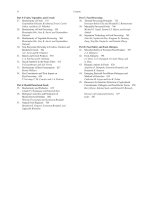
Carbohydrates, Storage and Structural Components
Lipids and Biomembranes
Proteins
Organic Acids
Fruit Ripening and Softening
Carbohydrate Metabolism
Cell Wall Degradation
Starch Degradation
Glycolysis
Citric Acid Cycle
Gluconeogenesis
Anaerobic Respiration
Pentose Phosphate Pathway
Lipid Metabolism
Proteolysis and Structure Breakdown in Chloroplasts
Secondary Plant Products and Flavour Components
Isoprenoid Biosynthesis
Anthocyanin Biosynthesis
Ester Volatile Biosynthesis
General Reading
References
Abstract: Fruits are major ingredients of human diet and provide several nutritional ingredients including carbohydrates, vitamins and functional food ingredients such as soluble and insoluble
fibers, polyphenols and carotenoids. Biochemical changes during
fruit ripening make the fruit edible by making them soft, changing
the texture through the breakdown of cell wall, converting acids or
stored starch into sugars and causing the biosynthesis of pigments
and flavour components. Fruits are processed into several products
to preserve these qualities.
INTRODUCTION
Because of various health benefits associated with the consumption of fruits and various products derived from fruits, these are
at the centre stage of human dietary choices in recent days. The
selection of trees that produce fruits with ideal edible quality
has been a common process throughout human history. Fruits
are developmental manifestations of the seed-bearing structures
in plants, the ovary. After fertilisation, the hormonal changes induced in the ovary result in the development of the characteristic
fruit that may vary in ontogeny, form, structure and quality. Pome
fruits such as apple and pear are developed from the development of the thalamus in the flower. Drupe fruits, such as cherry,
peach, plum, apricot and so on, are developed from the ovary
wall (mesocarp) enclosing a single seed. Berry fruits such as
tomato possess the seeds embedded in a jelly-like pectinaceous
matrix, with the ovary wall developing into the flesh of the fruit.
Cucumbers and melons develop from an inferior ovary. Citrus
fruits belong to the class hesperidium, where the ovary wall
develops as a protective structure surrounding the juice-filled
locules that become the edible part of the fruit. In strawberry,
the seeds are located outside the fruit, and it is the receptacle of
the ovary (central portion) that develops into the edible part. The
biological purpose of the fruit is to attract vectors that help in the
dispersal of the seeds. For this, the fruits have developed various
organoleptic (stimulatory to organs) characteristics that include
attractive colour, flavour and taste. The biochemical characteristics and pathways in the fruits are developmentally structured to
achieve these goals. The nutritional and food qualities of fruits
arise as a result of the accumulation of components derived from
these intricate biochemical pathways. In terms of production and
Food Biochemistry and Food Processing, Second Edition. Edited by Benjamin K. Simpson, Leo M.L. Nollet, Fidel Toldr´a, Soottawat Benjakul, Gopinadhan Paliyath and Y.H. Hui.
C 2012 John Wiley & Sons, Inc. Published 2012 by John Wiley & Sons, Inc.
533
P1: SFK/UKS
BLBS102-c27
P2: SFK
BLBS102-Simpson
March 21, 2012
13:25
Trim: 276mm X 219mm
534
Printer Name: Yet to Come
Part 5: Fruits, Vegetables, and Cereals
volume, tomato, orange, banana and grape are the major fruit
crops used for consumption and processing around the world
(Kays 1997).
BIOCHEMICAL COMPOSITION
OF FRUITS
Fruits contain a large percentage of water, which can often exceed 95% by fresh weight. During ripening, activation of several metabolic pathways often leads to drastic changes in the
biochemical composition of fruits. Fruits such as banana store
starch during development, and hydrolyse the starch to sugars
during ripening, that also results in fruit softening. Most fruits
are capable of photosynthesis, store starch and convert them to
sugars during ripening. Fruits such as apple, tomato, grape and
so on have a high percentage of organic acids, which decreases
during ripening. Fruits also contain large amounts of fibrous
materials such as cellulose and pectin. The degradation of these
polymers into smaller water-soluble units during ripening leads
to fruit softening as exemplified by the breakdown of pectin
in tomato and cellulose in avocado. Secondary plant products
are major compositional ingredients in fruits. Anthocyanins are
the major colour components in grape, blueberry, apple and
plum; carotenoids, specifically lycopene and carotene, are the
major components that impart colour in tomato and watermelon.
Aroma is derived from several types of compounds that include
monoterpenes (as in lime, orange), ester volatiles (ethyl, methyl
butyrate in apple, isoamyl acetate in banana), simple organic
acids such as citric and malic acids (citrus fruits, apple) and
small chain aldehydes such as hexenal and hexanal (cucumber).
Fruits are also rich in vitamin C. Lipid content is quite low in
fruits, the exceptions being avocado and olives, in which triacylglycerols (oils) form the major storage components. The
amounts of proteins are usually low in most fruits.
Carbohydrates, Storage and Structural
Components
As the name implies, carbohydrates are organic compounds containing carbon, hydrogen and oxygen. Basically, all carbohydrates are derived by the photosynthetic reduction of CO2 to
the pentoses (ribose, ribulose) and hexoses (glucose, fructose),
which are also intermediates in the metabolic pathways. Polymerisation of several sugar derivatives leads to various storage
(starch, inulin) and structural components (cellulose, pectin).
During photosynthesis, the glucose formed is converted to
starch and stored as starch granules. Glucose and its isomer fructose, along with phosphorylated forms (glucose-6-phosphate,
glucose-1,6- diphosphate, fructose-6-phosphate and fructose1,6-diphosphate), can be considered to be the major metabolic
hexose pool components that provide carbon skeleton for the
synthesis of carbohydrate polymers. Starch is the major storage
carbohydrate in fruits. There are two molecular forms of starch,
amylose and amylopectin and both components are present in the
starch grain. Starch is synthesised from glucose phosphate by the
activities of a number of enzymes designated as ADP-glucose
pyrophosphorylase, starch synthase and a starch-branching en-
zyme. ADP-glucose pyrophosphorylase catalyses the reaction
between glucose-1-phosphate and ATP that generates ADPglucose and pyrophosphate. ADP-glucose is used by starch synthase to add glucose molecules to amylose or amylopectin chain,
thus increasing their degree of polymerisation. By contrast to
cellulose that is made up of glucose units in β-1,4-glycosidic
linkages, the starch molecule contains glucose linked by α-1,4glycosidic linkages. The starch branching enzyme introduces
glucose molecules through α-1,6- linkages which further gets extended into linear amylose units with α-1,4- glycosidic linkages.
Thus, the added glucose branch points (α-1,6-linkages) serve as
sites for further elongation by starch synthase, thus resulting in
a branched starch molecule, also known as amylopectin.
Cell wall is a complex structure composed of cellulose and
pectin, derived from hexoses such as glucose, galactose, rhamnose and mannose, and pentoses such as xylose and arabinose,
as well as some of their derivatives such as glucuronic and
galacturonic acids (Negi and Handa 2008). A model proposed
by Keegstra et al. (1973) describes the cell wall as a polymeric
structure constituted by cellulose microfibrils and hemicellulose
embedded in the apoplastic matrix in association with pectic
components and proteins. In combination, these components
provide the structural rigidity that is characteristic to the plant
cell. Most of the pectin is localised in the middle lamella. Cellulose is biosynthesised by the action of β-1,4-glucan synthase
enzyme complexes that are localised on the plasma membrane.
The enzyme uses uridine diphosphate glucose (UDPG) as a
substrate, and by adding UDPG units to small cellulose units,
extends the length and polymerisation of the cellulose chain. In
addition to cellulose, there are polymers made of different hexoses and pentoses known as hemicelluloses, and based on their
composition, they are categorised as xyloglucans, glucomannans and galactoglucomannans. The cellulose chains assemble
into microfibrils through hydrogen bonds to form crystalline
structures. In a similar manner, pectin is biosynthesised from
UDP-galacturonic acid (galacturonic acid is derived from galactose, a six carbon sugar), as well as other sugars and derivatives
and includes galacturonans and rhamnogalacturonans that form
the acidic fraction of pectin. As the name implies, rhamnogalacturonans are synthesised primarily from galacturonic acid and
rhamnose. The acidic carboxylic groups complex with calcium
that provide the rigidity to the cell wall and the fruit. The neutral fraction of the pectin comprises polymers such as arabinans
(polymers of arabinose), galactans (polymers of galactose) or
arabinogalactans (containing both arabinose and galactose). All
these polymeric components form a complex three-dimensional
network stabilised by hydrogen bonds, ionic interactions involving calcium, phenolic components such as diferulic acid and
hydroxyproline-rich glycoproteins (Fry 1986, Negi and Handa
2008). It is also important to visualise that these structures are
not static and the components of cell wall are constantly being
turned over in response to growth conditions.
Lipids and Biomembranes
By structure, lipids can form both structural and storage
components. The major forms of lipids include fatty acids,
P1: SFK/UKS
BLBS102-c27
P2: SFK
BLBS102-Simpson
March 21, 2012
13:25
Trim: 276mm X 219mm
Printer Name: Yet to Come
27 Biochemistry of Fruits
diacyl- and triacylglycerols, phospholipids, sterols, and waxes
that provide an external barrier to the fruits. Fruits in general
are not rich in lipids with the exception of avocado and olives
that store large amounts of triacylglycerols or oil. As generally observed in plants, the major fatty acids in fruits include
palmitic (16:0), stearic (18:0), oleic (18:1), linoleic (18:2) and
linolenic (18:3) acids. Among these, oleic, linoleic and linolenic
acids possess an increasing degree of unsaturation. Olive oil is
rich in triacylglycerols containing the monounsaturated oleic
acid and is considered as a healthy ingredient for human
consumption.
Compartmentalisation of cellular ingredients and ions is an
essential characteristic of all life forms. The compartmentalisation is achieved by biomembranes, formed by the assembly of
phospholipids and several neutral lipids that include diacylglycerols and sterols, the major constituents of the biomembranes.
Virtually, all cellular structures include or are enclosed by
biomembranes. The cytoplasm is surrounded by the plasma
membrane, the biosynthetic and transport compartments such
as the endoplasmic reticulum and Golgi bodies form an integral network of membranes within the cell. Photosynthesis,
which converts light energy into chemical energy, occurs on the
thylakoid membrane matrix in the chloroplast, and respiration,
which further converts chemical energy into more usable forms,
occurs on the mitochondrial cristae. All these membranes have
their characteristic composition and enzyme complexes to perform their designated function.
The major phospholipids that constitute the biomembranes
include phosphatidylcholine, phosphatidylethanolamine, phosphatidylglycerol and phosphatidylinositol. Their relative proportion may vary from tissue to tissue. In addition, metabolic
intermediates of phospholipids such as phosphatidic acid, diacylglycerols, free fatty acids and so on are also present in the
membrane in lower amounts. Phospholipids are integral functional components of hormonal and environmental signal transduction processes in the cell. Phosphorylated forms of phosphatidylinositol such as phosphatidylinositol-4- phosphate and
phosphatidylinositol-4,5-bisphosphate are formed during signal
transduction events, though their amounts can be very low. The
membrane also contains sterols such as sitosterol, campesterol
and stigmasterol, as well as their glucosides, and they are extremely important for the regulation of membrane fluidity and
function (Whitaker 1988, 1991, 1993, 1994).
Biomembranes are bilamellar layers of phospholipids. The
amphipathic nature of phospholipids having hydrophilic head
groups (choline, ethanolamine, etc.) and hydrophobic fatty acyl
chains, thermodynamically favour their assembly into bilamellar
or micellar structures when exposed to an aqueous environment.
In a biomembrane, the hydrophilic headgroups are exposed to
the external aqueous environment. The phospholipid composition between various fruits may differ, and within the same fruit,
the inner and outer lamella of the membrane may have a different phospholipids composition. Such differences may cause
changes in polarity between the outer and inner lamellae of the
membrane, and lead to the generation of a voltage across the
membrane. These differences usually become operational during signal transduction events.
535
An essential characteristic of the membrane is its fluidity.
The fluid-mosaic model of the membrane (Singer and Nicholson
1972) depicts the membrane as a planar matrix comprising phospholipids and proteins. The proteins are embedded in the membrane bilayer (integral proteins) or are bound to the periphery
(peripheral proteins). The nature of this interaction results from
the structure of the proteins. If the proteins have a much larger
proportion of hydrophobic amino acids, they would tend to become embedded in the membrane bilayer. If the protein contains
more hydrophilic amino acids it may tend to prefer a more aqueous environment, and thus remain as a peripheral protein. In
addition, proteins may be covalently attached to phospholipids
such as phosphatidylinositol. Proteins that remain in the cytosol
may also become attached to the membrane in response to an
increase in cytosolic calcium levels. The membrane is a highly
dynamic entity. The semi-fluid nature of the membrane allows
for the movement of phospholipids in the plane of the membrane, and between the bilayers of the membrane. The proteins
are also mobile within the plane of the membrane. However, this
process is not always random and is regulated by the functional
assembly of proteins into metabolons (functional assembly of
enzymes and proteins, e.g., photosynthetic units in thylakoid
membrane, respiratory complexes in the mitochondria, cellulose synthase on plasma membrane, etc.), their interactions with
the underlying cytoskeletal system (network of proteins such as
actin and tubulin), and the fluidity of the membrane.
The maintenance of homeostasis (life processes) requires the
maintenance of the integrity and function of discrete membrane
compartments. This is essential for the compartmentalisation of
ions and metabolites, which may otherwise destroy the cell. For
instance, calcium ions are highly compartmentalised within the
cell. The concentration of calcium is maintained at the millimolar levels within the cell wall compartment (apoplast), endoplasmic reticulum and the tonoplast (vacuole). This is achieved by
energy-dependent transport of calcium from the cytoplasm into
these compartments by ATPases. As a result, the cytosolic calcium levels are maintained at low micromolar (<1 µM) levels.
Maintenance of this concentration gradient across the membrane
is a key requirement for the signal transduction events, as regulated entry of calcium into the cytosol can be achieved simply
by opening calcium channels. Calcium can then activate several
cellular biochemical reactions that mediate the response to the
signal. Calcium is pumped back into the storage compartments
when the signal diminishes in intensity. In a similar manner,
cytosolic pH is highly regulated by the activity of proton ATPases. The pH of the apoplast and the vacuole is maintained near
four, whereas the pH of the cytosol is maintained in the range
of 6–6.5. The pH gradient across the membrane is a key feature that regulates the absorption, or extrusion of other ions and
metabolites such as sugars. The cell could undergo senescence
if this compartmentalisation is lost.
There are several factors that affect the fluidity of the membrane. The major factor that affects the fluidity is the type and
proportion of acyl chain fatty acids of the phospholipids. At a
given temperature, a higher proportion of unsaturated fatty acyl
chains (oleic, linoleic, linolenic) in the phospholipids can increase the fluidity of the membrane. An increase in saturated
P1: SFK/UKS
BLBS102-c27
P2: SFK
BLBS102-Simpson
March 21, 2012
536
13:25
Trim: 276mm X 219mm
Printer Name: Yet to Come
Part 5: Fruits, Vegetables, and Cereals
fatty acids such as palmitic and stearic acids can decrease the
fluidity. Other membrane components such as sterols, and degradation products of fatty acids such as fatty aldehydes, alkanes
and so on can also decrease the fluidity. Based on the physiological status of the tissue, the membrane can exist in either a liquid
crystalline state (where the phospholipids and their acyl chains
are mobile) or a gel state where they are packed as rigid ordered
structures and their movements are much restricted. The membrane usually has co-existing domains of liquid crystalline and
gel phase lipids depending on growth conditions, temperature,
ion concentration near the membrane surface and so on. The
tissue has the ability to adjust the fluidity of the membrane by
altering the acyl lipid composition of the phospholipids. For instance, an increase in the gel phase lipid domains resulting from
exposure to cold temperature could be counteracted by increasing the proportion of fatty acyl chains having a higher degree
of unsaturation, and, therefore, a lower melting point. Thus, the
membrane will tend to remain fluid even at a lower temperature (Whitaker 1991, 1992, 1993, 1994). An increase in gel
phase lipid domains can result in the loss of compartmentalisation. The differences in the mobility properties of phospholipid
acyl chains can cause packing imperfections at the interface between gel and liquid crystalline phases, and these regions can
become leaky to calcium ions and protons that are highly compartmentalised. The membrane proteins are also excluded from
the gel phase into the liquid crystalline phase. Thus, during examinations of membrane structure by freeze fracture electron
microscopy, the gel phase domains can appear as regions devoid
of proteins (Paliyath and Thompson 1990).
Proteins
Fruits, in general, are not very rich sources of proteins. During
the early growth phase of fruits, the chloroplasts and mitochondria are the major organelles that contain structural proteins.
The structural proteins include the light-harvesting complexes in
chloroplast or the respiratory enzyme/protein complexes in mitochondria. Ribulose-bis-phosphate carboxylase/oxygenase (Rubisco) is the most abundant enzyme in photosynthetic tissues.
Fruits do not store proteins as an energy source. The green fruits
such as bell peppers and tomato have a higher level of chloroplast
proteins.
Organic Acids
Organic acids are major components of some fruits. The acidity of fruits arises from the organic acids that are stored in the
vacuole, and their composition can vary depending on the type
of fruit. In general, young fruits contain more organic acids,
which may decline during maturation and ripening due to their
conversion to sugars (gluconeogenesis; eg. conversion of malic
acid into glucose during ripening of apple). Some fruit families
are characterised by the presence of certain organic acids. For
example, fruits of oxalidaceae members (e.g., starfruit, Averrhoa
carambola) contain oxalic acid, and fruits of the citrus family,
rutaceae, are rich in citric acid. Apples contain malic acid and
grapes are characterised by the presence of tartaric acid. In gen-
eral, citric and malic acids are the major organic acids of fruits.
Grapes contain tartaric acid as the major organic acid. During
ripening, these acids can enter the citric acid cycle and undergo
further metabolic conversions.
l-(+)tartaric acid is the optically active form of tartaric acid
in grape berries. A peak in acid content is observed before
the initiation of ripening, and the acid content declines on a
fresh weight basis during ripening. Tartaric acid can be biosynthesised from carbohydrates and other organic acids. Radiolabelled glucose, glycolate and ascorbate were all converted to
tartarate in grape berries. Malate can be derived from the citric
acid cycle or through carbon dioxide fixation of pyruvate by
the malic enzyme (NADPH-dependent malate dehydrogenase).
Malic acid, as the name implies, is also the major organic acid
in apples.
FRUIT RIPENING AND SOFTENING
Fruit ripening is a physiological event that results from a very
complex and interrelated biochemical changes that occur in the
fruits. Ripening is the ultimate stage of the development of
the fruit, which entails the development of ideal organoleptic
characters such as taste, colour and aroma that are important
features of attraction for the vectors (animals, birds, etc.) responsible for the dispersal of the fruit, and thus the seeds, in the
ecosystem. Human beings have developed an agronomic system of cultivation, harvest and storage of fruits with ideal food
qualities. In most cases, the ripening process is very fast, and
the fruits undergo senescence resulting in the loss of desirable
qualities. An understanding of the biochemistry and molecular biology of the fruit ripening process has resulted in developing biotechnological strategies for the preservation of postharvest shelf life and quality of fruits (Negi and Handa 2008,
Paliyath et al. 2008a).
A key initiator of the ripening process is the gaseous plant
hormone ethylene. In general, all plant tissues produce a low,
basal, level of ethylene. Based on the pattern of ethylene production and responsiveness to externally added ethylene, fruits are
generally categorised into climacteric and non-climacteric fruits.
During ripening, the climacteric fruits show a burst in ethylene
production and respiration (CO2 production). Non-climacteric
fruits show a considerably low level of ethylene production. In
climacteric fruits (apple, pear, banana, tomato, avocado, etc.),
ethylene production can reach levels of 30–500 ppm (parts per
million, microlitre/L), whereas in non-climacteric fruits (orange,
lemon, strawberry, pineapple, etc.) ethylene levels usually are
in the range of 0.1–0.5 ppm. Ethylene can stimulate its own
biosynthesis in climacteric fruits, known as autocatalytic ethylene production. As well, the respiratory carbon dioxide evolution increases in response to ethylene treatment, termed as the
respiratory climacteric. Climacteric fruits respond to external
ethylene treatment by accelerating the respiratory climacteric
and time required for ripening, in a concentration-dependent
manner. Non-climacteric fruits show increased respiration in response to increasing ethylene concentration without accelerating
the time required for ripening.
P1: SFK/UKS
BLBS102-c27
P2: SFK
BLBS102-Simpson
March 21, 2012
13:25
Trim: 276mm X 219mm
Printer Name: Yet to Come
27 Biochemistry of Fruits
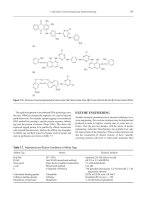
Ethylene biosynthetic pathway
Methionine
Methionine adenosyl transferase
S-Adenosyl methionine (SAM)
ACC synthase
Methyl thioribose
1-Aminocyclopropane1-carboxylic acid
ACC oxidase
Ethylene
537
ity in fruits. Inhibition of the ACC synthase and ACC oxidase
gene expression by the introduction of their respective antisense
cDNAs resulted in delayed ripening and better preservation of
the quality of tomato (Hamilton et al. 1990, Oeller et al. 1991)
and apple (Hrazdina et al. 2000) fruits. ACC synthase, which
is the rate-limiting enzyme of the pathway, requires pyridoxal5-phosphate as a cofactor, and is inhibited by pyridoxal phosphate inhibitors such as aminoethoxyvinylglycine (AVG) and
aminooxy acetic acid (AOA). Field application of AVG as a
growth regulator (RetainTM , Valent Biosciences, Chicago) has
been used to delay ripening in fruits such as apples, peaches and
pears. Also, commercial storage operations employ controlled
atmosphere with very low oxygen levels (1–3%) for long-term
storage of fruits such as apples to reduce the production of
ethylene, as oxygen is required for the conversion of ACC to
ethylene.
In response to the initiation of ripening, several biochemical changes are induced in the fruit, which ultimately results
in the development of ideal texture, taste, colour and flavour.
Several biochemical pathways are involved in these processes
as described in the subsequent text.
Ethylene receptor
Carbohydrate Metabolism
Fruit ripening/senescence
Figure 27.1. Summary of ethylene biosynthesis and action during
fruit ripening. ACC, 1-Aminocyclopropane 1- Carboxylic Acid.
Ethylene is biosynthesised through a common pathway
that uses the amino acid methionine as the precursor (Yang
1981, Fluhr and Mattoo 1996) (Fig. 27.1). The first reaction of the pathway involves the conversion of methionine to
S-adenosyl methionine (SAM) mediated by the enzyme methionine adenosyl transferase. SAM is further converted into
1-aminocyclopropane-1-carboxylic acid (ACC) by the enzyme
ACC synthase. The sulphur moiety of methylthioribose generated during this reaction is recycled back to methionine by the
action of a number of enzymes. ACC is the immediate precursor of ethylene and is acted upon by ACC oxidase to generate
ethylene. ACC synthase and ACC oxidase are the key control
points in the biosynthesis of ethylene. ACC synthase is a soluble
enzyme located in the cytoplasm, with a relative molecular mass
of 50 kDa (kiloDalton). ACC oxidase is found to be associated
with the vacuolar or mitochondrial membrane. Using molecular
biology tools, a cDNA (complementary DNA representing the
coding sequences of a gene) for ACC oxidase was isolated from
tomato (Hamilton et al. 1991) and is found to encode a protein
with a relative molecular mass of 35 kDa. There are several
isoforms of ACC-synthase. These are differentially expressed in
response to wounding, other stress factors and at the initiation
of ripening. ACC oxidase reaction requires Fe2+ , ascorbate and
oxygen.
Regulation of the activities of ACC synthase and ACC oxidase
is extremely important for the preservation of shelf life and qual-
Cell Wall Degradation
Cell wall degradation is the major factor that causes softening of several fruits. This involves the degradation of cellulose
components, pectin components or both. Cellulose is degraded
by the enzyme cellulase or β-1,4-glucanase. Pectin degradation
involves the enzymes pectin methylesterase, polygalacuronase
(pectinase) and β-galactosidase (Negi and Handa 2008). The
degradation of cell wall can be reduced by the application of
calcium as a spray or drench in apple fruits. Calcium binds
and cross-links the free carboxylic groups of polygalacturonic
acid components in pectin. Calcium treatment, therefore, also
enhances the firmness of the fruits.
The activities of both cellulase and pectinase have been observed to increase during ripening of avocado fruits and result in
their softening. Cellulase is an enzyme with a relative molecular
mass of 54.2 kDa and formed by extensive post-translational processing of a native 54 kDa protein involving proteolytic cleavage
of the signal peptide and glycosylation (Bennet and Christopherson 1986). Further studies have shown three isoforms of
cellulose ranging in molecular masses between 50 and 55 kDa.
These forms are associated with the endoplasmic reticulum,
the plasma membrane and the cell wall (Dallman et al. 1989).
The cellulase isoforms are initially synthesised at the style end
of the fruit at the initiation of ripening, and the biosynthesis
progressively increases towards the stalk end of the fruit with
the advancement of ripening. Degradation of hemicelluloses
(xyloglucans, glucomannans and galactoglucomannans) is also
considered as an important feature that leads to fruit softening.
Degradation of these polymers could be achieved by cellulases
and galactosidases.
Loss of pectic polymers through the activity of polygalacturonases (PG) is a major factor involved in the softening of fruits