Encyclopedia of geology, five volume set, volume 1 5 (encyclopedia of geology series) ( PDFDrive ) 2355
Bạn đang xem bản rút gọn của tài liệu. Xem và tải ngay bản đầy đủ của tài liệu tại đây (192.57 KB, 1 trang )
512 SEDIMENTARY ENVIRONMENTS/Carbonate Shorelines and Shelves
right down to the shelf edge at 200 m depth. In addition, tidal currents are strong and can rework sediments and prevent mud deposition over much of
the shelf. Therefore the entire shelf is above storm
wave base and much of it is within the mid-ramp zone
as the nearshore areas slope steeply off the coastal
cliffs. Locally, for example in western Ireland and
north-west Scotland, carbonate beaches are formed
of skeletal sands and gravels (Figure 1C). By way of
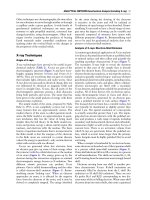
example, a shelf profile is shown across the shelf
north of Scotland (Figure 12). Inner to mid parts of
the shelf are swept by tidal currents that restrict any
mud sedimentation, and these areas are characterized
by mollusc-rich sands and gravels (Figure 12). Such
facies are common throughout this carbonate province (Figure 11). Locally they are enriched in siliciclastic sand grains that have been reworked from
nearby rocky cliffs and islands. These shell gravels
not only represent the remains of a diverse molluscan-rich seafloor community but also form a substrate for encrusting calcareous organisms such as
tube worms and bryozoans.
The outer part of the shelf and the shelf margin
are inhabited by a quite different seafloor community dominated by an unusual free-living or nonencrusting tube worm known as Ditrupa (Figure 12).
These conical tubes occur in great abundance (upto
1000 individuals per square metre) in the outer shelf,
associated with minor contributions from molluscs,
bryozoans, and solitary corals that use the Ditrupa
tubes as a hard substrate to grow on. With increasing
depth, pelagic foraminifera become more important
and the sediments have a muddy texture below wave
base and the shelf edge. Many areas of the deep shelf
and continental slope are covered by a colonial coral
known as Lophelia (Figure 12). Although not present
on the selected transect, it is common around the
unattached carbonate shelves of the Faeroes, Rockall,
and Porcupine Banks of the north-east Atlantic
(Figure 11) where it forms extensive thickets on the
seafloor. On the Norwegian shelf it forms deep-water
reefs tens of metres high and hundreds of kilometres
long. Living at depths of 200–500 m, these coral
thickets exist by suspension feeding. They are not
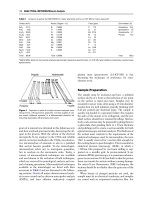
Figure 12 North west south east section across the shelf to the west of Shetland, illustrating the occurrence of the main carbonate
facies with respect to shelf regions. Note the considerable depth of the fair weather and storm wave bases compared with the sheltered
Gulf (Figure 10) and the importance of the rocky shoreline and islands (Foula) in this region. Photographs illustrate the skeletal nature
of the shelf carbonates: (A) scale: foreground 50 cm across; (B, C) scale bars 2 cm. (After Light JL and Wilson JB (1998) Cool water
carbonate deposition on the West Shetland Shelf: a modern distally steepened ramp. In: Wright VP and Burchette TP (eds.) Carbonate
Ramps, pp. 73 105. Special Publication 149. London: Geological Society.