Pediatric emergency medicine trisk 4167 4167
Bạn đang xem bản rút gọn của tài liệu. Xem và tải ngay bản đầy đủ của tài liệu tại đây (128.21 KB, 1 trang )
TABLE 126.7
VERBAL DE-ESCALATION/CALMING TECHNIQUES
Clearly introduce yourself
Use simplified language, a soft voice, and slow movements
Explain what will happen in the ED
Reduce environmental stimulation, if possible (less noise or light, fewer
people)
Remove access to breakable objects/equipment
Allow room for pacing, if possible
Offer food or drink, which is inherently calming
Reassure child that you are there to keep him or her safe, that this is your
job
Listen and empathize (a treatment cornerstone)
Tell child how you plan to honor his or her reasonable requests
Clarify the child’s goal and then try to link his or her cooperation to that
goal
Find things for the child to control, like choice of drinks
Engage available consultants: security, social work, psychiatry
Offer distracting toys/sensory modalities
Remain engaged; perceived ignoring may encourage escalations
Remember not to take their anger personally
ED, emergency department.
Reprinted from Hilt RJ, Woodward TA. Agitation treatment for pediatric emergency patients. J Am
Acad Child Adolesc Psychiatry 2008;47(2):132–138. Copyright © 2008 The American Academy of
Child and Adolescent Psychiatry. With permission.
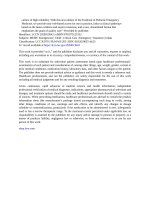
Medical and Physical Strategies for the Emergency Treatment of Agitation.
Medical and physical methods may be necessary to contain the patient’s
violent behavior. However, controversy exists regarding in what situations
and when such treatment is indicated. While their use can prevent significant
and potentially life-threatening violent outbursts and can help an out-ofcontrol patient calm down, restraint also has the potential to be physically
and psychologically harmful and traumatizing to the patient, the family, and
the staff. Adverse reactions to medications, physical harm and death due to