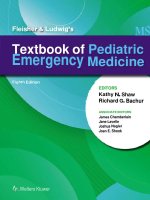
Pediatric emergency medicine trisk 4616 4616
Bạn đang xem bản rút gọn của tài liệu. Xem và tải ngay bản đầy đủ của tài liệu tại đây (74.75 KB, 1 trang )
3. Long large-bore needles or angiocatheters (should be at least 3.25 in in length for needle chest
decompression in large adults)
E. Medications
Drug dosing in children should use processes minimizing the need for calculations, preferably a length-based
system . In general, medications may include:
1. Cardiovascular medication, such as 1:10,000 epinephrine, atropine, antidysrhythmics (e.g., adenosine and
amiodarone), calcium channel blockers, beta-blockers, nitroglycerin tablets, aspirin, vasopressor for
infusion
2. Cardiopulmonary/respiratory medications, such as albuterol (or other inhaled beta agonist) and
ipratropium bromide, 1:1,000 epinephrine, furosemide
3. 50% dextrose solution (and sterile diluent or 25% dextrose solution for pediatrics)
4. Analgesics, narcotic, and nonnarcotic
5. Antiepileptic medications, such as diazepam or midazolam
6. Sodium bicarbonate, magnesium sulfate, glucagon, naloxone hydrochloride, calcium chloride
7. Bacteriostatic water and sodium chloride for injection
8. Additional medications, as per local medical director
Optional equipment
The equipment in this section is not mandated or required. Use should be based on local needs and resources.
A. Optional equipment for BLS ground ambulances
1. Glucometer or blood glucose test strips (per state protocol and/or local medical control approval)
2. Infant oxygen mask
3. Infant self-inflating resuscitation bag
4. Airways
a. Nasopharyngeal (12F, 14F)
b. Oropharyngeal (size 00)
5. CPAP/BiPAP capability
6. Neonatal blood pressure cuff
7. Infant blood pressure cuff
8. Pediatric stethoscope
9. Infant cervical immobilization device
10. Pediatric backboard and extremity splints
11. Femur traction device (adult and child sizes)
12. Pelvic immobilization device
13. Elastic wraps
14. Ocular irrigation device
15. Hot packs
16. Warming blanket
17. Cooling device
18. Soft patient restraints
19. Folding stretcher
20. Bedpan
21. Topical hemostatic agent/bandage
22. Appropriate CBRNE PPE (chemical, biologic, radiologic, nuclear, explosive personal protective
equipment), including respiratory and body protection; protective helmet/jackets or coats/pants/boots
23. Applicable chemical antidote autoinjectors (at a minimum for crew members’ protection; additional for
victim treatment based on local or regional protocol; appropriate for adults and children)
B. Optional equipment for ALS emergency ground ambulances