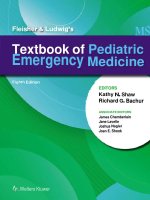
Pediatric emergency medicine trisk 4063 4063
Bạn đang xem bản rút gọn của tài liệu. Xem và tải ngay bản đầy đủ của tài liệu tại đây (82.88 KB, 1 trang )
Respiratory function requires flow of air along a pressure gradient into
the tracheobronchial tree. Any compressive or obstructive force can
compromise this process, resulting in a thoracic emergency.
The emergency clinician evaluating the child with a thoracic problem
must attempt to determine whether the patient has evidence of airway
compromise, circulatory compromise, or components of both.
Thoracic conditions of surgical significance frequently present as a
result of a mechanical or infectious complication of an underlying
anatomic abnormality . These anatomic abnormalities may be grouped
into conditions resulting in airway compromise, violations of the pleural
space, intrinsic lesions of the lung, mediastinal masses, and
diaphragmatic defects.
Exceptions include pneumothorax and empyema, which can present in
previously healthy children and which require prompt detection and
treatment.
RELATED CHAPTERS
Signs and Symptoms:
Foreign Body: Ingestion and Aspiration: Chapter 32
Pain: Back: Chapter 54
Pain: Dysphagia: Chapter 56
Respiratory Distress: Chapter 71
Stridor: Chapter 75
Wheezing: Chapter 84
Medical, Surgical, and Trauma Emergencies
Infectious Disease Emergencies: Chapter 94
Pulmonary Emergencies: Chapter 99
Thoracic Trauma: Chapter 115
Procedures: Chapter 130
Ultrasound: Chapter 131
The Children’s Hospital of Philadelphia Clinical Pathway