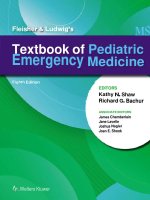
Pediatric emergency medicine trisk 2468 2468
Bạn đang xem bản rút gọn của tài liệu. Xem và tải ngay bản đầy đủ của tài liệu tại đây (99.63 KB, 1 trang )
organ damage and multisystem organ failure. First-line treatment is to provide
intravascular replacement with iso-osmotic fluids, typically normal saline, or
packed red blood cells in the setting of acute hemorrhage. Typical resuscitation
volumes are 10 mL/kg over 30 minutes, with more judicious use in the premature
infant. Excessive volume expansion in the preterm neonate is associated with
higher morbidity; therefore early administration of pressors is necessary if there is
a limited response to volume. Treatment of hypotension should be directed at
improving perfusion and cardiac function, rather than aiming for a desired blood
pressure value. This is of particular importance in conditions that widen the pulse
pressure, where systolic pressures are adequate but the mean arterial pressure
underestimates perfusion pressure.
Temperature
Rectal thermometry is considered the reference standard for measurement of body
temperature in neonates. However, it is important to note that mechanical trauma
from rectal thermometry in a newborn can result in peritonitis and abscess
formation, and should be performed with caution. It is also contraindicated in
patients with neutropenia. Similarly, infants receiving active intervention for
temperature control require continuous thermometry that is better accomplished
with electronic axillary thermometry. Temperature readings may vary according
to the site measured so that reference ranges should be interpreted with its
specific set of normal values. In general, hypothermia in a neonate occurs when
the temperature is less than 36.5°C, and fever occurs when temperatures exceed
38°C.
Infants have a very large ratio of surface area to body mass, low fat stores, and
immature thermoregulatory centers, all of which leave them at increased risk for
cold stress. Neonates naturally respond to cold stress by becoming
hypermetabolic, vasoconstricted, hyperactive, tachycardic, tachypneic, and
acidotic. Heat loss after a week of life commonly occurs through radiation, and is
greatly influenced by ambient temperature, humidity, and the temperature of
surfaces to which the infant is exposed. Therefore, whenever possible, it is
important for the clinician to minimize exposure to cold air and surfaces during
examination or observation by placing the baby under an open radiant heater.
Hyperthermia or fever is most often noted as a sign of hypermetabolism in a
septic infant. However, hypothermia can also be a sign of sepsis, due to a
markedly diminished response to bacterial pyrogens in neonates (see Chapter 31
Fever ).