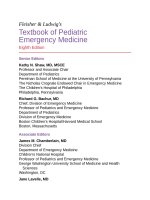
Pediatric emergency medicine trisk 2990 2990
Bạn đang xem bản rút gọn của tài liệu. Xem và tải ngay bản đầy đủ của tài liệu tại đây (46.6 KB, 1 trang )
headaches, dizziness, and fatigue, occur in about 5% of children. Hepatotoxicity,
manifested primarily as elevation of transaminases, and nephrotoxicity, including
proteinuria and renal papillary necrosis, are rare but potentially dangerous if
overlooked. Friability of the skin and a porphyria-like blistering of sun-exposed areas
may be seen with these agents, especially naproxen when used in fair-skinned children.
Unlike salicylates, NSAIDs rarely cause tinnitus or hyperventilation. Reye
syndrome, although far less common than with salicylates, has been reported in
children receiving NSAIDs; therefore, it is prudent to consider suspension of these
agents in children with influenza or varicella. Salicylates must be carefully avoided in
children who are even exposed to these viruses. In any child using salicylates or other
NSAIDs, development of pernicious vomiting and/or alteration in mental status
warrants consideration of Reye syndrome.
Each of the second-line agents used in the treatment of JIA also has the potential to
cause specific forms of toxicity. Despite its favorable therapeutic profile, methotrexate
is an antimetabolite with the potential to cause oral ulcers, nausea, vomiting, and
abdominal pain. These adverse effects may be minimized by supplementation with
folic acid. Children must be monitored regularly for evidence of hepatic toxicity;
persistent elevation of hepatic transaminases identifies those at risk for hepatic fibrosis
or cirrhosis. Methotrexate may also cause lymphopenia, especially with prolonged use,
or even pancytopenia due to bone marrow suppression. Ten percent of children
receiving methotrexate for arthritis may develop mild hypogammaglobulinemia, but
there is no evidence that this is clinically significant. Concurrent use of other
dihydrofolate reductase inhibitors, such as trimethoprim-sulfamethoxazole (Bactrim),
potentiates these risks and should be avoided.
Rarely, use of methotrexate is associated with the development of pulmonary
hypersensitivity. This most commonly occurs during the first 6 to 12 months of use and
may be marked by dyspnea, cough, fever, and fluffy infiltrates on chest x-ray. Although
such symptoms may be conclusively distinguished from viral pneumonitis only by lung
biopsy, suspicion of this complication necessitates discontinuation of methotrexate and
institution of treatment with systemic corticosteroids. Failure to stop the drug, or a
second exposure to methotrexate, may cause fatal respiratory failure.
The biologics are generally well tolerated, but as with all medications that target the
immune response as a way of controlling inflammation, biologics are
immunosuppressive. Although these effects are more limited than those of traditional
cytotoxic agents, defenses against various infections are impaired. The infectious risk
appears to increase significantly with use of more than one biologic agent at a time.
Although most people note only an increased frequency of mild upper respiratory tract
illnesses, treatment with TNF inhibitors also increases susceptibility to potentially
serious mycobacterial, bacterial, fungal, and herpes viral infections.
The long-term effects of altering the immune response with anti-TNF medications
are not yet known. In adults, new autoantibodies may develop (including ANA and