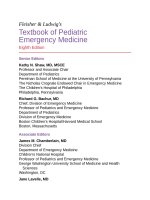
Pediatric emergency medicine trisk 1084 1084
Bạn đang xem bản rút gọn của tài liệu. Xem và tải ngay bản đầy đủ của tài liệu tại đây (46.26 KB, 1 trang )
pneumonitis, pleurisy, spontaneous pneumothorax, or mass. Foreign bodies
ingested and lodged in the esophagus can be visualized if radiopaque (e.g., coins).
In the cervical esophagus, they will lie flat and be fully visible in the
posteroanterior view of the chest. A foreign body such as a coin in trachea
typically appears “on end” on the posteroanterior view of the chest. Airway
foreign-body aspiration most frequently manifests, however, by hyperinflation or
atelectasis on radiographs because most tracheobronchial foreign bodies are not
radiopaque. Inspiratory and expiratory films or decubitus CXR may demonstrate
focal hyperinflation (i.e., the lobe with an obstructed bronchus remains inflated in
expiration or when placed on the dependent side on a decubitus film). Other
characteristic radiographic changes include the wide mediastinum from an aortic
aneurysm, abnormal cardiac silhouette related to a pericardial effusion or
cardiomegaly, rib fractures, or bone changes of metabolic bone derangements. A
calcified ring may be visualized in approximately one-third of patients with a
history of Kawasaki disease. The presence of atelectasis may suggest mucous
plugging or may be subtle evidence of pulmonary infarction from an embolus or a
vasoocclusive crisis of sickle cell anemia. The presence of a wedge-shaped
pulmonary infiltrate with an ipsilateral elevated hemidiaphragm is suggestive of a
pulmonary embolism.
Studies other than CXR and EKGs are rarely necessary. Laboratory studies
(such as troponin) are typically not needed in the workup of most patients with
chest pain. However, if there is clinical suspicion for cardiac abnormalities such
as myocarditis, pericarditis, or acute MI based on history or an abnormal EKG,
then selective use of a troponin assay is warranted. In general, myocarditis is
often the cause of increased troponin as the diagnosis of acute MI is extremely
low in children. Of note, troponin levels may be elevated in noncardiac disease
states such as sepsis. B-type natriuretic peptide (BNP) can be useful in children
with pre-existing heart disease or in those who are in congestive heart failure.
Toxicologic screens are useful if the patient is considered at risk of drug abuse,
particularly cocaine, or if the diagnosis remains unclear. An hCG (human
chorionic gonadotropin) level should be considered in postpubertal females to
assist with diagnosing pregnancy.
An elevated leukocyte count with a shift to the left may point toward infection
as the cause of pain in patients with a systemic illness. Examination of a
peripheral smear and a hemoglobin electrophoresis are indicated in the child
suspected of having sickle cell disease as the cause of chest pain. In children with
sickle cell disease, a CBC, reticulocyte count, and blood culture are indicated to
assist in ascertaining acute chest syndrome or pneumonia, as well as the presence