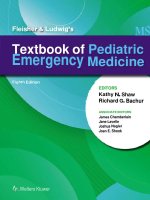
Pediatric emergency medicine trisk 2027 2027
Bạn đang xem bản rút gọn của tài liệu. Xem và tải ngay bản đầy đủ của tài liệu tại đây (46.3 KB, 1 trang )
laboratory findings may be safely discharged. Minor local symptoms with no
signs of systemic toxicity warrant a 12 to 24-hour observation time. All patients
receiving CroFab should be admitted to the hospital for monitoring and upon
discharge need to be reassessed 2 to 3 days and 5 to 7 days after their last
antivenom dose as recurrent coagulopathy can develop and persist for 1 week or
longer.
Wound care includes irrigation, cleansing, a loose dressing, and tetanus
prophylaxis. Cotton padding can be used between swollen digits, and analgesics
provided as needed. Current studies question the need for prophylactic antibiotics.
Surgical excision of the wound, routine fasciotomy, and application of ice are
contraindicated. Excision of the wound does not remove significant venom after
30 minutes, and cryotherapy has been associated with increased extremity
necrosis and amputations. Fasciotomy should be reserved for the rare case of a
true compartment syndrome. Necrosis is usually the result of the proteolytic
enzymes or inappropriate therapy and is not typically caused by increased
compartmental pressure. Superficial debridement may be required at 3 to 6 days;
one possible wound care regimen suggested at this stage includes local oxygen,
aluminum acetate (1:20 solution) soaks, and triple dye. Physical therapy is
beneficial during the healing phase.
Supportive care focuses on correction of the intravascular depletion that results
from increased venous capacitance, interstitial third spacing, and hemorrhagic
losses. There should be two IV lines for antivenin therapy and volume
replacement. Shock usually develops between 6 and 24 hours after the snakebite
but may present within the first hour in severe envenomation. Central vascular
monitoring and accurate urine output measurements are desirable for optimal
therapy. Normal saline or lactated Ringer solution (20 mL/kg over 1 hour),
followed by fresh whole blood or other blood components, often corrects the
hypovolemia (see Chapter 10 Shock ). Vasopressors are usually needed only
transiently in the more severe cases. A bleeding diathesis is best managed with
fresh whole blood, or blood component therapy, primarily packed red blood cells
(10 mL/kg), and fresh-frozen plasma (10 mL/kg). With life-threatening bleeding,
platelets (0.2 units/kg) and a more concentrated fibrinogen source (cryoprecipitate
—dose one bag per 5 kg body weight) should also be considered. Abnormal
clotting parameters, including fibrinogen and platelet and blood counts, should be
reevaluated every 4 to 6 hours. Respiratory and renal support may also be
required.
The rate of serum sickness with CroFab is much lower than that seen with
older products. Signs of serum sickness include rashes, arthralgias, edema,