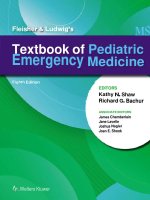
Pediatric emergency medicine trisk 2006 2006
Bạn đang xem bản rút gọn của tài liệu. Xem và tải ngay bản đầy đủ của tài liệu tại đây (115.33 KB, 1 trang )
Clinical recognition. Bites are seldom mistaken if the child is old enough to
describe the spider. There is generalized pain and rigidity of muscles 1 to 8 hours
after the bite, typically without local symptoms. The pain is cramping and felt in
the abdomen, flanks, thighs, and chest. Nausea and vomiting are often reported in
children. Respiratory distress, chills, urinary retention, tachycardia, hypertension,
myocarditis and priapism can occur. Patients might become anxious and report
generalized diaphoresis and flushing. There is a 4% to 5% mortality rate, with
death resulting from cardiovascular collapse. The mortality rate in young children
may be as high as 50% if untreated. The syndrome after a black widow spider bite
may easily confuse the clinician as it mimics many medical or surgical conditions
such as myocardial infarction, alcohol/opiate withdrawal, organophosphate
poisoning, acute abdomen, rabies, tetanus, renal colic, food poisoning, or
Staphylococcal sepsis.
TABLE 90.20
GRADING SCALE FOR LATRODECTUS ENVENOMATION
Grade
Symptoms
1
Asymptomatic
Local pain at bite site
2
Normal vital signs
Muscular pain—localized
Diaphoresis—localized
Normal vital signs
3
Muscular pain—generalized
Abnormal vital signs
Nausea, vomiting
Headaches
Diaphoresis
Management. A child who has severe pain and muscle rigidity after a spider
bite should be considered a Latrodectus bite victim. A clinical grading scale has
been developed by Clark ( Table 90.20 ). Local treatment of the site of the bite
with the use of a tourniquet or with incision and suction of the venom has not
proven beneficial. Treatment with Latrodectus antivenin (Lyovac, Merck, Sharp