Andersons pediatric cardiology 953
Bạn đang xem bản rút gọn của tài liệu. Xem và tải ngay bản đầy đủ của tài liệu tại đây (138.89 KB, 3 trang )
Nonconfluentpulmonaryarteries.
Whenbothintrapericardialandsystemic-to-pulmonarycollateralarteriesfeed
differentpartsofthepulmonaryparenchyma,itisessentialtodeterminethe
proportionssuppliedbyeachofthepathways,rememberingthatintheextreme
formoftheanomalybothlungsarefedexclusivelybysystemic-to-pulmonary
arteries.Anothervarietyofmultifocalsupplyisfoundwhenthepulmonary
arteriesarepresentbutnonconfluent.Thedifferentpartsofthelungsmaybe
suppliedbysystemic-to-pulmonarycollateralarteries,byaductoranomalous
pulmonaryarteryfromtheascendingaorta,byacoronaryarterialfistulaor
aortopulmonarywindow,orbyacombinationofthese.Alternatively,the
intrapulmonaryarteriesmaynotbesuppliedbyanyofthesesources,withblood
reachingthemonlyattheprecapillarylevelthroughacquiredcollateralarteries
thatenterthelungseithercentrifugallythroughthebronchialarteriesor
centripetallyviatheintercostalorcoronaryarteries.Acquiredcollateralarteries
canalsocoexistwiththeothervarietiesofarterialsupply.
MajorSystemic-to-PulmonaryCollateralArteries.
Thesearteriesarecharacteristicfortheso-calledcomplexvariantofTOF/PA.
Theirrelationshiptothebronchialarterieshasyettobefullyestablished.4Some
ofthemajorcollateralarterieshavenoindependentcoursewithinthelung
parenchyma,extendingonlyfromasystemicartery,usuallytheaorta,tothe
originoftheintrapulmonaryarteriesatornearthehilum.Arterieswiththis
morphologyaresimpleconduits.Theycanpassinfrontof,behind,oreven
throughtheesophagus.4Theyalsofrequentlybranchandencirclethebranches
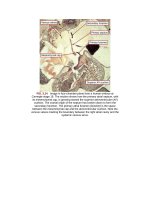
ofthebronchialtree(Fig.36.7).
FIG.36.7 Directsystemic-to-pulmonarycollateralarterytakingitsorigin
fromthedescendingaorta.Thecollateralarterypassesbehindthe
esophagusbutbranchestorunbothinfrontof(redarrow)andbehind
(greenarrow)therightbronchus.Thearteriesextenddirectlyintothe
pulmonaryparenchyma.
Inothercircumstances,thecollateralarteriesextendintothelungalongthe
bronchialtree,branchinginthepatternofabronchialartery,andalsosupplying
thebronchialwall.Acommonembryologicoriginofthesevesselswiththe
bronchialarteriescannotbeexcluded(Fig.36.8).TheMelbournegrouphave
summarizedevidencetosupportthistheory,5althoughtheStanfordgrouphas
arguedagainstit.6
FIG.36.8 Dissectionofasystemic-to-pulmonarycollateralarterythat
branchesinconcertwiththebronchialtreeasitextendstosupplythe
pulmonaryparenchyma.Thisvesselcouldwellbeabronchialartery,yetit
isaccuratelydescribedasasystemic-to-pulmonaryartery.
Ourpreferenceistodescribethesevesselsassystemic-to-pulmonary
collateralarteries,ormajoraortopulmonarycollateralarteries.Thearteries,
typicallybetweentwoandsixinnumber,usuallyarisefromtheanteriorwallof
theaortaoppositetheoriginoftheintercostalarteries(seeFig.36.5).Individual
collateralarteriescanalsotakeoriginfromthebrachiocephalicarteriesoreven
fromthecoronaryarteries.7Whentheyarisefromtheaorta,thearteries
frequentlyrunaretroesophagealcourse(seeFig.36.7).4Theycanbe
distinguishedfromaductbytheirhistologicstructureaswellasanatomicallyin
mostcases,sincethearterialductoriginatesonlyfromagivenpointwithinthe
aorticarch,permittingitsdistinctionfromthearteriesofthefifthpharyngeal
arch(seeFig.36.4).Evenwhenitbranchesfromanondominantaorticarch,the
ductoriginatesmoreorlessoppositethetakeoffofabrachiocephalicor
subclavianartery.Acollateralarisingintheregiontypicalfortheductuscanalso
bedistinguishedfromaductusintraoperativelybynotingthattherecurrent
laryngealnervedoesnotwraparoundit.