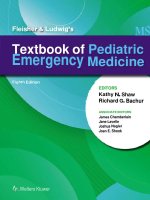
Pediatric emergency medicine trisk 0116 0116
Bạn đang xem bản rút gọn của tài liệu. Xem và tải ngay bản đầy đủ của tài liệu tại đây (70.34 KB, 1 trang )
patient are equal members of the human family. Humanism is often not
taught but is always a part of the hidden curriculum.
WHAT IS THE RELATIONSHIP OF HUMANISM TO
PROFESSIONALISM?
Humanism and professionalism are in perfect balance within each of us. We
wish to be objective, evidenced based and fully competent in delivering the
best care. We also want to be kind, empathetic and compassionate and
practice the art of medicine along with the science. Care is not optimal
when this balance is disrupted. One neither wishes to be perceived as cold
and uncaring even while making the correct diagnosis and applying the
right treatment. Doing so will lead to nonadherence, lack of follow-up,
dissatisfaction and in extreme cases questions of malpractice. On the other
hand, the doctor who is caring and empathetic who does not make the
correct diagnosis and applies the correct therapy is also not fulfilling their
responsibility. Keeping the balance is important. Studies have identified the
characteristics of the humanistic physician as seen through the eyes of
patients, colleagues and trainees. Some have suggested that resident training
need to stress both professionalism and humanistic values and that there has
been a decline in humanistic values throughout medical practice.
WHY IS BALANCE IMPORTANT? TO THE PATIENT? TO
THE DOCTOR?
The balance of humanism and professionalism is important to the patient
and family as the recipients of care want to feel the caring. A parent wants
to be sure that their most valuable and loved child is in competent and
caring hands. The balance is also good for the doctor or nurse who wants to
feel that they are not on a medical assembly line but that they are helping
people and fulfilling their chosen goals as a healthcare professional. Those
who lose track of their core mission and their North Star are prone to
fatigue, burn-out, and even depression. To act in a humanistic way requires
that one feels human, fulfilled, cared about, protected and encouraged.
When the doctor feels these things, he/she is able to reflect them to others.
HOW DO WE MAINTAIN AND PROJECT OUR
HUMANISM?